FUTURE SCENARIO
ADVANCING SUSTAINABLE BIOENERGY DEVELOPMENT
New, advanced technologies make it possible to produce climate neutral fuels from non-forest and non-food energy crops. The benefits of cultivation and use of these energy crops for transport fuels and electricity goes beyond the benefits of reducing greenhouse gas emissions. Terrestrial energy crop cultivation and aquatic energy crop harvesting reverses land and water degradation, increases biodiversity and carbon sequestration and improves land fertility. We call this
Deep Green Biomass. Moreover, deploying these energy crops for the production of advanced biofuels will positively impact social-economic structures and energy independence and reduce the need for involuntary migration and deforestation: Deep Green Energy.
Deep Green Energy Partners works to accelerate deployment of deep green biomass for the production of advanced biofuels and biochemicals, to restore soil and water conditions and to optimize the overall ecological-economic effects of investments in the energy transition.
ADVANCING SUSTAINABLE BIOENERGY DEVELOPMENT
New, advanced technologies make it possible to produce climate neutral fuels from non-forest and non-food energy crops. The benefits of cultivation and use of these energy crops for transport fuels and electricity goes beyond the benefits of reducing greenhouse gas emissions. Terrestrial energy crop cultivation and aquatic energy crop harvesting reverses land and water degradation, increases biodiversity and carbon sequestration and improves land fertility. We call this
Deep Green Biomass. Moreover, deploying these energy crops for the production of advanced biofuels will positively impact social-economic structures and energy independence and reduce the need for involuntary migration and deforestation: Deep Green Energy.
Deep Green Energy Partners works to accelerate deployment of deep green biomass for the production of advanced biofuels and biochemicals, to restore soil and water conditions and to optimize the overall ecological-economic effects of investments in the energy transition.
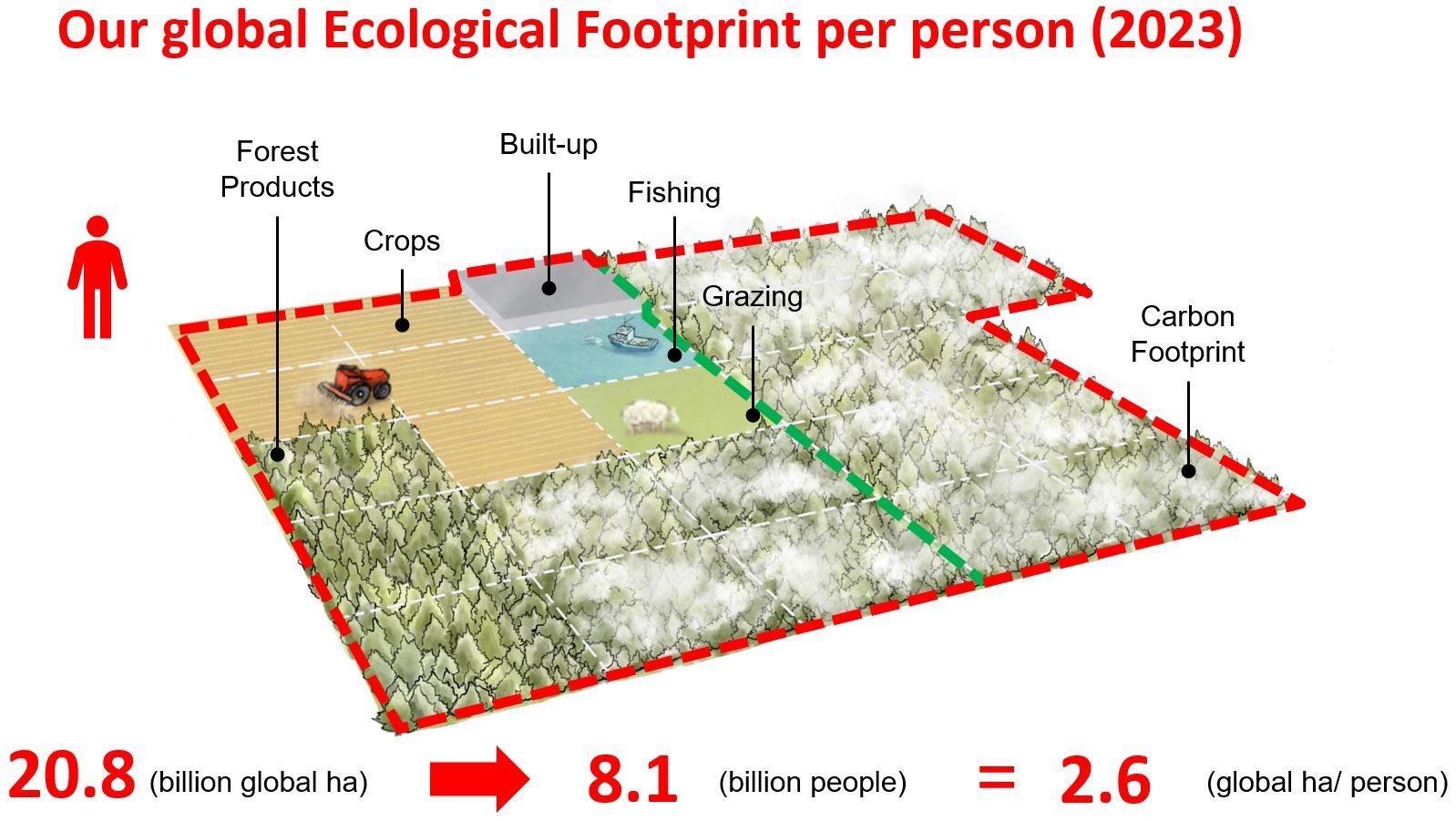
The global ecological footprint per person.
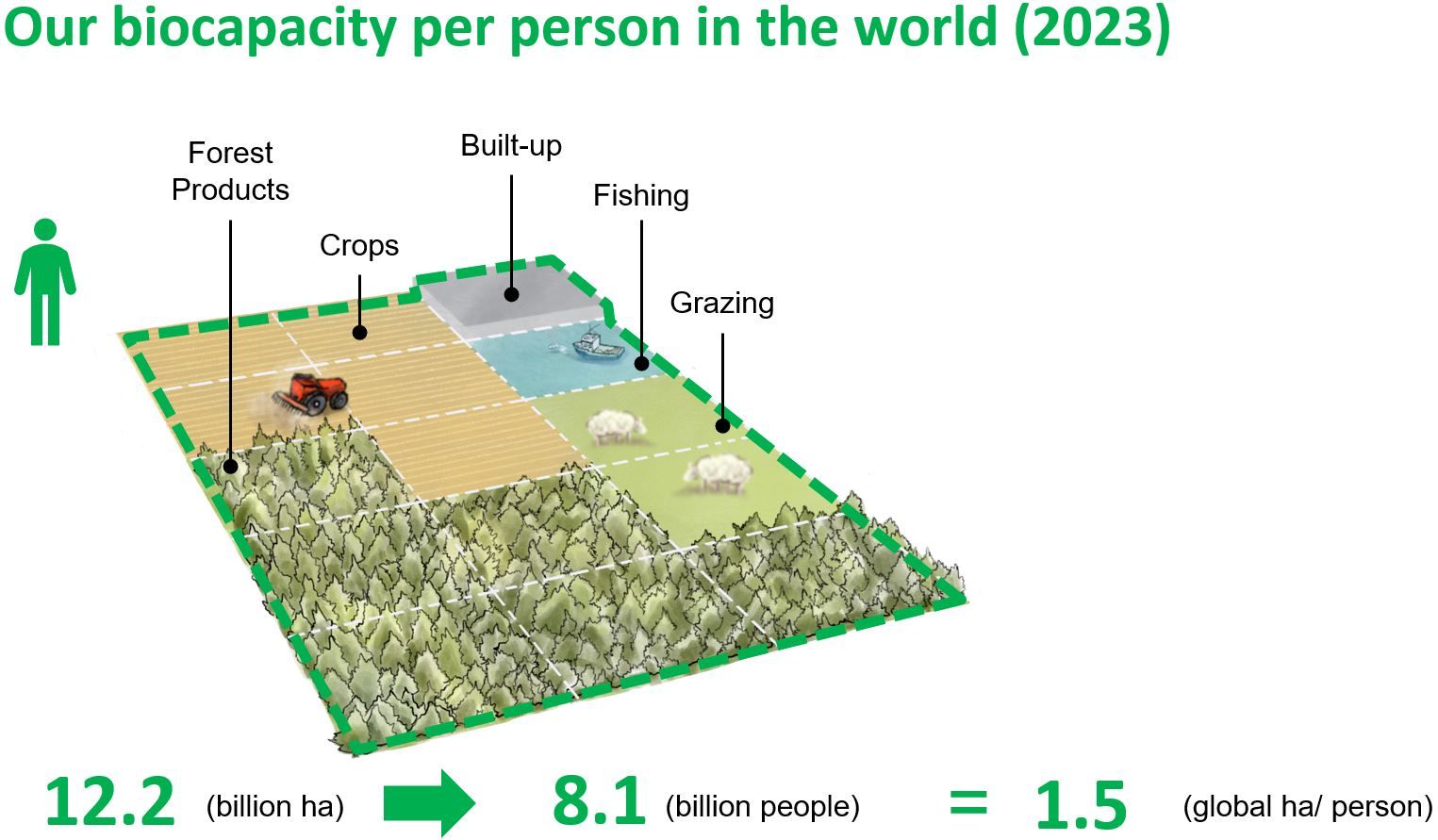
The global biocapacity per person.
ADVANCING SUSTAINABLE BIOENERGY DEVELOPMENT
New, advanced technologies make it possible to produce climate neutral fuels from non-forest and non-food energy crops. The benefits of cultivation and use of these energy crops for transport fuels and electricity goes beyond the benefits of reducing greenhouse gas emissions. Terrestrial energy crop cultivation and aquatic energy crop harvesting reverses land and water degradation, increases biodiversity and carbon sequestration and improves land fertility. We call this
Deep Green Biomass. Moreover, deploying these energy crops for the production of advanced biofuels will positively impact social-economic structures and energy independence and reduce the need for involuntary migration and deforestation: Deep Green Energy.
Deep Green Energy Partners works to accelerate deployment of deep green biomass for the production of advanced biofuels and biochemicals, to restore soil and water conditions and to optimize the overall ecological-economic effects of investments in the energy transition.
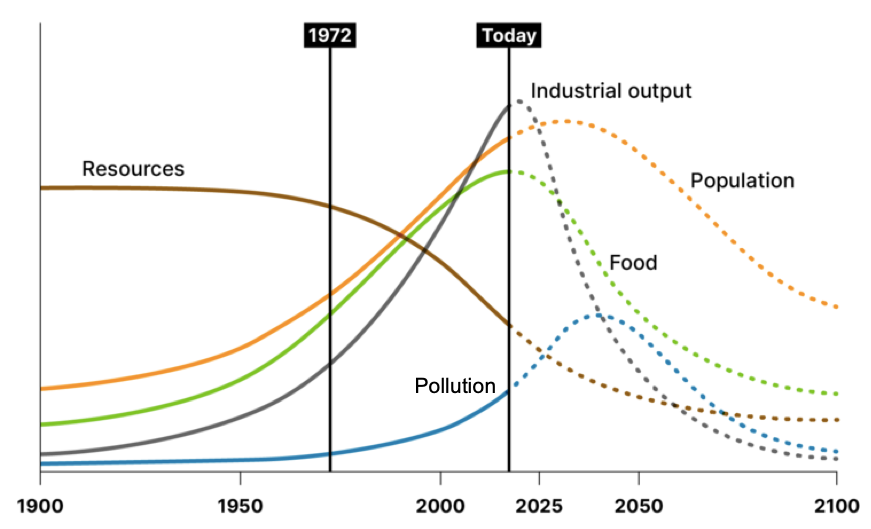
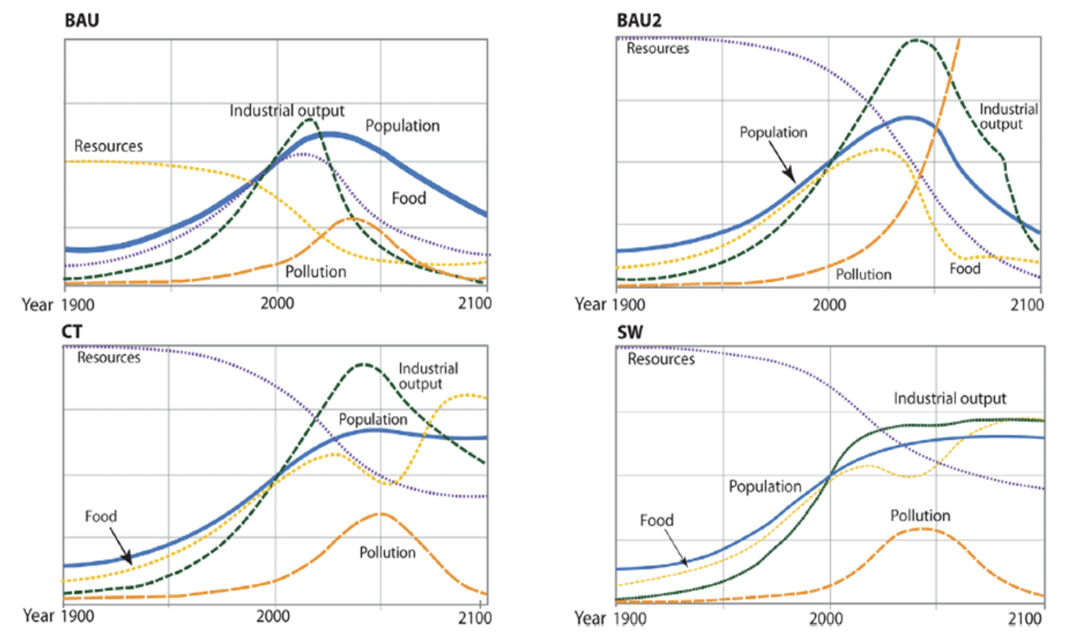
A 2020 reassessment, using empirical data with 4 scenarios of the models from the Limits to Growth developed 50 years ago showed not only that earlier predictions were pretty accurate but also that the two scenarios that track closest to the empirical data, Business As Usual 2 (BAU2) and Comprehensive Technology (CT), both show a decline in growth by around 2030 but where BAU2 leads to collapse, CT results in decline but no collapse. It also showed that we are the furthest removed from the Stabilized World (SW) scenario. As the scenarios do not deviate significantly before 2020 the coming years will indicate which will be the likely outcome.
The system dynamics of limits to growth on a finite planet with 5 main variables: population, industrial production, resources, food production and pollution.
The Business As Usual (BAU), Business As Usual 2 (BAU2), Comprehensive Technology (CT) and Stabilized World (SW) scenarios from The Limits to Growth.
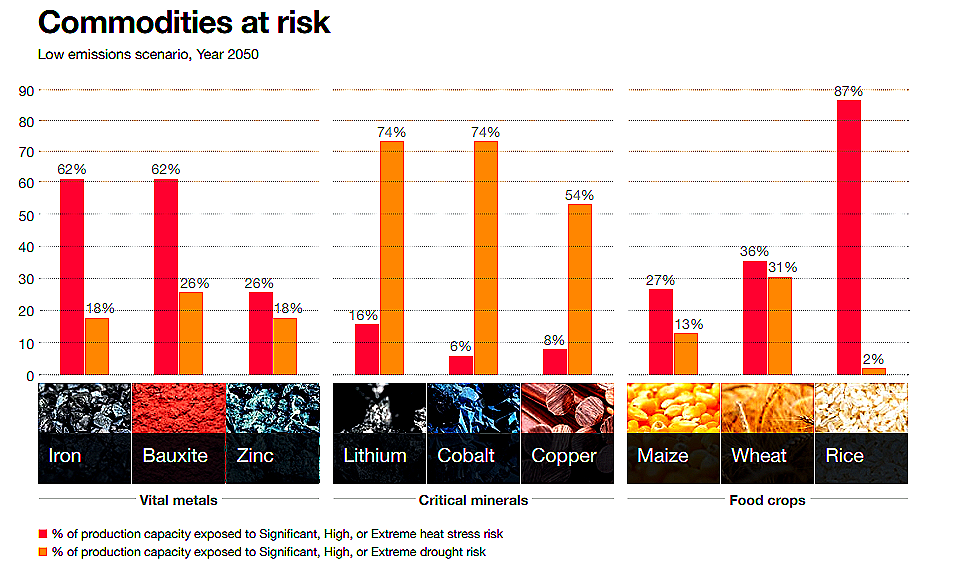
Comodities at risk from drought and heat stress in a low emissions scenario
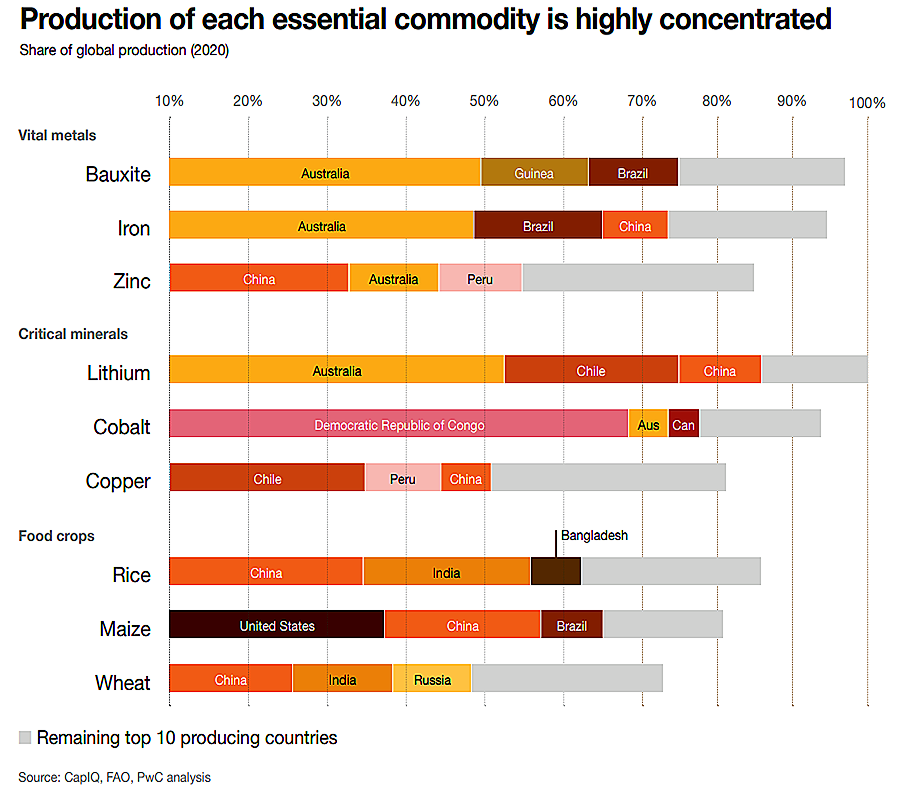
Production of each commodity is highly concentrated
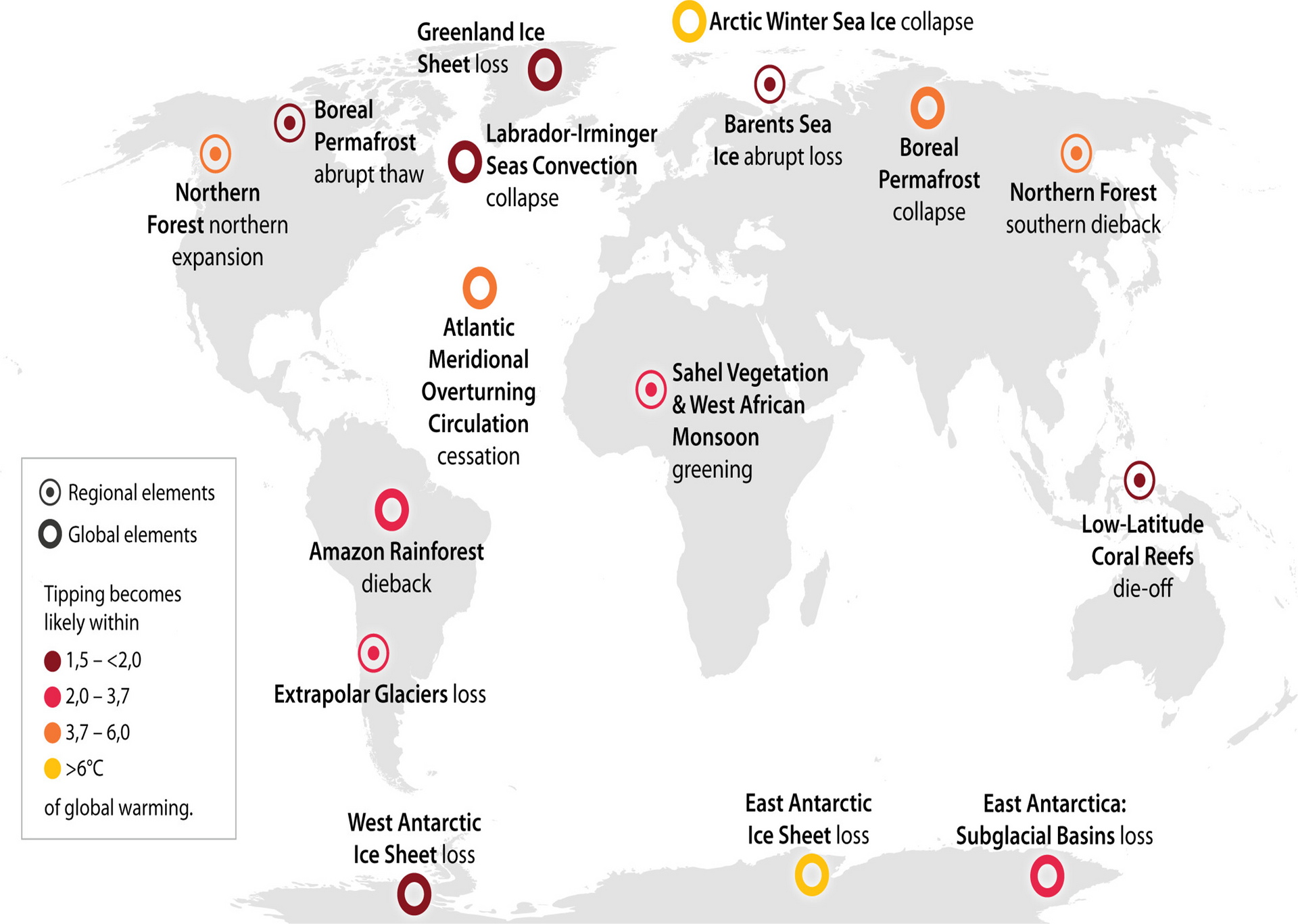
Projection of the likelihood of various tipping points occurring once certain global warming thresholds are reached.
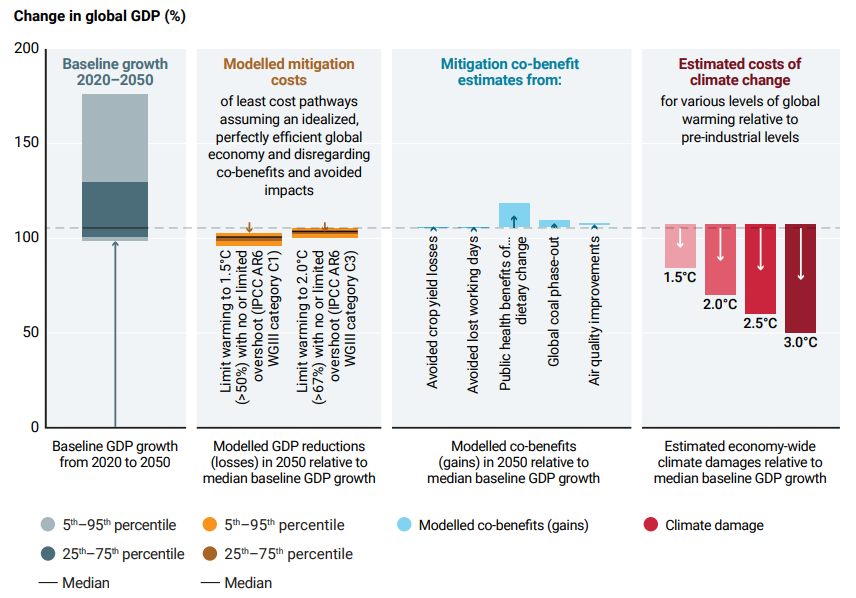
Projected impact of global warming on World GDP, disregarding impacts of extreme weather events and reaching tipping points
ADVANCING SUSTAINABLE BIOENERGY DEVELOPMENT
New, advanced technologies make it possible to produce climate neutral fuels from non-forest and non-food energy crops. The benefits of cultivation and use of these energy crops for transport fuels and electricity goes beyond the benefits of reducing greenhouse gas emissions. Terrestrial energy crop cultivation and aquatic energy crop harvesting reverses land and water degradation, increases biodiversity and carbon sequestration and improves land fertility. We call this
Deep Green Biomass. Moreover, deploying these energy crops for the production of advanced biofuels will positively impact social-economic structures and energy independence and reduce the need for involuntary migration and deforestation: Deep Green Energy.
Deep Green Energy Partners works to accelerate deployment of deep green biomass for the production of advanced biofuels and biochemicals, to restore soil and water conditions and to optimize the overall ecological-economic effects of investments in the energy transition.
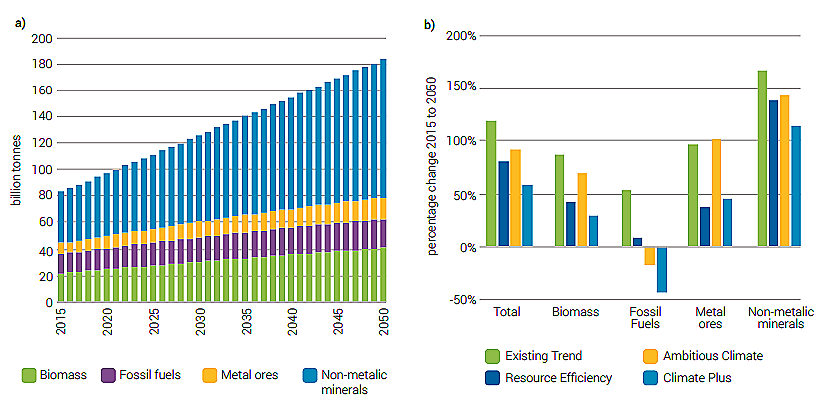
The carbon part of the footprint (the difference between carbon uptake by the world's ecosystems and anthropogenic emissions) accounts for almost two-thirds of the ecological footprint, of which fossil fuel use accounts for ~ 65% and land-use and fisheries (for the extraction and production of our food and material needs) for about ~35%. In a Business as Usual scenario, fossil fuel production (energy, plastics, fertilizers, etc.) keeps rising until around 2040, and by 2050 return to about current levels. The total annual material extraction is expected follow the existing trend growing from a little over 100 billion tonnes today to 170-184 billion tonnes by 2050. Demand for biomass (food, timber, fuel, chemicals) is expected to rise ~ 50% and that for ores by 60% and non-metallic minerals (e.g. and, rock or limestone) by 50-100%. Waste streams are projected to grow by
~ 70% and anthropogenic emissions will rise by 25% to over 70 GtCO2eq.
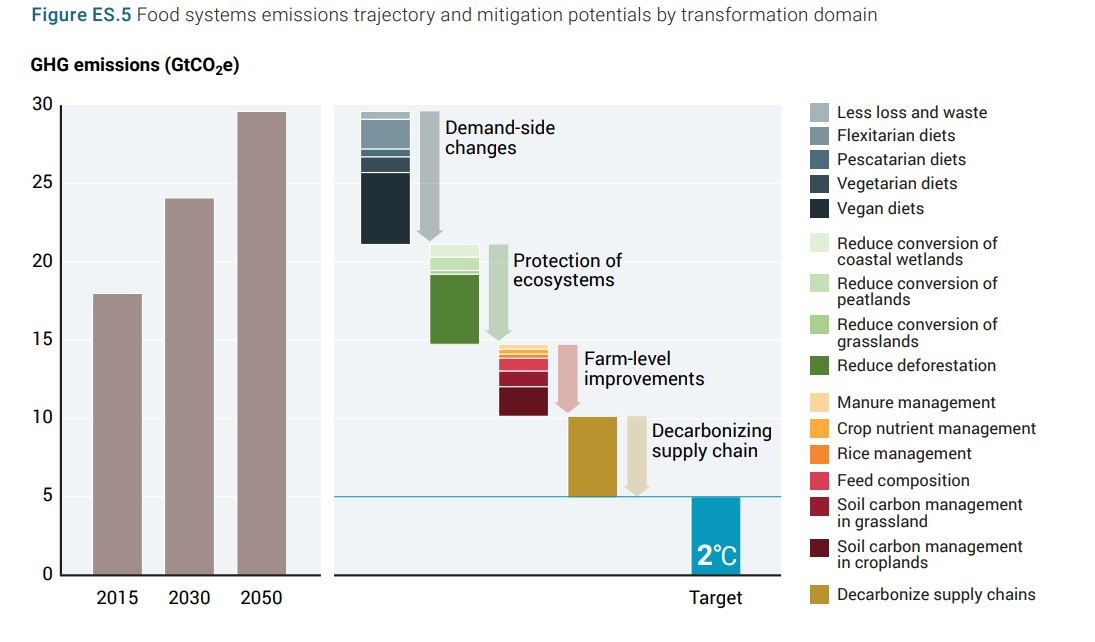
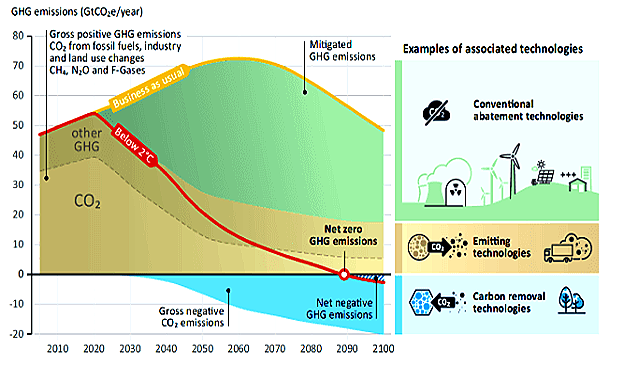
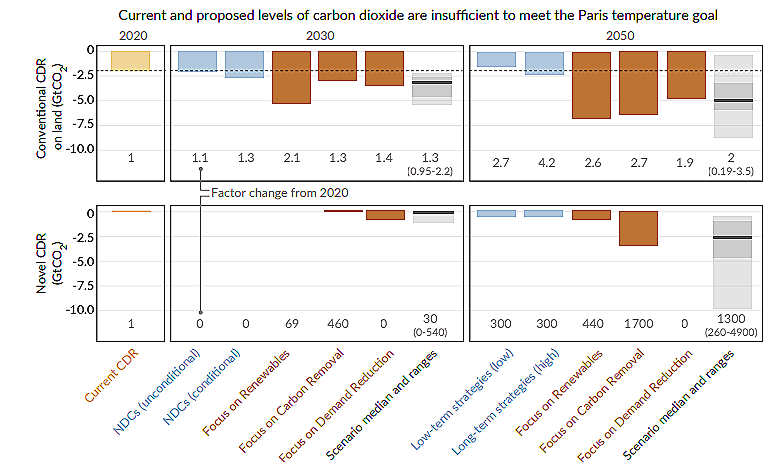
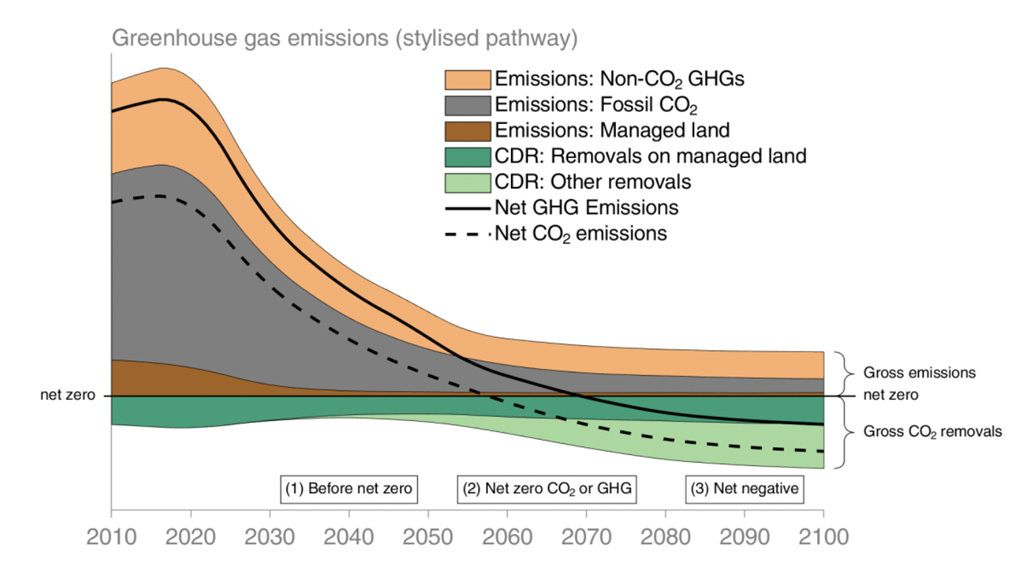
The actual gap between business as usual and a net-zero to be closed by carbon dioxide (CO2eq) removal (CDR) depends on how other technologies develop.
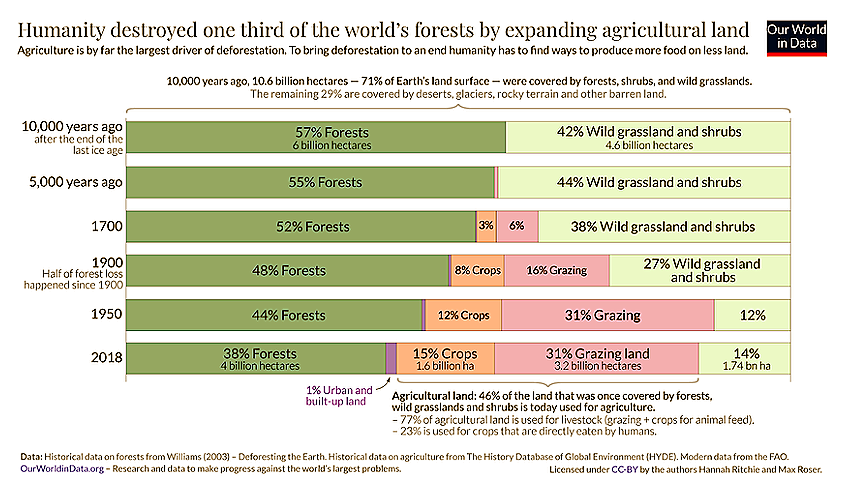
Global land vegetation can sequester an extra of 13.74 GtC per year.
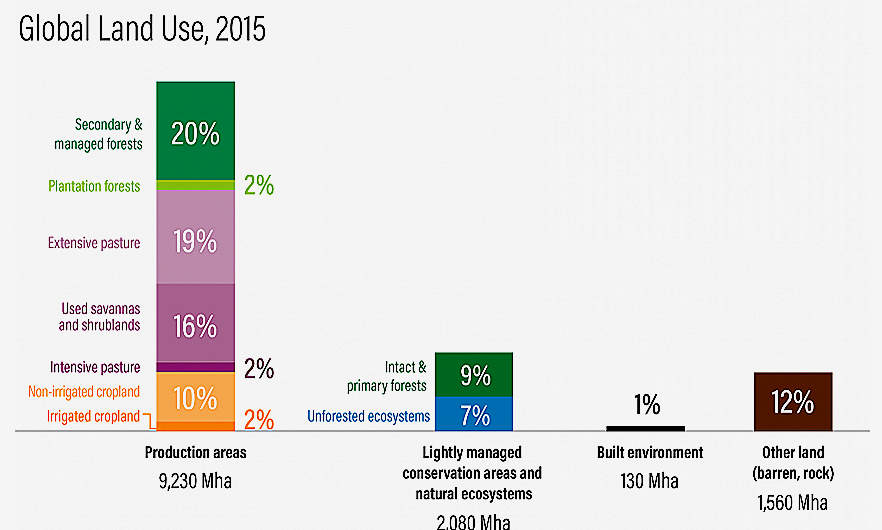
Global land-use 2015.
ADVANCING SUSTAINABLE BIOENERGY DEVELOPMENT
New, advanced technologies make it possible to produce climate neutral fuels from non-forest and non-food energy crops. The benefits of cultivation and use of these energy crops for transport fuels and electricity goes beyond the benefits of reducing greenhouse gas emissions. Terrestrial energy crop cultivation and aquatic energy crop harvesting reverses land and water degradation, increases biodiversity and carbon sequestration and improves land fertility. We call this
Deep Green Biomass. Moreover, deploying these energy crops for the production of advanced biofuels will positively impact social-economic structures and energy independence and reduce the need for involuntary migration and deforestation: Deep Green Energy.
Deep Green Energy Partners works to accelerate deployment of deep green biomass for the production of advanced biofuels and biochemicals, to restore soil and water conditions and to optimize the overall ecological-economic effects of investments in the energy transition.
Intensifying land-use for agriculture, forestry and mining will cause additional pollution and climate change will accelerate losses to nature stocks (biodiversity, vegetation, clean water and soils) and carbon sequestration capacity as well as world GDP. Natural forests and grasslands will decline by ~ 400 million hectares (Mha) by increased land-use for agriculture, ~ 120 Mha from forest harvest, and forest fires will consume ~ 100-250 Mha of forests. Waste recycling and new technologies for sustainable food, energy and material production will develop slowly and their contribution to increasing supply security, reducing scarcity or mitigating climate change will be negligible.
GW will reach 2C well before 2050, triggering various tipping points along the way exacerbating losses to nature. This scenario will inevitably result in a cascade of irreversible global ecologic, economic and social system collapses before 2050.
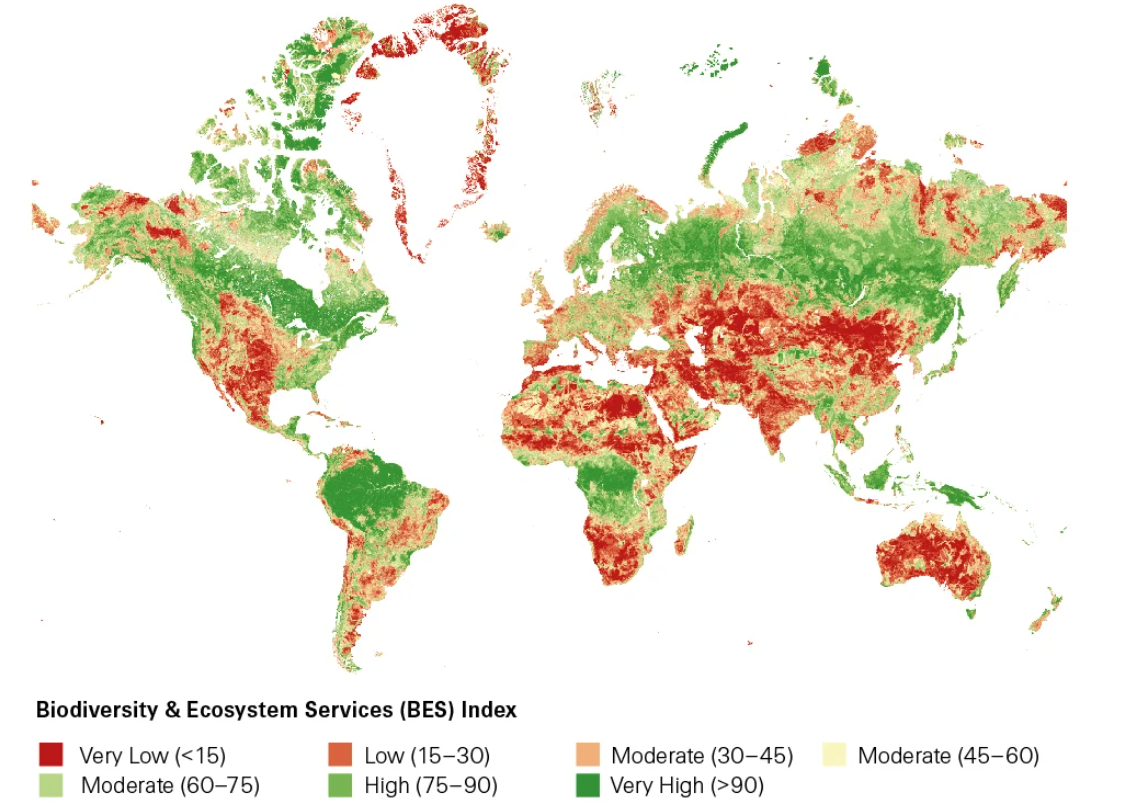
The state of biodiversity and ecosystem services in relation to the health and stability of the communities and economies they support
Projected impact of global warming on World GDP, disregarding impacts of extreme weather events and reaching tipping points
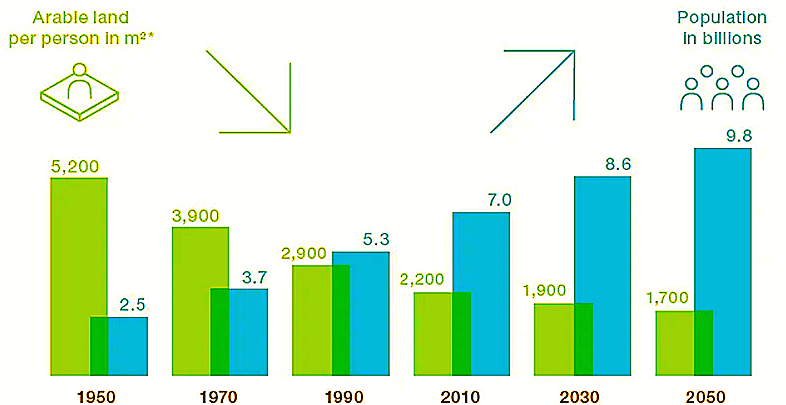
Arable land per capita 1950-2050
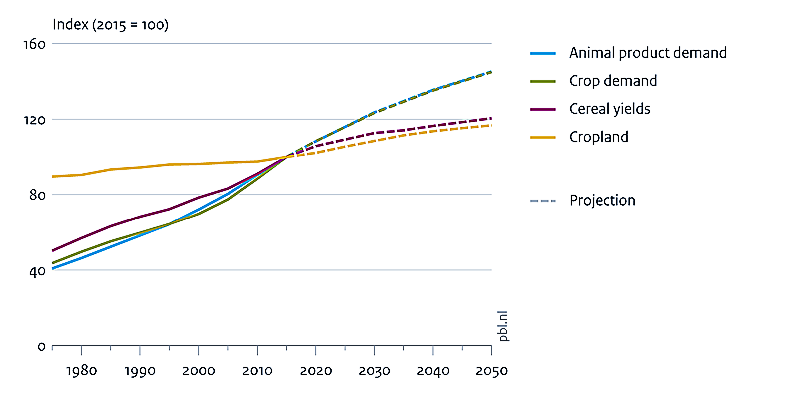
Projected food demand 2050
One third,
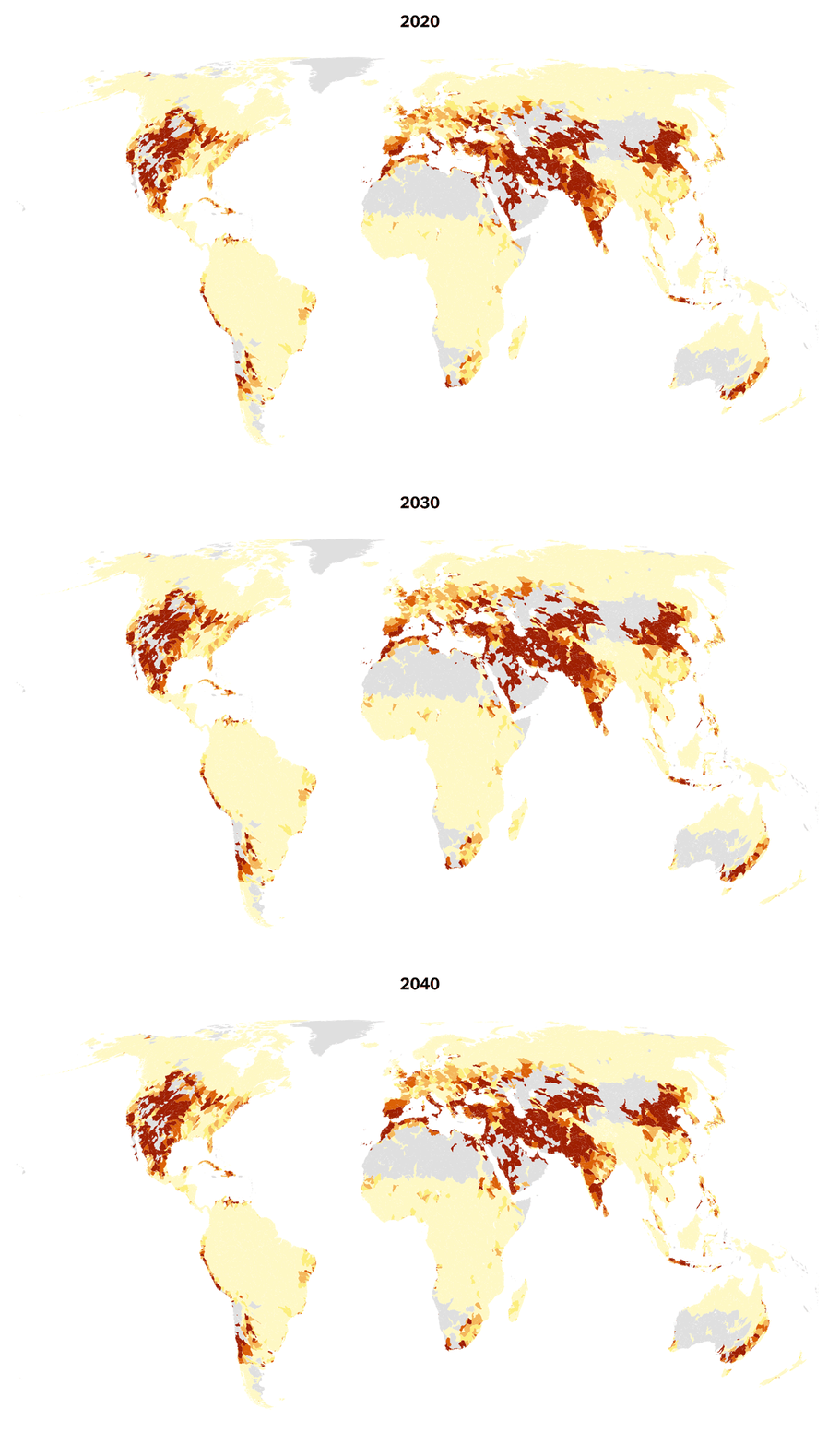
1.600 Mha of all agricultural land, about the size of South America is losing its productivity and more than 70% of farmers have already seen harvest losses from climate change, reducing their incomes by 16%. To compensate for yield losses agriculture land will expand by at least 300 Mha but likely much more, more forest will disappear, more fertilizers and pesticides will be deployed and the biodiversity on which food production depends will further decline until it collapses in many parts of the world. On top of that climate change will gradually push more agricultural land out of production.
Climate change will gradually limit part of the world's food production
ADVANCING SUSTAINABLE BIOENERGY DEVELOPMENT
New, advanced technologies make it possible to produce climate neutral fuels from non-forest and non-food energy crops. The benefits of cultivation and use of these energy crops for transport fuels and electricity goes beyond the benefits of reducing greenhouse gas emissions. Terrestrial energy crop cultivation and aquatic energy crop harvesting reverses land and water degradation, increases biodiversity and carbon sequestration and improves land fertility. We call this
Deep Green Biomass. Moreover, deploying these energy crops for the production of advanced biofuels will positively impact social-economic structures and energy independence and reduce the need for involuntary migration and deforestation: Deep Green Energy.
Deep Green Energy Partners works to accelerate deployment of deep green biomass for the production of advanced biofuels and biochemicals, to restore soil and water conditions and to optimize the overall ecological-economic effects of investments in the energy transition.
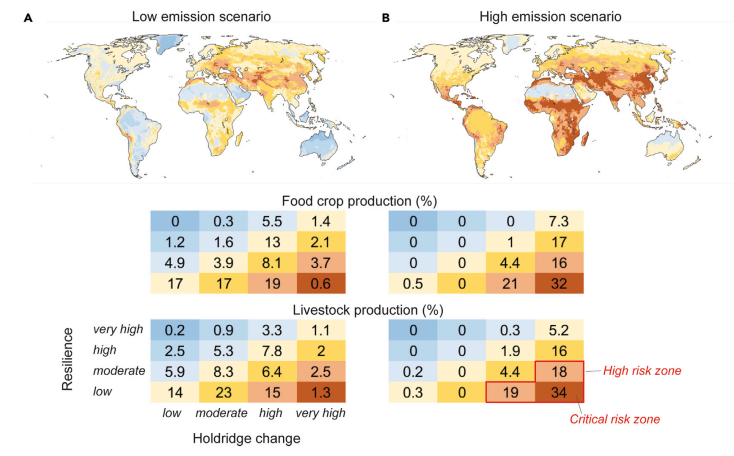
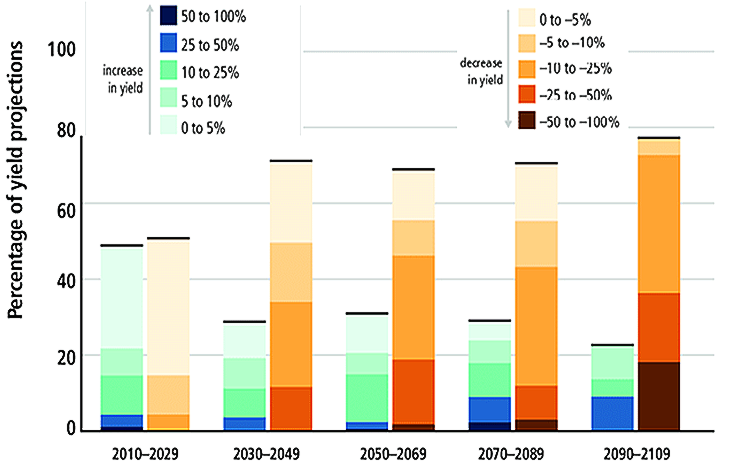
Crop yield increases are outpaced by yield declines as GW increases
ADVANCING SUSTAINABLE BIOENERGY DEVELOPMENT
New, advanced technologies make it possible to produce climate neutral fuels from non-forest and non-food energy crops. The benefits of cultivation and use of these energy crops for transport fuels and electricity goes beyond the benefits of reducing greenhouse gas emissions. Terrestrial energy crop cultivation and aquatic energy crop harvesting reverses land and water degradation, increases biodiversity and carbon sequestration and improves land fertility. We call this
Deep Green Biomass. Moreover, deploying these energy crops for the production of advanced biofuels will positively impact social-economic structures and energy independence and reduce the need for involuntary migration and deforestation: Deep Green Energy.
Deep Green Energy Partners works to accelerate deployment of deep green biomass for the production of advanced biofuels and biochemicals, to restore soil and water conditions and to optimize the overall ecological-economic effects of investments in the energy transition.
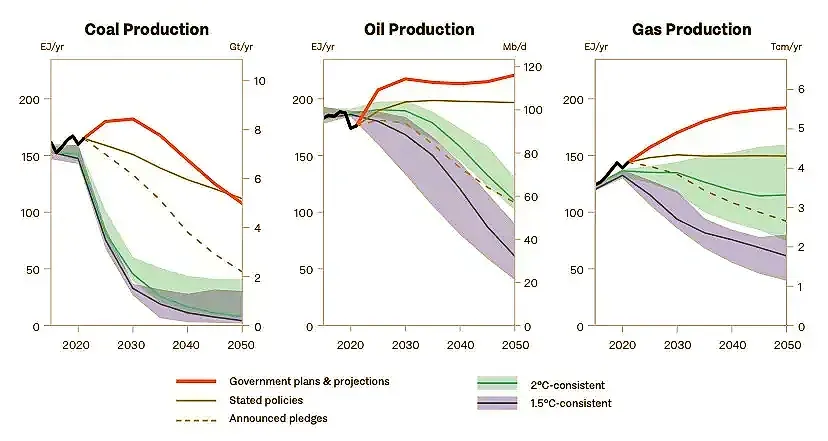
Projected coal, oil and gas production, 2020-2050
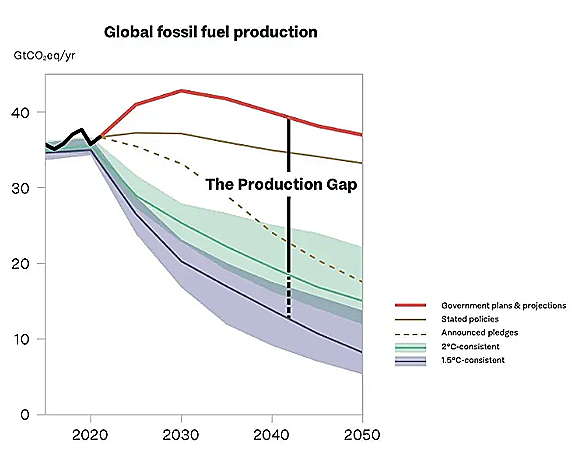
Projected emissions from fossil fuel use, 2020-2050
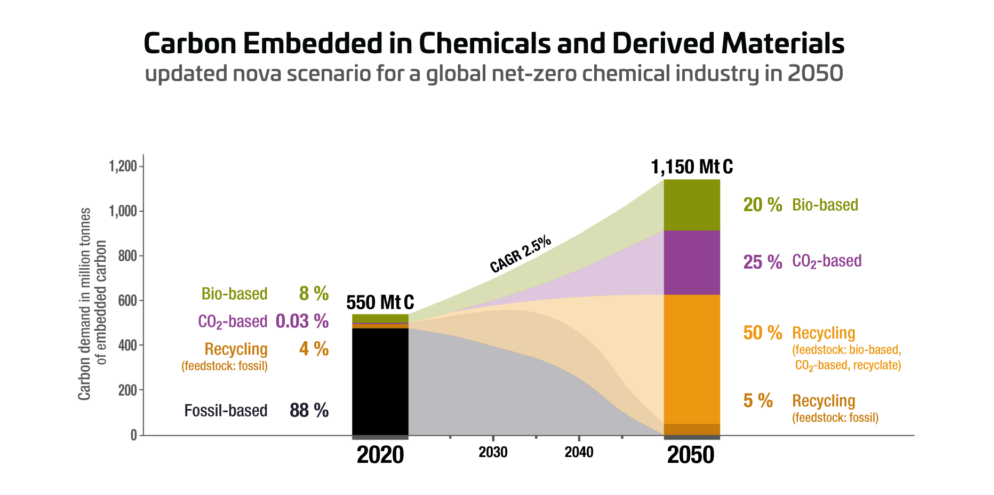
Carbion demand embedded in chemicals and derived maerials
The trade-off between material and emissions intensity of low-carbon energy
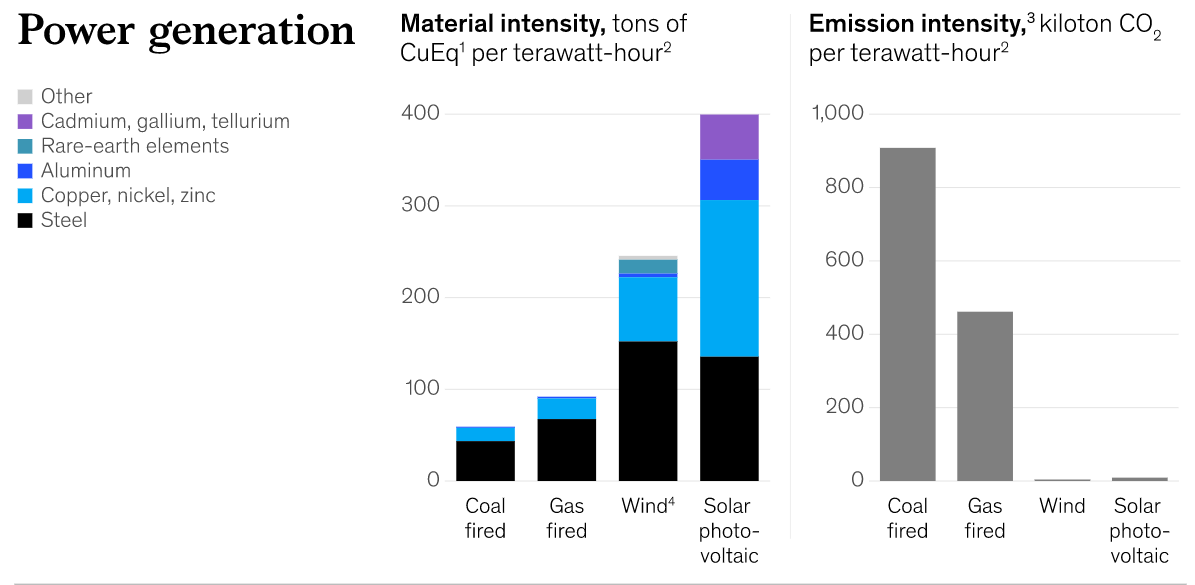
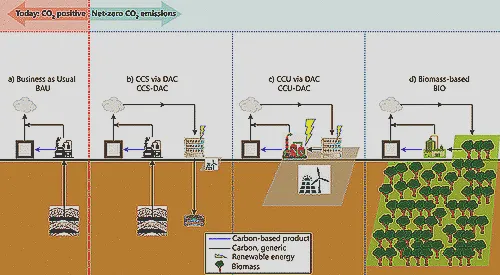
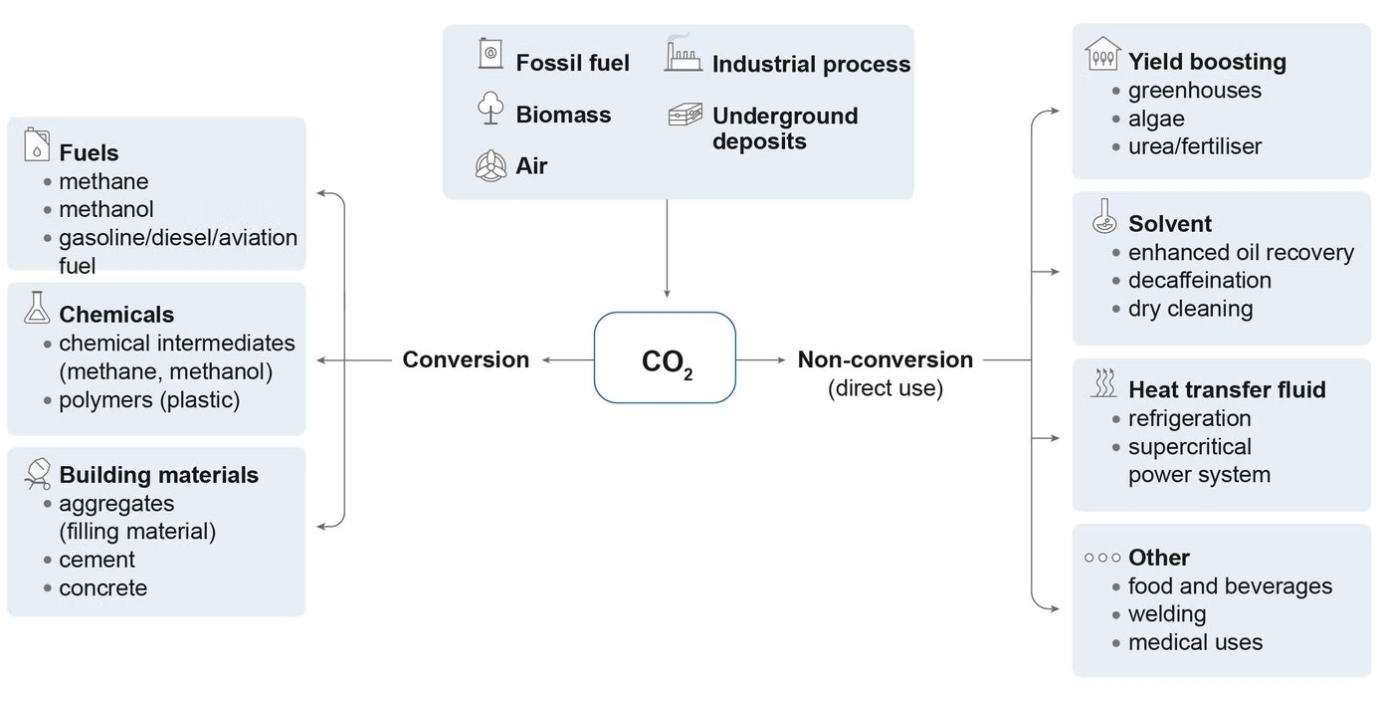
Technical carbon capture, either at smokestacks or directly from the air, will take at least several decades before it can play a meaningful role in the removal or recycling of carbon emissions for energy or chemicals. As carbon can not replaced in chemicals as it is the essential component, and will not be replaced in energy unless an alternative is available, the only option to close the fossil fuels production gap is by substituting fossil based carbon by bio based carbon. As the emissions gap has to be closed as well, the bio based carbon has to come from additionally planted biomass, which will require land and thus the land gap further increases.
Besides more food, energy an chemicals we will also need more timber, metals and minerals. By 2050 overall material use will have grown by ~80% and deforestation, mining and processing will contribute to further emissions and ESs loss. Evermore so, as many of the untapped stores of these materials located on land currently covered by the remaining forests and wild grass lands. Today the world recycles ~7.2% of what it uses. And even if we could realize a circular material economy, natural capital per capita and general climatic conditions will continue to decline as long as next year's material demands surpass those of last year's supplies.
So lets see how we can make the puzzle that closes the land, food yield, fossil fuel production, materials and emissions gaps, and increases supply security and how this starts by planting grasses.
ADVANCING SUSTAINABLE BIOENERGY DEVELOPMENT
New, advanced technologies make it possible to produce climate neutral fuels from non-forest and non-food energy crops. The benefits of cultivation and use of these energy crops for transport fuels and electricity goes beyond the benefits of reducing greenhouse gas emissions. Terrestrial energy crop cultivation and aquatic energy crop harvesting reverses land and water degradation, increases biodiversity and carbon sequestration and improves land fertility. We call this
Deep Green Biomass. Moreover, deploying these energy crops for the production of advanced biofuels will positively impact social-economic structures and energy independence and reduce the need for involuntary migration and deforestation: Deep Green Energy.
Deep Green Energy Partners works to accelerate deployment of deep green biomass for the production of advanced biofuels and biochemicals, to restore soil and water conditions and to optimize the overall ecological-economic effects of investments in the energy transition.
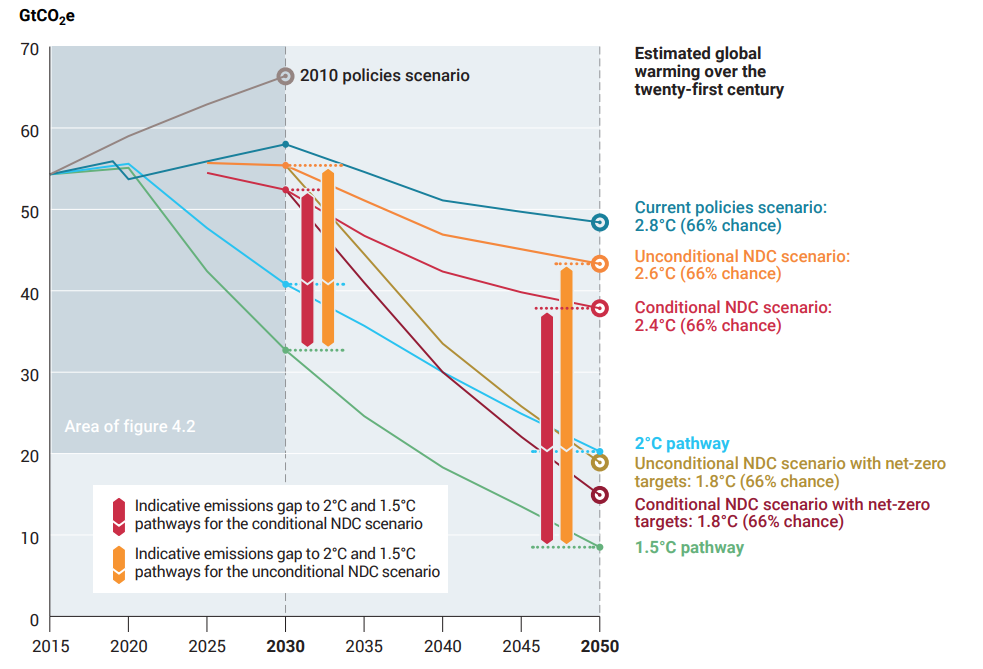
In the current future scenario in which global greenhouse gas (GHG) emissions are reduced by 10-15% in 2050, minimal 2.8°C global warming this century of which 2.5°C
might already be reached before 2050, by when net zero
will apply to global GDP instead of emissions.
ADVANCING SUSTAINABLE BIOENERGY DEVELOPMENT
New, advanced technologies make it possible to produce climate neutral fuels from non-forest and non-food energy crops. The benefits of cultivation and use of these energy crops for transport fuels and electricity goes beyond the benefits of reducing greenhouse gas emissions. Terrestrial energy crop cultivation and aquatic energy crop harvesting reverses land and water degradation, increases biodiversity and carbon sequestration and improves land fertility. We call this
Deep Green Biomass. Moreover, deploying these energy crops for the production of advanced biofuels will positively impact social-economic structures and energy independence and reduce the need for involuntary migration and deforestation: Deep Green Energy.
Deep Green Energy Partners works to accelerate deployment of deep green biomass for the production of advanced biofuels and biochemicals, to restore soil and water conditions and to optimize the overall ecological-economic effects of investments in the energy transition.
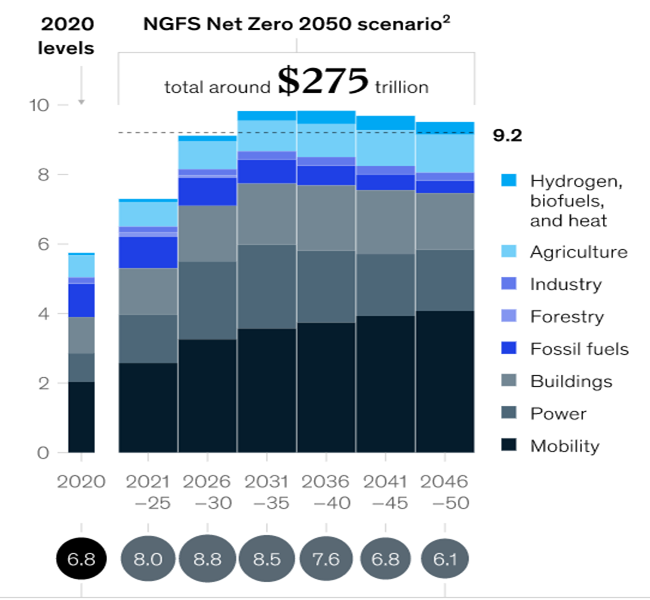
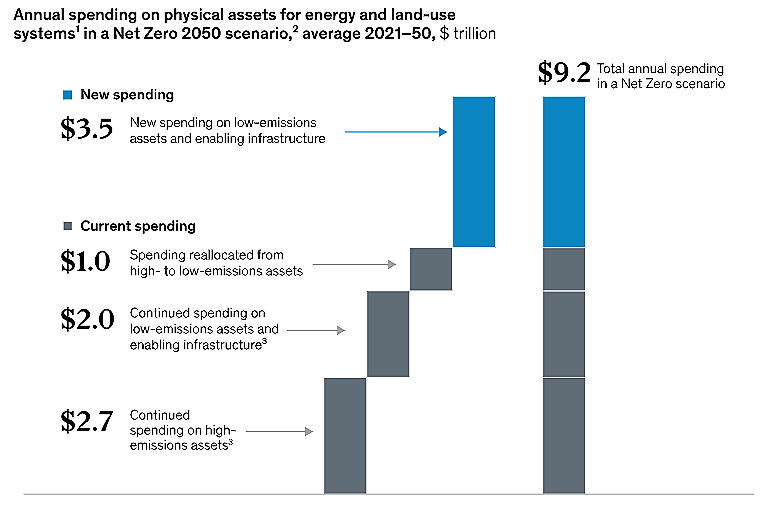
Based on the current policy's the annual emissions in 2030 show a gap of about 23 GtCO2eq with a 1.5°C scenario and for a 2°C scenario the gap would be 15 GtCO2eq. (GtCO2eq is the global warming potential of any greenhouse gas expressed in the global warming potential of 1 billion tonnes of CO2). By 2050 these annual gaps will have increased to 40 and 30 CtCO2eq respectively. As CO2 and other GHG emissions are rising instead of declining, emission overshoots are unavoidable and thus more CO2 would have to to be removed in the future.
ADVANCING SUSTAINABLE BIOENERGY DEVELOPMENT
New, advanced technologies make it possible to produce climate neutral fuels from non-forest and non-food energy crops. The benefits of cultivation and use of these energy crops for transport fuels and electricity goes beyond the benefits of reducing greenhouse gas emissions. Terrestrial energy crop cultivation and aquatic energy crop harvesting reverses land and water degradation, increases biodiversity and carbon sequestration and improves land fertility. We call this
Deep Green Biomass. Moreover, deploying these energy crops for the production of advanced biofuels will positively impact social-economic structures and energy independence and reduce the need for involuntary migration and deforestation: Deep Green Energy.
Deep Green Energy Partners works to accelerate deployment of deep green biomass for the production of advanced biofuels and biochemicals, to restore soil and water conditions and to optimize the overall ecological-economic effects of investments in the energy transition.
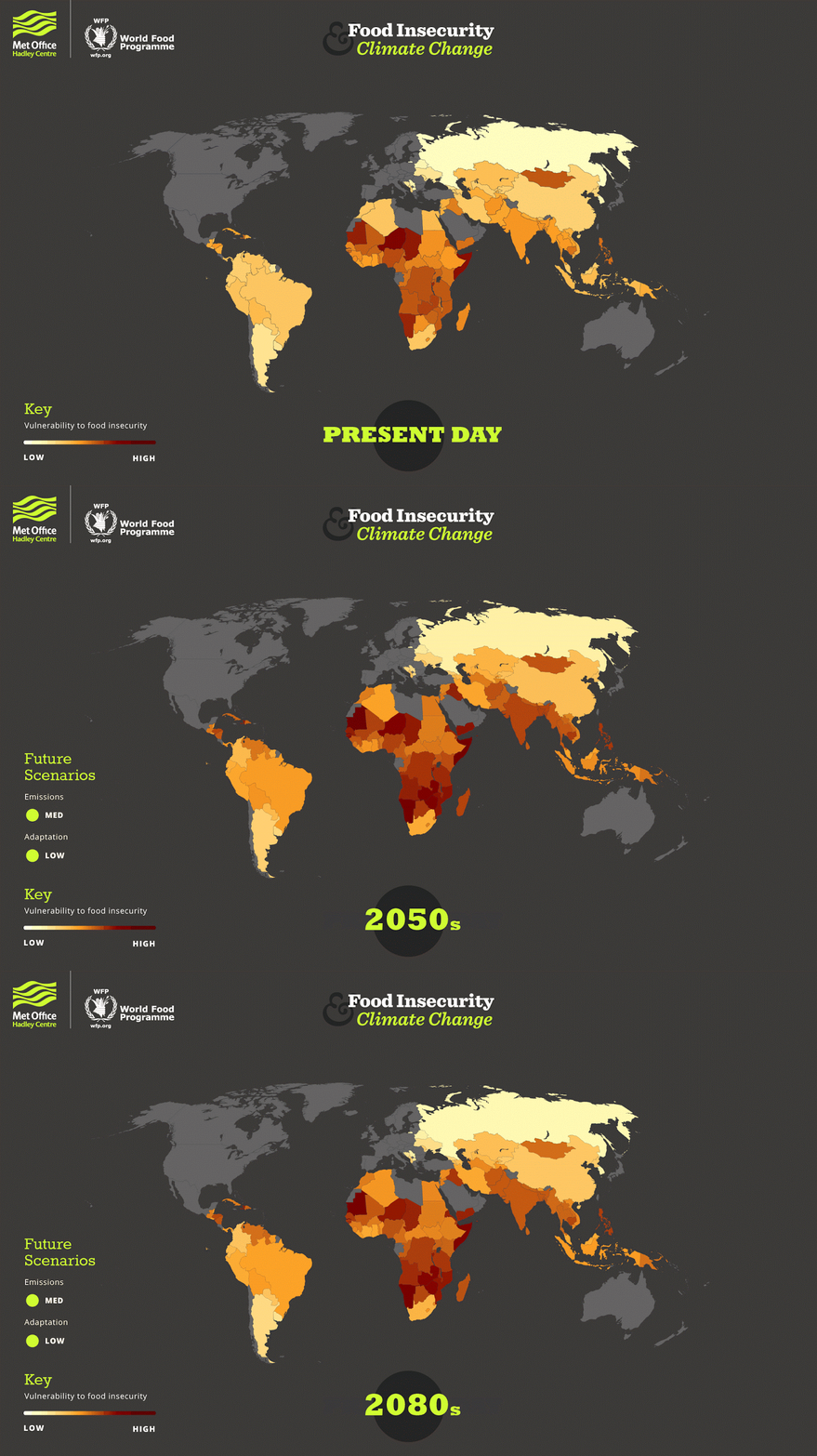
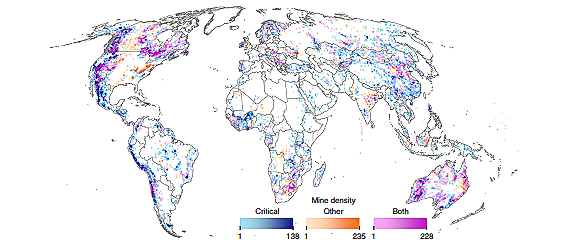
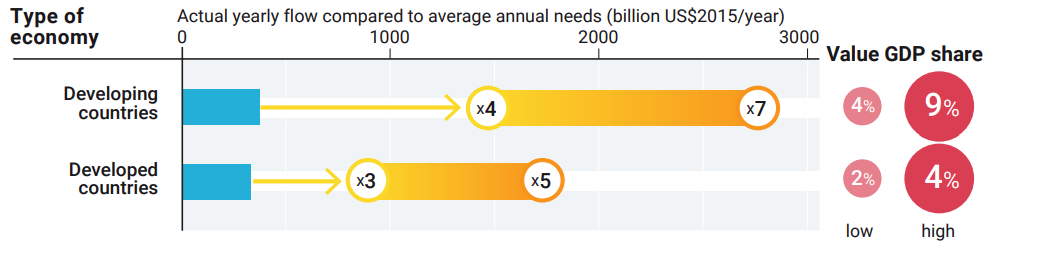
To offset ongoing and additional emissions large scale carbon sequestration and ecosystem preservation and restoration projects are necessary to maintain the minimum level of ecosystem services for our survival. Most of the remaining critical ecosystems are however located in developing countries in Sub-Sahara Africa, Central and South America and
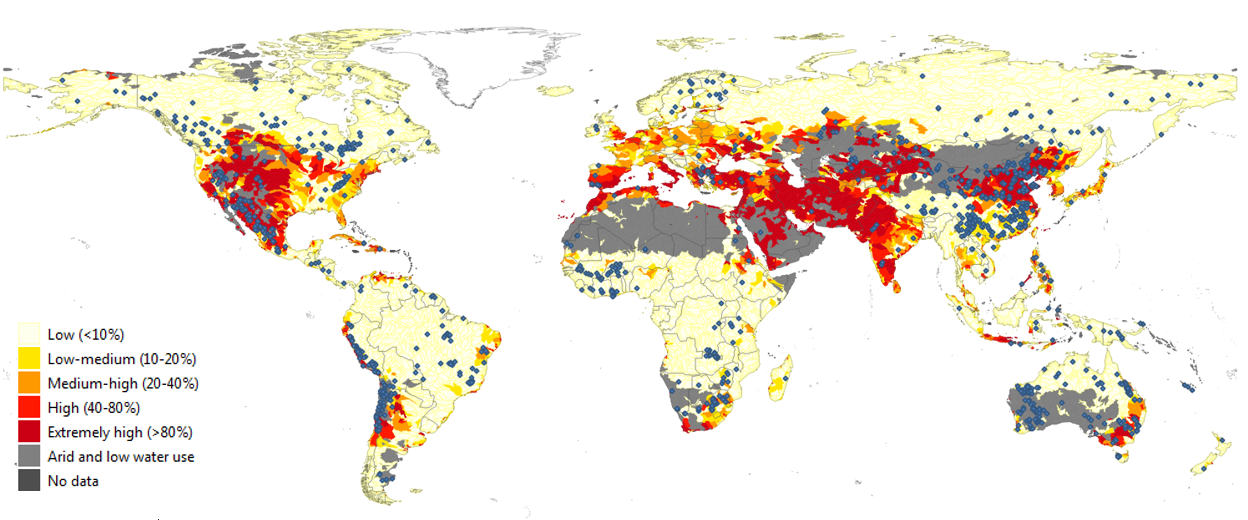
Asia, countries that have no or limited funds to invest in ecosystem preservation, let alone for restoration and additional carbon sequestration. The same African and Asian regions are also the regions where climate change will hit economies and food production the hardest and where most of the population growth is expected. As satisfying water, food, energy and financial needs prevails in these regions as much as in the rest of the world, more (tropical) forests and savannas will disappear instead of being preserved. The result: more forest and savanna loss, no emissions offset and intensifying water and food shortages that will hit about half of the world population in the next few decades.
ADVANCING SUSTAINABLE BIOENERGY DEVELOPMENT
New, advanced technologies make it possible to produce climate neutral fuels from non-forest and non-food energy crops. The benefits of cultivation and use of these energy crops for transport fuels and electricity goes beyond the benefits of reducing greenhouse gas emissions. Terrestrial energy crop cultivation and aquatic energy crop harvesting reverses land and water degradation, increases biodiversity and carbon sequestration and improves land fertility. We call this
Deep Green Biomass. Moreover, deploying these energy crops for the production of advanced biofuels will positively impact social-economic structures and energy independence and reduce the need for involuntary migration and deforestation: Deep Green Energy.
Deep Green Energy Partners works to accelerate deployment of deep green biomass for the production of advanced biofuels and biochemicals, to restore soil and water conditions and to optimize the overall ecological-economic effects of investments in the energy transition.
ADVANCING SUSTAINABLE BIOENERGY DEVELOPMENT
New, advanced technologies make it possible to produce climate neutral fuels from non-forest and non-food energy crops. The benefits of cultivation and use of these energy crops for transport fuels and electricity goes beyond the benefits of reducing greenhouse gas emissions. Terrestrial energy crop cultivation and aquatic energy crop harvesting reverses land and water degradation, increases biodiversity and carbon sequestration and improves land fertility. We call this
Deep Green Biomass. Moreover, deploying these energy crops for the production of advanced biofuels will positively impact social-economic structures and energy independence and reduce the need for involuntary migration and deforestation: Deep Green Energy.
Deep Green Energy Partners works to accelerate deployment of deep green biomass for the production of advanced biofuels and biochemicals, to restore soil and water conditions and to optimize the overall ecological-economic effects of investments in the energy transition.
Impacts of climate change are non-linear and changes in one part of the world's ecosystems triggered changing events in various others, thus a cycle of mutual enforcing impacts across all ecosystems has been set into motion. This is why events that were predicted to happen in several decades are already happening today. For the Earth's critical ecosystems that are already at the brink of irreversible breakdown, or tipping points, this means that their collaps is likely (38–81%) closer to today than predicted in earlier linear models.
ADVANCING SUSTAINABLE BIOENERGY DEVELOPMENT
New, advanced technologies make it possible to produce climate neutral fuels from non-forest and non-food energy crops. The benefits of cultivation and use of these energy crops for transport fuels and electricity goes beyond the benefits of reducing greenhouse gas emissions. Terrestrial energy crop cultivation and aquatic energy crop harvesting reverses land and water degradation, increases biodiversity and carbon sequestration and improves land fertility. We call this
Deep Green Biomass. Moreover, deploying these energy crops for the production of advanced biofuels will positively impact social-economic structures and energy independence and reduce the need for involuntary migration and deforestation: Deep Green Energy.
Deep Green Energy Partners works to accelerate deployment of deep green biomass for the production of advanced biofuels and biochemicals, to restore soil and water conditions and to optimize the overall ecological-economic effects of investments in the energy transition.
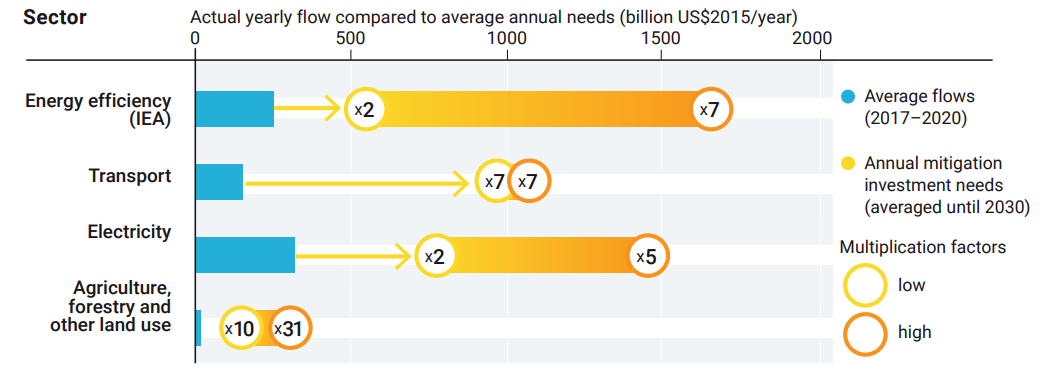
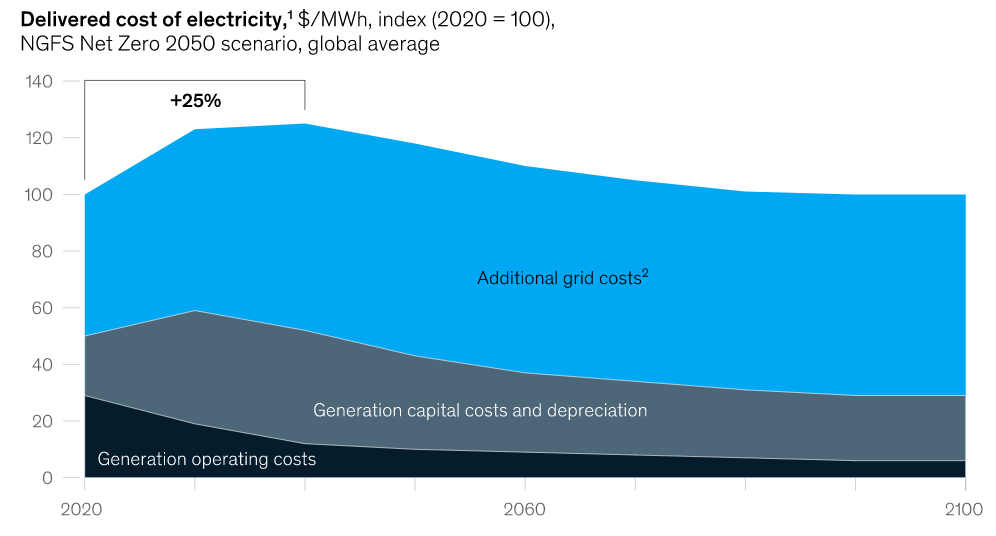
Current climate policies lead to annual "over-emissions" of 2-2,5 gigatonnes CO2eq year on year vis-a-vis what would be needed to limit global warming to 1.5-2°C in linear damage scenarios. The included carbon sequestration and ecosystem preservation/restoration commitments are vague, insufficient at best and deemed to fail due to lack of funds and a viable economic business case. But as solar, wind and hydro energy are neither green, cheap or helpful to avoid tipping points
ADVANCING SUSTAINABLE BIOENERGY DEVELOPMENT
New, advanced technologies make it possible to produce climate neutral fuels from non-forest and non-food energy crops. The benefits of cultivation and use of these energy crops for transport fuels and electricity goes beyond the benefits of reducing greenhouse gas emissions. Terrestrial energy crop cultivation and aquatic energy crop harvesting reverses land and water degradation, increases biodiversity and carbon sequestration and improves land fertility. We call this
Deep Green Biomass. Moreover, deploying these energy crops for the production of advanced biofuels will positively impact social-economic structures and energy independence and reduce the need for involuntary migration and deforestation: Deep Green Energy.
Deep Green Energy Partners works to accelerate deployment of deep green biomass for the production of advanced biofuels and biochemicals, to restore soil and water conditions and to optimize the overall ecological-economic effects of investments in the energy transition.
ADVANCING SUSTAINABLE BIOENERGY DEVELOPMENT
New, advanced technologies make it possible to produce climate neutral fuels from non-forest and non-food energy crops. The benefits of cultivation and use of these energy crops for transport fuels and electricity goes beyond the benefits of reducing greenhouse gas emissions. Terrestrial energy crop cultivation and aquatic energy crop harvesting reverses land and water degradation, increases biodiversity and carbon sequestration and improves land fertility. We call this
Deep Green Biomass. Moreover, deploying these energy crops for the production of advanced biofuels will positively impact social-economic structures and energy independence and reduce the need for involuntary migration and deforestation: Deep Green Energy.
Deep Green Energy Partners works to accelerate deployment of deep green biomass for the production of advanced biofuels and biochemicals, to restore soil and water conditions and to optimize the overall ecological-economic effects of investments in the energy transition.
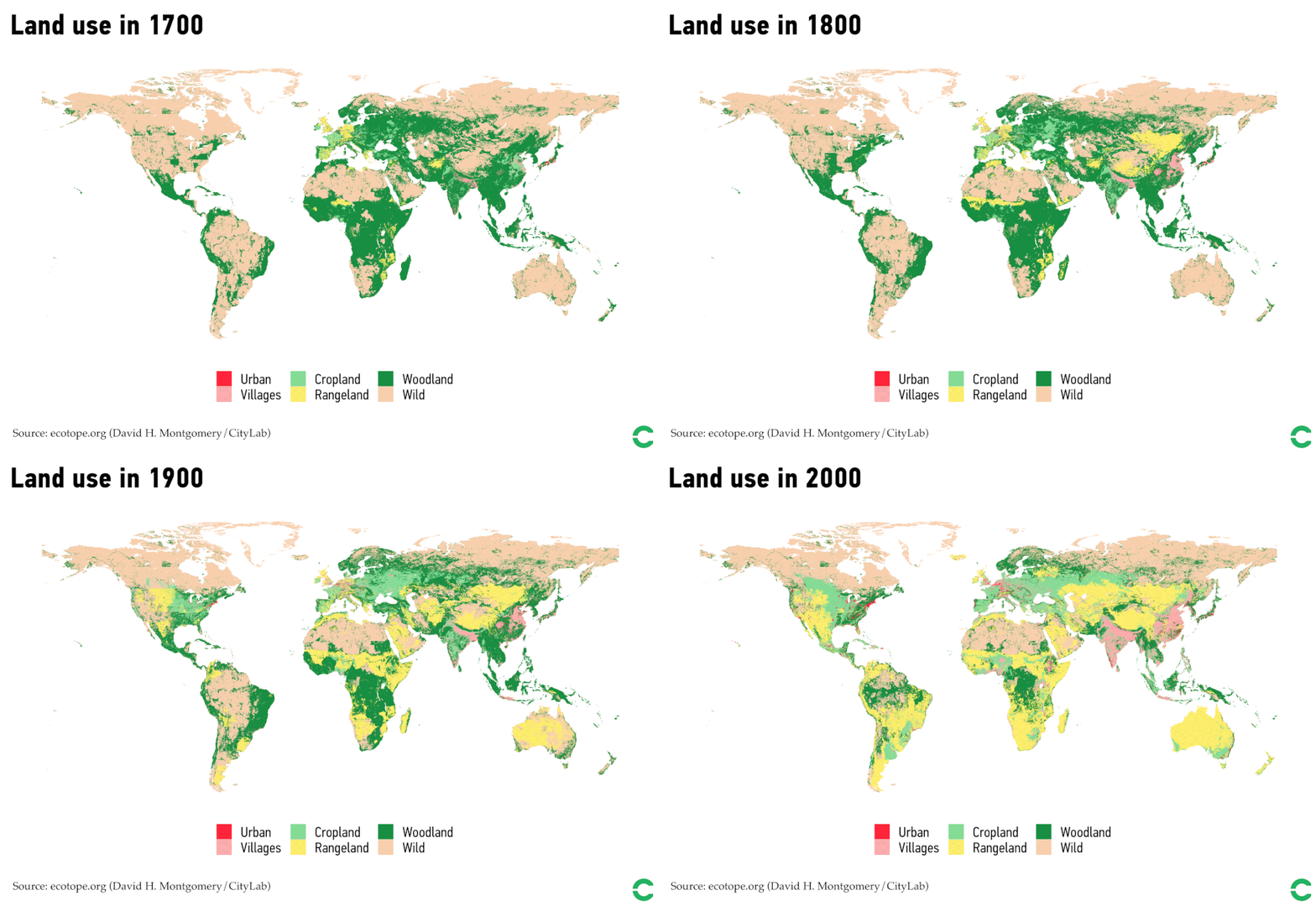
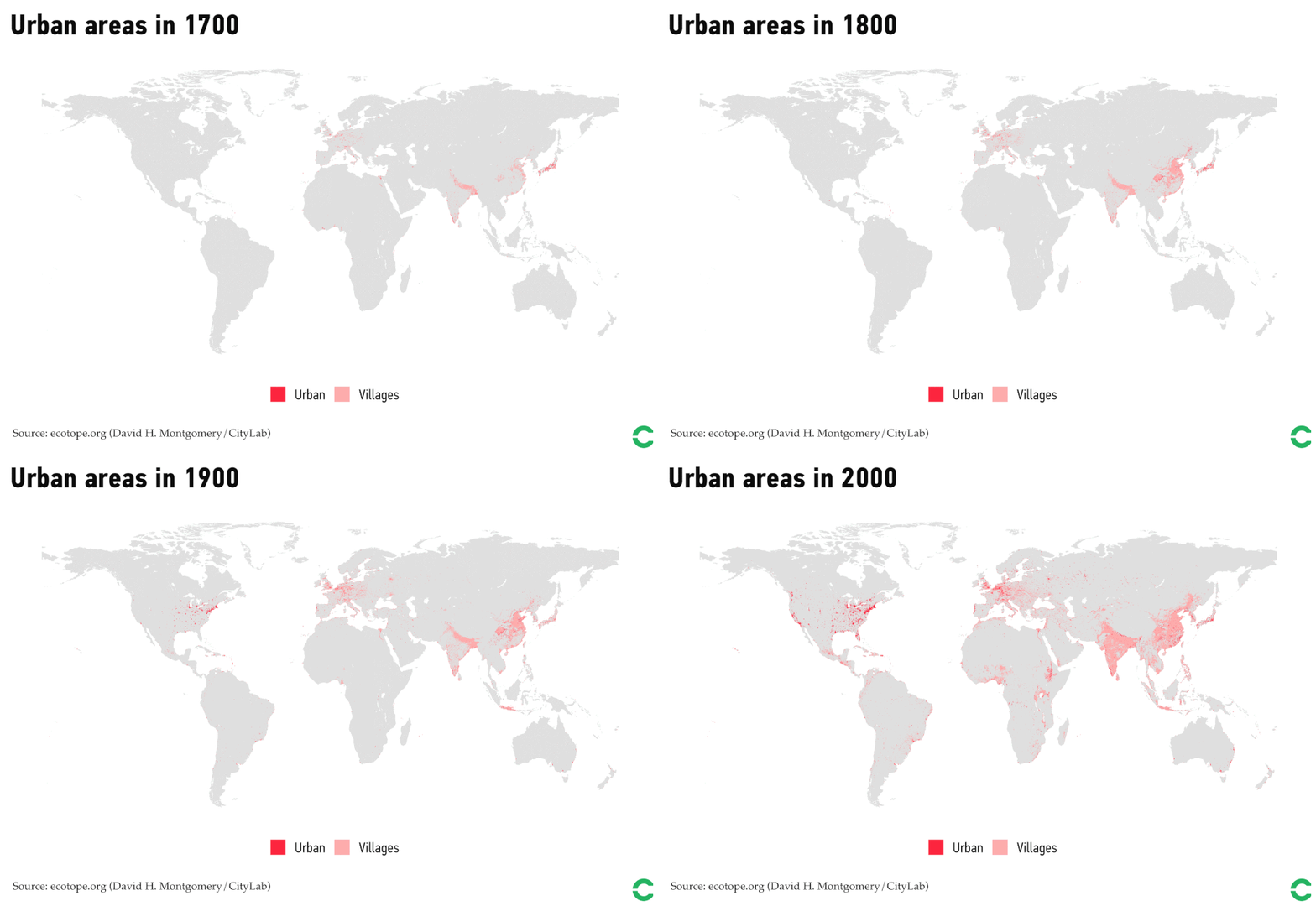
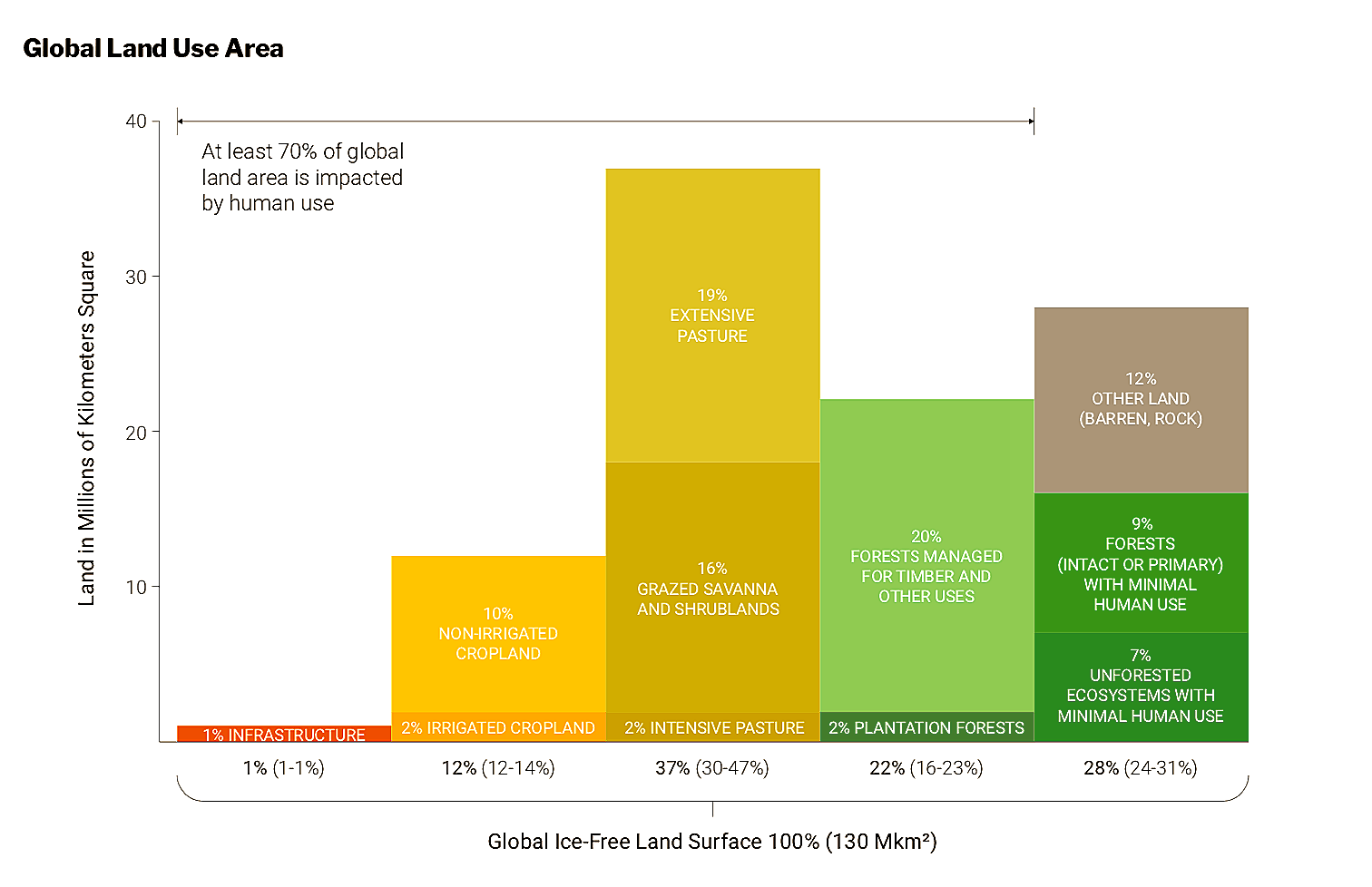
Today the world's food system uses about 45% of all arable land and over 70% of all freshwater withdrawals. The change in land-use caused around 140 Gt (1 gigaton=1 billion tonnes) of organic soil carbon and 500 Gt of biomass carbon from forests and other natural vegetation to be transferred to the atmosphere. The built environment, cities, suburbs, villages and infrastructure now covers 1% of the global land area houses 55% of the world population and as urbanization increased so did demand for food, water, energy, materials and services.
In 1850 the industrial revolution came up to steam, fossil fuel use lifted and since then around 2400 Gt CO2 emissions of around 2400 billion tonnes. This feat however came at the cost of the world's natural resources, and as we failed to recycle the resources we used we have entered the era of arrived ended up in with waste surpluses and too much carbon in the atmosphere and too little carbon in the biosphere. ch provides us with the essential ecosystem services on which our lives depend. which are finite and faster used than they are replenished. Simple math tells us therefore that we have to find a different path if we want halt the cascade of crises we are facing.
Land-use, industry and increased atmospheric CO2
levels also impact the world's water mass. Pollution, the introduction of alien flora and fauna, contamination and increased aquatic CO2
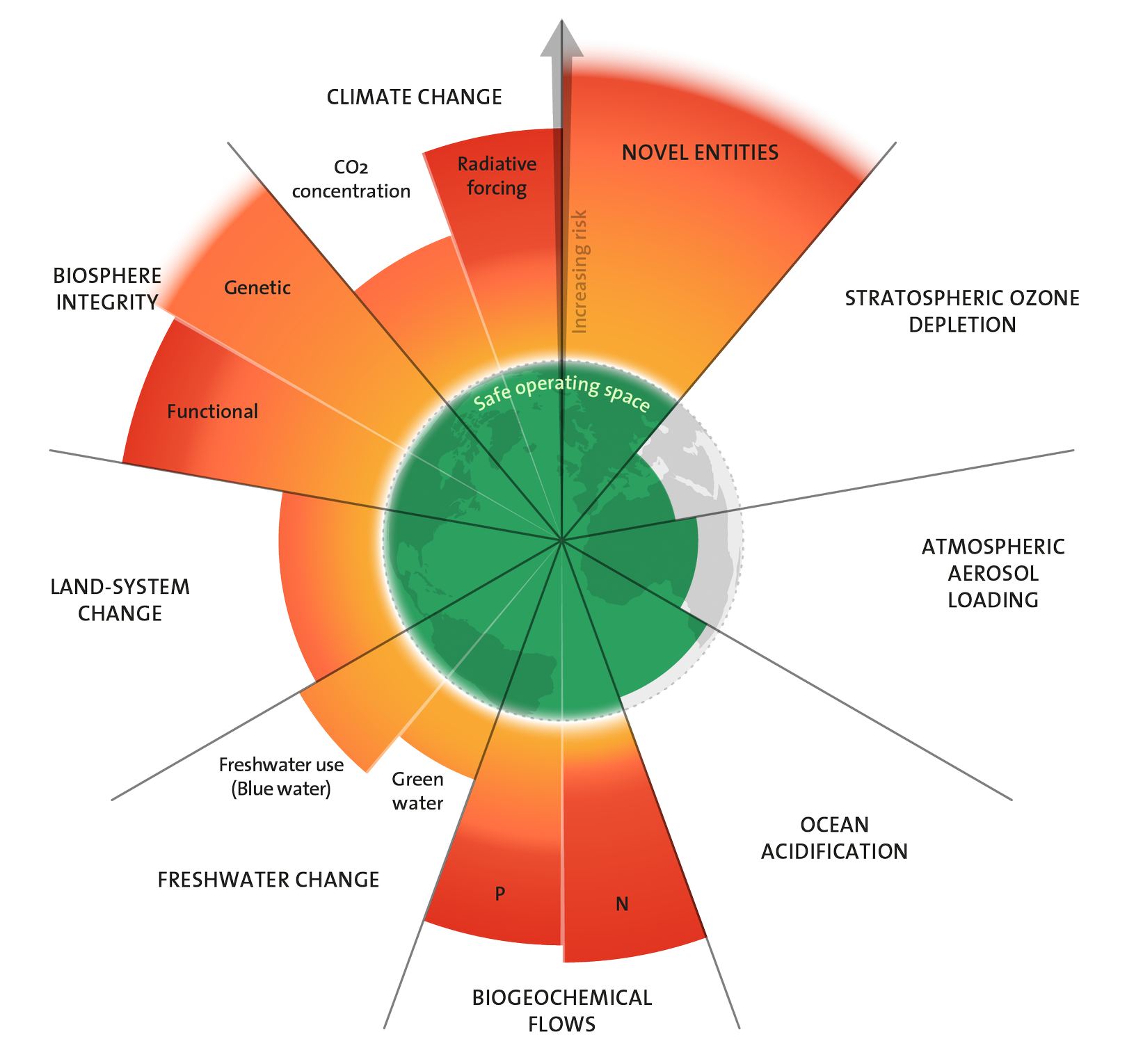
uptake are changing the physical, chemical and biological properties of water with detrimental consequences for all living organisms in rivers, lakes, seas and oceans. Plastics, chemicals and the proces of water acidification, "climate change's evil twin", are gradually destructing ocean and freshwater ecosystems.
The gap between global water supply and demand is projected to reach 40% by 2030 if current practices continue.
ADVANCING SUSTAINABLE BIOENERGY DEVELOPMENT
New, advanced technologies make it possible to produce climate neutral fuels from non-forest and non-food energy crops. The benefits of cultivation and use of these energy crops for transport fuels and electricity goes beyond the benefits of reducing greenhouse gas emissions. Terrestrial energy crop cultivation and aquatic energy crop harvesting reverses land and water degradation, increases biodiversity and carbon sequestration and improves land fertility. We call this
Deep Green Biomass. Moreover, deploying these energy crops for the production of advanced biofuels will positively impact social-economic structures and energy independence and reduce the need for involuntary migration and deforestation: Deep Green Energy.
Deep Green Energy Partners works to accelerate deployment of deep green biomass for the production of advanced biofuels and biochemicals, to restore soil and water conditions and to optimize the overall ecological-economic effects of investments in the energy transition.
Today's demands of our food system are already incompatible with the land and water required to maintain the minimal levels of ecosystem services. It's demands will increase with population growth and yield losses from climate change and soil depletion. Business as usual global use of fertilizer and pesticides is expected to grow 50% by 2050, by when more (tropical) forests and savannas about the size of India will have been converted into cropland and pastures, and overall emissions from agriculture will have doubled. A third of all land used for agricultural, comparable to the land size of South America, is showing a persistent decline in productivity and will be abandoned faster than projected in linear GW scenarios. Much of these abandoned lands are passed the point where they can restore naturally and will degrade further unless their soil health gets restored.
ADVANCING SUSTAINABLE BIOENERGY DEVELOPMENT
New, advanced technologies make it possible to produce climate neutral fuels from non-forest and non-food energy crops. The benefits of cultivation and use of these energy crops for transport fuels and electricity goes beyond the benefits of reducing greenhouse gas emissions. Terrestrial energy crop cultivation and aquatic energy crop harvesting reverses land and water degradation, increases biodiversity and carbon sequestration and improves land fertility. We call this
Deep Green Biomass. Moreover, deploying these energy crops for the production of advanced biofuels will positively impact social-economic structures and energy independence and reduce the need for involuntary migration and deforestation: Deep Green Energy.
Deep Green Energy Partners works to accelerate deployment of deep green biomass for the production of advanced biofuels and biochemicals, to restore soil and water conditions and to optimize the overall ecological-economic effects of investments in the energy transition.
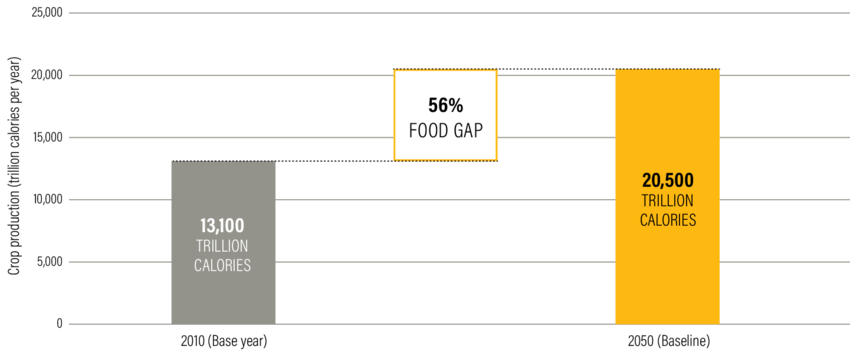
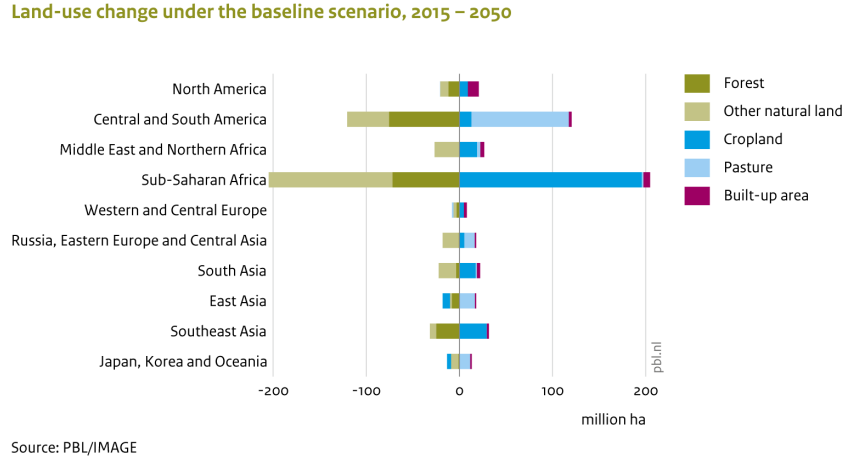
In the Baseline scenario continued worldwide croplands expand by 280 million ha and pastureland by 150 million ha (430 million ha total) up to 2050, which comes almost completely at the expense of forests and wild grasslands in Sub-Saharan Africa, the America's and Asia. Increase in food production is at minimum demand levels and around 66 Gt above and belowground carbon is lost. In the restoration and/or protection scenarios around 5 billion ha (35% of the global land area) are restored and most of the loss in natural land (natural forests and grasslands) is avoided. Crop yields will increase by 5% to 10% by 2050 in most developing countries, compared to the Baseline scenario (further yield increases in developed nations are not feasible) by 2050. Which is close to what is projected to be needed to feed a 9.3 billion people world population.
In the most ambitious scenario the global agricultural area in 2050 increases only by 30 million ha (almost 400 million ha less than in the baseline scenario) and some 83 Gt more carbon is stored in above and belowground biomass compared to the Baseline scenario by 2050, i.e. a net gain of 17 Gt in carbon sequestration between 2015 and 2050 (about 2 GtCO2eq per year). As the land surface barely increases, agriculture is forced to intensify to increase yields per ha by some 9% above levels under the Baseline scenario, in 2050. This is significantly beyond what is achievable through the restoration of soils. Hence fertilizer and water use will rise, further exceeding planetary boundaries, and land and food prices will follow suit.
In 2020 around 115 countries had committed a total of close to 1 billion hectares to land restoration, about 20% of the 5 billion hectares in the PBL restoration scenarios. At the COP 27, in 2022 policies and pledges were upgraded and around 1.2 billion hectares are now earmarked for carbon sequestration, that largely or fully overlap with the restoration commitments. In a business as usual scenario our current food system will therefore likely still cause around 400 million ha of natural land conversion and 50% more emissions by 2050 (below left).
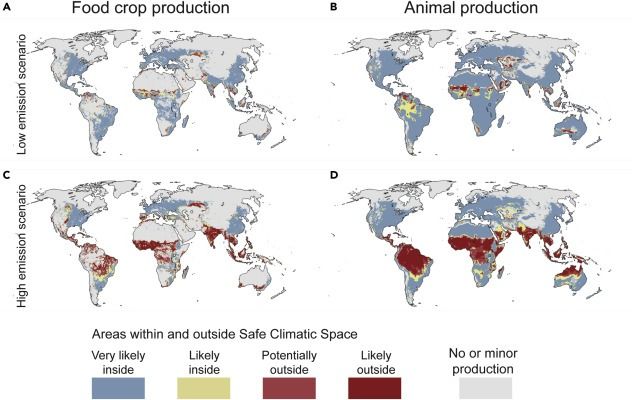
The more so as climatic conditions will steadily reduce crop yields per hectare and animal production the most where the population will grow the most (below right). If temperatures and extreme weather events increase more than assumed, 31% of the global food crop and 34% of livestock production could gradually become impossible by 2081–2100 due to ambient climatic conditions (below right). Without decoupling of a substantial part of the world's food production from land, water, emissions, eutrophication and climatic conditions, further deforestation growing global food and water insecurity and subsequent migration seems inevitable.