Nieuwe alinea
DEEP GREEN ENERGY PARTNERS
ADVANCING SUSTAINABLE BIOENERGY DEVELOPMENT
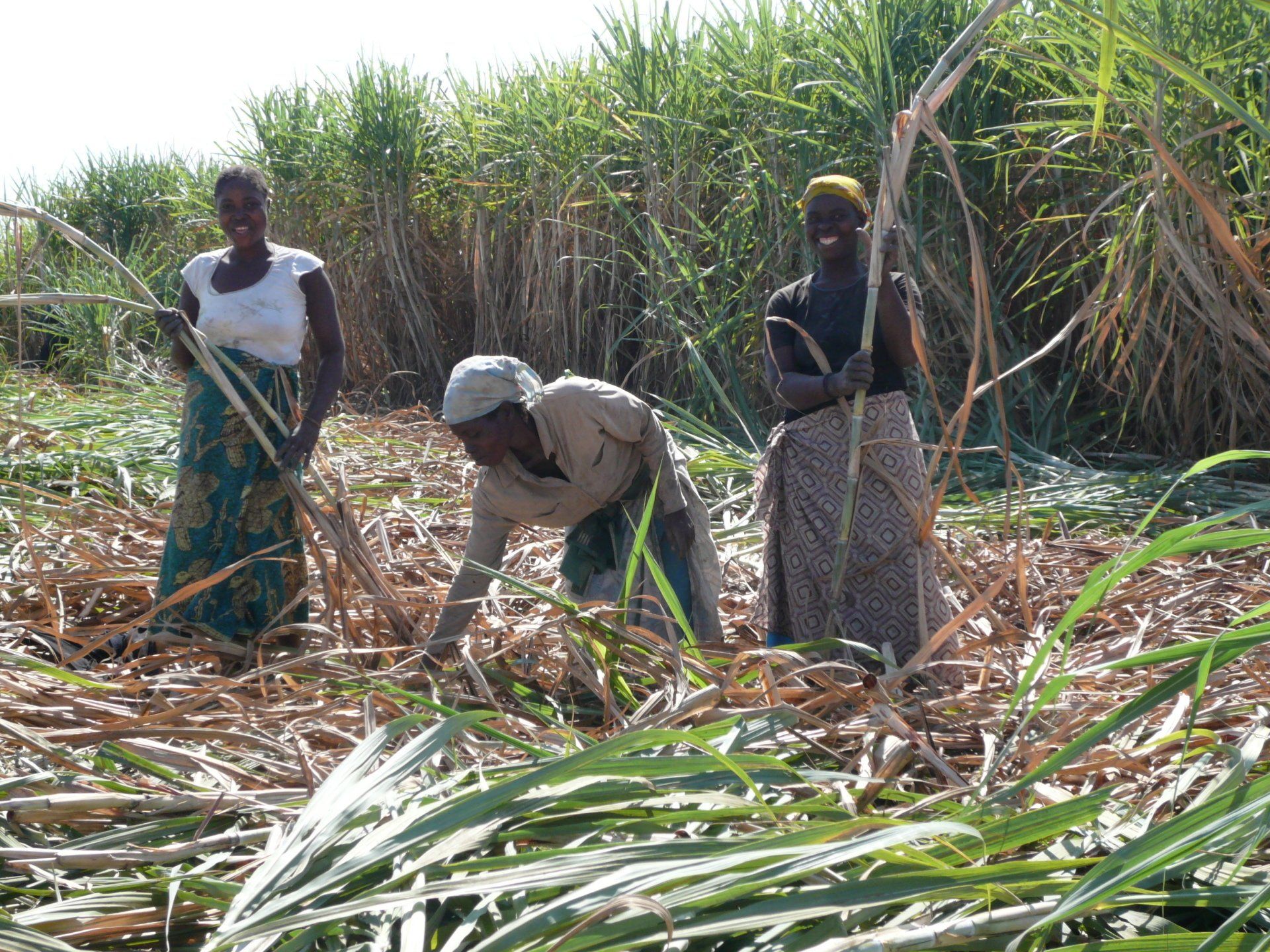
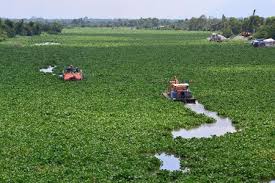
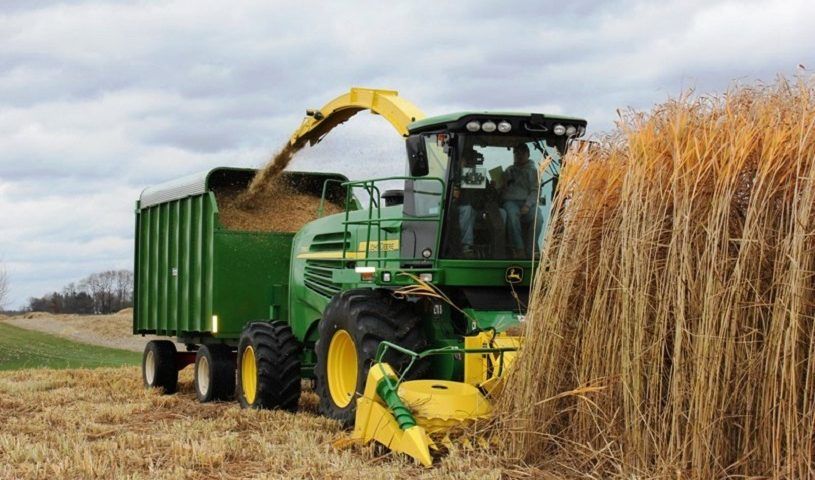
New, advanced technologies make it possible to produce climate neutral fuels from non-forest and non-food energy crops. The benefits of cultivation and use of these energy crops for transport fuels and electricity goes beyond the benefits of reducing greenhouse gas emissions. Terrestrial energy crop cultivation and aquatic energy crop harvesting reverses land and water degradation, increases biodiversity and carbon sequestration and improves land fertility. We call this
Deep Green Biomass. Moreover, deploying these energy crops for the production of advanced biofuels will positively impact social-economic structures and energy independence and reduce the need for involuntary migration and deforestation: Deep Green Energy.
Deep Green Energy Partners works to accelerate deployment of deep green biomass for the production of advanced biofuels and biochemicals, to restore soil and water conditions and to optimize the overall ecological-economic effects of investments in the energy transition.
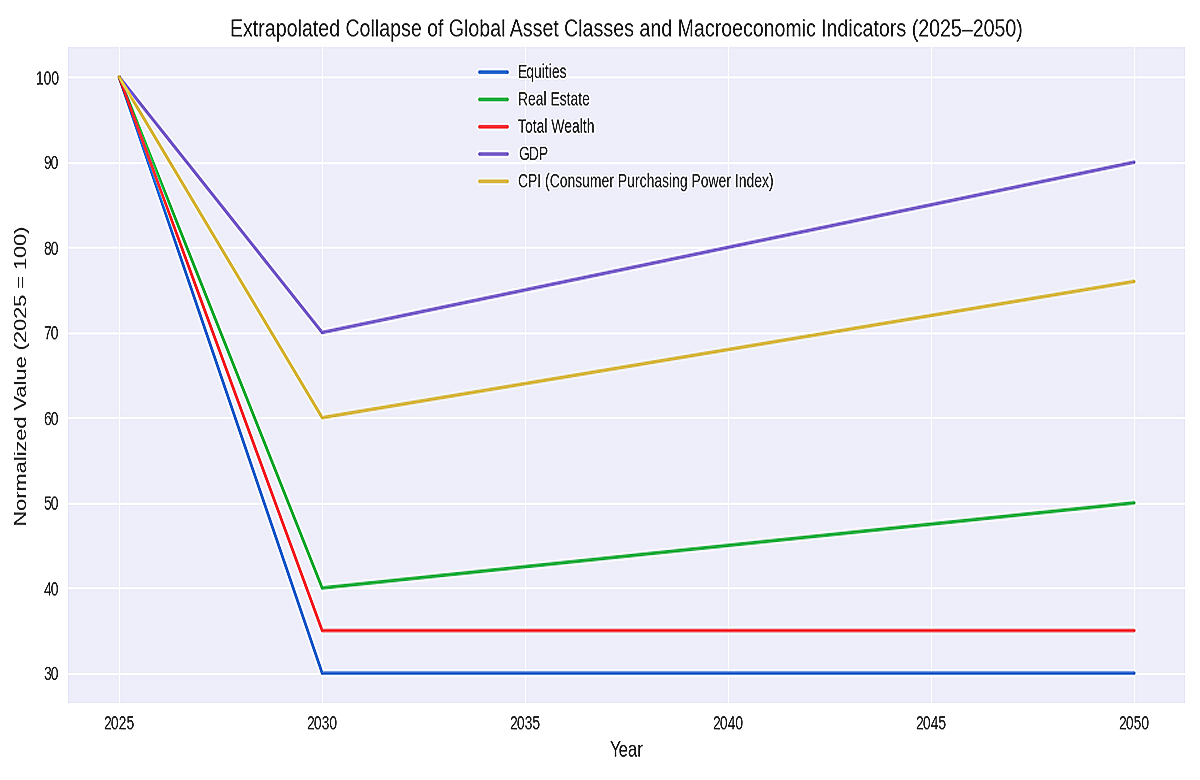
As ecosystems decline so does Real GDP. Business as usual ecosystems will partially collapse and real GDP will follow before 2030.
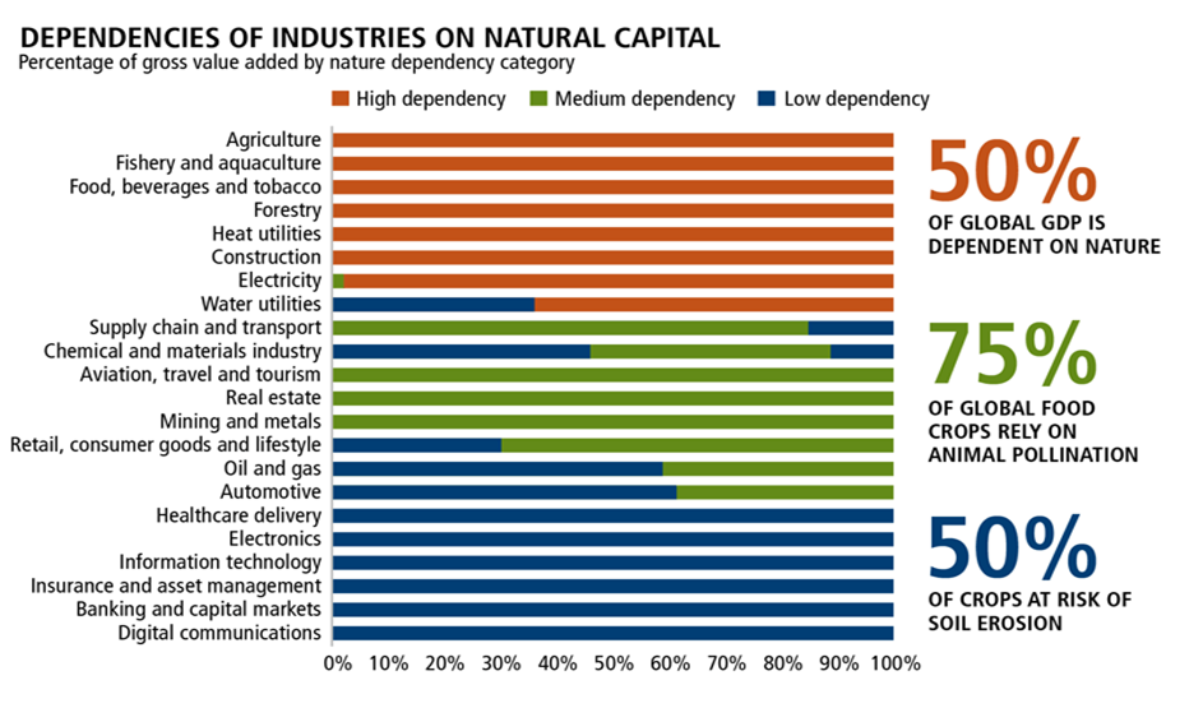
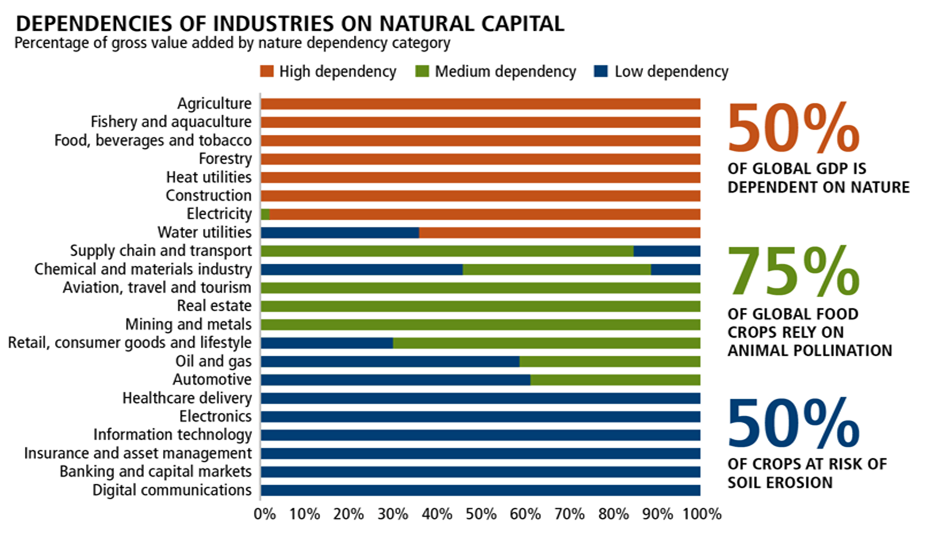
Half of the world's world's GDP and 75% of its economic sectors and industries are dependent on the world's natural capital.
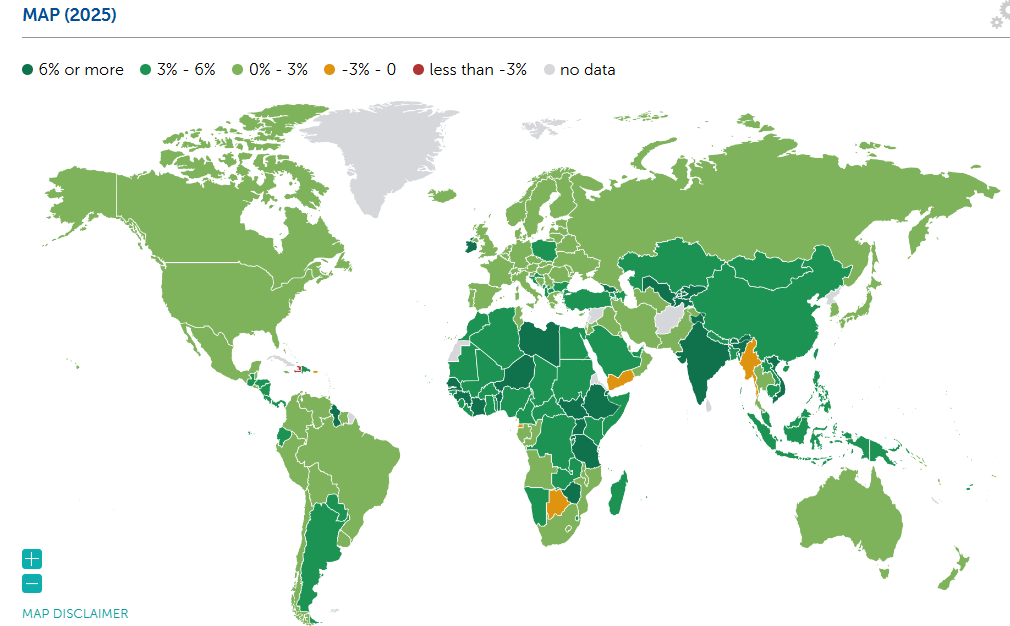
Real GDP Growth 2025 by country, annual percent change. Not accounting for population growth.
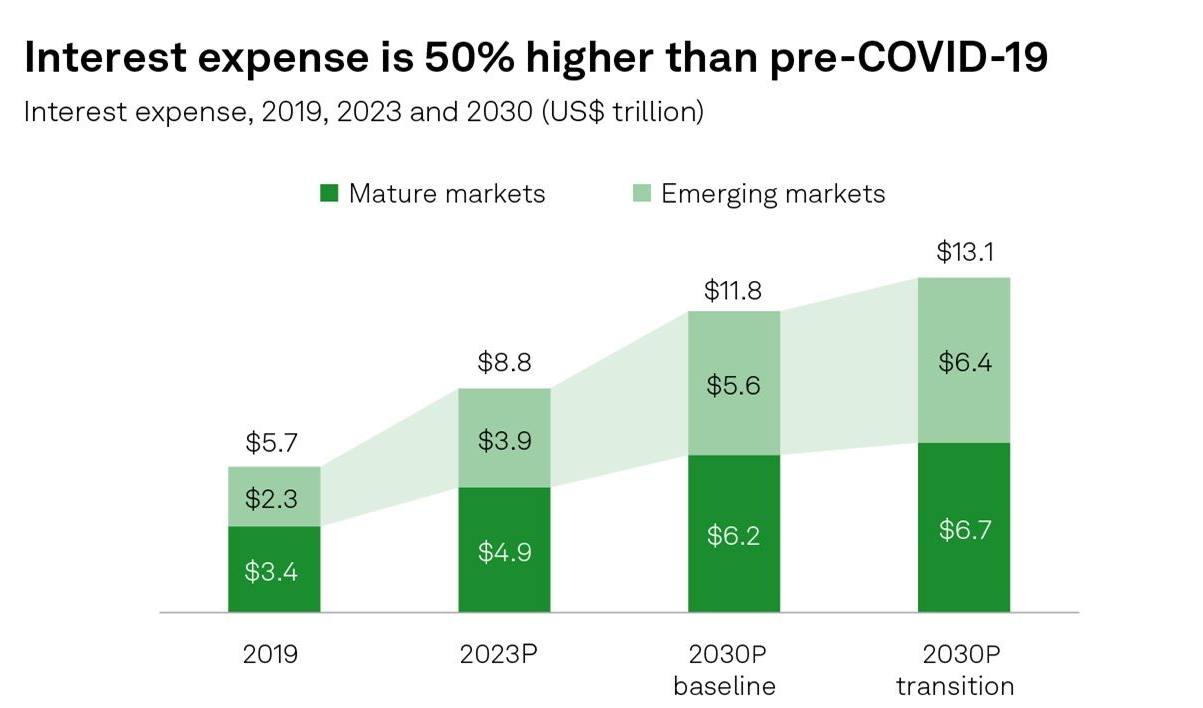
Global leverage trending up and structurally higher interest rates will increase the financing bill for governments, corporates and households.
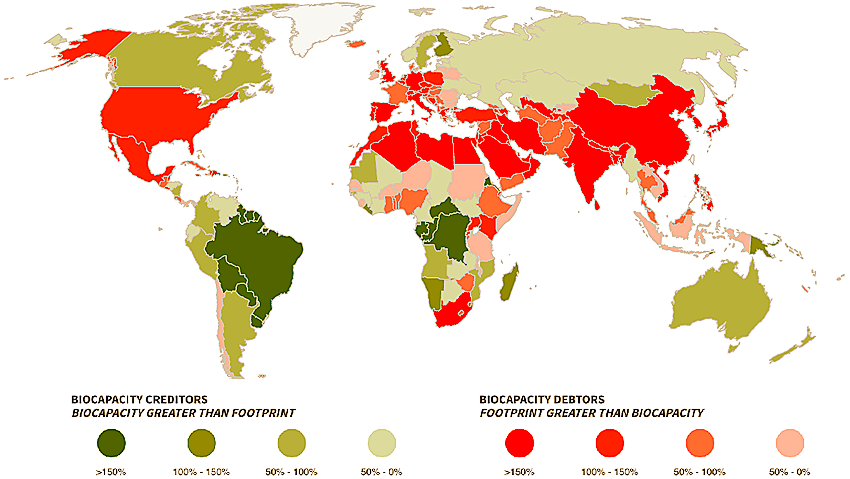
The world's ecological footprint exceeds it's biocapacity by 80%, the same percentage applies to the size of the world population living in countries running an ecological deficit.
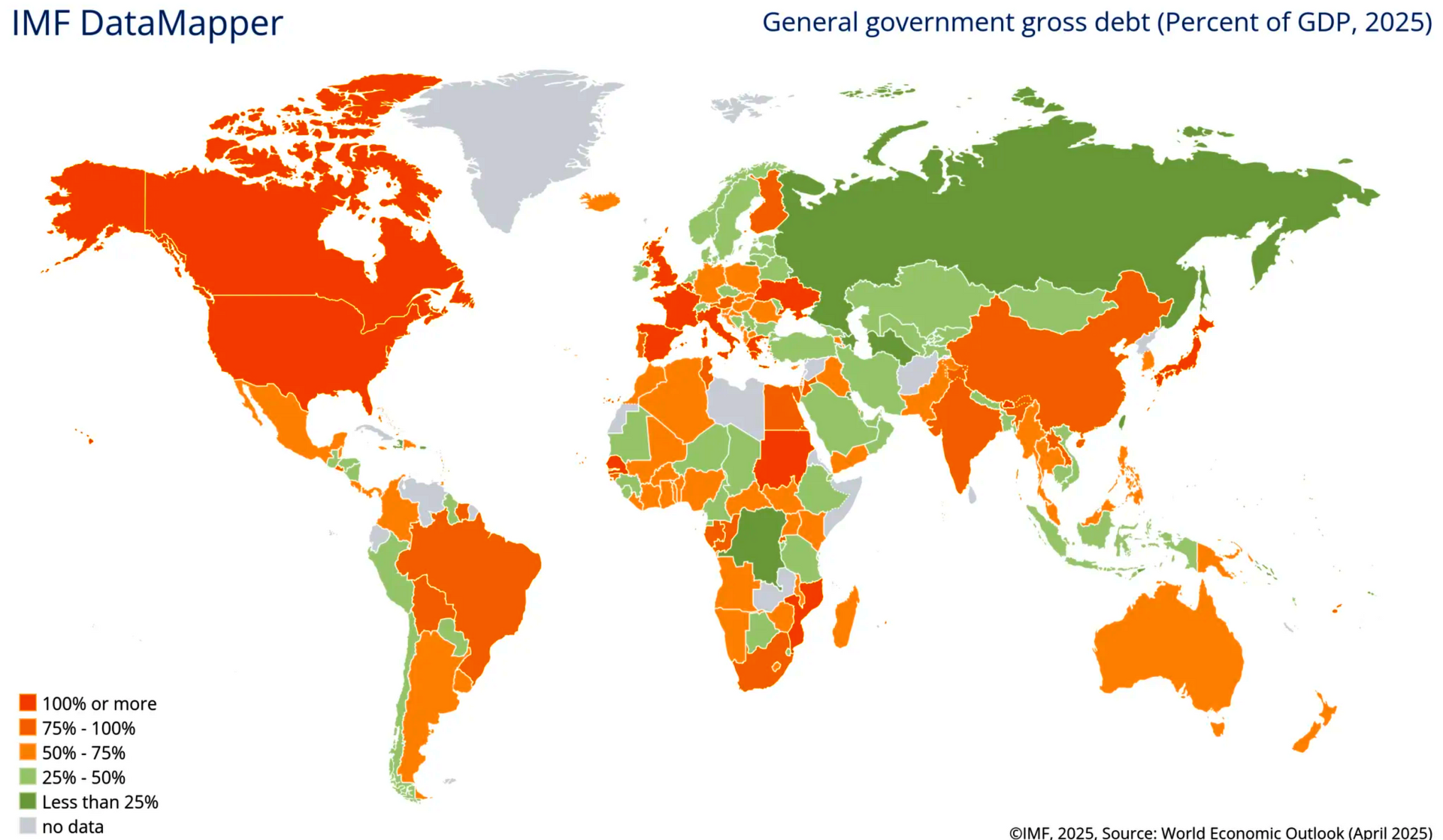
The average government debt-to-GDP ratio is 110% for advanced economies and 74% for emerging markets and developing economies, about 80% above sustainable levels for both.
Asset bubbles and equity price collapses over the centuries: from tulip mania to the South Sea, Mississippi, Railway, Wall Street, Dot-Com, financial, and AI?
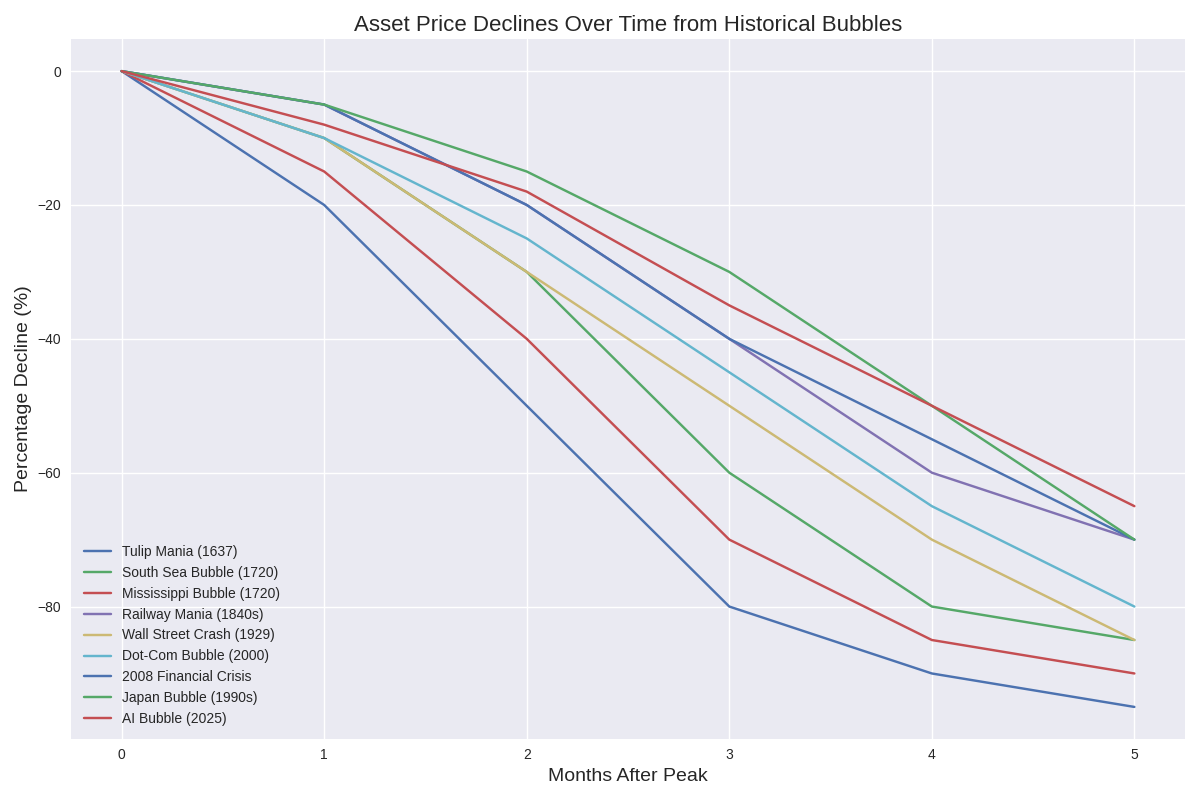
The global economic trajectory 2025-2050, assuming global debt and asset bubbles burst within the next five years and impacts similar to those on Japan's economy.
Most of the world's industries economy and GDP is directly dependent on natural capital and so is 100 percent of our food and water supply.
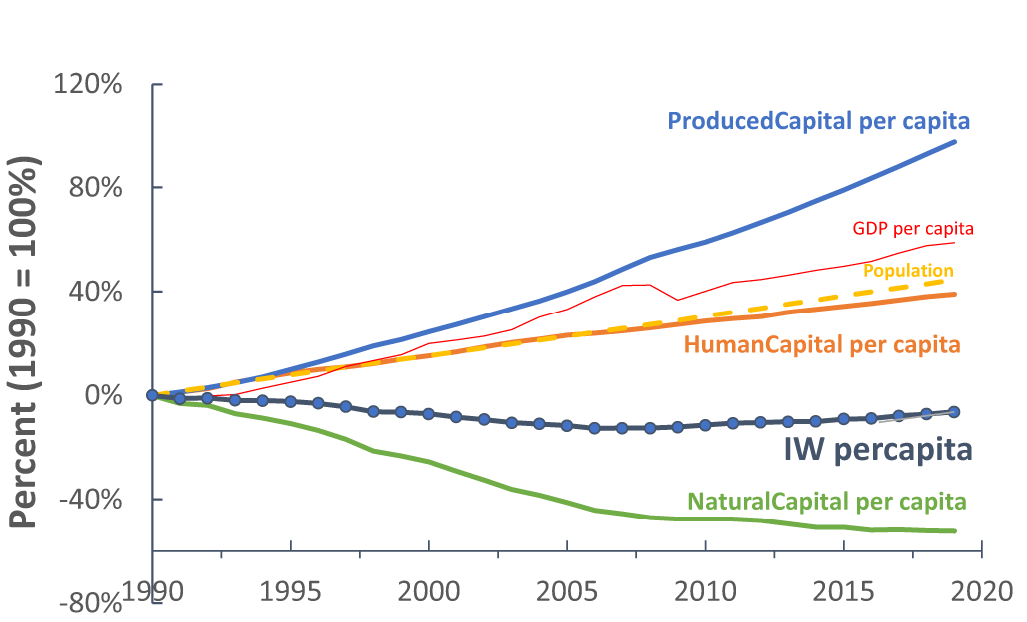
Comparative trends in global natural capital Inclusive wealth per capita and its components (1990-2020).
Perennial grasses (or C4 energy crops) are the best option for carbon sequestration and mitigation on 45% of all current crop land.
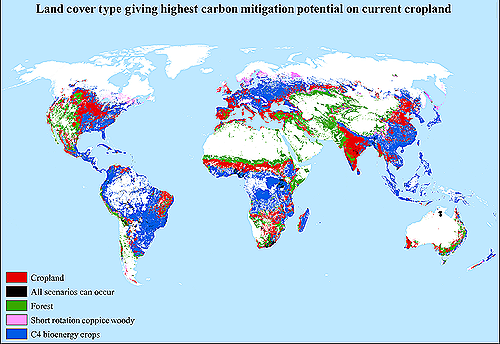
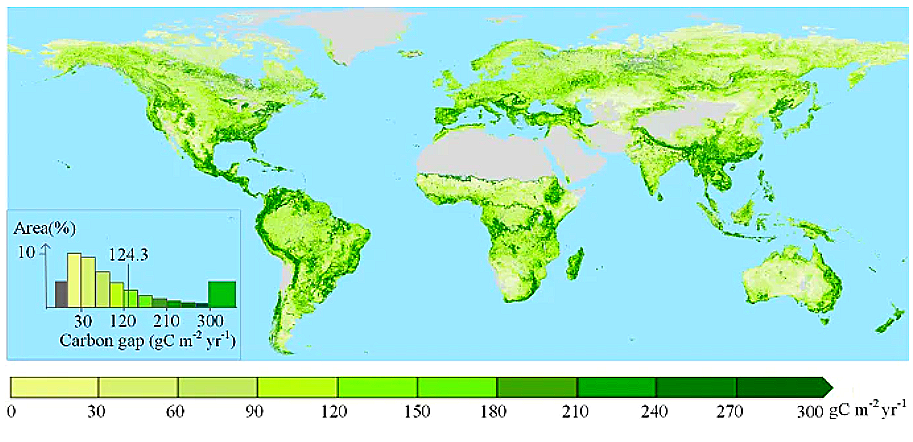
Global land vegetation can sequester an extra of 13.74 GtC per year, by optimizing land management practices. Half of that extra can come from ~15% of the global vegetated area.
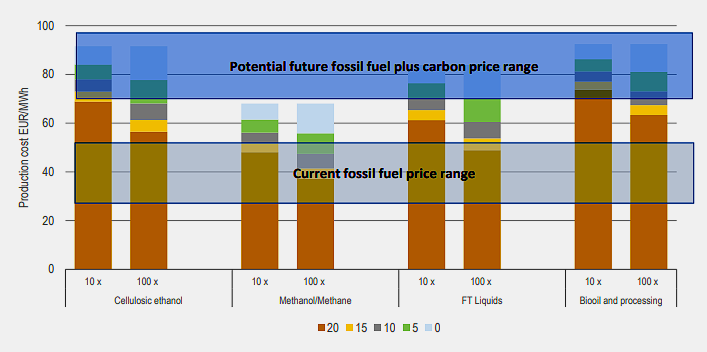
Impact of learning on costs as advanced biofuels scale-up, and competitiveness at 2020 fossil fuel prices and carbon price range.
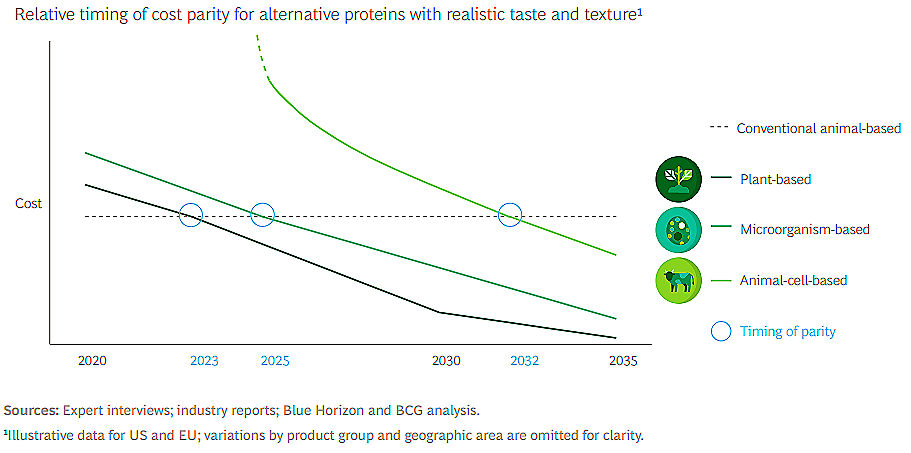
Cost for alternative proteins meat, fillet, milk, eggs, for which like-for-like alternatives can be created by building on current technology.
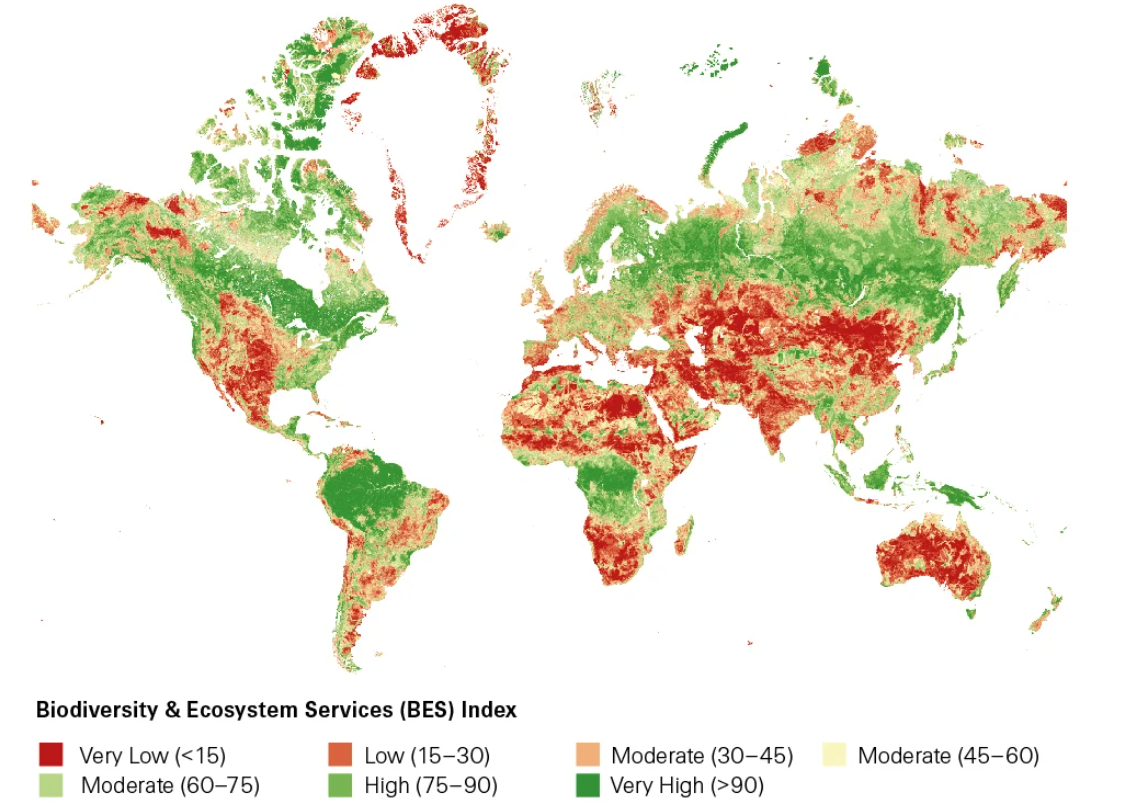
The state of biodiversity and ecosystem services in relation to the health and stability of the communities and economies they support
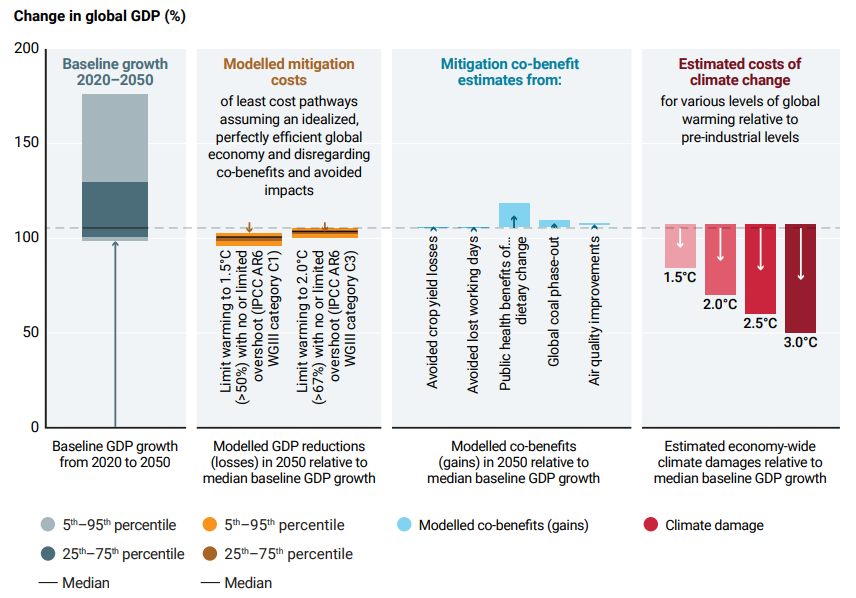
Projected impact of global warming on World GDP, disregarding impacts of extreme weather events and reaching tipping points
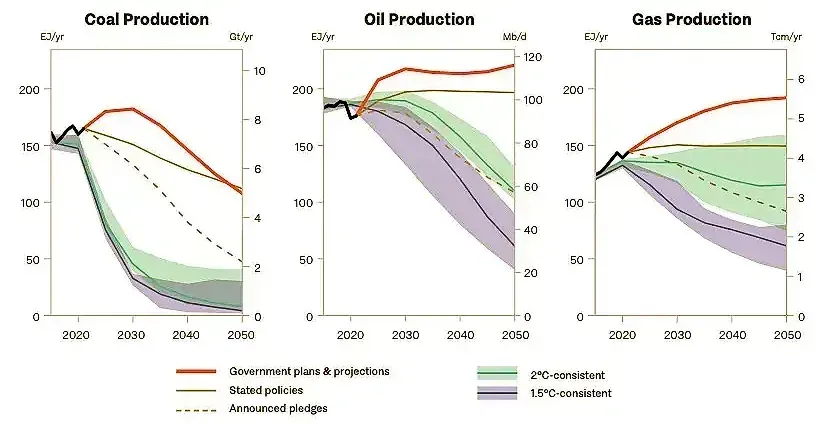
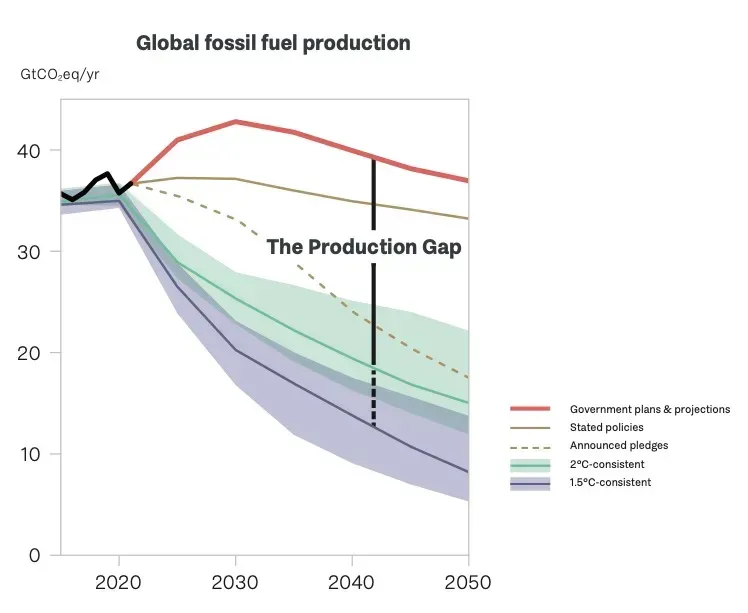
Projected coal, oil and gas production, 2020-2050
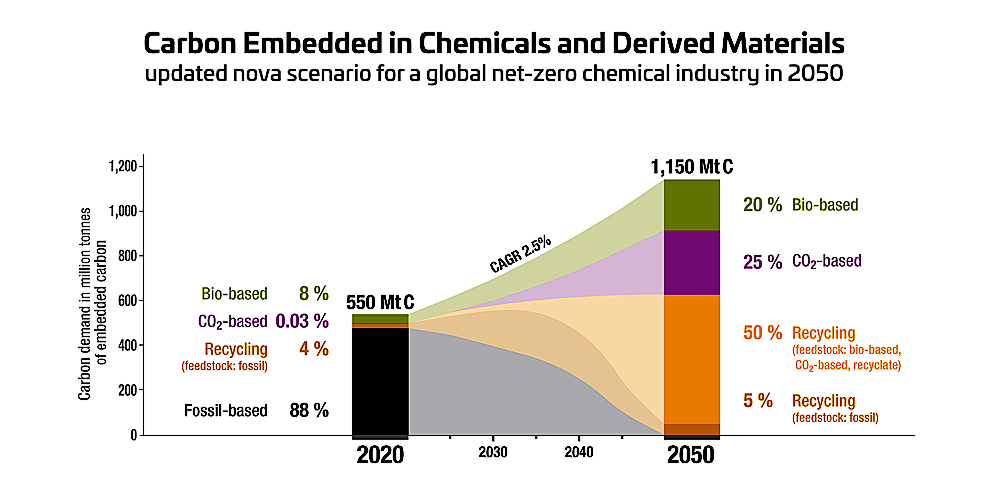
Carbon demand embedded in chemicals and derived maerials
One third,
1.600 Mha of all agricultural land, about the size of South America is losing its productivity and more than 70% of farmers have already seen harvest losses from climate change, reducing their incomes by 16%. To compensate for yield losses agriculture land will expand by at least 300 Mha but likely much more, more forest will disappear, more fertilizers and pesticides will be deployed and the biodiversity on which food production depends will further decline until it collapses in many parts of the world. On top of that climate change will gradually push more agricultural land out of production.
ADVANCING SUSTAINABLE BIOENERGY DEVELOPMENT
New, advanced technologies make it possible to produce climate neutral fuels from non-forest and non-food energy crops. The benefits of cultivation and use of these energy crops for transport fuels and electricity goes beyond the benefits of reducing greenhouse gas emissions. Terrestrial energy crop cultivation and aquatic energy crop harvesting reverses land and water degradation, increases biodiversity and carbon sequestration and improves land fertility. We call this
Deep Green Biomass. Moreover, deploying these energy crops for the production of advanced biofuels will positively impact social-economic structures and energy independence and reduce the need for involuntary migration and deforestation: Deep Green Energy.
Deep Green Energy Partners works to accelerate deployment of deep green biomass for the production of advanced biofuels and biochemicals, to restore soil and water conditions and to optimize the overall ecological-economic effects of investments in the energy transition.
Precision fermentation can produce about ~1.400.000 times more mass than soy per m², thus we could provide all the calories, proteins, carbs we need from 1.42 Mha and ~300-500 Mha for fruits, vegetables, pulses, citrus fruits, roots, tubers and oil crops. There would be no need for intensive agriculture or deforestation and food production could be done in city bio-breweries comparable to local beer and bakeries. If we add the production of cultivated meat and dairy to the breweries,
we could provide all our meats and dairy from ~85 Mha and reduce environmental pollution and emissions from livestock by 70-94%.
Thus we could achieve the required impact reductions for a below 2C GW decentralized food system. We have 25 years to gradually transform the food system, which is not only technical possible, but also doable and likely achievable as cultural resistance will likely die out with time or overcome by hunger. Indoor food production however requires more electricity, concentrated CO2
and nutrients for plant, cell and bacterial growth, a lot of stainless steel and capital. Electricity, concentrated CO2 and nutrients can be largely supplied by energy crops, or by a combination of
Which brings us to how to use the freed up land, for carbon sequestration, ecosystem restoration, energy, materials and income generation.
Indoor food production will make food production largely resource and climate independent, can free up to ~3.000 Mha of agricultural land, eliminate the need for deforestation for food. Establishing local and regional indoor food hubs comparable to e.g. The Netherlands, increases food supply and food security as it reduces the risks of transport, climate impacts and geographically concentrated production.
Thus if we scale up modern bioenergy and modern food production fast enough, keep 1.5 Mha for sustainable livestock grazing, 1.2 Mha for sustainable food crop and fruit cultivation, move the rest of food production indoors, this will leave ~2 billion hectares for natural forest expansion and perennial grasses. This equals the combined sizes of readily available land for perennial grasses and the eroding agricultural land that is losing its productivity and is in need of restoration. This deep green alternative scenario would eliminate the cause for further biodiversity loss and deforestation, secure sufficient ESs per capita, carbon sequestration, food, energy, materials, livable climatic conditions as well as a more pleasant future.
In the combined NDCs 1.200 Mha are set aside for forest, carbon sequestration and ESs restoration projects, only about half of that land is available today, the remaining ~600 Mha either has to miraculously appear or come from reclaiming agricultural land. Much of the (to be) abandoned agricultural lands are passed the point where they can naturally regenerate. These lands will further degrade under pressure from extreme weather events, desertification, pollution and the carbon, water and nutrients they hold will be lost unless we actively intervene. losses unless we find a way to produce more food from less land , sustainable food production remains an oxymoron.For increasing carbon sequestration and land degradation we basically have three options for vegatative We have basically three option to reverse
In the combined NDCs 1.200 Mha is set aside for forest, carbon sequestration and ESs restoration projects only about half of that land is available today, the remaining ~600 Mha either has to miraculously appear or come from reclaiming agricultural land.
So, the total land-gap for combined food production, forests, carbon sequestration and ESs restoration will likely be anywhere between 900 Mha and 2.500 Mha. In conclusion, unless we find a way to drastically improve efficiencies in the food system to close both the food- and the land-gap, food supply and ESs will collapse in those regions of the world where populations increase, and food yields decrease most.
ADVANCING SUSTAINABLE BIOENERGY DEVELOPMENT
New, advanced technologies make it possible to produce climate neutral fuels from non-forest and non-food energy crops. The benefits of cultivation and use of these energy crops for transport fuels and electricity goes beyond the benefits of reducing greenhouse gas emissions. Terrestrial energy crop cultivation and aquatic energy crop harvesting reverses land and water degradation, increases biodiversity and carbon sequestration and improves land fertility. We call this
Deep Green Biomass. Moreover, deploying these energy crops for the production of advanced biofuels will positively impact social-economic structures and energy independence and reduce the need for involuntary migration and deforestation: Deep Green Energy.
Deep Green Energy Partners works to accelerate deployment of deep green biomass for the production of advanced biofuels and biochemicals, to restore soil and water conditions and to optimize the overall ecological-economic effects of investments in the energy transition.
The second option would be to increase indoor food production.
Current cropland for direct human consumption is ~704 Mha and provides 83% of all calories consumed by humans today. Using the numbers from the food and land gaps above this would be 83% this would be 83% of 18.000 trillion calories produced today, 14.940 trillion calories, or 73% of calories. So, if the world went vegan we would need would need about 34% more land for food crops, so just under 1.000 Mha would suffice to feed the world by 2050. This would free up ~3.000 Mha land, substantially more than 300-1.900 Mha land gap direct emissions by ~50-60% + deforestation.
ADVANCING SUSTAINABLE BIOENERGY DEVELOPMENT
New, advanced technologies make it possible to produce climate neutral fuels from non-forest and non-food energy crops. The benefits of cultivation and use of these energy crops for transport fuels and electricity goes beyond the benefits of reducing greenhouse gas emissions. Terrestrial energy crop cultivation and aquatic energy crop harvesting reverses land and water degradation, increases biodiversity and carbon sequestration and improves land fertility. We call this
Deep Green Biomass. Moreover, deploying these energy crops for the production of advanced biofuels will positively impact social-economic structures and energy independence and reduce the need for involuntary migration and deforestation: Deep Green Energy.
Deep Green Energy Partners works to accelerate deployment of deep green biomass for the production of advanced biofuels and biochemicals, to restore soil and water conditions and to optimize the overall ecological-economic effects of investments in the energy transition.
Today ~80% percent of all energy consumption is fossil based, ~50% of our food production depends on fossil based fertilizers and pesticides, as well as 99% of all chemicals production. Fossil fuels are the cause of ~70% of all emissions and there is no shortage of fossil fuels. Energy consumption is set to grow by 10-20%, fertilizer consumption by 40% and chemicals by 100%. In the positive scenario global primary energy supply is projected
to reach 656 EJ in 2050, ~10% higher than the current 608 EJ, and the ratio of fossil/non-fossil energy supply will become ~50/50 by 2050.
In 2050, the planned fossil fuel production for combined energy and chemicals is about ~520 EJ. The overall fossil fuel demand for energy will decline to 425-315 EJ versus 490 EJ today, depending on scenario. The difference, i.e. 95-205 EJ will be used for the production of chemicals (e.g. plastics and fertilizers) or to reduce the projected share of renewables. Notwithstanding the projected emissions reductions from substitution of coal by gas, carbon capture and storage (CCS) and efficiency gains, the missions from this 520 EJ would be 150% above the maximum level required for 2C GW. Thus we have to find a way to eliminate or neutralize 60% of all emissions from fossil fuel use.
ADVANCING SUSTAINABLE BIOENERGY DEVELOPMENT
New, advanced technologies make it possible to produce climate neutral fuels from non-forest and non-food energy crops. The benefits of cultivation and use of these energy crops for transport fuels and electricity goes beyond the benefits of reducing greenhouse gas emissions. Terrestrial energy crop cultivation and aquatic energy crop harvesting reverses land and water degradation, increases biodiversity and carbon sequestration and improves land fertility. We call this
Deep Green Biomass. Moreover, deploying these energy crops for the production of advanced biofuels will positively impact social-economic structures and energy independence and reduce the need for involuntary migration and deforestation: Deep Green Energy.
Deep Green Energy Partners works to accelerate deployment of deep green biomass for the production of advanced biofuels and biochemicals, to restore soil and water conditions and to optimize the overall ecological-economic effects of investments in the energy transition.
For 2C GW we would have to replace 60%, or 312 EJ in primary energy, of fossil fuels supply, between 255-190 EJ for energy and 57-123 EJ for chemicals. This under the assumption that non-carbon energy supply and chemical consumption and CCS will happen as projected. Bioenergy from perennial grasses, for this purpose called called energy crops, play an substantial role in all 2C GW scenarios as it is the only option to produce GHG neutral or negative energy.
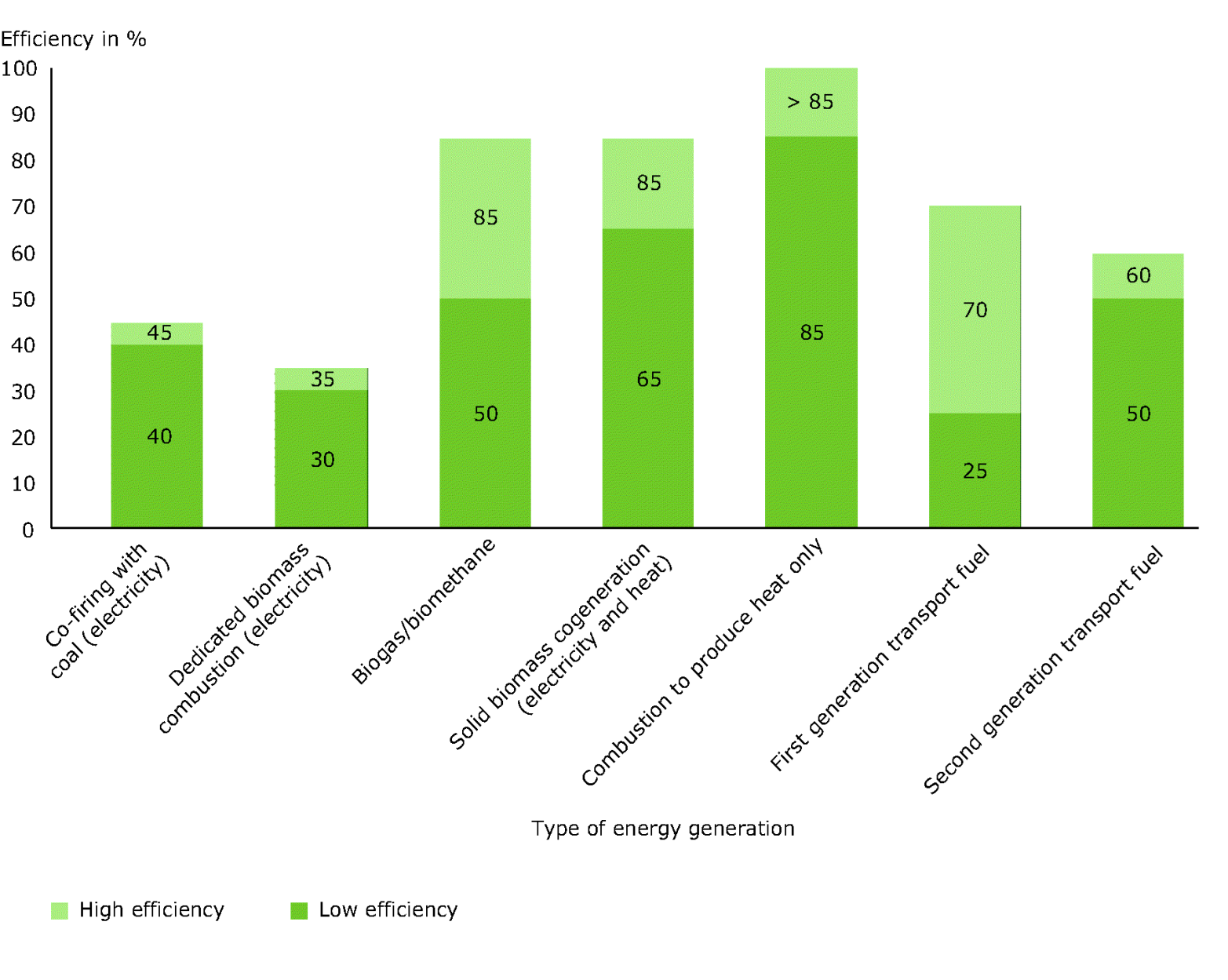
The energy conversion efficiencies of biomass to energy vis-a-vis fossil fuels differs by its deployment. Biofuels for transport have an energy efficiency of ~60% compared to oil and gas, deployed for heat and electricity in the form of pellets and biogas/biomethane efficiency is just a little below or equal to those of fossil fuels. to replace 312 EJ equivalent of fossil fuels at an average 75% net energy conversion efficiency of modern bioenergy vis-a-vis fossil fuels we would need ~416 EJ of additional modern bioenergy by 2050. The potential maximum sustainable biowaste supply is ~60 EJ, which is not part of the equation, but kept in reserve to compensate for any setbacks.
ADVANCING SUSTAINABLE BIOENERGY DEVELOPMENT
New, advanced technologies make it possible to produce climate neutral fuels from non-forest and non-food energy crops. The benefits of cultivation and use of these energy crops for transport fuels and electricity goes beyond the benefits of reducing greenhouse gas emissions. Terrestrial energy crop cultivation and aquatic energy crop harvesting reverses land and water degradation, increases biodiversity and carbon sequestration and improves land fertility. We call this
Deep Green Biomass. Moreover, deploying these energy crops for the production of advanced biofuels will positively impact social-economic structures and energy independence and reduce the need for involuntary migration and deforestation: Deep Green Energy.
Deep Green Energy Partners works to accelerate deployment of deep green biomass for the production of advanced biofuels and biochemicals, to restore soil and water conditions and to optimize the overall ecological-economic effects of investments in the energy transition.
For 2C GW we will need to close a food gap ~4.500 billion calories, a land gap of anywhere between 300 Mha and 1.900 Mha, an emissions gap of ~30 GtCO2eq. and a fossil fuel production gap of 60% or ~312 EJ for energy and chemicals in the next 25 years. As technical solutions will take time to take effect and increase emissio ns and ESs loss during their roll-out, we will have to rely on nature based solutions to fill most of these gaps as we scale-up those technical solutions that are the most efficient for filling the gaps.
Nature based solutions are primarily aimed at improved land use and management to conserve and restore healthy land and ecosystem conditions, i.e. improving soil organic carbon, nutrients, biodiversity and reducing aridity, by improved vegetative cover (plants) and land management. If successful, water regulation and primary production increases. Primary production is the process by which raw inorganic molecules like CO2, nitrogen, water and mineral nutrients and sunlight are converted (or recycled) to useable organic molecules and materials such as carbohydrates, proteins, lipids, or food/feed crops, fruits and timber through photosynthesis, i.e. increased biomass production.
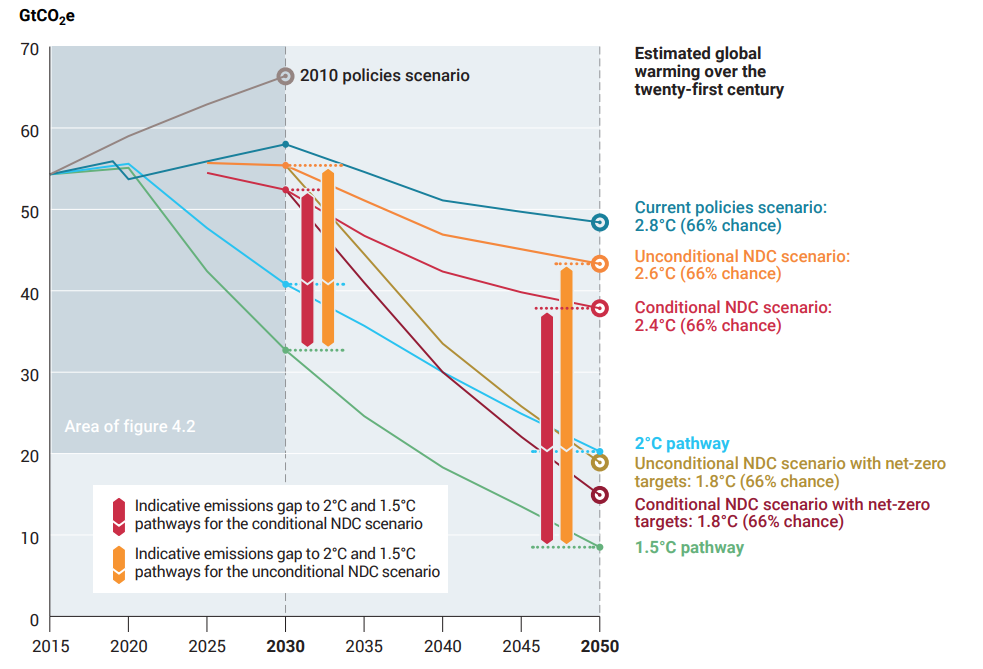
Estimated emissions gaps and global warming under current policy scenario, excluding the effects of potentially reaching tipping points
Effects of changes in land use, land management and climate on land conditions and ecosystems services.
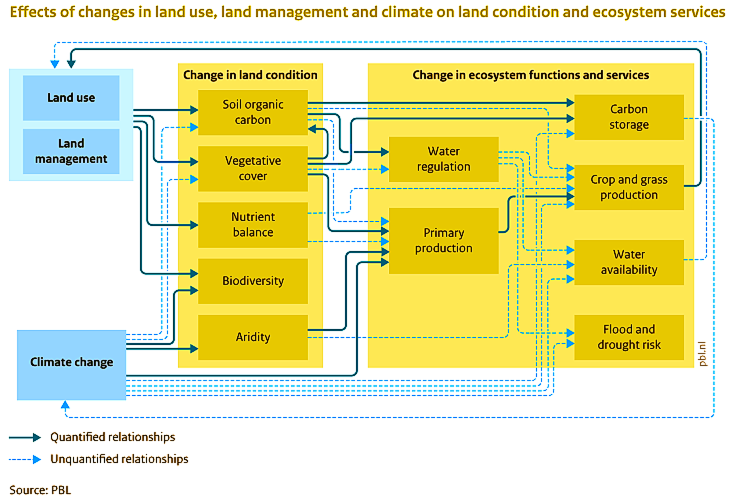
Plants and (soil)microbes, the two primary producers, work in harmony but it are mainly plants, i.e. trees, food/ feed crops, shrubs and perennial grasses that start the process of primary production. Each type of plant comes with its own soil, water and climatic requirements, has its particular conversion efficiencies of solar energy, CO2, nutrients and water to usable materials. Moreover, any change in land use and vegetation impacts soils, biodiversity and the wider environment differently.
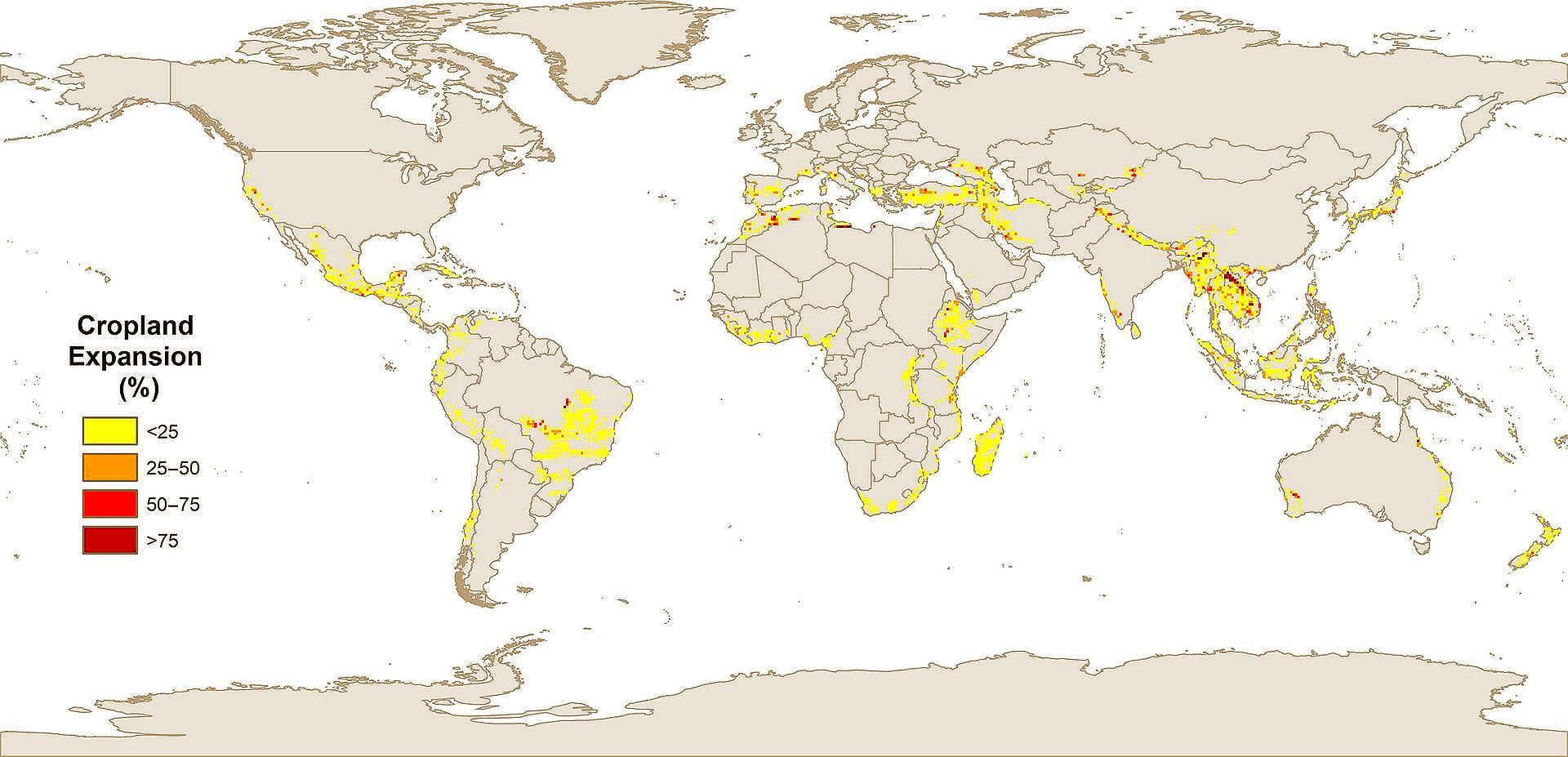
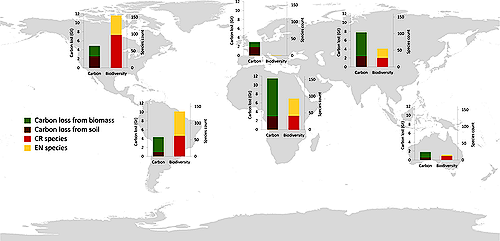
Old forests, and rainforests in particular are crucial to biodiversity and carbon preservation as well water and climate regulation. Globally around
10 million ha per year are lost to deforestation. Nearly all, 95%, of this deforestation occurs in the tropics, i.e rainforests. Unless additional action is taken an estimated
270 million ha of tropical rainforests
will be deforested by 2050 for pasture, crops (soy, palm oil), fuel wood, timber and mining. Around half of the deforestation is offset
by regrowing forests, so overall net forest loss is about around 5 million ha/y, of which most is of high biodiversity importance. Wildfires, droughts and deforestation in the hart of old forests speeds up the loss of tree cover, carbon and biodiversity.
ADVANCING SUSTAINABLE BIOENERGY DEVELOPMENT
New, advanced technologies make it possible to produce climate neutral fuels from non-forest and non-food energy crops. The benefits of cultivation and use of these energy crops for transport fuels and electricity goes beyond the benefits of reducing greenhouse gas emissions. Terrestrial energy crop cultivation and aquatic energy crop harvesting reverses land and water degradation, increases biodiversity and carbon sequestration and improves land fertility. We call this
Deep Green Biomass. Moreover, deploying these energy crops for the production of advanced biofuels will positively impact social-economic structures and energy independence and reduce the need for involuntary migration and deforestation: Deep Green Energy.
Deep Green Energy Partners works to accelerate deployment of deep green biomass for the production of advanced biofuels and biochemicals, to restore soil and water conditions and to optimize the overall ecological-economic effects of investments in the energy transition.
Planting new forests, afforestation or reforestation, is far less efficient as often assumed whilst natural forest expansion is. Forests don't simply grow anywhere, take many decades to mature and increase carbon sequestration. New forests are not the same as old forests for biodiversity: it takes centuries to recover lost biodiversity.
Moreover, new forest need a lot of water and care to mature which is costly, and to be commercially viable, trees have to be cut before any potential benefits can materialize. The envisioned carbon sequestration by forestation projects is therefore doubtful. From a climate, biodiversity and ESs perspective it makes far more sense to let existing forests standing and expand naturally over time, and to plant trees in agroforestry systems and urban areas for local cooling and water regulation.
Land restoration by food/feed crop cultivation on existing cropland or pastures might be technically possible but comes with lower yields, yields that are already under pressure from nutrients and water depletion and climate change. Increasing food and feed crop production on open fields or more livestock grazing on pastures therefore equals more deforestation, biodiversity loss and desertification. Hence, unless we find a way to produce more food from less land, sustainable food production remains an oxymoron.
ADVANCING SUSTAINABLE BIOENERGY DEVELOPMENT
New, advanced technologies make it possible to produce climate neutral fuels from non-forest and non-food energy crops. The benefits of cultivation and use of these energy crops for transport fuels and electricity goes beyond the benefits of reducing greenhouse gas emissions. Terrestrial energy crop cultivation and aquatic energy crop harvesting reverses land and water degradation, increases biodiversity and carbon sequestration and improves land fertility. We call this
Deep Green Biomass. Moreover, deploying these energy crops for the production of advanced biofuels will positively impact social-economic structures and energy independence and reduce the need for involuntary migration and deforestation: Deep Green Energy.
Deep Green Energy Partners works to accelerate deployment of deep green biomass for the production of advanced biofuels and biochemicals, to restore soil and water conditions and to optimize the overall ecological-economic effects of investments in the energy transition.
For 2C GW we have to close an emissions gap of ~30 GtCO2eq, 1.2 GtCO2eq
year on year. Today, the worldwide size of abandoned agricultural lands is estimated at 600-900 million hectare (Mha). About 1.600 Mha, a third of all current land used for agriculture, is losing its productivity and will be partially abandoned in the next decades when its use for agriculture is no longer economically viable. So there is anywhere between ~600 and 2.500 Mha available for perennilization and natural forest expansion by 2050, provided of course that we find a solution for food production from less land.
ADVANCING SUSTAINABLE BIOENERGY DEVELOPMENT
New, advanced technologies make it possible to produce climate neutral fuels from non-forest and non-food energy crops. The benefits of cultivation and use of these energy crops for transport fuels and electricity goes beyond the benefits of reducing greenhouse gas emissions. Terrestrial energy crop cultivation and aquatic energy crop harvesting reverses land and water degradation, increases biodiversity and carbon sequestration and improves land fertility. We call this
Deep Green Biomass. Moreover, deploying these energy crops for the production of advanced biofuels will positively impact social-economic structures and energy independence and reduce the need for involuntary migration and deforestation: Deep Green Energy.
Deep Green Energy Partners works to accelerate deployment of deep green biomass for the production of advanced biofuels and biochemicals, to restore soil and water conditions and to optimize the overall ecological-economic effects of investments in the energy transition.
By optimizing current land management practices global soils and land vegetation could annually sequester about 13.74 gigatonnes of carbon (GtC) more than it does today. This equals ~50 GtCO2 sequestration by above- and belowground plant and microbial biomass (1 GtC = 3,67 GtCO2eq). When we assume not only a change in land management practices but also a change of land-cover, i.e. abandoned and to be abandoned food crop and grazing lands are (partially) converted to C4 perennial grasslands, the potential for carbon sequestration further increases.
ADVANCING SUSTAINABLE BIOENERGY DEVELOPMENT
New, advanced technologies make it possible to produce climate neutral fuels from non-forest and non-food energy crops. The benefits of cultivation and use of these energy crops for transport fuels and electricity goes beyond the benefits of reducing greenhouse gas emissions. Terrestrial energy crop cultivation and aquatic energy crop harvesting reverses land and water degradation, increases biodiversity and carbon sequestration and improves land fertility. We call this
Deep Green Biomass. Moreover, deploying these energy crops for the production of advanced biofuels will positively impact social-economic structures and energy independence and reduce the need for involuntary migration and deforestation: Deep Green Energy.
Deep Green Energy Partners works to accelerate deployment of deep green biomass for the production of advanced biofuels and biochemicals, to restore soil and water conditions and to optimize the overall ecological-economic effects of investments in the energy transition.
The CO2
sequestration rate of energy crops differs per variety, climate zone, soil conditions and management practices. The aboveground carbon mass sequestered by plants is easy to asses as it can be measured after cutting and drying. The aboveground dried carbon mass of perennial grasses consists on average of 48% carbon. Assuming a global average yield of 23.5 t/DM/ha/y this means ~11.25 tonnes of carbon (tC) are sequestered in above ground biomass per hectare. Assuming a net carbon belowground (soil) sequestration of ~20% of the aboveground carbon mass on average, i.e. 2.25 tC, this means that total average annual carbon sequestration per ha is, 13.4 tC/ha/y, which equals ~50 tCO2/ha/y. Offsetting 1.2 GtCO2eq
year on year would mean planting 24 Mha each year, about 600 Mha upto 2050 if plantation would be spread evenly over climate zones and soil conditions. This might seem like a lot, but it is only about 33% of
the ~72 Mha average annual land-use change. Actual yields and belowground biomass growth however differ greatly. In general: the closer to the (sub)tropics the higher the sequestration rate. In e.g.
Zimbabwe one ha of Napier grass
can yield 90 tonnes dry matter per year (t/DM/ha/y) while Miscanthus x Giganteus hybrids in Germany yields 15 and 40 t/DM/ha/y in Central and Southern europe.
ADVANCING SUSTAINABLE BIOENERGY DEVELOPMENT
New, advanced technologies make it possible to produce climate neutral fuels from non-forest and non-food energy crops. The benefits of cultivation and use of these energy crops for transport fuels and electricity goes beyond the benefits of reducing greenhouse gas emissions. Terrestrial energy crop cultivation and aquatic energy crop harvesting reverses land and water degradation, increases biodiversity and carbon sequestration and improves land fertility. We call this
Deep Green Biomass. Moreover, deploying these energy crops for the production of advanced biofuels will positively impact social-economic structures and energy independence and reduce the need for involuntary migration and deforestation: Deep Green Energy.
Deep Green Energy Partners works to accelerate deployment of deep green biomass for the production of advanced biofuels and biochemicals, to restore soil and water conditions and to optimize the overall ecological-economic effects of investments in the energy transition.
For 2C GW we would have to replace 60%, or 312 EJ in primary energy, of fossil fuels supply, between 255-190 EJ for energy and 57-123 EJ for chemicals. This under the assumption that non-carbon energy supply and chemical consumption and CCS will happen as projected. Bioenergy from perennial grasses, for this purpose called called energy crops, play an substantial role in all 2C GW scenarios as it is the only option to produce GHG neutral or negative energy.
The energy conversion efficiencies of biomass to energy vis-a-vis fossil fuels differs by its deployment. Biofuels for transport have an energy efficiency of ~60% compared to oil and gas, deployed for heat and electricity in the form of pellets and biogas/biomethane efficiency is just a little below or equal to those of fossil fuels. to replace 312 EJ equivalent of fossil fuels at an average 75% net energy conversion efficiency of modern bioenergy vis-a-vis fossil fuels we would need ~416 EJ of additional modern bioenergy by 2050. The potential maximum sustainable biowaste supply is ~60 EJ, which is not part of the equation, but kept in reserve to compensate for any setbacks.
Projected emissions from fossil fuel use, 2020-2050
Net efficiencies of bioenergy pathways
ADVANCING SUSTAINABLE BIOENERGY DEVELOPMENT
New, advanced technologies make it possible to produce climate neutral fuels from non-forest and non-food energy crops. The benefits of cultivation and use of these energy crops for transport fuels and electricity goes beyond the benefits of reducing greenhouse gas emissions. Terrestrial energy crop cultivation and aquatic energy crop harvesting reverses land and water degradation, increases biodiversity and carbon sequestration and improves land fertility. We call this
Deep Green Biomass. Moreover, deploying these energy crops for the production of advanced biofuels will positively impact social-economic structures and energy independence and reduce the need for involuntary migration and deforestation: Deep Green Energy.
Deep Green Energy Partners works to accelerate deployment of deep green biomass for the production of advanced biofuels and biochemicals, to restore soil and water conditions and to optimize the overall ecological-economic effects of investments in the energy transition.
Assuming a global average yield of 23.5 tDM/ha/y and an average energy content of 17.6 GJ per ton, one hectare produces ~410 GJ of primary energy annually on average. Thus we would require ~1.000 Mha of average land or ~500 Mha of the highest yielding land. This corresponds with the various net-zero scenarios in which, depending on the emphasis on bioenergy, the required global land area dedicated to energy crops is estimated between 180 Mha and 1084 Mha.
In modern bioenergy use, non-food and non-forest biomass is first processed into pellets or advanced, or 2nd generation bio-coal, bio-liquid and bio-gaseous fuels. Modern bioenergy products can replace crude and refined fossil counterparts in almost all uses, including the production of various chemicals.
As all biofuels can be blended or co-processed with their fossil counterparts, with limited adaption to existing processes, infrastructure or equipment it is the fastest and most efficient option to reduce net emissions from fossil fuels. Moreover, once technical carbon capture becomes available bioenergy from energy crops is the only option to produce emissions negative electricity and heat.
ADVANCING SUSTAINABLE BIOENERGY DEVELOPMENT
New, advanced technologies make it possible to produce climate neutral fuels from non-forest and non-food energy crops. The benefits of cultivation and use of these energy crops for transport fuels and electricity goes beyond the benefits of reducing greenhouse gas emissions. Terrestrial energy crop cultivation and aquatic energy crop harvesting reverses land and water degradation, increases biodiversity and carbon sequestration and improves land fertility. We call this
Deep Green Biomass. Moreover, deploying these energy crops for the production of advanced biofuels will positively impact social-economic structures and energy independence and reduce the need for involuntary migration and deforestation: Deep Green Energy.
Deep Green Energy Partners works to accelerate deployment of deep green biomass for the production of advanced biofuels and biochemicals, to restore soil and water conditions and to optimize the overall ecological-economic effects of investments in the energy transition.
Advanced, or 2nd generation bioenergy products burn far cleaner than fossil fuels or 1st generation biofuels from wood or food crops as minerals and other contaminants are removed in the production process. These removals served as nutrients for the biomass to grow and thus natural fertilisers are produced as a coproduct, reducing the need for synthetic fertilizers while sooth, nitrogen oxides, fine particles and carbon emissions can be reduced by 90% or more.
ADVANCING SUSTAINABLE BIOENERGY DEVELOPMENT
New, advanced technologies make it possible to produce climate neutral fuels from non-forest and non-food energy crops. The benefits of cultivation and use of these energy crops for transport fuels and electricity goes beyond the benefits of reducing greenhouse gas emissions. Terrestrial energy crop cultivation and aquatic energy crop harvesting reverses land and water degradation, increases biodiversity and carbon sequestration and improves land fertility. We call this
Deep Green Biomass. Moreover, deploying these energy crops for the production of advanced biofuels will positively impact social-economic structures and energy independence and reduce the need for involuntary migration and deforestation: Deep Green Energy.
Deep Green Energy Partners works to accelerate deployment of deep green biomass for the production of advanced biofuels and biochemicals, to restore soil and water conditions and to optimize the overall ecological-economic effects of investments in the energy transition.
The
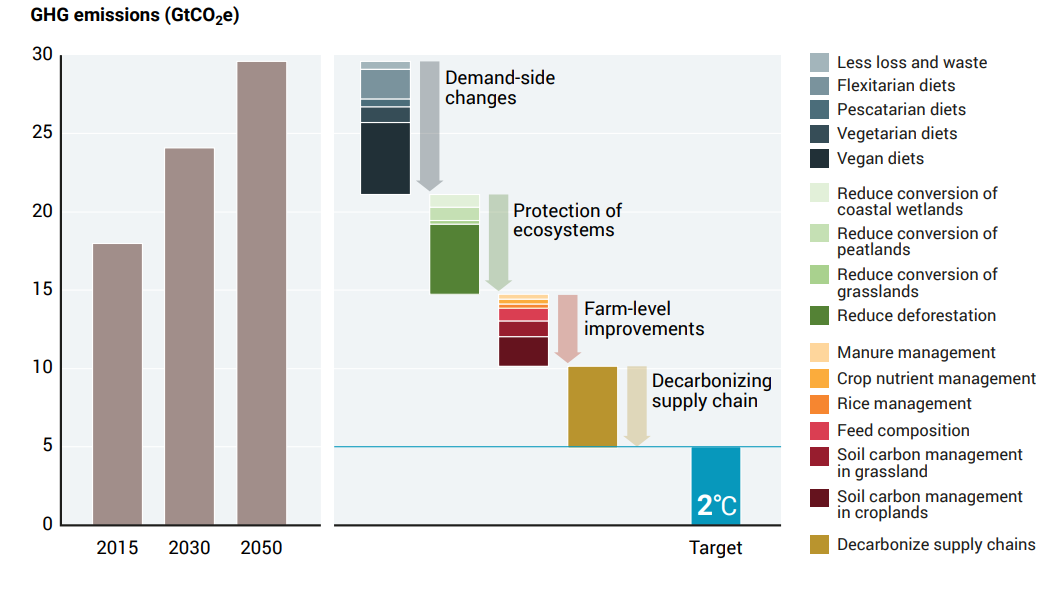
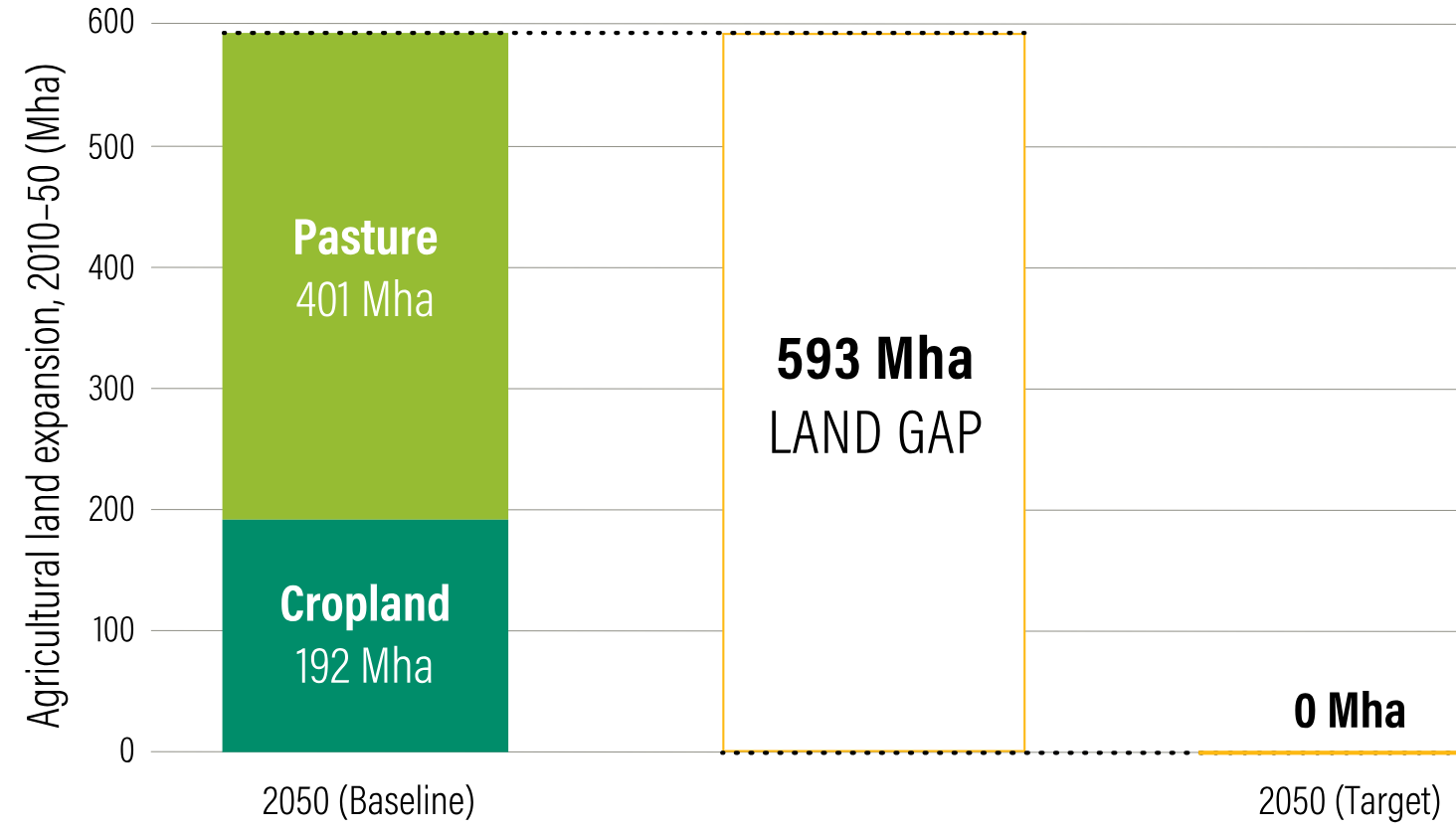
food system has to change for its own survival as it demands for water, land and fertilizers are incompatible with maintaining the minimum of levels ecosystem services and climatic conditions it depends upon. For 2C GW emissions will need to be reduced by 75% by 2050 and water use by >40%, while we have to close a food gap of ~4.500 billion calories, a land gap of a nywhere between 300 Mha and 1.900 Mha vis-a-vis today. We have three basic options to achieve this: improve land use by dietary change, optimize land management or decouple food and feed production from land, water and climatic conditions altogether, i.e. move a larger part of our food production inside.
The world needs to close a 75-85% emissions gap from the food system by 2050
The world needs to close an agricultural land gap of minimal 593 Mha between 2010 and 2050
ADVANCING SUSTAINABLE BIOENERGY DEVELOPMENT
New, advanced technologies make it possible to produce climate neutral fuels from non-forest and non-food energy crops. The benefits of cultivation and use of these energy crops for transport fuels and electricity goes beyond the benefits of reducing greenhouse gas emissions. Terrestrial energy crop cultivation and aquatic energy crop harvesting reverses land and water degradation, increases biodiversity and carbon sequestration and improves land fertility. We call this
Deep Green Biomass. Moreover, deploying these energy crops for the production of advanced biofuels will positively impact social-economic structures and energy independence and reduce the need for involuntary migration and deforestation: Deep Green Energy.
Deep Green Energy Partners works to accelerate deployment of deep green biomass for the production of advanced biofuels and biochemicals, to restore soil and water conditions and to optimize the overall ecological-economic effects of investments in the energy transition.
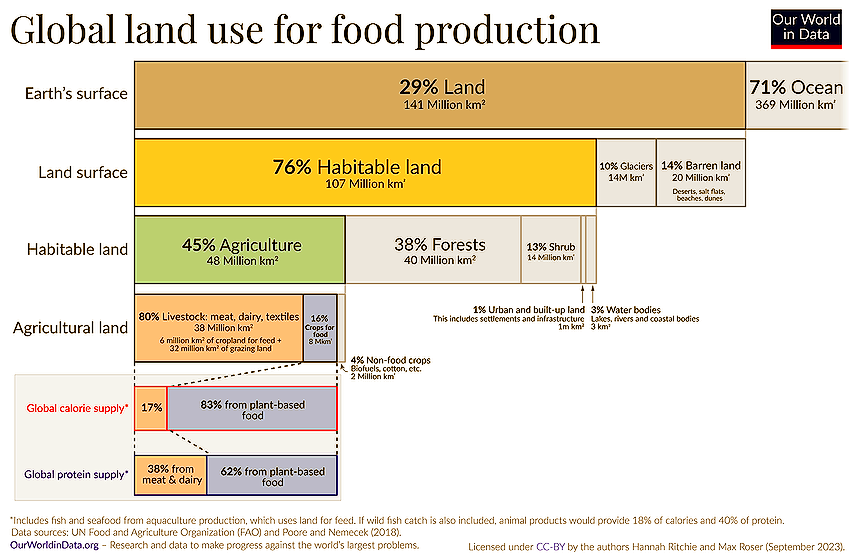
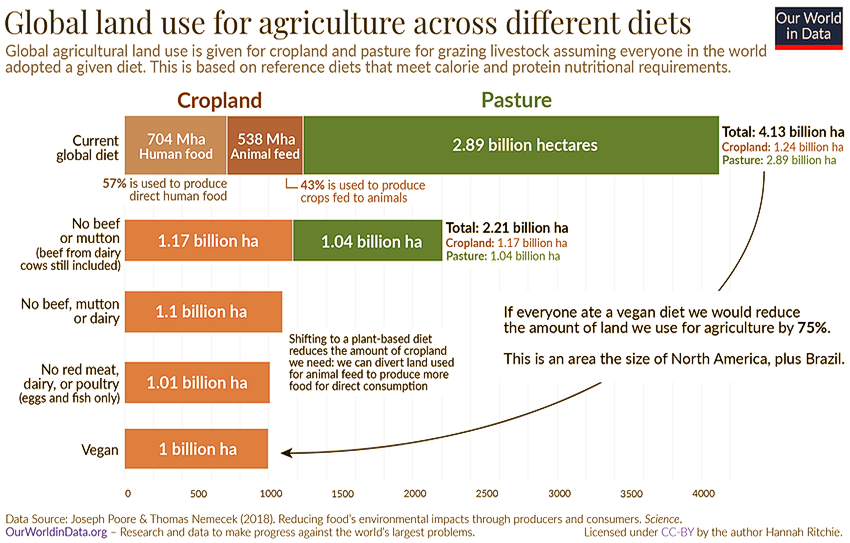
Land use and dietary change: 75% of all agricultural land is used for grazing and feed production, thus if we would all go vegan, this would reduce the land used for food production by 75%, practically eliminate the need for food driven deforestation and free up ~3.800 Mha for sustainable food crop production, forest expansion and energy crops. It would also reduce direct emissions from tilling for feed and livestock's burping and farting (~10-20% of all emissions). Thus we could close the land gap and achieve half of the reduction targets. An all vegan diet is however not healthy as we need some nutrients that are provided by animals. Nevertheless we could reduce meat consumption by 75% in rich countries without a problem to our health. A 75% reduction of meat, in particular cows, and dairy is what is considered to be required to secure an adequate future food supply and would still free up ~2800 Mha, which is close to the maximum land gap.
Global land-use for food production
Global land for agriculture across different diets
ADVANCING SUSTAINABLE BIOENERGY DEVELOPMENT
New, advanced technologies make it possible to produce climate neutral fuels from non-forest and non-food energy crops. The benefits of cultivation and use of these energy crops for transport fuels and electricity goes beyond the benefits of reducing greenhouse gas emissions. Terrestrial energy crop cultivation and aquatic energy crop harvesting reverses land and water degradation, increases biodiversity and carbon sequestration and improves land fertility. We call this
Deep Green Biomass. Moreover, deploying these energy crops for the production of advanced biofuels will positively impact social-economic structures and energy independence and reduce the need for involuntary migration and deforestation: Deep Green Energy.
Deep Green Energy Partners works to accelerate deployment of deep green biomass for the production of advanced biofuels and biochemicals, to restore soil and water conditions and to optimize the overall ecological-economic effects of investments in the energy transition.
Improved land management: If we would optimize crop cultivation practices by e.g. precision farming this would reduce environmental impacts considerably: About
50 percent
of the world’s food production depends on mineral fertilizers, but only about
one-third of all nitrogen fertilizers and half of the phosphorus fertilizers
is used by plants, the rest is lost. Without the use of pesticides, there would be a 78% loss of fruit production, a 54% loss of vegetable production, and a 32% loss of cereal production, but only 1% of total pesticides are effectively used to control insect pests on target plants.
Agriculture uses 70% of all water withdrawals, of which 40% is wasted. All that's wasted not only costs money but is also polluting the environment. If, on top of the other ifs we would also use renewable energy on farm and for transport, we probably could come close to achieving the 2050 targets for agriculture.
ADVANCING SUSTAINABLE BIOENERGY DEVELOPMENT
New, advanced technologies make it possible to produce climate neutral fuels from non-forest and non-food energy crops. The benefits of cultivation and use of these energy crops for transport fuels and electricity goes beyond the benefits of reducing greenhouse gas emissions. Terrestrial energy crop cultivation and aquatic energy crop harvesting reverses land and water degradation, increases biodiversity and carbon sequestration and improves land fertility. We call this
Deep Green Biomass. Moreover, deploying these energy crops for the production of advanced biofuels will positively impact social-economic structures and energy independence and reduce the need for involuntary migration and deforestation: Deep Green Energy.
Deep Green Energy Partners works to accelerate deployment of deep green biomass for the production of advanced biofuels and biochemicals, to restore soil and water conditions and to optimize the overall ecological-economic effects of investments in the energy transition.
In reality people will however demand more meat and dairy, the uptake of precision farming is slow and gets more complicated as climate change progresses. Thus agriculture will likely continue as before until it becomes impossible due to climatic conditions, water scarcity or soil nutrient depletion.
To avoid food and water supply collapse and consequent famine, a substantial part of our food production has to become drastically more efficient and will inevitably have to move indoors, while the other part has to become less efficient in yield but sustainable for nature.
ADVANCING SUSTAINABLE BIOENERGY DEVELOPMENT
New, advanced technologies make it possible to produce climate neutral fuels from non-forest and non-food energy crops. The benefits of cultivation and use of these energy crops for transport fuels and electricity goes beyond the benefits of reducing greenhouse gas emissions. Terrestrial energy crop cultivation and aquatic energy crop harvesting reverses land and water degradation, increases biodiversity and carbon sequestration and improves land fertility. We call this
Deep Green Biomass. Moreover, deploying these energy crops for the production of advanced biofuels will positively impact social-economic structures and energy independence and reduce the need for involuntary migration and deforestation: Deep Green Energy.
Deep Green Energy Partners works to accelerate deployment of deep green biomass for the production of advanced biofuels and biochemicals, to restore soil and water conditions and to optimize the overall ecological-economic effects of investments in the energy transition.
The future of indoor food production has already arrived: vegetables and fruits are produced in vertical greenhouses and proteins, carbohydrates, fats, vitamines, flour, dairy products and whole meats are already produced by advanced ''cellular" and "precision fermentation" technologies in bio-factories. All three are produced in closed environments, practically independent from soil, water and climatic conditions and increase land, water and nutrient efficiencies by between 90% and 99% while decimating fertilizer, pesticides and production times.
Thus we can produce the identical biological foods and food components we are using today in sufficient amounts, from the same resources as the plants and animals we now cultivate to provide our food: energy, carbon dioxide (CO2), water and nutrients (e.g. nitrogen, phosphor, sulfur and potassium). To many of us indoor produced foods, using microorganisms and animal cells might feel strange, but it is little different from what happens in plants and animals, and without it the world's food-systems will simply collapse in many parts of the world and global food prices will keep rising fast.
ADVANCING SUSTAINABLE BIOENERGY DEVELOPMENT
New, advanced technologies make it possible to produce climate neutral fuels from non-forest and non-food energy crops. The benefits of cultivation and use of these energy crops for transport fuels and electricity goes beyond the benefits of reducing greenhouse gas emissions. Terrestrial energy crop cultivation and aquatic energy crop harvesting reverses land and water degradation, increases biodiversity and carbon sequestration and improves land fertility. We call this
Deep Green Biomass. Moreover, deploying these energy crops for the production of advanced biofuels will positively impact social-economic structures and energy independence and reduce the need for involuntary migration and deforestation: Deep Green Energy.
Deep Green Energy Partners works to accelerate deployment of deep green biomass for the production of advanced biofuels and biochemicals, to restore soil and water conditions and to optimize the overall ecological-economic effects of investments in the energy transition.
The average energy requirements of indoor food production are however will likely be higher on average until technologies have matured than open field production. Energy crops can however provide that energy, as well as the CO2
and many of the nutrients (co-produced as natural fertilizer) needed for indoor food production. The energy can also be provided by non-carbon energy combined with hydrogen, direct air capture installation or by CO2
absorbing microbes but this will be less energy and economical efficient in the foreseeable future and will take longer to scale up.
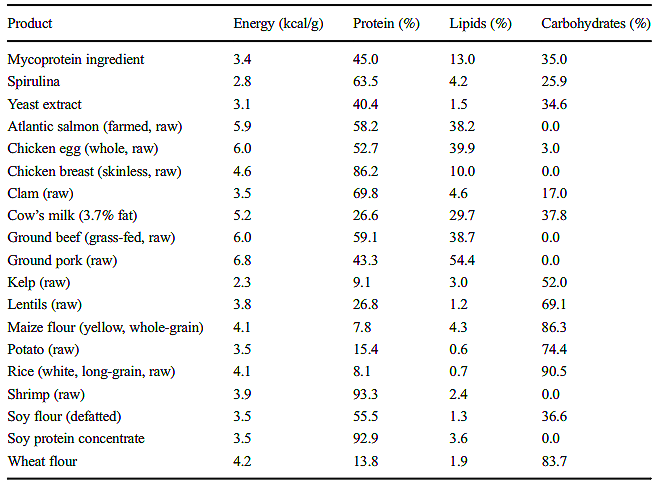
A comparison of the basic nutritional properties of microbial food products
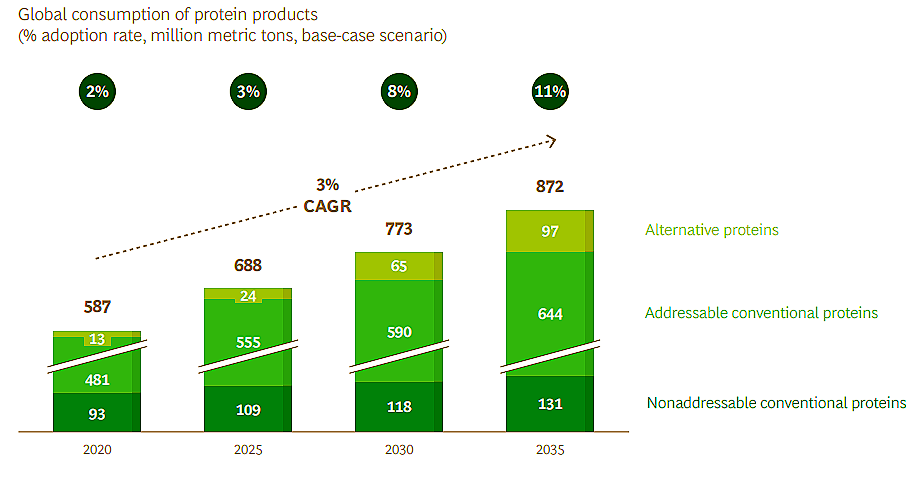
to a selection of basic foodstuffs by dry weight further shows that modern indoor food production for feed and food is pretty efficient. Alternative proteins, plant-, microrganism- and animal-cell based are projected to account for 11-22% of the protein market in 2035, by when all alternative have reached price parity, and then will grow by 5% year on year. If these projections come true, we would have to ~triple the 5% growth rate to meet the 75% in meat consumption reduction by 2050.
Comparison of nutritional properties of microbial food products
Alternative Proteins Will Very Likely Account for 11% of the Protein Market in 2035
ADVANCING SUSTAINABLE BIOENERGY DEVELOPMENT
New, advanced technologies make it possible to produce climate neutral fuels from non-forest and non-food energy crops. The benefits of cultivation and use of these energy crops for transport fuels and electricity goes beyond the benefits of reducing greenhouse gas emissions. Terrestrial energy crop cultivation and aquatic energy crop harvesting reverses land and water degradation, increases biodiversity and carbon sequestration and improves land fertility. We call this
Deep Green Biomass. Moreover, deploying these energy crops for the production of advanced biofuels will positively impact social-economic structures and energy independence and reduce the need for involuntary migration and deforestation: Deep Green Energy.
Deep Green Energy Partners works to accelerate deployment of deep green biomass for the production of advanced biofuels and biochemicals, to restore soil and water conditions and to optimize the overall ecological-economic effects of investments in the energy transition.
The value of natural capital per capita has declined by around 48% since 1990
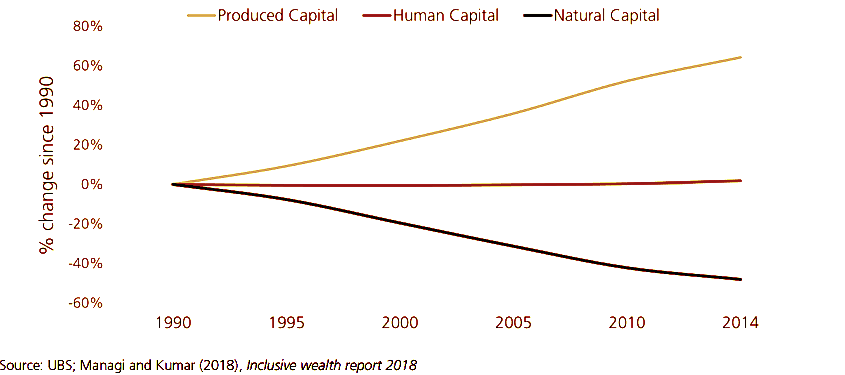
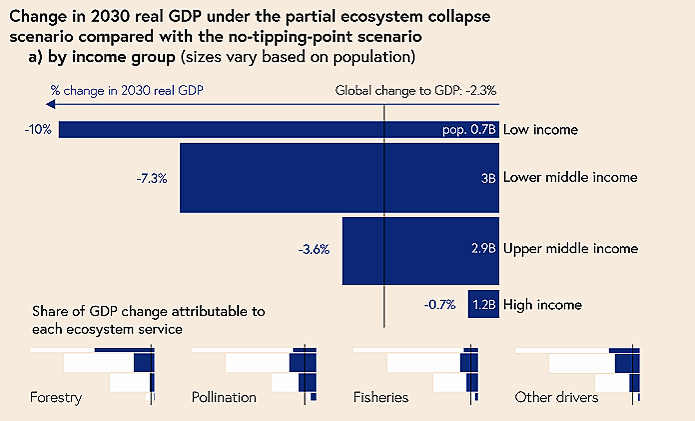
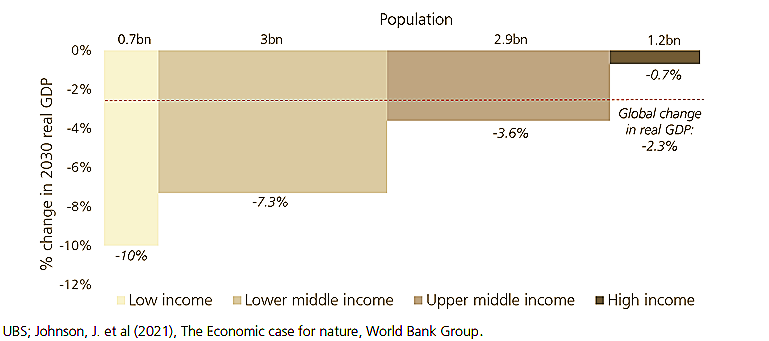
Declining ecosystem services could cost the world 2.3% in annual GDP by 2030
ADVANCING SUSTAINABLE BIOENERGY DEVELOPMENT
New, advanced technologies make it possible to produce climate neutral fuels from non-forest and non-food energy crops. The benefits of cultivation and use of these energy crops for transport fuels and electricity goes beyond the benefits of reducing greenhouse gas emissions. Terrestrial energy crop cultivation and aquatic energy crop harvesting reverses land and water degradation, increases biodiversity and carbon sequestration and improves land fertility. We call this
Deep Green Biomass. Moreover, deploying these energy crops for the production of advanced biofuels will positively impact social-economic structures and energy independence and reduce the need for involuntary migration and deforestation: Deep Green Energy.
Deep Green Energy Partners works to accelerate deployment of deep green biomass for the production of advanced biofuels and biochemicals, to restore soil and water conditions and to optimize the overall ecological-economic effects of investments in the energy transition.
In 2023 the average world temperatures reached 1.46 C above 1900 levels and set a record by briefly passing 2C at the end of November and unless more drastic action is taken climate, societal and economic tipping points are reached rather sooner than later. The outcome of COP 28 more or less guarantees continued global warming and biodiversity losses, and unless we counter these emissions and damages fast we are facing a complex of cascading, food, water, migration, financial and (geo)political crises.
ADVANCING SUSTAINABLE BIOENERGY DEVELOPMENT
New, advanced technologies make it possible to produce climate neutral fuels from non-forest and non-food energy crops. The benefits of cultivation and use of these energy crops for transport fuels and electricity goes beyond the benefits of reducing greenhouse gas emissions. Terrestrial energy crop cultivation and aquatic energy crop harvesting reverses land and water degradation, increases biodiversity and carbon sequestration and improves land fertility. We call this
Deep Green Biomass. Moreover, deploying these energy crops for the production of advanced biofuels will positively impact social-economic structures and energy independence and reduce the need for involuntary migration and deforestation: Deep Green Energy.
Deep Green Energy Partners works to accelerate deployment of deep green biomass for the production of advanced biofuels and biochemicals, to restore soil and water conditions and to optimize the overall ecological-economic effects of investments in the energy transition.
More than half of the world’s gross domestic product (GDP) – equivalent to an estimated USD 58 trillion – is moderately or highly dependent on nature. Without immediate action to improve the health of natural ecosystems and biodiversity more than half of the market value of listed companies on 19 major stock exchanges is exposed to material risk and so are our investments, savings, pensions and the world's future earning capacity required to built the sustainable supply systems of the future. Over the last 35 years the world's natural capital declined by ~2.5% per capita annually, and the resulting loss in ecosystem services could cost the world a projected 2.3% in GDP annually As only ~35% of all global investments has been
CARBON SEQUESTRATION - ECOSYSTEM RESTORATION
ADVANCING SUSTAINABLE BIOENERGY DEVELOPMENT
New, advanced technologies make it possible to produce climate neutral fuels from non-forest and non-food energy crops. The benefits of cultivation and use of these energy crops for transport fuels and electricity goes beyond the benefits of reducing greenhouse gas emissions. Terrestrial energy crop cultivation and aquatic energy crop harvesting reverses land and water degradation, increases biodiversity and carbon sequestration and improves land fertility. We call this
Deep Green Biomass. Moreover, deploying these energy crops for the production of advanced biofuels will positively impact social-economic structures and energy independence and reduce the need for involuntary migration and deforestation: Deep Green Energy.
Deep Green Energy Partners works to accelerate deployment of deep green biomass for the production of advanced biofuels and biochemicals, to restore soil and water conditions and to optimize the overall ecological-economic effects of investments in the energy transition.
Drastic scale-up of natural carbon sequestration by energy crops was already required in all below 2C GW by 2100 scenarios. Now that we are heading for 2.5C by 2050 we will have to sequester not only more carbon but also faster. The deep green
scenario therefore starts with the only option that can achieve this: growing perennial grasses like Miscanthus or King grass on degraded lands. Various perennial grasses variaties (often called elephant grass or energy crops) sequester carbon many times faster than trees and preserve and restore soil carbon, water and health to depleted lands through their long root systems from the moment they are planted. Moreover,
they are climate resilient, nutrient and water efficient, cheap to cultivate and grow well on marginal lands all over the world. And, unlike trees many perennial grasses can be harvested once or multiple times per year without interrupting the sequestration or growth cycles which provides an economical viable business case.
Energy crops can replace non-renewable fossil and forest fuels in almost all energy and chemical uses, when deployed for electricity they offer the sustainable alternative for wind, solar, hydro and nuclear. As 18-30% of carbon removed from the atmosphere remains stored below ground energy crops provide the regenerative substitute for many commodities needed in the energy and materials transition that can not be produced without a trade-off between decreasing emissions increasing biodiversity and ecosystem losses.
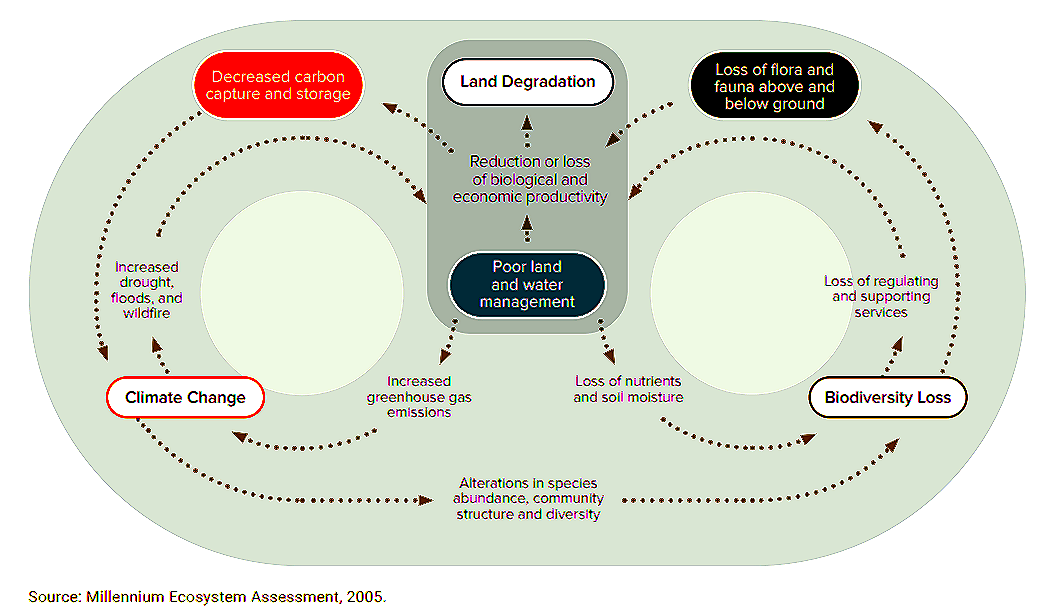
Feedback loops between land degradation, climate change, and biodiversity loss
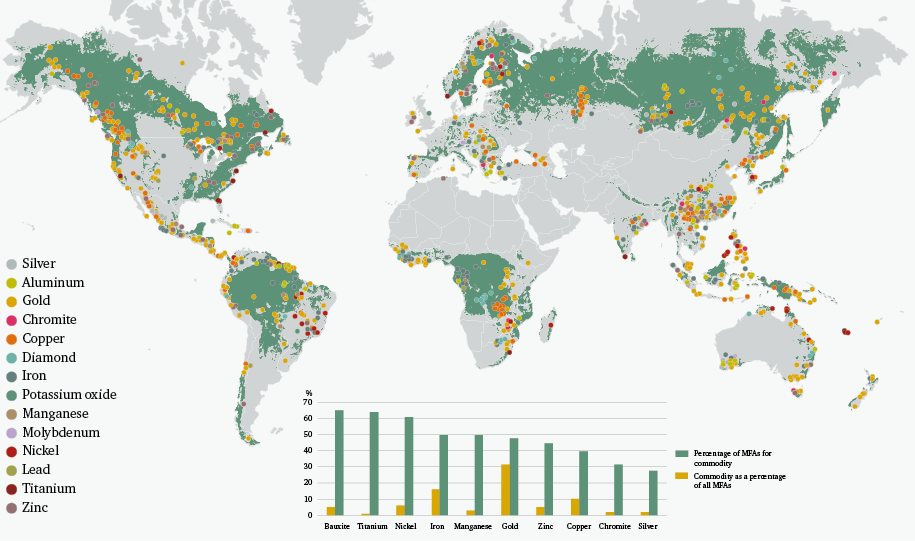
Large-scale mines in forest areas (MFAs), by primary commodity
ADVANCING SUSTAINABLE BIOENERGY DEVELOPMENT
New, advanced technologies make it possible to produce climate neutral fuels from non-forest and non-food energy crops. The benefits of cultivation and use of these energy crops for transport fuels and electricity goes beyond the benefits of reducing greenhouse gas emissions. Terrestrial energy crop cultivation and aquatic energy crop harvesting reverses land and water degradation, increases biodiversity and carbon sequestration and improves land fertility. We call this
Deep Green Biomass. Moreover, deploying these energy crops for the production of advanced biofuels will positively impact social-economic structures and energy independence and reduce the need for involuntary migration and deforestation: Deep Green Energy.
Deep Green Energy Partners works to accelerate deployment of deep green biomass for the production of advanced biofuels and biochemicals, to restore soil and water conditions and to optimize the overall ecological-economic effects of investments in the energy transition.
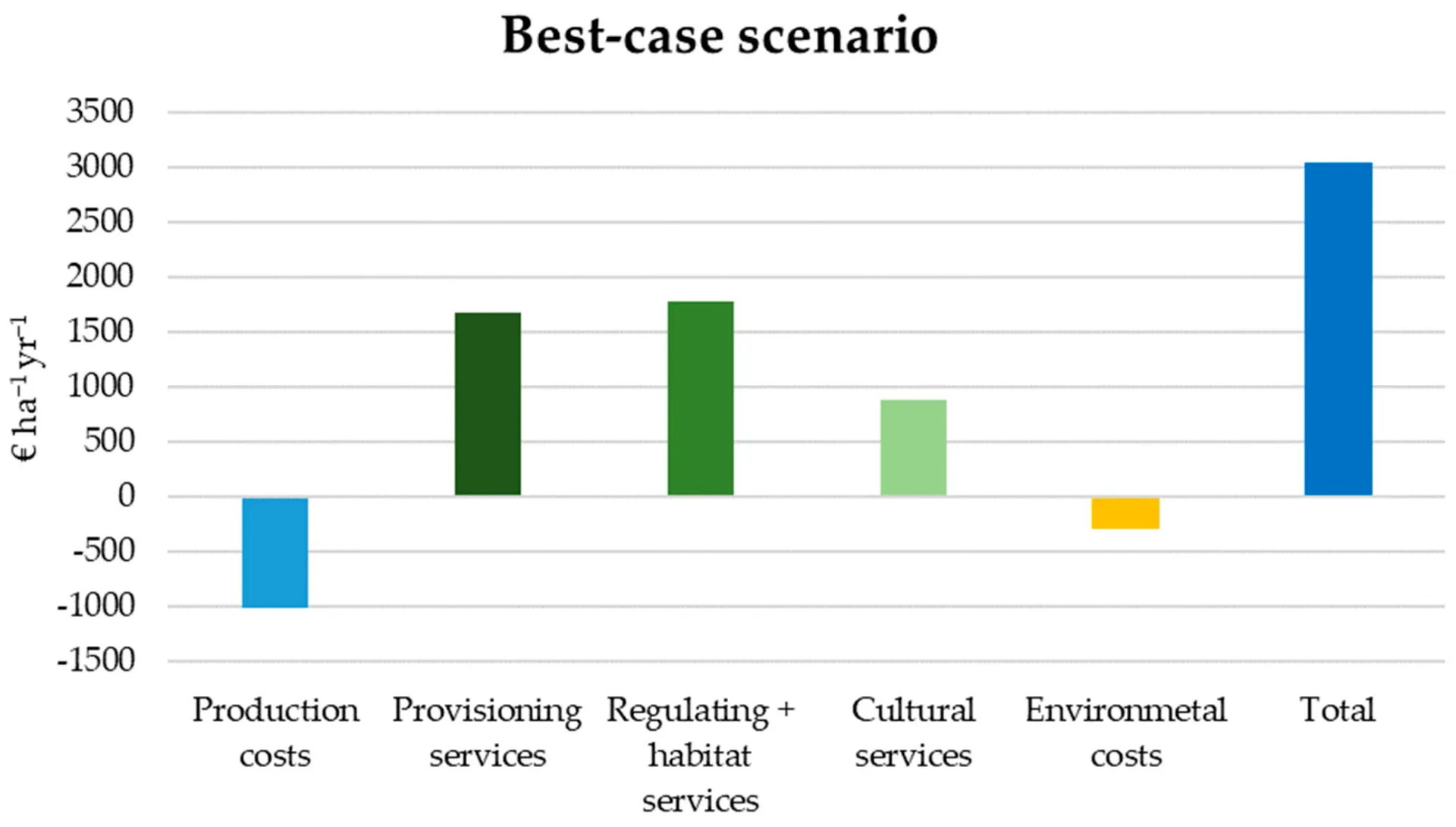
Energy crop cultivation not only provides the best option for carbon sequestration and soil restoration but also The ecosystem benefits of energy crops depend on specific soil and land conditions and yields per hectare but as a rule of thumb: the worse soil and land conditions and the higher the yield, the higher the ecosystem benefits. In e.g. (sub)tropical regions yields per hectare can be multiple times higher than in moderate climate zones and so will be the benefits. In a ''standard scenario'' the monetarized ecosystem benefits of e.g. Miscanthus cultivation in Germany (2020), by far outweigh the economic and environmental costs
resulting. in a true benefit of about Eur 1.800 per ha/year. If corrected for the 2023 EU ETS price of Eur 80 the benefits would be Eur 4.000 ha/y. The absolute benefits will however depend on how the energy crops are deployed for e.g. energy and food.
ADVANCING SUSTAINABLE BIOENERGY DEVELOPMENT
New, advanced technologies make it possible to produce climate neutral fuels from non-forest and non-food energy crops. The benefits of cultivation and use of these energy crops for transport fuels and electricity goes beyond the benefits of reducing greenhouse gas emissions. Terrestrial energy crop cultivation and aquatic energy crop harvesting reverses land and water degradation, increases biodiversity and carbon sequestration and improves land fertility. We call this
Deep Green Biomass. Moreover, deploying these energy crops for the production of advanced biofuels will positively impact social-economic structures and energy independence and reduce the need for involuntary migration and deforestation: Deep Green Energy.
Deep Green Energy Partners works to accelerate deployment of deep green biomass for the production of advanced biofuels and biochemicals, to restore soil and water conditions and to optimize the overall ecological-economic effects of investments in the energy transition.
Today bio-energy accounts for 55% of all renewable energy
and over 6% of global energy supply. In 2C GW scenarios total bio-energy has to increase by a factor 2 to 7 by 2050. Actual needs depending on how fast deforestation for direct use of wood for heating and cooking heat can be replaced by electricity or (advanced) biofuels, other renewable energy options and the development of technical carbon capture. As energy crops are the only option to produce those volumes sustainable, the global land area dedicated to energy crops is projected to be between 180 million ha and 1084 million ha. About 500 million ha of suitable land is readily available without conflicting with forest or agricultural land and the remainder will become available from agricultural lands that are already degrading and will be abandoned as their exploitation will no longer be viable.
Cultivating 1 billion hectares of energy crops will capture about 35 Gt (Gigatonnes) CO2 annually, which equals the total human caused CO2
emissions today. Extrapolating the German Miscanthus case, and applying the current EU ETS price of Eur 80/tonne CO2, this represents Eur 0.2tn (trillion) in direct financial profits, 2.8tn CO2 sequestration profits and net 1tn in other ecosystem services. If all German energy crops would be converted to isobutanol to replace fossil petrol
this would reduce the value of net CO2 profits by 0.6tn (-2.1tn from combustion and + 1.5 tn from avoided emissions by substitution). Leaving a net of 3.4 trillion in overall profits.
ADVANCING SUSTAINABLE BIOENERGY DEVELOPMENT
New, advanced technologies make it possible to produce climate neutral fuels from non-forest and non-food energy crops. The benefits of cultivation and use of these energy crops for transport fuels and electricity goes beyond the benefits of reducing greenhouse gas emissions. Terrestrial energy crop cultivation and aquatic energy crop harvesting reverses land and water degradation, increases biodiversity and carbon sequestration and improves land fertility. We call this
Deep Green Biomass. Moreover, deploying these energy crops for the production of advanced biofuels will positively impact social-economic structures and energy independence and reduce the need for involuntary migration and deforestation: Deep Green Energy.
Deep Green Energy Partners works to accelerate deployment of deep green biomass for the production of advanced biofuels and biochemicals, to restore soil and water conditions and to optimize the overall ecological-economic effects of investments in the energy transition.
The future of sustainable food production has already arrived: vegetables and fruits produced in vertical greenhouses and proteins, carbohydrates, fats, vitamines, flour, dairy products and whole meats by advanced ''cellular" and "precision fermentation" technologies in bio-factories. All three are produced in closed environments independent from soil, water and climatic conditions and increase land, water and nutrient efficiencies by between 90% and 99% while decimating pollution and production times. Thus we can produce the identical biological foods and food components we are using today in sufficient amounts, from the same resources as the plants and animals we now cultivate in open fields to provide our food: energy, carbon dioxide (CO2), water and nutrients (e.g. nitrogen, phosphor, sulfur and potassium).
ADVANCING SUSTAINABLE BIOENERGY DEVELOPMENT
New, advanced technologies make it possible to produce climate neutral fuels from non-forest and non-food energy crops. The benefits of cultivation and use of these energy crops for transport fuels and electricity goes beyond the benefits of reducing greenhouse gas emissions. Terrestrial energy crop cultivation and aquatic energy crop harvesting reverses land and water degradation, increases biodiversity and carbon sequestration and improves land fertility. We call this
Deep Green Biomass. Moreover, deploying these energy crops for the production of advanced biofuels will positively impact social-economic structures and energy independence and reduce the need for involuntary migration and deforestation: Deep Green Energy.
Deep Green Energy Partners works to accelerate deployment of deep green biomass for the production of advanced biofuels and biochemicals, to restore soil and water conditions and to optimize the overall ecological-economic effects of investments in the energy transition.
The energy requirements of indoor food production are however a little higher on average than open air production. Energy crops can provide that energy, as well as the CO2
and many of the nutrients needed for indoor food production. Thus many of the actions needed for in the foodsystem to achieve 2°C GW are achieved simultaneously. At the same time much of the (to be) abandoned agricultural lands that are passed the point where they can naturally regenerate their health. Energy crops plantations can halt further land degradation and abandonment and provided an alternative livelihood, thus the arguments in the land for food or energy discussion are reversed.
GHG emissions from various energy sources are well documented and relatively easy to assess and therefore simple to price. This has led to modelling the monetized financial cost and the avoided cost of GW by the alternatives for renewable energy as policy drivers. The impacts on biodiversity and ecosystems are far more challenging to asses as ecosystems are unique, local, site-specific and the impacts of incremental, irreversible species loss brings us rapidly closer to ecosystem collapses. Moreover, as most of the ecosystem cost for energy incur in the mining, processing and equipment production outside, and beyond the control of the country of deployment it makes the supply chain costs to ecosystems highly dependable on difficult to influence resource extraction practices.
Moreover, the financial benefits of renewable energy can always be positive as these are set by the production cost in a semi-monopolistic market largely controlled by governments. As we have recently seen projected cost for e.g. wind energy were far lower than actual cost but these can be simply compensated by increased prices that are justified by increasing the "cost" for CO2eq
emissions up to the objective cost of about Eur 180 per ton CO2eq. As there is no objective price for the cost for ecosystem losses and the successive feedback loops, monetizing ecosystem services is only useful ecosystem impacts: it is either positive or negative.
The ecosystem impacts of solar, wind and
hydro energy production differ considerably depending on the specifics by location but are always negative and can not be compensated internally by the production system. A holistic assessment for e.g Pakistan
of the potential energy mix including hydro, wind and solar for the year 2030 is illustrative: a total positive economic impact of up to USD 9617 million per year, with a complete loss of USD 1259 million per year in ecosystem services values and all three renewables contributing to the loss of ecosystem services. The ecosystem impacts of bioenergy on the other hand can be both positive or negative depending on it's source and how it is deployed.
ADVANCING SUSTAINABLE BIOENERGY DEVELOPMENT
New, advanced technologies make it possible to produce climate neutral fuels from non-forest and non-food energy crops. The benefits of cultivation and use of these energy crops for transport fuels and electricity goes beyond the benefits of reducing greenhouse gas emissions. Terrestrial energy crop cultivation and aquatic energy crop harvesting reverses land and water degradation, increases biodiversity and carbon sequestration and improves land fertility. We call this
Deep Green Biomass. Moreover, deploying these energy crops for the production of advanced biofuels will positively impact social-economic structures and energy independence and reduce the need for involuntary migration and deforestation: Deep Green Energy.
Deep Green Energy Partners works to accelerate deployment of deep green biomass for the production of advanced biofuels and biochemicals, to restore soil and water conditions and to optimize the overall ecological-economic effects of investments in the energy transition.
Cultivating 1 billion hectares of energy crops will capture about 35 Gt (Gigatonnes) CO2 annually, which equals the total human caused CO2
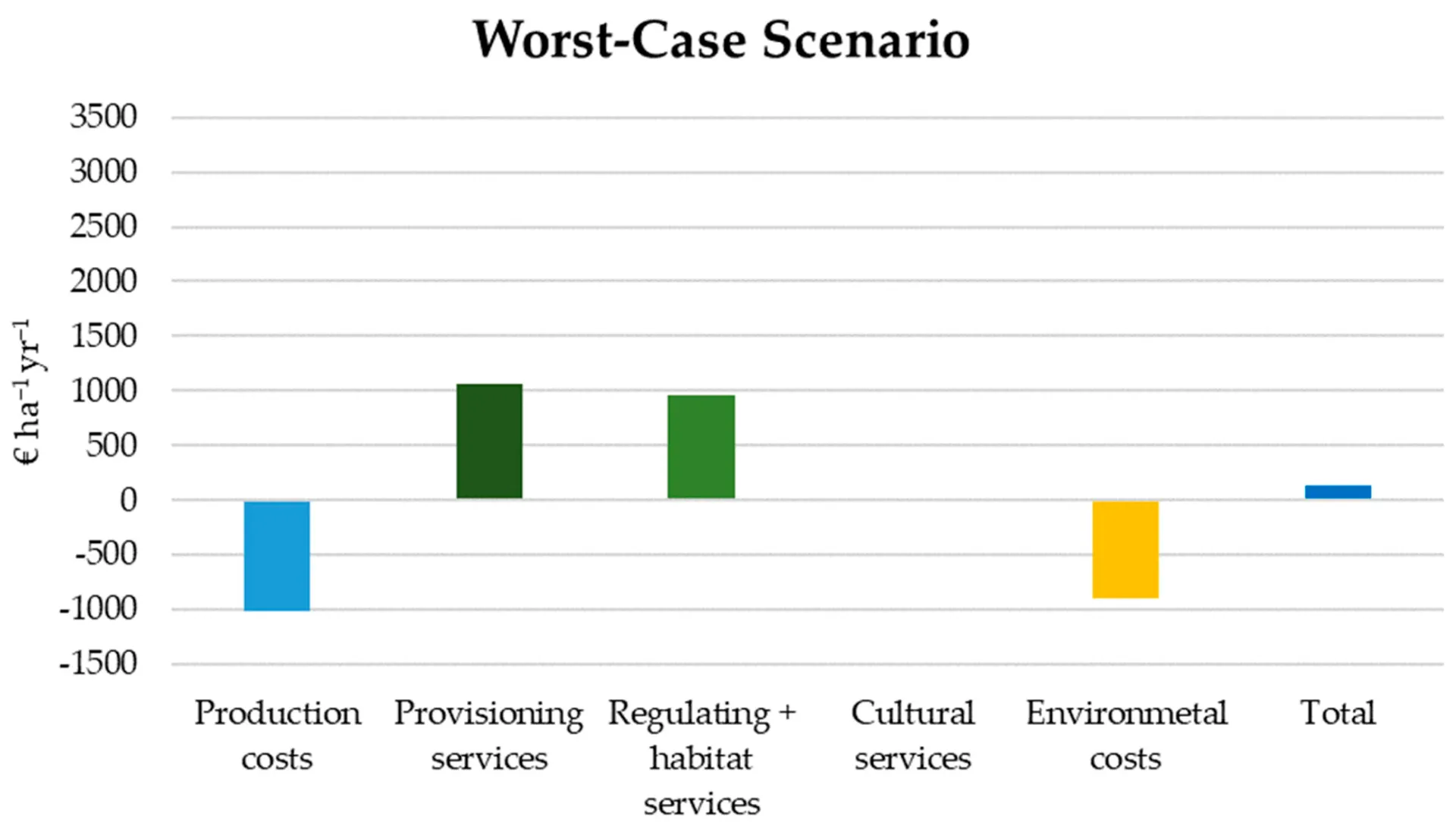
emissions today. Depending on the scenario assessed, best case or worst case the cultivation of miscanthus leads to a net benefit of 140 to 3051 EUR ha−1 yr−1 Extrapolating the German Miscanthus case, and applying the current EU ETS price of Eur 80/tonne CO2, this represents Eur 0.2tn (trillion) in direct financial profits, 2.8tn CO2 sequestration profits and net 1tn in other ecosystem services. If all German energy crops would be converted to isobutanol to replace fossil petrol
this would reduce the value of net CO2 profits by 0.6tn (-2.1tn from combustion and + 1.5 tn from avoided emissions by substitution). Leaving a net of 3.4 trillion in overall profits .
Maximazion of production against lowest cost On a global level there is enough land, water, energy and capital to produce sufficient food and energy for the world population by 2050, but not without further biodiversity and ecosystem losses. On a regional or national level the mismatch between land and water resources is increasing and so is the number of countries depending on direct and indirect food, water and energy imports. Countries reliant on imports will have to generate the income to pay for these imports by exports.
Monetized internal and external costs and benefits - Best Case
Monetized internal and external costs and benefits - Worst Case
ADVANCING SUSTAINABLE BIOENERGY DEVELOPMENT
New, advanced technologies make it possible to produce climate neutral fuels from non-forest and non-food energy crops. The benefits of cultivation and use of these energy crops for transport fuels and electricity goes beyond the benefits of reducing greenhouse gas emissions. Terrestrial energy crop cultivation and aquatic energy crop harvesting reverses land and water degradation, increases biodiversity and carbon sequestration and improves land fertility. We call this
Deep Green Biomass. Moreover, deploying these energy crops for the production of advanced biofuels will positively impact social-economic structures and energy independence and reduce the need for involuntary migration and deforestation: Deep Green Energy.
Deep Green Energy Partners works to accelerate deployment of deep green biomass for the production of advanced biofuels and biochemicals, to restore soil and water conditions and to optimize the overall ecological-economic effects of investments in the energy transition.
Cultivating 1 billion hectares of energy crops will capture about 35 Gt (Gigatonnes) CO2 annually, which equals the total human caused CO2
emissions today. Depending on the scenario assessed, the cultivation of miscanthus leads to a net benefit of 140 to 3051 EUR ha−1 yr−1 Extrapolating the German Miscanthus case, and applying the current EU ETS price of Eur 80/tonne CO2, this represents Eur 0.2tn (trillion) in direct financial profits, 2.8tn CO2 sequestration profits and net 1tn in other ecosystem services. If all German energy crops would be converted to isobutanol to replace fossil petrol
this would reduce the value of net CO2 profits by 0.6tn (-2.1tn from combustion and + 1.5 tn from avoided emissions by substitution). Leaving a net of 3.4 trillion in overall profits.
ADVANCING SUSTAINABLE BIOENERGY DEVELOPMENT
New, advanced technologies make it possible to produce climate neutral fuels from non-forest and non-food energy crops. The benefits of cultivation and use of these energy crops for transport fuels and electricity goes beyond the benefits of reducing greenhouse gas emissions. Terrestrial energy crop cultivation and aquatic energy crop harvesting reverses land and water degradation, increases biodiversity and carbon sequestration and improves land fertility. We call this
Deep Green Biomass. Moreover, deploying these energy crops for the production of advanced biofuels will positively impact social-economic structures and energy independence and reduce the need for involuntary migration and deforestation: Deep Green Energy.
Deep Green Energy Partners works to accelerate deployment of deep green biomass for the production of advanced biofuels and biochemicals, to restore soil and water conditions and to optimize the overall ecological-economic effects of investments in the energy transition.
Extrapolating the example of Miscanthus cultivation in Germany to 1 billion hectares will capture around 35 Gt CO2 which is about the same as current human caused (anthropogenic) CO2 emissions. This would require about 37 million hectares of energy crops plantations year on year up to 2050, which seems a lot but is about half of the average annual land-use change. The CO2 sequestration rate per hectare (ha) depends on yield and soil conditions: the more the land is degraded, the more CO2 it can restore and the more nutrients it needs to restore yields. Energy crops need little fertilizer and the highest yields are achieved in (sub)tropical climates, which is also where a lot of land is degraded and little
If we annually move 1% of all protein production indoors (feed and food) and deploy the cultivated energy crops for the energy, CO2 and nutrients for indoor production we would reduce the climate impacts and GHG emissions from today's agriculture by 0.9% annually and land-use by between 5.5 and 26 million hectares (150 - 700 million hectares by 2050).
The world loses an estimated USD 10-30 trillion per year in ecosystem services
owing to land-cover change and land degradation. deliver at least a net ecosystem improvement benefit of between EUR 1.2 and 4.2 trillion
at a CO2
price of EUR 27, an annual yield of 15 tonnes dry matter/ha (DM/ha/y) and deploying the harvest for the substitution of fossil fuels by e.g. isobutanol. If the true consequential cost of CO2 would be used in the quotation, about EUR 180/ton, benefits would be 2.5 trillion higher, about EUR 5 trillion/year. Which is close to the annual global oil, gas and coal sales of about USD 5.5 trillion.
Energy consumption is expected to grow by 35% and emisons by 50%
is 16.3 t DM ha−1 yr−1 (7.0 t DM ha−1 yr−1), with the highest yields in the Amazon area and southeastern Asia.
Our energy and food system are directly and indirectly the cause of 90% of global warming, climate change and biodiversity losses. The total value of food and oil&gas sales are estimated to be about USD 9.3 trillion and that of energy about USD 6 trillion. Global governments price subsidies for fossil fuels amount to USD 577 Bn which cause USD 6 trillion in damages .The rational for quick rebalancing action to halt and subsequently reverse biodiversity loss is pretty evident in both financial and social terms. This also means that projected future impacts will happen sooner as well and our timeframe for mitigation or adaption is therefore shorter than assumed in earlier scenarios.So, what and how can we change as consumers what governments and industry can not? The short answer is: grow grasses to restore ecosystems, deploy these grasses to reduce demand for fossil and forest fuels and move food production indoors before it succumbs under it's own weight. All three elements can be developed stand-alone but coordinating their development will allow for resource and supply chain optimization as well as fast roll-out times.
ADVANCING SUSTAINABLE BIOENERGY DEVELOPMENT
New, advanced technologies make it possible to produce climate neutral fuels from non-forest and non-food energy crops. The benefits of cultivation and use of these energy crops for transport fuels and electricity goes beyond the benefits of reducing greenhouse gas emissions. Terrestrial energy crop cultivation and aquatic energy crop harvesting reverses land and water degradation, increases biodiversity and carbon sequestration and improves land fertility. We call this
Deep Green Biomass. Moreover, deploying these energy crops for the production of advanced biofuels will positively impact social-economic structures and energy independence and reduce the need for involuntary migration and deforestation: Deep Green Energy.
Deep Green Energy Partners works to accelerate deployment of deep green biomass for the production of advanced biofuels and biochemicals, to restore soil and water conditions and to optimize the overall ecological-economic effects of investments in the energy transition.
Extrapolating the example of Miscanthus cultivation in Germany to 1 billion hectares will capture around 35 Gt CO2 which is about the same as current human caused (anthropogenic) CO2 emissions. This would require about 37 million hectares of energy crops plantations year on year up to 2050, which seems a lot but is about half of the average annual land-use change. If we annually move 1% of all protein production indoors (feed and food) and deploy the cultivated energy crops for the energy, CO2 and nutrients for indoor production we would reduce the climate impacts and GHG emissions from today's agriculture by 0.9% annually and land-use by between 5.5 and 26 million hectares (150 - 700 million hectares by 2050).
The world loses an estimated USD 10-30 trillion per year in ecosystem services
owing to land-cover change and land degradation. deliver at least a net ecosystem improvement benefit of between EUR 1.2 and 4.2 trillion
at a CO2
price of EUR 27, an annual yield of 15 tonnes dry matter/ha (DM/ha/y) and deploying the harvest for the substitution of fossil fuels by e.g. isobutanol. If the true consequential cost of CO2 would be used in the quotation, about EUR 180/ton, benefits would be 2.5 trillion higher, about EUR 5 trillion/year. Which is close to the annual global oil, gas and coal sales of about USD 5.5 trillion.
Energy consumption is expected to grow by 35% and emisons by 50%
is 16.3 t DM ha−1 yr−1 (7.0 t DM ha−1 yr−1), with the highest yields in the Amazon area and southeastern Asia.
Our energy and food system are directly and indirectly the cause of 90% of global warming, climate change and biodiversity losses. The total value of food and oil&gas sales are estimated to be about USD 9.3 trillion and that of energy about USD 6 trillion. Global governments price subsidies for fossil fuels amount to USD 577 Bn which cause USD 6 trillion in damages .The rational for quick rebalancing action to halt and subsequently reverse biodiversity loss is pretty evident in both financial and social terms. This also means that projected future impacts will happen sooner as well and our timeframe for mitigation or adaption is therefore shorter than assumed in earlier scenarios.So, what and how can we change as consumers what governments and industry can not?
ADVANCING SUSTAINABLE BIOENERGY DEVELOPMENT
New, advanced technologies make it possible to produce climate neutral fuels from non-forest and non-food energy crops. The benefits of cultivation and use of these energy crops for transport fuels and electricity goes beyond the benefits of reducing greenhouse gas emissions. Terrestrial energy crop cultivation and aquatic energy crop harvesting reverses land and water degradation, increases biodiversity and carbon sequestration and improves land fertility. We call this
Deep Green Biomass. Moreover, deploying these energy crops for the production of advanced biofuels will positively impact social-economic structures and energy independence and reduce the need for involuntary migration and deforestation: Deep Green Energy.
Deep Green Energy Partners works to accelerate deployment of deep green biomass for the production of advanced biofuels and biochemicals, to restore soil and water conditions and to optimize the overall ecological-economic effects of investments in the energy transition.
ADVANCING SUSTAINABLE BIOENERGY DEVELOPMENT
New, advanced technologies make it possible to produce climate neutral fuels from non-forest and non-food energy crops. The benefits of cultivation and use of these energy crops for transport fuels and electricity goes beyond the benefits of reducing greenhouse gas emissions. Terrestrial energy crop cultivation and aquatic energy crop harvesting reverses land and water degradation, increases biodiversity and carbon sequestration and improves land fertility. We call this
Deep Green Biomass. Moreover, deploying these energy crops for the production of advanced biofuels will positively impact social-economic structures and energy independence and reduce the need for involuntary migration and deforestation: Deep Green Energy.
Deep Green Energy Partners works to accelerate deployment of deep green biomass for the production of advanced biofuels and biochemicals, to restore soil and water conditions and to optimize the overall ecological-economic effects of investments in the energy transition.
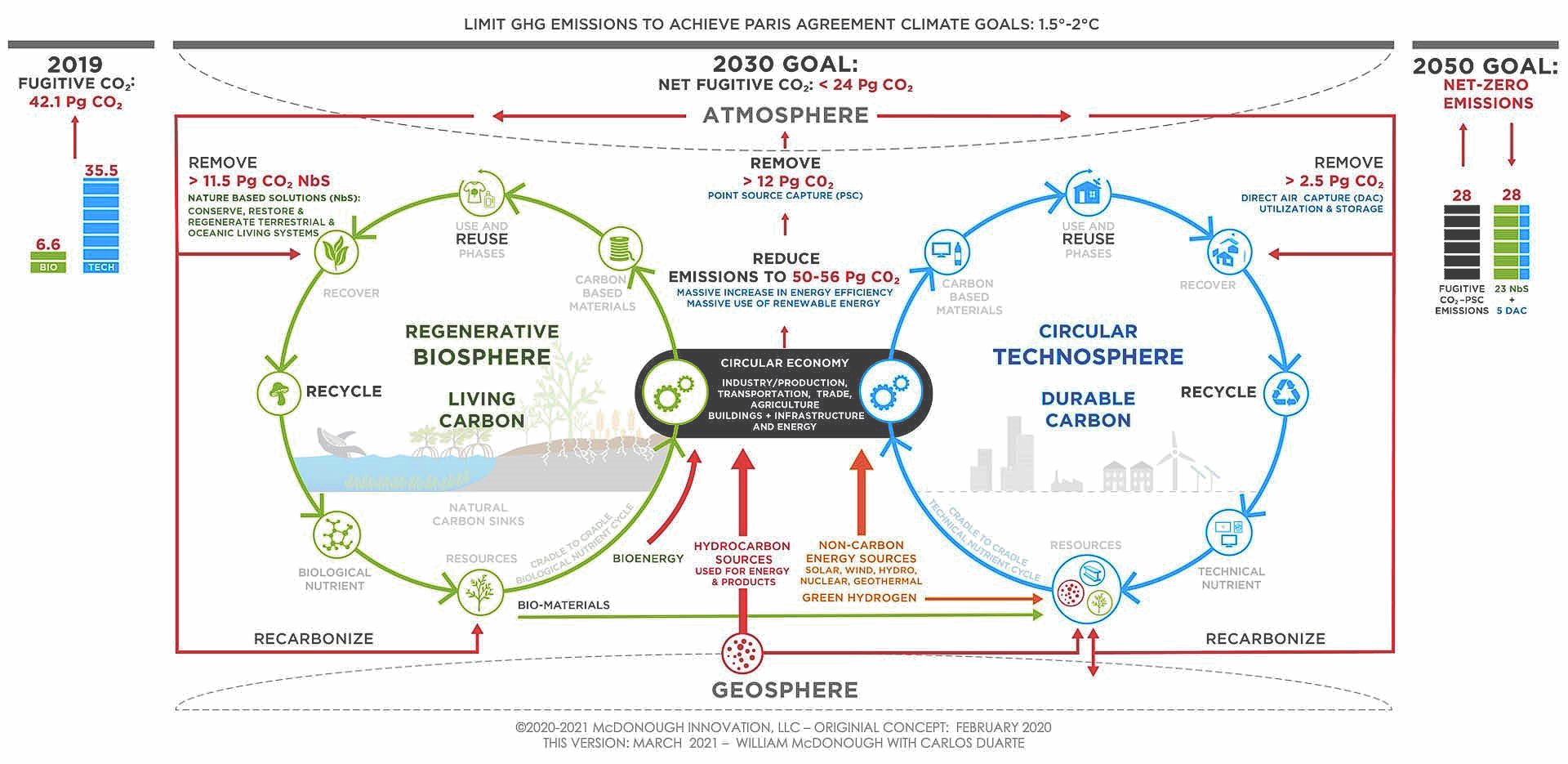
The rational for a circular carbon economy be evident, the road to salvation is however less so. The technosphere (resource extraction, transport, industry, construction, heat, cooling, electricity) is powered for over 80% by fossil fuels while only 0,01% of its emissions are captured by technical means. Non-carbon energy use is growing, but so still is fossil's as it is often the cheapest or only option to keep the economy running in the foreseeable future and its production is more profitable than that of renewable energy.
In the biosphere emissions are caused by natural occurring processes (respiration, decay, wildfires, volcanic) or by anthropogenic (human caused) induced processes: land-use change and resource extraction for food, fuels, fibers, materials and urban areas. Until technical carbon capture, at smokestacks or directly from the air is sufficiently scaled-up we have no other options for increasing carbon circularity than by expanding carbon sequestration (biomass), and reducing emissions from energy use by deploying non-carbon renewable energy, renewable biomass or nuclear.
ADVANCING SUSTAINABLE BIOENERGY DEVELOPMENT
New, advanced technologies make it possible to produce climate neutral fuels from non-forest and non-food energy crops. The benefits of cultivation and use of these energy crops for transport fuels and electricity goes beyond the benefits of reducing greenhouse gas emissions. Terrestrial energy crop cultivation and aquatic energy crop harvesting reverses land and water degradation, increases biodiversity and carbon sequestration and improves land fertility. We call this
Deep Green Biomass. Moreover, deploying these energy crops for the production of advanced biofuels will positively impact social-economic structures and energy independence and reduce the need for involuntary migration and deforestation: Deep Green Energy.
Deep Green Energy Partners works to accelerate deployment of deep green biomass for the production of advanced biofuels and biochemicals, to restore soil and water conditions and to optimize the overall ecological-economic effects of investments in the energy transition.
Renewable resources are natural resources which are replenished to replace the portion depleted by usage and consumption, either through natural reproduction or other recurring processes faster than they are used. I.e. wind, solar, hydro, geothermal, tidal and bio-carbon for renewable energy and bio-carbon for renewable materials (renewable carbon).
Deployment of fossil carbons accounts for over 64% of all carbon dioxide emissions and 43% of all methane emissions, which translates to 72% of all weighted global greenhouse gas emissions. Renewable energy can technically replace a substantial part of the fossil carbons used for energy. Renewable carbon can replace fossil carbon in almost all energy and materials. Therefore increasing and integrating renewable carbon and renewable holds the promise of a sustainable future.
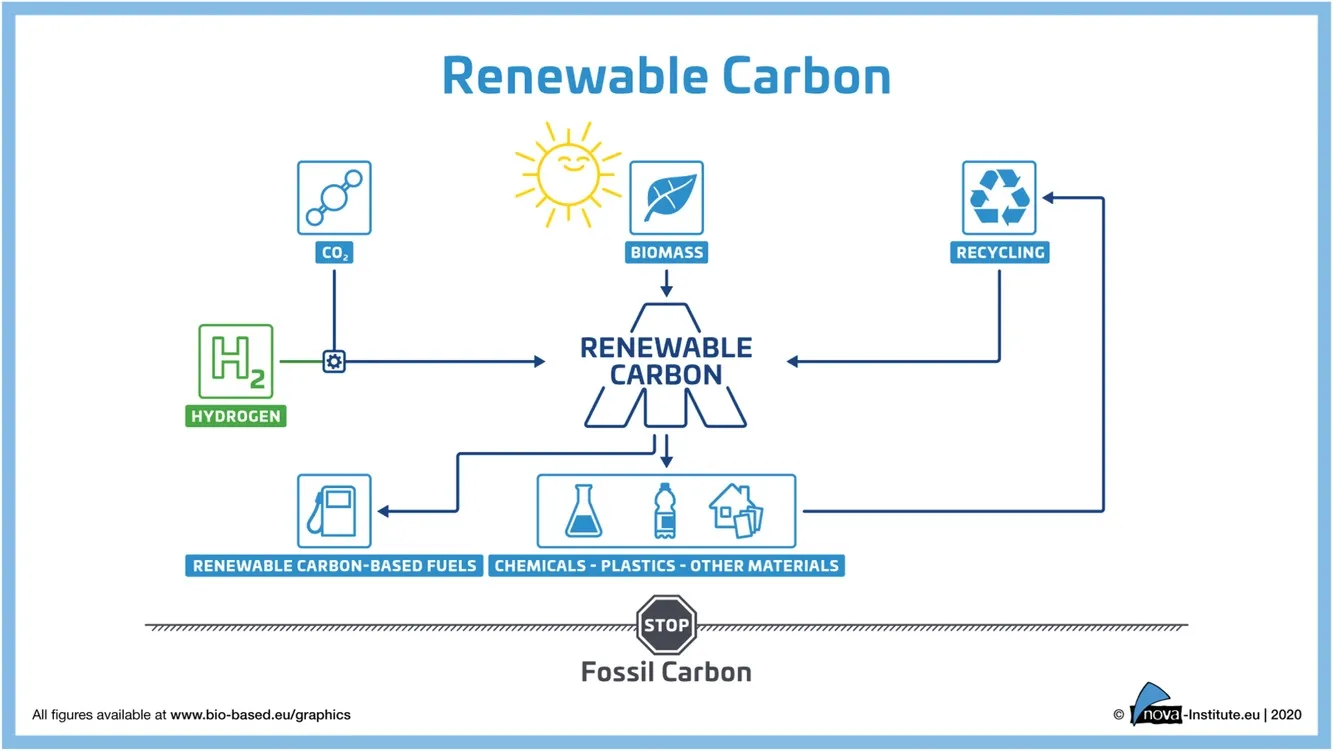
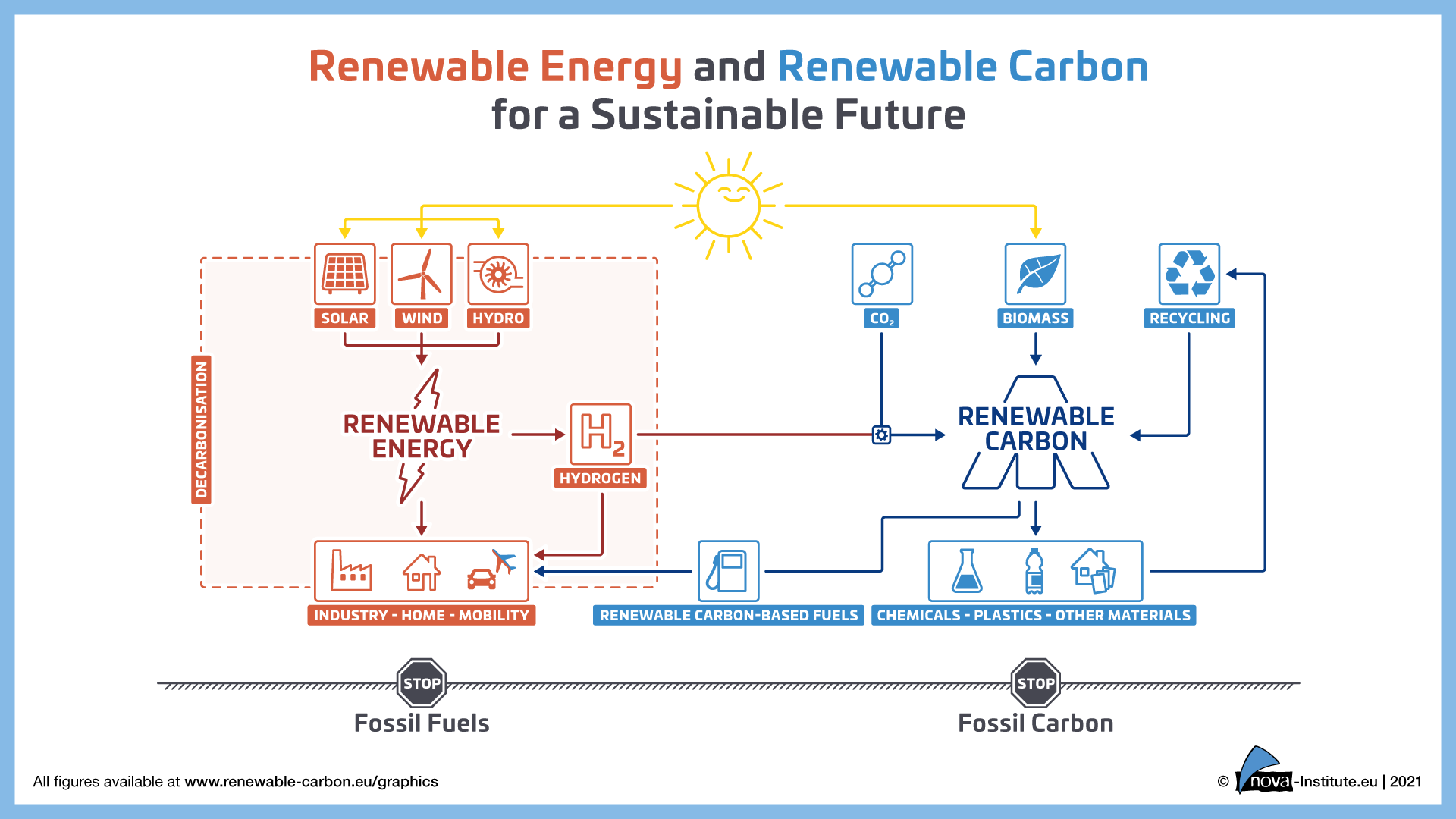
ADVANCING SUSTAINABLE BIOENERGY DEVELOPMENT
New, advanced technologies make it possible to produce climate neutral fuels from non-forest and non-food energy crops. The benefits of cultivation and use of these energy crops for transport fuels and electricity goes beyond the benefits of reducing greenhouse gas emissions. Terrestrial energy crop cultivation and aquatic energy crop harvesting reverses land and water degradation, increases biodiversity and carbon sequestration and improves land fertility. We call this
Deep Green Biomass. Moreover, deploying these energy crops for the production of advanced biofuels will positively impact social-economic structures and energy independence and reduce the need for involuntary migration and deforestation: Deep Green Energy.
Deep Green Energy Partners works to accelerate deployment of deep green biomass for the production of advanced biofuels and biochemicals, to restore soil and water conditions and to optimize the overall ecological-economic effects of investments in the energy transition.
The scale-up of circularity and the deployment of renewable resources ar both limited by their own resource requirements: land, water, materials, energy and workforce. Renewable energy and renewable carbon are therefore not by definition also sustainable.
ADVANCING SUSTAINABLE BIOENERGY DEVELOPMENT
New, advanced technologies make it possible to produce climate neutral fuels from non-forest and non-food energy crops. The benefits of cultivation and use of these energy crops for transport fuels and electricity goes beyond the benefits of reducing greenhouse gas emissions. Terrestrial energy crop cultivation and aquatic energy crop harvesting reverses land and water degradation, increases biodiversity and carbon sequestration and improves land fertility. We call this
Deep Green Biomass. Moreover, deploying these energy crops for the production of advanced biofuels will positively impact social-economic structures and energy independence and reduce the need for involuntary migration and deforestation: Deep Green Energy.
Deep Green Energy Partners works to accelerate deployment of deep green biomass for the production of advanced biofuels and biochemicals, to restore soil and water conditions and to optimize the overall ecological-economic effects of investments in the energy transition.
Renewable non-carbon energy requires mainly materials (concrete, minerals and metals), water, organization, money and a skilled workforce and is therefore only sustainable when the damages and emissions from resource extraction, production and distribution are less than those from using fossil-based energy. Renewable carbon-energy comes from biomass and is only sustainable when the particular biomass used is a) renewable, i.e. when it is additionally planted for the specific purpose of deployment, and carbon is sequestered by its regrowth at the same (or greater) rate as carbon is emitted from its combustion or other use, and b) does not compete for land and water with food production, carbon sequestration and biodiversity.
ADVANCING SUSTAINABLE BIOENERGY DEVELOPMENT
New, advanced technologies make it possible to produce climate neutral fuels from non-forest and non-food energy crops. The benefits of cultivation and use of these energy crops for transport fuels and electricity goes beyond the benefits of reducing greenhouse gas emissions. Terrestrial energy crop cultivation and aquatic energy crop harvesting reverses land and water degradation, increases biodiversity and carbon sequestration and improves land fertility. We call this
Deep Green Biomass. Moreover, deploying these energy crops for the production of advanced biofuels will positively impact social-economic structures and energy independence and reduce the need for involuntary migration and deforestation: Deep Green Energy.
Deep Green Energy Partners works to accelerate deployment of deep green biomass for the production of advanced biofuels and biochemicals, to restore soil and water conditions and to optimize the overall ecological-economic effects of investments in the energy transition.
As biodiversity is essential for the ecosystem services on which our lives depend, any assessment of what should or could change commences with the land and water requirements for biodiversity. Most biodiversity, carbon and clean water is held and sequestered by old, mature forests, peatlands, mangroves tundras and wild grasslands.
The preservation and restoration of the 20% global land area will require a stop of further land expansion by all other land-uses unless they contribute to above or below ground biodiversity. Natural mature forests recovery show fast recovery rates of carbon stores and biodiversity of about 20-25 years while newly established forests or plantations only recover a fraction of that carbon 30-50 years and some of its biodiversity after 100 years. So forest should be left alone to naturally expand and more effective biomass for carbon sequestration, energy crops that can be harvested while soil carbon is continuously restored, should be planted to remove the economical reasons for deforestation. Speed is required for both preservation and restoration, as climate change is working counter productive.
ADVANCING SUSTAINABLE BIOENERGY DEVELOPMENT
New, advanced technologies make it possible to produce climate neutral fuels from non-forest and non-food energy crops. The benefits of cultivation and use of these energy crops for transport fuels and electricity goes beyond the benefits of reducing greenhouse gas emissions. Terrestrial energy crop cultivation and aquatic energy crop harvesting reverses land and water degradation, increases biodiversity and carbon sequestration and improves land fertility. We call this
Deep Green Biomass. Moreover, deploying these energy crops for the production of advanced biofuels will positively impact social-economic structures and energy independence and reduce the need for involuntary migration and deforestation: Deep Green Energy.
Deep Green Energy Partners works to accelerate deployment of deep green biomass for the production of advanced biofuels and biochemicals, to restore soil and water conditions and to optimize the overall ecological-economic effects of investments in the energy transition.
The next priorities for land-use, concerning the remaining 50% of global land area would arguably be food. Today Agricultural land-use
covers about 45% of all arable land and a third of that land, some 1600 million hectares is increasingly losing its carbon, water and productivity due to intensive agriculture. More efficient agricultural techniques, crop improvements and relocating crop lands to optimal could increase yields per hectare but this alone will insufficient to halt the conversion of more forest and grassland to farm land.
However, as the world population is growing, gets wealthier and increasingly urbanized, dietary preferences changes as well. Overall food demand is set to grow 50% by 2050 and global meat and dairy consumption is on a course to increase by nearly 70%. Livestock, feed crops and rangeland account for 75% of all agricultural land-use, thus an increase of about 25% net overall land-use for food and 50% of emissions from its production is to be expected. Meeting future cereal, meat and dairy demand within the current system will unavoidably push agricultural land needs over even the minimum thresholds needed for biodiversity.
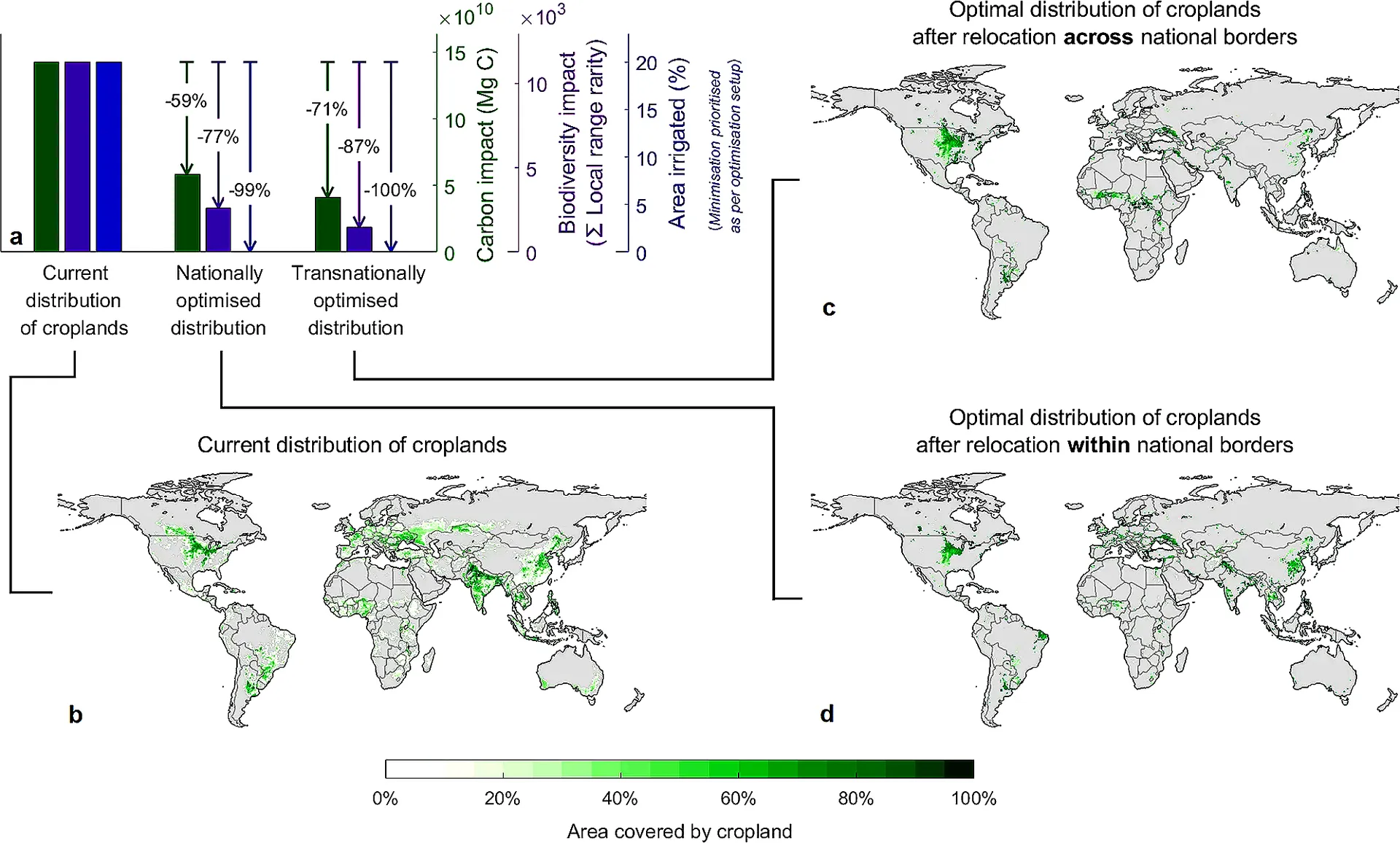
ADVANCING SUSTAINABLE BIOENERGY DEVELOPMENT
New, advanced technologies make it possible to produce climate neutral fuels from non-forest and non-food energy crops. The benefits of cultivation and use of these energy crops for transport fuels and electricity goes beyond the benefits of reducing greenhouse gas emissions. Terrestrial energy crop cultivation and aquatic energy crop harvesting reverses land and water degradation, increases biodiversity and carbon sequestration and improves land fertility. We call this
Deep Green Biomass. Moreover, deploying these energy crops for the production of advanced biofuels will positively impact social-economic structures and energy independence and reduce the need for involuntary migration and deforestation: Deep Green Energy.
Deep Green Energy Partners works to accelerate deployment of deep green biomass for the production of advanced biofuels and biochemicals, to restore soil and water conditions and to optimize the overall ecological-economic effects of investments in the energy transition.
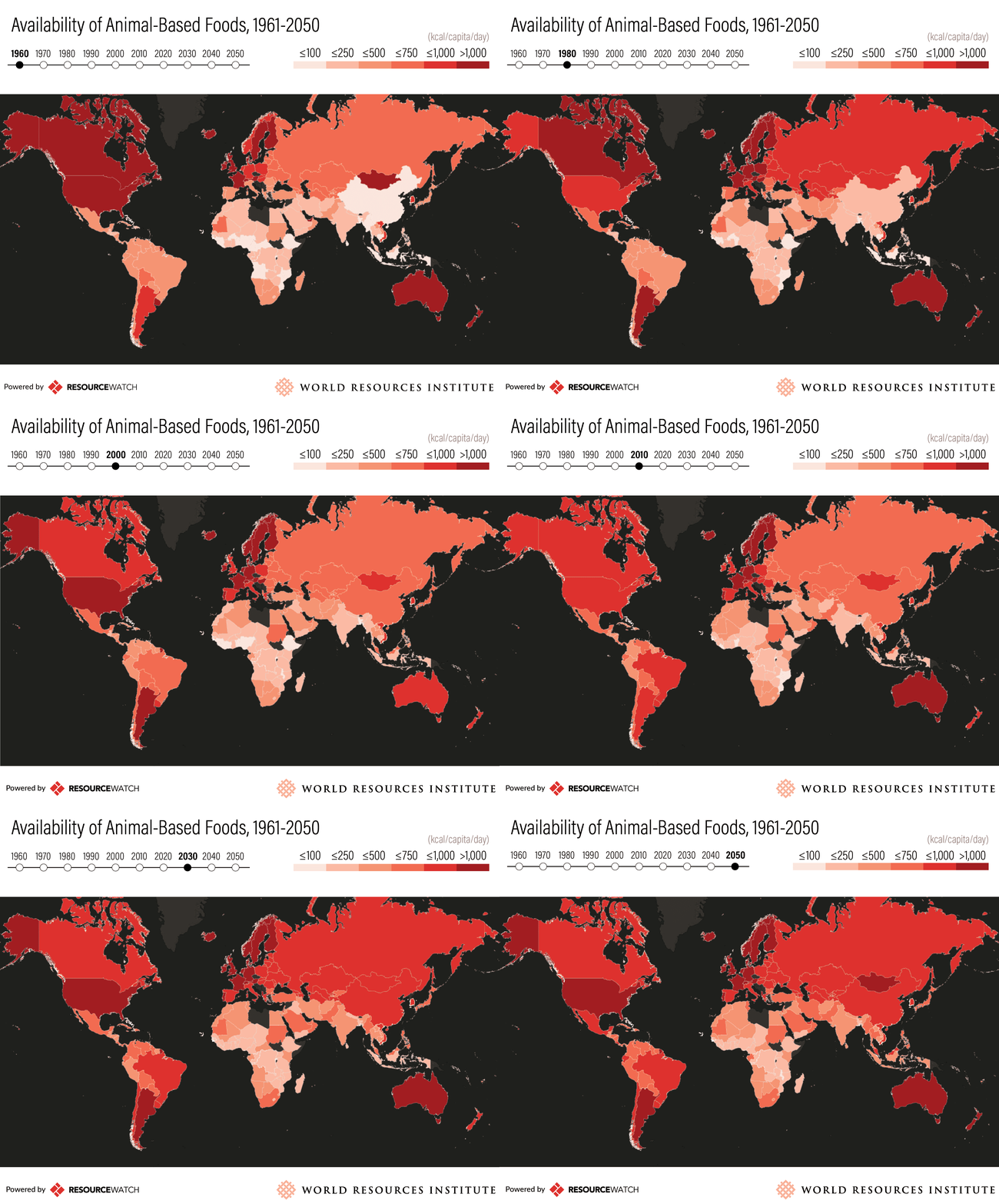
ADVANCING SUSTAINABLE BIOENERGY DEVELOPMENT
New, advanced technologies make it possible to produce climate neutral fuels from non-forest and non-food energy crops. The benefits of cultivation and use of these energy crops for transport fuels and electricity goes beyond the benefits of reducing greenhouse gas emissions. Terrestrial energy crop cultivation and aquatic energy crop harvesting reverses land and water degradation, increases biodiversity and carbon sequestration and improves land fertility. We call this
Deep Green Biomass. Moreover, deploying these energy crops for the production of advanced biofuels will positively impact social-economic structures and energy independence and reduce the need for involuntary migration and deforestation: Deep Green Energy.
Deep Green Energy Partners works to accelerate deployment of deep green biomass for the production of advanced biofuels and biochemicals, to restore soil and water conditions and to optimize the overall ecological-economic effects of investments in the energy transition.
Food production is however already preparing for the future. Production of foods and food ingredients in advanced greenhouses, breweries and bio-factories is increasing. Advanced food production - vertical farming and single-cell/cellular farming - drastically increases land, water and fertilizer efficiencies and decimates emissions, pollution as well as production times. Advanced food production takes place in closed environments and it is therefore largely climate and land independent, which improves both food security and independence. Moreover, it is the only to meet food the world's demand without conflicting with the need for biodiversity.
ADVANCING SUSTAINABLE BIOENERGY DEVELOPMENT
New, advanced technologies make it possible to produce climate neutral fuels from non-forest and non-food energy crops. The benefits of cultivation and use of these energy crops for transport fuels and electricity goes beyond the benefits of reducing greenhouse gas emissions. Terrestrial energy crop cultivation and aquatic energy crop harvesting reverses land and water degradation, increases biodiversity and carbon sequestration and improves land fertility. We call this
Deep Green Biomass. Moreover, deploying these energy crops for the production of advanced biofuels will positively impact social-economic structures and energy independence and reduce the need for involuntary migration and deforestation: Deep Green Energy.
Deep Green Energy Partners works to accelerate deployment of deep green biomass for the production of advanced biofuels and biochemicals, to restore soil and water conditions and to optimize the overall ecological-economic effects of investments in the energy transition.
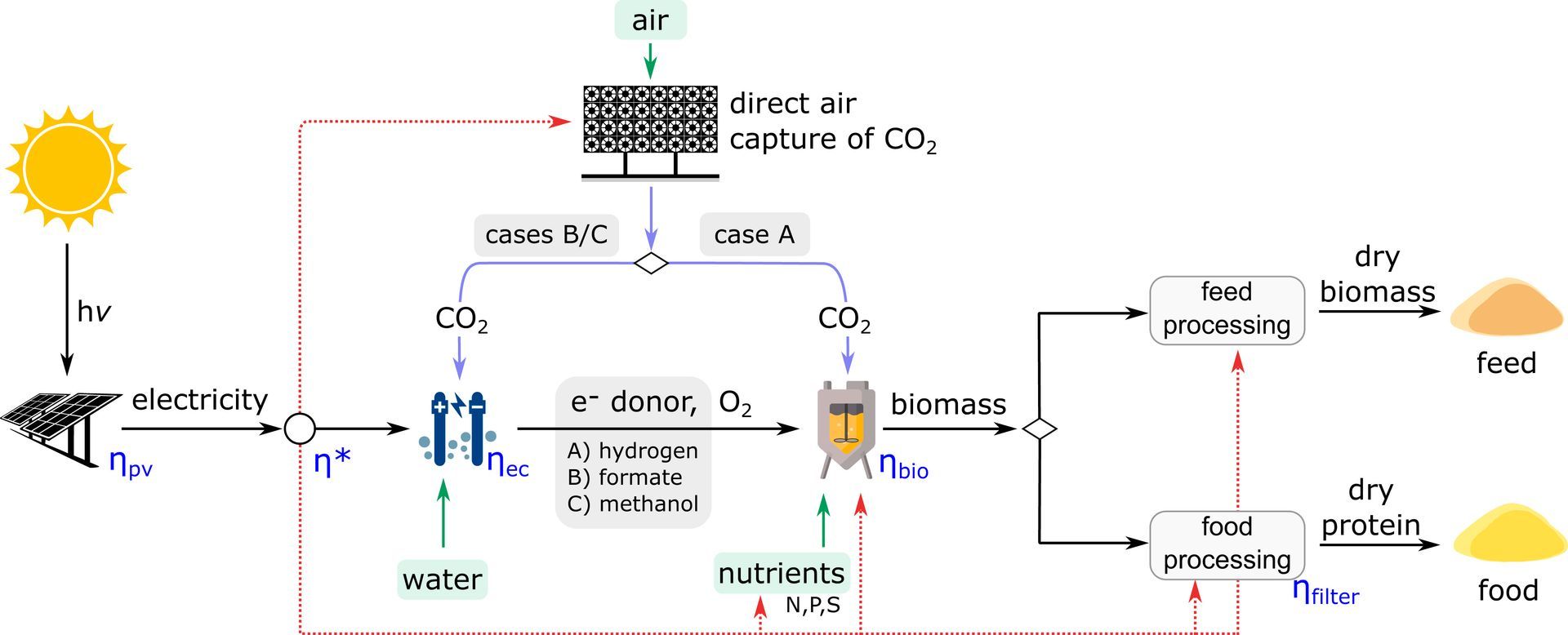
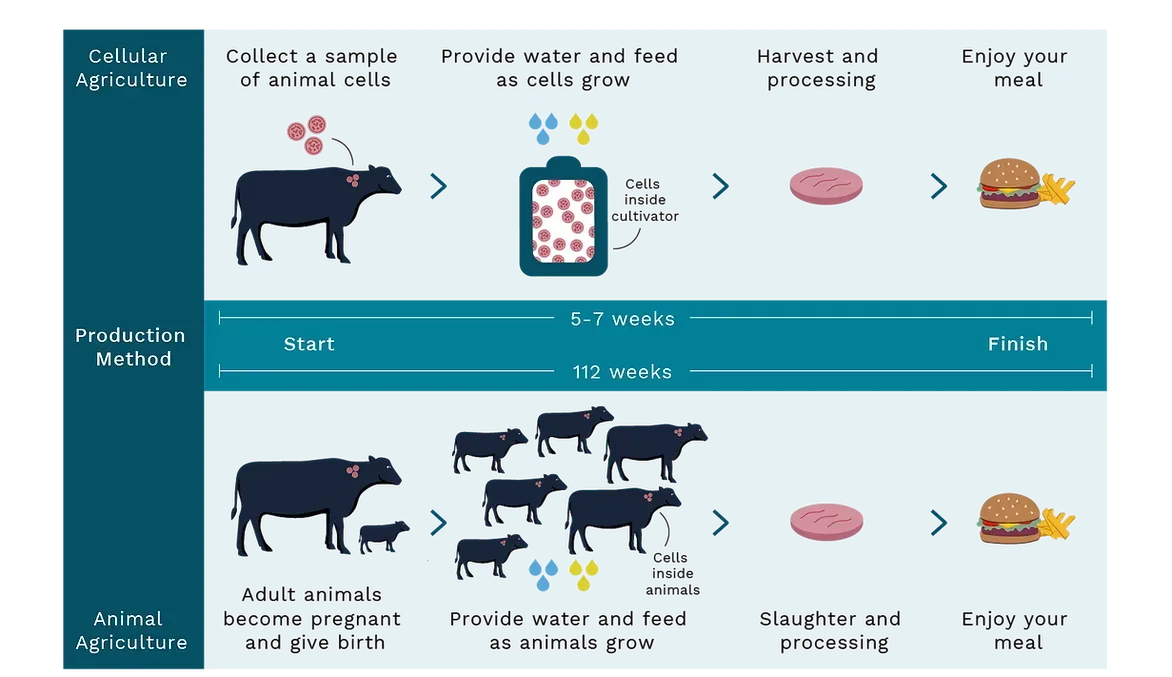
ADVANCING SUSTAINABLE BIOENERGY DEVELOPMENT
New, advanced technologies make it possible to produce climate neutral fuels from non-forest and non-food energy crops. The benefits of cultivation and use of these energy crops for transport fuels and electricity goes beyond the benefits of reducing greenhouse gas emissions. Terrestrial energy crop cultivation and aquatic energy crop harvesting reverses land and water degradation, increases biodiversity and carbon sequestration and improves land fertility. We call this
Deep Green Biomass. Moreover, deploying these energy crops for the production of advanced biofuels will positively impact social-economic structures and energy independence and reduce the need for involuntary migration and deforestation: Deep Green Energy.
Deep Green Energy Partners works to accelerate deployment of deep green biomass for the production of advanced biofuels and biochemicals, to restore soil and water conditions and to optimize the overall ecological-economic effects of investments in the energy transition.
Advanced food production single-cell and cellular process require basically the same resources as the plants and animals we now cultivate in open fields or indoors: energy (electricity, heat) carbon (CO2), water and nutrients. Various microorganisms produce proteins, carbohydrates, fats, vitamines and m eat far more time and resource efficient than plants and animals can. Thus while decimating land, water, fertilizer, pesticide and herbicide use food production drastically increases. At the same time the need for deforestation decreases and the land area and water needed for ecosystem restoration and carbon sequestration increase.
Many food ingredients are already produced indoors by traditional or advanced food technologies and the first advanced produced pancakes and meats are now commercially available. Scale-up will bring the continuous improvement necessary to further increase process efficiencies, optimize taste experience and bring down cost. Advanced food production will however need the same energy and CO2 as traditional farming, which brings us back to the last pieces of the "land, water climate puzzle" puzzle: renewable energy and renewable carbon.
ADVANCING SUSTAINABLE BIOENERGY DEVELOPMENT
New, advanced technologies make it possible to produce climate neutral fuels from non-forest and non-food energy crops. The benefits of cultivation and use of these energy crops for transport fuels and electricity goes beyond the benefits of reducing greenhouse gas emissions. Terrestrial energy crop cultivation and aquatic energy crop harvesting reverses land and water degradation, increases biodiversity and carbon sequestration and improves land fertility. We call this
Deep Green Biomass. Moreover, deploying these energy crops for the production of advanced biofuels will positively impact social-economic structures and energy independence and reduce the need for involuntary migration and deforestation: Deep Green Energy.
Deep Green Energy Partners works to accelerate deployment of deep green biomass for the production of advanced biofuels and biochemicals, to restore soil and water conditions and to optimize the overall ecological-economic effects of investments in the energy transition.
The impacts of renewable non-carbon and bio-carbon based energy differ considerably and therefore we start with the non-carbon variant. The
land-use for non-carbon renewable energy for windturbines, solar panels, reservoirs, infrastructure is relatively limited and the same applies to the land-use required mining. Mining sites now cover a land area estimated to be 0.5% of the global ice-free land surface but they potentially influence 40% of Earth’s land surface
by land clearing, toxic pollution and habitat destruction. About 8% of the so influenced lands coincide with protected natural areas, 7% with key biodiversity areas, and 16% with remaining wilderness. And as rivers end in lakes or seas this puts mining in conflict with both terrestrial and aquatic biodiversity.
Most mining areas (82%) target materials needed for renewable energy production, and areas that overlap with protected areas and remaining wilderness contain a greater density of mines (the indicator of threat severity) compared to the overlapping mining areas that target other materials. Although it is too early to tell it is har to imagine how deep sea mining would not affect seas and oceans.
Mining also uses water which adding to water stress and food insecurity in those areas that are already suffering from droughts. Thus, as renewable non-carbon energy supply grows so does the chance that these new threats to biodiversity surpass those averted by climate change mitigation.
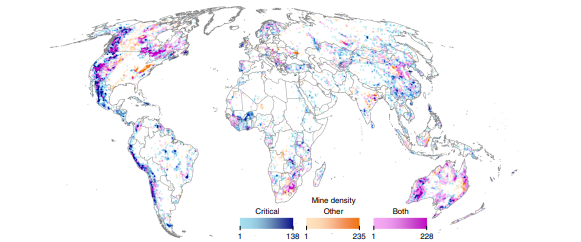
ADVANCING SUSTAINABLE BIOENERGY DEVELOPMENT
New, advanced technologies make it possible to produce climate neutral fuels from non-forest and non-food energy crops. The benefits of cultivation and use of these energy crops for transport fuels and electricity goes beyond the benefits of reducing greenhouse gas emissions. Terrestrial energy crop cultivation and aquatic energy crop harvesting reverses land and water degradation, increases biodiversity and carbon sequestration and improves land fertility. We call this
Deep Green Biomass. Moreover, deploying these energy crops for the production of advanced biofuels will positively impact social-economic structures and energy independence and reduce the need for involuntary migration and deforestation: Deep Green Energy.
Deep Green Energy Partners works to accelerate deployment of deep green biomass for the production of advanced biofuels and biochemicals, to restore soil and water conditions and to optimize the overall ecological-economic effects of investments in the energy transition.
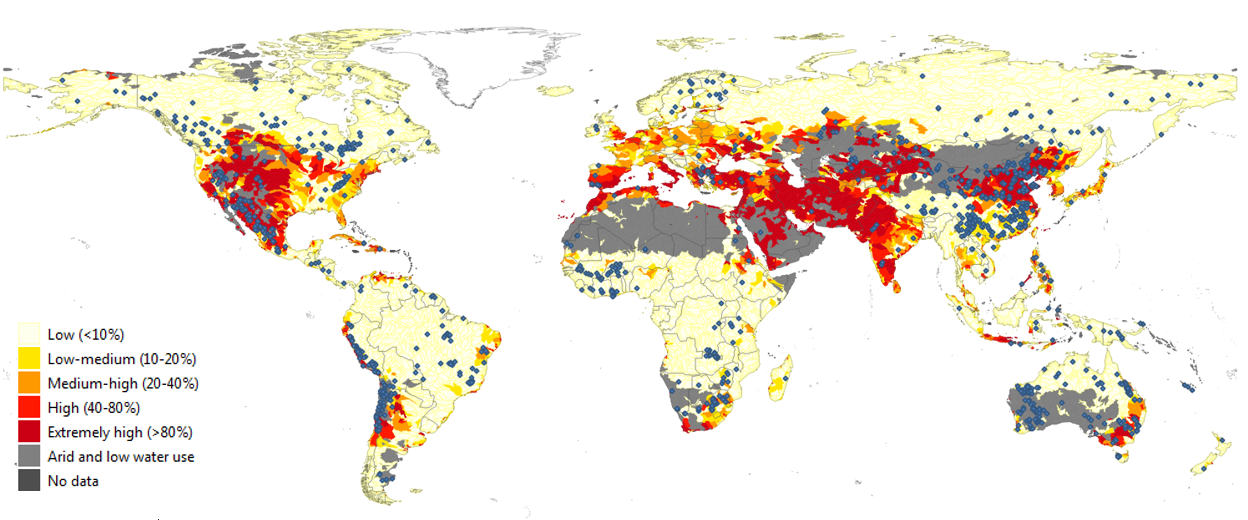
ADVANCING SUSTAINABLE BIOENERGY DEVELOPMENT
New, advanced technologies make it possible to produce climate neutral fuels from non-forest and non-food energy crops. The benefits of cultivation and use of these energy crops for transport fuels and electricity goes beyond the benefits of reducing greenhouse gas emissions. Terrestrial energy crop cultivation and aquatic energy crop harvesting reverses land and water degradation, increases biodiversity and carbon sequestration and improves land fertility. We call this
Deep Green Biomass. Moreover, deploying these energy crops for the production of advanced biofuels will positively impact social-economic structures and energy independence and reduce the need for involuntary migration and deforestation: Deep Green Energy.
Deep Green Energy Partners works to accelerate deployment of deep green biomass for the production of advanced biofuels and biochemicals, to restore soil and water conditions and to optimize the overall ecological-economic effects of investments in the energy transition.
The next priorities for land-use, concerning the remaining 50-70% of global land area would arguably be food. Today Agricultural land-use
covers just under 50% of all arable land and a third of that land, some 1600 million hectares is increasingly losing its carbon, water and productivity due to intensive agriculture. More efficient agricultural techniques and crop improvements will increase yields per hectare but insufficiently to halt the conversion of more forest and grassland to be converted to farm land, as food demand is set to grow 50% by 2050 and yield improvements on existing agricultural land are difficult due to soil depletion. Moroever, climate change will reduce both average global yields per hectare and the total climatic land area suited for open field crops production, animals and humans increasing the need for new land.
Relocating current croplands to optimal locations worldwide or within national borders, could simultaneously decrease the current carbon, biodiversity, and irrigation water footprint of global crop production by 71 and 59%, 87 and 77%, and 100 and 99%, respectively, assuming no change in output and high-input farming on newly established sites. The optimum scenario would reduce the total global area used for cropland to less than half (48%) of the current area and overlaps with only 0.2% of areas classified as tropical forest biomes, representing a reduction of 98% in the tropical forest area that is currently being used for crop production. Assuming a 40% demand increase for crops, about 30% of cropland could be freed by 2050.
However, as the world population gets wealthier and increasingly urbanized dietary preferences changes as well. Global meat and dairy consumption is on a course to increase by nearly 70% in 2050. Livestock, feed crops and rangeland account for 75% of all agricultural land-use, thus an increase of 25% net overall land-use and 40-45% of emissions from agriculture. Meeting future meat and dairy demand witin the current system will unavoidably push agricultural land needs over even the minimum thresholds needed for biodiversity.
ADVANCING SUSTAINABLE BIOENERGY DEVELOPMENT
New, advanced technologies make it possible to produce climate neutral fuels from non-forest and non-food energy crops. The benefits of cultivation and use of these energy crops for transport fuels and electricity goes beyond the benefits of reducing greenhouse gas emissions. Terrestrial energy crop cultivation and aquatic energy crop harvesting reverses land and water degradation, increases biodiversity and carbon sequestration and improves land fertility. We call this
Deep Green Biomass. Moreover, deploying these energy crops for the production of advanced biofuels will positively impact social-economic structures and energy independence and reduce the need for involuntary migration and deforestation: Deep Green Energy.
Deep Green Energy Partners works to accelerate deployment of deep green biomass for the production of advanced biofuels and biochemicals, to restore soil and water conditions and to optimize the overall ecological-economic effects of investments in the energy transition.
Food production is however already adapting to the future. Production of foods and food ingredients in advanced greenhouses, breweries and bio-factories is increasing. Advanced food production - vertical farming and single-cell/cellular farming - drastically increases land, water and fertilizer efficiencies and decimates emissions, pollution and production times. Advanced food production takes place in closed environments and it is therefore largely climate and land independent, which improves both food security and independence.
ADVANCING SUSTAINABLE BIOENERGY DEVELOPMENT
New, advanced technologies make it possible to produce climate neutral fuels from non-forest and non-food energy crops. The benefits of cultivation and use of these energy crops for transport fuels and electricity goes beyond the benefits of reducing greenhouse gas emissions. Terrestrial energy crop cultivation and aquatic energy crop harvesting reverses land and water degradation, increases biodiversity and carbon sequestration and improves land fertility. We call this
Deep Green Biomass. Moreover, deploying these energy crops for the production of advanced biofuels will positively impact social-economic structures and energy independence and reduce the need for involuntary migration and deforestation: Deep Green Energy.
Deep Green Energy Partners works to accelerate deployment of deep green biomass for the production of advanced biofuels and biochemicals, to restore soil and water conditions and to optimize the overall ecological-economic effects of investments in the energy transition.
Advanced food production single-cell and cellular process require basically the same resources as the plants and animals we now cultivate in open fields or indoors: energy (electricity, heat) CO2, water and nutrients. Various microorganisms produce proteins, carbohydrates, fats, vitamines and meat far more time and resource efficient than plants and animals can. Thus while decimating land, water, fertilizer, pesticide and herbicide use . The decimation of land and water requirements for food production reduces the need for deforestation and frees land needed for ecosystem restoration and carbon sequestration.
It however needs energy and CO2 just like traditional farming, which brings us to the last pieces of the "land-use" puzzle: renewable energy and renewable carbon. Until technical carbon capture at smokestacks for storage and recycling (CCS) or directly from the air (DAC) become emission efficient and commercially viable we have two options to reduce global warming: renewable non-carbon energy or renewable carbon from biomass.
Technically we can integrate and scale up renewable energy and advanced food systems to the extend that we come close to a climate neutral food-energy system. The transition to a substantial non-carbon energy system will however demand fast amounts of raw non-renewable materials for production units, distribution infrastructure and end-user equipment. The decarbonization and electrification of the energy system is therefore essentially a trade-off between the carbon emission intensity of the current energy system and the combined additional environmental damages and emissions required for a substantially decarbonized energy system: deforestation, (deep-sea) mineral mining, waste and the production of steel, concrete, batteries and cars. Advanced food production will also require additional production facilities requiring steel and other less scarce resources. Mining those minerals, and in particular that are critical for the energy transition poses serious threats to species and ecosystems and the jury is still out deciding which renewable energy options are sustainable in relation to their particular use.
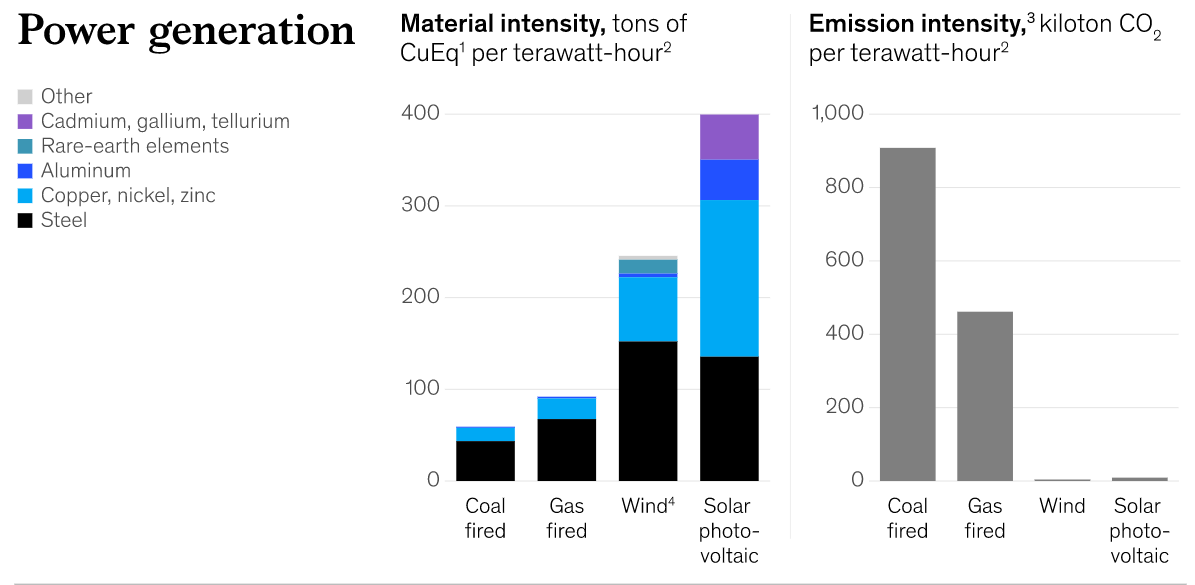
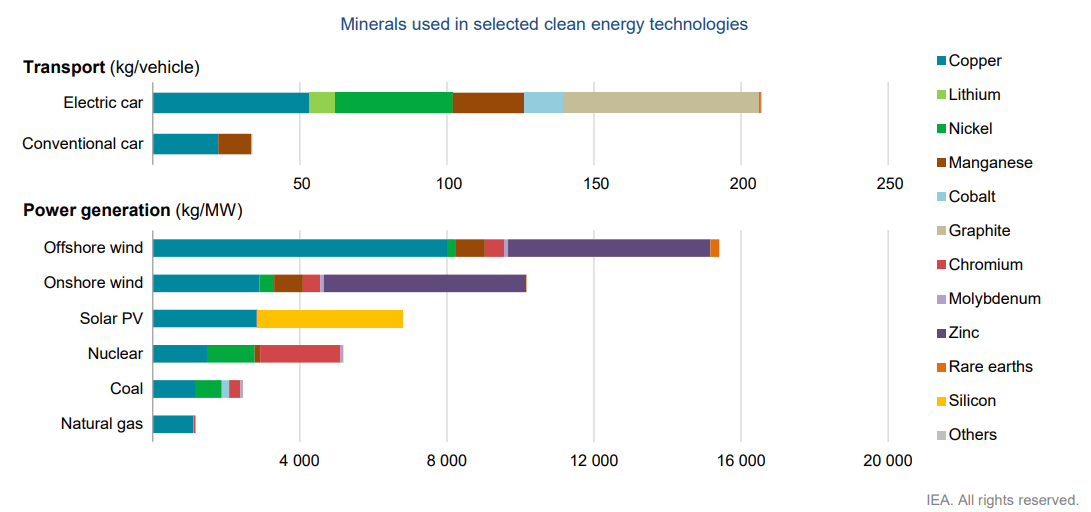
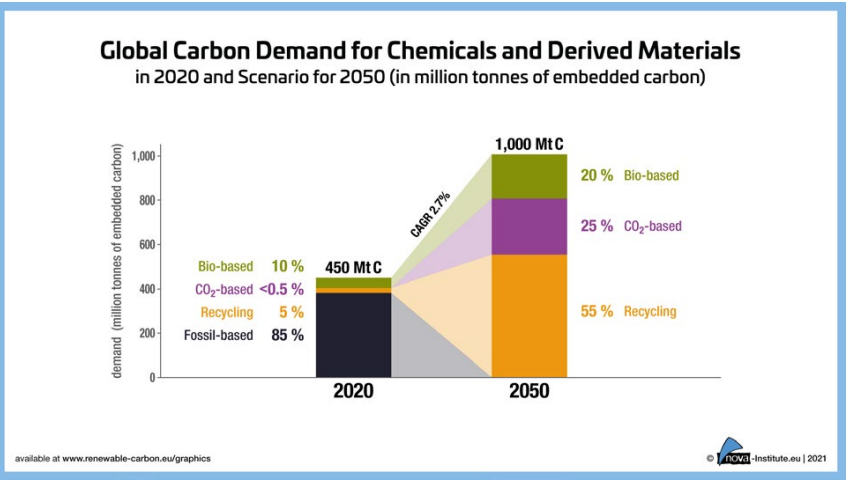
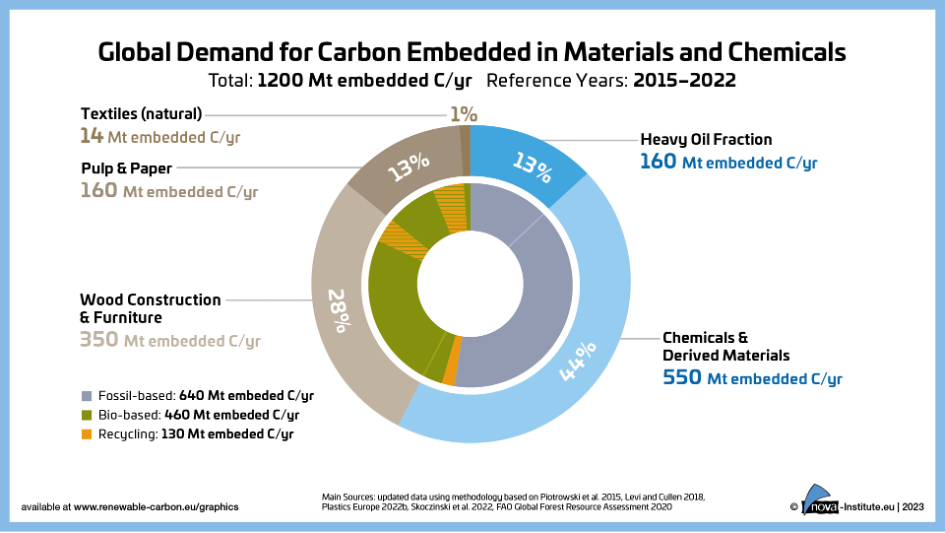
ADVANCING SUSTAINABLE BIOENERGY DEVELOPMENT
New, advanced technologies make it possible to produce climate neutral fuels from non-forest and non-food energy crops. The benefits of cultivation and use of these energy crops for transport fuels and electricity goes beyond the benefits of reducing greenhouse gas emissions. Terrestrial energy crop cultivation and aquatic energy crop harvesting reverses land and water degradation, increases biodiversity and carbon sequestration and improves land fertility. We call this
Deep Green Biomass. Moreover, deploying these energy crops for the production of advanced biofuels will positively impact social-economic structures and energy independence and reduce the need for involuntary migration and deforestation: Deep Green Energy.
Deep Green Energy Partners works to accelerate deployment of deep green biomass for the production of advanced biofuels and biochemicals, to restore soil and water conditions and to optimize the overall ecological-economic effects of investments in the energy transition.
Life cycle GHG emissions electricity
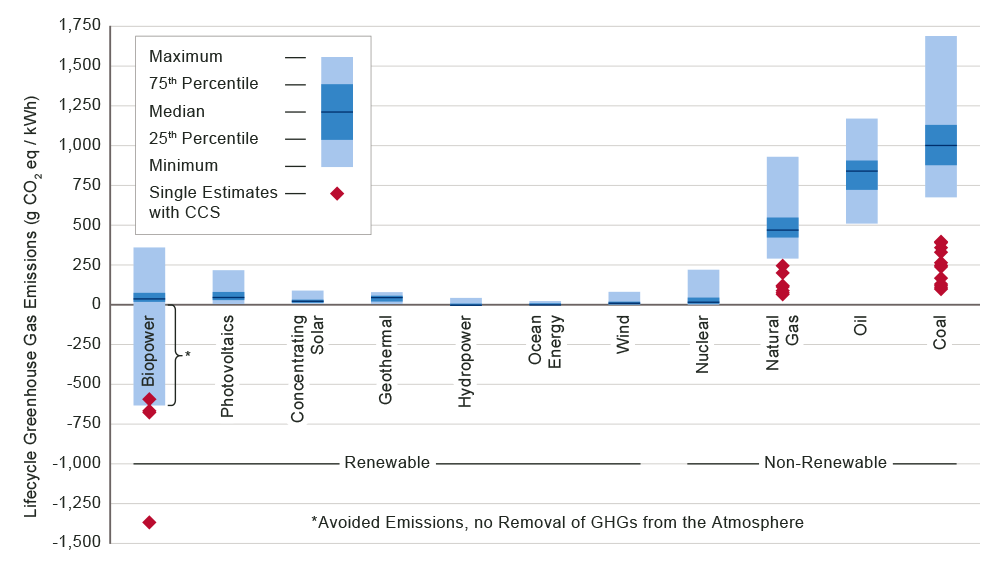
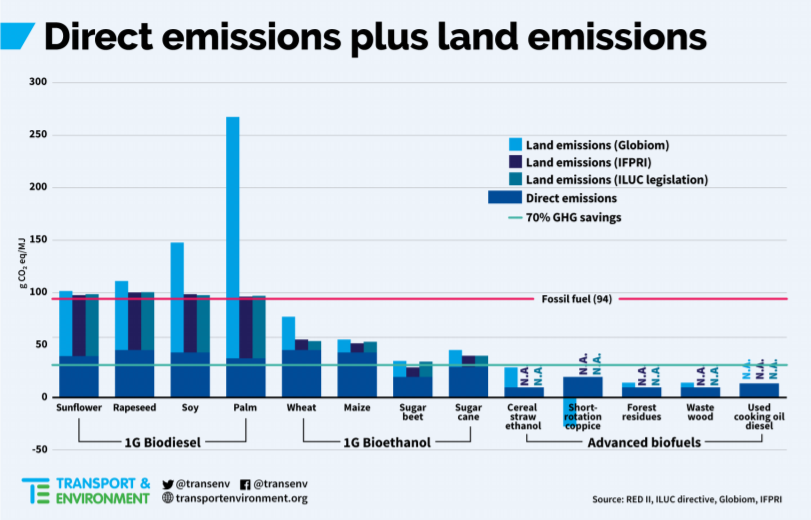
ADVANCING SUSTAINABLE BIOENERGY DEVELOPMENT
New, advanced technologies make it possible to produce climate neutral fuels from non-forest and non-food energy crops. The benefits of cultivation and use of these energy crops for transport fuels and electricity goes beyond the benefits of reducing greenhouse gas emissions. Terrestrial energy crop cultivation and aquatic energy crop harvesting reverses land and water degradation, increases biodiversity and carbon sequestration and improves land fertility. We call this
Deep Green Biomass. Moreover, deploying these energy crops for the production of advanced biofuels will positively impact social-economic structures and energy independence and reduce the need for involuntary migration and deforestation: Deep Green Energy.
Deep Green Energy Partners works to accelerate deployment of deep green biomass for the production of advanced biofuels and biochemicals, to restore soil and water conditions and to optimize the overall ecological-economic effects of investments in the energy transition.
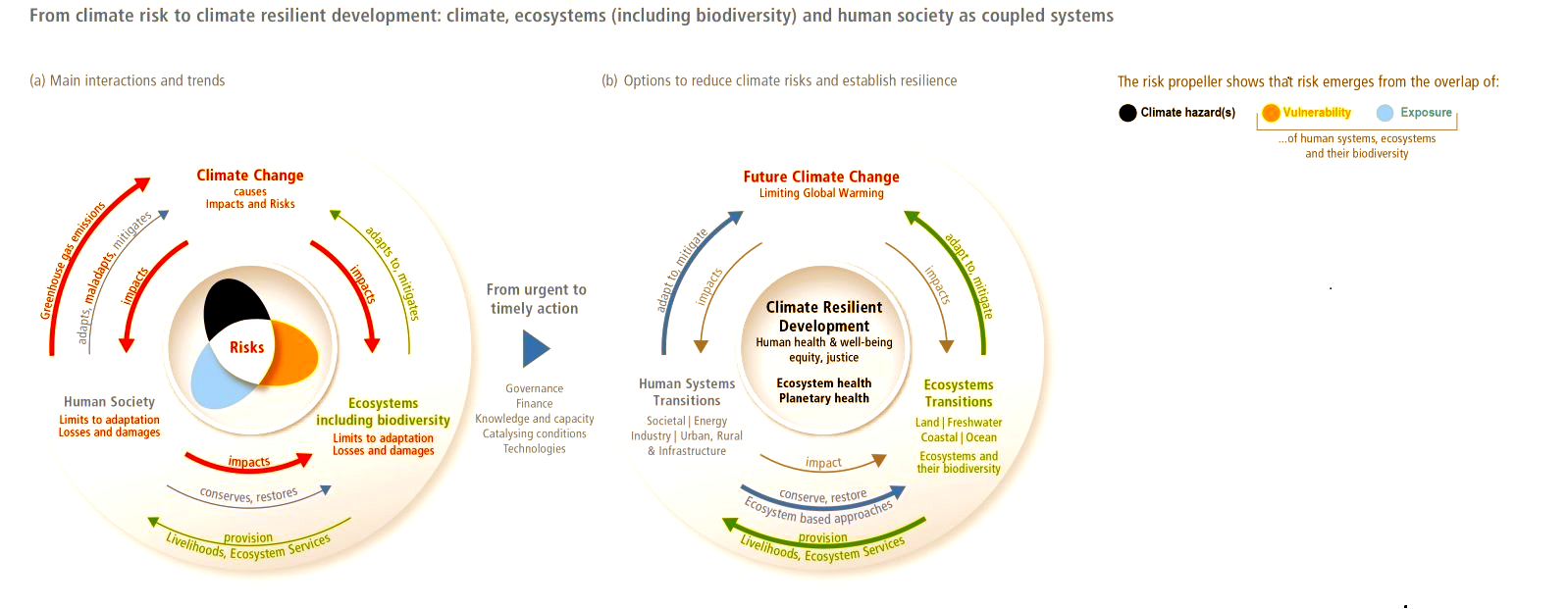
ADVANCING SUSTAINABLE BIOENERGY DEVELOPMENT
New, advanced technologies make it possible to produce climate neutral fuels from non-forest and non-food energy crops. The benefits of cultivation and use of these energy crops for transport fuels and electricity goes beyond the benefits of reducing greenhouse gas emissions. Terrestrial energy crop cultivation and aquatic energy crop harvesting reverses land and water degradation, increases biodiversity and carbon sequestration and improves land fertility. We call this
Deep Green Biomass. Moreover, deploying these energy crops for the production of advanced biofuels will positively impact social-economic structures and energy independence and reduce the need for involuntary migration and deforestation: Deep Green Energy.
Deep Green Energy Partners works to accelerate deployment of deep green biomass for the production of advanced biofuels and biochemicals, to restore soil and water conditions and to optimize the overall ecological-economic effects of investments in the energy transition.
DEEP GREEN ENERGY PARTNERS
ADVANCING SUSTAINABLE BIOENERGY DEVELOPMENT
New, advanced technologies make it possible to produce climate neutral fuels from non-forest and non-food energy crops. The benefits of cultivation and use of these energy crops for transport fuels and electricity goes beyond the benefits of reducing greenhouse gas emissions. Terrestrial energy crop cultivation and aquatic energy crop harvesting reverses land and water degradation, increases biodiversity and carbon sequestration and improves land fertility. We call this
Deep Green Biomass. Moreover, deploying these energy crops for the production of advanced biofuels will positively impact social-economic structures and energy independence and reduce the need for involuntary migration and deforestation: Deep Green Energy.
Deep Green Energy Partners works to accelerate deployment of deep green biomass for the production of advanced biofuels and biochemicals, to restore soil and water conditions and to optimize the overall ecological-economic effects of investments in the energy transition.
When we do it fast enough it will buy us the time needed to scale up the non-carbon energy supply, a sustainable carbon supply and the recycling of materials before climate change, hunger, thirst and armed conflicts over natural resources put the world in persistent turmoil as illustrated below.
The supply of most of our basic needs (from seeds to food and from oil to the minerals and metals needed for solar, wind or nuclear energy) is controlled by a few companies and nations. who's leaders serve the interests of their particular shareholders and stakeholders, not the world's.
These same companies and nations stand to lose the most from changing our supply systems and therefore if we don't take control of producing the things we need most; food, energy and functioning ecosystems, things won't change before it's too late.
The UN IPCC and many other organization have developed detailed scenarios on how the right combination of renewable resources, new technologies, industrial,agricultural and land-use practices could avoid the various crises from escalating. Scenarios for tackling the various crises all rely on five basic instruments acting in harmony: less overall consumption and more recycling of resources, less greenhouse gas (GHG) emissions and more GHG capture, and substitution of finite resources by renewable alternatives. The sustainable resources and technologies that could set the world on a less destructive course are available but deploying them is often less profitable to incumbent industries and resource supplying countries than continuing business as usual, i.e. returns on investments in fossil fuels are higher than in renewable energy.
Reality is however far removed from these scenarios. Increased recycling on a global scale will only happen once prices of raw resources surpasses those of recycled equivalents, which will take longer than allowed for in 1.5-2 C global warming (GW) scenarios. Emissions reductions means either carbon capture at point of emission (e.g. smokestacks) or avoiding emissions by substitution of carbon resources (e.g. wind, solar, nuclear). Switching to non-carbon substitutes and smokestack carbon capture options require new technical infrastructure and equipment, resulting in (additional) emissions and lead times that exceed the thresholds for 1.5-2 C GW. Staying anywhere close to 2C will therefore depend on the one remaining option: more nature based carbon capture (sequestration) and deploying thus increased renewable carbon resources as substitute for non-renewable fossil and forest derived resources.
Deep Green Energy Partners believes that we, private individuals, households, businesses and investors have another option: develop the sustainable supply chains for food, fuels and material ourselves. We don't have to invent the wheel as that has already been done, we just need to get it spinning faster and make sure that it stays aligned with our common interest in halting global warming, functioning ecosystems and increasing global food and water security.
On the
current scenario page
a summary of the projected impacts of the current investment, energy, food, water and material demand and consequences for 2050 can be found. The time has come for us, private individuals, businesses and investors to to start a secure future food, water, energy and material supply ourselves.
Partnering
If you think you are a possible partner, because you want to off-set your private or corporate emissions, invest directly in Deep Green supply chains, you can supply Deep Green resources or enhancing technologies and/or you are an end-user looking for climate neutral food, fuels or chemicals please feel free to contact us by the link below.