DGE SOCIAL
Physical Abundance Solves Social Instability
Rebuilding 855.7 million hectares of degraded soil, rewilding 278.7 million hectares of forest, and locking carbon into biogenic buildings does more than stabilize the climate; it directly eliminates the physical scarcities that drive poverty, hunger, water wars, and forced migration. Under the
BAU Transition + AI, rising temperatures, crop failures, and "greenflation" push billions of people into a vice of falling real incomes and soaring food and energy bills. By contrast, the
Deep Green Energy (DGE) + AI system decentralizes food, clean water, energy, and rural land revenue across every region on Earth—turning climate-vulnerable regions into thriving, self-reliant bio-economies while protecting middle-class purchasing power and pension wealth in industrialized nations
Global Humanitarian & Economic Divergence — BAU Transition (+AI) vs. Deep Green Energy (+AI) (2026–2050)
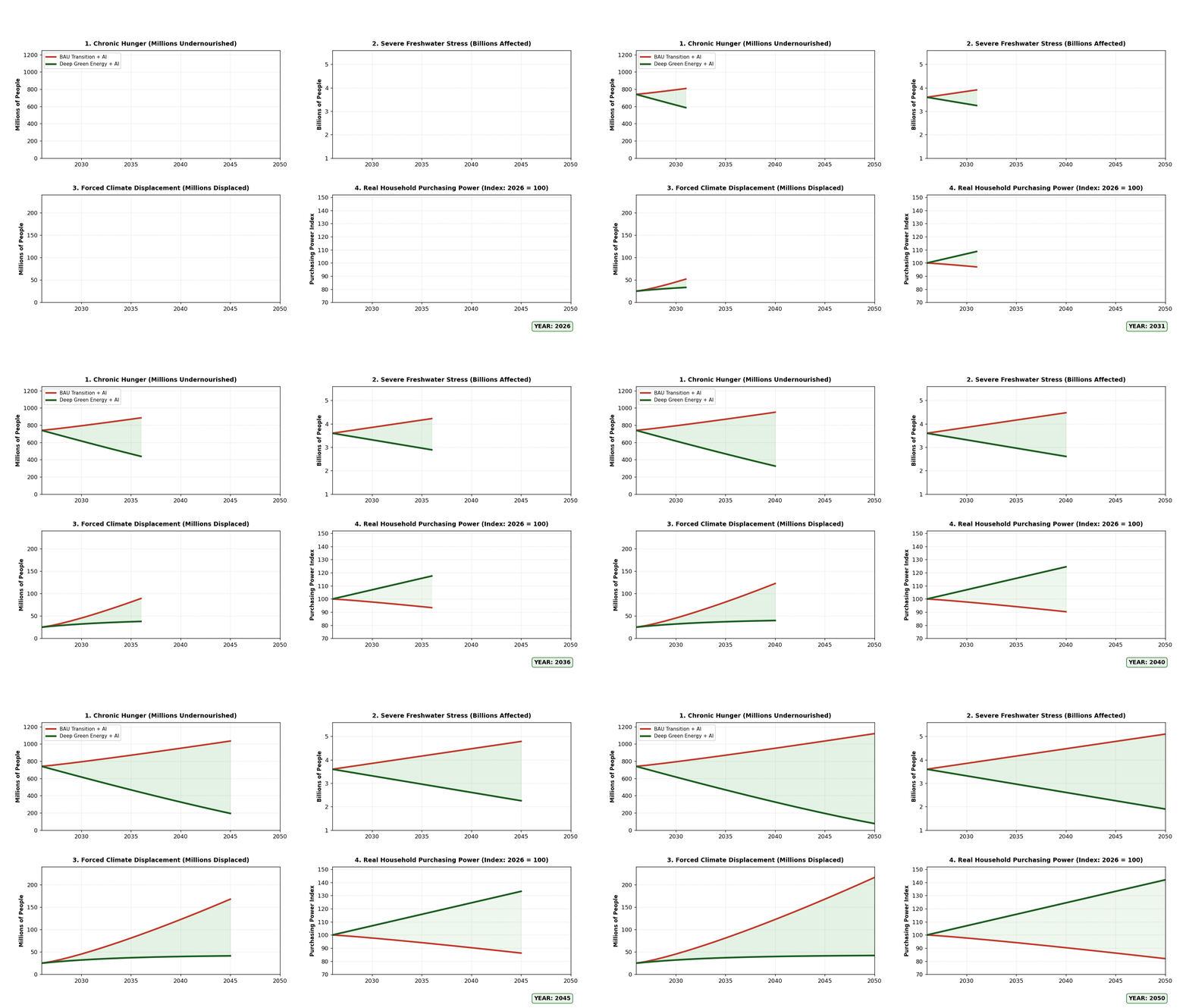
Tabel 4A: Global Social & Humanitarian Crisis Indicators (2026 Baseline vs. 2050 BAU & DGE)
| Social & Humanitarian Indicator | 2025/2026 Baseline | 2050 Realistic BAU | 2050 Deep Green Economy (DGE) | DGE Social Stabilization Mechanism | Source |
|---|---|---|---|---|---|
| 1. Chronic Hunger & Food Insecurity | ~735 Million
(Moderate/severe: 2.3B) |
1.10+ Billion
(+40% to +80% food inflation) |
< 50 Million (Near Zero)
(Full price parity) |
Distributed Bio-Hubs produce local proteins & CEA crops regardless of drought or heatwaves. | FAO SOFI |
| 2. Severe Freshwater Stress | 2.40 Billion
(70% water used in farming) |
4.80+ Billion
(Major aquifer depletion) |
< 1.20 Billion (-75%)
(Aquifers recharging) |
Precision fermentation (-90% water) & closed-loop greenhouses (-90% water) slash agricultural draw. | UN Water |
| 3. Forced Climate & Resource Displacement | ~35 Million / yr
(Internal & cross-border) |
216M – 350M Cumulative
(Uninhabitable heat/crop zones) |
-80% Displacement
(Rural livelihood boom) |
855.7M ha of perennial grass cultivation creates millions of stable rural agro-industrial jobs. | World Bank Groundswell |
| 4. Household Cost-of-Living & Climateflation | Elevated Volatility
(Energy & food price spikes) |
Chronic Stagflation
(Uninsurable homes & farms) |
Structural Price Stability
(Abundant food & drop-in fuel) |
Decouples essential household nutrition, heating, and transport from fossil & weather shocks. | ECB / PIK |
| 5. Air Pollution & Heat Mortality | ~7.0 Million Deaths/yr
(Fossil & fuelwood smoke) |
9.5+ Million Deaths/yr
(Wet-bulb heat extremes) |
-70% Premature Deaths
(Clean air & urban cooling) |
Cuts fossil fuels by -85%, replaces indoor wood smoke, and expands urban green/forest buffers. | WHO/ Lancet Countdown |
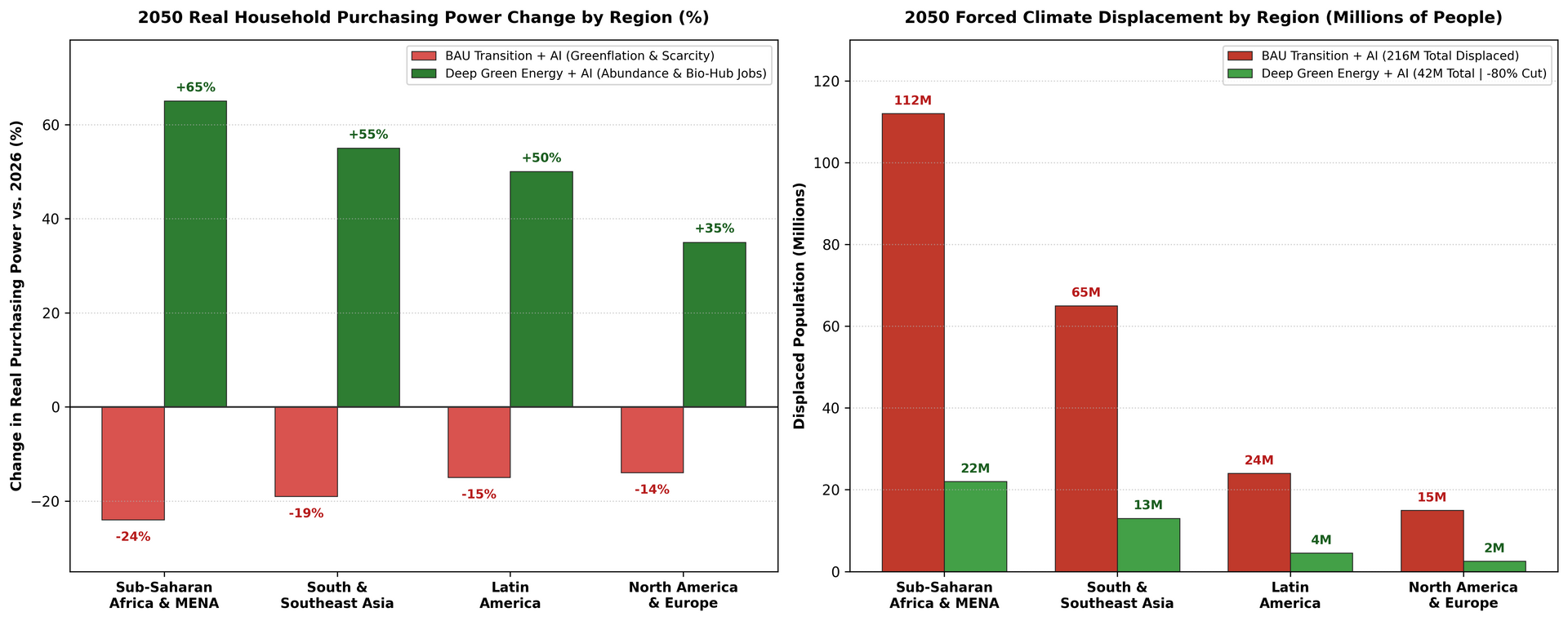
2. Regional Impact Comparison (2050: BAU Transition + AI vs. Deep Green Energy + AI)
Purchasing Power, Wealth, Hunger, Water & Conflict
1. The Core Premise: Replacing Scarcity-Driven Crises with Decentralized Abundance
By 2050, the social outcomes of the BAU Transition (+AI) and the Deep Green Energy (+AI) pathway diverge dramatically across all five pillars of human security:
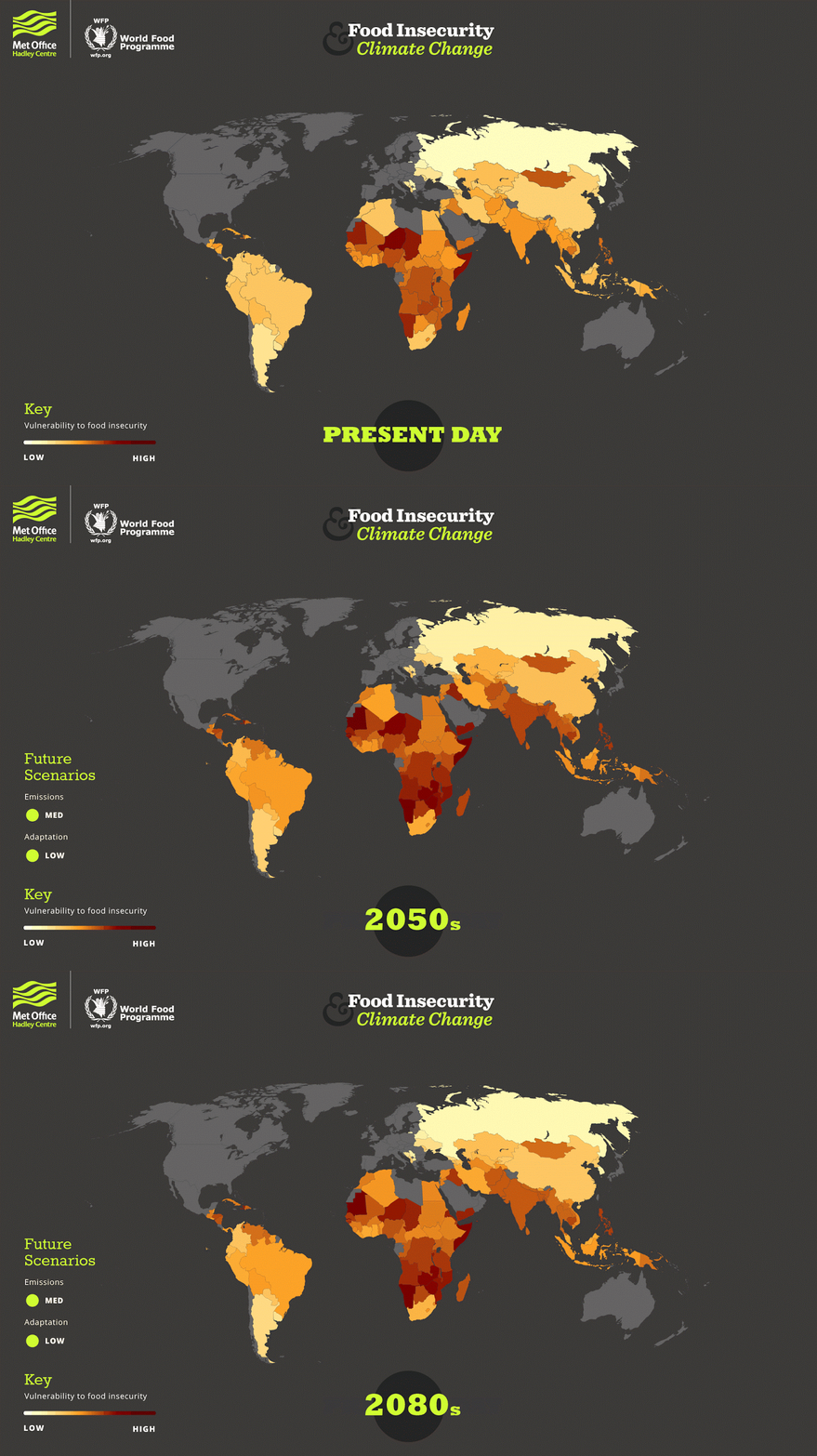
- 1. Hunger & Food Security: Under BAU, climate shocks and +50% demand growth push the number of chronically undernourished people from ~735 million today toward 1.1+ billion by 2050 (FAO). Co-locating precision fermentation and climate-proof indoor farms with local biomass CHP hubs eliminates weather-driven crop failures and cuts staple protein and produce costs by 30%–45%, virtually eradicating chronic hunger.
- 2. Thirst & Freshwater Security: Under BAU, over 5 billion people face severe water scarcity for at least one month per year by 2050 (UN-Water). Shifting 35% of livestock/dairy and 25% of cereals to fermentation and 35% of produce to closed-loop greenhouses saves >250 km³ of freshwater annually while perennial grass roots boost rainwater retention by +30%, restoring depleted aquifers across arid basins.
- 3. Purchasing Power & Cost of Living: In the BAU Transition, $5–$6 trillion/yr in deficit spending and fossil write-offs fuel persistent climateflation and greenflation, eroding real household disposable income even as AI displaces white-collar and routine jobs. In DGE, abundant local bio-energy, low-cost indoor food, and affordable biogenic housing materials lower essential living costs by 20%–35%, turning AI productivity gains into rising real purchasing power.
- 4. Broad-Based Wealth Creation: Rather than concentrating capital in speculative asset bubbles ($450T) or $25T of stranded fossil write-offs, DGE anchors $15.18 trillion in productive rural and peri-urban bio-hubs—creating 120+ million new rural jobs in perennial grass agronomy, harvesting, bio-refining, and indoor horticulture while raising rural land and farm incomes across developing economies.
- 5. Conflict & Forced Climate Migration: Under BAU, collapsing harvests, water depletion, and extreme heat displace over 216 million internal and cross-border climate migrants by 2050 (World Bank Groundswell), igniting resource conflicts and severe border instability. Decentralized DGE bio-hubs allow vulnerable populations to prosper in place—cutting forced climate displacement by 75%–85%.
Global Humanitarian & Economic Divergence — BAU Transition (+AI) vs. Deep Green Energy (+AI) (2026–2050)
Tabel 4B: Regional Bubble Bursts, Sovereign Debt Defaults & Geopolitical Risk (2026–2050)
| Global Region | 2050 BAU Financial & Bubble Shock | 2050 BAU Humanitarian & Resource Crisis | DGE Regional Stabilization & Growth Engine | Source |
|---|---|---|---|---|
| 1. North America & Europe | -$180T Paper Wealth Bust
Equity, commercial real estate & pension deflation + $8T stranded fossil assets. |
Climateflation, uninsurable coastal/wildfire property & border migration pressure. | Bio-Hub Tech & Capital Hub
Reuses 100% of gas/refinery grids; exports high-ROI precision fermentation & CEA IP. |
BIS/ NGFS |
| 2. East Asia & China | -$140T Property & Debt Crisis
Local government & real estate debt cascade; industrial export contraction. |
Severe water stress in northern plains, heatwaves & imported food/energy vulnerability. | Industrial Bio-Refining Scale
Deploys torrefied pellets in existing coal/steel plants & scales urban vertical farming. |
IMF WEO |
| 3. South Asia (India & Neighbors) | Sovereign Debt & FX Collapse
Fiscal deficits surge from food/fuel subsidies and extreme monsoon/heat reconstruction. |
Lethal wet-bulb heatwaves, Himalayan glacier water loss & 400M+ facing acute food/water crisis. | High-Yield Napier & Water Security
Napier grass thrives in tropical climates; CEA & fermentation cut farm water use by -90%. |
World Bank |
| 4. Sub-Saharan Africa | Widespread Sovereign Defaults
Debt service consumes >50% of state revenue as rain-fed export crops fail. |
350M+ facing famine, desertification & mass displacement toward North Africa and Europe. | Global Biomass & Protein Powerhouse
Cultivates degraded savannas with perennial grasses, generating $300B+/yr in rural exports. |
AfDB/ UNCCD |
| 5. Latin America | Agri-Export & Banking Crash
Amazon dieback collapses regional rainfall, hydro power & soy/cattle export collateral. |
Loss of the Amazon moisture pump triggers severe drought across Brazil, Argentina & Andes. | Amazon Rewilding & Bio-SAF Hub
Replaces cattle pasture with high-margin Bio-SAF refineries & monetizes forest carbon sinks. |
IDB/ IPCC AR6 |
| 6. Middle East & Petro-States (MENA) | -$12T Stranded Oil & Gas Bust
Sovereign wealth funds deplete as oil demand peaks and desalination costs spike. |
Extreme heat (>50°C), zero renewable groundwater & total reliance on food imports. | Solar-CEA & e-Fuel Transition
Pairs abundant solar power with closed-loop greenhouses (-90% water) & e-SAF synthesis. |
Carbon Tracker |
ADVANCING SUSTAINABLE BIOENERGY DEVELOPMENT
New, advanced technologies make it possible to produce climate neutral fuels from non-forest and non-food energy crops. The benefits of cultivation and use of these energy crops for transport fuels and electricity goes beyond the benefits of reducing greenhouse gas emissions. Terrestrial energy crop cultivation and aquatic energy crop harvesting reverses land and water degradation, increases biodiversity and carbon sequestration and improves land fertility. We call this
Deep Green Biomass. Moreover, deploying these energy crops for the production of advanced biofuels will positively impact social-economic structures and energy independence and reduce the need for involuntary migration and deforestation: Deep Green Energy.
Deep Green Energy Partners works to accelerate deployment of deep green biomass for the production of advanced biofuels and biochemicals, to restore soil and water conditions and to optimize the overall ecological-economic effects of investments in the energy transition.
The total amount of water always remains constant but during the water cycle
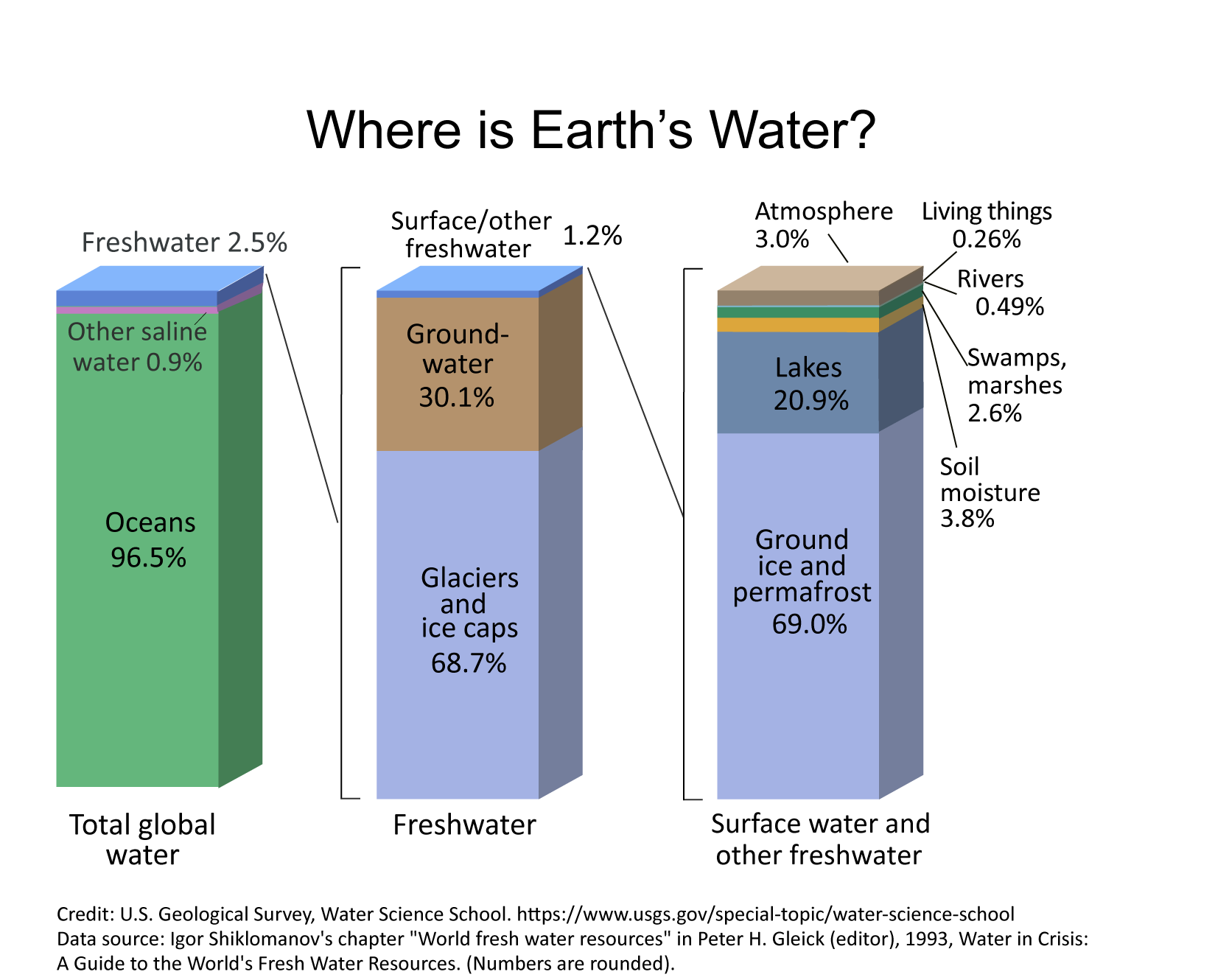
between land, oceans and atmosphere water changes from salt to sweet and from liquid to gas and back. Of all the water that in the earth's sphere, roughly 97.5% is saltwater and less than 2.5% is freshwater. Most (69%) of earth’s freshwater is frozen in glaciers, ice caps, or is deep underground in aquifers (30%). Less than 1% of Earth’s freshwater is easily accessible (lakes and rivers) to meet the needs for agriculture, industry and domestic consumption.
The world's freshwater supply is effected the most by interaction with the other systems (land, energy and GHG emissions) and climate change.
Over 60% of rainwater evaporates above forests, savannahs, grazing and agricultural lands (“green water”). About 40% of all rainwater (or 43,000 km³) contributes to rivers, lakes, groundwater and glaciers (“blue water”), which then flows back into the oceans. Human blue water withdrawals made up about 10% (or 4,300 km³) of total blue water sources in 2012 as shown below, 70% of this was being used for irrigation (3,000 km³) and the remaining 1,300 km³ for industry and households. Only a very small part of this water cycle serves as drinking water and more than 85% is consumed indirectly through food, energy and material production systems.
Moisture absorption and retention are some of the most important contributions of soil organic matter. Researchers at the Rodale Institute have estimated that each pound of carbon in the soil can retain up to 40 lbs of water. If a soil has 1% organic matter, we can estimate that there is 1% time 2,000,000 lbs of soil per acre (6 inches) deep or 20,000 lbs of organic matter. If we estimate that the organic matter is 40% carbon, that would be the equivalent of 8,000 lb of carbon. If 40 lbs of water for each lb of carbon, then 320,000 lbs of water or approximately 40,000 gallons of water per acre be 1% organic matter (8.3 lbs/gal water).
ADVANCING SUSTAINABLE BIOENERGY DEVELOPMENT
New, advanced technologies make it possible to produce climate neutral fuels from non-forest and non-food energy crops. The benefits of cultivation and use of these energy crops for transport fuels and electricity goes beyond the benefits of reducing greenhouse gas emissions. Terrestrial energy crop cultivation and aquatic energy crop harvesting reverses land and water degradation, increases biodiversity and carbon sequestration and improves land fertility. We call this
Deep Green Biomass. Moreover, deploying these energy crops for the production of advanced biofuels will positively impact social-economic structures and energy independence and reduce the need for involuntary migration and deforestation: Deep Green Energy.
Deep Green Energy Partners works to accelerate deployment of deep green biomass for the production of advanced biofuels and biochemicals, to restore soil and water conditions and to optimize the overall ecological-economic effects of investments in the energy transition.
FRESHWATER DEMAND AND SUPPLY GROWTH
ADVANCING SUSTAINABLE BIOENERGY DEVELOPMENT
New, advanced technologies make it possible to produce climate neutral fuels from non-forest and non-food energy crops. The benefits of cultivation and use of these energy crops for transport fuels and electricity goes beyond the benefits of reducing greenhouse gas emissions. Terrestrial energy crop cultivation and aquatic energy crop harvesting reverses land and water degradation, increases biodiversity and carbon sequestration and improves land fertility. We call this
Deep Green Biomass. Moreover, deploying these energy crops for the production of advanced biofuels will positively impact social-economic structures and energy independence and reduce the need for involuntary migration and deforestation: Deep Green Energy.
Deep Green Energy Partners works to accelerate deployment of deep green biomass for the production of advanced biofuels and biochemicals, to restore soil and water conditions and to optimize the overall ecological-economic effects of investments in the energy transition.
The volume of water used globally – about 4.600 cubic kilometers a year – is
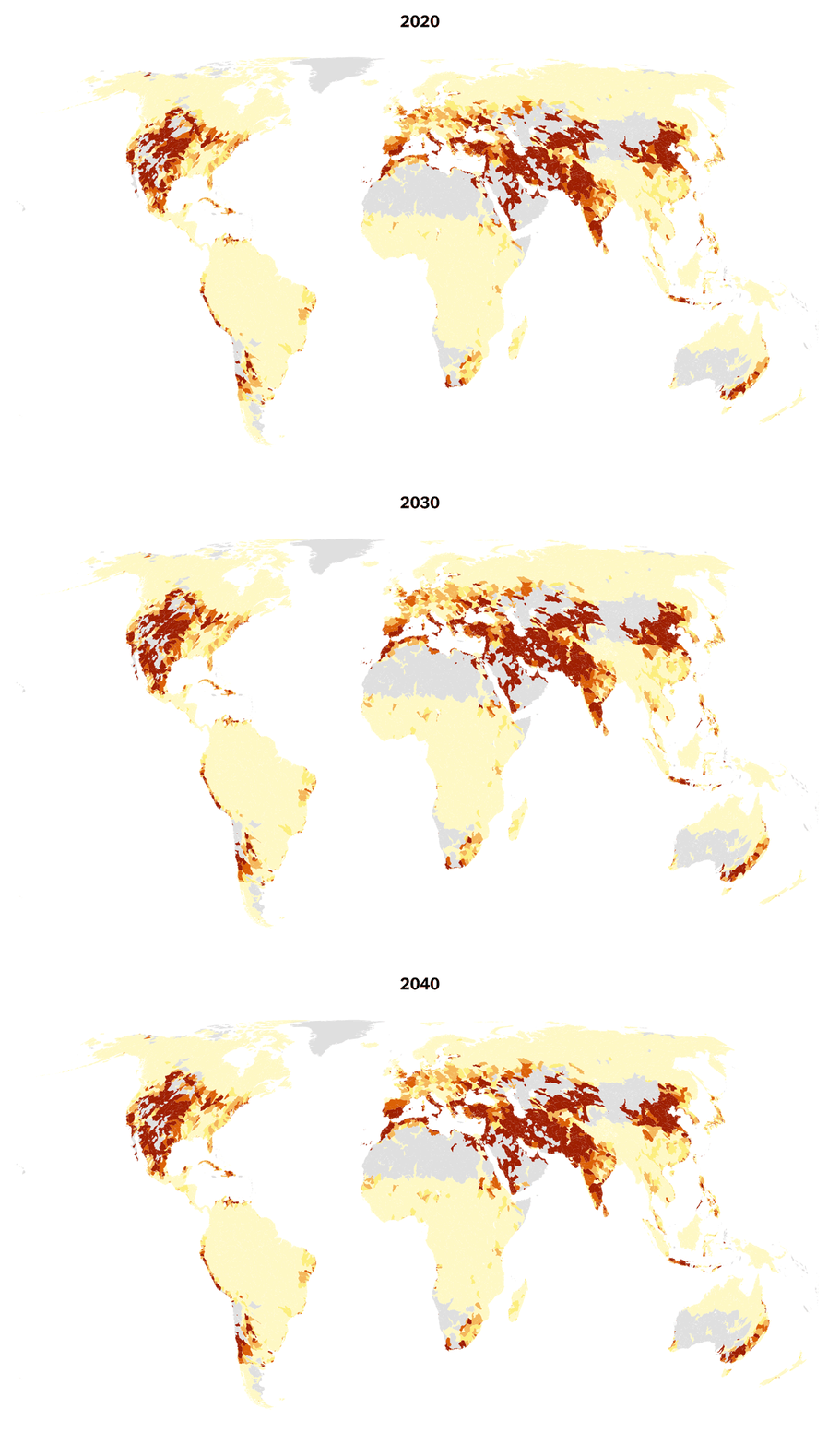
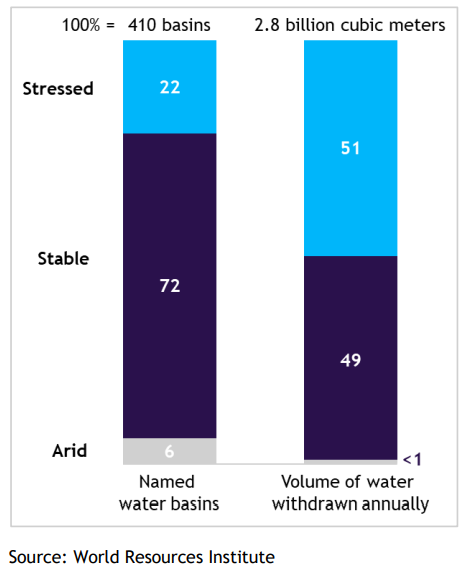
already close to the maximum the earth can sustain without dangerously shrinking supplies. will increase by 20% to 30% by 2050, up to 5,500 to 6,000 km3 per year. Global water demand for agriculture will increase by 60%. The availability of freshwater varies by location. Just nine countries account for 60% of all freshwater supplies. The majority of the world’s freshwater is stored in 410 basins. About a quarter of these basins, accounting for more than half of all water withdrawals, already face water stress see the figure on the right. Yet, many of the world’s water basins are projected to be confronted with an even further decline in water supply of around 10% by 2030 and up to 25% in 2050.10 This reduction in supply is not evenly distributed, and some regions could be facing a reduction in supply of more than 70% by 2050.
The second water crisis is posed by the degrading quality of the available freshwater resources. The link between water quality and water quantity is often overlooked yet deteriorating water quality is a major factor in increasing global water stress as it reduces the quantity of water available for use without requiring significant treatment costs. Water pollution occurs when harmful substances —such as chemicals or pesticides — contaminate a stream, river, lake, ocean, aquifer, or other body of water, degrading water quality and rendering it toxic to humans or the environment. Of 2,300 large lakes assessed globally in 2019, nearly a quarter recorded high to extreme turbidity(water cloudiness), which can cause adverse impacts on ecosystems and human health.
The economic consequences of the freshwater crisis can be severe. Estimates by the World Bank indicate that in some regions, such as the Middle East, Sahel and Asia, GDP growth could decline by as much as 6% by 2050 as a result of water related impacts on agriculture, health, income and prosperity.26 In regions downstream of heavily polluted rivers, GDP growth is estimated to be lowered by a third.27 Research from the World Resources Institute found that it would cost 1% of worldwide GDP to secure water for our societies by 2030.28 The estimated annual cost to eliminate industrial pollution is USD 87.4 billion, which is about 0.1% of global GDP. 29 Adding also agricultural and domestic pollution, the costs of elimination are estimated to increase to USD 291 billion per year.
ADVANCING SUSTAINABLE BIOENERGY DEVELOPMENT
New, advanced technologies make it possible to produce climate neutral fuels from non-forest and non-food energy crops. The benefits of cultivation and use of these energy crops for transport fuels and electricity goes beyond the benefits of reducing greenhouse gas emissions. Terrestrial energy crop cultivation and aquatic energy crop harvesting reverses land and water degradation, increases biodiversity and carbon sequestration and improves land fertility. We call this
Deep Green Biomass. Moreover, deploying these energy crops for the production of advanced biofuels will positively impact social-economic structures and energy independence and reduce the need for involuntary migration and deforestation: Deep Green Energy.
Deep Green Energy Partners works to accelerate deployment of deep green biomass for the production of advanced biofuels and biochemicals, to restore soil and water conditions and to optimize the overall ecological-economic effects of investments in the energy transition.
Many of the water systems that keep ecosystems thriving and feed a growing human population have become stressed. Rivers, lakes and aquifers are drying up or becoming too polluted to use. More than half the world’s wetlands have disappeared.
Agriculture consumes more water than any other source and wastes much of that through inefficiencies and industries need water to make anything and often reduce the supply for other uses by polluting it. Climate change is altering patterns of weather and water around the world, causing shortages and droughts in some areas and floods in others.
At the current consumption rate, this situation will only get worse. By 2050, two-thirds of the world’s population may face water shortages. And ecosystems around the world will suffer even more.the supply of freshwater has been steadily decreasing while demand has been increasing. By 2030 the global gap between supply and demand is projected to be 40%, assuming no further efficiency gains. Population growth and economic development are increasing the amount of water required for irrigation, industry and domestic purposes, while climate change and deforestation increasingly strain available water resources.
The volume of water used globally – about 4.600 cubic kilometers a year – is
already close to the maximum the earth can sustain without dangerously shrinking supplies. will increase by 20% to 30% by 2050, up to 5,500 to 6,000 km3 per year. Global water demand for agriculture will increase by 60%. The availability of freshwater varies by location. Just nine countries account for 60% of all freshwater supplies. The majority of the world’s freshwater is stored in 410 basins. About a quarter of these basins, accounting for more than half of all water withdrawals, already face water stress see the figure on the right. Yet, many of the world’s water basins are projected to be confronted with an even further decline in water supply of around 10% by 2030 and up to 25% in 2050.10 This reduction in supply is not evenly distributed, and some regions could be facing a reduction in supply of more than 70% by 2050.
The second water crisis is posed by the degrading quality of the available freshwater resources. The link between water quality and water quantity is often overlooked yet deteriorating water quality is a major factor in increasing global water stress as it reduces the quantity of water available for use without requiring significant treatment costs. Water pollution occurs when harmful substances —such as chemicals or pesticides — contaminate a stream, river, lake, ocean, aquifer, or other body of water, degrading water quality and rendering it toxic to humans or the environment. Of 2,300 large lakes assessed globally in 2019, nearly a quarter recorded high to extreme turbidity(water cloudiness), which can cause adverse impacts on ecosystems and human health.
The economic consequences of the freshwater crisis can be severe. Estimates by the World Bank indicate that in some regions, such as the Middle East, Sahel and Asia, GDP growth could decline by as much as 6% by 2050 as a result of water related impacts on agriculture, health, income and prosperity.26 In regions downstream of heavily polluted rivers, GDP growth is estimated to be lowered by a third.27 Research from the World Resources Institute found that it would cost 1% of worldwide GDP to secure water for our societies by 2030.28 The estimated annual cost to eliminate industrial pollution is USD 87.4 billion, which is about 0.1% of global GDP. 29 Adding also agricultural and domestic pollution, the costs of elimination are estimated to increase to USD 291 billion per year.
Demand growth: Freshwater use has increased sixfold over the past century and is now rising by about 1% a year. Gobal water demand for all uses, presently about 4,600 km3 per year, will increase by 20%-65% by 2050, up to 5,500 to 8,000 km3 per year. This margin is large as final demand will depend on world population, GDP growth and, of course global warming. Global demand for agriculture, accounting for about 70% of all water withdrawals and energy and industry, accounting for 20% are expected to grow by approximately 30-50% respectively 50-80% by 2050.Supply growth: Water supply from melting snow and glaciers feed rivers and lakes. Rivers and lakes (surface water) supply part of the water demand and overflows replenish aquifers (groundwater reservoirs) for use in times that rivers and lakes are low. Global warming is accelerating melting and thus part of the additional demand has been met, another part has been met by increasing water extraction from aquifers, and when no fresh water supply is available from seawater desalination.
ADVANCING SUSTAINABLE BIOENERGY DEVELOPMENT
New, advanced technologies make it possible to produce climate neutral fuels from non-forest and non-food energy crops. The benefits of cultivation and use of these energy crops for transport fuels and electricity goes beyond the benefits of reducing greenhouse gas emissions. Terrestrial energy crop cultivation and aquatic energy crop harvesting reverses land and water degradation, increases biodiversity and carbon sequestration and improves land fertility. We call this
Deep Green Biomass. Moreover, deploying these energy crops for the production of advanced biofuels will positively impact social-economic structures and energy independence and reduce the need for involuntary migration and deforestation: Deep Green Energy.
Deep Green Energy Partners works to accelerate deployment of deep green biomass for the production of advanced biofuels and biochemicals, to restore soil and water conditions and to optimize the overall ecological-economic effects of investments in the energy transition.
The above actuals and projections might however been outdated. Agricultural water appropriation has undergone rapid changes in recent decades, but estimates of global water appropriation have not been updated with the latest data and consistent methods. A 2022 reassessment based earth observation data
indicates "that agriculture remains the largest user in terms of both water consumption and withdrawals worldwide, representing 87% of global water consumption, with approximately 60% of global freshwater withdrawals devoted to irrigation. The percentage of withdrawals devoted to irrigation has decreased in recent decades when compared to the previous estimate of 70%. The results reveal the actual global crop consumptive use (8053.6 km3/yr) of blue and green water". In Africa and Asia, where an estimated 85-90% of all fresh water used is for agriculture and where world population growth and climate change impacts are expected to be the largest this will lead to groundwater depletion in the near future. E.g by 2030 21 major Indian cities, including Chennai and New Delhi, might have run out of groundwater completely and in sixty percent of Indian districts, groundwater levels have already reached critically low levels.
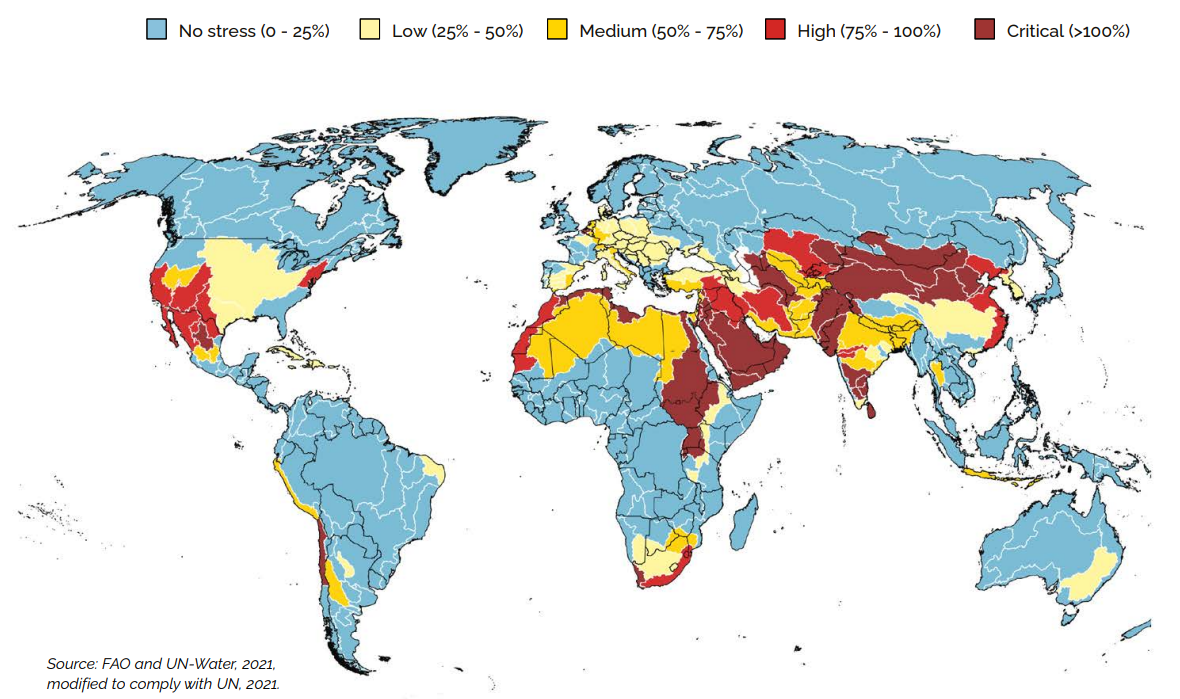
More and more people live in areas where clean water resources and population do not match. India for instance has about 17% of the world’s population but only 7% of the world’s freshwater resources, over half of all it groundwater wells are decreasing and much of the water is polluted. But also in most of Europe and the Mediterranean and much of the US water is getting scarcer due to over extraction, contamination, droughts and, strange as it may sound, surpluses from floods. Around 2.4 billion people living in countries are experiencing water stress today. This number is expected to increase to 5.4 billion people in 2040.
ADVANCING SUSTAINABLE BIOENERGY DEVELOPMENT
New, advanced technologies make it possible to produce climate neutral fuels from non-forest and non-food energy crops. The benefits of cultivation and use of these energy crops for transport fuels and electricity goes beyond the benefits of reducing greenhouse gas emissions. Terrestrial energy crop cultivation and aquatic energy crop harvesting reverses land and water degradation, increases biodiversity and carbon sequestration and improves land fertility. We call this
Deep Green Biomass. Moreover, deploying these energy crops for the production of advanced biofuels will positively impact social-economic structures and energy independence and reduce the need for involuntary migration and deforestation: Deep Green Energy.
Deep Green Energy Partners works to accelerate deployment of deep green biomass for the production of advanced biofuels and biochemicals, to restore soil and water conditions and to optimize the overall ecological-economic effects of investments in the energy transition.
CLIMATE CHANGE IMPACTS ON WATER QUANTITY AND QUALITY
ADVANCING SUSTAINABLE BIOENERGY DEVELOPMENT
New, advanced technologies make it possible to produce climate neutral fuels from non-forest and non-food energy crops. The benefits of cultivation and use of these energy crops for transport fuels and electricity goes beyond the benefits of reducing greenhouse gas emissions. Terrestrial energy crop cultivation and aquatic energy crop harvesting reverses land and water degradation, increases biodiversity and carbon sequestration and improves land fertility. We call this
Deep Green Biomass. Moreover, deploying these energy crops for the production of advanced biofuels will positively impact social-economic structures and energy independence and reduce the need for involuntary migration and deforestation: Deep Green Energy.
Deep Green Energy Partners works to accelerate deployment of deep green biomass for the production of advanced biofuels and biochemicals, to restore soil and water conditions and to optimize the overall ecological-economic effects of investments in the energy transition.
Climate change impacts the world’s water in complex ways. In a warmer world, the air will suck up more evaporating water from oceans, lakes, soil and plants. Increases in atmospheric water vapor amplify the
global hydrologic cycle, making wet regions wetter and dry regions drier. The more water vapor that air contains, the more energy it holds which fuels intense storms, particularly over land. This results in more extreme weather events, heavier rainfall and more evaporation from land which increases soil dry out and thus the world's water cycle becomes a
positive climate change feedback loop by itself. Vapor pressure increases about 7% for each one degree increase in temperature.
Other things being equal (winds, cloudiness etc) we may expect an intensification of the water cycle of 7% per degree of global warming.
Climate change aggravates the situation in countries already currently experiencing water stress and generate similar problems in areas that have not been severely affected yet. Many rivers stop flowing and lakes are drying up, while intens rains cause more flooding that spreads pollution over land, underground aquifers and finally oceans while taking along fertile soil. The remaining water in aquifers gets contaminated making it less or unsuitable for drinking or irrigation. Increasing temperatures, precipitation, wind and solar radiation are accelerating the effects of eutrophication of lakes and coastal areas. Melting glaciers and stronger rainfall cause faster water to ocean run-off, the time water remains frozen and/or in land-based reservoirs decreases, so sea level rises.
So while demand keeps increasing, the volumes of available freshwater in rivers, lakes and easy accessibel aquifers are decreasing. One option is to tap the potential of deeper aquifers to increase both supply and year-round supply security which is in particular important for agriculture. The great majority of global farmlands are rainfed.
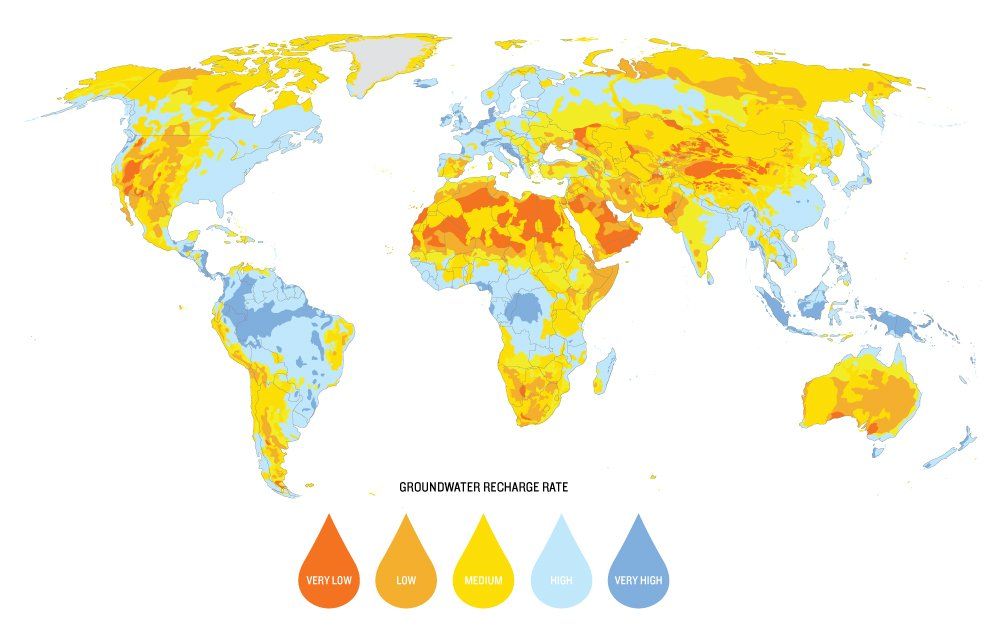
Rainfed systems are not only less productive than irrigated farmlands, they are also more vulnerable to extreme weather events and climate change. The use of groundwater is soaring in regions with lower and medium recharge rates in many other regions sustainable withdrawal is still possible. Both surface water and groundwater are increasingly impacted by contamination and pollution.
ADVANCING SUSTAINABLE BIOENERGY DEVELOPMENT
New, advanced technologies make it possible to produce climate neutral fuels from non-forest and non-food energy crops. The benefits of cultivation and use of these energy crops for transport fuels and electricity goes beyond the benefits of reducing greenhouse gas emissions. Terrestrial energy crop cultivation and aquatic energy crop harvesting reverses land and water degradation, increases biodiversity and carbon sequestration and improves land fertility. We call this
Deep Green Biomass. Moreover, deploying these energy crops for the production of advanced biofuels will positively impact social-economic structures and energy independence and reduce the need for involuntary migration and deforestation: Deep Green Energy.
Deep Green Energy Partners works to accelerate deployment of deep green biomass for the production of advanced biofuels and biochemicals, to restore soil and water conditions and to optimize the overall ecological-economic effects of investments in the energy transition.
Desalinization, the only option to "create" more freshwater comes at considerable economic and environmental cost. Desalination requires a lot of energy, takes out both good and bad minerals from the water, increases the salinity of the waters or land where the processed water is dumped and might introduce contaminants to the water system. Global warming and the increasing frequency of droughts in regions that once enjoyed mild climates might already by 2030 cause cause a 40 per cent supply-demand deficit for drinking water worldwide. Desalination is the only currently available technology capable of countering such a crisis and those countries that need it and can afford it will therefore use it.
ADVANCING SUSTAINABLE BIOENERGY DEVELOPMENT
New, advanced technologies make it possible to produce climate neutral fuels from non-forest and non-food energy crops. The benefits of cultivation and use of these energy crops for transport fuels and electricity goes beyond the benefits of reducing greenhouse gas emissions. Terrestrial energy crop cultivation and aquatic energy crop harvesting reverses land and water degradation, increases biodiversity and carbon sequestration and improves land fertility. We call this
Deep Green Biomass. Moreover, deploying these energy crops for the production of advanced biofuels will positively impact social-economic structures and energy independence and reduce the need for involuntary migration and deforestation: Deep Green Energy.
Deep Green Energy Partners works to accelerate deployment of deep green biomass for the production of advanced biofuels and biochemicals, to restore soil and water conditions and to optimize the overall ecological-economic effects of investments in the energy transition.
ANTHROPOGENIC CAUSED WATER DEGRADATION
ADVANCING SUSTAINABLE BIOENERGY DEVELOPMENT
New, advanced technologies make it possible to produce climate neutral fuels from non-forest and non-food energy crops. The benefits of cultivation and use of these energy crops for transport fuels and electricity goes beyond the benefits of reducing greenhouse gas emissions. Terrestrial energy crop cultivation and aquatic energy crop harvesting reverses land and water degradation, increases biodiversity and carbon sequestration and improves land fertility. We call this
Deep Green Biomass. Moreover, deploying these energy crops for the production of advanced biofuels will positively impact social-economic structures and energy independence and reduce the need for involuntary migration and deforestation: Deep Green Energy.
Deep Green Energy Partners works to accelerate deployment of deep green biomass for the production of advanced biofuels and biochemicals, to restore soil and water conditions and to optimize the overall ecological-economic effects of investments in the energy transition.
The world's freshwater systems are increasingly under pressure from a combination of deforestation, bacteria, sewage, chemicals and plastics that remove oxygen and transform many freshwater ecosystems to poisonous and carbon and decease emitting pools. As all water sooner or later ends up in oceans, oceans are also experiencing the effects of pollution and eutrophication of freshwater in particular in coastal zones.
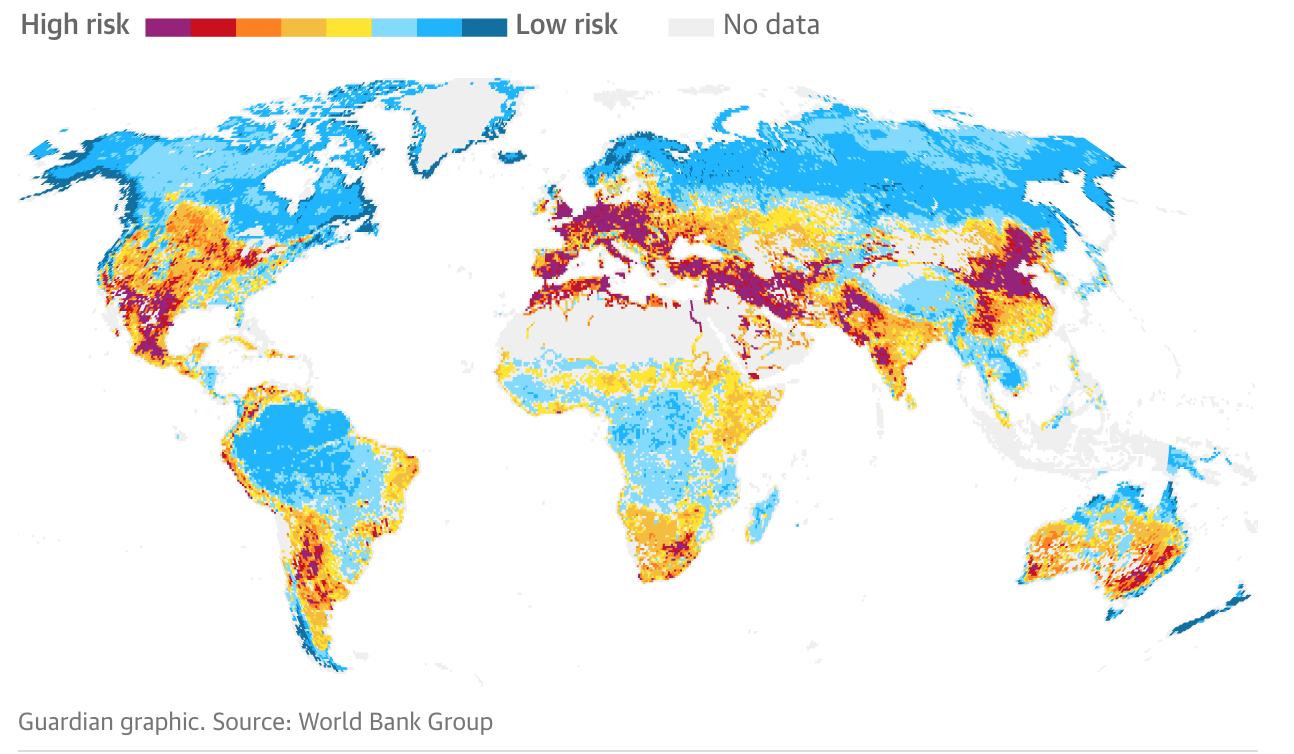
Pollution, contamination and the introduction of alien flora and fauna, global warming and CO2 uptake are changing the physical, chemical or biological properties of water with a detrimental consequence of all living organisms in rivers, lakes and seas and oceans. It is clear from map that high income status does not confer immunity from water quality problems. This contradicts what one might assume based on the environmental Kuznets curve hypothesis, which posits that pollution eventually declines with prosperity. Not only does pollution not decline with economic growth, but the range of pollutants tends to expand with prosperity.
ADVANCING SUSTAINABLE BIOENERGY DEVELOPMENT
New, advanced technologies make it possible to produce climate neutral fuels from non-forest and non-food energy crops. The benefits of cultivation and use of these energy crops for transport fuels and electricity goes beyond the benefits of reducing greenhouse gas emissions. Terrestrial energy crop cultivation and aquatic energy crop harvesting reverses land and water degradation, increases biodiversity and carbon sequestration and improves land fertility. We call this
Deep Green Biomass. Moreover, deploying these energy crops for the production of advanced biofuels will positively impact social-economic structures and energy independence and reduce the need for involuntary migration and deforestation: Deep Green Energy.
Deep Green Energy Partners works to accelerate deployment of deep green biomass for the production of advanced biofuels and biochemicals, to restore soil and water conditions and to optimize the overall ecological-economic effects of investments in the energy transition.
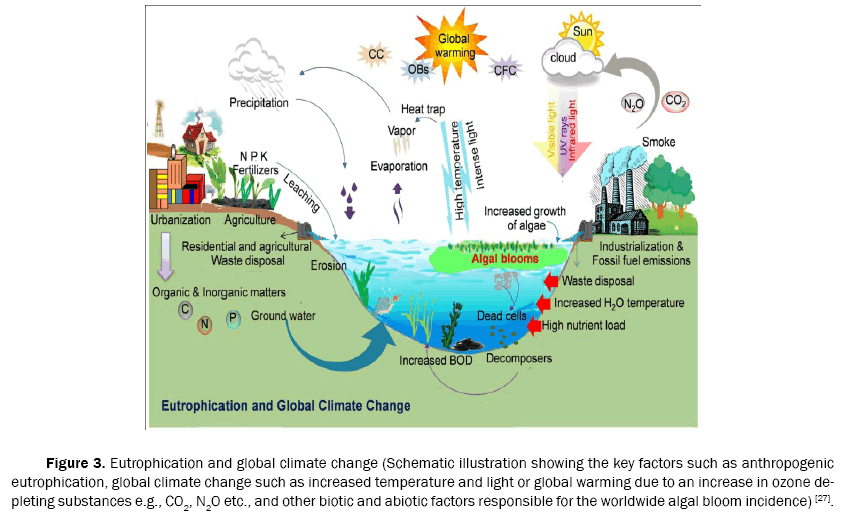
Various forms pollution change the physical, chemical or biological properties of water with detrimental consequences for living organism. Severe pathogen (micro organismes) pollution of drinking water is effecting some 2 billion people around the world. Eutrophication, the increase of nitrogen and phosphorous concentration in water (mainly from fertilizers) leads to the growth of (toxic) algae, cyanobacteria, heterotrophic microbes, and detritus (periphyton) in lakes and river beds with detrimental effects on ecosystems.
Eutrophication increases biological oxygen demand of water, the release of toxic and carbon gases and encourage growth of aquatic weeds. This has adverse effects
on fishery, portable water, irrigation and navigation. Eutrophic water favours the growth of disease causing agents of health hazards. The enhancing rate of deposition of silt and organic debris in the eutrophic water body makes the water body slowly becomes shallower and more poisonous. In dry zones water bodies slowly transform into a wetland, with increased methane emissions, and finally into dry land. An estimated 31% of the global landmass contains undesirable levels of periphyton growth.
ADVANCING SUSTAINABLE BIOENERGY DEVELOPMENT
New, advanced technologies make it possible to produce climate neutral fuels from non-forest and non-food energy crops. The benefits of cultivation and use of these energy crops for transport fuels and electricity goes beyond the benefits of reducing greenhouse gas emissions. Terrestrial energy crop cultivation and aquatic energy crop harvesting reverses land and water degradation, increases biodiversity and carbon sequestration and improves land fertility. We call this
Deep Green Biomass. Moreover, deploying these energy crops for the production of advanced biofuels will positively impact social-economic structures and energy independence and reduce the need for involuntary migration and deforestation: Deep Green Energy.
Deep Green Energy Partners works to accelerate deployment of deep green biomass for the production of advanced biofuels and biochemicals, to restore soil and water conditions and to optimize the overall ecological-economic effects of investments in the energy transition.
Lakes and other freshwater systems cause about half of all methane emissions which is to a large extend caused by the decomposition of invasive aquatic weeds and other biomass in water bodies and methanogenesis. Methanogenesis is the process by which carbon dioxide is reduced to methane by wetland microbes (methanogens). Methanogens feed on nitrogen, phosphor and oxygen and the more methanogens the less oxygen for other species and the more methane emissions.
ADVANCING SUSTAINABLE BIOENERGY DEVELOPMENT
New, advanced technologies make it possible to produce climate neutral fuels from non-forest and non-food energy crops. The benefits of cultivation and use of these energy crops for transport fuels and electricity goes beyond the benefits of reducing greenhouse gas emissions. Terrestrial energy crop cultivation and aquatic energy crop harvesting reverses land and water degradation, increases biodiversity and carbon sequestration and improves land fertility. We call this
Deep Green Biomass. Moreover, deploying these energy crops for the production of advanced biofuels will positively impact social-economic structures and energy independence and reduce the need for involuntary migration and deforestation: Deep Green Energy.
Deep Green Energy Partners works to accelerate deployment of deep green biomass for the production of advanced biofuels and biochemicals, to restore soil and water conditions and to optimize the overall ecological-economic effects of investments in the energy transition.
WATER, CO2 UPTAKE
AND ACIDIFICATION
ADVANCING SUSTAINABLE BIOENERGY DEVELOPMENT
New, advanced technologies make it possible to produce climate neutral fuels from non-forest and non-food energy crops. The benefits of cultivation and use of these energy crops for transport fuels and electricity goes beyond the benefits of reducing greenhouse gas emissions. Terrestrial energy crop cultivation and aquatic energy crop harvesting reverses land and water degradation, increases biodiversity and carbon sequestration and improves land fertility. We call this
Deep Green Biomass. Moreover, deploying these energy crops for the production of advanced biofuels will positively impact social-economic structures and energy independence and reduce the need for involuntary migration and deforestation: Deep Green Energy.
Deep Green Energy Partners works to accelerate deployment of deep green biomass for the production of advanced biofuels and biochemicals, to restore soil and water conditions and to optimize the overall ecological-economic effects of investments in the energy transition.
The ocean absorbs about 30% of the CO2
that is released in the atmosphere. As levels of atmospheric CO2
increase the amount of carbon dioxide absorbed by the ocean also increases.
When CO2
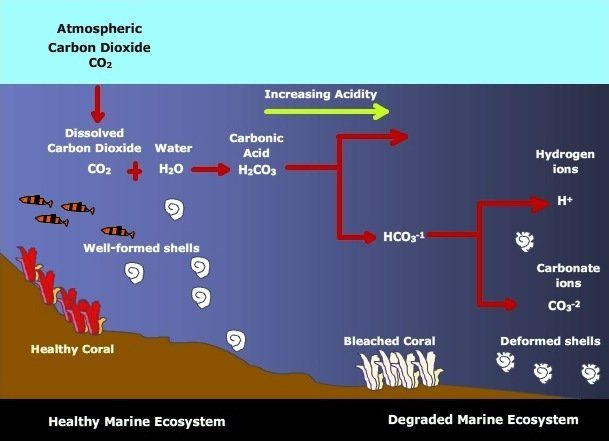
is absorbed by seawater, a series of chemical reactions occur resulting in the increased concentration of hydrogen ions.
This process has far reaching implications for the ocean as it is killing ocean ecosystem as described below, and as recently discovered freshwater ecosystems are likely effected.
When CO2 dissolves in seawater it forms carbonic acid and as more CO2 is taken up by the oceans surface, the pH decreases, moving towards a less alkaline and therefore more acidic state. The acidification of ocean water leads to the growth of algae that get nutrients in the form of acidity dissolved in seawater. Algae in turn prevent sunlight from entering the underwater surface hampering photosynthesis by aquatic plants due to lack of sunlight. Aquatic plants and animals need both proper pH balance and various minerals and other compounds to grow and survive. Acidification and algae growth are disrupting the nutrients supply for all other sea life, corals and shellfish in particular; acidification is therefore climate change's evil twin.