
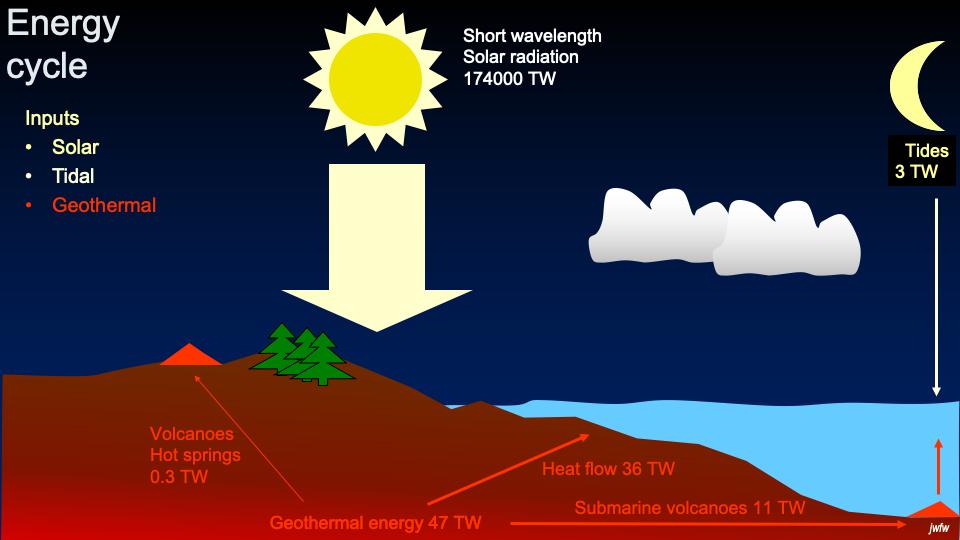
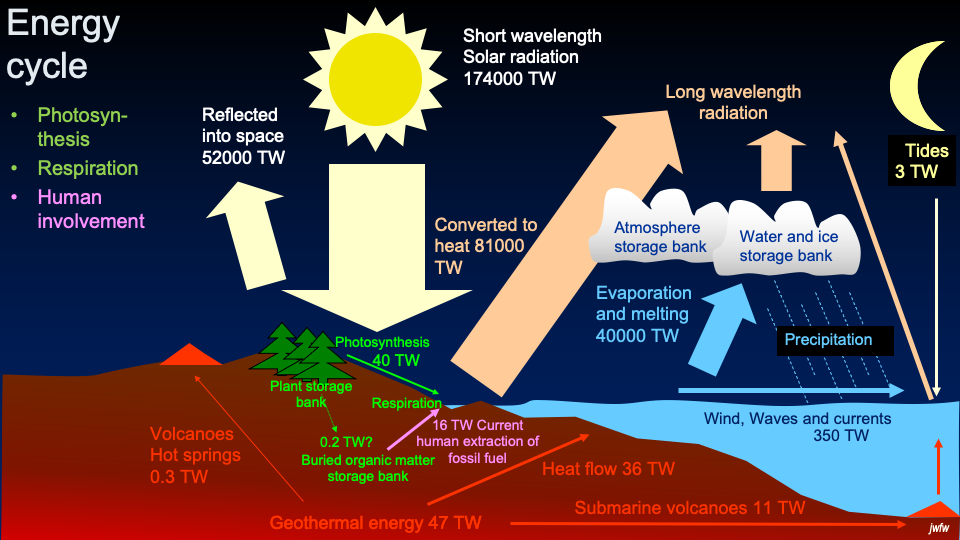
A proportion of the incoming solar energy, by heating the atmosphere and oceans, causes convection currents in both. In this process, heat energy is converted to kinetic or mechanical energy. This is the fundamental mechanism of origin of wind in the atmosphere, and of ocean currents in the hydrosphere, these movements involve about 350 TW of power. (Tidal energy gets mixed in to the pattern of water movements in the ocean). The 40 TW captured by the biosphere is basically used for its own growth and only an estimated estimated 0.2 TW, less than 1% of all the carbon extracted by photosynthesis, ultimately becomes fossil fuels.
Much of the rest of the Sun’s radiation, about 46% or 81,000 TW is absorbed and converted to heat energy by the atmosphere, the hydrosphere, and the geosphere. When sunlight reaches Earth, the surface absorbs some of the light’s energy and re-radiates it as infrared waves, which we feel as heat. These infrared waves travel up into the atmosphere and will escape back into space if unimpeded. Some molecules in the atmosphere, like carbon dioxide (CO2) than can not escape to space themselves can however absorb infrared waves an so impede energy escaping to space.
Whether or not molecules in the atmosphere absorb infrared waves
depends on their geometry and composition. Oxygen (O2) and nitrogen (N2) molecules for example are made up of only two atoms of the same element which narrows their movements and the variety of wavelengths they can interact with. Oxygen and nitrogen, which together account for 99 percent of the atmosphere absorb energy that has tightly packed wavelengths of around 200 nanometers or less, whereas infrared energy travels at wider and lazier wavelengths of 700 to 1,000,000 nanometers. Those ranges don’t overlap, so oxygen and nitrogen let the waves (and heat) pass freely through the atmosphere. Greenhouse gasses (GHGs) like carbon dioxide (CO2), methane (CH4) and nitrious oxide (N20)
on the other hand are made up of three or more atoms, which gives them a larger variety of ways to stretch and bend and twist.
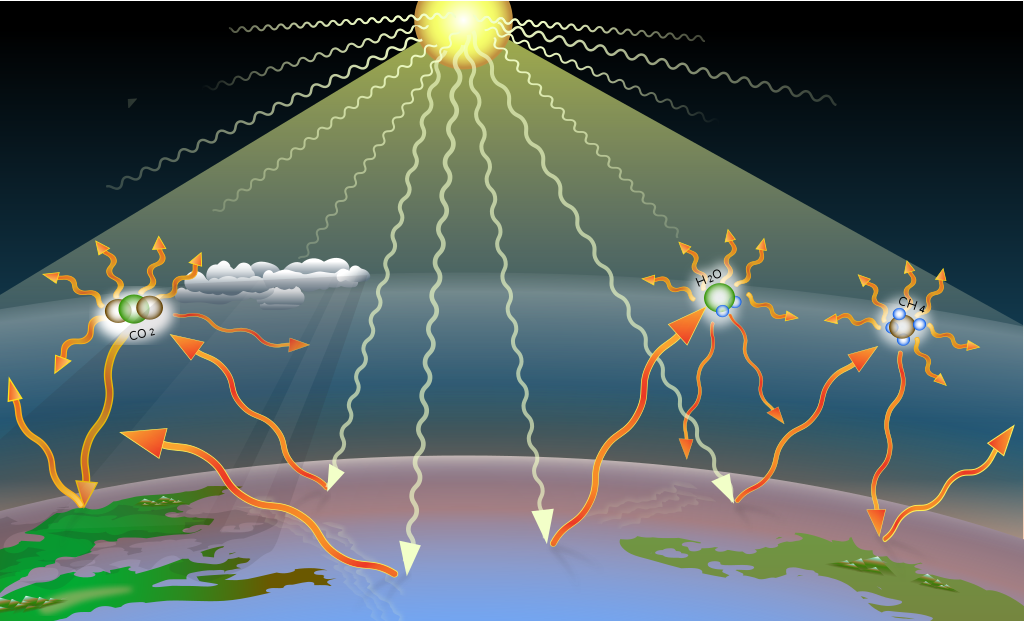
This means they can absorb a wider range of wavelengths including infrared waves and thus impede heath being radiated into space. Carbon dioxide, for example, absorbs energy at a variety of wavelengths between 2,000 and 15,000 nanometers, a range that overlaps with that of infrared energy. And as e.g. CO2
soaks up this infrared energy, it vibrates and re-emits the infrared energy back in all directions. About half of the absorbed energy goes out into space, and about half of it returns to Earth as heat. This effect is similar to the behavior of the glass in a greenhouse, which is transparent to visible light, but which blocks infra-red radiation, warming the interior. Thus although GHGs make up only about 0.05% of the atmosphere they are the cause of global warming.
Almost all GHGs are part of the Earth's chemical cycles that form closed systems between the Earth's biosphere, hydrosphere, geosphere and atmosphere in which chemicals change phase (fixed, liquid, gas) and composition. Chemical cycles are either driven by chemical reactions, like the absorption of CO2
when it comes in contact with water mass or by biochemical processes driven by living organismes. Living organisms cycle and transform chemical elements and compounds between spheres: carbon, water, nitrogen, oxygen, and phosphorus are recycled and stored by the living organisms. Most Carbon dioxide (CO2), methane (CH4) and nitrious oxide (N2O) is drawn down from the atmosphere by plants and microbes and transformed to C, N, O and H elements and compounds used for their own growth by which they maintain the world's ecosystem.
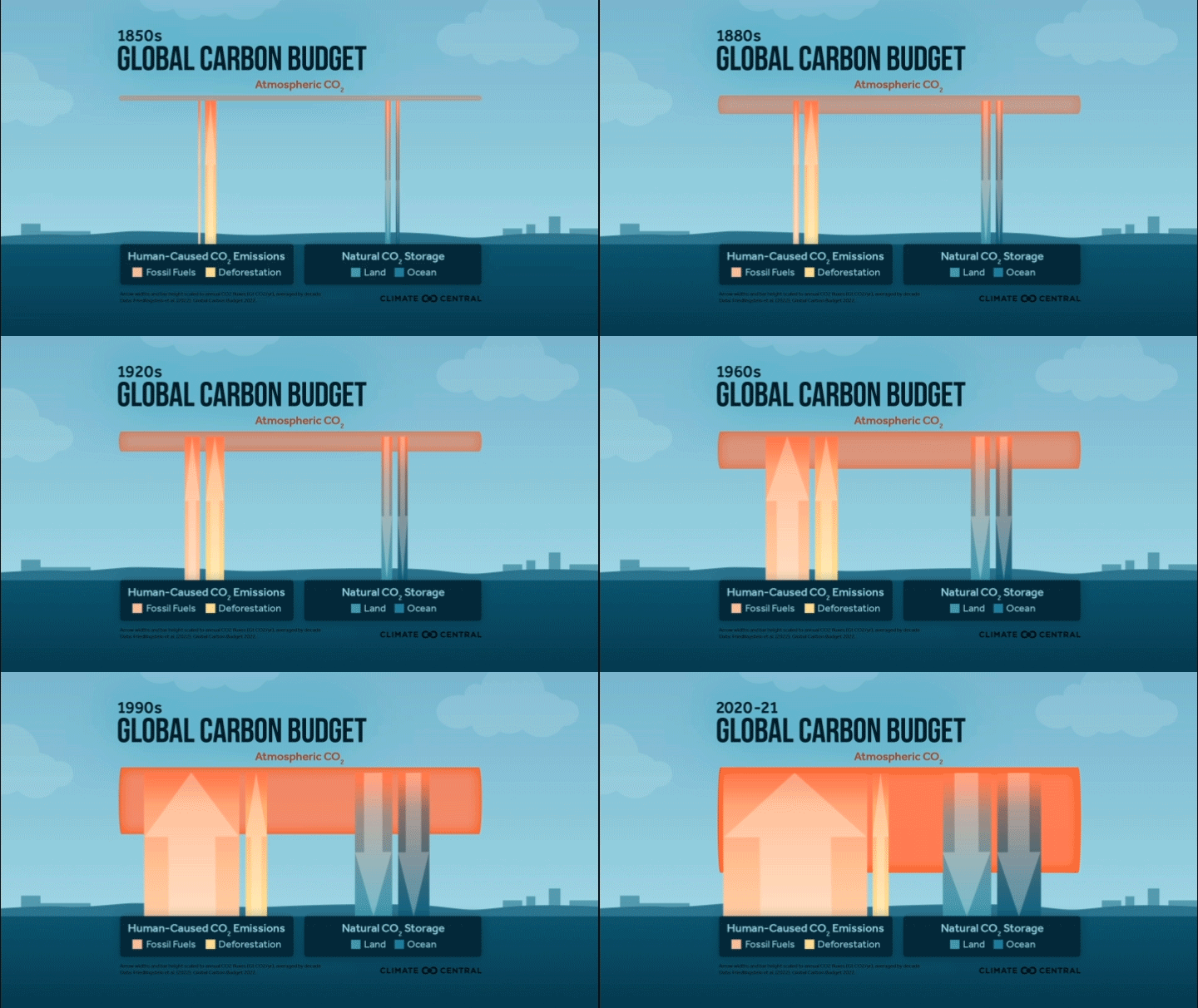
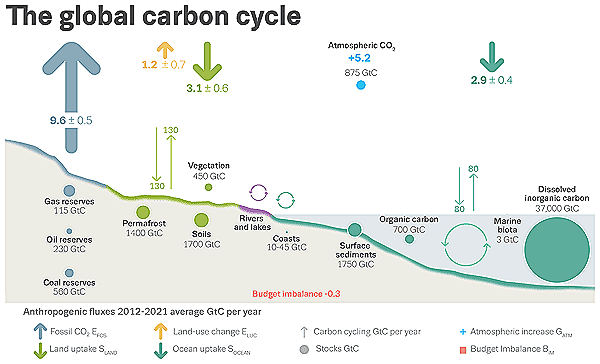
The carbon cycle (representing over 90% of all greenhouse gasses) is illustrative for the relation between human activity and the greenhouse effect through additional emissions. Since the start of the industrial revolution we have been steadily widening the gap between the amount of carbon that is added to and removed from the atmosphere. In the last 10 years human caused (anthropogenic) carbon emission averaged 10.8 GtC (gigatonnes carbon), of which 3.1 GtC was absorbed by biomass through biochemical processes, water mass absorbed 2.9 GtC through chemical processes and the remaining 5.2 GtC remains in the atmosphere.
We still burn fossil fuels faster than they are formed, cut forests faster than they can grow and cause the release of carbon from soils, other vegetation and permafrost. This translates into increasing incremental carbon addition to the atmosphere while reducing incremental terrestrial carbon stores and carbon draw down and storage capacity. Not only does this make halting global warming more difficult but it also changes the pace and size of the Earth's ecosystems and (bio)chemical cycles, and thus the quality and quantity of the land, biomass and water resources on which our existence depends.
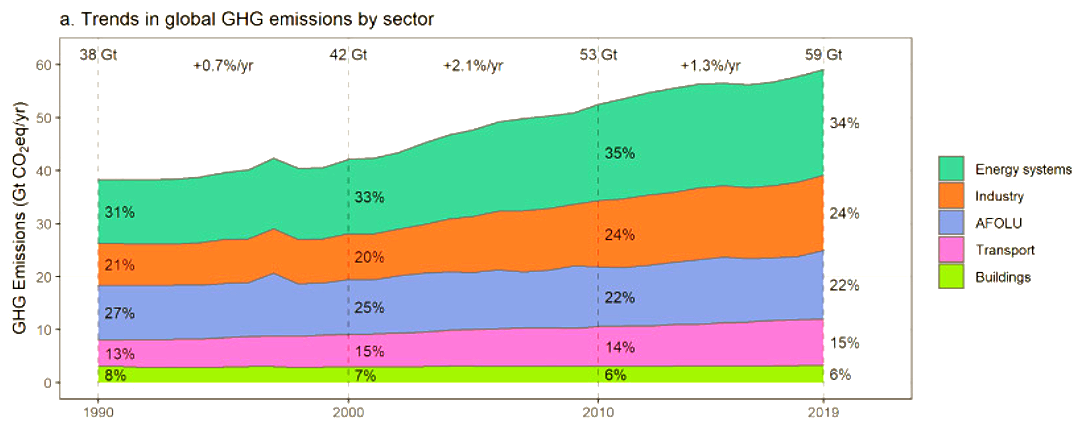
In 2020 the total net annual global anthropogenic greenhouse gas emissions, expressed in the global warming potential of CO2, had reached a total of 60 billion tonnes of CO2
equivalent (GtCO2eq).
Approximately 34% (20 GtCO2eq) came from the energy supply sector, 24% (14 GtCO2eq) from industry, 22% (13 GtCO2eq) from agriculture, forestry and other land use (AFOLU), 15% (8.7 GtCO2eq) from transport and 6% (3.3 GtCO2eq) from buildings.
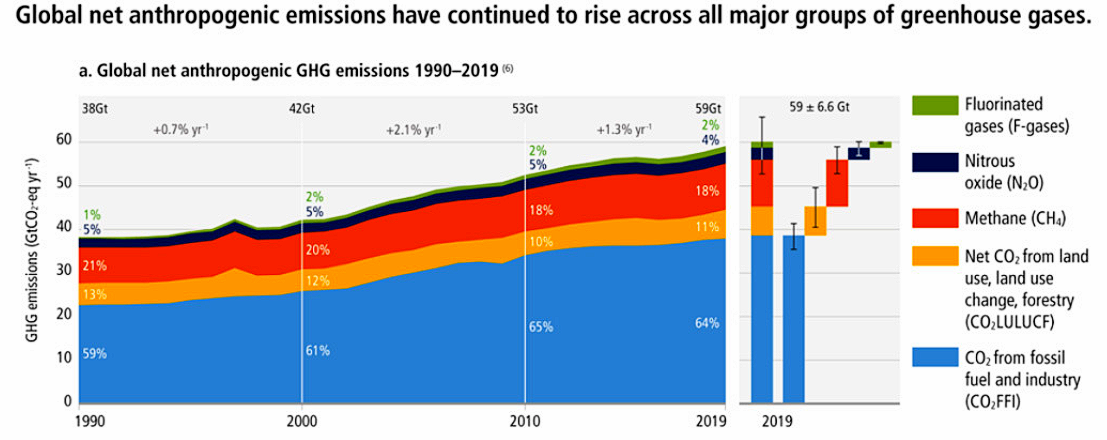
GHGs differ in the time they linger in the atmosphere and how much infrared they capture and thus how much they contribute to global warming. As CO2 represents 75% of the global warming resulting from all GHGs, non-CO2 GHG emissions are reported in CO2-equivalent emissions (CO2eq) based on their global warming potential over a period of 100 years (GWP100) compared to CO2.
The relation between GHG emissions and
the size of production value chains - extraction-processing-use-waste - is almost lineair. As our energy system is for 90% carbon based it is directly (extraction and processing) and indirectly (use in transport, agriculture, industry and built environment) the cause of around 72% of all GHG emission. In a
business as usual scenario greenhouse gas emissions will therefore increase by an estimated 50% over the next decades.
The four most important materials on which modern societies are built are cement, steel, plastics and ammonia. All depend heavily on the combustion on high density energy for production, i.e. fossil fuels, as does our food system. Excluding energy use, the food system accounts for about 18%, cement for 3%, plastics and chemicals for 2.5% and fertilizers for 3.5% of all net GHG emissions.
As can be arrived from the above figures te most relevant natural (bio)chemical cycles in relation to GHGs are the carbon cycle (CO2) and (CH4) and the nitrogen cycle (N2O). The most potent GHG, water vapor (H2O) is however not reflected in the above GHG tables as it not a cause of global warming but caused by it. The content of water vapor in the atmosphere, increases by 7% for each degree of global warming and doubles the global warming effect of other GHGs and therefore it's cycle should be included.
The carbon cycle can in two sub-cycles: respiration and photosynthesis, that are dependent upon another. In the respiration cycle, fauna, or animal life inhabiting the biosphere, consume carbohydrates (in the form of plant life) and oxygen and output carbon dioxide, water and energy. The animals use the energy produced to power their biology. Flora, the ecosystem's plant life, perform photosynthesis. Plants take in energy from the sun, carbon dioxide and water and produce carbohydrates and oxygen. These carbohydrates and oxygen are readily used by the fauna present in the ecosystem. In addition to being consumed by animal life, some of these carbohydrates return to the earth when the flora die. They break down and most the carbon returns to the ecosystem in the form of carbon dioxide. Another part is transformed, over millions of years under high pressure and high temperature, into fossil fuels. About 1% of all the carbon extracted by photosynthesis, ultimately becomes fossil fuels.
ADVANCING SUSTAINABLE BIOENERGY DEVELOPMENT
New, advanced technologies make it possible to produce climate neutral fuels from non-forest and non-food energy crops. The benefits of cultivation and use of these energy crops for transport fuels and electricity goes beyond the benefits of reducing greenhouse gas emissions. Terrestrial energy crop cultivation and aquatic energy crop harvesting reverses land and water degradation, increases biodiversity and carbon sequestration and improves land fertility. We call this
Deep Green Biomass. Moreover, deploying these energy crops for the production of advanced biofuels will positively impact social-economic structures and energy independence and reduce the need for involuntary migration and deforestation: Deep Green Energy.
Deep Green Energy Partners works to accelerate deployment of deep green biomass for the production of advanced biofuels and biochemicals, to restore soil and water conditions and to optimize the overall ecological-economic effects of investments in the energy transition.
Carbon dioxide (CO2) is the primary greenhouse gas, accounting for about three-quarters of all greenhouse gas emissions. It can linger in the atmosphere for thousands of years and at this time it's only removed from the atmosphere and stored away by increased storage in vegetation and soils (carbon sequestration) and by increased ocean uptake. CO2
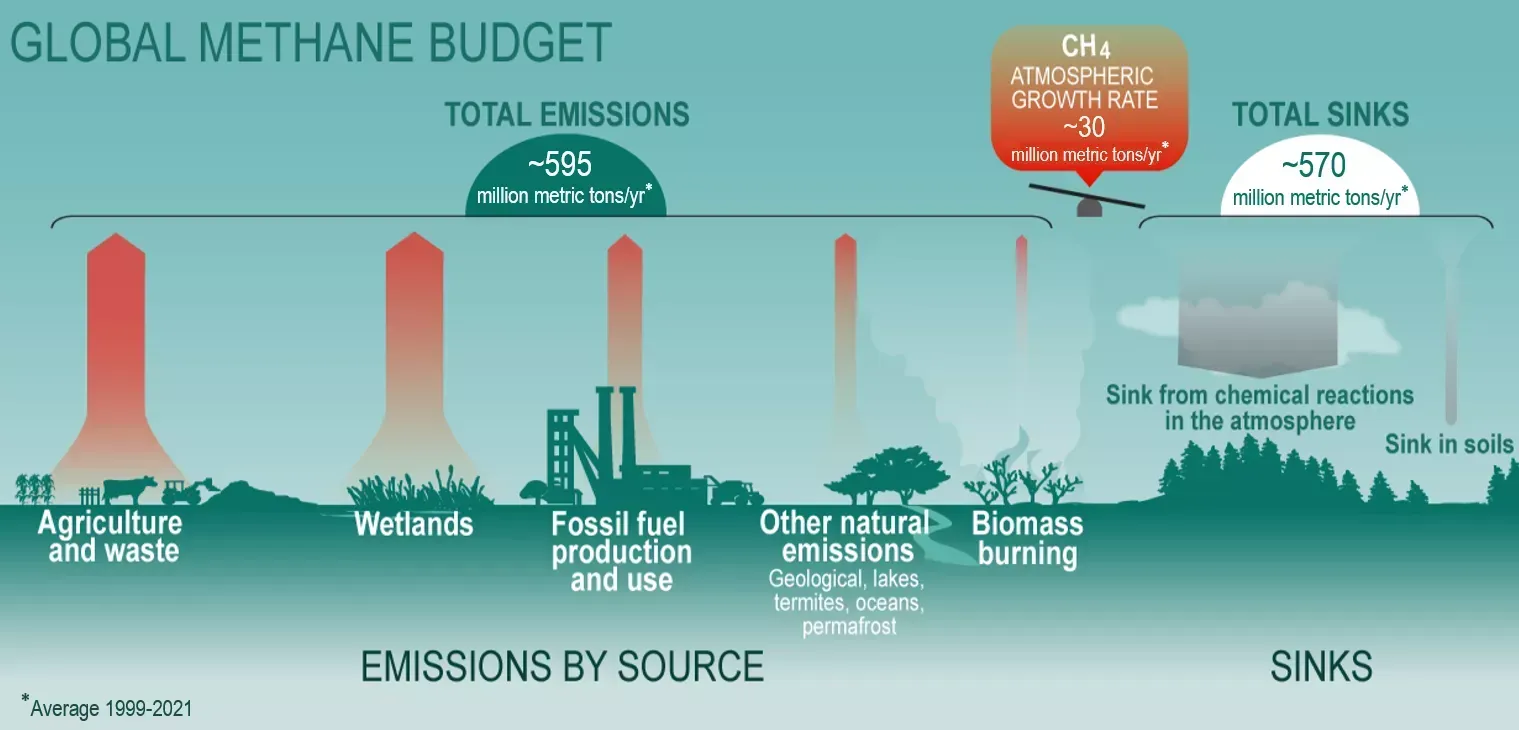
emissions mainly come from burning organic materials: coal, oil, gas, wood, and solid waste. Besides in the form of carbon dioxide, carbon is also emitted to the atmosphere in the form of methane (CH4).
ADVANCING SUSTAINABLE BIOENERGY DEVELOPMENT
New, advanced technologies make it possible to produce climate neutral fuels from non-forest and non-food energy crops. The benefits of cultivation and use of these energy crops for transport fuels and electricity goes beyond the benefits of reducing greenhouse gas emissions. Terrestrial energy crop cultivation and aquatic energy crop harvesting reverses land and water degradation, increases biodiversity and carbon sequestration and improves land fertility. We call this
Deep Green Biomass. Moreover, deploying these energy crops for the production of advanced biofuels will positively impact social-economic structures and energy independence and reduce the need for involuntary migration and deforestation: Deep Green Energy.
Deep Green Energy Partners works to accelerate deployment of deep green biomass for the production of advanced biofuels and biochemicals, to restore soil and water conditions and to optimize the overall ecological-economic effects of investments in the energy transition.
Methane is the main component of natural gas, it is released from landfills, gas and petroleum industries, agriculture (especially from the digestive systems of grazing animals), decomposing aquatic biomass and thawing permafrost. A molecule of methane stays in the atmosphere for about 12 years, but it is global warming effect is about 84 times more potent than CO2 over the two decades from it's release. Methane accounts for about 18% of all greenhouse gasses. Atmospheric methane is converted by a long series of chemical reactions in the atmosphere by oxidization into carbon dioxide (CO2) and water (H2O).
CO2 emissions can also be captured at smokestacks of power plants and factories, Carbon Capture and Storage (CCS), but today only about 0.1% is captured so. Carbon removal directly from the atmosphere by technical means is also possible but only climate efficient when superfluous renewable energy is available. Both technical solutions are developing but their potential succes is subject of debate.
Most of the nitrogen found in ecosystems exists as nitrogen gas.
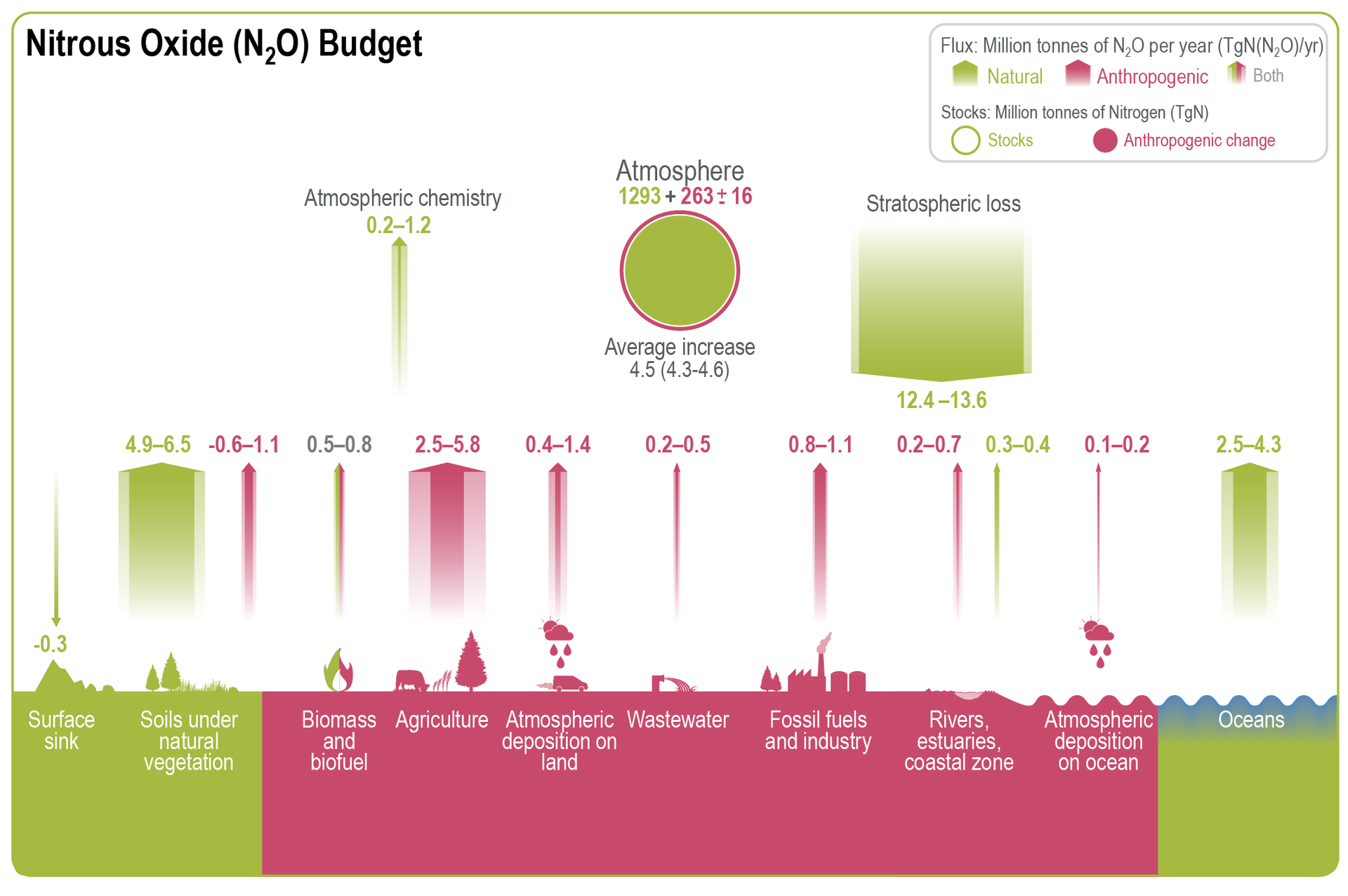
Nearly 78% of the earth's atmosphere is made of nitrogen. The nitrogen in the atmosphere is very stable and does not combine easily with other elements (inert). Lightning has sufficient energy to convert nitrogen into nitrates, a form of nitrogen usable by plant life. The second way nitrogen is converted to nitrates is by nitrogen fixing bacteria. These bacteria use special enzymes to convert nitrogen to nitrates. Plants use these nitrates to form amino acids. Animals eat the plants for the amino acids to help build muscle tissue. When plants and animals die, denitrifying bacteria convert the nitrates back into the gaseous form of nitrogen, which is released back into the atmosphere. Just like for the carbon cycle the serious disturbance of the nitrogen cycle started with the industrial revolution but it was when Haber and Bosh developed an industrial scale production proces in the 1910s
for the conversion of inert atmospheric nitrogen (N2) to ammonia (NH3) by a reaction with hydrogen (H2) that the natural nitrogen cycle was drastically impacted.
ADVANCING SUSTAINABLE BIOENERGY DEVELOPMENT
New, advanced technologies make it possible to produce climate neutral fuels from non-forest and non-food energy crops. The benefits of cultivation and use of these energy crops for transport fuels and electricity goes beyond the benefits of reducing greenhouse gas emissions. Terrestrial energy crop cultivation and aquatic energy crop harvesting reverses land and water degradation, increases biodiversity and carbon sequestration and improves land fertility. We call this
Deep Green Biomass. Moreover, deploying these energy crops for the production of advanced biofuels will positively impact social-economic structures and energy independence and reduce the need for involuntary migration and deforestation: Deep Green Energy.
Deep Green Energy Partners works to accelerate deployment of deep green biomass for the production of advanced biofuels and biochemicals, to restore soil and water conditions and to optimize the overall ecological-economic effects of investments in the energy transition.
Anthropogenic disturbance of the nitrogen cycle started also with the burning of carbon fuels causing NOx
releases, which are formed as a by-product during combustion of carbon. The Haber-Bosch invention enabled the productions of a variety of products (including nylon and explosives) but probably most important: synthetic fertilizer. Synthetic fertilizers enabled the Green Revolution that supercharged the agricultural sector in the 1960s and
"detonated the population explosion". By the 1970s technical production of NH3
from N2
overtook the natural biochemical production cycle and since then 40-50% of the global food supply depends on synthetic fertilizers.
Food security relies on nitrogen fertilizers, but its production and use account for approximately 5% of global GHG emissions, of which two-thirds take place after they are spread on fields, with one-third of emissions coming from production processes.
Most N-bonds created by humans are lost to the environment which has numerous negative impacts. Among the best known effects are acid rain, smog,
eutrophication
of fresh and coastal waters and stratospheric ozone depletion. The impacts continue and will be magnified, as more N-bonds (or Nr) are lost to the environment and move along their biogeochemical pathway at an even greater rate. The same atom of Nr can cause multiple effects in the atmosphere, in terrestrial ecosystems, in freshwater and marine systems, and on human health. This sequence of effects is referred to as the nitrogen cascade. As the cascade progresses, the origin of Nr becomes unimportant. The only way to eliminate Nr accumulation and stop the cascade is to stop producing Nr or convert Nr back to the nonreactive N2
form. Nitrous oxide (N2O) represents a relatively small share of GHG emissions but it is 264 times more powerful than carbon dioxide over 20 years, and its lifetime in the atmosphere exceeds a century.
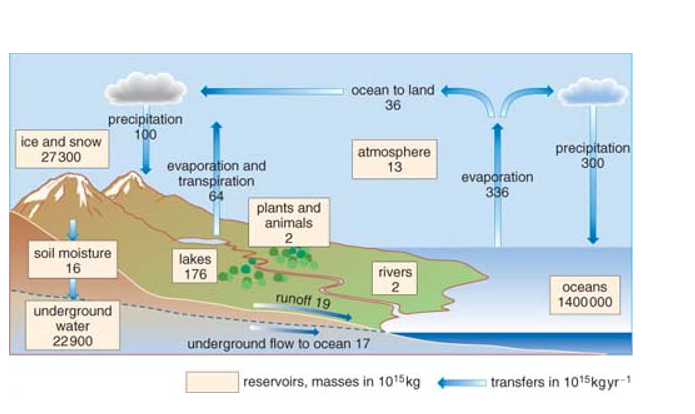
The water cycle begins with precipitation. Water from soils, vegetation, lakes, rivers and oceans evaporates into the atmosphere. These water vapors gather, under the right conditions, to form clouds. Eventually, these vapors condense and become rain or another form of precipitation. This precipitation falls to the earth's surface. Next, some of the precipitation flows into the ground and becomes part of the ecosystem's water table. The rest flows into streams and rivers, and eventually back into the lakes and oceans from where it came. Along this journey, lifeforms in the ecosystem use the water to sustain life.
ADVANCING SUSTAINABLE BIOENERGY DEVELOPMENT
New, advanced technologies make it possible to produce climate neutral fuels from non-forest and non-food energy crops. The benefits of cultivation and use of these energy crops for transport fuels and electricity goes beyond the benefits of reducing greenhouse gas emissions. Terrestrial energy crop cultivation and aquatic energy crop harvesting reverses land and water degradation, increases biodiversity and carbon sequestration and improves land fertility. We call this
Deep Green Biomass. Moreover, deploying these energy crops for the production of advanced biofuels will positively impact social-economic structures and energy independence and reduce the need for involuntary migration and deforestation: Deep Green Energy.
Deep Green Energy Partners works to accelerate deployment of deep green biomass for the production of advanced biofuels and biochemicals, to restore soil and water conditions and to optimize the overall ecological-economic effects of investments in the energy transition.
Water vapor is a key part of Earth’s water cycle:
the path that all water follows as it moves around Earth’s atmosphere, land, and ocean as liquid water, solid ice, and gaseous water vapor. Water vapor is also Earth’s most abundant greenhouse gas and is responsible for about half of Earth’s warming effects. But water vapor doesn’t cause global warming, it’s a consequence of it. As greenhouse gases like carbon dioxide and methane increase, Earth's temperature rises in response and for every degree Celsius that Earth’s atmospheric temperature rises, the amount of water vapor in the atmosphere can increase by about 7%. Thus water vapor supercharges the global warming effect.
Increases in atmospheric water vapor also amplify the global water cycle. They contribute to making wet regions wetter and dry regions drier. The more water vapor that air contains, the more energy it holds. This energy fuels intense storms, particularly over land. This results in more extreme weather events. But more evaporation from the land also dries out soils. When water from intense storms falls on hard, dry ground, it runs off into rivers and streams instead of dampening soils. This increases the risk of drought. In short, when atmospheric water vapor meets increased levels of other greenhouse gases, its impacts on Earth’s climate are substantial.
Fluorinated gasses or F-gasses form a group of man-made gasses containing fluor of which hydrofluorocarbons, perfluorocarbons, chlorofluorocarbons, sulfur hexafluoride, and nitrogen trifluoride are the best known. F-gasses have heat-trapping potential thousands of times greater than CO2, stay in the atmosphere for hundreds to thousands of years and are responsible for about one-tenth of the direct radiative forcing from all long-lived anthropogenic
greenhouse gases. As these gasses are purely man-made there is no natural cycle for f-gasses and most are removed from the atmosphere only when they are destroyed by sunlight in the far upper atmosphere. In general, f-gasses are the most potent and longest lasting type of GHGs emitted by human activities. F-gasses and are mainly used as refrigerants in air conditioning and other refrigeration systems. F gases can also be found in other equipment, such as fire protection systems, high voltage switchgear, and specialized industrial processes as well as solvents and types of aerosols.
GLOBAL WARMING, CLIMATE CHANGE AND FEEDBACK LOOPS
GLOBAL WARMING, CLIMATE CHANGE AND FEEDBACK LOOPS
We are burning fossil fuels at a rate of about 16 TW, 80 times faster than the rate at which carbon is being stored in the geosphere. Burning fossil fuels – coal, oil, and natural gas – in oxygen releases the stored energy and return carbon dioxide to the atmosphere. At the same time we are reducing the world's carbon storage absorption capacity by deforestation, soil depletion and environmental pollution. Thus the solar energy trapped in greenhouse gasses keeps increasing which in turn accelerates, global warming and extreme weather eventskeep increasing.
As we burn burn fossil fuels – coal, oil, and natural gas – in oxygen to release the stored energy returns carbon dioxide to the atmosphere. We are currently burning fossil fuels at a rate of about 16 TW, 80 times faster than the rate at which carbon is being stored in the geosphere. Therefore its getting hotter. ll greenhouse gas emissions today the average temperature on Earth would
either stabilize right away or within a few decades
provided that the Earth's recycling and storage capacity is not further reduced.
Earth’s albedo varies a little through time, because ice and clouds are much more reflective than water or forests or deserts. As the Earth warms, the proportion of the surface covered by glacier ice decreases. This in turn decreases the albedo, leading to further warming. This kind of self-accelerating process is known as a positive feedback loop.

ADVANCING SUSTAINABLE BIOENERGY DEVELOPMENT
New, advanced technologies make it possible to produce climate neutral fuels from non-forest and non-food energy crops. The benefits of cultivation and use of these energy crops for transport fuels and electricity goes beyond the benefits of reducing greenhouse gas emissions. Terrestrial energy crop cultivation and aquatic energy crop harvesting reverses land and water degradation, increases biodiversity and carbon sequestration and improves land fertility. We call this
Deep Green Biomass. Moreover, deploying these energy crops for the production of advanced biofuels will positively impact social-economic structures and energy independence and reduce the need for involuntary migration and deforestation: Deep Green Energy.
Deep Green Energy Partners works to accelerate deployment of deep green biomass for the production of advanced biofuels and biochemicals, to restore soil and water conditions and to optimize the overall ecological-economic effects of investments in the energy transition.
Greenhouse gases in turn cause global warming as they trap the sun’s energy in Earth’s atmosphere as heat. As more and more greenhouse gasses are released, more heat gets trapped and the planet warms up. Global warming causes more water evaporation, which doubles the rate of global warming, and increases droughts, wildfires, storms, disappearing glaciers, melting permafrost, sea level rises, extreme weather events and worsening climatic conditions. All these events accumulate in feedback loops starting a cyclical chain reaction that repeats again and again. Thus our food, feed and energy systems have become key factors in the feedback loops af global warming and therefore a direct threat to food and water security and livable climatic conditions.
The impacts of various factors on climate change feedback loops can be positive (accelerating climate change) or negative (slowing down climate change) as shown above. The only negative feedbacks for climate change is increased CO2 uptake by plants, soil and oceans. But while increased CO2
uptake by biomass and soil has many positive effects on supply- and ecosystems when absorbed by water mass this CO2
uptake accelerates the process of acidification which destroys water ecosystems.
Acidification is therefore often called the 'climate change's equally evil twin.
NET ZERO EMISSIONS & GLOBAL WARMING
The remaining carbon budget per mid 2022, the total amount of carbon we can emit before global warming to 1.5°C in 2100 is inevitabel, was around 303 GtCO2, for limiting warming to 2°C as 1053 GtCO2
by May 2022, at current rates we will likely reach average global warming by 1.5°C within 5-10 years and 2°C in 20-25 years from 2022 . Halting global warming and ocean acidification can only be achieved by balancing greenhouse gas emissions and removals: i.e. halting carbon, nitrogen and water emissions from our supply systems entering the atmosphere and returning carbon, nitrogen and water from the atmosphere to terrestrial reservoirs.
Global warming halts when net anthropogenic greenhouse gas emissions halt (that is, when emissions reach net zero), and the level of warming is determined by the cumulative net emissions up to that point. Unless net emissions then go below zero (that is, more carbon removed than greenhouse gasses emitted), the earth's surface temperature is expected to keep slowly increasing for decades to centuries. In other words the sooner we halt emissions and start removing carbon, the sooner global warming comes to a halt.
NET ZERO EMISSIONS & GLOBAL WARMING