
DGE SCENARIO
ADVANCING SUSTAINABLE BIOENERGY DEVELOPMENT
New, advanced technologies make it possible to produce climate neutral fuels from non-forest and non-food energy crops. The benefits of cultivation and use of these energy crops for transport fuels and electricity goes beyond the benefits of reducing greenhouse gas emissions. Terrestrial energy crop cultivation and aquatic energy crop harvesting reverses land and water degradation, increases biodiversity and carbon sequestration and improves land fertility. We call this
Deep Green Biomass. Moreover, deploying these energy crops for the production of advanced biofuels will positively impact social-economic structures and energy independence and reduce the need for involuntary migration and deforestation: Deep Green Energy.
Deep Green Energy Partners works to accelerate deployment of deep green biomass for the production of advanced biofuels and biochemicals, to restore soil and water conditions and to optimize the overall ecological-economic effects of investments in the energy transition.
The good news is that it is actually possible to build hyper-efficient, circular, and localized supply systems (food, water, meterial energy). All elements and required technologies were either already part of the basic masterplan or part of the more disruptive technologies for which scale-up was held back by vested interests and fear of human paralysis. By reshuffling these elements in time we can solve the fundamental flaws in the old Masterplan for sustainably meeting future demand and limiting global warming to 2C.
The fundamentals of the old Masterplan don’t change: increase renewable energy, (partially) phase out fossil fuels and forest wood, increase regenerative agriculture to restore biodiversity and ecosystems, halt deforestation and make the transition to a circular, net-zero emissions economy. Some dietary changes will still be required, but they are limmited to a 35% decrease in consumption of cattle and mutton meat&dairy. The share of fossil fuels in the total energy mix will be reduced but remain substantial.
ADVANCING SUSTAINABLE BIOENERGY DEVELOPMENT
New, advanced technologies make it possible to produce climate neutral fuels from non-forest and non-food energy crops. The benefits of cultivation and use of these energy crops for transport fuels and electricity goes beyond the benefits of reducing greenhouse gas emissions. Terrestrial energy crop cultivation and aquatic energy crop harvesting reverses land and water degradation, increases biodiversity and carbon sequestration and improves land fertility. We call this
Deep Green Biomass. Moreover, deploying these energy crops for the production of advanced biofuels will positively impact social-economic structures and energy independence and reduce the need for involuntary migration and deforestation: Deep Green Energy.
Deep Green Energy Partners works to accelerate deployment of deep green biomass for the production of advanced biofuels and biochemicals, to restore soil and water conditions and to optimize the overall ecological-economic effects of investments in the energy transition.
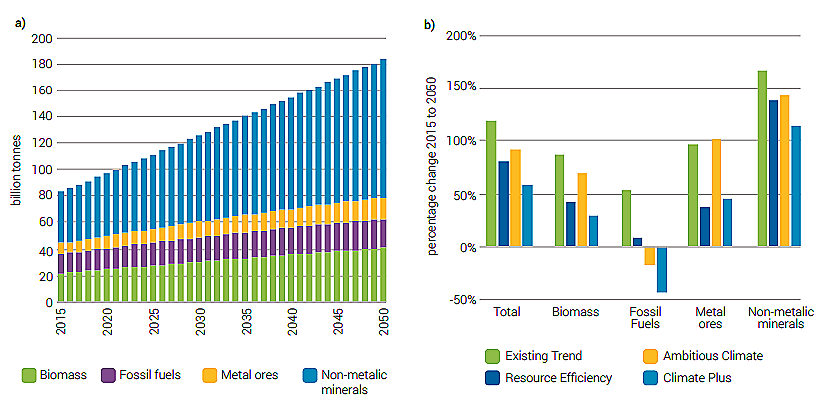
In the Business as Usual scenario, fossil fuel production (energy, plastics, fertilizers, etc.) keeps rising until around 2040, and by 2050 return to about current levels. The total annual material extraction is expected follow the existing trend growing from a little over 100 billion tonnes today to 170-184 billion tonnes by 2050. Demand for biomass (food, timber, fuel, chemicals) is expected to rise ~ 50% and that for ores by 60% and non-metallic minerals (e.g. and, rock or limestone) by 50-100%. Waste streams are projected to grow by
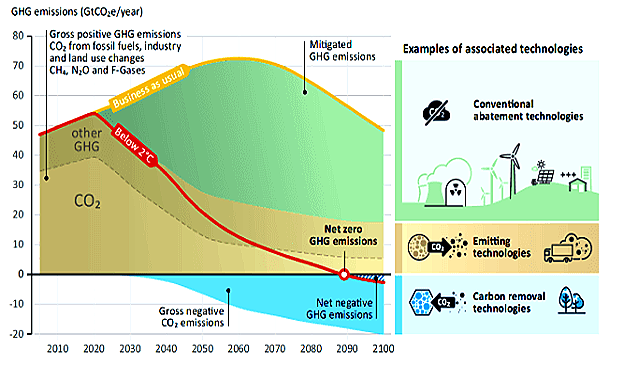
~ 70% and anthropogenic emissions will rise by 25% to over 70 GtCO2eq.
The actual gap between business as usual and a net-zero to be closed by carbon dioxide (CO2eq) removal (CDR) depends on how other technologies develop.
ADVANCING SUSTAINABLE BIOENERGY DEVELOPMENT
New, advanced technologies make it possible to produce climate neutral fuels from non-forest and non-food energy crops. The benefits of cultivation and use of these energy crops for transport fuels and electricity goes beyond the benefits of reducing greenhouse gas emissions. Terrestrial energy crop cultivation and aquatic energy crop harvesting reverses land and water degradation, increases biodiversity and carbon sequestration and improves land fertility. We call this
Deep Green Biomass. Moreover, deploying these energy crops for the production of advanced biofuels will positively impact social-economic structures and energy independence and reduce the need for involuntary migration and deforestation: Deep Green Energy.
Deep Green Energy Partners works to accelerate deployment of deep green biomass for the production of advanced biofuels and biochemicals, to restore soil and water conditions and to optimize the overall ecological-economic effects of investments in the energy transition.
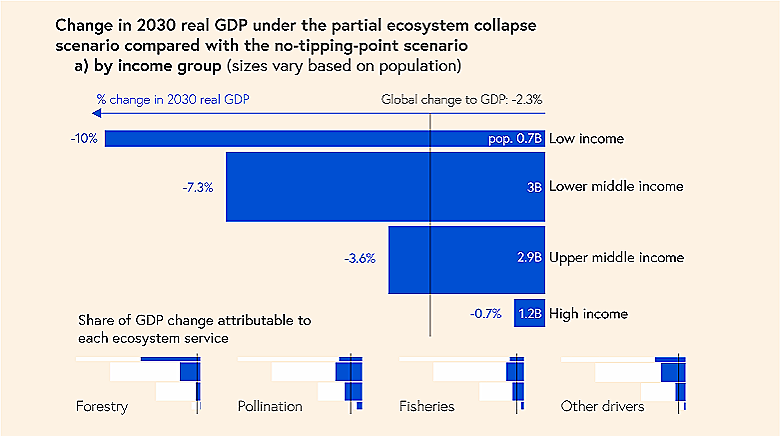
Intensifying land-use for agriculture, forestry and mining will cause additional pollution and climate change will accelerate losses to nature stocks (biodiversity, vegetation, clean water and soils) and carbon sequestration capacity as well as world GDP. Natural forests and grasslands will decline by ~ 400 million hectares (Mha) by increased land-use for agriculture, ~ 120 Mha from forest harvest, and forest fires will consume ~ 100-250 Mha of forests. Waste recycling and new technologies for sustainable food, energy and material production will develop slowly and their contribution to increasing supply security, reducing scarcity or mitigating climate change will be negligible.
GW will reach 2C well before 2050, triggering various tipping points along the way exacerbating losses to nature. This scenario will inevitably result in a cascade of irreversible global ecologic, economic and social system collapses before 2050.
Business as Usual Real GDP could already starts its by 2030.
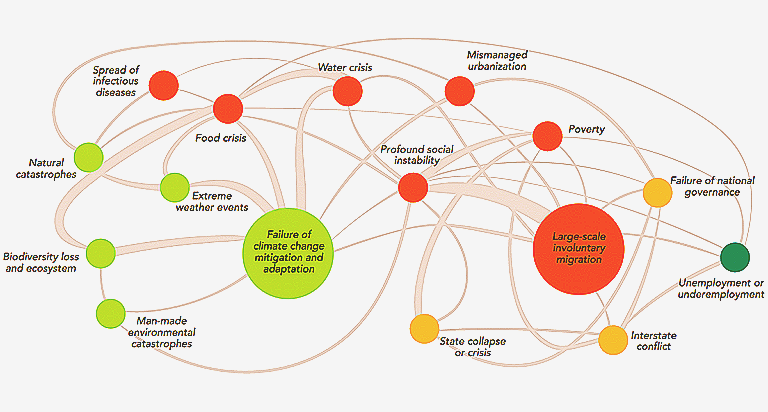
The relation between climate change, biodiversity-, food- and water-loss, crises and migration
ADVANCING SUSTAINABLE BIOENERGY DEVELOPMENT
New, advanced technologies make it possible to produce climate neutral fuels from non-forest and non-food energy crops. The benefits of cultivation and use of these energy crops for transport fuels and electricity goes beyond the benefits of reducing greenhouse gas emissions. Terrestrial energy crop cultivation and aquatic energy crop harvesting reverses land and water degradation, increases biodiversity and carbon sequestration and improves land fertility. We call this
Deep Green Biomass. Moreover, deploying these energy crops for the production of advanced biofuels will positively impact social-economic structures and energy independence and reduce the need for involuntary migration and deforestation: Deep Green Energy.
Deep Green Energy Partners works to accelerate deployment of deep green biomass for the production of advanced biofuels and biochemicals, to restore soil and water conditions and to optimize the overall ecological-economic effects of investments in the energy transition.
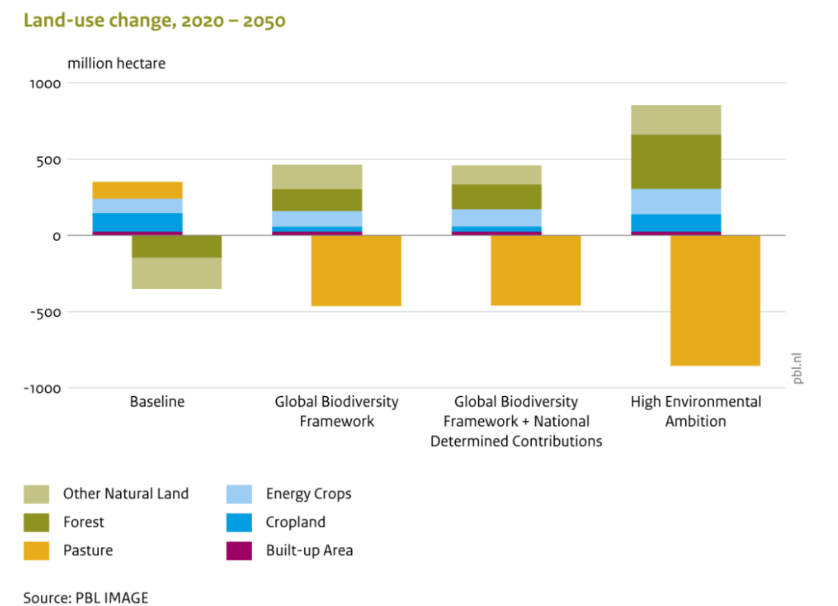
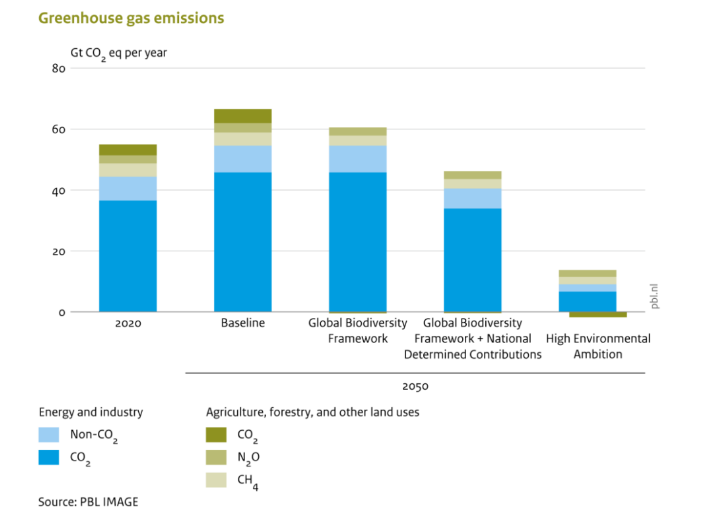
A recent, October 2024, analyses of 4 alternative land-use scenarios and their impacts on biodiversity and emissions was made on the bases of the current policies, NDCs and additional biodiversity preservation and restoration efforts. This enables a comparison of changes in land-use and -management and their impacts on lifestyles and net-emissions assuming current policies in energy and industry sectors will achieve the envisioned effects.
The 4 alternative scenarios: A Baseline scenario (based on current policies), a GBF (Global Biodiversity Framework) scenario based on Baseline + increased biodiversity protection efforts, a GBF + NDCs scenario and a High Environmental Ambition scenarios. I
Land-use change in 4 more ambitious scenarios vis-a-vis business as usual
Greenhouse gas emissions in 4 more ambitious scenarios vis-a-vis business as usual
ADVANCING SUSTAINABLE BIOENERGY DEVELOPMENT
New, advanced technologies make it possible to produce climate neutral fuels from non-forest and non-food energy crops. The benefits of cultivation and use of these energy crops for transport fuels and electricity goes beyond the benefits of reducing greenhouse gas emissions. Terrestrial energy crop cultivation and aquatic energy crop harvesting reverses land and water degradation, increases biodiversity and carbon sequestration and improves land fertility. We call this
Deep Green Biomass. Moreover, deploying these energy crops for the production of advanced biofuels will positively impact social-economic structures and energy independence and reduce the need for involuntary migration and deforestation: Deep Green Energy.
Deep Green Energy Partners works to accelerate deployment of deep green biomass for the production of advanced biofuels and biochemicals, to restore soil and water conditions and to optimize the overall ecological-economic effects of investments in the energy transition.
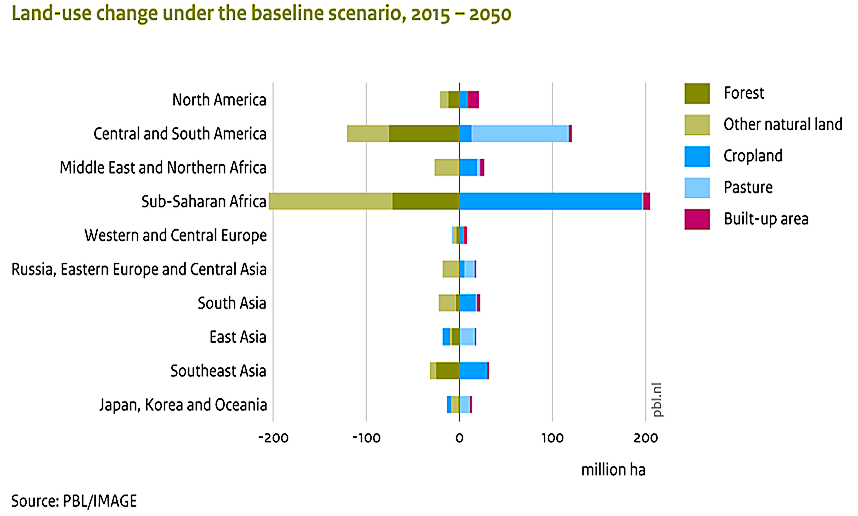
In the Baseline scenario the present ~ 18% of the world's land surface, including its carbon, freshwater and biodiversity, that is labeled "protected area" is effectively protected. Global agricultural yields per hectare increase as before, ~ 350 million hectares (Mha) of natural forest and grasslands will be annexed by agriculture and energy crops (perennial grasses and short rotation trees). Carbon stocks (trees, plants, soils) in 2050 are projected to remain almost at current levels as soil carbon gains from sustainable agricultural practices and enhanced nature protection are offset by vegetative losses from mainly deforestation. GW is projected to reach ~ 3.1°C in 2100.
In the GBF and GBF + NDCs, 30% of the terrestrial surface and its carbon and biodiversity stocks is protected. In these scenarios land and water management efficiencies increase. Forestry in managed forests is kept to sustainable levels by reduced timber demand per capita, forest plantations are kept at Baseline levels to reduce pressure on natural forests. Cropland only marginally increases and 50% of the world population adopts a healthy dinner (less livestock products) and food waste is reduced by 50%. This frees up grasslands for forests, natural lands conservation and enhancement, and energy crops. In these scenarios the area of forest and natural lands increases by ~ 300 Mha globally (3.8% increase) and GW will reach between 2.4-2.9 °C.
In the "High Environmental Ambition Scenario" the protected land surface is further increased to 50%, the world population on a healthy diet increases to 100%, forests and natural areas increase by 550 Mha (6.9% increase), policies are brought in line with the Paris Agreement, and GW is kept below 2°C.
ADVANCING SUSTAINABLE BIOENERGY DEVELOPMENT
New, advanced technologies make it possible to produce climate neutral fuels from non-forest and non-food energy crops. The benefits of cultivation and use of these energy crops for transport fuels and electricity goes beyond the benefits of reducing greenhouse gas emissions. Terrestrial energy crop cultivation and aquatic energy crop harvesting reverses land and water degradation, increases biodiversity and carbon sequestration and improves land fertility. We call this
Deep Green Biomass. Moreover, deploying these energy crops for the production of advanced biofuels will positively impact social-economic structures and energy independence and reduce the need for involuntary migration and deforestation: Deep Green Energy.
Deep Green Energy Partners works to accelerate deployment of deep green biomass for the production of advanced biofuels and biochemicals, to restore soil and water conditions and to optimize the overall ecological-economic effects of investments in the energy transition.
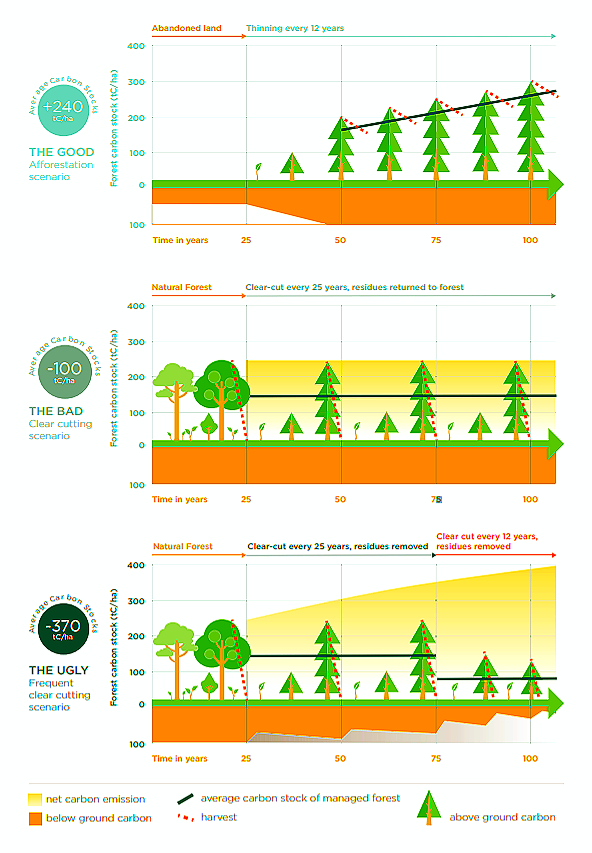
As technical options for carbon capture and removal before 2050 are negligible the world's governments have pledged 1.2 billion ha (~ 10% of the arable land mass) for additional carbon removal by natural sequestration by 2050-2060. Approximately half this surface is intended for restoration efforts which do not require land-use change. The other half involves planting of new forests (reforestation and afforestation) on degraded lands which does involve land-use change (i.e. conversion of degraded crop- or grasslands). In the same timeframe natural carbon sequestration on agricultural lands is intended to increase by more sustainable practices. Which should set us on the road towards GBF + NDCs scenarios. Regretfully it won't.
Forest, wetland and grassland protection makes sense as it can halt further losses. Restoration of tropical lands also makes sense as it can resort effects before 2050. Reforestation (planting forests where they once stood) on degraded lands outside the (sub)tropics will sequestre too little carbon before 2050 to halt or compensate for increased forest losses from wildfires, mining and/or meet the ~35% increase in forest wood demand upto 2050. Afforestation (planting forests where they never stood before) is difficult as the absence of suitable climatic and soil conditions was the reason they were not growing on these lands in the first place.
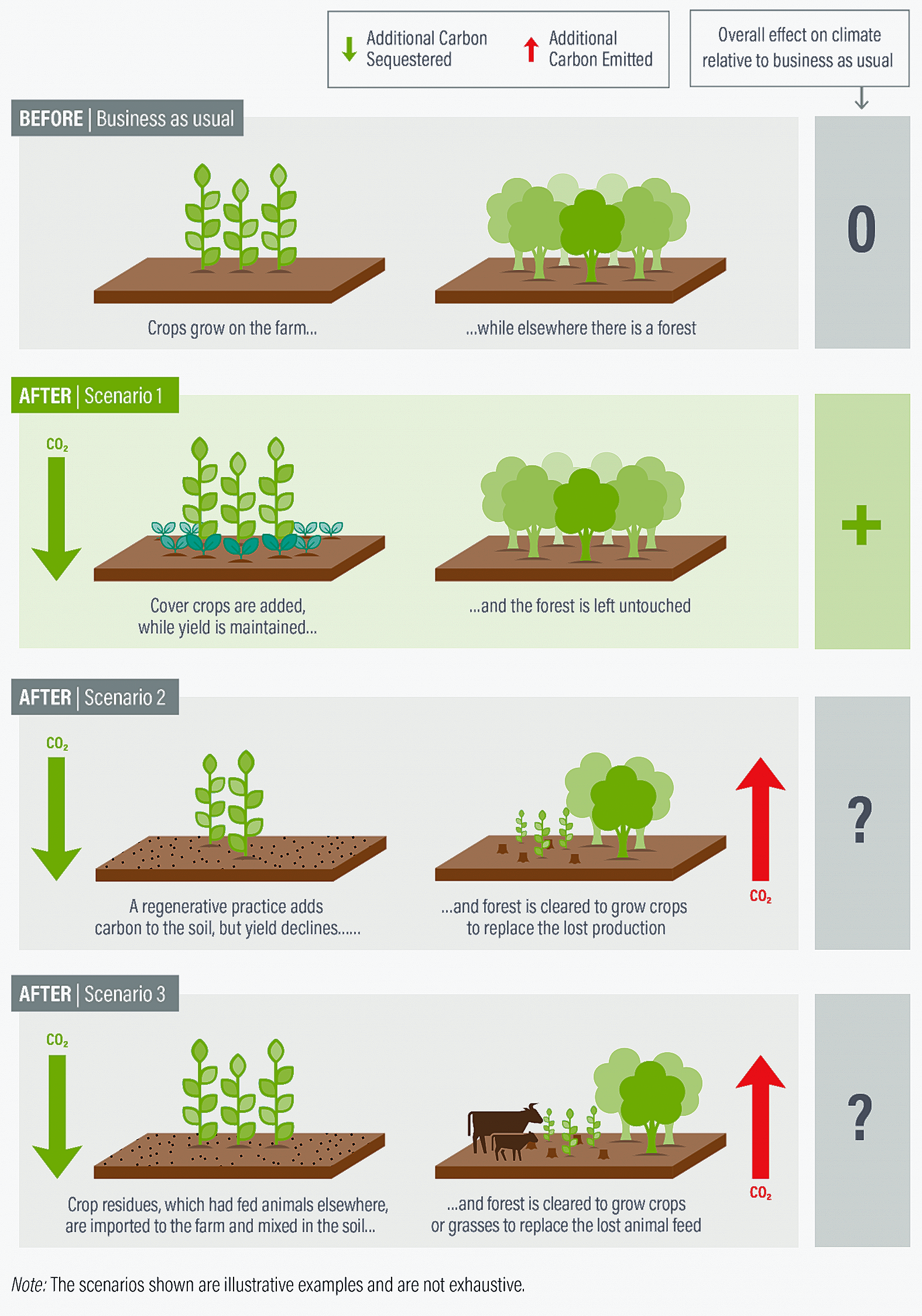
More sustainable agriculture is possible and might even turn agriculture lands in to carbon sinks instead of sources but not without reducing yields. As yields are already decreasing from soil depletion and climate change, both will increase with time and food demand will rise by 35% this will lead to more conversion of forests and other natural lands conform the Baseline scenario.
The potential for carbon sequestration by new forests and forest plantations.
The potential for carbon sequestration by sustainable agriculture.
ADVANCING SUSTAINABLE BIOENERGY DEVELOPMENT
New, advanced technologies make it possible to produce climate neutral fuels from non-forest and non-food energy crops. The benefits of cultivation and use of these energy crops for transport fuels and electricity goes beyond the benefits of reducing greenhouse gas emissions. Terrestrial energy crop cultivation and aquatic energy crop harvesting reverses land and water degradation, increases biodiversity and carbon sequestration and improves land fertility. We call this
Deep Green Biomass. Moreover, deploying these energy crops for the production of advanced biofuels will positively impact social-economic structures and energy independence and reduce the need for involuntary migration and deforestation: Deep Green Energy.
Deep Green Energy Partners works to accelerate deployment of deep green biomass for the production of advanced biofuels and biochemicals, to restore soil and water conditions and to optimize the overall ecological-economic effects of investments in the energy transition.
Today about 80% and 99% of all energy and chemicals (including plastics and nitrogen fertilizers) are sourced from fossil fuels (primerally oil & gas) and are produced by using fossil fuels. Cement and concrete, the other two main materials on which modern societies are built, depend on high density energy for production, i.e. fossil fuels (primarily coal), and the mining of ores and minerals. Fossil fuel use accounts for ~72% of global GHG emissions. Excluding energy emissions, cement production accounts for 3%, plastics and chemicals for 2.5% and fertilizers for 3.5%.
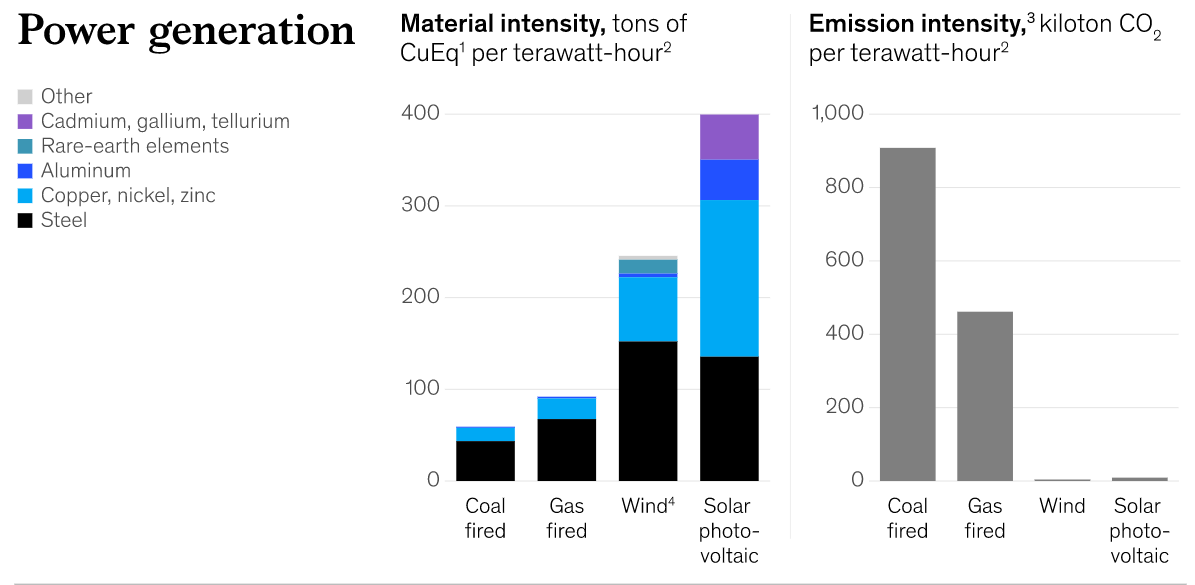
Carbon capture technologies are still in their infancies and capture less than 0.1% of all energy and industrial emissions today, thus technical carbon capture cannot play a meaningful role in energy and material production before 2050. In the most positive scenario, overall energy consumption growth by 2050 is limited to 10-20% and the ratio of carbon/non-carbon energy supply will be 50/50. Large scale solar, wind, hydro and nuclear energy supply requires substantial amounts of carbon, concrete, ores and metals. The potential positive effects from decarbonization and electrification will therefore be largely canceled out by the additional direct and indirect emissions from extraction and production of the materials needed for a low-carbon energy system (production, distribution infrastructure and equipment) in the next decades.
ADVANCING SUSTAINABLE BIOENERGY DEVELOPMENT
New, advanced technologies make it possible to produce climate neutral fuels from non-forest and non-food energy crops. The benefits of cultivation and use of these energy crops for transport fuels and electricity goes beyond the benefits of reducing greenhouse gas emissions. Terrestrial energy crop cultivation and aquatic energy crop harvesting reverses land and water degradation, increases biodiversity and carbon sequestration and improves land fertility. We call this
Deep Green Biomass. Moreover, deploying these energy crops for the production of advanced biofuels will positively impact social-economic structures and energy independence and reduce the need for involuntary migration and deforestation: Deep Green Energy.
Deep Green Energy Partners works to accelerate deployment of deep green biomass for the production of advanced biofuels and biochemicals, to restore soil and water conditions and to optimize the overall ecological-economic effects of investments in the energy transition.
In the current scenario OECD countries predominantly invest in energy-decarbonization and -efficiency increases and some industrial carbon capture projects. This is however far away from what is needed to halt emissions or ecosystem decline. Hence large scale carbon sequestration and ecosystem restoration projects are necessary to maintain the minimum level of ecosystem services on which our survival depends. Most of the remaining critical ecosystems are located in developing countries in Sub-Sahara Africa, Central and South America and Asia, countries that have no or limited funds to invest in ecosystem preservation, let alone for restoration and additional carbon sequestration or to participate in the energy transition.
The same African and Asian regions are also the regions where climate change will hit economies and food production the hardest and where most of the population growth is expected. As satisfying water, food, energy and financial needs prevails in these regions as well, more (tropical) forests and savannas will disappear instead of being preserved. So the world basically continuous business as usual. Global warming speeds up while the ecosystems on which we depend to absorb and recycle our waste into clean water, flora and fauna, food and materials, and to regulate the Earth's temperature and climatic conditions are further reduced. The linear impacts of the growing imbalance in a business as usual scenario are relatively easy to predict, e.g. water and food shortages will hit about half of the world population in the next few decades due to the combined impacts from emissions and pollution from agriculture, transport and industry, deforestation, land and water degradation and climate change.
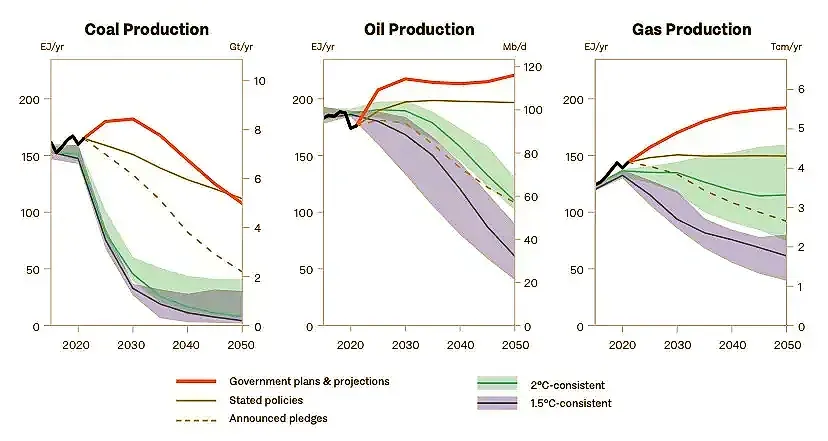
Projected coal, oil and gas production, 2020-2050
The trade-off between material and emissions intensity of low-carbon energy
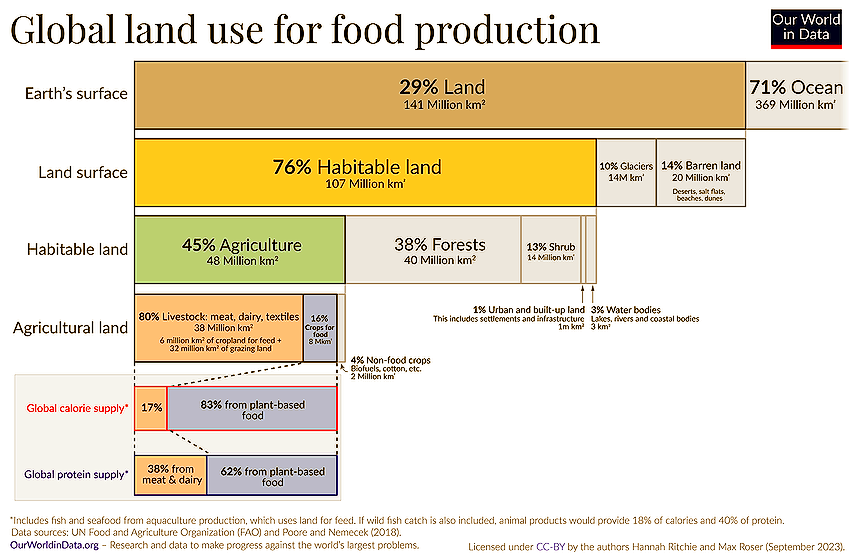
The total habitable land size is about 10.500 Mha is covered and used by 4 main categories: forests, wild grassland, agriculture and cities/buildings, and other built structures. Today 31% of all habitual land is used for food: livestock grazing, 15% for food and feed crops and about 1% is urban and built up land for housing, industry, offices, mining and transport. Forests and wild grasslands cover 38% and 14% respectively of the global land surface, which as we saw is already below the minimum surface needed for sufficient biodiversity, ESs and carbon sequestration.
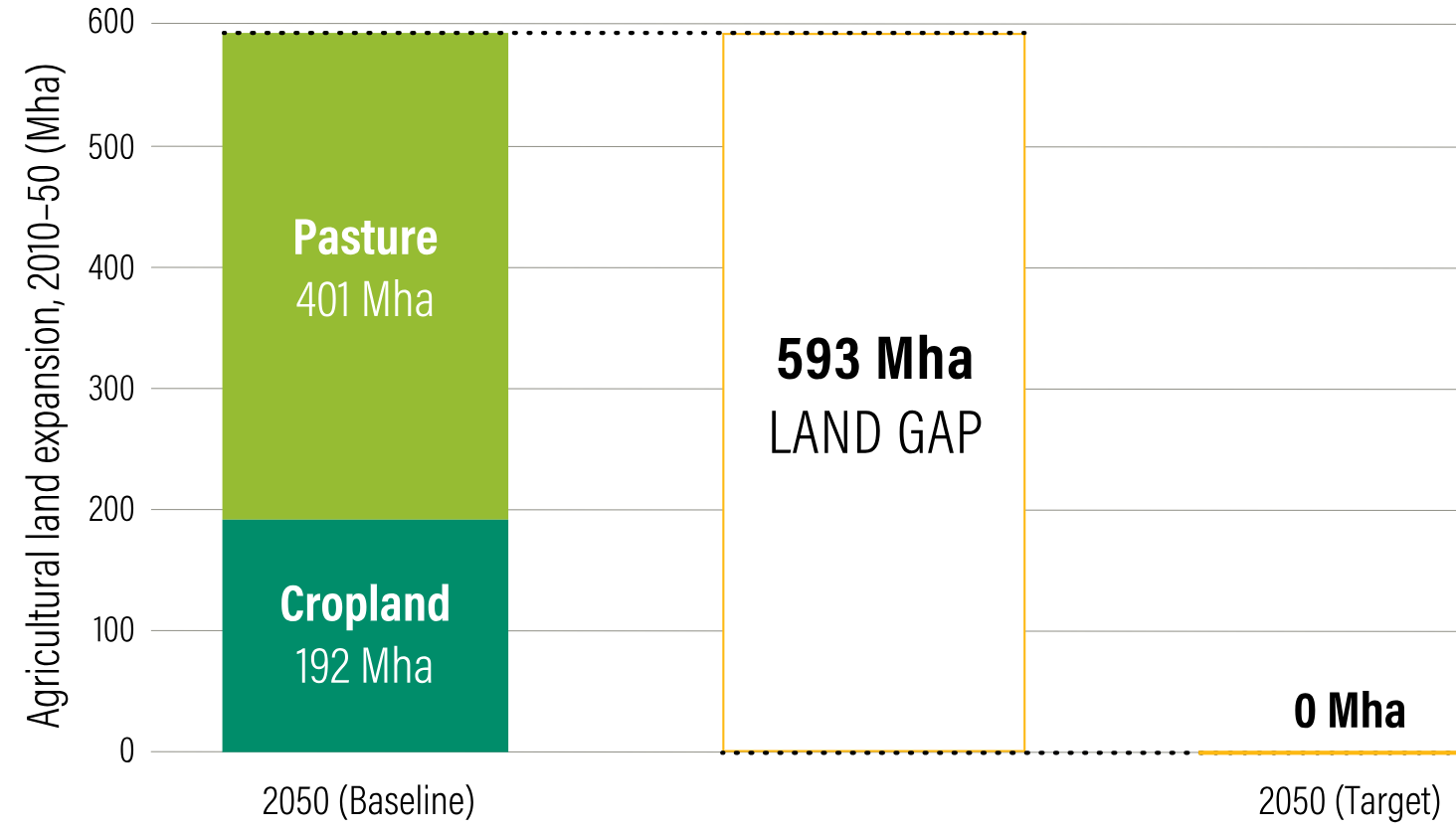
As we need more food, feed, energy and materials as well as more carbon sequestration, biodiversity and ESs which all require land, we have a gap between the total land size available and the total land needed for all purposes, the land gap. As food production has the largest potential land gap that is where we have to start our puzzle of closing the land gap.
ADVANCING SUSTAINABLE BIOENERGY DEVELOPMENT
New, advanced technologies make it possible to produce climate neutral fuels from non-forest and non-food energy crops. The benefits of cultivation and use of these energy crops for transport fuels and electricity goes beyond the benefits of reducing greenhouse gas emissions. Terrestrial energy crop cultivation and aquatic energy crop harvesting reverses land and water degradation, increases biodiversity and carbon sequestration and improves land fertility. We call this
Deep Green Biomass. Moreover, deploying these energy crops for the production of advanced biofuels will positively impact social-economic structures and energy independence and reduce the need for involuntary migration and deforestation: Deep Green Energy.
Deep Green Energy Partners works to accelerate deployment of deep green biomass for the production of advanced biofuels and biochemicals, to restore soil and water conditions and to optimize the overall ecological-economic effects of investments in the energy transition.
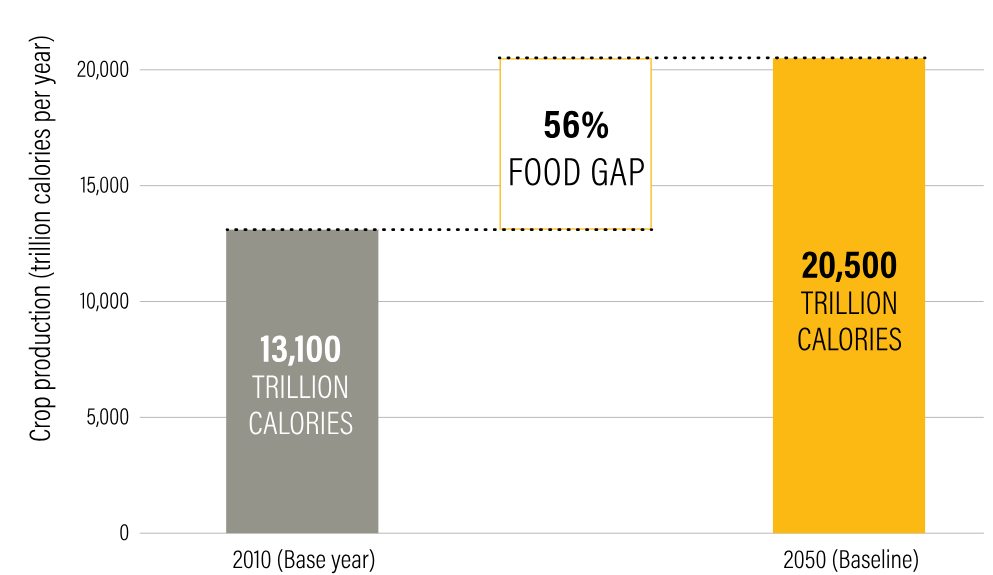
Food consumption is projected to grow by 56%, or 7.400 trillion calories by 2050 vis-a-vis 2010 (the food gap). Assuming a linear increase this means that we would 35% of 7.400 trillion calories, or 4.500 billion more calories between today and 2050. Increasing agriculture yields on within the present foodsystems is however impossible without incurring more forest and natural grassland conversion to crop and grazing land and increasing fertilizer and pesticide use. Business as usual, a minimum of 300 Mha (the food yield - land gap) or about the size of India of forest and grasslands will be converted to farmland.
The world needs to close a food gap of 56% between 2010 and 2050
The world needs to close an agricultural land gap of minimal 593 Mha between 2010 and 2050
ADVANCING SUSTAINABLE BIOENERGY DEVELOPMENT
New, advanced technologies make it possible to produce climate neutral fuels from non-forest and non-food energy crops. The benefits of cultivation and use of these energy crops for transport fuels and electricity goes beyond the benefits of reducing greenhouse gas emissions. Terrestrial energy crop cultivation and aquatic energy crop harvesting reverses land and water degradation, increases biodiversity and carbon sequestration and improves land fertility. We call this
Deep Green Biomass. Moreover, deploying these energy crops for the production of advanced biofuels will positively impact social-economic structures and energy independence and reduce the need for involuntary migration and deforestation: Deep Green Energy.
Deep Green Energy Partners works to accelerate deployment of deep green biomass for the production of advanced biofuels and biochemicals, to restore soil and water conditions and to optimize the overall ecological-economic effects of investments in the energy transition.
The 300 Mha food yield-land gap is in the best case scenario, in which yields per hectare will increase as before. A third,
1.600 Mha
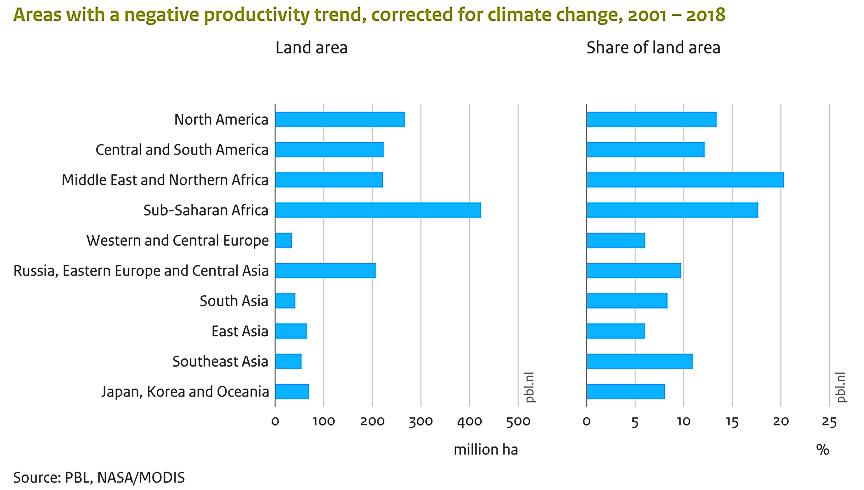
of all agricultural land, about the size of South America, is however already losing its productivity due to nutrient and water depletion, and a substantial part of all grasslands are subject to desertification
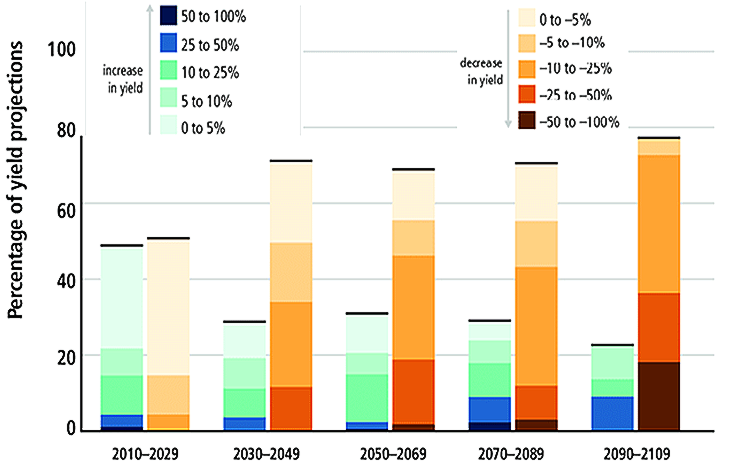
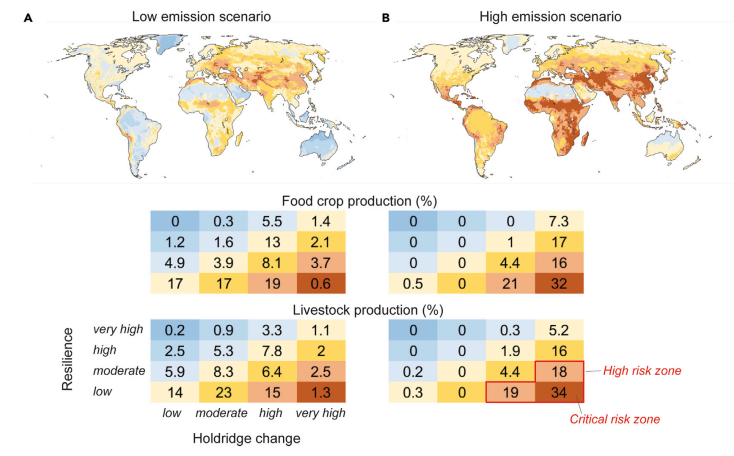
from overgrazing, burnings and climate hazards. Extreme weather events will increasingly cause seasonal harvest losses, and rising average temperatures will reduce average yields, at 2°C GW crop yields will decrease by 3–12%
and livestock numbers by 7-10%. In other words, to close the 2050 ~4.500 billion calories food gap, the 2050 food yield-land gap will likely be anywhere between 300-1.900 Mha depending on how the effects of climate change, land degradation and crop improvements turn out.
Global area showing a negative production trend
ADVANCING SUSTAINABLE BIOENERGY DEVELOPMENT
New, advanced technologies make it possible to produce climate neutral fuels from non-forest and non-food energy crops. The benefits of cultivation and use of these energy crops for transport fuels and electricity goes beyond the benefits of reducing greenhouse gas emissions. Terrestrial energy crop cultivation and aquatic energy crop harvesting reverses land and water degradation, increases biodiversity and carbon sequestration and improves land fertility. We call this
Deep Green Biomass. Moreover, deploying these energy crops for the production of advanced biofuels will positively impact social-economic structures and energy independence and reduce the need for involuntary migration and deforestation: Deep Green Energy.
Deep Green Energy Partners works to accelerate deployment of deep green biomass for the production of advanced biofuels and biochemicals, to restore soil and water conditions and to optimize the overall ecological-economic effects of investments in the energy transition.
Crop yield increases from GW are outpaced by yield declines
ADVANCING SUSTAINABLE BIOENERGY DEVELOPMENT
New, advanced technologies make it possible to produce climate neutral fuels from non-forest and non-food energy crops. The benefits of cultivation and use of these energy crops for transport fuels and electricity goes beyond the benefits of reducing greenhouse gas emissions. Terrestrial energy crop cultivation and aquatic energy crop harvesting reverses land and water degradation, increases biodiversity and carbon sequestration and improves land fertility. We call this
Deep Green Biomass. Moreover, deploying these energy crops for the production of advanced biofuels will positively impact social-economic structures and energy independence and reduce the need for involuntary migration and deforestation: Deep Green Energy.
Deep Green Energy Partners works to accelerate deployment of deep green biomass for the production of advanced biofuels and biochemicals, to restore soil and water conditions and to optimize the overall ecological-economic effects of investments in the energy transition.
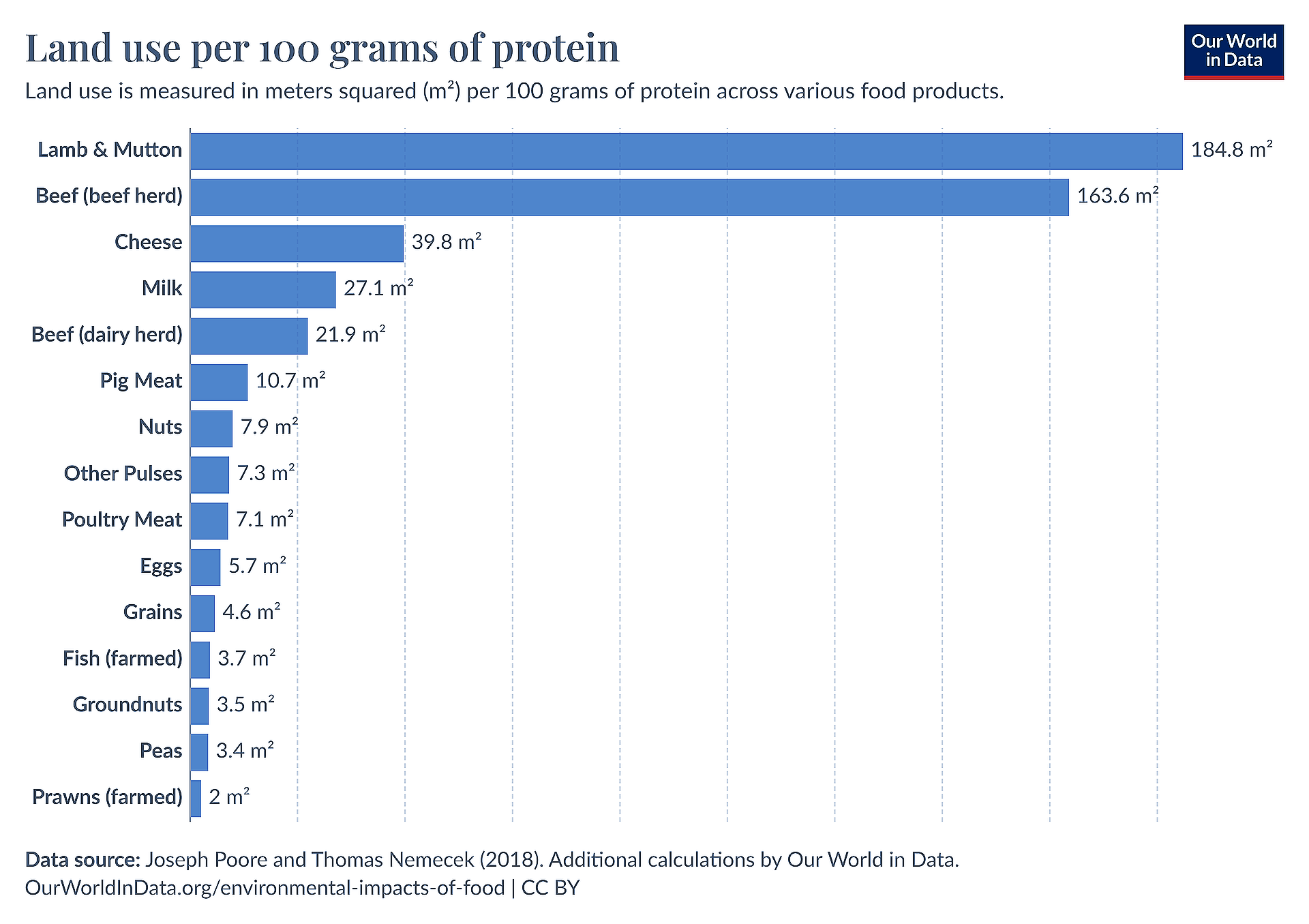
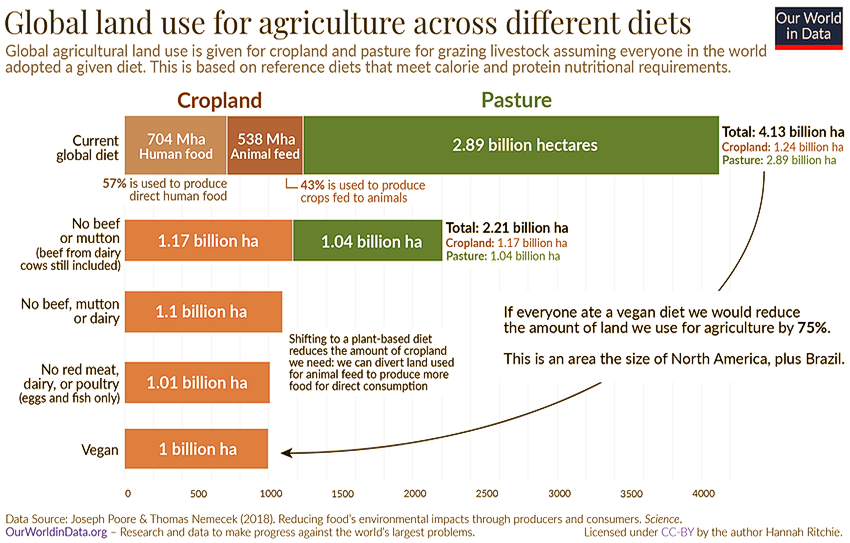
Let's first consider the option of dietary change. It takes ~100 times as much land to produce a kilocalorie of beef or lamb versus plant-based alternatives and that same ratio applies to for producing kilogram of proteins. An all vegan diet is however not healthy as we need some nutrients that are provided by animals. We could reduce meat consumption by 75% in rich countries
without a problem to our health. Cutting out most "grazed meat", i.e. mutton and cattle, would free up ~1900 Mha. Thus we could technically close the food yield gap, produce all the nutrients we need and free ~1.900 Mha for other purposes by reducing grazed meat consumption.
ADVANCING SUSTAINABLE BIOENERGY DEVELOPMENT
New, advanced technologies make it possible to produce climate neutral fuels from non-forest and non-food energy crops. The benefits of cultivation and use of these energy crops for transport fuels and electricity goes beyond the benefits of reducing greenhouse gas emissions. Terrestrial energy crop cultivation and aquatic energy crop harvesting reverses land and water degradation, increases biodiversity and carbon sequestration and improves land fertility. We call this
Deep Green Biomass. Moreover, deploying these energy crops for the production of advanced biofuels will positively impact social-economic structures and energy independence and reduce the need for involuntary migration and deforestation: Deep Green Energy.
Deep Green Energy Partners works to accelerate deployment of deep green biomass for the production of advanced biofuels and biochemicals, to restore soil and water conditions and to optimize the overall ecological-economic effects of investments in the energy transition.
Besides, water, vitamins, minerals an average person needs about 2250 calories a day, ~50% carbohydrates, ~25% protein and ~25% fats. Today, close to 10% of the world population is facing chronic hunger and 42% is unable to afford a healthy diet. Unless we drastically increase production efficiencies and make food production independent from climatic and soil conditions it will (partly) collapse in many parts of the world. We have to option for achieving production efficiencies: dietary change and/or decoupling food production from land use, i.e. moving food production inside.
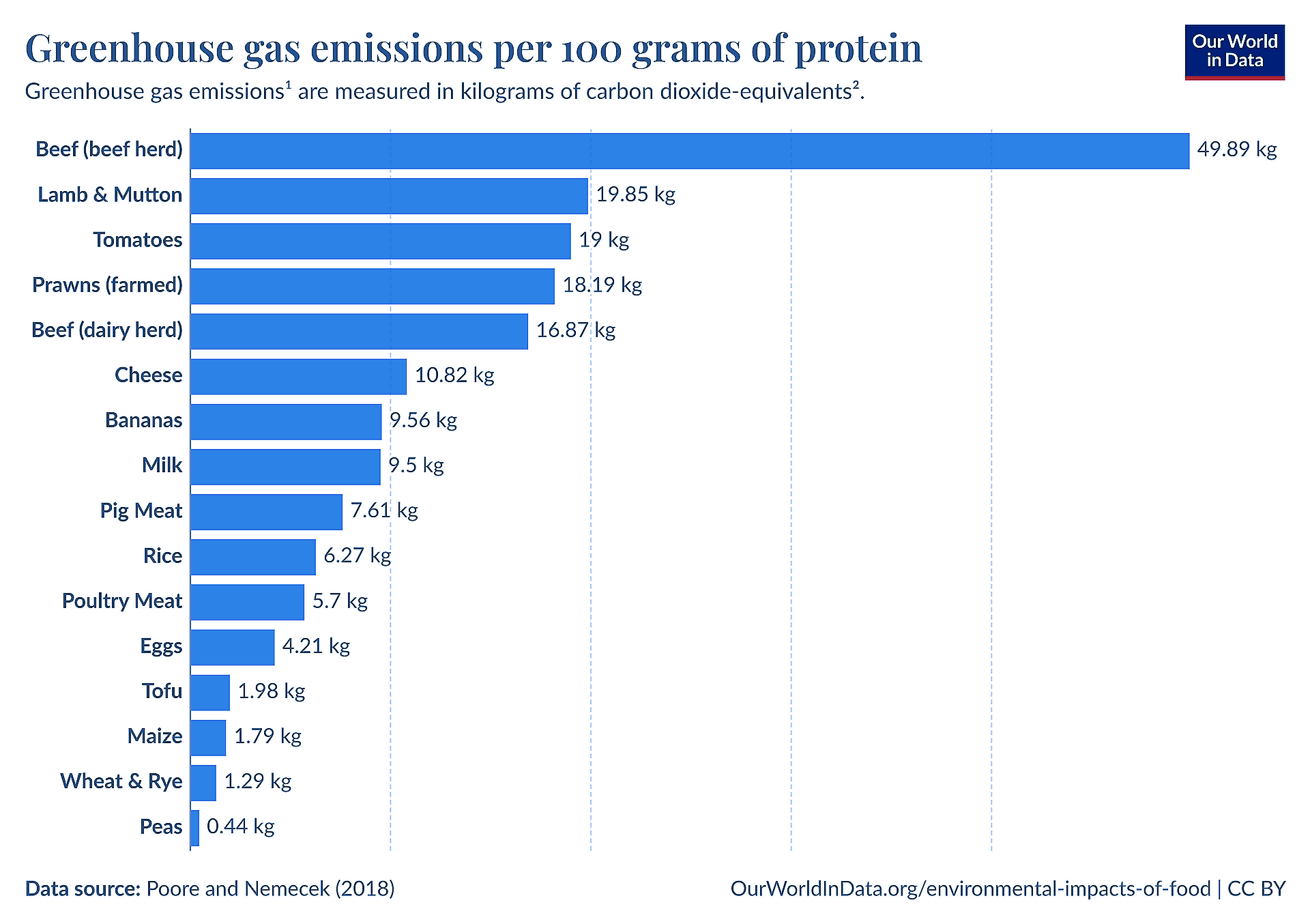
It takes ~90 times as much land to produce one kilocalorie, or a kilogram of protein of beef or lamb versus e.g. soy and 100 respectively 50 times the CO2eq emissions. A mainly vegan diet would practically eliminate the need for deforestation and results in ~65% CO2eq less emissions from the food system, and
free over 3.000 Mha for other purposes. An all vegan diet is however not healthy as we need some macronutrients that are provided by animals, it will also not welcomed by many of us as we like meat and dairy. We could hower reduce the consumption of meat and dairy in most rich countries by the 75% needed to secure future food production without a problem. Decimating just the meat consumption of cattle and mutton raised for the purpose, would free up ~1900 Mha, still leave us with dairy, and the meat from dairy cows, goats and lamb as well as other meats for consumption.
Global land-use for food production
Global land for agriculture across different diets
Global land-use for food production
Global land for agriculture across different diets
ADVANCING SUSTAINABLE BIOENERGY DEVELOPMENT
New, advanced technologies make it possible to produce climate neutral fuels from non-forest and non-food energy crops. The benefits of cultivation and use of these energy crops for transport fuels and electricity goes beyond the benefits of reducing greenhouse gas emissions. Terrestrial energy crop cultivation and aquatic energy crop harvesting reverses land and water degradation, increases biodiversity and carbon sequestration and improves land fertility. We call this
Deep Green Biomass. Moreover, deploying these energy crops for the production of advanced biofuels will positively impact social-economic structures and energy independence and reduce the need for involuntary migration and deforestation: Deep Green Energy.
Deep Green Energy Partners works to accelerate deployment of deep green biomass for the production of advanced biofuels and biochemicals, to restore soil and water conditions and to optimize the overall ecological-economic effects of investments in the energy transition.
The second option, moving food production indoors, will be unavoidable for sufficiently increasing food yields and securing regional food and feed supply. Net crop and livestock yields from open fields will decrease due to rising temperatures, and extreme weather events. Moving food production indoors drastically improves yields and climate resilience while removing the need for more forest and grassland conversion, and the consequential loss of biodiversity and carbon sequestration capacity. Thus a combination of dietary change and increased indoor food production will be necessary to close the food yield gap and the agricultural land gap.
Climate change will gradually limit part of the world's food production
ADVANCING SUSTAINABLE BIOENERGY DEVELOPMENT
New, advanced technologies make it possible to produce climate neutral fuels from non-forest and non-food energy crops. The benefits of cultivation and use of these energy crops for transport fuels and electricity goes beyond the benefits of reducing greenhouse gas emissions. Terrestrial energy crop cultivation and aquatic energy crop harvesting reverses land and water degradation, increases biodiversity and carbon sequestration and improves land fertility. We call this
Deep Green Biomass. Moreover, deploying these energy crops for the production of advanced biofuels will positively impact social-economic structures and energy independence and reduce the need for involuntary migration and deforestation: Deep Green Energy.
Deep Green Energy Partners works to accelerate deployment of deep green biomass for the production of advanced biofuels and biochemicals, to restore soil and water conditions and to optimize the overall ecological-economic effects of investments in the energy transition.
Projected land use change under a moderate climate change scenario
ADVANCING SUSTAINABLE BIOENERGY DEVELOPMENT
New, advanced technologies make it possible to produce climate neutral fuels from non-forest and non-food energy crops. The benefits of cultivation and use of these energy crops for transport fuels and electricity goes beyond the benefits of reducing greenhouse gas emissions. Terrestrial energy crop cultivation and aquatic energy crop harvesting reverses land and water degradation, increases biodiversity and carbon sequestration and improves land fertility. We call this
Deep Green Biomass. Moreover, deploying these energy crops for the production of advanced biofuels will positively impact social-economic structures and energy independence and reduce the need for involuntary migration and deforestation: Deep Green Energy.
Deep Green Energy Partners works to accelerate deployment of deep green biomass for the production of advanced biofuels and biochemicals, to restore soil and water conditions and to optimize the overall ecological-economic effects of investments in the energy transition.
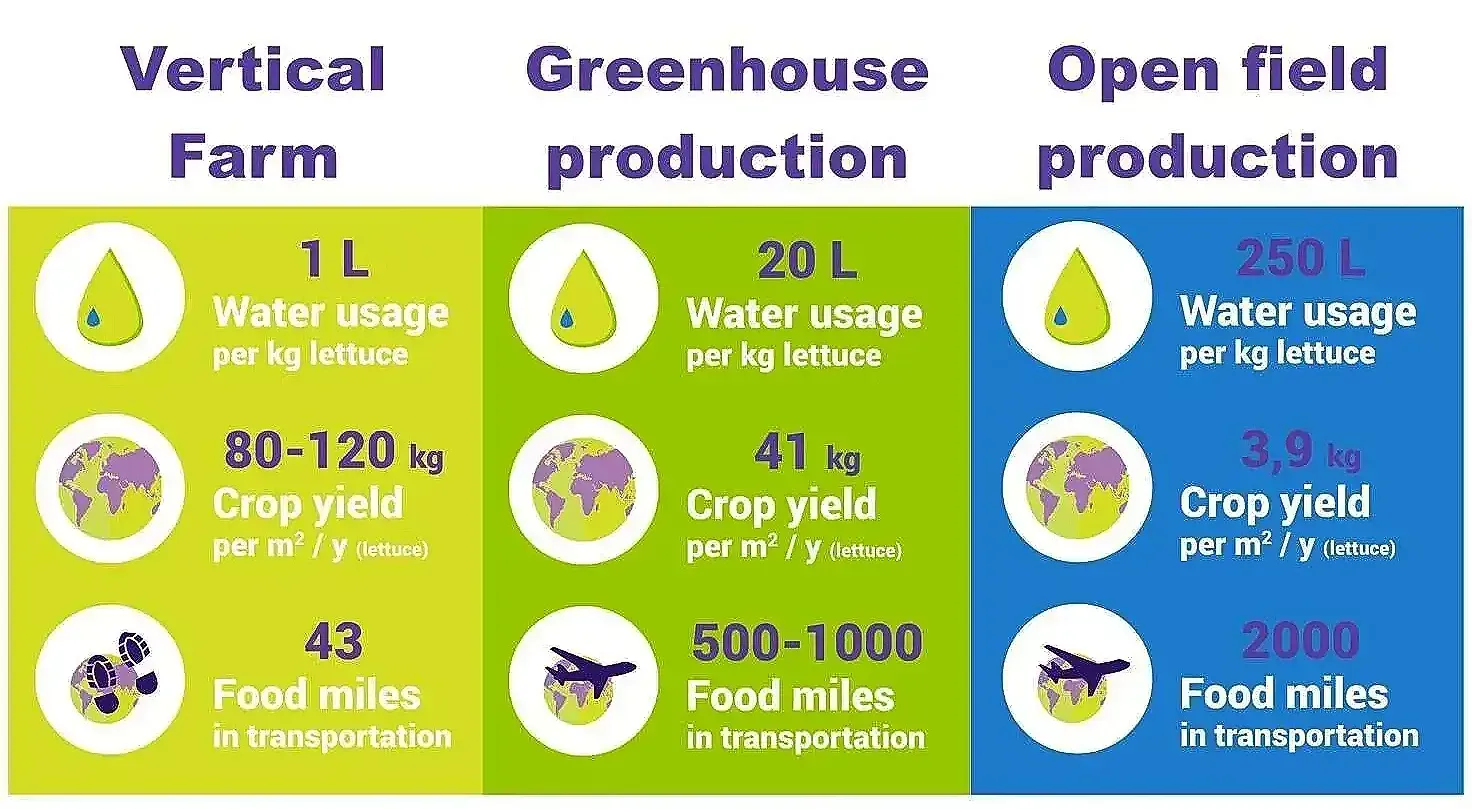
Vegetables and fruits are already large scale produced in conventional and vertical greenhouses, partly or fully independent from climatic, land, soil, water and other environmental conditions. Indoor vegetable and fruit farming increases yields by 10 to 40 times and reduces the need for water, pesticides and fertilizers. It also increases supply security as it reduces the risk of transport, climate impacts and centralized production. Fruits and vegetables (important for the provisioning of fibres, vitamins and minerals) provide only a small part of our total calories, proteins, carbs and other nutrients. As their share in crop land use is relatively limited, moving them will only marginal decrease the overall land gap.
Yields, land, water and food miles for indoor and open field crop production
ADVANCING SUSTAINABLE BIOENERGY DEVELOPMENT
New, advanced technologies make it possible to produce climate neutral fuels from non-forest and non-food energy crops. The benefits of cultivation and use of these energy crops for transport fuels and electricity goes beyond the benefits of reducing greenhouse gas emissions. Terrestrial energy crop cultivation and aquatic energy crop harvesting reverses land and water degradation, increases biodiversity and carbon sequestration and improves land fertility. We call this
Deep Green Biomass. Moreover, deploying these energy crops for the production of advanced biofuels will positively impact social-economic structures and energy independence and reduce the need for involuntary migration and deforestation: Deep Green Energy.
Deep Green Energy Partners works to accelerate deployment of deep green biomass for the production of advanced biofuels and biochemicals, to restore soil and water conditions and to optimize the overall ecological-economic effects of investments in the energy transition.
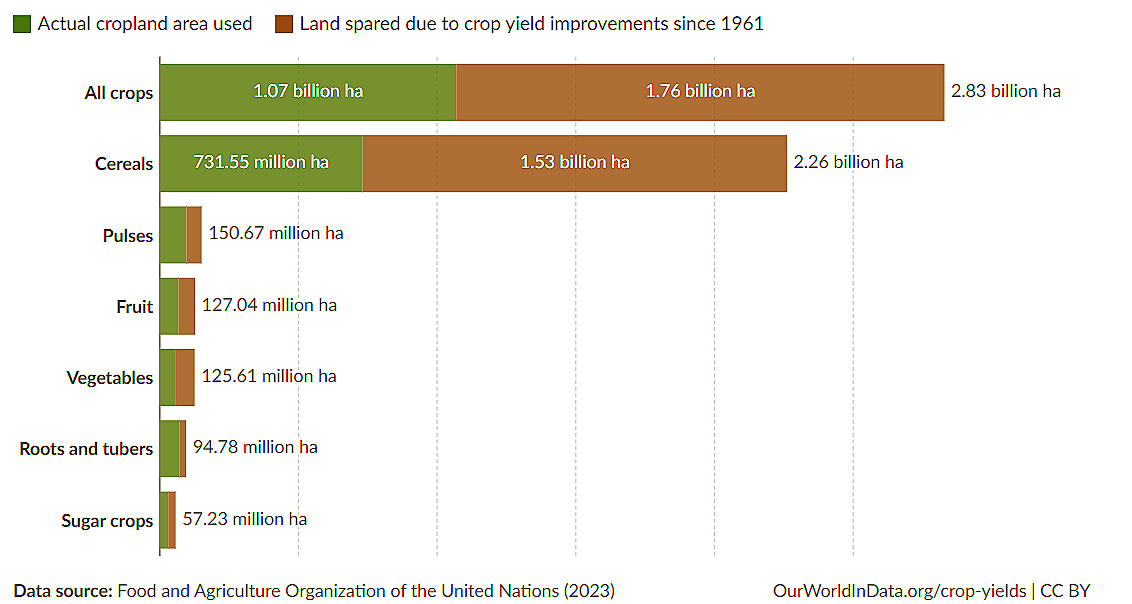
Global land spared due to increased crop yields
ADVANCING SUSTAINABLE BIOENERGY DEVELOPMENT
New, advanced technologies make it possible to produce climate neutral fuels from non-forest and non-food energy crops. The benefits of cultivation and use of these energy crops for transport fuels and electricity goes beyond the benefits of reducing greenhouse gas emissions. Terrestrial energy crop cultivation and aquatic energy crop harvesting reverses land and water degradation, increases biodiversity and carbon sequestration and improves land fertility. We call this
Deep Green Biomass. Moreover, deploying these energy crops for the production of advanced biofuels will positively impact social-economic structures and energy independence and reduce the need for involuntary migration and deforestation: Deep Green Energy.
Deep Green Energy Partners works to accelerate deployment of deep green biomass for the production of advanced biofuels and biochemicals, to restore soil and water conditions and to optimize the overall ecological-economic effects of investments in the energy transition.
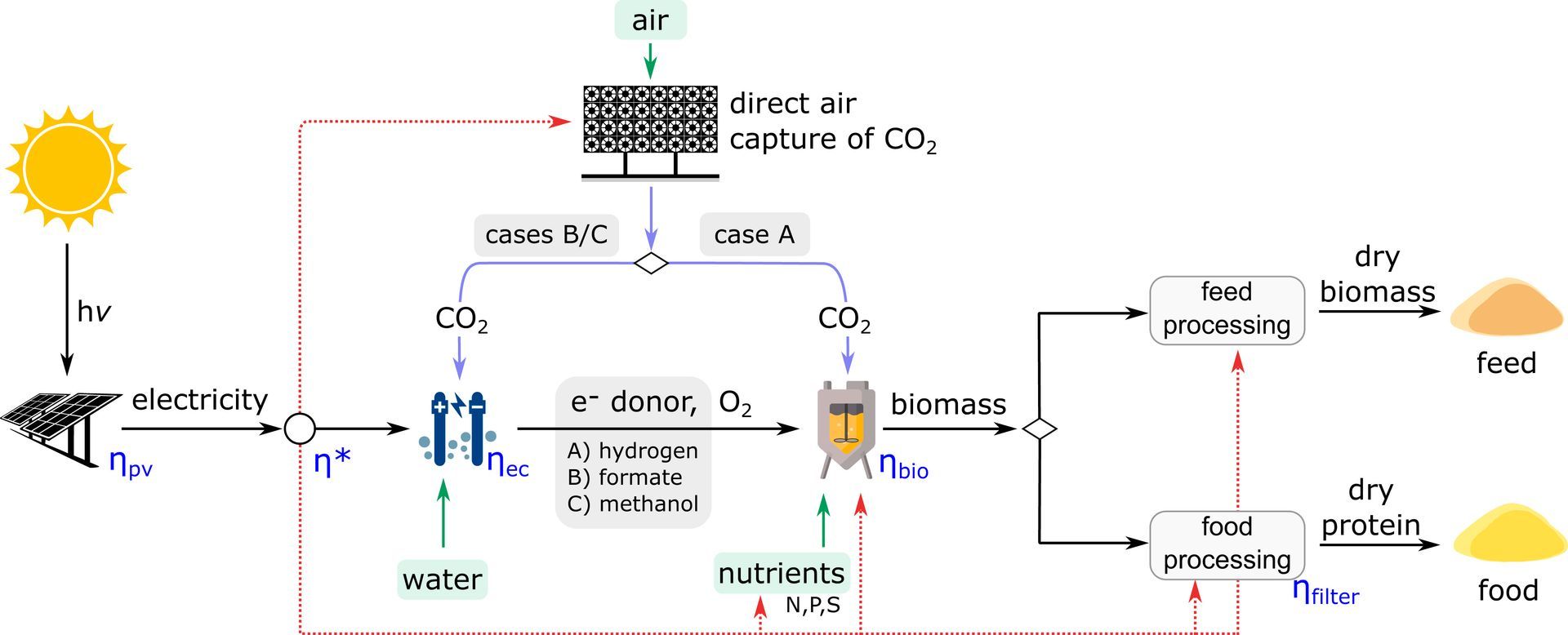
Precision fermentation for proteins, carbohydrates, fats, vitamines, flour, dairy
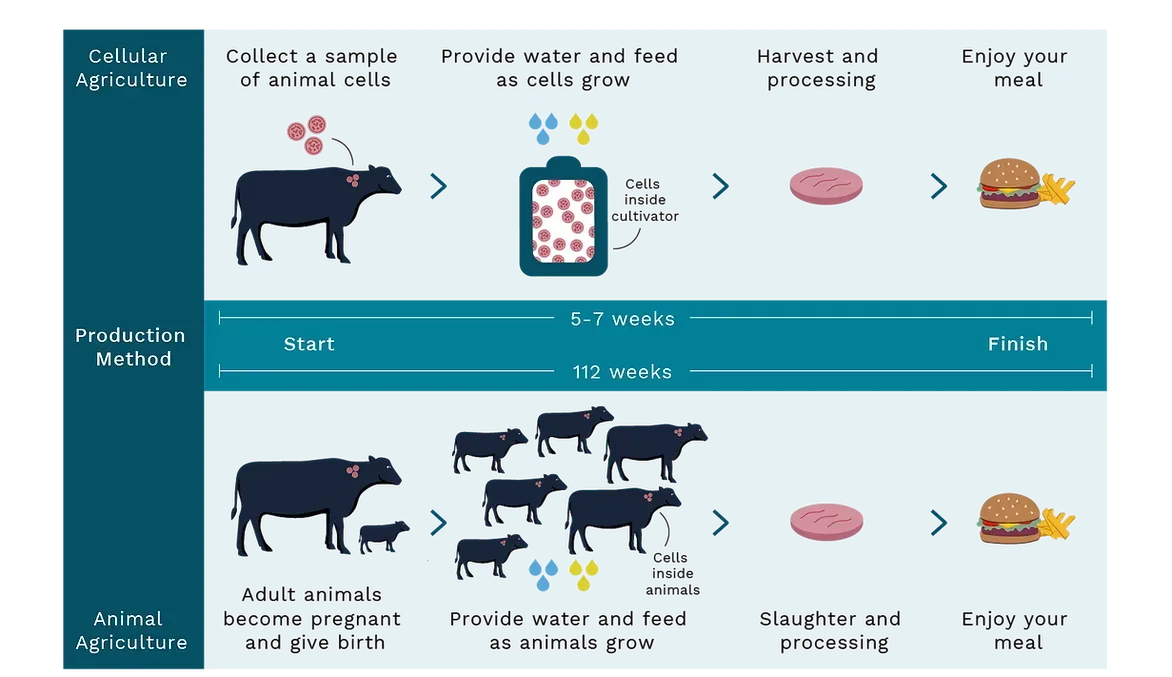
Cultivated or cellular meat
ADVANCING SUSTAINABLE BIOENERGY DEVELOPMENT
New, advanced technologies make it possible to produce climate neutral fuels from non-forest and non-food energy crops. The benefits of cultivation and use of these energy crops for transport fuels and electricity goes beyond the benefits of reducing greenhouse gas emissions. Terrestrial energy crop cultivation and aquatic energy crop harvesting reverses land and water degradation, increases biodiversity and carbon sequestration and improves land fertility. We call this
Deep Green Biomass. Moreover, deploying these energy crops for the production of advanced biofuels will positively impact social-economic structures and energy independence and reduce the need for involuntary migration and deforestation: Deep Green Energy.
Deep Green Energy Partners works to accelerate deployment of deep green biomass for the production of advanced biofuels and biochemicals, to restore soil and water conditions and to optimize the overall ecological-economic effects of investments in the energy transition.
As discussed we could feed the world on a vegan diet using 1.000 Mha and a "no-grazed meat" diet on 2.200 Mha. A cultivation tank of 1500 m³, 60 meters tall and 7–11 meters wide
has an annual output of 50–60 kilo tonnes of dry bacterial biomass. This would roughly translate to 413–496 tonnes of dry microbial biomass/m²/year, if discounting the surrounding area that would be required for downstream processing infrastructure. One hectare of land could theoretically house 82 such vessels and would have a combined annual output of 4.1–4.9 million tonnes of dry bacterial biomass. In comparison, the average US soybean yield in 2017 was 3.3 tonnes tonnes wet weight per hectare i.e. it produces 1.400.000 times more mass than soy per m². So if would assume a modest median of 50% for calorie, protein and carbohydrate content per kg compared to crops and meat we would need 1.000 Mha/700.000 = 1.42 Mha or 2.200/700.000 = 3.14 Mha respectively and ~500 Mha for fruits, vegetables, pulses, citrus fruits, roots and tubers and oil crops to feed the world.
Thus if we scale up modern bioenergy and modern food production fast enough, keep 1.5 Mha for sustainable livestock grazing, 1.2 Mha for sustainable food crop and fruit cultivation, move the rest of food production indoors, this will leave ~2 billion hectares for natural forest expansion and perennial grasses. This equals the combined sizes of readily available land for perennial grasses and the eroding agricultural land that is losing its productivity and is in need of restoration. This deep green alternative scenario would eliminate the cause for further biodiversity loss and deforestation, secure sufficient ESs per capita, carbon sequestration, food, energy, materials, livable climatic conditions as well as a more pleasant future.
Ensuring food supply for all and at all times requires both a base level of local self-sufficiency and moderate connectivity with regional and global markets.
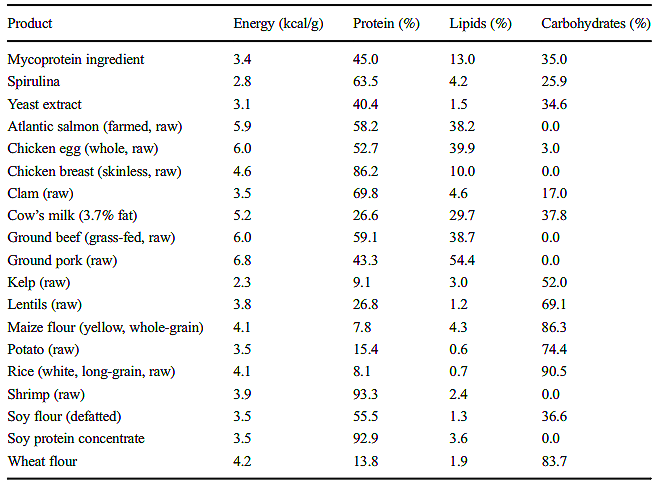
Comparison of nutritional properties of microbial food products per mass unit
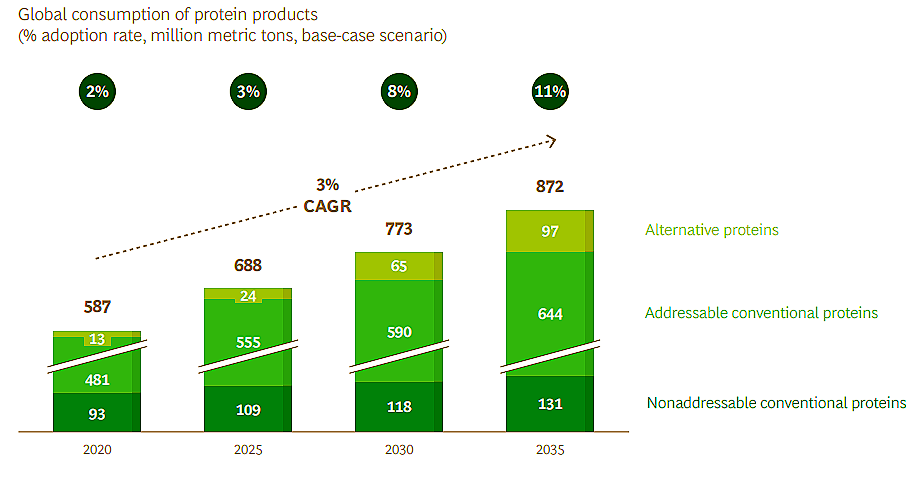
Alternative Proteins Will Very Likely Account for 11% of the Protein Market in 2035
ADVANCING SUSTAINABLE BIOENERGY DEVELOPMENT
New, advanced technologies make it possible to produce climate neutral fuels from non-forest and non-food energy crops. The benefits of cultivation and use of these energy crops for transport fuels and electricity goes beyond the benefits of reducing greenhouse gas emissions. Terrestrial energy crop cultivation and aquatic energy crop harvesting reverses land and water degradation, increases biodiversity and carbon sequestration and improves land fertility. We call this
Deep Green Biomass. Moreover, deploying these energy crops for the production of advanced biofuels will positively impact social-economic structures and energy independence and reduce the need for involuntary migration and deforestation: Deep Green Energy.
Deep Green Energy Partners works to accelerate deployment of deep green biomass for the production of advanced biofuels and biochemicals, to restore soil and water conditions and to optimize the overall ecological-economic effects of investments in the energy transition.
practically independent from soil, water and climatic conditions, and increases production-
Thus, we can feed the world a healthy and affluent diet, close the food yield - land gap and improve local food security by a combination of dietary change and indoor food production. To many of us indoor foods, using microorganisms and animal cells might feel strange, but it is little different from what happens in plants and animals or from how many of our foods (e.g, cheese, yoghurt and lately chicken nuggets and hamburgers) are produced today. And if we phase out grazing meat, and phase in indoor foods fast enough we will also cut deforestation, emissions, pollution and eutrophication in time before water and food stress will escalate as projected. Moreover, it will free ~1.900 Mha for sustainable agriculture, ecosystem restoration and carbon sequestration.
ADVANCING SUSTAINABLE BIOENERGY DEVELOPMENT
New, advanced technologies make it possible to produce climate neutral fuels from non-forest and non-food energy crops. The benefits of cultivation and use of these energy crops for transport fuels and electricity goes beyond the benefits of reducing greenhouse gas emissions. Terrestrial energy crop cultivation and aquatic energy crop harvesting reverses land and water degradation, increases biodiversity and carbon sequestration and improves land fertility. We call this
Deep Green Biomass. Moreover, deploying these energy crops for the production of advanced biofuels will positively impact social-economic structures and energy independence and reduce the need for involuntary migration and deforestation: Deep Green Energy.
Deep Green Energy Partners works to accelerate deployment of deep green biomass for the production of advanced biofuels and biochemicals, to restore soil and water conditions and to optimize the overall ecological-economic effects of investments in the energy transition.
Current cropland for direct human consumption is ~704 Mha and provides 83% of all calories consumed by humans today. Using the numbers from the food and land gaps above this would be 83% this would be 83% of 18.000 trillion calories produced today, 14.940 trillion calories, or 73% of calories. So, if the world went vegan we would need would need about 34% more land for food crops, so just under 1.000 Mha would suffice to feed the world by 2050. This would free up ~3.000 Mha land, substantially more than 300-1.900 Mha land gap direct emissions by ~50-60% + deforestation.
ADVANCING SUSTAINABLE BIOENERGY DEVELOPMENT
New, advanced technologies make it possible to produce climate neutral fuels from non-forest and non-food energy crops. The benefits of cultivation and use of these energy crops for transport fuels and electricity goes beyond the benefits of reducing greenhouse gas emissions. Terrestrial energy crop cultivation and aquatic energy crop harvesting reverses land and water degradation, increases biodiversity and carbon sequestration and improves land fertility. We call this
Deep Green Biomass. Moreover, deploying these energy crops for the production of advanced biofuels will positively impact social-economic structures and energy independence and reduce the need for involuntary migration and deforestation: Deep Green Energy.
Deep Green Energy Partners works to accelerate deployment of deep green biomass for the production of advanced biofuels and biochemicals, to restore soil and water conditions and to optimize the overall ecological-economic effects of investments in the energy transition.
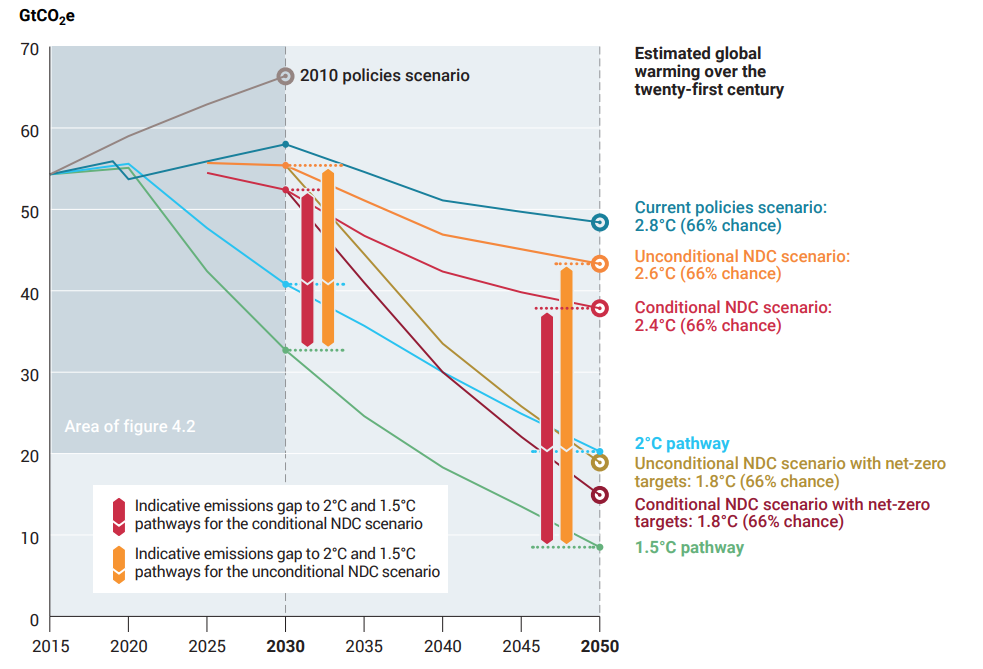
Assuming the current For 2°C GW we will need to close an emissions gap of ~30 GtCO2eq by 2050, i.e. increase net carbon sequestration by 1.2 GtCO2eq year on year. This is possible if cutting grazing meat, indoor food production demand side changes
closed the food yield-land gap by demand side changes and e . Most of the other emissions gaps in the food system are closed by and more sustainable crop cultivation. and land use and cover of abandoned and to abandoned agricultural land is optimized for ESs, carbon sequestration primary production.
Estimated emissions gaps and global warming under current policy scenario, excluding the effects of potentially reaching tipping points
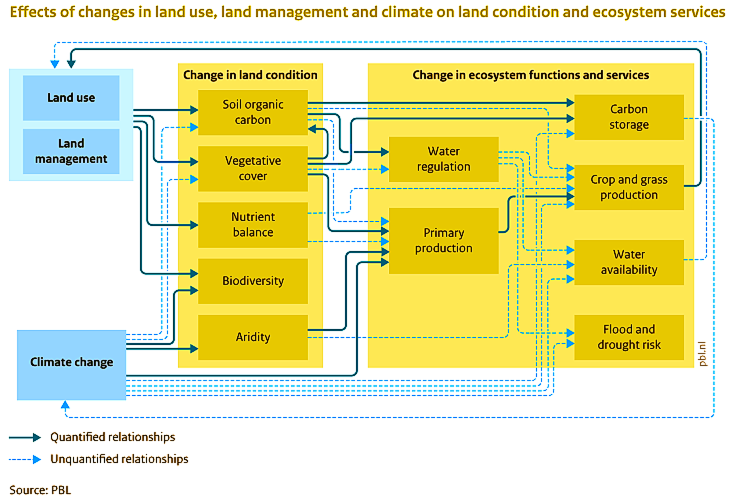
Effects of changes in land use, land management and climate on land conditions and ecosystems services.
ADVANCING SUSTAINABLE BIOENERGY DEVELOPMENT
New, advanced technologies make it possible to produce climate neutral fuels from non-forest and non-food energy crops. The benefits of cultivation and use of these energy crops for transport fuels and electricity goes beyond the benefits of reducing greenhouse gas emissions. Terrestrial energy crop cultivation and aquatic energy crop harvesting reverses land and water degradation, increases biodiversity and carbon sequestration and improves land fertility. We call this
Deep Green Biomass. Moreover, deploying these energy crops for the production of advanced biofuels will positively impact social-economic structures and energy independence and reduce the need for involuntary migration and deforestation: Deep Green Energy.
Deep Green Energy Partners works to accelerate deployment of deep green biomass for the production of advanced biofuels and biochemicals, to restore soil and water conditions and to optimize the overall ecological-economic effects of investments in the energy transition.
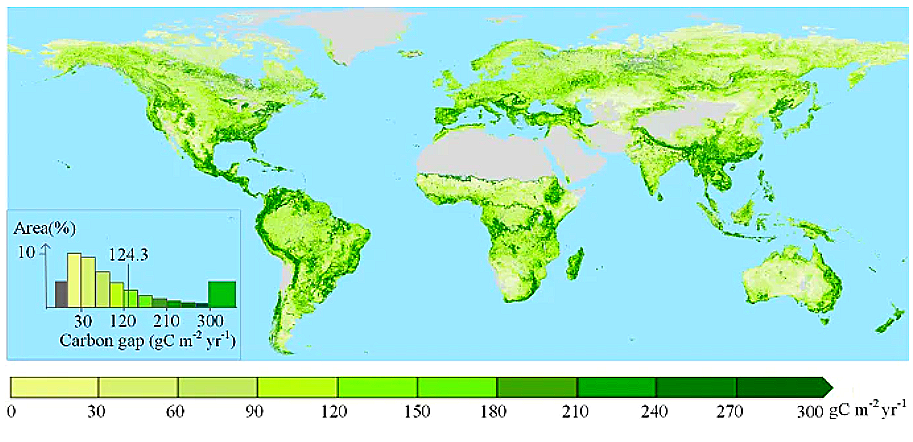
By optimizing current land management and cover practices global soils and land vegetation could annually sequester about 13.74 gigatonnes of carbon (GtC) more than it does today. This equals ~50 GtCO2 sequestration by above- and belowground plant and microbial biomass (1 GtC = 3,67 GtCO2eq) which is more than sufficient to close the emissions gap. Therefore abandoned and to be abandoned food crop and grazing lands are to be converted back to forests and grasslands. Much of the (to be) abandoned agricultural lands are however passed the point where they can naturally regenerate the forests or grasses that once covered them. So, we have to actively intervene and cover these lands with the vegetation that has the highest carbon sequestration potential and to protect these lands from further degradation by extreme weather events, desertification, and the loss of carbon, water and nutrients.
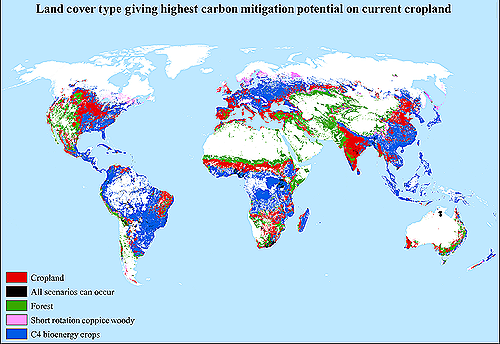
Land cover type giving highest carbon mitigation potential on current crop land.
Global land vegetation can sequester an extra of 13.74 GtC per year, by optimizing land management practices. Half of that extra can come from ~15% of the global vegetated area.
The red pixels on the above land cover map indicate highly productive agricultural land where land-use change from food crops does not increase net carbon sequestration (~420.6 Mha). The blue pixels indicate the land where perennial grasses (e.g. Miscanthus, Napier, King or Switch grass), often generically called elephant-, giant grasses or C4 energy crops) have the highest carbon sequestration potential (~484.9 Mha). The purple pixels indicate where short rotation coppice wood, i.e. willow or eucaliptus (~26.3 Mha) and the green pixels where forest (~186.5 Mha) would have the best potential. The black dots (~24 Mha) indicate where either perennial grasses or short rotation wood would have the highest potential. The percentages for grazing lands are likely similar or lean even more to perennial grasses given the global spread, recent historical cover and the overlap in both maps.
In the combined NDCs 1.200 Mha are set aside for forest and carbon sequestration and ESs restoration projects, divided about 50/50. Only about half of that land is available today, the remaining ~600 Mha either has to miraculously appear or come from reclaiming agricultural land.
ADVANCING SUSTAINABLE BIOENERGY DEVELOPMENT
New, advanced technologies make it possible to produce climate neutral fuels from non-forest and non-food energy crops. The benefits of cultivation and use of these energy crops for transport fuels and electricity goes beyond the benefits of reducing greenhouse gas emissions. Terrestrial energy crop cultivation and aquatic energy crop harvesting reverses land and water degradation, increases biodiversity and carbon sequestration and improves land fertility. We call this
Deep Green Biomass. Moreover, deploying these energy crops for the production of advanced biofuels will positively impact social-economic structures and energy independence and reduce the need for involuntary migration and deforestation: Deep Green Energy.
Deep Green Energy Partners works to accelerate deployment of deep green biomass for the production of advanced biofuels and biochemicals, to restore soil and water conditions and to optimize the overall ecological-economic effects of investments in the energy transition.
Planting new forests, afforestation or reforestation, is far less efficient as often assumed whilst natural forest expansion is. Forests don't simply grow anywhere, need good soil conditions, take many decades to mature and increase carbon sequestration. New forests are not the same as old forests for biodiversity: it takes centuries to recover lost biodiversity.
Moreover, new forest need a lot of water and care to mature which is costly, and to be commercially viable, trees have to be cut before any potential benefits can materialize. The envisioned carbon sequestration by forestation projects is therefore doubtful. From a climate, biodiversity and ESs perspective it makes far more sense to let existing forests standing and expand naturally over time, and to plant trees in agroforestry systems and urban areas for local cooling and water regulation.
ADVANCING SUSTAINABLE BIOENERGY DEVELOPMENT
New, advanced technologies make it possible to produce climate neutral fuels from non-forest and non-food energy crops. The benefits of cultivation and use of these energy crops for transport fuels and electricity goes beyond the benefits of reducing greenhouse gas emissions. Terrestrial energy crop cultivation and aquatic energy crop harvesting reverses land and water degradation, increases biodiversity and carbon sequestration and improves land fertility. We call this
Deep Green Biomass. Moreover, deploying these energy crops for the production of advanced biofuels will positively impact social-economic structures and energy independence and reduce the need for involuntary migration and deforestation: Deep Green Energy.
Deep Green Energy Partners works to accelerate deployment of deep green biomass for the production of advanced biofuels and biochemicals, to restore soil and water conditions and to optimize the overall ecological-economic effects of investments in the energy transition.
This leaves planting new grass lands. Perennial grasses (e.g. Miscanthus, Napier, King or Switch grass, often generically called elephant-, giant grasses or C4 energy crops) can potentially be 4–15 times
more effective than forest and grassland conservation in reducing CO2
emissions and mitigating climate change, even after taking account of carbon emissions from land-use changes and opportunity costs. Perennial grasses are cheap to cultivate, require little fertilizer or maintenance, are climate resilient and grow well on marginal lands all over the world.
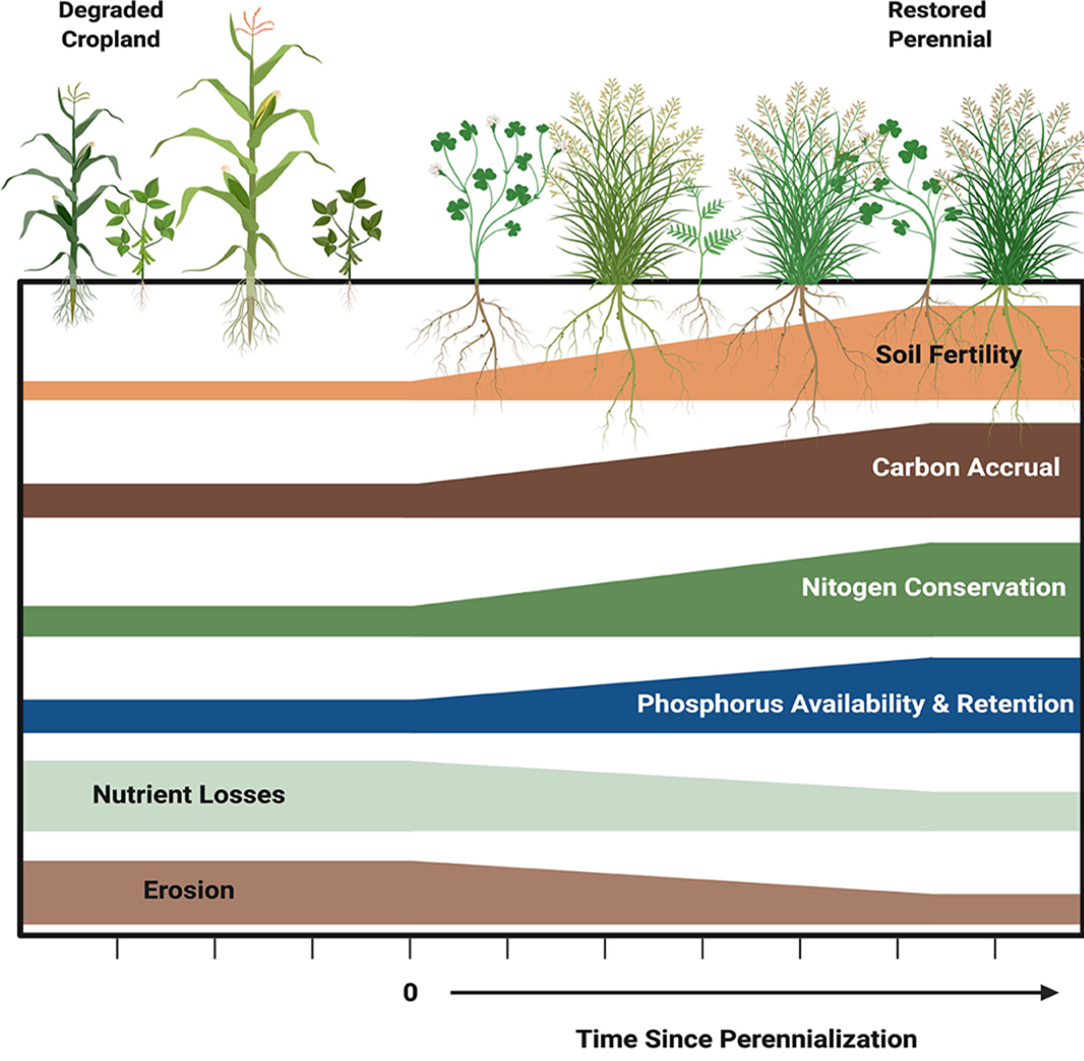
Planting perennial grasses on degraded and abandoned agricultural lands (perennialization) increases terrestrial carbon sequestration, restores soil organic carbon and fertility, vegetative (leaf) cover and soil water holding capacity. When done at scale,
perennialization enhances hydrology, cooling and reduces aridity, in a similar way as forests do. Perennial grasses have large and long root systems that assure longer and deeper carbon and water holding as well microbial activity. Runoff of available water and nutrients is reduced, and water and nutrient availability and resilience to extreme weather events increases in limited time.
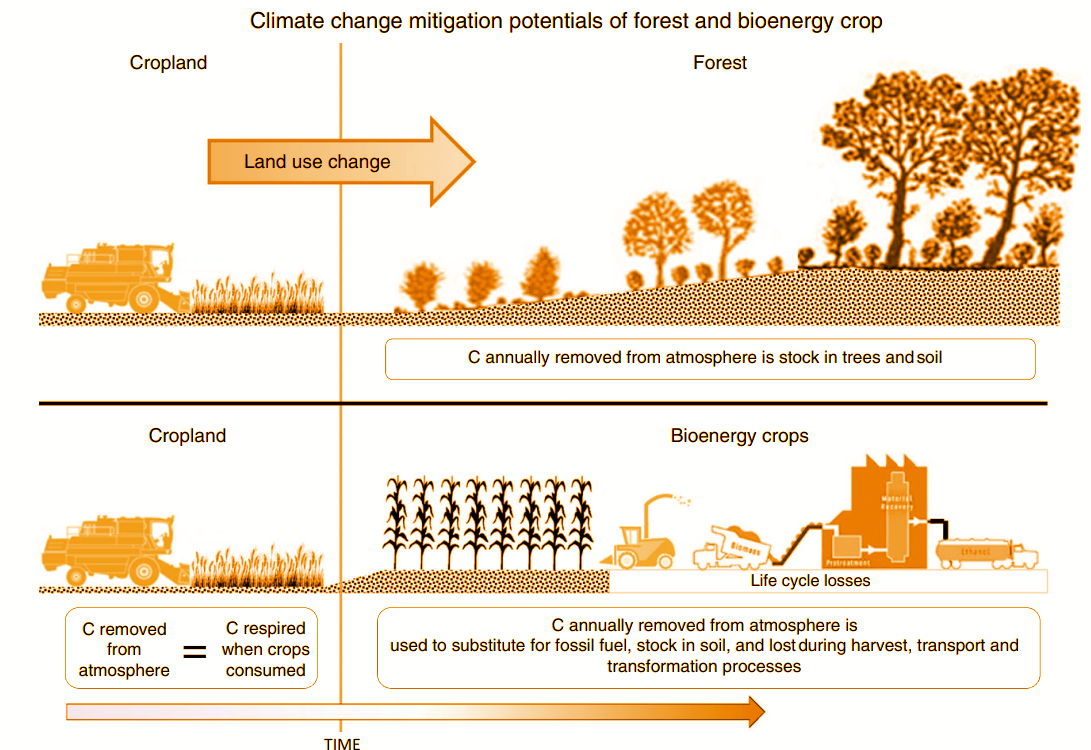
Climate change mitigation potentials of forests, food and perennial grasses for e.g bioenergy
Restoring soil fertility on degraded lands via perennialization
ADVANCING SUSTAINABLE BIOENERGY DEVELOPMENT
New, advanced technologies make it possible to produce climate neutral fuels from non-forest and non-food energy crops. The benefits of cultivation and use of these energy crops for transport fuels and electricity goes beyond the benefits of reducing greenhouse gas emissions. Terrestrial energy crop cultivation and aquatic energy crop harvesting reverses land and water degradation, increases biodiversity and carbon sequestration and improves land fertility. We call this
Deep Green Biomass. Moreover, deploying these energy crops for the production of advanced biofuels will positively impact social-economic structures and energy independence and reduce the need for involuntary migration and deforestation: Deep Green Energy.
Deep Green Energy Partners works to accelerate deployment of deep green biomass for the production of advanced biofuels and biochemicals, to restore soil and water conditions and to optimize the overall ecological-economic effects of investments in the energy transition.
Perennial grasses can be harvested once or multiple times per year without interrupting carbon sequestration, plant growth cycles or the recovery of soil biodiversity. Moreover, perennial grasses have to be replanted every 7 to 25 years depending on grass variety and so the annual tilling process for food/feed crops are avoided. Perennialization is also the most beneficial land-use option to increase primary production, measured both in yields and in time. Thus unlike forest or food/feed crop plantations, perennial grass plantations provide a steady revenue stream and a sustainable and economically viable business case for increasing carbon sequestration, ecosystem and land restoration and limiting GW.
ADVANCING SUSTAINABLE BIOENERGY DEVELOPMENT
New, advanced technologies make it possible to produce climate neutral fuels from non-forest and non-food energy crops. The benefits of cultivation and use of these energy crops for transport fuels and electricity goes beyond the benefits of reducing greenhouse gas emissions. Terrestrial energy crop cultivation and aquatic energy crop harvesting reverses land and water degradation, increases biodiversity and carbon sequestration and improves land fertility. We call this
Deep Green Biomass. Moreover, deploying these energy crops for the production of advanced biofuels will positively impact social-economic structures and energy independence and reduce the need for involuntary migration and deforestation: Deep Green Energy.
Deep Green Energy Partners works to accelerate deployment of deep green biomass for the production of advanced biofuels and biochemicals, to restore soil and water conditions and to optimize the overall ecological-economic effects of investments in the energy transition.
The CO2
sequestration rate of energy crops differs per variety, climate zone, soil conditions and management practices. The aboveground carbon mass sequestered by plants is easy to asses as it can be measured after cutting and drying. The aboveground dried carbon mass of perennial grasses consists on average of 48% carbon. Assuming a global average yield of 23.5 t/DM/ha/y this means ~11.25 tonnes of carbon (tC) are sequestered in above ground biomass per hectare. Assuming a net carbon belowground (soil) sequestration of ~20% of the aboveground carbon mass on average, i.e. 2.25 tC, this means that total average annual carbon sequestration per ha is, 13.4 tC/ha/y, which equals ~50 tCO2/ha/y. Offsetting 1.2 GtCO2eq
year on year would mean planting 24 Mha each year, about 600 Mha upto 2050 if plantation would be spread evenly over climate zones and soil conditions. This might seem like a lot, but it is only about 33% of
the ~72 Mha average annual land-use change. Actual yields and belowground biomass growth however differ greatly. In general: the closer to the (sub)tropics the higher the sequestration rate. In e.g.
Zimbabwe one ha of Napier grass
can yield 90 tonnes dry matter per year (t/DM/ha/y) while Miscanthus x Giganteus hybrids in Germany yields 15 and 40 t/DM/ha/y in Central and Southern europe.
ADVANCING SUSTAINABLE BIOENERGY DEVELOPMENT
New, advanced technologies make it possible to produce climate neutral fuels from non-forest and non-food energy crops. The benefits of cultivation and use of these energy crops for transport fuels and electricity goes beyond the benefits of reducing greenhouse gas emissions. Terrestrial energy crop cultivation and aquatic energy crop harvesting reverses land and water degradation, increases biodiversity and carbon sequestration and improves land fertility. We call this
Deep Green Biomass. Moreover, deploying these energy crops for the production of advanced biofuels will positively impact social-economic structures and energy independence and reduce the need for involuntary migration and deforestation: Deep Green Energy.
Deep Green Energy Partners works to accelerate deployment of deep green biomass for the production of advanced biofuels and biochemicals, to restore soil and water conditions and to optimize the overall ecological-economic effects of investments in the energy transition.
Today ~80% percent of all energy consumption is fossil based, ~50% of our food production depends on fossil based fertilizers and pesticides, as well as 99% of all chemicals production. Fossil fuels are the cause of ~70% of all emissions and there is no shortage of fossil fuels. Energy consumption is set to grow by 10-20%, fertilizer consumption by 40% and chemicals by 100%. In the positive scenario global primary energy supply is projected
to reach 656 EJ in 2050, ~10% higher than the current 608 EJ, and the ratio of fossil/non-fossil energy supply will become ~50/50 by 2050.
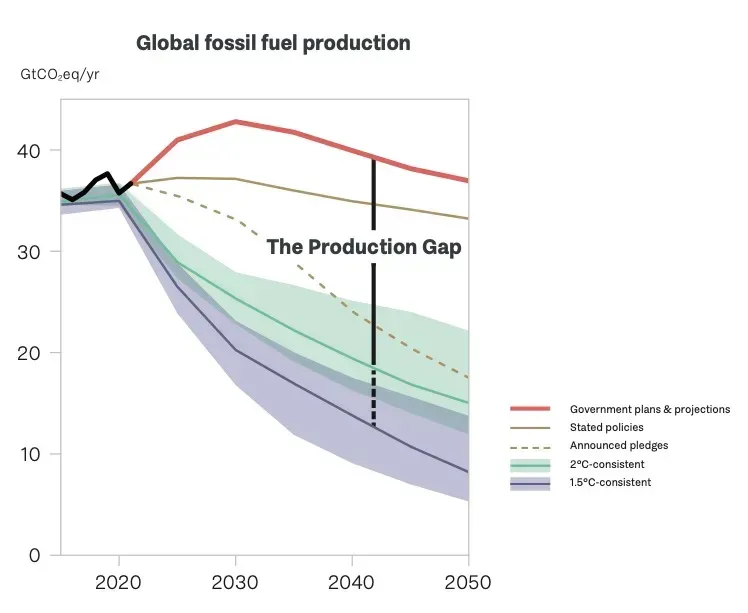
In 2050, the planned fossil fuel production for combined energy and chemicals is about ~520 EJ. The overall fossil fuel demand for energy will decline to 425-315 EJ versus 490 EJ today, depending on scenario. The difference, i.e. 95-205 EJ will be used for the production of chemicals (e.g. plastics and fertilizers) or to reduce the projected share of renewables. Notwithstanding the projected emissions reductions from substitution of coal by gas, carbon capture and storage (CCS) and efficiency gains, the missions from this 520 EJ would be 150% above the maximum level required for 2C GW. Thus we have to find a way to eliminate or neutralize 60% of all emissions from fossil fuel use.
Projected coal, oil and gas production, 2020-2050
Projected emissions from fossil fuel use, 2020-2050
ADVANCING SUSTAINABLE BIOENERGY DEVELOPMENT
New, advanced technologies make it possible to produce climate neutral fuels from non-forest and non-food energy crops. The benefits of cultivation and use of these energy crops for transport fuels and electricity goes beyond the benefits of reducing greenhouse gas emissions. Terrestrial energy crop cultivation and aquatic energy crop harvesting reverses land and water degradation, increases biodiversity and carbon sequestration and improves land fertility. We call this
Deep Green Biomass. Moreover, deploying these energy crops for the production of advanced biofuels will positively impact social-economic structures and energy independence and reduce the need for involuntary migration and deforestation: Deep Green Energy.
Deep Green Energy Partners works to accelerate deployment of deep green biomass for the production of advanced biofuels and biochemicals, to restore soil and water conditions and to optimize the overall ecological-economic effects of investments in the energy transition.
As discussed we could feed the world on a vegan diet using 1.000 Mha and a "no-grazed meat" diet on 2.200 Mha. A cultivation tank of 1500 m³, 60 meters tall and 7–11 meters wide
has an annual output of 50–60 kilo tonnes of dry bacterial biomass. This would roughly translate to 413–496 tonnes of dry microbial biomass/m²/year, if discounting the surrounding area that would be required for downstream processing infrastructure. One hectare of land could theoretically house 82 such vessels and would have a combined annual output of 4.1–4.9 million tonnes of dry bacterial biomass. In comparison, the average US soybean yield in 2017 was 3.3 tonnes tonnes wet weight per hectare i.e. it produces 1.400.000 times more mass than soy per m². So if would assume a modest median of 50% for calorie, protein and carbohydrate content per kg compared to crops and meat we would need 1.000 Mha/700.000 = 1.42 Mha or 2.200/700.000 = 3.14 Mha respectively and ~500 Mha for fruits, vegetables, pulses, citrus fruits, roots and tubers and oil crops to feed the world.
Thus if we scale up modern bioenergy and modern food production fast enough, keep 1.5 Mha for sustainable livestock grazing, 1.2 Mha for sustainable food crop and fruit cultivation, move the rest of food production indoors, this will leave ~2 billion hectares for natural forest expansion and perennial grasses. This equals the combined sizes of readily available land for perennial grasses and the eroding agricultural land that is losing its productivity and is in need of restoration. This deep green alternative scenario would eliminate the cause for further biodiversity loss and deforestation, secure sufficient ESs per capita, carbon sequestration, food, energy, materials, livable climatic conditions as well as a more pleasant future.
Ensuring food supply for all and at all times requires both a base level of local self-sufficiency and moderate connectivity with regional and global markets.
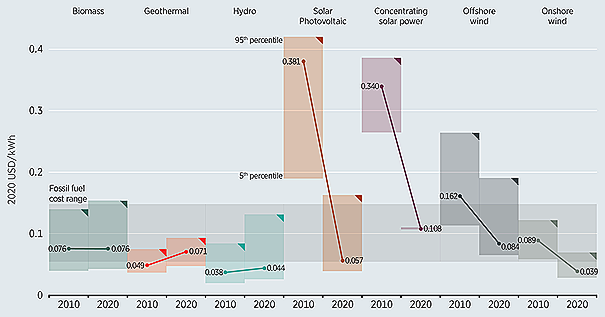
d farming, but here the same principle applies as for energy decarbonization, scale-up wil bring down cost. It took 100s of billions in subsidies to bring down cost for solar and wind energy to price competing levels with other energy sources. Prices that are not fixed but set by a few major players in the world, and are thus less based on production cost than on geopolitical interests. There are enough fossil fuels
Until the sum of anthropognic and nature based GHG fluxes between Earth and the atmosphere reaches net zero global temperatures keep rising. Temperatures will only only come down once this sum becomes net negative. Most countries have committed to net-zero emission targets by the second half of this century meaning that any GHG emissions after around 2030 and until net-zero is reached will have to be removed to keep global warming below 1.5°C.
The 2050 projected annual emissions gap with 1.5-2°C in current global warming scenarios is about 250%, the temperature gap 1-2 C, the projected food gap is 45%, the land gap
about 450 million hectares
and the
material resources gap over 200% and the projected water gap for 2030 is 40%. more GHG capture, and substitution of finite resources by renewable alternatives.
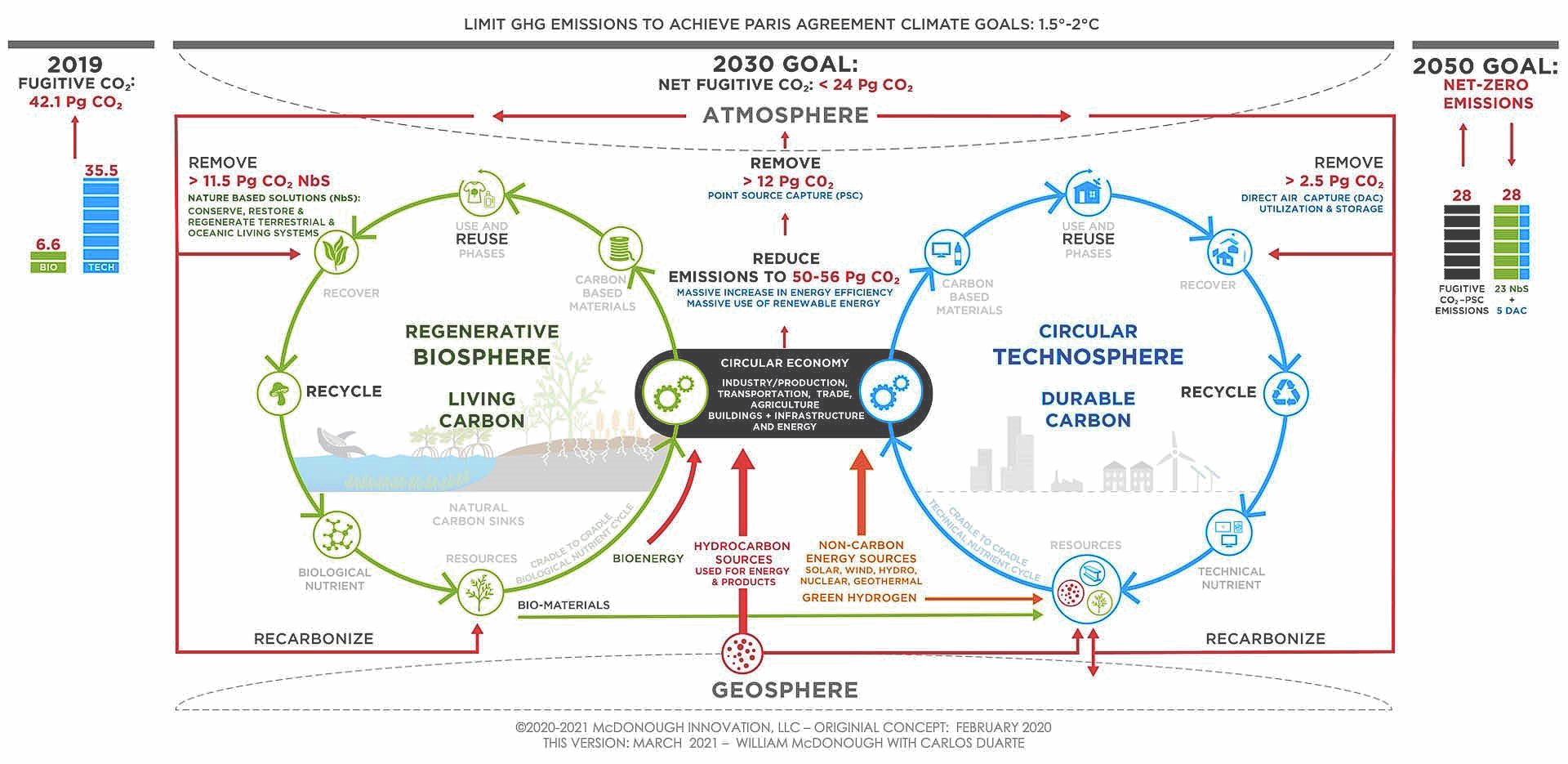
All technical solutions will take time to implement on meaningful scales. The Deep Green Energy scenario therefore starts by drawing down CO2
from the atmosphere to simultaneously halt global warming, increase above and belowground carbon stocks and water retention as well as the supply of renewable resources. The latter will be gradually fed in to the technosphere as it develops, which will deliver the efficiency needed to meet the world's demand sustainably.
CO2 is absorbed through photosynthesis by plants and microbes living on land and in water. CO2
also dissolves in water wherever, lakes, rivers, seas or oceans or the tidal marshes and mangroves between land and sea (coastal blue carbon) meet with air. The CO2
uptake by water mass is around
6 Gt/year today and the more atmospheric carbon levels increase the more carbon is absorbed by water which causes water to become more acid. Acidification of water results in aquatic ecosystem deterioration or destruction and is therefore reffered to as climate change's evil twin.
As
increased terrestrial CO2
uptake and/or emissions will automatically reduce the share of atmospheric CO2
absorbed by water, we will focus on terrestrial based solutions, starting with land-use and the options for carbon sequestration and capture. The interaction of carbon and water mass is further discussed in the water section. The various techniques for above and belowground terrestrial carbon sequestration, capture and removal are illustrated below.
Assuming that the
current policies and action scenarios will come true, a minimum additional 2-2.5 GtCO2eq carbon removal are needed year on year to remain on course for 1.5-2°C global warming up to 2050. As the available land surface and time far carbon sequestration and removal are limited we have to optimize land-use efficiencies for all purposes, so we start with land-use.
Land and soil recarbonizing by natural carbon sequestration is done by plants and microbes through photosynthesis or chemosynthesis, the use of light or chemical energy to assimilate CO2
for growth of their mass. As these organismes are the basis of any organic material production (or biomass) production they are called primary producers and their growth primary production. Increased net primary production (the balance between above and belowground biomass increases and losses) or NPP therefore equals their net CO2
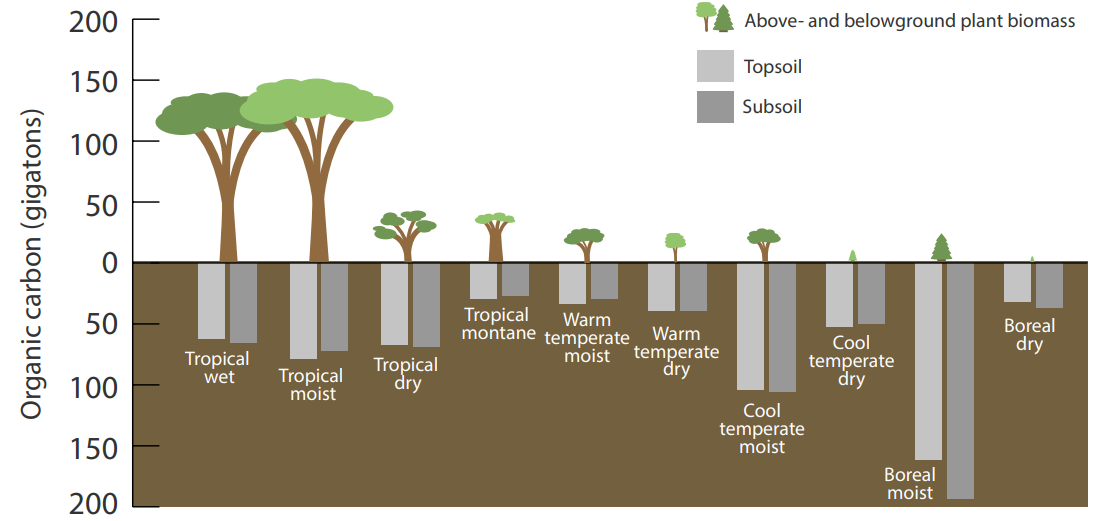
uptake. As shown above, increased carbon sequestration is possible on almost all land. Land-use change and management e.g. deforestation, forestry, agriculture and aquaculture expansion or mining cause however cause below and aboveground NPP and carbon losses. The divisions in global above and belowground organic carbon biomass stocks and land-use/landcover are shown below.
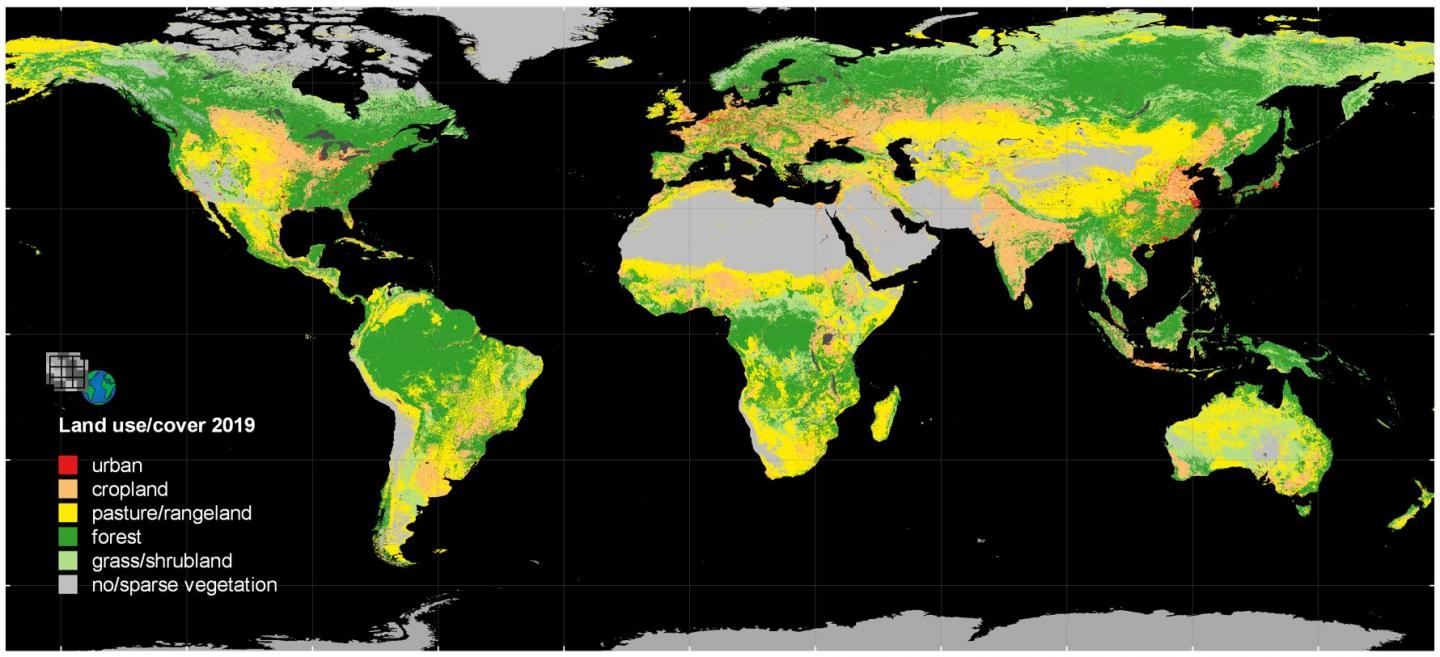
The AFOLU (managed land) sector, on average, accounted for 13-21% of global total anthropogenic (GHG) emissions
in the period 2010-2019. Some carbon losses could be recovered with in a couple of decades, other losses are permanent or take a century or more to recover.
Potential carbon losses from future land-use conversion and climate change are estimated about
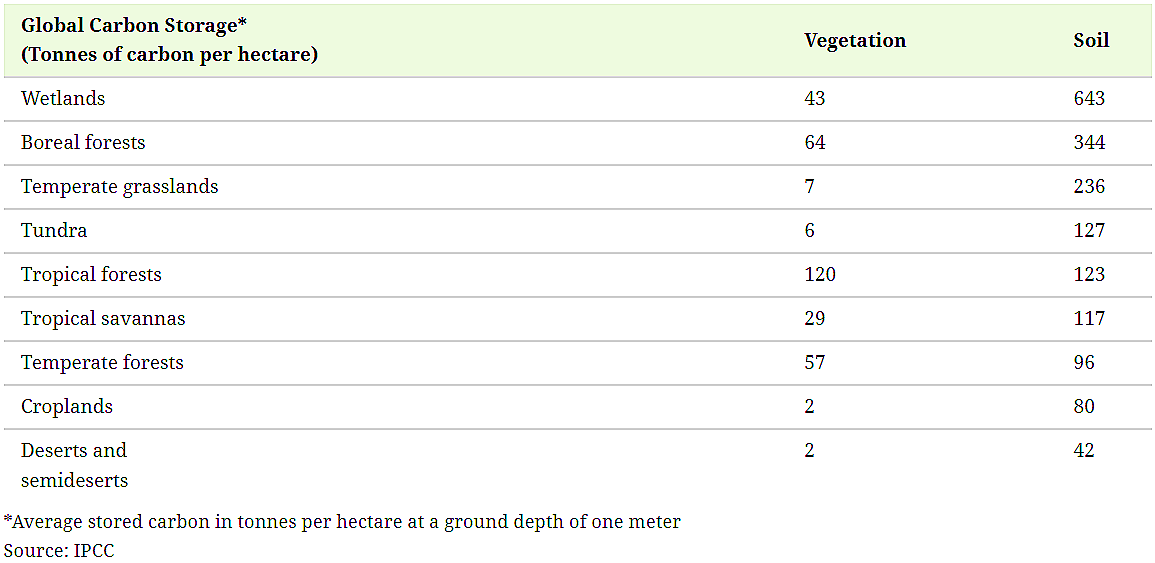
731.7 ± 340.2 Gt of which 139.1 ± 443.6 Gt would be irrecoverable. Most of which
can be halted or mitigated through adaptive management. In the map below the ‘irrecoverable carbon’ reserves that are manageable and vulnerable to disturbance are identified. Soil carbon losses from permafrost soil (containing 1,400-1,600 Gt of organic carbon), which are under imminent threat from global warming induced thaw are excluded as these are largely beyond the scope of direct management options. The table below indicates the carbon loss per hectare for various landcover categories.
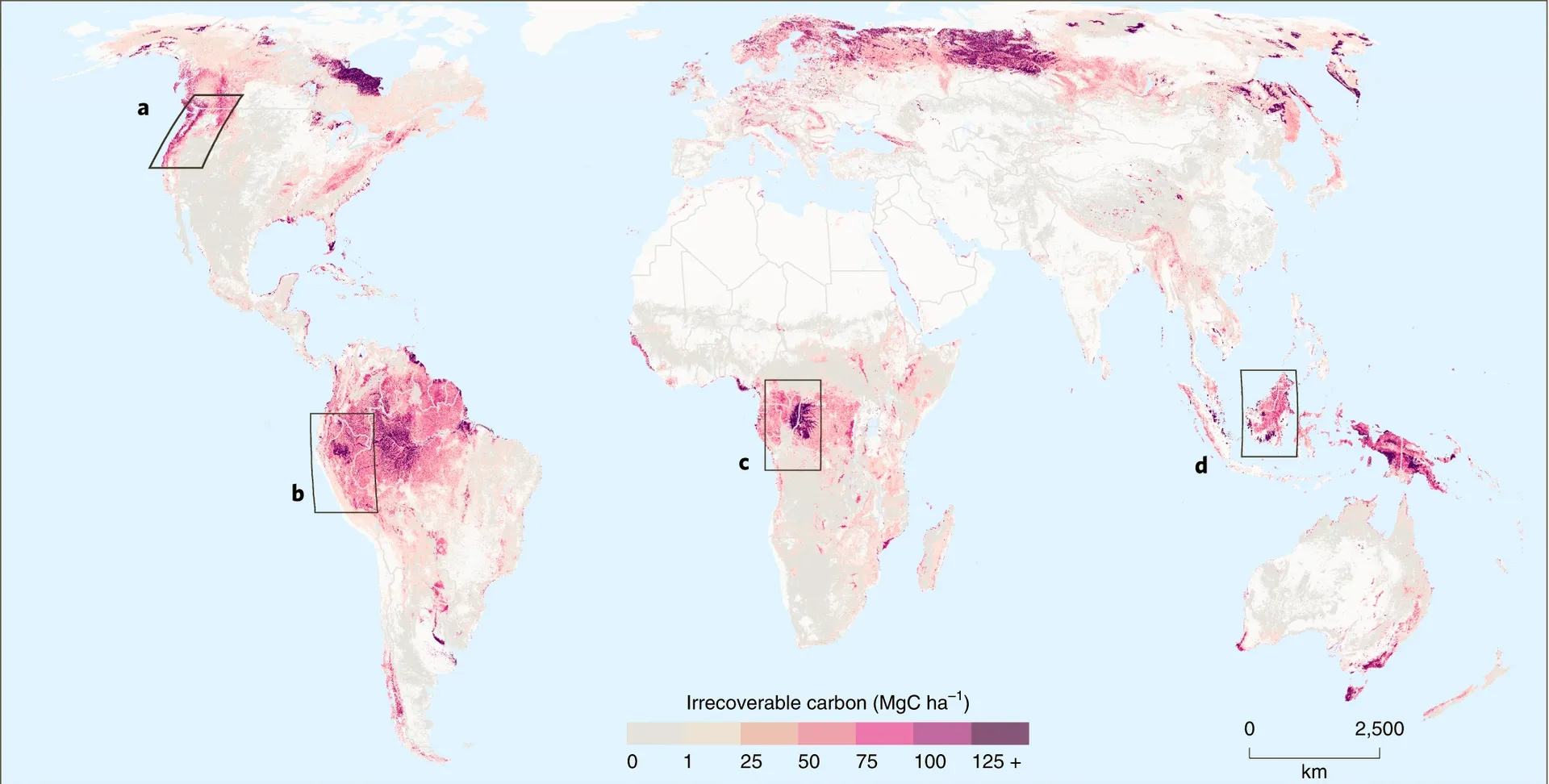
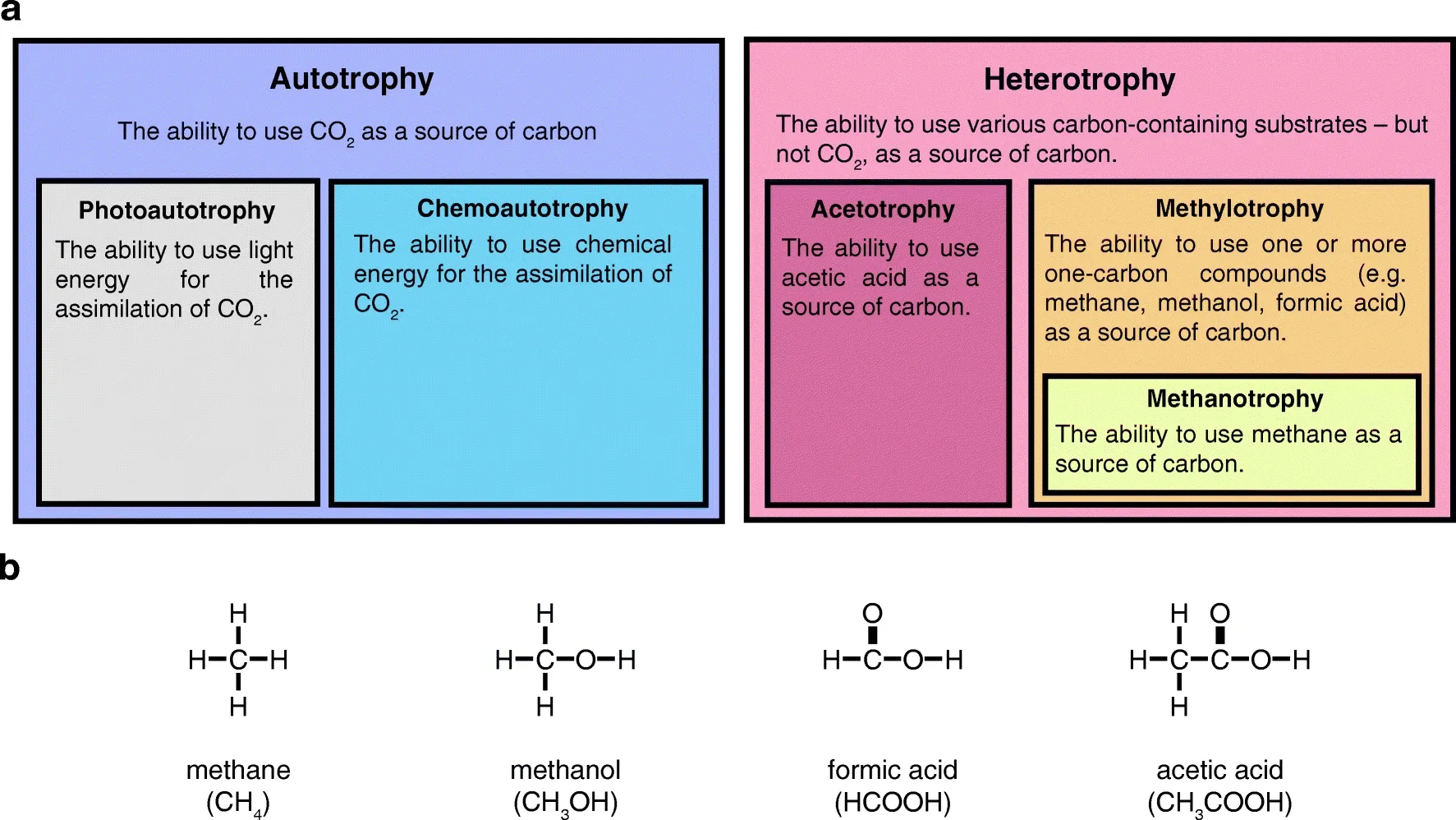
As can be derived from the table above most terrestrial carbon is stored in soils as a result of microbial growth belowground. Belowground autotrophic microorganisms can assimilate CO2
directly as a source of carbon (C) to grow. Similar to plants, they fix atmospheric carbon (C) through photosynthesis for their own growth and divide. Heterotrophic microorganisms on the other hand can only assimilate the organic C needed for their growth that has already been synthesized (“fixed”) from CO2 by e.g. plants or autotrophic microorganisms or found in methane or acids. Microorganisms use carbon to produce different substances ranging from methane to proteïnes, carbohydrates vitamins, lipids and more.
The autotrophic microorganisms in global terrestrial soils capture around
3.6 Gt carbon each year, which corresponds to around 6% of the net primary production of terrestrial vegetation. Soil vegetation cover, carbon and moisture are the main factors that increase soil microbial mass, so by increasing soil carbon microbial soil mass increases as well. Soil carbon is the best indication of soil health and therefore often used as overall indication for soil quality. Microorganisms can also be cultivated in fermentation tanks or open ponds. (aquatic microorganisms are further discussed in the water section)
Increased carbon sequestration requires a combination of halting further losses and expansion of above and below ground carbon stocks. Natural forests and grasslands contain most of all carbon per hectare and absorb
more than they emit. Keeping existing natural forests, and grasslands
healthy and functional is therefore evidently an effective option towards avoiding emissions and maintaining and stable carbon stocks, biodiversity and NPP. Land demand for increased carbon sequestration, food and forestry exceeds the total available land mass. As increasing all within the current systems parameters is impossible, we have to make some changes to these systems.
Forests and grasslands are not cut, thinned, burned or converted without cause and halting further losses depends on increasing land-use efficiencies and finding substitutes for forest timber, pulp and fuel wood and, of course halting global warming which causes further above and belowground carbon losses. As current agriculture poses the largest threat to deforestation and other land-use change, planetary health and its own future, we start with assessing our options for changing land-use and land-demand by food systems.
Food demand is expected to rise with
50%
by 2050, which can only be met by expanding crop land at the cost of forests or grass lands containing fertile soils. In a business as usual scenario a projected 300 million to
500 million ha of forests and grass lands will be replaced by food and feed crops in mainly tropical regions. At the same time current agricultural lands will be abandoned due to demographic, economic and climatic changes and soil degradation.
Both land expansion and land abandonnement result in land loss are incompatible with the land requirements for both carbon sequestration and future food production as the current structure of food systems
causes the deterioration of soil carbon, water, nutrients, biodiversty and climatic conditions it depends upon. So, if we want to secure future food security the current systems will have to change in such way that we can increase yields while reducing negative effects. Lets first consider traditional crop production.
OPENFIELD
CROP PRODUCTION
Business as usual scenario continued worldwide croplands expand by 280 million ha, the majority of current cropland expansion occurs in the tropics, with as much as 80% of new croplands replacing forests. Projected losses in carbon and biodiversity are shown below.
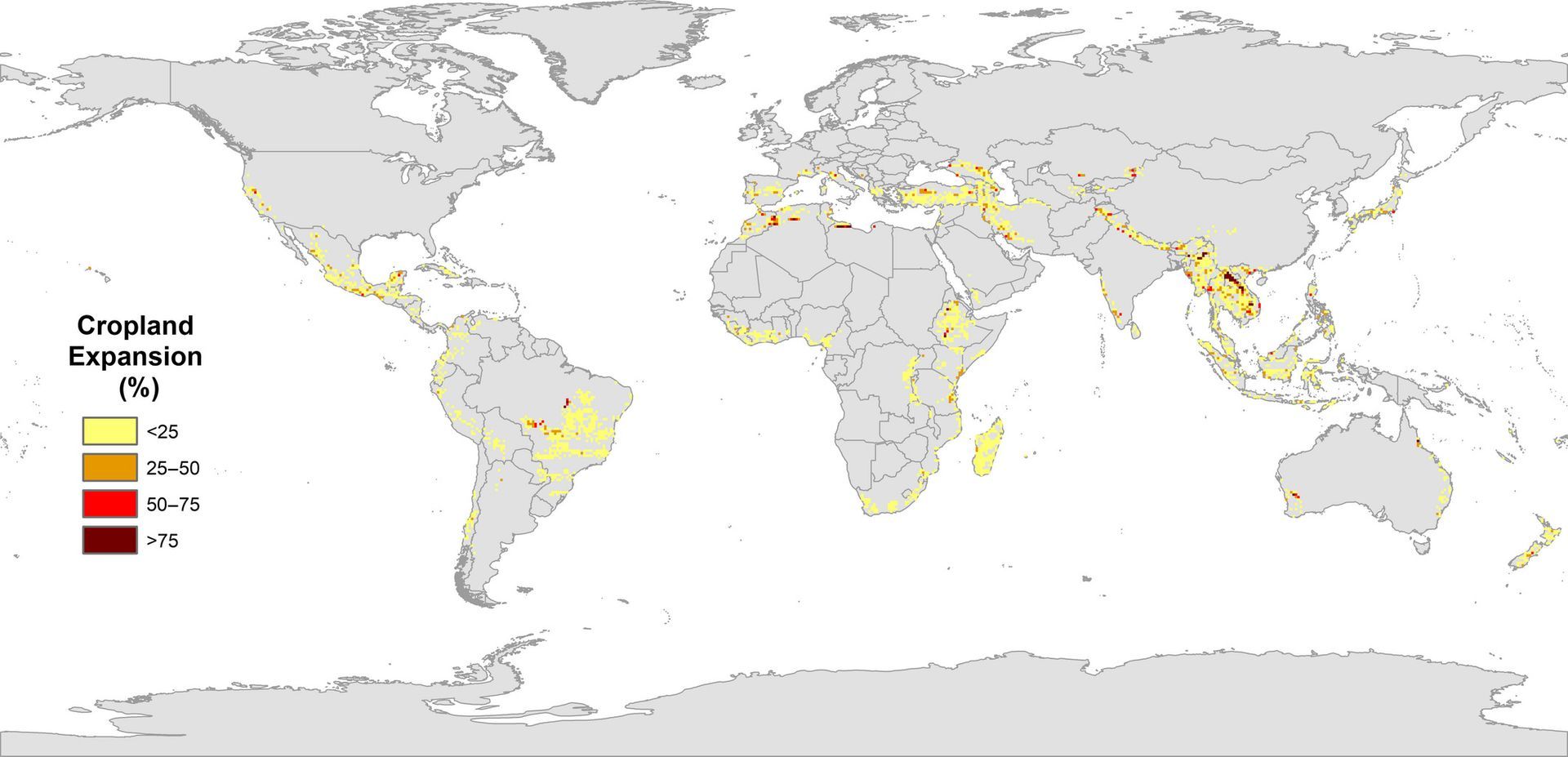
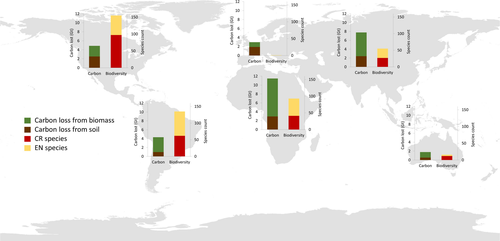
Increasing crop yields requires either more land or further intensification. More land-use will result in more above and belowground carbon loss and further ecosystem deterioration land conversion, more intensification will increase emissions, pollution and eutrophication, more indoor food production will avoid most of these effects while freeing land for carbon sequestration but requires construction of many new greenhouses and thus time. To balance the various impacts of the individual options we will therefore have to implement all three simultaneously, and to avoid the projected crop land expansion and corresponding carbon and biodiversity losses we will have to act fast.
Between 1961 and 2006, yield losses due to droughts and changes in precipitation were estimated at
25%. These negative yield impacts were however more than compensated by developments in agronomy and crop technology. In
most developed nations increased are not feasible
but crop yields on healthy soils in developing nations can still increase substantially. A third of all agricultural land
is however already losing its productivity and restoring these lands by regenerative agriculture while increasing crop supply is practically impossible, as illustrated on the right. Openfield crop production will therefore either move into forest and natural grasslands has to be partly reallocated to more productive crop lands to protect natural lands and to enable land restoration by sustainable farming.
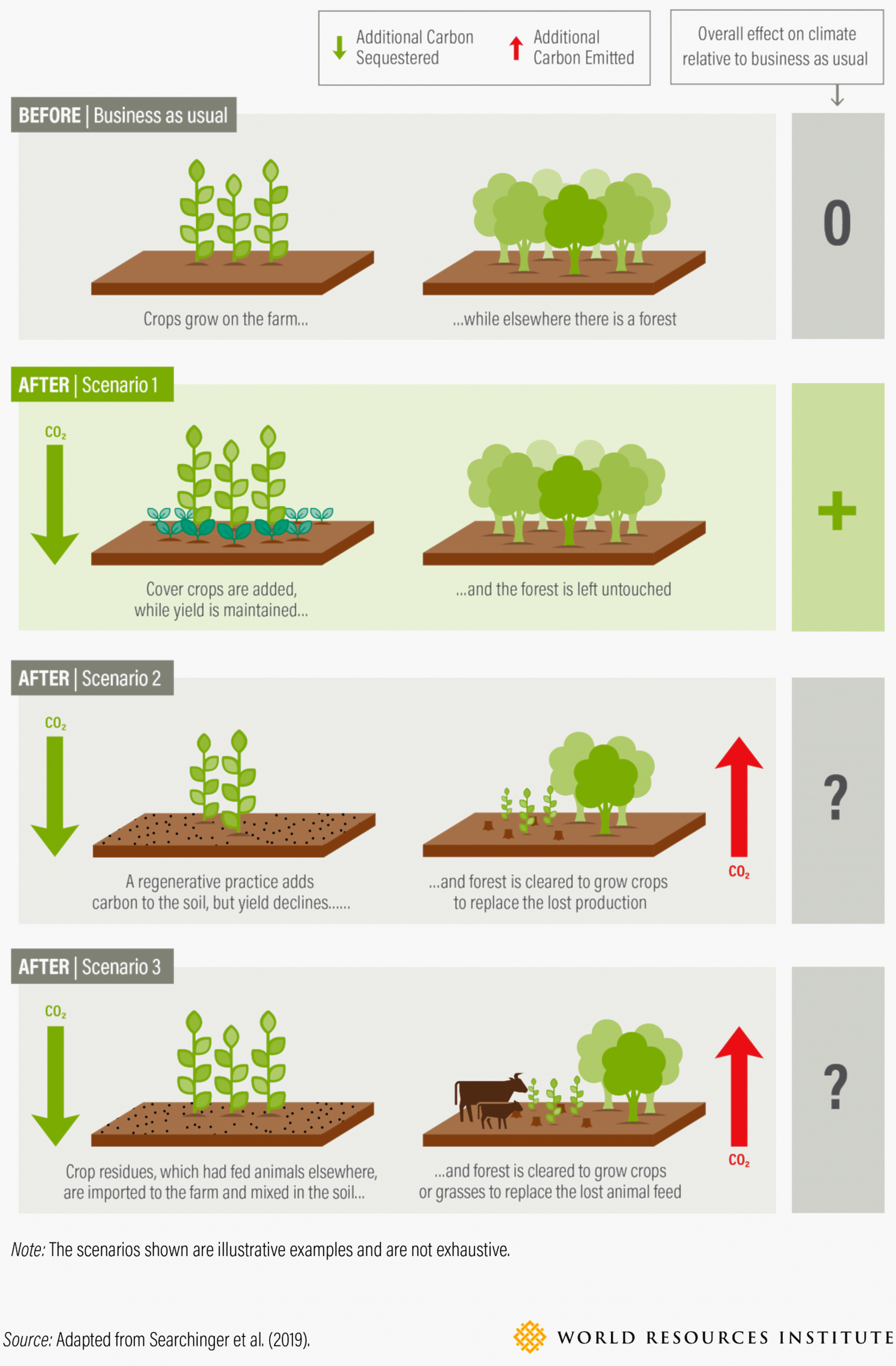
Climatic, water and environmental conditions will prohibit or disturb openfield food and feed crop production in an ever larger part of the world. Relocation and more intensive crop production will be necessary to meet future global demand and avoid further natural land conversion. Relocating crop production and yield increases can not be done indefinitely and cannot been done without increasing the environmental damages on the selected location. Relocating food production also jeopardizes food sovereignty and security, therefore part of crop production has to become climate resilient and land independent, i.e. moved into greenhouses.
INTENSIFYING OPENFIELD
CROP PRODUCTION
A recent estimate for relocating current croplands to optimal locations, whilst allowing ecosystems in then-abandoned areas to regenerate, could simultaneously decrease the current carbon, biodiversity, and irrigation water footprint of global crop production by 71%, 87%, and 100%, respectively, assuming high-input farming on newly established sites as shown below. The total worldwide area used for agriculture in the optimised scenario would be less than half (48%) of the current area and overlaps with only 0.2% of areas classified as tropical forest biomes, representing a reduction of 98% in the tropical forest area that is currently being used for crop production. As moving agricultural production, and thus labour and capital, across national borders poses political and socio-economic challenges that may be difficult to resolve in the near future the authors repeated their analysis whilst requiring that, in the optimised scenario, the total production of each crop in each country remain identical to the one at present.
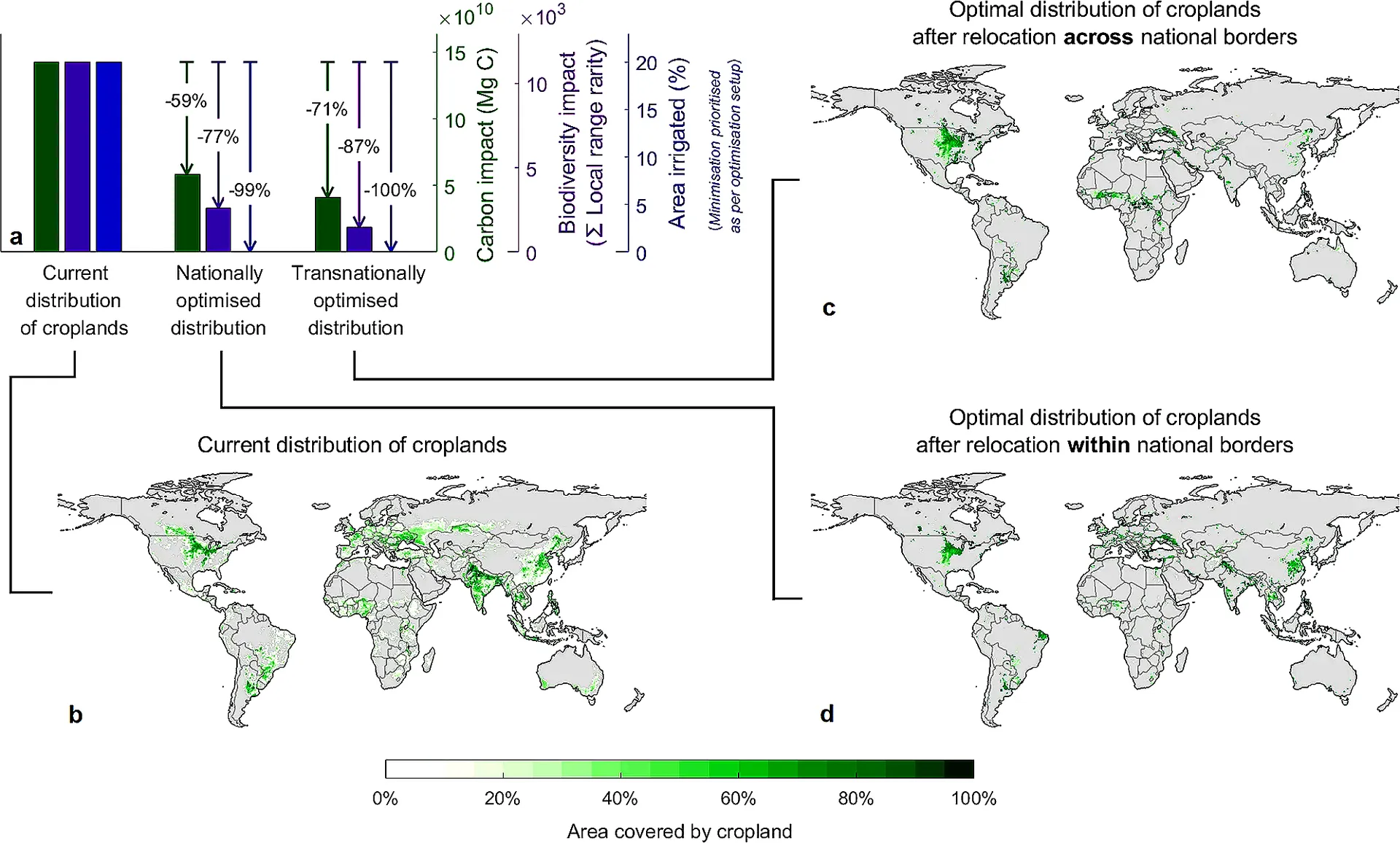
Assuming high-input crop management on relocated sites, the authors estimate that if each country independently optimised its distribution of croplands, the resulting worldwide carbon and biodiversity impacts would be 59% and 77% lower than they are currently. The vast majority of production, corresponding to 99.4% of global croplands, could be nationally relocated so that rainfall provides sufficient water supply; however, some countries produce crops for which natural agro-ecological conditions within their borders are not suitable, and thus some irrigation or greenhouse cultivation remains needed to maintain the current national production levels of each crop.
Climatic, water and environmental conditions will prohibit or disturb openfield crop production in an ever larger part of the world and more intensive crop production will cause more damages and can not be done indefinitely. Relocating food production also jeopardizes national and regional food sovereignty and security. Therefore a large part of crop production has to become climate and land independent, i.e. it has to be produced locally and indoors.
GREENHOUSE FARMING
Climate change is already reducing average yields for most of the major vegetables.
Moreover, increasing temperatures, reduced irrigation-water availability, flooding, and salinity will be the major limiting factors in sustaining and increasing vegetable productivity. Under changing climatic situations crop failures, shortage of yields, reduction in quality and increasing pest and disease problems are common rendering vegetable production increasingly unprofitable. The impact of climate change on fruit crops is likely to be even more detrimental as compared to field crops as the adaptation capacity of shorter duration crops is generally greater than perennials. Fruit and vegetable production in many parts of the world will therefore either move indoors or perish.
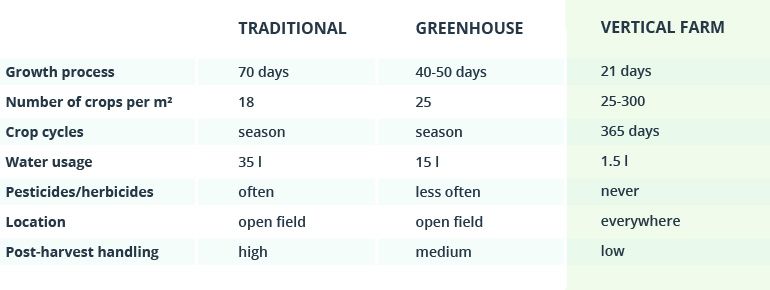
Greenhouse cultivation can be either be soil-based (S) or soil-less. The yields of soil-less cultivation systems are much higher in general than those of soil-based systems due to more precise levels of control for nutrient delivery, oxygenation, pH, and temperature control. Perennial crops, because of their basic biology, are generally only grown in soil-based cropping systems, whereas most annual crops can also be cultivated using soil-free techniques like hydroponics (H) and depending on size can be stapled in vertical rows, i.e. vertical farming (VF).
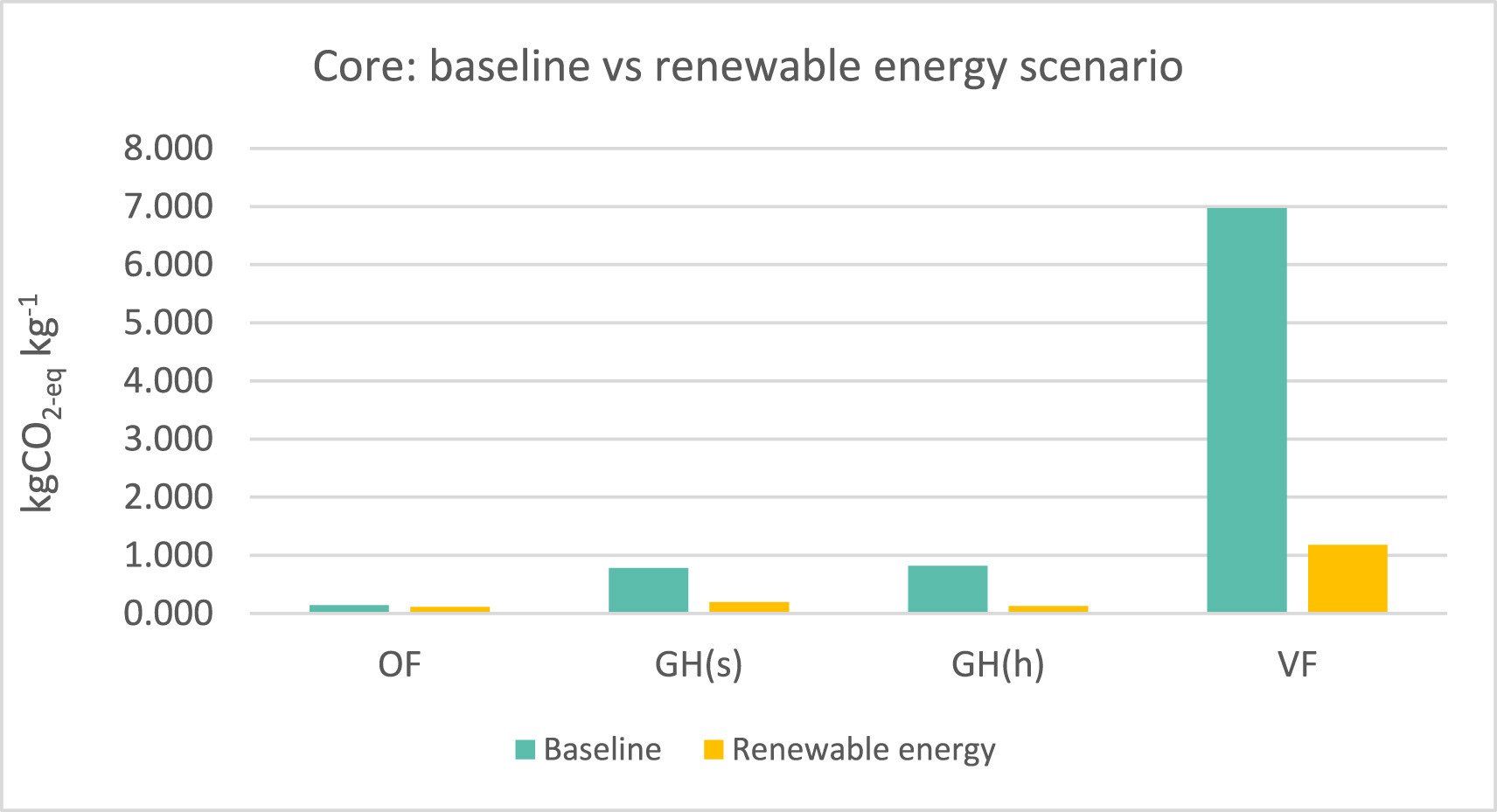
The extended growing season for crops allows them to disproportionately contribute to global production relative to their small footprint. Produce of various vegetables and fruits can be increased up to 20 times per square meter in different greenhouse systems as shown below. Production in controlled environments also enables limiting waste and leakage of nutrients, water and emissions and the more advanced, the less resources, pesticides, herbicides and fertilizers are required. required. Realizing higher yields versus openfield (OF) however requires more energy, and the energy source is therefore the most decisive factor for overall sustainability.
LIVESTOCK PRODUCTION
Currently, the global biomass of mammalian livestock is 67% larger than that of humans, 1329% larger than that of all wild mammals, and 318% larger than total mammalian biomass that was supported on Earth 100,000 years ago. Livestock grazing removes large quantities of carbon from global rangelands. Because the most productive lands tend to be used for crops, grazing often occurs on less-productive drylands and grasslands with more variable or extreme climates. In less productive rangelands, the removal of large quantities of plant biomass by grazers often leads to (further) land degradation and subsequent soil carbon losses. Meat and dairy demand is expected to grow by 70% by 2050 and grazing land is therefore set to expand by 150 million ha. Again, this is projected to happen in mainly tropical natural areas where forests and natural grasslands offer the only fertile land left.
Climate change will affect the economic performance of dairy and meat production as well as the various health issues for both indoor and outdoor livestock farming. At 2°C of warming, livestock numbers will decrease by 7 to 10 percent by 2050, at higher temperatures, animals also reduce their feed intake
by 3–5% per additional degree of temperature,
which reduces their productivity. Moreover, heat stress increases respiration and mortality, reduces fertility, modifies animal behaviour, and suppresses the immune and endocrine system, thereby increasing animal susceptibility to some diseases. Declining livestock yields will have to be compensated by more animals and/or relocation to more favorable conditions as well.
In many countries livestock production has been industrialized already due to urbanization and economics. This certainly helped to reduce the additional demand for grazing land but comes with many negative impacts. Farm animals held in densely populated environments, for either meat or dairy production, results in poor living conditions and hygiene and the emergence of zoonotic diseases (infectious diseases transmitted from and between animals and humans). Impacts are amplified due to the high density, genetic proximity, increased immunodeficiency, and transport of live farm animals. Livestock production finds itself facing the same threats as crop production. Health issues for concentrated indoor livestock production (e.g birth and swine flu) and in particular zootonic diseases form an extra challenge.
Openfield food production will either take shelter from climatic conditions or will succumb while more land and forests are lost. To meet future demand, food production will have to further intensify. Food production optimizing by relocation will increase yields but finds it limitations in the need for local food sovereignty and security as well as environmental damages. Therefore local indoor food production, in particular in those parts of the world where climatic conditions will gradually make openfield crop and livestock production physically or economically impossible, will have to move indoors. We need not only lettuce and strawberries but also proteins, carbohydrates and fats and therefore producing the latter without cereals, soy or livestock is the only option.
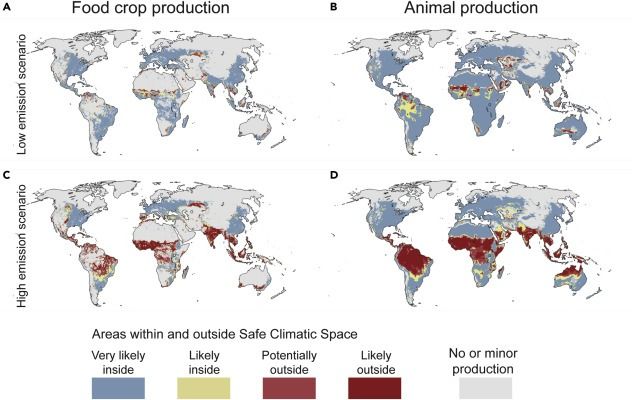
Advanced food technologies produce food ingredients, components or final products, mimicking the biological processes within an animal, plant but in a closed, controlled environment. Advanced food production is done basically by two processes. 1) Growing animal cells in factories in a similar way as in animals but outside the animal (refered to cultured, printed or cellular meats). 2) and producing food ingredients in fermentation tanks using microorganisms to produce the same basic ingredients as the more complex organismes plants and animals do. Fermentation comes in three variaties: traditional fermentation (e.g. cheese, beer, wine, yeast and tempeh), more advanced for food additives (e.g. vitamines, flavors) and microbal precision fermentation (or cell-factories) for food additives and components (e.g. proteins, fats, complex yeasts, dairy and carbohydrates). By combining the produce from different processes final food and feed products can be construed that are similar in look, feel and mouth experience to traditional produced products. Advanced food technologies are many times more time, land, water and nutrients efficient and can produce more healthy proteins, carbs, vitamines, meats and dairy from basically CO2
and electricity than cows, pigs, fish, soy plants or cereal crops. So, technically we can move food production indoors, decimate land and other resources use of our food systems, halt the need for agricultural land expansion, make our food systems climate and location independent and free the land needed for carbon sequestration.
PRECISION FERMENTATION
Microbes need carbon and other nutrients comparable to plants (e.g. nitrogen (N), phosphorus (P), potassium (K), sulphur (S) to grow and produce different substances ranging from e.g. edible proteïnes, hydro-carbons, vitamins, to lipids. Different species can be programmed to produce the desired substance by different precision fermentation paths. In the
below illustration
a comparison is made between plant photosynthesis and the analogous electro–microbial process to produce yeast as example.
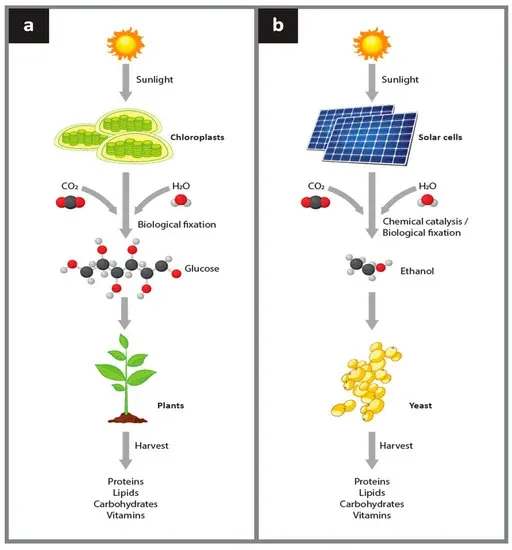
Panel (a) Photosynthetic production of food. The initial capture of energy from sunlight by plants uses chlorophyll and other light harvesting pigments located in chloroplasts to absorb photons. The absorbed energy is used in the process of photosynthesis to combine CO2 and hydrogen derived from water into sugars. Plant biosynthetic pathways allow the sugar synthesized in photosynthesis to build all amino acids, complex carbohydrates, nucleotides, nucleosides, vitamins, lipids, and other co-factors required to sustain plant growth. The plant biomass is harvested and used by humans or animals as food. Panel (b) The electro–microbial production of food. The initial capture of energy from sunlight in the electro–microbial process uses solar panels to absorb photons and generate electrical energy. The electrical energy is used to combine CO2 and hydrogen derived from water to form ethanol. Yeast cells then use their biosynthetic pathways to grow on ethanol and synthesize all amino acids, complex carbohydrates, nucleotides, nucleosides, vitamins, lipids, and other co-factors required to sustain yeast growth. The yeast biomass is harvested and used by humans or animals as food.
Precision fermentation turns microorganisms into extremely efficient mini-factories producing more specific enzymes, or ingredient specific material for food. Various microorganisms are capable of very rapid growth with cell division occurring approximately every
20 min (e.g. Escherichia coli) to every 90 min (e.g. common baker’s yeast Saccharomyces cerevisiae). And they do so using a fraction of the land, water and causing far less global warming (GWP) and environmental damages as shown below for microbial protein (MP) and various other protein food sources.
Recent estimates of the nutritional value of a vitamin-prototrophic yeast strain in the context of human space travel suggest that all vitamins and macronutrients necessary for a balanced human diet could be provided for 50–100 people per day from a single 3000 L fermentation tank, with a diameter of 1-1.5 M².
A 1500 m³, 60 meters tall and 7–11 meters wide cultivation tank
has an annual output of 50–60 kilo tonnes of dry bacterial biomass. This would roughly translate to 413–496 tonnes of dry microbial biomass/m²/year, if discounting the surrounding area that would be required for downstream processing infrastructure. One hectare of land could theoretically house 82 such vessels and would have a combined annual output of 4.1–4.9 million tonnes of dry bacterial biomass. In comparison, the average US soybean yield in 2017 was 3.3 tonnes wet weight per hectare.
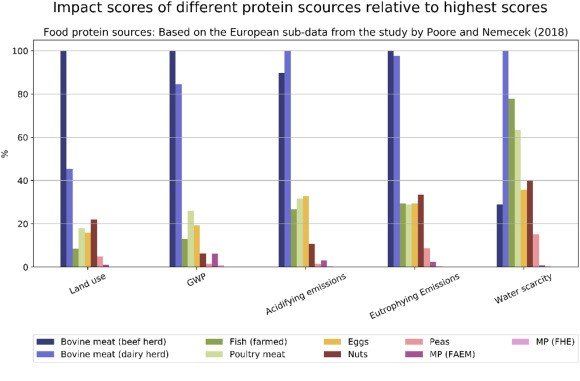
CULTIVATED MEAT
To produce 18% of the global calorie supply and 37% of the protein supply we use almost 80%
of all agricultural land for livestock and about
41% of total agricultural water
for its feed. Meat demand is expected to grow 70% by 2050 and the meat production chain (feed production, grazing, manure, farting and burping, slaughtering, processing and transport) causes about 65-70% of all emissions from the agriculture sector. Beef, the most commonly consumed ruminant meat requires 20 times more land and emitting 20 times more GHGs per gram of edible protein than common plant proteins, such as beans, peas and lentils.
Cultivated (or cellular) meat does not require breeding, feeding or slaughtering animals but the end product, meat, is the same.
In the below left illustration the production proces of cellular meat is compared to traditional or animal meat. In the figure below right the land and water use, GWP and particulate matter are compared for various meats and protein alternatives.
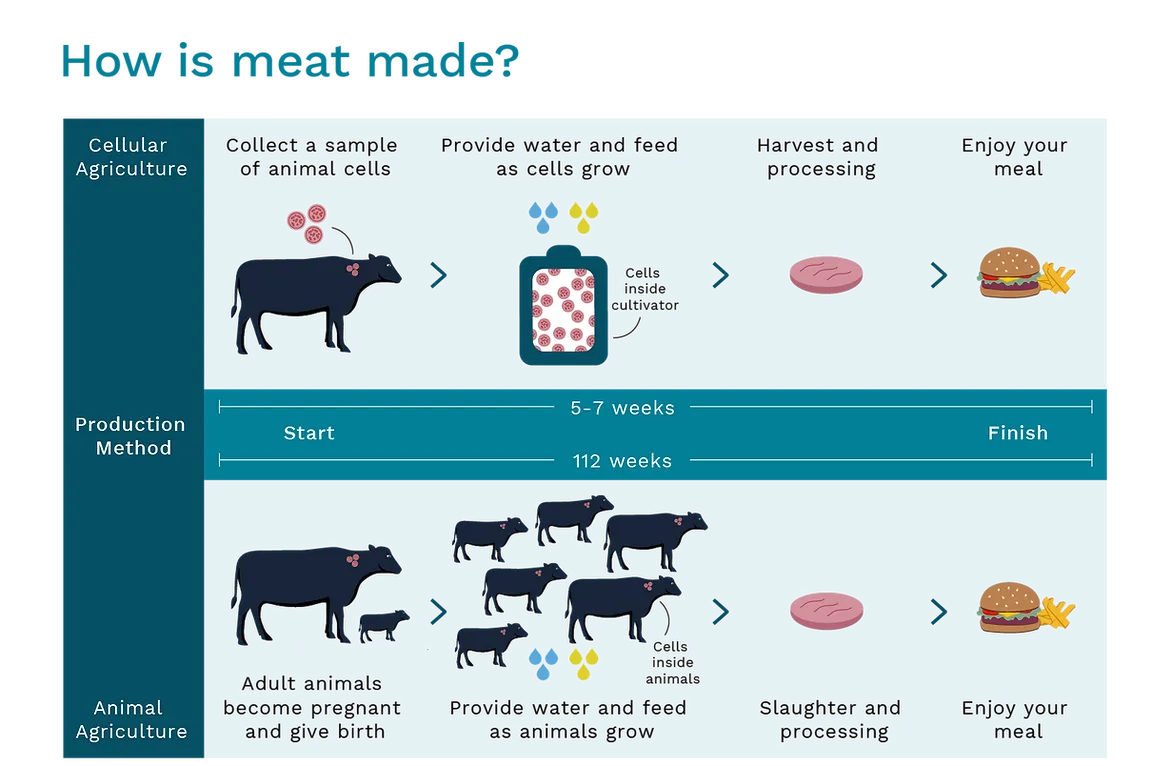
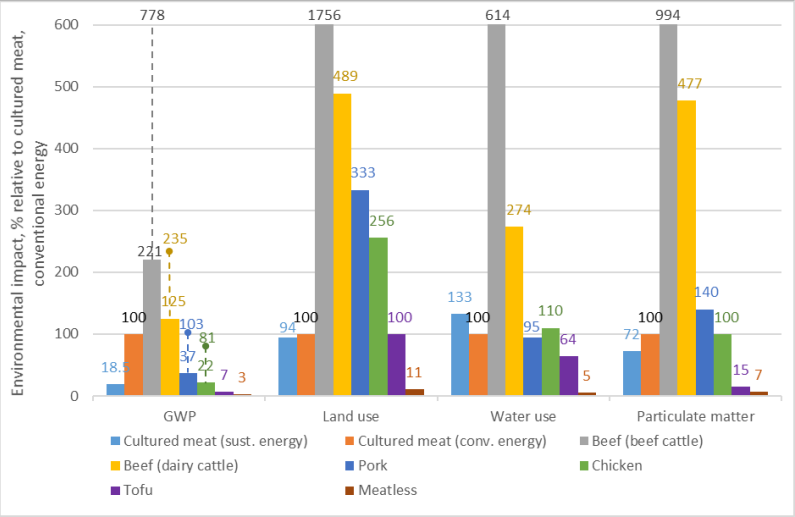
Cultivated, lab or reactor meat sounds unhealthy to many people, but the opposite is actually true as the process takes place in a controlled environment pollution and contamination entering the traditional meat chain can be avoided. The first step in
meat cultivation
is to obtain a sample of cells from an animal. Cultivators provide the living environment for cells. These cells are put in cultivators, also known as bioreactors, vessels that provide temperature-controlled, clean, and closed environments for cells to grow. Inside the animal, blood delivers the components necessary for cell life and growth: carbohydrates, amino acids, proteins, fats, vitamins, minerals, and growth factors this is now mimicked in the vessel using the same components.
Within a cultivator, structures (or scaffolds) provide a surface for the cells to mature into muscle and fat, and into the desired texture and form. Scaffolds help the cells grow into the desired meat product. A scaffold’s physical attributes (such as composition, function, stiffness, roughness, or porosity) can influence the characteristics of the final meat product. Growth media components can be obtained from plant and fungus extracts, or produced through (precision) fermentation.
So we can technically decimate land and other resources (except energy) use in our food systems by a factor 5-10 but this will require tens of thousands new biorefineries and greenhouses. Much of the world's fermentation capacity is already spoken for and new, more efficient greenhouses will also need to be built. So the transition of the food and land-use system is in the same situation as the
energy transition: It takes time and long-term investments to develop new supply chains and infrastructure and labor and capital are scarce. There is however a difference: we will run out of food and water faster than we run out of fossil fuels so we have less time to scale-up biorefinery capacity before food, water and climate driven conflicts and migration will escalate. Moreover, advanced food production, unlike decarbonization, will free the land needed for carbon sequestration to offset emissions from both the food and the energy system.
Countries' climate pledges include
almost 1.2 billion hectares (ha) of land prioritized for carbon sequestration
to offset emissions and preserve ecosystem services between 2022 and 2060. Of these 1.2 billion ha, 551 million are earmarked for restoring degraded lands, including agroforestry (combining crops with trees), reduced harvest and regenerating of degraded forests. Given that natural forests and grassland reduction still ongoing and an additional loss of around 450 million ha is projected these 551 million ha are well allocated.
The other 633 million ha are intended for establishing plantations and new areas devoted exclusively to forests. The question is how these hectares are use best to optimize sequestration and to halt deforestation. Deforestation happens to clear land for agriculture and mining or to collect timber, pulp and fuel wood. To be effective in the next 2 to 3 decades (the minimum time needed to sufficiently scale up non-carbon energy and advanced food capacity) any solution must deliver both optimal sequestration and a meaningful increase in deployable biomass to replace forestry products. The last not only as to reduce the need for deforestation but also to provide a viable business case for sequestration. Lets consider the options.
EXPANSION OF FOREST LAND
Tree planting (reforestation or afforestation) is often promoted and perceived as a logical solution for carbon sequestration and to compensate for deforestation, biodiversity and ecosystem losses and ongoing emissions. At first glance this makes sense but planting new forests
to compensate for the loss of natural forests is ineffective. Plantation forest are mostly monocultures that do little for biodiversity or to support local livelihoods and net carbon sequestration effects are absent or limited as they don't last until the lost carbon is (fully) recovered.
It takes a least a decade after planting before carbon retention and sequestration start happening and about 2 to 3 decades to become effective before it becomes effective. Forests need to have a permanence of around 100 years to become effective carbon stores and there is no guarantee they last that long.
Planting forests on abandoned land for harvesting purposes is only effective when harvested the Good way, i.e.
by thinning trees and forests at lower pace than their growth, once every dozen years starting 2 to 3 decades after planting. When done the Good way both below and above ground carbon stocks increase, as illustrated on the right.
New forests however don't grow just anywhere. The longer ago an area has been deforested the more difficult it is to establish new forests in that area. As there are many subsidies and/or emissions offset funds to collect for planting new trees, plantations often appear on lands that were recently forested. And as sustainable thinning results in lower yields and higher costs than clear cutting, clear cutting is the more common practice. Depending on the clearing frequency and whether forest residues are left, either aboveground carbon is lost, the Bad scenario, or both above and belowground carbon is lost, the Ugly scenario.
In the best case scenario expansion of forest land has a time lag in carbon sequestration and revenue of between 2-3 decades, a slow but steady increase of above and belowground carbon stocks and biodiversity and a constant revenue thereafter. In the worst case scenario it causes the immediate loss of both below and aboveground carbon and biodiversity, and reduces the sequestration capacity vis-a-vis the situation before the expansion permanently. That is not to say that reforestation and afforestation are to complex or tricky per se, but it is more often so than not, and its potential contribution to solving the interlinked problems of deforestation, food and water scarcity, biodiversity loss and rising atmospheric carbon levels in the next decades are marginal.
Preserving existing forests, expansion of (assisted) natural forest regeneration and agroforestry are far more effective and less costly, tricky or complex than reforestation and afforestation projects. To optimize carbon sequestration on the earmarked 633 million ha of non-forest and to halt deforestation we need an alternative, or complementary solution that is more efficient in time and less vulnerable to financial and climate pressure: carbon and energy farming.
CARBON AND ENERGY FARMING
Carbon and energy farming serves multiple purposes: carbon sequestration (above and below ground), soil protection and restoration, water regulation, increasing the total amount of accumulated carbon on earth and generating steady and frequent revenue streams to pay for it all. The most efficient plants for carbon sequestration are called energy crops as their high carbon efficiency makes them ideal candidates for replacing forest trees and fossil fuels as carbon neutral source for energy, but the same applies however to carbon for chemicals or construction materials or as combined source of CO2
and energy for indoor food production (see further below).
Energy crops come in many variaties each having its particular growth cycle, yields and climate and soil preference. But all have a number of characteristics in common that are best explained by using Miscanthus as example. Miscanthus has a growth cycle of about a year, regrows directly after harvesting and sequesters more carbon belowground (soil) and aboveground (plants) than newly planted trees, and is far less demanding and more climate resilient than either trees or food crops.
In the below figure the typical parameters of various energy crops and trees (wood) per hectare/year are shown, the higher the energy content the higher the carbon uptake per hectare. Energy crops are therefore highly suited for the production of renewable energy, bio-degradable chemicals and building materials to replace fossil and forest based carbon. The carbon efficiency and short growth cycle means that Miscanthus generates constant revenue streams while sequestration is only interrupted once every 15-30 years when its need to be replanted. That said, energy crops have more advantages.
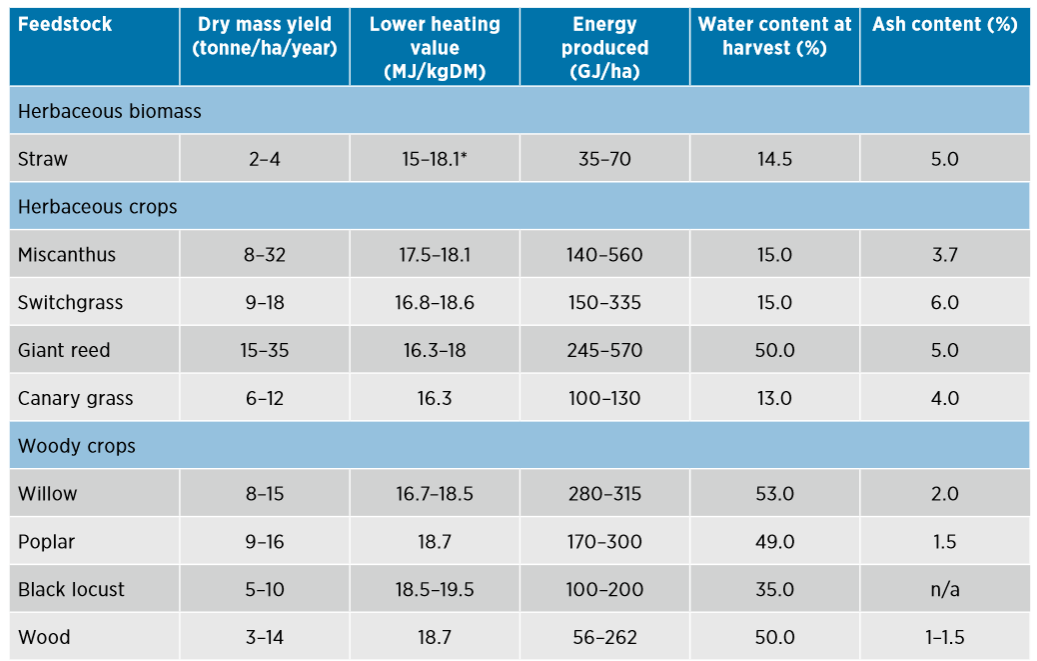
Miscanthus e.g. grows in very diverse conditions maintaining high yields, requires few cultivation handlings (from first year on it is (almost) only harvesting), and is very efficient in the use and sequestration of nutrients and water resources. Miscanthus stores part of the carbon, nutrients and water it sequesters during growth in and around its root systems. After harvesting it remobilizes the nutrients to the roots which will then be reused in the new growing season. This property is highly beneficial as it means the crop needs very little fertilization, improves soil quality, is efficiently feeding soil microorganisms and is more climate resilient than either trees or food crops. As Miscanthus is a perennial no tiling is required for 15-30 years.
Today approximately
1.8 billion hectares of suitable land
is available for energy crops. This land does not overlap with protected, forested, urban or food agricultural land as shown on the right. Planting the 633 million hectares designated for non-forest carbon sequestration with
the mean best performing energy crop
will cause about 850 million tonnes carbon to be sequestered annually below ground and almost 5 billion tonnes above ground, equaling 3.1 GtCO2eq, and 18.1 GtCO2eq respectively. After deduction of 10% of the above ground sequestration for on farm harvesting and maintenance this leaves net 19-19.5 GtCO2eq sequestration which is exactly in the middle of what is needed annually by 2030 for 1.5-2°C scenarios.
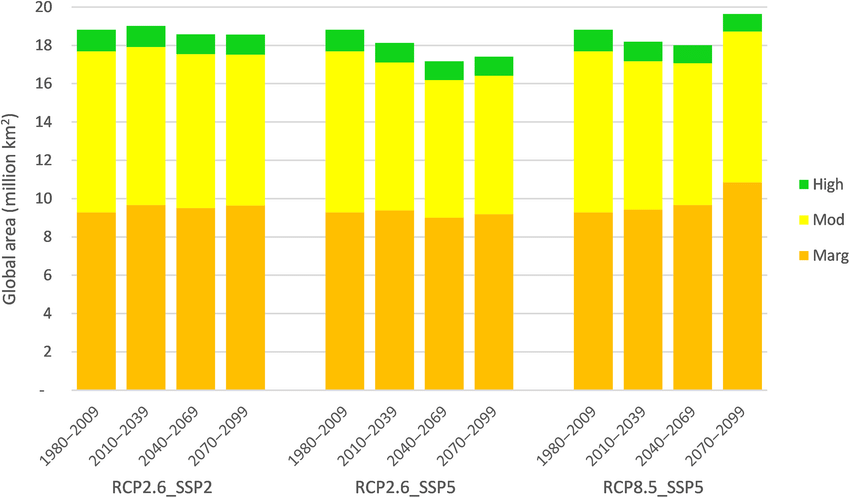
For 1.5-2°C scenarios we will have to limit emissions to 10-20 GtCO2eq by 2050, by when emissions are projected to have grown by 50%. So, all other things equal we would need to compensate 90-15 = 75 GtCO2eq in 2050.
At and average of 30 GtCO2eq per ha that would mean about 2.5 billion hectares of energy crops by 2050. The missing 700 million ha might well come from the 1.600 million ha of agricultural lands that are already losing productivity and will be abandoned land when food production is forced indoors. Establishing 80 million ha of energy crop plantations each year might seem a lot but the average annual change in land-use is about 70 million ha, so it is not too extravagant.
The Land Gap Report
and other publications have outlined the implications of increased crop land for crossing planetary boundaries resulting from tillage and the need for fertilizing, i.e. nitrogen and phosphorus. As perennial energy crops have to be replanted every 15-30 years and as nutrient management characteristics differ from those of food crops, nutrient losses from tillage and run off are limited. Moreover, CO2 sequestration will generally outweigh the effects from remaining run-offs on acidification and eutrophication.
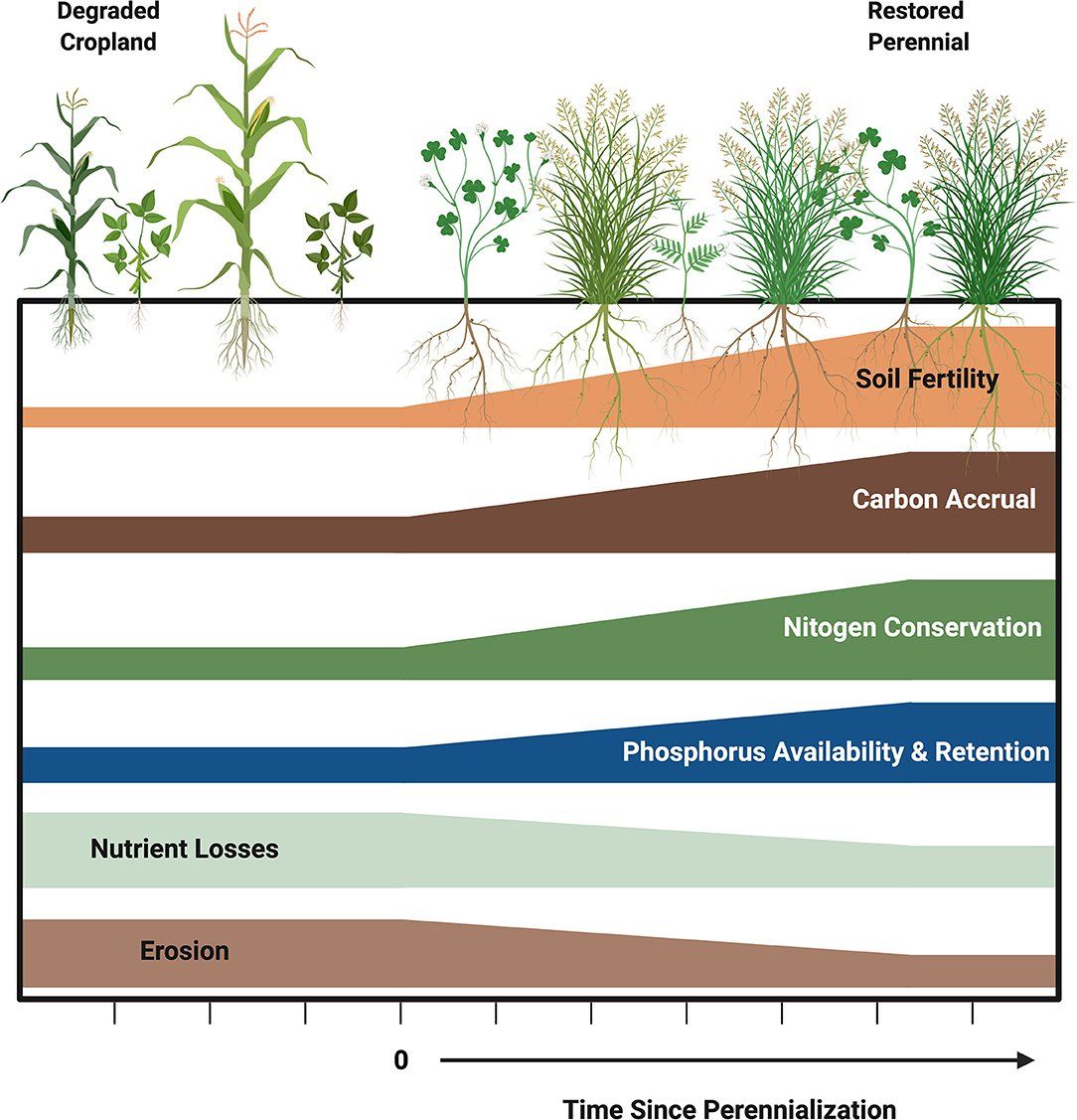
Miscanthus and other perennial energy crops, just like any other plant and tree need phosphorus and nitrogen. Most perennial energy crops however have deep root systems, about 3 to 8 times more extensive than annual crops, which they use for nutrients storage for later use. Compared to e.g. maize overal additional nutrients needs are
50% less on average. The root system also reduces nutrients run off, from either soil organic matter or added in fertilizer.
Overall carbon accrual, nitrogen conservation and phosphorus retention rates are high, as shown on the left. Perennialization therefore has substantial promise for restoring fertility to degraded croplands. Deforestation also results in nutrients run off and deployment of energy crop biomass as substitute for forest biomass, e.g. for building materials, fuels or electricity opens the way to a climate and environmental neutral food, feed, fuel and fiber supply. When that electricity is used for advanced food production it will reduce the land need for food, and when combined with carbon capture it will deliver carbon negative energy.
For 1.5-2°C scenarios we will have to limit emissions to 10-20 GtCO2eq by 2050, by when emissions are projected to have grown by 50%. So, all other things equal we would need to compensate 90-15 = 75 GtCO2eq in 2050.
At and average of 30 tCO2eq per ha that would mean about 2.5 billion hectares of energy crops by 2050. The missing 700 million ha might well come from the 1.600 million ha of agricultural lands that are already losing productivity and will be abandoned land when food production is forced indoors. Establishing 80 million ha of energy crop plantations each year might seem a lot but the average annual change in land-use is about 70 million ha, so it is not too extravagant.
CARBON AND ENERGY SUPPLY
Where forests need to remain standing to be beneficial for carbon sequestration, energy crops need to be harvested to keep up sequestration rates. Deploying 1 billion hectares for energy crops will deliver about 7.000 million tonnes, or 7 Gt of additional, consumable, renewable carbon or 260 EJ gross energy (about 45% of global primary energy demand). And as the above sequestration metrics are only valid when energy crops are actually harvested and deployed we have to find profitable deployment for them. How energy crops are best deployed; to replace fossil and forest carbon in transport, electricity, heat, chemicals (including fertilizers), or construction materials depends on developments in the technosphere: carbon capture and recycling, non-carbon energy scale-up, future energy conversion efficiencies and food technologies. The options are further discussed in the below sections.
ADVANCING SUSTAINABLE BIOENERGY DEVELOPMENT
New, advanced technologies make it possible to produce climate neutral fuels from non-forest and non-food energy crops. The benefits of cultivation and use of these energy crops for transport fuels and electricity goes beyond the benefits of reducing greenhouse gas emissions. Terrestrial energy crop cultivation and aquatic energy crop harvesting reverses land and water degradation, increases biodiversity and carbon sequestration and improves land fertility. We call this
Deep Green Biomass. Moreover, deploying these energy crops for the production of advanced biofuels will positively impact social-economic structures and energy independence and reduce the need for involuntary migration and deforestation: Deep Green Energy.
Deep Green Energy Partners works to accelerate deployment of deep green biomass for the production of advanced biofuels and biochemicals, to restore soil and water conditions and to optimize the overall ecological-economic effects of investments in the energy transition.
According to the 2022 IPCC report, when food security and environmental concerns are considered, bioenergy has the potential to produce 5-50EJ per year and 50-250EJ per year by 2050 for residues and dedicated biomass production systems, respectively. (250EJ per year is equivalent to around 40-45% of current global primary energy demand.) Food security, the main limiting factor and rapidly increased indoor food production is not included in the equation. Sustainable biomass supply limits are the second limiting factor, and demand is already approaching the supply limits of the most-used wastes and residues. In other words; we either need to find new sustainable biomass resources or bioenergy growth comes to a standstill.
When energy crops are deployed for electricity or heat generation the total GHG or CO2eq emissions (emissions - sequestration) are at par with wind and solar but comes with the potential positive ecosystem effects that wind and solar are lacking. Combined with carbon capture and sequestration (CCS) it offers the unique option to produce GHG negative heat, electricity and e-fuels like hydrogen (more sequestration than emissions). When deployed for advanced transport fuels it provides (close to) GHG neutral fuels.
Life cycle GHG emissions electricity
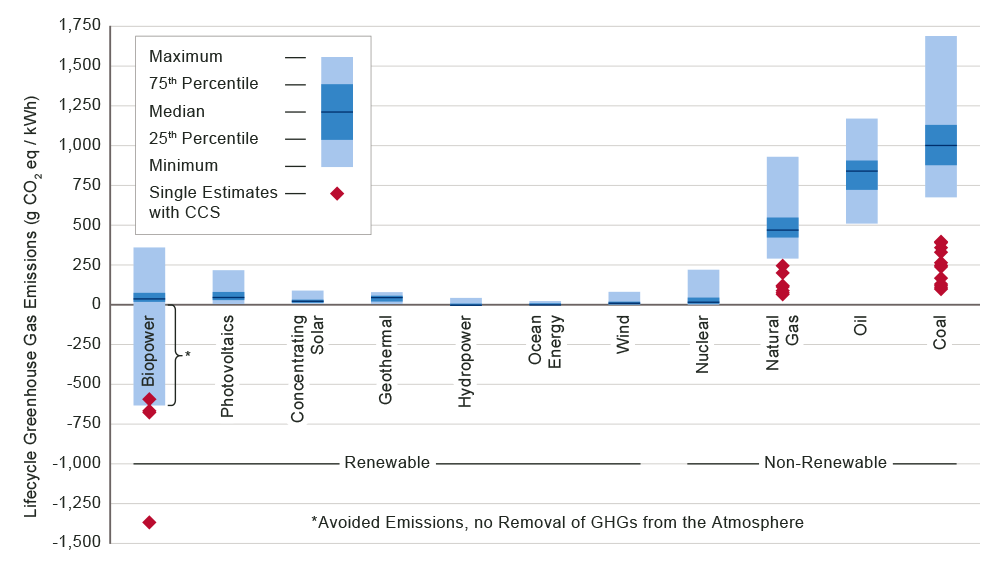
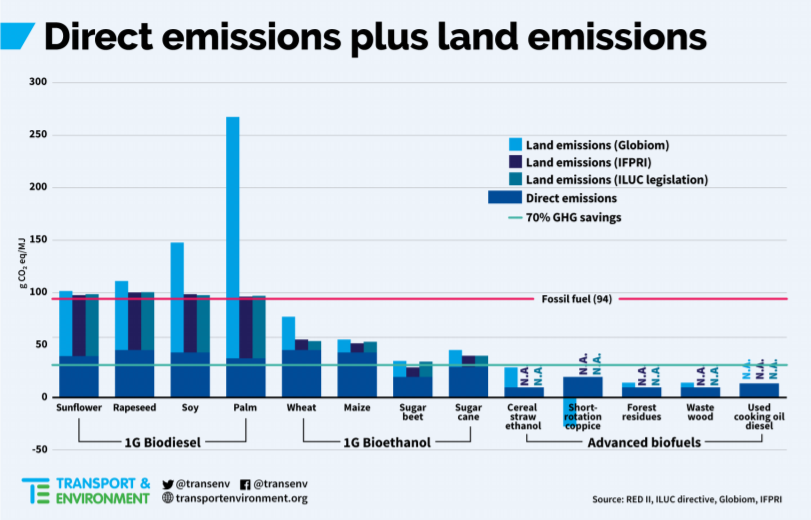
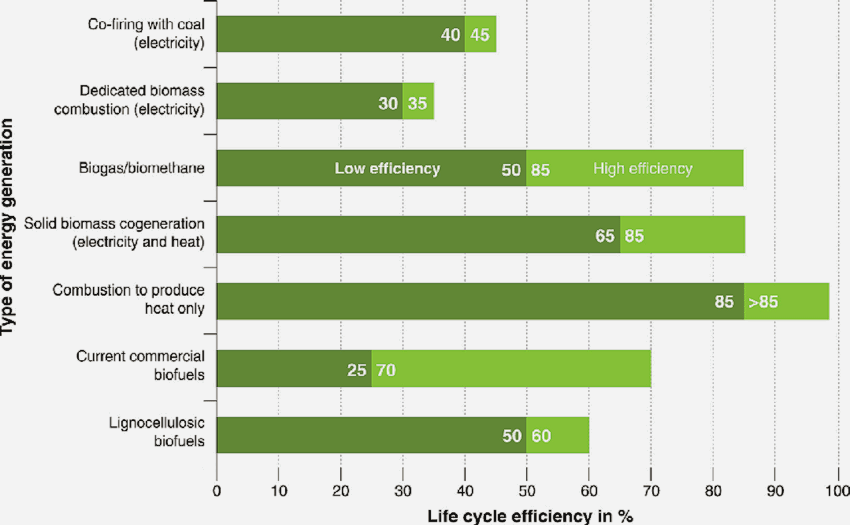
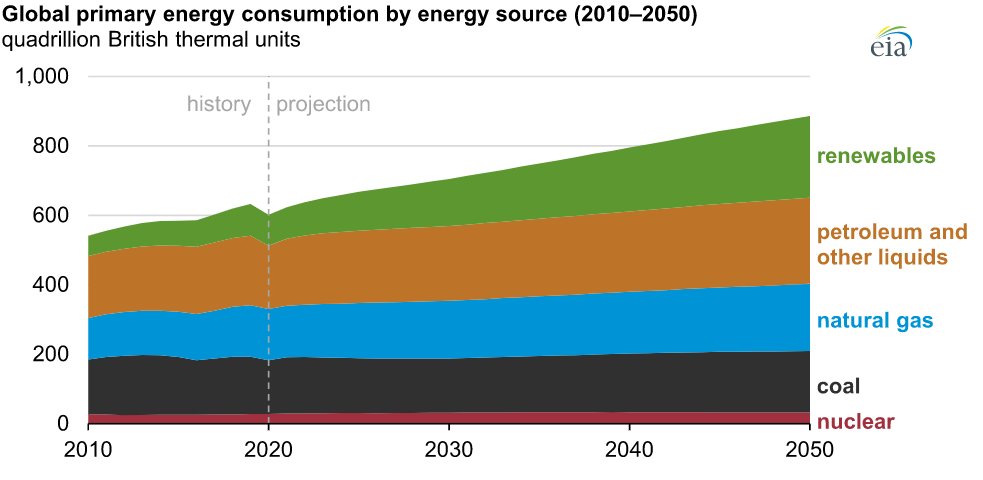
BECCS (option d) from energy crops instead of trees, delivers both carbon soil sequestration and climate neutral electricity, i.e. carbon negative energy. CCUS can be integrated in new power and industrial plants and retrofitted to existing plants that may
otherwise still be emitting 8 billion tonnes of CO2
in 2050 (option a), around one-quarter of today’s annual energy-sector emissions. DAC(S) is efficient for carbon capture when sufficient renewable energy is available.
Meaning that by using fossil energy its net effects are close to zero but when using renewable energy it can be highly effective.
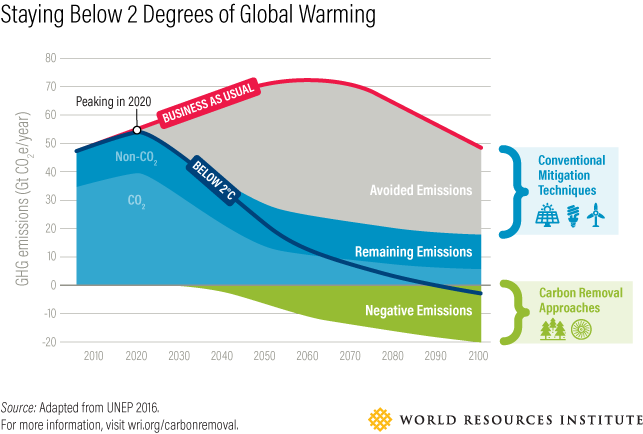
101 out of 116 of the IPCC scenarios
mitigating greenhouse gas emissions depend on using negative emissions technology, including DACS. Around 230 Mt of CO2
are currently used each year, mainly in direct use pathways in the fertiliser industry for urea manufacturing (~130 Mt) and for enhanced oil recovery (~80 Mt).
For 1.5°C scenarios projected carbon removals are in the order of 100–1000 GtCO2eq over the 21st century (IPCC, 2018). So the less emissions are avoided by increased low carbon-energy supply and improved agricultural practices, the more the need for carbon removal and negative emissions by natural or technical means increases.
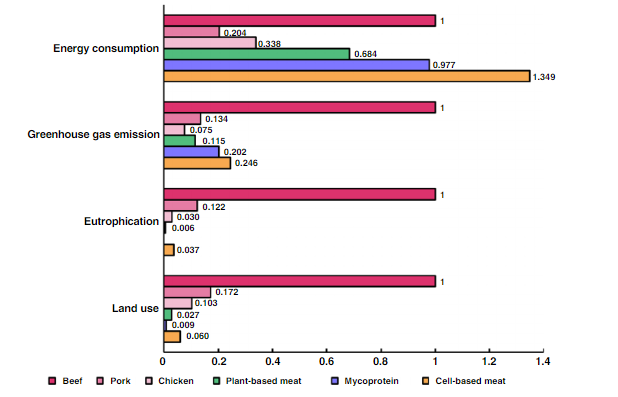
The current food systems use about
30% of globally available energy, and this energy accounts for about 30% of overall agri-food systems emissions as food systems still heavily dependent on fossil fuels. On average, 70% percent of the energy consumed by agri-food systems occurs after food leaves farms, in transportation, processing, packaging, shipping, storage, marketing, etc. New food systems will reduce overall supply chain energy (less weight, less cooling requirements, multiple times longer shelf-life, less packaging and less losses) in general as shown in the above sections. The 30% on farm energy is however difficult to electrify. But as indoor food production can be done from renewable electricity and heat/cooling instead, also part of the energy emissions from on farm production can be mitigated.
In a business as usual scenario, assuming that by 2050 food production and corresponding emissions will have grown by 50%, almost
75% of all arable land
and an even higher percentage of freshwater withdrawals would be needed for food production. As demand for meat and dairy from ruminants is expected to grow faster this percentage would even be higher. Food supply system emissions (including deforestation) will have grown from 24 GtCO2eq today to over
30 GtCO2eq instead of the 5 GtCO2eq needed for a 2C scenario, and that only if climatic conditions don't change. In other words: without moving food production into bio-refineries, and in particular dairy and meat production, the looming food, water, migration and climate crises are unavoidable.
To achieve 5 GTCO2eq emissions from agriculture in 2050, production would have to be reduced by 80%. Extrapolated to land, all other things equal, this would mean openfield food production would have to be concentrated on 1 billion hectares. Even we consider that
Just as openfield agriculture, indoor food productions requires carbon, nutrients, water, light and other energy/heat sources. All of these will have to be delivered to the bio-refineries and greenhouses from where the product is distributed to either end-users or for further processing. In the optimal situation bio-refineries and greenhouses would therefore be built near their clients (e.g. in or close to cities or regional hubs like breweries used to be) and the carbon and nutrient supply comes from organic waste streams (e.g. food and other bio-waste or waste water) or CO2 captured at power/heat plants, factories or refineries in the neighborhood while the energy/heath comes from these same plants and factories or from renewable sources. Thus we could have an (almost) climate neutral and resilient food system.
Cleaning large waste streams to food processing standards is happening but it will take time to become before technologies are steady and approved for human food applications.
urrent food systems use about 30 percent of globally available energy, and this energy accounts for about 30 percent of agri-food systems greenhouse gas emissions because food systems are heavily dependent on fossil fuels. 70% percent of the energy consumed by agri-food systems occurs after food leaves farms, in transportation, processing, packaging, shipping, storage, marketing, etc. So, the on farm emissions account for 3%
What's more, Indoor non-animal meat production could avoid part of today's annual deforestation, 5 million hectares of which 95% of this occurs in the tropics. It could also reduce the 1.75 billion tonnes of annual animal waste and reduces the resources needed for feed production including 75% of global maize production, a third of all grains, and two thirds of all soya, as well as 20% of freshwater withdrawals.
Nature based carbon capture can be temporary (e.g. plantation forests and food crops - carbon released after harvesting, consumption and soil tilling), lasting or (semi) permanent (natural forests that naturally renew) or permanent (bioenergy with technical carbon capture and storage, BECCS).
A global median yield of 16.3 tonnes dry matter per year (t/DM/ha/yr) of e.g. Miscanthus translates to 9 tonnes carbon or 33 tonnes CO2eq
per hectare of which about 1.2 tonnes C (or 4,4 tonnes CO2) is stored belowground in soils and root systems. Assuming 10% of the above ground carbon is needed for harvesting etc. the average net carbon sequestration per hectare would be 8.2 tonnes carbon, or 30 (25,7 + 4,4) tonnes CO2eq
per hectare. For 1.5-2°C scenarios we need to offset 2-3 GTCO2eq year on year in the next decade to compensate for surplus emissions which would take 70-100 million hectares of energy crop plantations each year in the next decade. This would be about 50% of all land available for energy crops today, actual land needs, yields and carbon sequestration are depending on the quality and soil carbon conditions of the land used. This might seem a lot but annually 70 million hectares change use, so it is not too extravagant.
Energy crops need to be harvested to maintain carbon sequestration rates so we need to useful deployment : food, feed, energy, chemicals and other materials. 1 billion hectares will deliver 7.000 million tonnes, or 7 Gt of additional, consumable, renewable carbon or 260 EJ gross energy. How these are best deployed, to replace fossil and forest carbon in transport, electricity, heat, chemicals, or construction materials depends on developments in the technosphere concerning carbon capture and recycling, non-carbon energy scale-up, future energy conversion efficiencies and food technologies. The options are further discusses below.
ADVANCING SUSTAINABLE BIOENERGY DEVELOPMENT
New, advanced technologies make it possible to produce climate neutral fuels from non-forest and non-food energy crops. The benefits of cultivation and use of these energy crops for transport fuels and electricity goes beyond the benefits of reducing greenhouse gas emissions. Terrestrial energy crop cultivation and aquatic energy crop harvesting reverses land and water degradation, increases biodiversity and carbon sequestration and improves land fertility. We call this
Deep Green Biomass. Moreover, deploying these energy crops for the production of advanced biofuels will positively impact social-economic structures and energy independence and reduce the need for involuntary migration and deforestation: Deep Green Energy.
Deep Green Energy Partners works to accelerate deployment of deep green biomass for the production of advanced biofuels and biochemicals, to restore soil and water conditions and to optimize the overall ecological-economic effects of investments in the energy transition.
New bio-technologies can produce food and feed from electricity and CO2,, energy crops can provide both. Modern biomass combined heat and power plants have energy conversion efficiencies of 70-80% and 90% lower NOx emissions
than natural gas boilers and engines. Energy crops can be a substitute for fossil fuels at an energy efficiency rate of 40%, and about 90% of all chemicals and wood for almost all construction materials. So deployment is no issue.
transition to food systems that can provide negative emissions (function as major carbon sink, instead of today being a major carbon source), and sustaining carbon sinks in natural ecosystems.ur food system is demanding and grows with t he world population: there is a 56% food gap, a 593 million-hectare land gap and an 11-gigaton GHG mitigation gap between the 2010 food system and what is needed by 2050. In 2022 about 1,561 million hectares
is used for food and feed crop production and in a business as usual scenario a projected additional
300 million hectares of forests will be replaced by food and feed crops. This implies that we would use about 1,900 million hectares for food production by 2050, well beyond the planetary safety mark for land-system change. It also implies no land availability for carbon sequestration or to increase renewable resource supply.
Food systems also drive various other elements past the safety thresholds. Agriculture uses 70% of global freshwater withdrawals (Green Water boundaries), causes 80% of deforestation (Biosphere Integrity), 78% of global ocean and freshwater eutrophication (fertilizers: P+N cause Ocean and Fresh Water acidification), about 40% of all emissions(climate change) and most of all biodiversity losses. Notwithstanding considerable efforts it has proven difficult to change the self-destructive character of agricultural systems as increasing production requires more land, water, fertilizers and animals.
Deforestation causes about 8 GTCO2eq annually. Intensive agriculture is the largest cause of soil erosion and increased soil carbon emissions which will increase rapidly once permafrost thaw set in. Once global warming reached 1.5-2°C an estimated 15-29 GtCO2 (25%-50% of today's emissions) will be released annually on average by soils. By than climatic conditions will gradually prohibit agriculture and livestock grazing in an increasing part of the world and climate feedback loops will gather strength. So we have to fundamentally change our food system
Increasing land for agricultural use presents problems other than just the risk of increasing competition for land. As agricultural land expands, it risks destabilizing vital ecosystems. Food production scenarios project global cropland area to range between 1,050 million ha and 2,110 million ha in 2050. Middle of the road 1.5°C scenarios project land demand for bioenergy to range from 100 to 800 million ha by 2050. Recent assessments however suggest that a threshold for sustainable global cropland use is likely to be around 1,100 - 1,500 million ha.
The land use sector (agriculture and forestry) is expected to contribute 20–400 Gt CO2 of additional removals between 2020 and 2100 in the IPCC 2022 scenarios. Maintaining or increasing terrestrial carbon stocks while meeting growing food demands will require increasing global land-use efficiency in terms of both storing carbon and producing food in a finite global land area.
New food technologies are many times more time, land, water and nutrients efficient and can produce more healthy proteins, carbs, vitamines, meats and dairy from CO2 and electricity than cows, pigs, fish, soy plants or cereal crops. Other new bio- and carbon technologies enable the conversion of bio-carbon and captured carbon to clean burning fuels, biodegradable chemicals, electricity and many construction materials that can to a high extend be integrated in existing production and supply chains.
will thus by us ''climate time" and provide us with the renewable resources to built out the infrastructure for technical carbon capture, non-carbon based energy supply, non-land based food systems and to replace fossil fuels and forest trees as carbon source. Natural carbon capture is the only only meaningful option we have left to reduce emissions in the shortterm and stay as close to 2°C as possible.
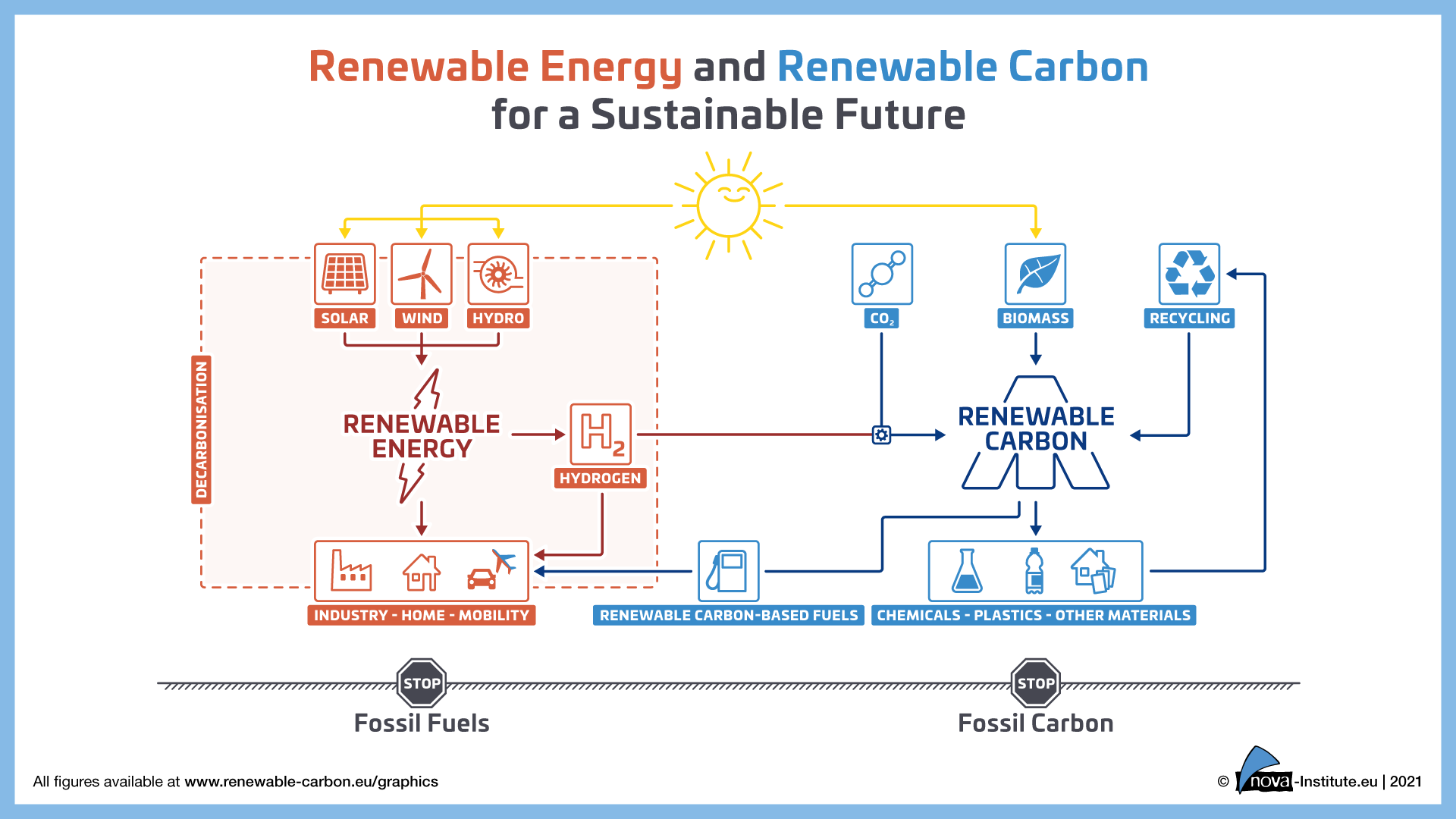
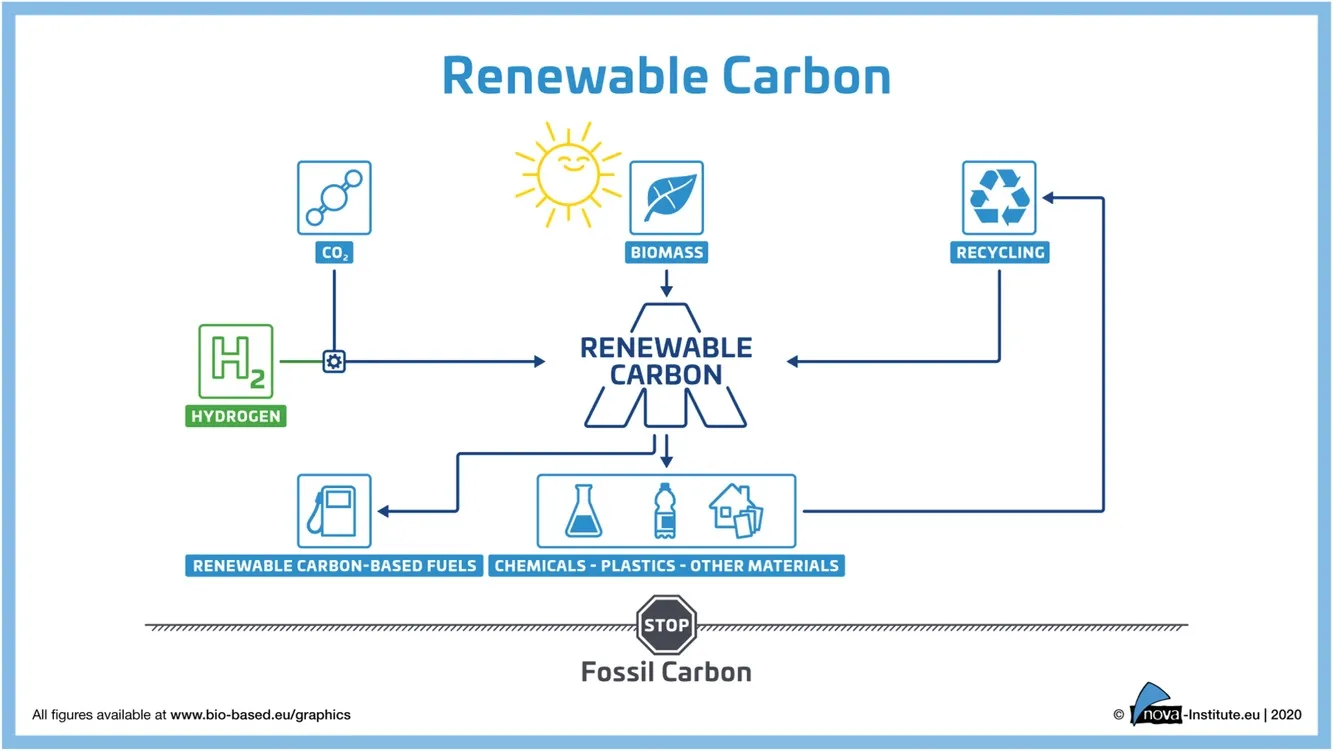
When energy crops are deployed for electricity or heat generation the total GHG or CO2eq emissions (emissions - sequestration) are at par with wind and solar but comes with the potential positive ecosystem effects that wind and solar are lacking. Combined with carbon capture and sequestration (CCS) it offers the unique option to produce GHG negative heat, electricity and e-fuels like hydrogen (more sequestration than emissions). When deployed for advanced transport fuels it provides (close to) GHG neutral fuels.
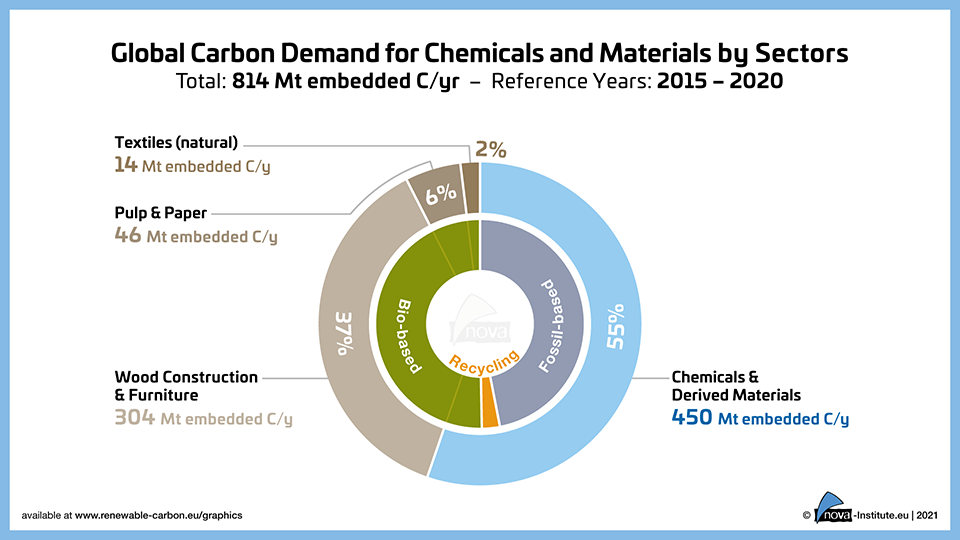
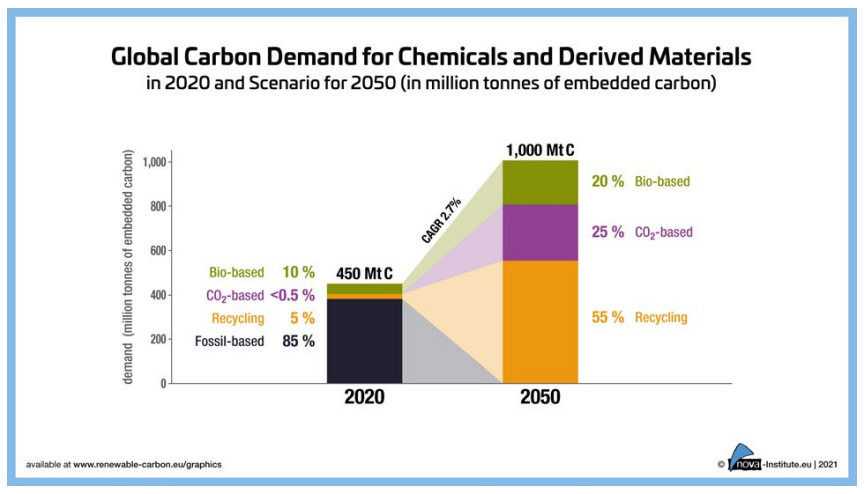
If historical operating patterns are maintained,33 and without additional abatement,34 estimated cumulative future CO2emissions from existing fossil fuel infrastructure, the majority of which is in the power sector, would, from 2018 until the endof its lifetime, amount to 660 [460–890] GtCO2. They would amount to 850 [600–1100] GtCO2 when unabated emissions fromcurrently planned infrastructure in the power sector is included. These estimates compare with cumulative global net CO2emissions from all sectors of 510 [330–710] GtCO2 until the time of reaching net zero CO2 emissions35 in pathways that limitwarming to 1.5°C (>50%) with no or limited overshoot, and 890 [640–1160] GtCO2 in pathways that limit warming to 2°C(>67%). (high confidence) (Table SPM.2) {2.7, Figure 2.26, Figure TS.8}
According to the 2022 IPCC report, when food security and environmental concerns are considered, bioenergy has the potential to produce 5-50EJ per year and 50-250EJ per year by 2050 for residues and dedicated biomass production systems, respectively. (250EJ per year is equivalent to around 40-45% of current global primary energy demand.)
When energy crops are deployed for electricity or heat generation the total GHG or CO2eq emissions (emissions - sequestration) are at par with wind and solar but comes with the potential positive ecosystem effects that wind and solar are lacking. Combined with carbon capture and sequestration (CCS) it offers the unique option to produce GHG negative heat, electricity and e-fuels like hydrogen (more sequestration than emissions). When deployed for advanced transport fuels it provides (close to) GHG neutral fuels.
Until the sum of anthropognic and nature based GHG fluxes between Earth and the atmosphere reaches net zero global temperatures keep rising. Temperatures will only only come down once this sum becomes net negative. Most countries have committed to net-zero emission targets by the second half of this century meaning that any GHG emissions after around 2030 and until net-zero is reached will have to be removed to keep global warming below 1.5°C.
When energy crops are deployed for electricity or heat generation the total GHG or CO2eq emissions (emissions - sequestration) are at par with wind and solar but comes with the potential positive ecosystem effects that wind and solar are lacking. Combined with carbon capture and sequestration (CCS) it offers the unique option to produce GHG negative heat, electricity and e-fuels like hydrogen (more sequestration than emissions). When deployed for advanced transport fuels it provides (close to) GHG neutral fuels.
Life cycle GHG emissions electricity
Terestrial NPP can also be incraesed by microbial growth. Autotrophic microorganisms can assimilate CO2
directly as a source of carbon (C) to grow. Similar to plants, they fix atmospheric carbon (C) through photosynthesis for their own growth and divide. Heterotrophic microorganisms can only assimilate the organic C needed for their growth that has already been synthesized (“fixed”) from CO2 by e.g. plants or autotrophic microorganisms or found in methane or acids. Microorganisms use carbon to produce different substances ranging from methane to proteïnes, vitamins, lipids and more. Microorganisms can also be cultivated in controlled, closed environments like fermentation tanks.
The autotrophic microorganisms in global terrestrial soils capture around
3.6 Gt carbon each year, which corresponds to around 6% of the net primary production of terrestrial vegetation. Soil vegetation cover, carbon and moisture are the two main factors that increase soil microbial mass, so by effectively increasing soil carbon by energy crops, which also increase soil moisture, microbial soil mass increases as well. Energy crops and microbes are also found in aquatic biosystems but
increase of aquatic energy crops and microbes has different, and often negative consequences for both ecosystems and emissions.
When CO2 dissolves in water due to natural exchange with athmosphere, it forms carbonic acid and as more CO2 is taken up by water, the pH decreases, moving towards a less alkaline and therefore more acidic state. The acidification of ocean water leads to the growth of algae that get nutrients in the form of acidity dissolved in water. Algae in turn prevent sunlight from entering the underwater surface hampering photosynthesis by aquatic plants due to lack of sunlight. Aquatic plants and animals need both proper pH balance and various minerals and other compounds to grow and survive. The decay of aquatic energy crops and fertilizer run off (eutrophication) provides the additional carbon, nitrogen and other nutrients source for algae growth. Essentially, acidification and algae growth are disrupting the nutrients supply for all other aquatic life and cause methane emissions from lakes, pools and stagnant rivers; acidification is therefore often called climate change's evil twin. Increasing terrestrial carbon sequestration results in less water acidification.
By 2050 we need 50% more food. Extreme weather events, pollution, water scarcity and warmer climatic conditions result in crop failures and shortage of yields, reduction in quality, increased pests and diseases, i.e a decline in cereals, vegetables, fruits, and open field livestock production. So we have a problem that can only be solved by moving food production from open field to indoors:(vertical) greenhouses and biorefineries. Indoor food production of proteins, carbohydrates, fats and other food and feed components is not only climate independent but also multiple times more efficient than open field production and thus for increasing edible NPP.
Biorefinery food production, microbial-precision fermentation (or MP) and cultured (or cellular) meats, not only increases NPP but also reduces, eutrophication, water, energy use and emissions. Actual savings depend on technology, end product and energy source as shown below. (Vertical) greenhouse farming requires more energy, but all three indoor food options use a fraction of the land and water compared to open field farmed counterparts (except for cultured meat compared to chicken).
The current structure of the food system lies at the center of the nexus of most global problems, stretching from poverty to environmental degradation. The increase in food production needed to meet the anticipated demands of the near future cannot be achieved by extrapolating current trends in production and consumption. Many efforts and programs have already been directed at more sustainable agricultural practices but although some of these bear fruit, results are insufficient to change the character and impacts of our food systems. Yield increases are not currently on track to meet projected increases in demand and climate change will not improve that situation. Improving future food security will require a decoupling of food production from land, water, emissions, eutrophication and climatic conditions.
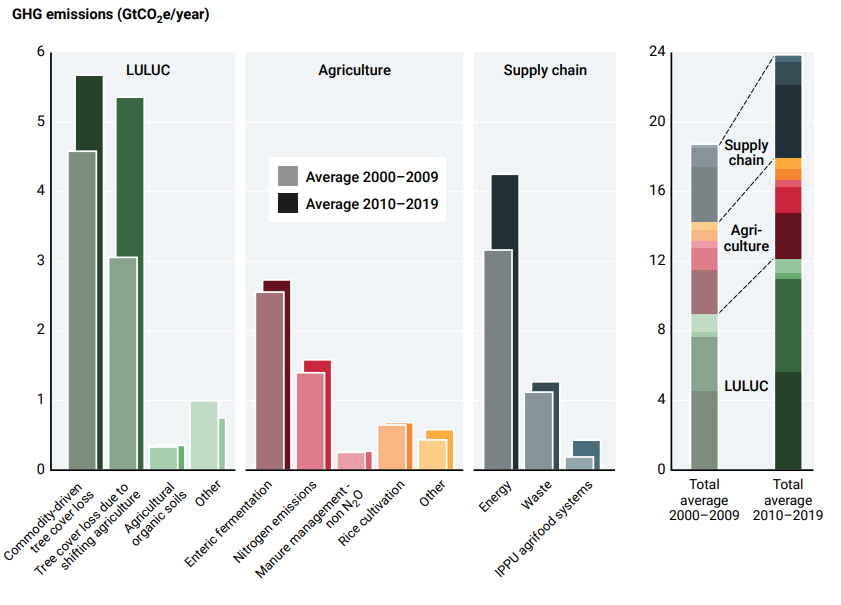
By 2050 we need 50% more food. Extreme weather events, pollution, water scarcity and warmer climatic conditions result in crop failures and shortage of yields, reduction in quality, increased pests and diseases, i.e a decline in cereals, vegetables, fruits, and open field livestock production. So we have a problem that can only be solved by moving food production from open field to indoors:(vertical) greenhouses and biorefineries. Indoor food production of proteins, carbohydrates, fats and other food and feed components is not only climate independent but also multiple times more efficient than open field production and thus for increasing edible NPP.
Biorefinery food production, microbial-precision fermentation (or MP) and cultured (or cellular) meats, not only increases NPP but also reduces, eutrophication, water, energy use and emissions. Actual savings depend on technology, end product and energy source as shown below. (Vertical) greenhouse farming requires more energy, but all three indoor food options use a fraction of the land and water compared to open field farmed counterparts (except for cultured meat compared to chicken).
Electricity, heat, CO2 and nutrients form the ingredients that feed the organismes in indoor food production, all of these can be provided by energy crops. Most of that land is still suitable for energy crops if it is not left to fall prey to desertification.
When adding up the carbon-containing methane, carbon dioxide and HFC/PFC, it becomes evident that approximately 92% of the GHGs contain carbon. 89% of CO2 emissions (i.e. 36.76 Gt CO2) are from fossil fuels, and at least one third of human-induced methane emissions (i.e. 3.3 Gt CO2eq) are also derived from fossil fuels. In total, roughly 40.1 of 55.6 Gt CO2eq or 72% of all GHG emissions were based on fossil carbon.
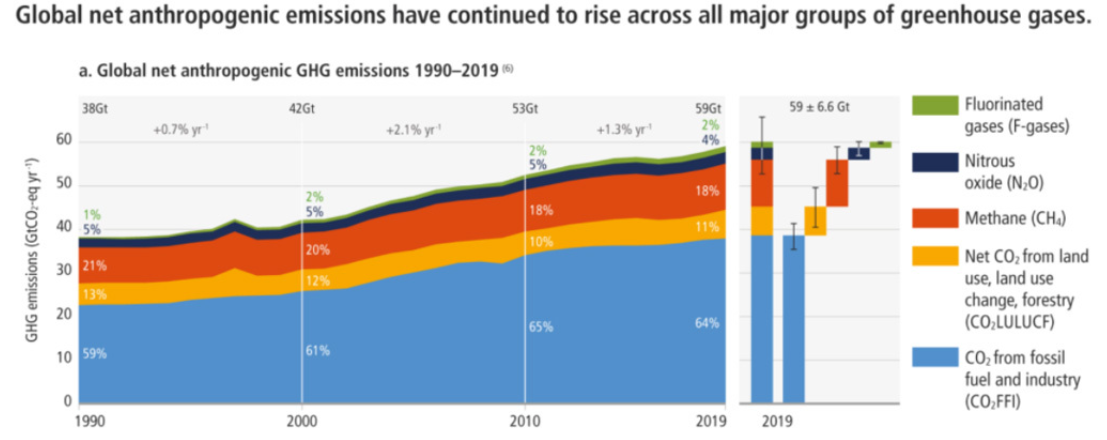
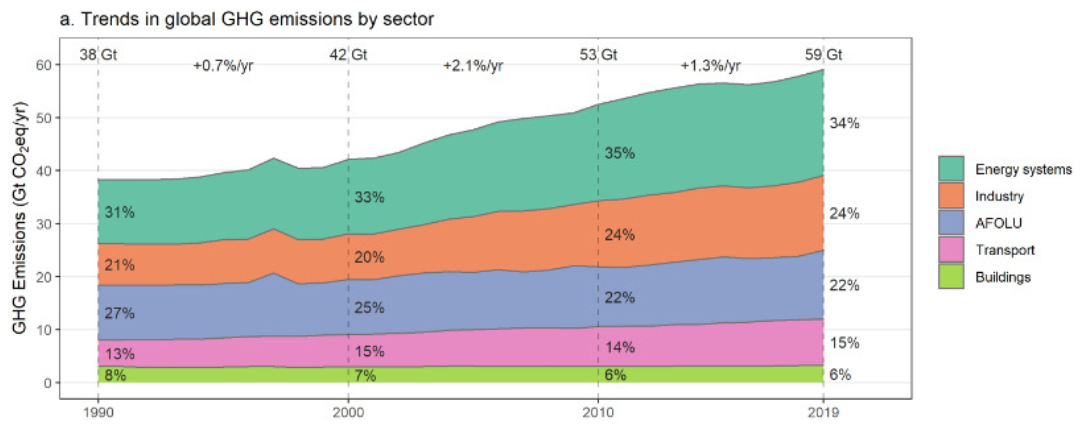
When energy crops are deployed for electricity or heat generation the total GHG or CO2eq emissions (emissions - sequestration) are at par with wind and solar but comes with the potential positive ecosystem effects that wind and solar are lacking. Combined with carbon capture and sequestration (CCS) it offers the unique option to produce GHG negative heat, electricity and e-fuels like hydrogen (more sequestration than emissions). When deployed for advanced transport fuels it provides (close to) GHG neutral fuels.
Life cycle GHG emissions electricity
the whole chemical and material sector such as plastics or detergents as well as wood inconstruction, the situation is different, as t hese products are based on carbon which cannot besubstituted or decarbonised. The carbon is embedded in these products
Of the total fossil carbon sourced today, about 85% is used for energy and 10-15% for chemicals including plastics. Carbon demand demand for chemicals is expected to more than double by 2050. For most primary petrochemical industries, roughly 70% of their carbon footprint originates from the carbon embedded in the molecules and whichdefined renewable carbon as coming from the biosphere, atmosphere or technosphere – butnot from the geosphere. This includes bioeconomy ((re)grown), carbon capture utilisation ((re)captured) and recycling ((re)cycled) For The essential link between the circular climate neutral economy, the world's economies, supply and ecosystems and the Earth's cycles is carbon. We have built our economies, infrastructures and the world order on carbon, which is why decarbonization takes (too) much time and is unaffordable to much of the world. The world as it is, simply needs more carbon and will satisfy that demand to the maximum extend. A circular, climate neutral economy therefore starts with a circular carbon economy.
Around 1.6 billion hectares of agricultural land (a third of all land used for agriculture) shows a persistent decline in primary productivity due to intensive grazing and crop cultivation. Between 2010-2020 about 12 million hectares of arable land were lost annually in this trajectory another 350 million hectares will be lost by 2050, excluding the losses from climate change. When all urban areas, food agricultural land, forests and protected zones are excluded and potential overlaps with degrading agriculture lands are eliminated about 0.5-0.6 billion hectares of high to moderate suitable land are available for energy crops today.
The cycle starts with increasing the volumes of sustainable biomass by energy crops and microbes, i.e miscanthus, fungi bacteria and algae to gradually replace fossil fuels,
food crops and cows. This biomass is processed by modern bio and chemical technologies, e.g. advanced biofuels for transport, carbon and nitrogen capture for electricity and heat, acellular, cellular
and greenhouse farming for food. This combination will make most of our supply chains climate neutral and climate change resilient. Moreover, it will help solve the problems of land depletion and erosion
and water contamination and evaporation and can eliminate the need for fossil fuels or trees in the production of chemicals and construction materials.
So there are at least about 1 billion hectares of high and moderate land for energy crops available and probably between 50%-100% more if we include marginally suited lands and lands no longer suitable for food production due to climate change by 2050. Using the best mean performing energy crop Miscanthus as example the annual average carbon sequestration would be 9 tonnes per hectare, 7.8 in aboveg round and 1.2 below ground. This equals 33 tonnes CO2eq per hectare. Assuming 10% of the above ground carbon is needed on for harvesting etc. the average net carbon sequestration per hectare would be 9.2 tonnes carbon, or 30 tonnes CO2eq per hectare. Planting 1.1 billion hectares with Miscanthus on land that is, or will become a net emission source would sequester net about 33 Gt CO2
from the atmosphere, the same 33 Gt of CO2 that was emitted as a result of combusting coal, oil and natural gas in 2019.
The same 1.1
billion hectares of Miscanthus would produce 16,3 Gt of dry biomass material that contains 17,6 MJ per tonne or 260 EJ gross energy (258 billion MJ) in total .
produce 17.6 (MJ/Dt) x 16,3 t/ha = 286,88 GJ/ha X 0.5 billion = 143, 44 billion GJ = 143 ,4 EJ. Total global consumption = 450 EJ. 143 x 0.4 = 57 EJ. 2 billion hectares = 228 EJ = 40% of all arable land
Today's total global net energy consumption is about 415 EJ. Heat and electricity represent about 51% respectively 17% of all energy consumption, 292 EJ, of which about 28% comes from renewable sources meaning that we would need another 210 EJ from renewable sources to have a fully carbon neutral heat and power supply. The energy conversion efficiency of energy crops to electricity and heat in modern combined in modern combined heat and power system (CHP) of different sizes 70-80% and for refitted coal plants about 65%. If we assume an average efficiency of 70% this would require 300 EJ of energy crops or about 75 million hectares more.
Transport fuels account for about 32% of all energy demand emissions, the share of renewables in transport is about 4%, the conversion efficiency to advanced biofuels for transport is about 40%. about 150 EJ x 2.5 = 375 EJ from energy crops.
In a circular climate neutral economy all biological and technical nutrients (or materials) as well as all carbon, nitrogen, water and other gases are recycled and any losses and additional materials come from renewable sources. These renewable resources must be substantial as, even when we could recycle all we use we would still need around 80% more material resources to meet future demand. Moreover, all recycling, harvesting (biomass, water, wind, solar) cause additional emissions, biodiversity loss and waste for which we would also have to compensate.
The essential link between the circular climate neutral economy, the world's economies, supply and ecosystems and the Earth's cycles is carbon. We have built our economies, infrastructures and the world order on carbon, which is why decarbonization takes (too) much time and is unaffordable to much of the world. The world as it is, simply needs more carbon and will satisfy that demand to the maximum extend. A circular, climate neutral economy therefore starts with a circular carbon economy.
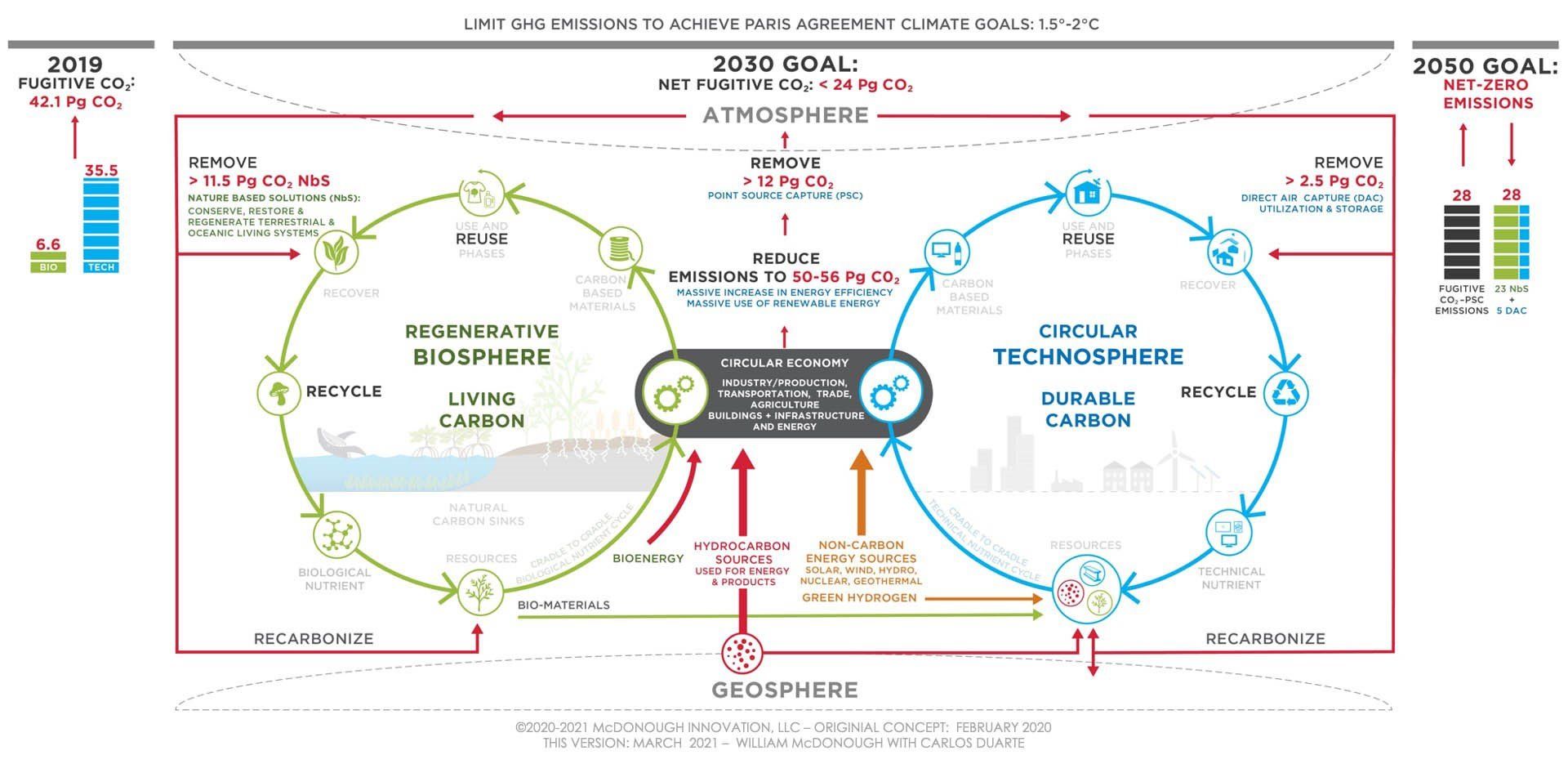
Life cycle GHG emissions electricity
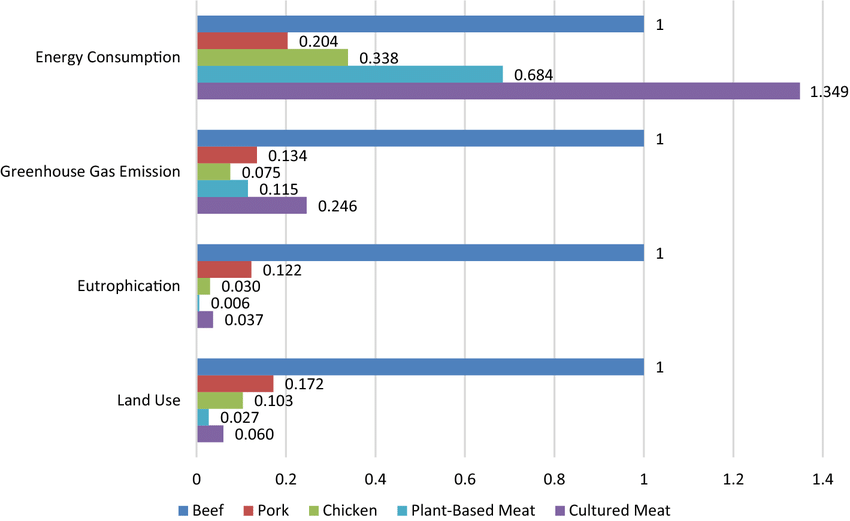
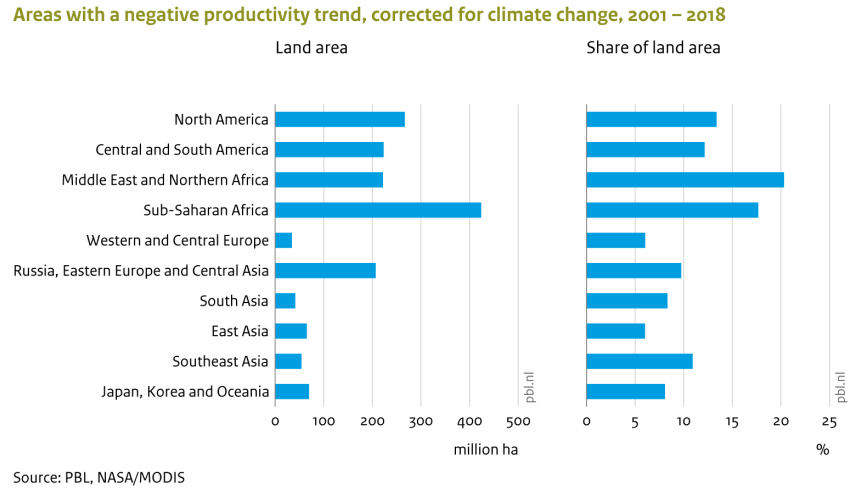
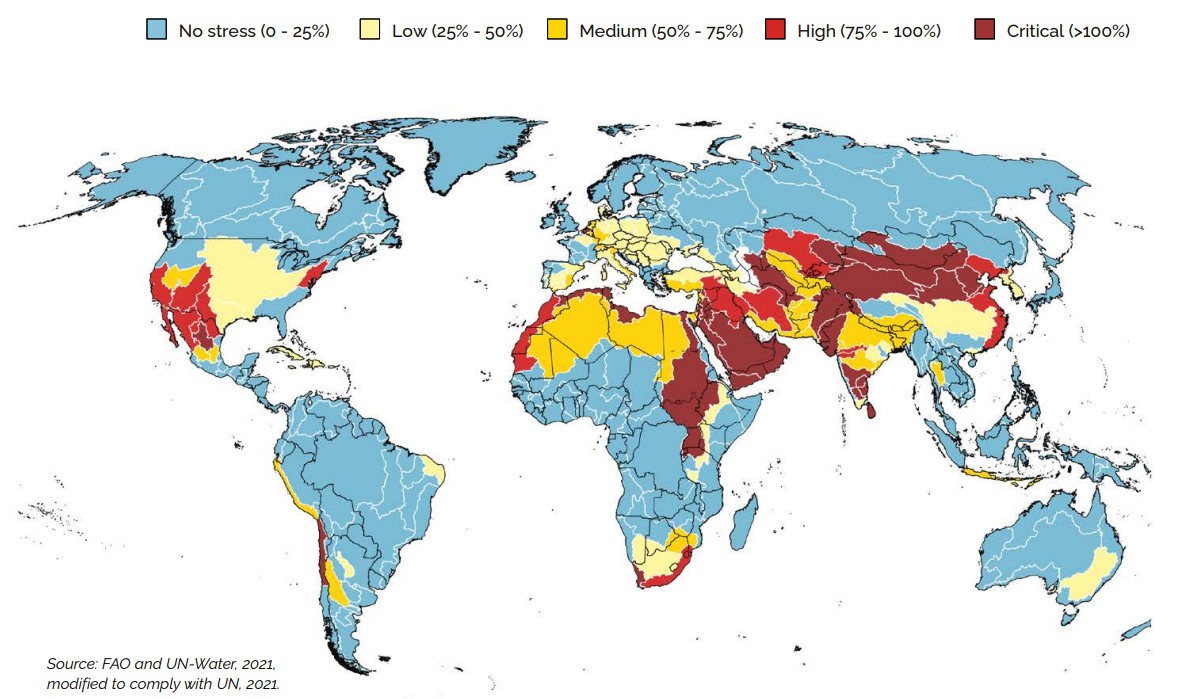
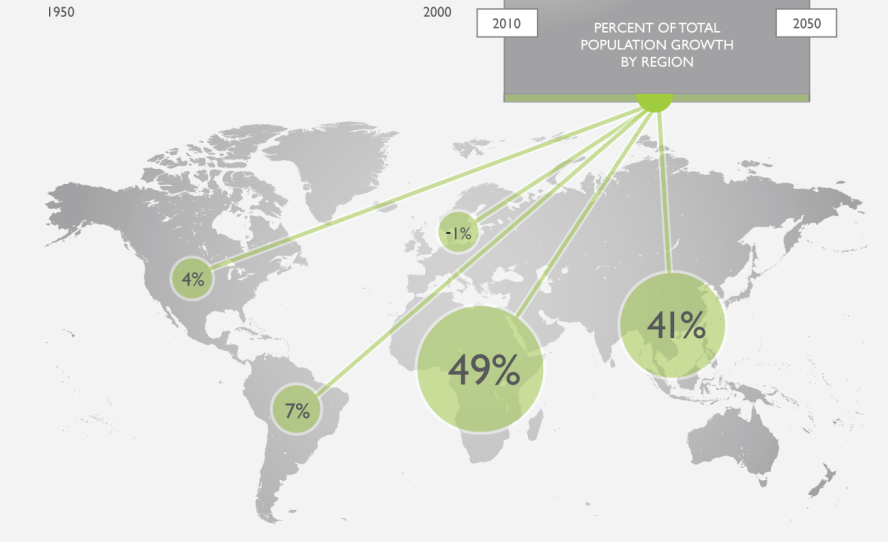
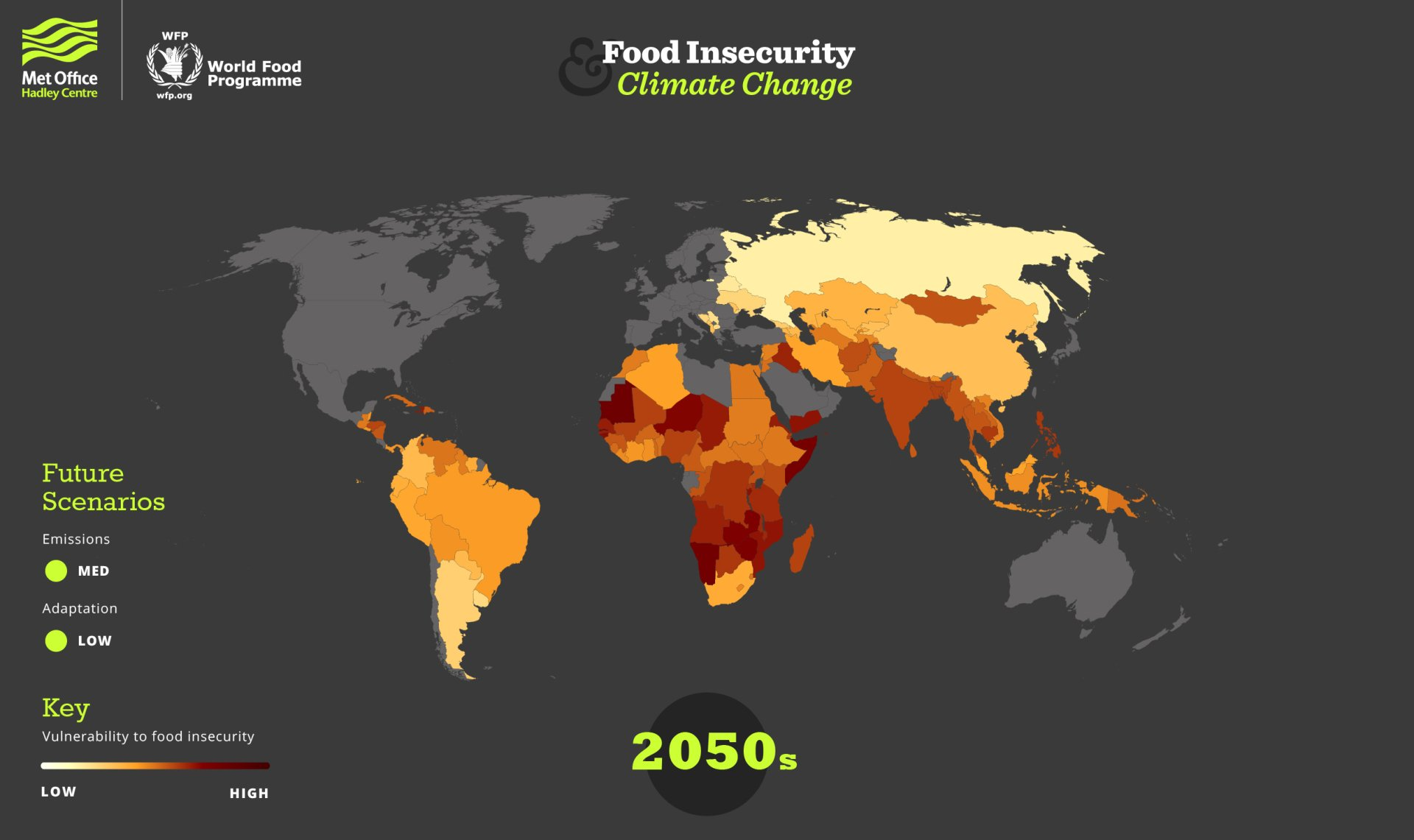
ADVANCING SUSTAINABLE BIOENERGY DEVELOPMENT
New, advanced technologies make it possible to produce climate neutral fuels from non-forest and non-food energy crops. The benefits of cultivation and use of these energy crops for transport fuels and electricity goes beyond the benefits of reducing greenhouse gas emissions. Terrestrial energy crop cultivation and aquatic energy crop harvesting reverses land and water degradation, increases biodiversity and carbon sequestration and improves land fertility. We call this
Deep Green Biomass. Moreover, deploying these energy crops for the production of advanced biofuels will positively impact social-economic structures and energy independence and reduce the need for involuntary migration and deforestation: Deep Green Energy.
Deep Green Energy Partners works to accelerate deployment of deep green biomass for the production of advanced biofuels and biochemicals, to restore soil and water conditions and to optimize the overall ecological-economic effects of investments in the energy transition.
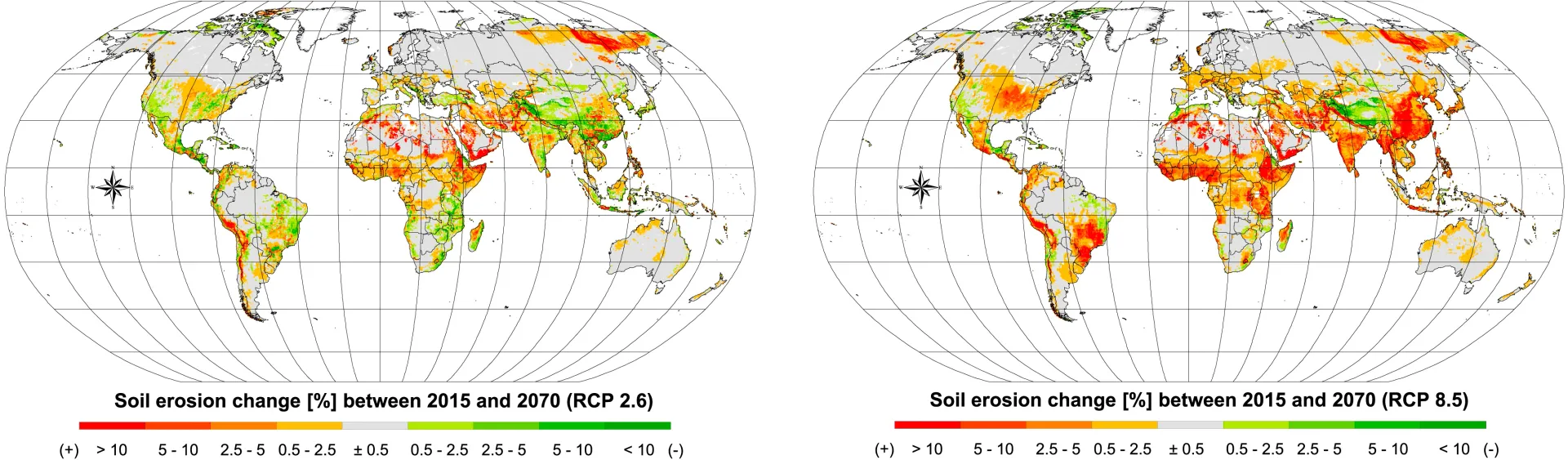
Today's reality is a different one:
70% more virgin materials are extracted annually than what the Earth can safely replenish
and overall material consumption will have almost doubled by 2050, we recycle 8.5% of what we use, use more fossil fuels and produce more emissions year on year, and the global warming trajectory is set for for
1.5.°C by 2030, 2°C by 2050
and well above
3°C by 2100. Even when all confirmed policies and actions become reality we still have a greenhouse gas surplus of 19-23 Gigtonnes CO2
equivalent (GtCO2eq). And due to the interlinkage of supply systems and their linkage with climate change, water, land and food systems will deteriorate under the combined pressure in particular in the regions of the world that are both hardest hit by climate change and see the largest increase in population.
ADVANCING SUSTAINABLE BIOENERGY DEVELOPMENT
New, advanced technologies make it possible to produce climate neutral fuels from non-forest and non-food energy crops. The benefits of cultivation and use of these energy crops for transport fuels and electricity goes beyond the benefits of reducing greenhouse gas emissions. Terrestrial energy crop cultivation and aquatic energy crop harvesting reverses land and water degradation, increases biodiversity and carbon sequestration and improves land fertility. We call this
Deep Green Biomass. Moreover, deploying these energy crops for the production of advanced biofuels will positively impact social-economic structures and energy independence and reduce the need for involuntary migration and deforestation: Deep Green Energy.
Deep Green Energy Partners works to accelerate deployment of deep green biomass for the production of advanced biofuels and biochemicals, to restore soil and water conditions and to optimize the overall ecological-economic effects of investments in the energy transition.
In the baseline below 2°C scenarios demand for
food and water will have increased by 30-50%, for
energy by 50%, overall
demand for materials will have grown by 80%,
greenhouse gas emissions by 60% by 2050. An additional 300 million hectares of forests will have been displaced by food and feed crops, water and food stress will have become normal for more than half of the world population and about 1 billion will have been displaced.
As the world is on a plus 3°C trajectory demand in most sectors will increase more than projected. For 2021 the overal recycling rate is less then 9%, that of carbon capture 0.12%,
energy related emissions set a new record and material consumption is growing at the rate of
3.2%
per year.
Governments are in aggregate planning
to produce around 110% more fossil fuels in 2030 than would be consistent with limiting global warming to 1.5°C, and 45% more than would be consistent with limiting warming to 2°C, on a global level. By 2040, this excess grows to 190% and 89%, respectively.
So, most likely some of the world will be driving electric cars largely powered by fossil fuels in 2050 while food, water, energy and many materials will gradually have become unavailable or unaffordable in most of the world and climatic conditions will have become unlivable in much of the world. To balance the effects of decarbonization and under investments by governments, citizens and companies will have to develop a more equalizing alternative in parallel that will mitigate the effects on food, water and energy security, ecosystems and livelihoods.
Demand for all material resources is projected to increase and recycling of all materials and carbon (C), nitrogen (N) and water (H2O) containing gasses for redeployment or (re)storage in the earth, biomass or soil is the only option to meet the world's future needs and slow down global warming. It starts with increasing the volumes of sustainable biomass by energy crops and microbes, i.e miscanthus, fungi bacteria and algae instead of food crops and cows. This biomass is processed by modern bio and chemical technologies, e.g. advanced biofuels for transport, carbon and nitrogen capture for electricity and heat, acellular, cellular
and greenhouse farming for food. This combination will make most of our supply chains climate neutral and climate change resilient. Moreover, it will help solve the problems of land depletion and erosion
and water contamination and evaporation and can eliminate the need for fossil fuels or trees in the production of chemicals and construction materials.
Emissions reductions through increased energy efficiencies and deployment of other renewable energy sources, e.g. wind, solar, hydro, tidal or nuclear energy is helpful but too limited in effect and scope to turn the tides:
energy demand is growing faster than renewable supply, all of them require
scarce material resources
while not producing any. Just as nuclear waste, solar panels and turbine blades have a
negative recycling value
and therefore the chance of a linear expansion of (toxic) waste heaps
with their supply is real.
A holistic approach that improves the workings of the combined earth systems and cycles is therefore the only option to turn the tides.
To be effective any solution will have to harmonize the world'd common interest in halting global warming and various individual, competing interests and objectives: profits (business), food, water, energy, material and sovereignty security and independence (nations), securing essential ecosystem services and halting global warming and conflicts (planet), demand satisfaction and increased prosperity (people). We know what needs to be done: produce less emissions, use less raw materials, do more recycling, increase input-output efficiencies and bring down what we sent, and will send to the atmosphere.
The figure on the left shows the expected overall global resource extractions for our material needs over time by source up to 2050 in a business as usual scenario and three more sustainable scenarios. Total demand increase for materials is more or less constant but the different scenarios predict how efficiency, recycling, waste and substitution will impact demand for various raw material categories. The linear relation between a 100% material supply and emissions increase would mean that in a business as usual scenario would increase by 50-70%.
Vegetation and microbes are the only option for meaningful carbon and nitrogen drawdowns from the atmosphere . and increase carbon in soil and biomass. Deploying the right varieties will increase food, water and energy supply and restore ecosystems. The world's natural resources, people, capital and industries are unevenly concentrated over the world and the resulting inequality is a problem for both the developed and the developing world that increases with climate change. Global population growth rates are on the way down in the developed world, and growing in the developing world. As a result the (aging) population in the developed world will become increasingly dependent on the (young) population of the developing world to produce and provide its physical needs and increase the global consumption that sustains the growth return on invested capital. The population in the developing will need relatively more resources and income to support its livelihood while and consumption growth will take place in Asia and Africa which is also where
extreme poverty is expected to concentrate and where the effects of climate change will hit hardest. Improvement of economic and social circumstances in the developing world will to a high extend determine the peak of the global population, GDP and consumption both in time and volume. Lifting 3.6bn over the poverty line of USD 5.50 per day would increase global emissions by 18%.
ADVANCING SUSTAINABLE BIOENERGY DEVELOPMENT
New, advanced technologies make it possible to produce climate neutral fuels from non-forest and non-food energy crops. The benefits of cultivation and use of these energy crops for transport fuels and electricity goes beyond the benefits of reducing greenhouse gas emissions. Terrestrial energy crop cultivation and aquatic energy crop harvesting reverses land and water degradation, increases biodiversity and carbon sequestration and improves land fertility. We call this
Deep Green Biomass. Moreover, deploying these energy crops for the production of advanced biofuels will positively impact social-economic structures and energy independence and reduce the need for involuntary migration and deforestation: Deep Green Energy.
Deep Green Energy Partners works to accelerate deployment of deep green biomass for the production of advanced biofuels and biochemicals, to restore soil and water conditions and to optimize the overall ecological-economic effects of investments in the energy transition.
At the current rate of progression, the increase in Earth’s long-term average temperature will reach 1.5°C above the 1850-1900 average by around 2033 and 2°C will be reached around 2060 and recent geopolitical events have increased the chance of reaching these thresholds rather sooner than later. By 2050 demand for food and water will have increased by 30-50%, for energy by 50%, overall demand for materials will have grown by 80%
and greenhouse gas emissions by 60%. Our current supply systems can impossibly meet that demand without further eroding ecosystems and accelerating global warming, the two main factors already increasingly threatening food and water security. To balance
As fossil fuels represent 80% of total energy consumption, 70% of all greenhouse gas emissions and energy is essential in all supply chains, decarbonization of the energy system and increasing efficiency became the priority in most policies. Full and fast enough decarbonizatoin will however require a tenfold increase of the pace of the transition, which is only possible in theory.
Global population growth rates are on the way down in the developed world. In the developing world they are however still growing. Overall global growth is expected to stabilize at
9-10.5 billion by 2070-2100 from when it turns negative. Most growth will take place in Asia and Africa which is also where
extreme poverty is expected to concentrate. Improvement of economic and social circumstances in the developing world will to a high extend determine the peak of the global population, GDP and consumption both in time and volume. Lifting 3.6bn over the poverty line of USD 5.50 per day would increase global emissions by 18%. The aging population in the developed world will become increasingly dependent on the population of the developing world to produce it needs and maintain GDP growth.
ADVANCING SUSTAINABLE BIOENERGY DEVELOPMENT
New, advanced technologies make it possible to produce climate neutral fuels from non-forest and non-food energy crops. The benefits of cultivation and use of these energy crops for transport fuels and electricity goes beyond the benefits of reducing greenhouse gas emissions. Terrestrial energy crop cultivation and aquatic energy crop harvesting reverses land and water degradation, increases biodiversity and carbon sequestration and improves land fertility. We call this
Deep Green Biomass. Moreover, deploying these energy crops for the production of advanced biofuels will positively impact social-economic structures and energy independence and reduce the need for involuntary migration and deforestation: Deep Green Energy.
Deep Green Energy Partners works to accelerate deployment of deep green biomass for the production of advanced biofuels and biochemicals, to restore soil and water conditions and to optimize the overall ecological-economic effects of investments in the energy transition.
At the current rate of progression, the increase in Earth’s long-term average temperature will reach 1.5°C above the 1850-1900 average by around 2033 and 2°C will be reached around 2060 and recent geopolitical events have increased the chance of reaching these thresholds rather sooner than later. By 2050 demand for food and water will have increased by 30-50%, for energy by 50%, overall demand for materials will have grown by 80%
and greenhouse gas emissions by 60%. Our current supply systems can impossibly meet that demand without further eroding ecosystems and accelerating global warming, the two main factors already increasingly threatening food and water security.
ADVANCING SUSTAINABLE BIOENERGY DEVELOPMENT
New, advanced technologies make it possible to produce climate neutral fuels from non-forest and non-food energy crops. The benefits of cultivation and use of these energy crops for transport fuels and electricity goes beyond the benefits of reducing greenhouse gas emissions. Terrestrial energy crop cultivation and aquatic energy crop harvesting reverses land and water degradation, increases biodiversity and carbon sequestration and improves land fertility. We call this
Deep Green Biomass. Moreover, deploying these energy crops for the production of advanced biofuels will positively impact social-economic structures and energy independence and reduce the need for involuntary migration and deforestation: Deep Green Energy.
Deep Green Energy Partners works to accelerate deployment of deep green biomass for the production of advanced biofuels and biochemicals, to restore soil and water conditions and to optimize the overall ecological-economic effects of investments in the energy transition.
The Earth's systems cycle materials and molecules between terrestrial and aquatic systems and the atmosphere. This system is a closed one, so when we pumped more carbon, methane, nitrogen and water in to the atmosphere and reduced the vegetation and soil microbes that draw these back down to earth and regulate terrestrial and aquatic ecosystems, we created several problems. Extreme droughts, rain fall, storms, heat waves, floods, wildfires, increasing food, water, energy stress, inflation, conflicts and migration are the most apparent today. Future projections for a business as usual scenario are still less attractive; uncontrollable sea level rises due to melting ice masses, unlivable climatic conditions, unlimited resource shortages, extinction of wild-life in large parts of the world, multiplying global conflicts and mass migration.
So we face a choice: we either accept the state of affairs, make the most of it while it lasts and blame our governments and industries for their incompetence and unwillingness or we take back control of the future by starting repairing to the design failures in the land, water and energy systems within our powers.
2019-2020 global financial flows towards climate mitigation and adaption were USD 632 billion whereas fossil fuel investments exceed USD 850 billion annually. Climate investments should be about USD 4.5-5 trillion annually to reach net-zero by 2050, whereas fossil fuel investments should dramatically decrease in this decade. Two-thirds of climate investments went to solar and wind energy and electric transport . Water, land-use and bioenergy systems accounted for less than 8%. Investments in (a)cellular food production totaled USD 1 billion in 2021 and in smokestack carbon capture USD 2.3 billion. If this scenario continues some of the richer part of the world might own an electric car in 2035 fed by fossil fuels, while electricity, food and water, will have become unaffordable to most of the world.
Conflicting interests, territorial constraints and the prevalence of short-term gains lock governments and industry in evermore unachievable decarbonization policies. And the harder these policies are pushed, the more expensive and unachievable they become as they escalate
climateflation, fossilflation, greenflation and
conflictflation. Investments in the circular carbon economy payoff faster as their products can be integrated in existing supply chains and start with greenhouse gas capture and removals and gradually deconcentrate resource control. The cost of a circular carbon economy will come down as learning curve effects kick in and price
competitiveness with traditionally produced counterparts will be reached, where not reached already, by increased carbon pricing and commodity prices.
ADVANCING SUSTAINABLE BIOENERGY DEVELOPMENT
New, advanced technologies make it possible to produce climate neutral fuels from non-forest and non-food energy crops. The benefits of cultivation and use of these energy crops for transport fuels and electricity goes beyond the benefits of reducing greenhouse gas emissions. Terrestrial energy crop cultivation and aquatic energy crop harvesting reverses land and water degradation, increases biodiversity and carbon sequestration and improves land fertility. We call this
Deep Green Biomass. Moreover, deploying these energy crops for the production of advanced biofuels will positively impact social-economic structures and energy independence and reduce the need for involuntary migration and deforestation: Deep Green Energy.
Deep Green Energy Partners works to accelerate deployment of deep green biomass for the production of advanced biofuels and biochemicals, to restore soil and water conditions and to optimize the overall ecological-economic effects of investments in the energy transition.
At the current rate of progression, the increase in Earth’s long-term average temperature will reach 1.5°C above the 1850-1900 average by around 2033 and 2°C will be reached around 2060 and recent geopolitical events have increased the chance of reaching these thresholds rather sooner than later. By 2050 demand for food and water will have increased by 30-50%, for energy by 50%, overall demand for materials will have grown by 80%
and greenhouse gas emissions by 60%. Our current supply systems can impossibly meet that demand without further eroding ecosystems and accelerating global warming, the two main factors already increasingly threatening food and water security.
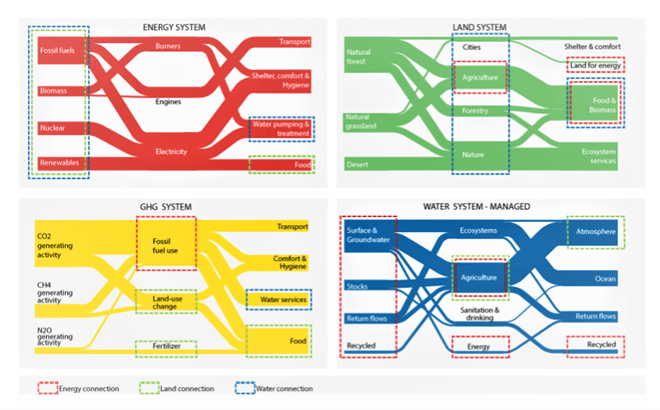
All our supply systems are interconnected with our land, water and energy systems. These systems in turn are connected with greenhouse gas emissions and the earth's carbon, nitrogen and water cycles. Climate mitigation or adaption solutions will only be effective when the impacts in all other systems are positive and vice versa. Today all systems are working against each other and a beneficial cross-system solution can only be achieved by a fundamental change of all systems.
ADVANCING SUSTAINABLE BIOENERGY DEVELOPMENT
New, advanced technologies make it possible to produce climate neutral fuels from non-forest and non-food energy crops. The benefits of cultivation and use of these energy crops for transport fuels and electricity goes beyond the benefits of reducing greenhouse gas emissions. Terrestrial energy crop cultivation and aquatic energy crop harvesting reverses land and water degradation, increases biodiversity and carbon sequestration and improves land fertility. We call this
Deep Green Biomass. Moreover, deploying these energy crops for the production of advanced biofuels will positively impact social-economic structures and energy independence and reduce the need for involuntary migration and deforestation: Deep Green Energy.
Deep Green Energy Partners works to accelerate deployment of deep green biomass for the production of advanced biofuels and biochemicals, to restore soil and water conditions and to optimize the overall ecological-economic effects of investments in the energy transition.
The reformation of all our supply and production systems, a task of already biblical proportions will be further complicated by frequent supply disruption from extreme weather events, armed conflicts, cyber attacks and pandemics. Without mangaging the environmental risks, headed by climate action failure that are now dominating the global risk index an effective system solution will be impossible.
Moreover, any effective solution will have to address the core of the problem: the long existing trade-offs between conflicting objectives: cost efficiency and maximum profit (business), food, water, energy and materials supply security (nations), essential ecosystem services (world), immediate satisfaction at lowest cost and increased prosperity (people). Therefore many detailed scenarios have been developed on how to avoid reaching 1.5-2°C global warming or how to improve food, water, material and energy security.
As fossil fuels represent 80% of total energy consumption, 70% of all greenhouse gas emissions and energy is essential in all supply chains, decarbonization of the energy system and increasing efficiency became the priority in most policies. Full and fast enough decarbonizatoin will however require a tenfold increase of the pace of the transition, which is only possible in theory.
The upfront cost of building a new decarbonized energy systems are simply (too) high vis-a-vis hydrocarbons, in terms of the combination of low-cost, high-energy density, stability, safety, portability and stranded assets. Supply of the necessary minerals are controlled by a few nations, just as fossil fuels, and the price for renewable energy security will therefore be higher as geopolitical relations worsen. Moreover, the required skilled workforce is already scarce and every new windmill or solar panel requires additional fossil energy for its production. So the cost for fossil energy will also rise and thus the price for food as well and the less investments are available to manage the other risks.
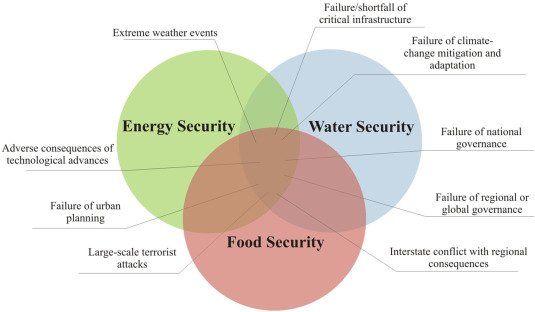
ADVANCING SUSTAINABLE BIOENERGY DEVELOPMENT
New, advanced technologies make it possible to produce climate neutral fuels from non-forest and non-food energy crops. The benefits of cultivation and use of these energy crops for transport fuels and electricity goes beyond the benefits of reducing greenhouse gas emissions. Terrestrial energy crop cultivation and aquatic energy crop harvesting reverses land and water degradation, increases biodiversity and carbon sequestration and improves land fertility. We call this
Deep Green Biomass. Moreover, deploying these energy crops for the production of advanced biofuels will positively impact social-economic structures and energy independence and reduce the need for involuntary migration and deforestation: Deep Green Energy.
Deep Green Energy Partners works to accelerate deployment of deep green biomass for the production of advanced biofuels and biochemicals, to restore soil and water conditions and to optimize the overall ecological-economic effects of investments in the energy transition.
Our current supply systems are already stretched to the limits and can impossibly meet that demand without further eroding ecosystems and accelerating climate change. By 2050 demand for
food and water is expected to have increased by 30-50%, for
energy by 50%, overall
demand for materials by 80%
and
greenhouse gas emissions by 60%. At the current rate the 1.5°C global warming threshold will be reached around 2033 and that of 2°C before 2060.
(On the Global temperature trend monitor you can see when 1.5C will be reached based on the current trajectory). Although decarbonization will help to absorb the additional energy demand it will do little to increase food, water and energy security or decrease absolute emissions in the next decades.
To increase supply security and reduce global warming we have to move the circular carbon economy back to the top of the agenda. Carbon is the key element of our bodies, foods, energy and many materials we use in daily life and a growing world population simply demand more carbon, not less. Capturing carbon from the atmosphere and at the smokestacks of power plants and industries and reusing carbon instead of sending it to the atmosphere is the most efficient and rational option to meet future carbon demand. It is also the best option to stay anywhere near 2°C global warming and to avoid current crises becoming unmanageable, including the possible migration of around 1.2 billion people due to environmental change, conflict and civil unrest by 2050. With the Global Calculator Tool
you can try the impact of different measures and scenarios on limiting global warming and supply yourself.
ADVANCING SUSTAINABLE BIOENERGY DEVELOPMENT
New, advanced technologies make it possible to produce climate neutral fuels from non-forest and non-food energy crops. The benefits of cultivation and use of these energy crops for transport fuels and electricity goes beyond the benefits of reducing greenhouse gas emissions. Terrestrial energy crop cultivation and aquatic energy crop harvesting reverses land and water degradation, increases biodiversity and carbon sequestration and improves land fertility. We call this
Deep Green Biomass. Moreover, deploying these energy crops for the production of advanced biofuels will positively impact social-economic structures and energy independence and reduce the need for involuntary migration and deforestation: Deep Green Energy.
Deep Green Energy Partners works to accelerate deployment of deep green biomass for the production of advanced biofuels and biochemicals, to restore soil and water conditions and to optimize the overall ecological-economic effects of investments in the energy transition.
The good news is that the natural and industrial technologies for the removal, capture and reuse of CO2 are already available and operational today. Just as decarbinozation a circular carbon economy comes at a cost, cost that will come down the more it is deployed just as it did for wind and solar. At mid 2022 prices many technologies are already price competitive and increasing scarcity, commodity prices and carbon pricing will close any remaining price gaps fast. More frequent food shortages and sudden price rises will increase public acceptance of the "labaroratory foods and feed" that are a prerequisite for future water and food security.
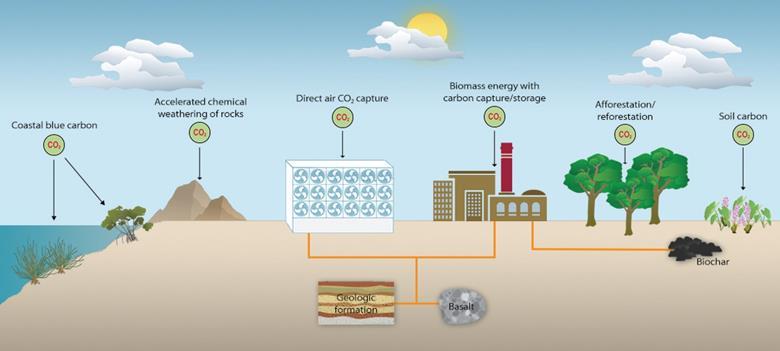
To understand the impacts and the need of a circular carbon economy we have to consider the impacts of the individual components within each particular system land, food, water, energy, materials) and on the interconnected systems level including earth's greenhouse gas cycles
and carbon capture and uses.
ADVANCING SUSTAINABLE BIOENERGY DEVELOPMENT
New, advanced technologies make it possible to produce climate neutral fuels from non-forest and non-food energy crops. The benefits of cultivation and use of these energy crops for transport fuels and electricity goes beyond the benefits of reducing greenhouse gas emissions. Terrestrial energy crop cultivation and aquatic energy crop harvesting reverses land and water degradation, increases biodiversity and carbon sequestration and improves land fertility. We call this
Deep Green Biomass. Moreover, deploying these energy crops for the production of advanced biofuels will positively impact social-economic structures and energy independence and reduce the need for involuntary migration and deforestation: Deep Green Energy.
Deep Green Energy Partners works to accelerate deployment of deep green biomass for the production of advanced biofuels and biochemicals, to restore soil and water conditions and to optimize the overall ecological-economic effects of investments in the energy transition.
CARBON AND ENERGY FARMING
ADVANCING SUSTAINABLE BIOENERGY DEVELOPMENT
New, advanced technologies make it possible to produce climate neutral fuels from non-forest and non-food energy crops. The benefits of cultivation and use of these energy crops for transport fuels and electricity goes beyond the benefits of reducing greenhouse gas emissions. Terrestrial energy crop cultivation and aquatic energy crop harvesting reverses land and water degradation, increases biodiversity and carbon sequestration and improves land fertility. We call this
Deep Green Biomass. Moreover, deploying these energy crops for the production of advanced biofuels will positively impact social-economic structures and energy independence and reduce the need for involuntary migration and deforestation: Deep Green Energy.
Deep Green Energy Partners works to accelerate deployment of deep green biomass for the production of advanced biofuels and biochemicals, to restore soil and water conditions and to optimize the overall ecological-economic effects of investments in the energy transition.
Most efforts towards carbon and energy farming are targeted at tree-planting today. Tree planting can become effective after a few decades once their leave, root and trunk mass has grown sufficiently,
which takes at least 20 years, delivers little gains but requires substantial efforts over that period.
Natural forest regeneration is more effective and less costly than afforestation and as climatic conditions change it will become more expensive and difficult. Agroforestry will help slowing down agricultural land and productivity losses but is not sufficient by itself. Therefore we need an efficient and affordable solution that effectively turns the tides of worsening land, water, soil conditions and general livelihood circumstances before climatic circumstances prohibit any remedies: energy crops.
ADVANCING SUSTAINABLE BIOENERGY DEVELOPMENT
New, advanced technologies make it possible to produce climate neutral fuels from non-forest and non-food energy crops. The benefits of cultivation and use of these energy crops for transport fuels and electricity goes beyond the benefits of reducing greenhouse gas emissions. Terrestrial energy crop cultivation and aquatic energy crop harvesting reverses land and water degradation, increases biodiversity and carbon sequestration and improves land fertility. We call this
Deep Green Biomass. Moreover, deploying these energy crops for the production of advanced biofuels will positively impact social-economic structures and energy independence and reduce the need for involuntary migration and deforestation: Deep Green Energy.
Deep Green Energy Partners works to accelerate deployment of deep green biomass for the production of advanced biofuels and biochemicals, to restore soil and water conditions and to optimize the overall ecological-economic effects of investments in the energy transition.
Energy crops and grasses, grow all over the world on land, in rivers and lakes. There are many varieties but all are highly efficient in carbon sequestration, produce high biomass yields per hectare and high energy yields (carbon) per mass unit. Energy crops grow well on marginal lands, are cheap to cultivate, need little maintenance, fertilizer and water, and can be harvested every few months or every few years depending on species. Lets take Miscanthus, the average best perennial energy crop as an example to demonstrate the benefits. Miscanthus is highly tolerant of multiple environmental stressors like flooding, salinity, toxins and cool soil temperatures. This robustness makes it possible to establish relatively high-yielding Miscanthus fields on marginal land, e.g. wastelands, wet (coastal) areas, abandoned milling sites, mountain slopes and abandoned agricultural
lands. It has very high yields without fertilizer due to nitrogen-fixing bacteria in its roots and improves soil quality and water retention.
ADVANCING SUSTAINABLE BIOENERGY DEVELOPMENT
New, advanced technologies make it possible to produce climate neutral fuels from non-forest and non-food energy crops. The benefits of cultivation and use of these energy crops for transport fuels and electricity goes beyond the benefits of reducing greenhouse gas emissions. Terrestrial energy crop cultivation and aquatic energy crop harvesting reverses land and water degradation, increases biodiversity and carbon sequestration and improves land fertility. We call this
Deep Green Biomass. Moreover, deploying these energy crops for the production of advanced biofuels will positively impact social-economic structures and energy independence and reduce the need for involuntary migration and deforestation: Deep Green Energy.
Deep Green Energy Partners works to accelerate deployment of deep green biomass for the production of advanced biofuels and biochemicals, to restore soil and water conditions and to optimize the overall ecological-economic effects of investments in the energy transition.
Miscanthus fully regrows, no tiling required, within a year after harvesting thus insuring unbroken carbon sequestration uptake and renewable biomass supply for about 20 years.
The total global area that is suitable, and potentially available today for energy crops is approximately 1.8 billion hectares
(18.8 million km2). Half of it, 0.95 billion hectares is highly or moderately suitable and the rest is just marginally suitable. When all urban areas, food agricultural land, forests and protected zones are excluded and potential overlaps with degrading agriculture lands are eliminated about 0.5 - 0.6 billion hectares are available today.
Planting 0.5 billion hectares using the median global best average performing of Miscanthus would annually remove about
4.4 Gt (billion tonnes) carbon net from te atmosphere
of which 0.5 billion would be stored in soils. it would also avoid 0.25 billion tonnes of emissions from land-use annually over a 35 year period. Thus we can reduce about half of the carbon emitted as CO2, 4.9 Gt by removal and 0.25 Gt by avoided land emissions. The additional effects on global warming due to avoided water evaporation are difficult to calculate but will be susbstantial.
ADVANCING SUSTAINABLE BIOENERGY DEVELOPMENT
New, advanced technologies make it possible to produce climate neutral fuels from non-forest and non-food energy crops. The benefits of cultivation and use of these energy crops for transport fuels and electricity goes beyond the benefits of reducing greenhouse gas emissions. Terrestrial energy crop cultivation and aquatic energy crop harvesting reverses land and water degradation, increases biodiversity and carbon sequestration and improves land fertility. We call this
Deep Green Biomass. Moreover, deploying these energy crops for the production of advanced biofuels will positively impact social-economic structures and energy independence and reduce the need for involuntary migration and deforestation: Deep Green Energy.
Deep Green Energy Partners works to accelerate deployment of deep green biomass for the production of advanced biofuels and biochemicals, to restore soil and water conditions and to optimize the overall ecological-economic effects of investments in the energy transition.
The total moderate and high suitable land available for energy crops will reach the above maximum of around 1 billion hectares in the next decades when land is abandoned due to food and feed productivity decreases. Additional land will however become available when (a)cellular food production lifts of and food and feed production is forced indoors. About 30% of the world’s energy is consumed within agri-food systems, and the food system is also responsible for 30% of all emissions. A 50% (a)cellular share in food production would reduce overall emissions and energy consumption by 25% and free-up another 1.5 billion hectares for carbon and energy farming bringing the total to 2-2.5 billion hectares or about 40-50% of all available arable land.
Global areas suitable and available for energy crops to the end of the century, Land suitability for energy crops under scenarios of climate change and land-use
ADVANCING SUSTAINABLE BIOENERGY DEVELOPMENT
New, advanced technologies make it possible to produce climate neutral fuels from non-forest and non-food energy crops. The benefits of cultivation and use of these energy crops for transport fuels and electricity goes beyond the benefits of reducing greenhouse gas emissions. Terrestrial energy crop cultivation and aquatic energy crop harvesting reverses land and water degradation, increases biodiversity and carbon sequestration and improves land fertility. We call this
Deep Green Biomass. Moreover, deploying these energy crops for the production of advanced biofuels will positively impact social-economic structures and energy independence and reduce the need for involuntary migration and deforestation: Deep Green Energy.
Deep Green Energy Partners works to accelerate deployment of deep green biomass for the production of advanced biofuels and biochemicals, to restore soil and water conditions and to optimize the overall ecological-economic effects of investments in the energy transition.
The total moderate and high suitable land available for energy crops will reach the above maximum of around 1 billion hectares in the next decades when land is abandoned due to food and feed productivity decreases. Additional land will however become available when (a)cellular food production lifts of and food and feed production is forced indoors. About 30% of the world’s energy is consumed within agri-food systems, and the food system is also responsible for 30% of all emissions. A 50% (a)cellular share in food production would reduce overall emissions and energy consumption by 25% and free-up another 1.5 billion hectares for carbon and energy farming bringing the total to 2-2.5 billion hectares or about 40-50% of all available arable land.
ADVANCING SUSTAINABLE BIOENERGY DEVELOPMENT
New, advanced technologies make it possible to produce climate neutral fuels from non-forest and non-food energy crops. The benefits of cultivation and use of these energy crops for transport fuels and electricity goes beyond the benefits of reducing greenhouse gas emissions. Terrestrial energy crop cultivation and aquatic energy crop harvesting reverses land and water degradation, increases biodiversity and carbon sequestration and improves land fertility. We call this
Deep Green Biomass. Moreover, deploying these energy crops for the production of advanced biofuels will positively impact social-economic structures and energy independence and reduce the need for involuntary migration and deforestation: Deep Green Energy.
Deep Green Energy Partners works to accelerate deployment of deep green biomass for the production of advanced biofuels and biochemicals, to restore soil and water conditions and to optimize the overall ecological-economic effects of investments in the energy transition.
THE WATER SYSTEM
ADVANCING SUSTAINABLE BIOENERGY DEVELOPMENT
New, advanced technologies make it possible to produce climate neutral fuels from non-forest and non-food energy crops. The benefits of cultivation and use of these energy crops for transport fuels and electricity goes beyond the benefits of reducing greenhouse gas emissions. Terrestrial energy crop cultivation and aquatic energy crop harvesting reverses land and water degradation, increases biodiversity and carbon sequestration and improves land fertility. We call this
Deep Green Biomass. Moreover, deploying these energy crops for the production of advanced biofuels will positively impact social-economic structures and energy independence and reduce the need for involuntary migration and deforestation: Deep Green Energy.
Deep Green Energy Partners works to accelerate deployment of deep green biomass for the production of advanced biofuels and biochemicals, to restore soil and water conditions and to optimize the overall ecological-economic effects of investments in the energy transition.
The earth's water cycle is comparable to the earth's carbon cycle. Although the atmosphere contains only a small proportion of the total global water, it plays a key role in connecting the major reservoirs of the oceans, lakes, soils, inland and sea ice, and rivers via the transport of moisture, evapotranspiration, and precipitation. This cycle Overall demand from food-, energy- and other industries as well as that of domestic consumption is expected to grow by minimal 20-30% in 2050. , where it contributes to the process of ocean acidification, climate change's equally evil twin. Acidification is the result from excess atmospheric CO2 uptake by water which effectively destroys water ecosystems, including our seafood supply.
Global warming is increases water evaporation, and atmospheric water vapor amplifies the global water cycle and the more water vapor that air contains, the more energy it holds. This energy fuels intense storms, particularly over land which results in shifting ...... more extreme weather events. More evaporation from the land also dries soils out. When water from intense storms falls on hard, dry ground, it runs off into rivers and streams instead of dampening soils. This increases the risk of drought. This contribute to making wet regions wetter and dry regions drier.
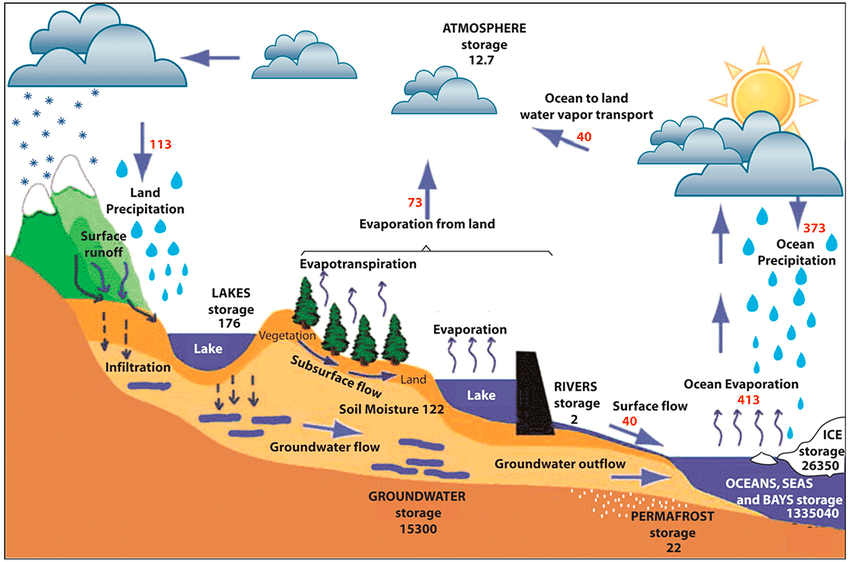
ADVANCING SUSTAINABLE BIOENERGY DEVELOPMENT
New, advanced technologies make it possible to produce climate neutral fuels from non-forest and non-food energy crops. The benefits of cultivation and use of these energy crops for transport fuels and electricity goes beyond the benefits of reducing greenhouse gas emissions. Terrestrial energy crop cultivation and aquatic energy crop harvesting reverses land and water degradation, increases biodiversity and carbon sequestration and improves land fertility. We call this
Deep Green Biomass. Moreover, deploying these energy crops for the production of advanced biofuels will positively impact social-economic structures and energy independence and reduce the need for involuntary migration and deforestation: Deep Green Energy.
Deep Green Energy Partners works to accelerate deployment of deep green biomass for the production of advanced biofuels and biochemicals, to restore soil and water conditions and to optimize the overall ecological-economic effects of investments in the energy transition.
The total amount of fresh water is constant. Overall demand from food-, energy- and other industries as well as that of domestic consumption is expected to grow by minimal 20-30% in 2050. During the consumption cycle most of the water gets polluted, evaporates or ends up in rivers, lakes and oceans. Global warming is increases water evaporation, and atmospheric water vapor amplifies the global water cycle and the more water vapor that air contains, the more energy it holds. This energy fuels intense storms, particularly over land which results in shifting ...... more extreme weather events. More evaporation from the land also dries soils out. When water from intense storms falls on hard, dry ground, it runs off into rivers and streams instead of dampening soils. This increases the risk of drought. This contribute to making wet regions wetter and dry regions drier.where it contributes to the process of ocean acidification, climate change's equally evil twin. Acidification is the result from excess atmospheric CO2 uptake by water which effectively destroys water ecosystems, including our seafood supply.
ADVANCING SUSTAINABLE BIOENERGY DEVELOPMENT
New, advanced technologies make it possible to produce climate neutral fuels from non-forest and non-food energy crops. The benefits of cultivation and use of these energy crops for transport fuels and electricity goes beyond the benefits of reducing greenhouse gas emissions. Terrestrial energy crop cultivation and aquatic energy crop harvesting reverses land and water degradation, increases biodiversity and carbon sequestration and improves land fertility. We call this
Deep Green Biomass. Moreover, deploying these energy crops for the production of advanced biofuels will positively impact social-economic structures and energy independence and reduce the need for involuntary migration and deforestation: Deep Green Energy.
Deep Green Energy Partners works to accelerate deployment of deep green biomass for the production of advanced biofuels and biochemicals, to restore soil and water conditions and to optimize the overall ecological-economic effects of investments in the energy transition.
THE ENERGY SYSTEM
ADVANCING SUSTAINABLE BIOENERGY DEVELOPMENT
New, advanced technologies make it possible to produce climate neutral fuels from non-forest and non-food energy crops. The benefits of cultivation and use of these energy crops for transport fuels and electricity goes beyond the benefits of reducing greenhouse gas emissions. Terrestrial energy crop cultivation and aquatic energy crop harvesting reverses land and water degradation, increases biodiversity and carbon sequestration and improves land fertility. We call this
Deep Green Biomass. Moreover, deploying these energy crops for the production of advanced biofuels will positively impact social-economic structures and energy independence and reduce the need for involuntary migration and deforestation: Deep Green Energy.
Deep Green Energy Partners works to accelerate deployment of deep green biomass for the production of advanced biofuels and biochemicals, to restore soil and water conditions and to optimize the overall ecological-economic effects of investments in the energy transition.
Carbon fuels are still the cheapest, or only energy option in most parts of the world and carbon capture and removal is the only option to effectively stop global warming. Energy crops are the carbon neutral energy source that can replace fossil fuels, wood and low-carbon energy in all energy sectors as shown below. When deployed for electricity, heat or transport (advanced biofuels) global warming potential (GWP) is at par with wind and solar but comes
with the potential positive ecosystem effects that wind and solar are lacking.
Combined with Carbon Capture Use or Storage (CCUS)
it is offers the unique option to provide carbon negative (more carbon is removed from than emitted to the atmosphere) heat for industrial processes, electricity and e-fuels like hydrogen. In the below graphics the life cycle greenhouse gas emissions (all emissions from planting to burning) for bio-energy based electricity and transport fuels are compared.
Life cycle GHG emissions electricity
ADVANCING SUSTAINABLE BIOENERGY DEVELOPMENT
New, advanced technologies make it possible to produce climate neutral fuels from non-forest and non-food energy crops. The benefits of cultivation and use of these energy crops for transport fuels and electricity goes beyond the benefits of reducing greenhouse gas emissions. Terrestrial energy crop cultivation and aquatic energy crop harvesting reverses land and water degradation, increases biodiversity and carbon sequestration and improves land fertility. We call this
Deep Green Biomass. Moreover, deploying these energy crops for the production of advanced biofuels will positively impact social-economic structures and energy independence and reduce the need for involuntary migration and deforestation: Deep Green Energy.
Deep Green Energy Partners works to accelerate deployment of deep green biomass for the production of advanced biofuels and biochemicals, to restore soil and water conditions and to optimize the overall ecological-economic effects of investments in the energy transition.
Global primary energy consumption reached over 595 exajoules in 2021. Every million hectares of land produces on average 17.6 (GJ/Dt) X 16,3 (t/h) = 286,88 Gj/h X 1.000.000 = 28,6 EJ. Energy for harvesting, planting and collection is about 10% leaving 25,75 EJ. The conversion efficiency rate of energy crops to electricity or fuels is about 40%, so 10,3 EJ consumable energy per million hectares.
http://tool.globalcalculator.org/globcalc.html?levers=g311111111111111c1b111cybi33g3gi233ssr24As11111gA2211111111/dashboard/en
0.5 billion hectares of energy crops produce 17.6 (MJ/Dt) x 16,3 t/ha = 286,88 GJ/ha X 0.5 billion = 143, 44 billion GJ = 143 ,4 EJ. Total global consumption = 450 EJ. 143 x 0.4 = 57 EJ. 2 billion hectares = 228 EJ = 40% of all arable land are the carbon neutral energy source that can replace fossil fuels, wood and low-carbon energy in all energy sectors as shown below. Deployed for electricity and industrial processes its global warming potential (GWP) is at par with wind and solar (disregarding water vapor effects) and comes with positive ecosystem effects that wind and solar are lacking. Combined with Carbon Capture Use and Storage (CCUS)
it is the only option to provide the carbon negative (more carbon is removed from than emitted to the atmosphere) electricity and e-fuels like hydrogen or the (advanced) climate neutral fuels for transport as shown below.
ADVANCING SUSTAINABLE BIOENERGY DEVELOPMENT
New, advanced technologies make it possible to produce climate neutral fuels from non-forest and non-food energy crops. The benefits of cultivation and use of these energy crops for transport fuels and electricity goes beyond the benefits of reducing greenhouse gas emissions. Terrestrial energy crop cultivation and aquatic energy crop harvesting reverses land and water degradation, increases biodiversity and carbon sequestration and improves land fertility. We call this
Deep Green Biomass. Moreover, deploying these energy crops for the production of advanced biofuels will positively impact social-economic structures and energy independence and reduce the need for involuntary migration and deforestation: Deep Green Energy.
Deep Green Energy Partners works to accelerate deployment of deep green biomass for the production of advanced biofuels and biochemicals, to restore soil and water conditions and to optimize the overall ecological-economic effects of investments in the energy transition.
Direct Air Carbon Capture and Storage (DACCS)
technologies are a promising addition for carbon capture when sufficient renewable energy is available it has a GHG removal efficiency of 79–91%.
Meaning that by using fossil energy it effects are close to zero but when using renewable energy it can be highly effective.
Retreiving as much nutriants and water
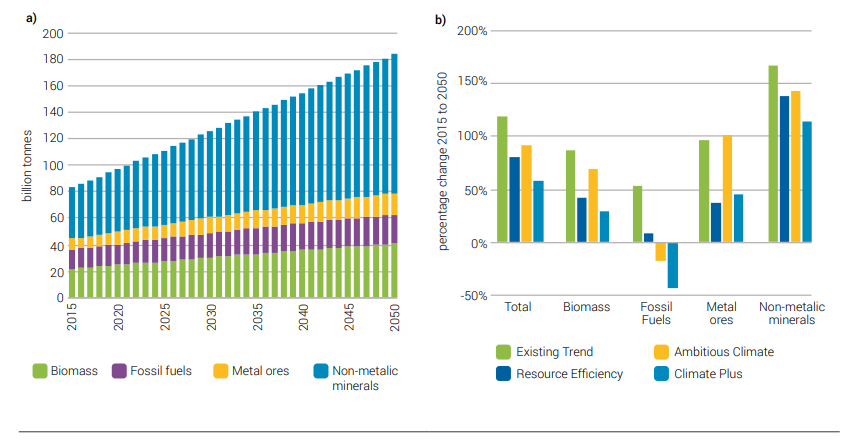
ADVANCING SUSTAINABLE BIOENERGY DEVELOPMENT
New, advanced technologies make it possible to produce climate neutral fuels from non-forest and non-food energy crops. The benefits of cultivation and use of these energy crops for transport fuels and electricity goes beyond the benefits of reducing greenhouse gas emissions. Terrestrial energy crop cultivation and aquatic energy crop harvesting reverses land and water degradation, increases biodiversity and carbon sequestration and improves land fertility. We call this
Deep Green Biomass. Moreover, deploying these energy crops for the production of advanced biofuels will positively impact social-economic structures and energy independence and reduce the need for involuntary migration and deforestation: Deep Green Energy.
Deep Green Energy Partners works to accelerate deployment of deep green biomass for the production of advanced biofuels and biochemicals, to restore soil and water conditions and to optimize the overall ecological-economic effects of investments in the energy transition.
The figure on the left shows the expected overall global resource extractions for our material needs over time by source up to 2050 in a business as usual scenario and three more sustainable scenarios. Annual demand increase for materials is more or less constant but the different scenarios predict how efficiency, recycling, waste and substitution will impact demand for various raw material categories. The current linear relation between material productions and emissions translates in an emissions increase of 40-55% when material supply increases by 80% as expected.
ADVANCING SUSTAINABLE BIOENERGY DEVELOPMENT
New, advanced technologies make it possible to produce climate neutral fuels from non-forest and non-food energy crops. The benefits of cultivation and use of these energy crops for transport fuels and electricity goes beyond the benefits of reducing greenhouse gas emissions. Terrestrial energy crop cultivation and aquatic energy crop harvesting reverses land and water degradation, increases biodiversity and carbon sequestration and improves land fertility. We call this
Deep Green Biomass. Moreover, deploying these energy crops for the production of advanced biofuels will positively impact social-economic structures and energy independence and reduce the need for involuntary migration and deforestation: Deep Green Energy.
Deep Green Energy Partners works to accelerate deployment of deep green biomass for the production of advanced biofuels and biochemicals, to restore soil and water conditions and to optimize the overall ecological-economic effects of investments in the energy transition.
Mitigating Climate Change
Damages of climate change and the cost of climate mitigation and adaption are dependent on future events. The impact and occurrence of future events depend on the actions we take or not take today. The direct relation between global warming, climate change and burning fossil fuels (causing 72% of overall emissions) has put the emphasis in policies and scenarios on decarbonizing the energy system. Decarbonization can only be effective when the global energy intensity (Carbon deployed for GDP growth) decreases fast enough; for a 2°C scenario a global decrease of both by 3.5% per year would be necessary. Instead the global energy intensity increased by 1.1% in 2020 while the carbon intensity decreased by a mere 0.3%. Decarbonization helps to halt stronger emission increases and damages, might increase energy independency but does little for food and water security or absolute emissions reductions. A more equal division of investments in decarbonzation and the circular carbon economy is therefore oportune.
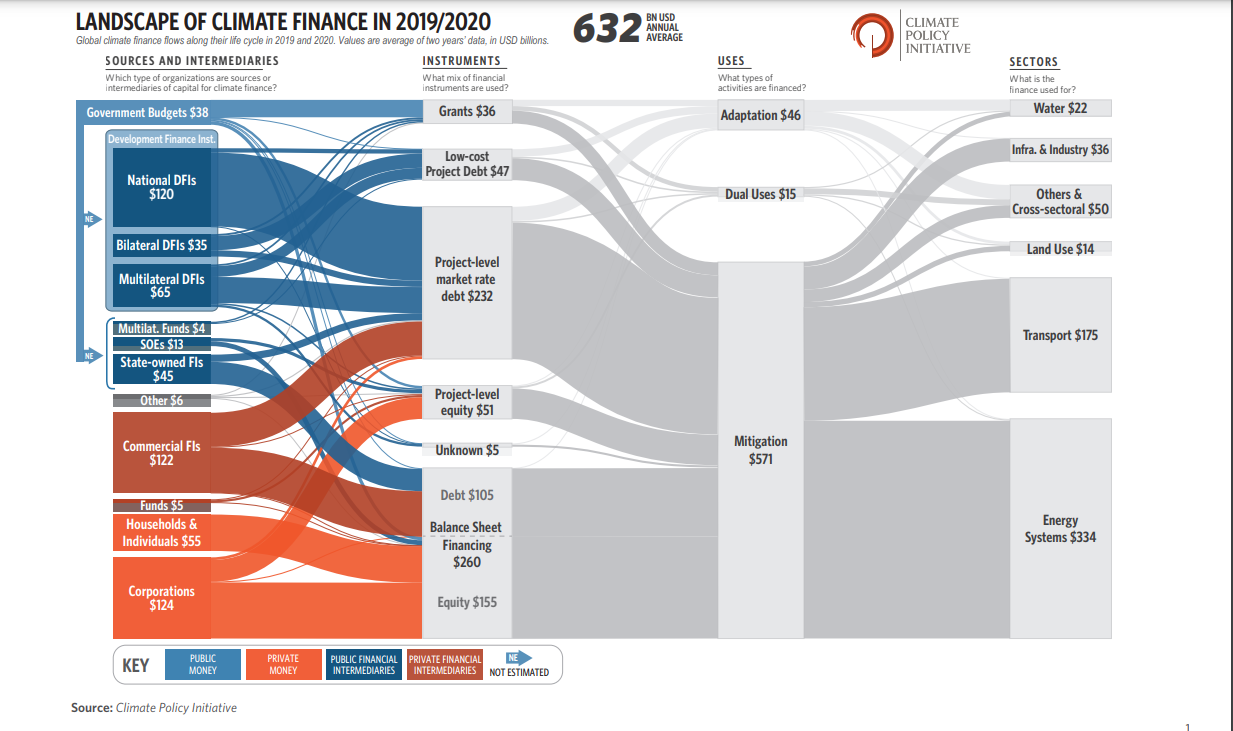
2019-2020 global financial flows towards climate mitigation and adaption were USD 632 billion, nowhere near the minimal USD 4.5-5 trillion annually needed for net zero 2050 scenarios. About two-thirds of all investments went to solar and wind energy and low carbon transport. Investments in (waste) water, land-use and bioenergy systems accounted for less than 8%. If this scenario continues much of the developed world might be driving electric cars in 2050 but the price of water, food and electricity will have exploded in both the developed and developing world.
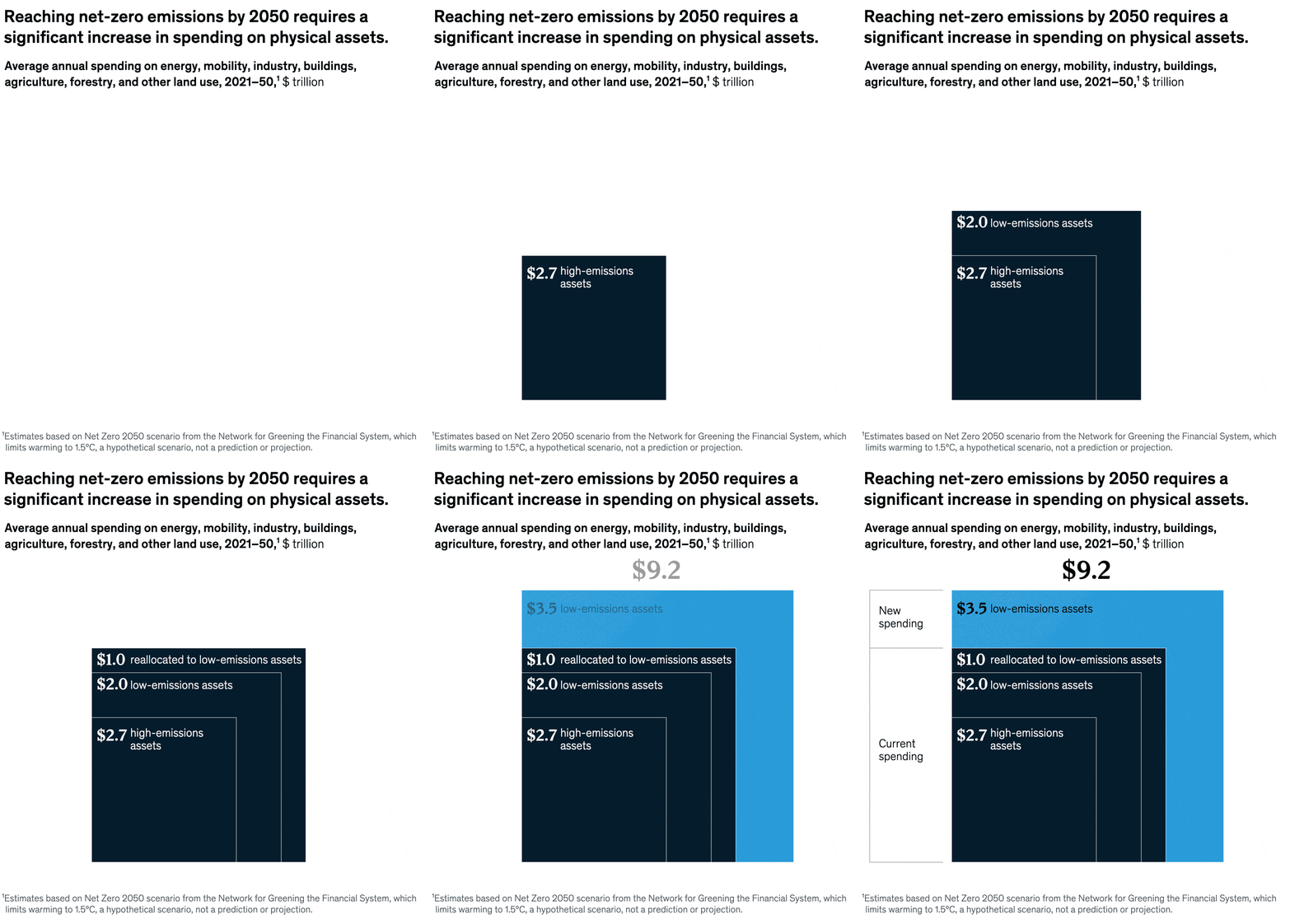
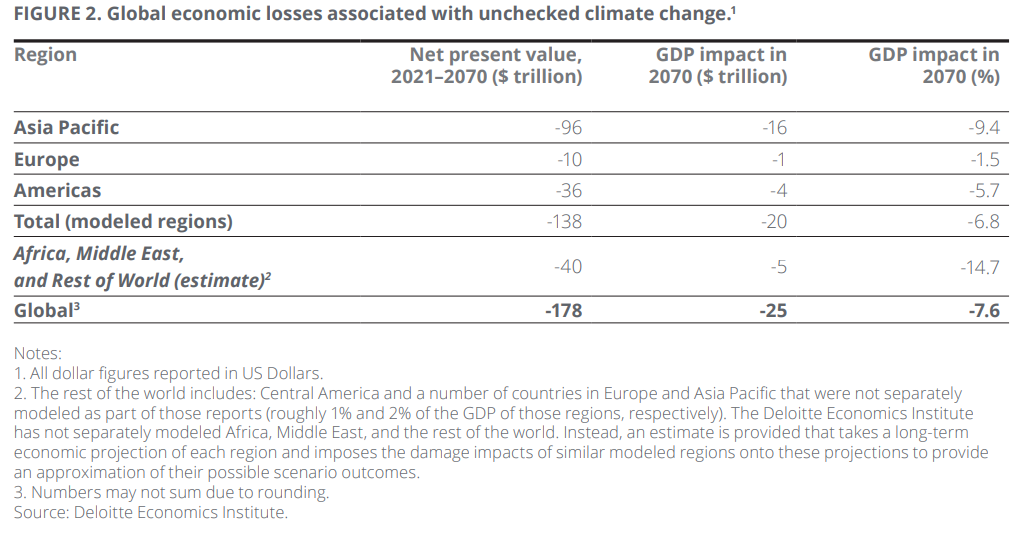
ADVANCING SUSTAINABLE BIOENERGY DEVELOPMENT
New, advanced technologies make it possible to produce climate neutral fuels from non-forest and non-food energy crops. The benefits of cultivation and use of these energy crops for transport fuels and electricity goes beyond the benefits of reducing greenhouse gas emissions. Terrestrial energy crop cultivation and aquatic energy crop harvesting reverses land and water degradation, increases biodiversity and carbon sequestration and improves land fertility. We call this
Deep Green Biomass. Moreover, deploying these energy crops for the production of advanced biofuels will positively impact social-economic structures and energy independence and reduce the need for involuntary migration and deforestation: Deep Green Energy.
Deep Green Energy Partners works to accelerate deployment of deep green biomass for the production of advanced biofuels and biochemicals, to restore soil and water conditions and to optimize the overall ecological-economic effects of investments in the energy transition.
Any system change will require enormous upfront investments and will meet resistance from those who stand to lose from it if there is no perspective for future business continuation and profits. A bio and CO2 -based circular economy overcomes many of the problems on the supply and demand side. New bio-technologies can produce food, feed, fuels, electricity, chemicals and materials that can replace fossil fuels, wood, windmills and solar panels with minimal adaption to existing infrastructures and equipment. Market penetration will however be faster achieved when they are blended in existent products and supply chains at gradually increasing fractions. As overall demand will grow over time this provides the perspective to both incumbent and future industry actors to adapt and develop new business models in realistic timeframes.
On the demand side cost and food, water and energy security are the decisive factors. Those that are willing and able to pay a premium have the choice for the more sustainable option or lifestyle. Most of the world however cannot pay the premium, is not willing to pay it or willing to make lifestyle changes. Increasing demand and climate change will increase scarcity, prices for food, water, energy, and materials faster than the circular carbon economy now develops making price parity for sustainable alternatives already reality at mid 2022 prices. Extreme weather events and geopolitical conflicts will cause more abrupt lasting price chocks. For a large part of the world access to basic resources is becoming problematic. Soil and land management are at the core of the circular carbon economy and as many of the poorest of the world live in rural communities paying them for soil and land and climate management will not only make food, water and energy available but also affordable, reducing the need for mass migration.
2019-2020 global financial flows towards climate mitigation and adaption were USD 632 billion, nowhere near the minimal USD 4.5-5 trillion annually needed for net zero 2050 scenarios. About two-thirds of all investments went to solar and wind energy and low carbon transport (EV). Investments in (waste) water, land-use and bioenergy systems accounted for less than 8%. If this scenario continues much of the developed world might be driving electric cars in 2050 but the price of water, food and renewable energy will have exploded, in both the developed and developing world.
ADVANCING SUSTAINABLE BIOENERGY DEVELOPMENT
New, advanced technologies make it possible to produce climate neutral fuels from non-forest and non-food energy crops. The benefits of cultivation and use of these energy crops for transport fuels and electricity goes beyond the benefits of reducing greenhouse gas emissions. Terrestrial energy crop cultivation and aquatic energy crop harvesting reverses land and water degradation, increases biodiversity and carbon sequestration and improves land fertility. We call this
Deep Green Biomass. Moreover, deploying these energy crops for the production of advanced biofuels will positively impact social-economic structures and energy independence and reduce the need for involuntary migration and deforestation: Deep Green Energy.
Deep Green Energy Partners works to accelerate deployment of deep green biomass for the production of advanced biofuels and biochemicals, to restore soil and water conditions and to optimize the overall ecological-economic effects of investments in the energy transition.
Climate risk is a systemic risk requiring coordinated action. With our scenarioanalysis, we estimate that in a severe, unmitigated climate-change scenario, globalGDP could be 18% less by mid-century compared to a no-climate change world. Ourmotivation is not to be alarmist, but to profile to the severity of potential risks,including of tail exposures, if society does nothing about climate change. No countryis immune to the effects of climate change, and no action is not an option. Manymajor economies would lose roughly 10% of their GDP in about 30 years’ time, whilesome in southeast Asia could lose roughly half of their GDP in that timeframe.
The transformation of the global economy needed to achieve net-zero emissions by 2050 would be universal and significant, requiring $9.2 trillion in annual average spending on physical assets, $3.5 trillion more than today.
On the demand side cost and food, water and energy security are the decisive factors. Those that are willing and able to pay a premium have the choice for the more sustainable option or lifestyle. Most of the world however cannot pay the premium, is not willing to pay it or willing to make lifestyle changes. Increasing demand and climate change will increase scarcity, prices for food, water, energy, and materials faster than the circular carbon economy now develops making price parity for sustainable alternatives already reality at mid 2022 prices. Extreme weather events and geopolitical conflicts will cause more abrupt lasting price chocks. For a large part of the world access to basic resources is becoming problematic. Soil and land management are at the core of the circular carbon economy and as many of the poorest of the world live in rural communities paying them for soil and land and climate management will not only make food, water and energy available but also affordable, reducing the need for mass migration.
Between 2010 and 2020, when the world seemed to be united in the common goal of reducing emissions and the pickings were easy,
the average annual growth-rate of greenhouse gas (GHG) emissions slowed down to 1.3% per year. Overall energy demand is still growing faster than renewable energy supply
and
climate change further accelerates that demand. Over the same period
net deforestation was about 4.7 million hectares/year and 12 million hectares of arable land were lost annually. Global raw materials use increased by 45% and average global temperatures have already rissen by 1.1°C
ADVANCING SUSTAINABLE BIOENERGY DEVELOPMENT
New, advanced technologies make it possible to produce climate neutral fuels from non-forest and non-food energy crops. The benefits of cultivation and use of these energy crops for transport fuels and electricity goes beyond the benefits of reducing greenhouse gas emissions. Terrestrial energy crop cultivation and aquatic energy crop harvesting reverses land and water degradation, increases biodiversity and carbon sequestration and improves land fertility. We call this
Deep Green Biomass. Moreover, deploying these energy crops for the production of advanced biofuels will positively impact social-economic structures and energy independence and reduce the need for involuntary migration and deforestation: Deep Green Energy.
Deep Green Energy Partners works to accelerate deployment of deep green biomass for the production of advanced biofuels and biochemicals, to restore soil and water conditions and to optimize the overall ecological-economic effects of investments in the energy transition.
In a business as usual scenario the world's GDP, population, consumption and emissions continue at their projected growth rate the world's natural resources will get scarcer, more expensive and eventually run out as will the remaining carbon budget for limiting warming to 1.5°C (5 to 7 years from now) and that for 2°C (20-24 year from now). In the meantime climate change will exacerbate water and food stress worldwide and put 1.2 billion people at risk of displacement by 2050.
In other words: to mitigate and adapt to the impacts of a 2-4°C warmer world we have to fundamentally change our food, energy and materials supply systems to which a Circular Carbon Economy and a sustainable, renewable carbon supply are key. All living things and many of the materials we use in our daily lives are made of carbon, we have built our economies, infrastructures and world order around carbon and we released the carbon to the atmosphere that now causes global warming. Redesigning our carbon sourcing and management systems is therefore far more efficient and effective in mitigating the effects of climate change than building new economic and geopolitical world order around solar and wind energy.
ADVANCING SUSTAINABLE BIOENERGY DEVELOPMENT
New, advanced technologies make it possible to produce climate neutral fuels from non-forest and non-food energy crops. The benefits of cultivation and use of these energy crops for transport fuels and electricity goes beyond the benefits of reducing greenhouse gas emissions. Terrestrial energy crop cultivation and aquatic energy crop harvesting reverses land and water degradation, increases biodiversity and carbon sequestration and improves land fertility. We call this
Deep Green Biomass. Moreover, deploying these energy crops for the production of advanced biofuels will positively impact social-economic structures and energy independence and reduce the need for involuntary migration and deforestation: Deep Green Energy.
Deep Green Energy Partners works to accelerate deployment of deep green biomass for the production of advanced biofuels and biochemicals, to restore soil and water conditions and to optimize the overall ecological-economic effects of investments in the energy transition.
Sustainable, renewable biomass is prerequisite for a successful transition to a biobased economy. Today this only limited available and we therefore will need fast new additional volumes of sustainable, climate resilient, renewable and cheap biomass. But that is not all, we also need cover crops to avoid abandoned agricultural land from erosion and to efficiently increase atmospheric carbon removal. Energy crop plantations and energy crop clearing from lakes and rivers can provide that biomass in the volumes needed. Carbon pricing and specific energy policies already provide the economical viable business case for sustainable bio-energy from energy crops. The prices of carbon emissions, low-carbon renewable energy alternatives, food, water and other natural resources are on the rise and closing the cost gap between a traditional and circular, biobased economy is happening fast. The interactive characteristics of the Nexus makes that the concept of Green Growth can only materialize when it is really green and what went up has come down again.
2019-2020 global financial flows towards climate mitigation and adaption were USD 632 billion, nowhere near the minimal USD 4.5-5 trillion annually needed for net zero 2050 scenarios. About two-thirds of all investments went to solar and wind energy and low carbon transport (EV). Investments in (waste) water, land-use and bioenergy systems accounted for less than 8%. If this scenario continues much of the developed world might be driving electric cars in 2050 but the price of water, food and renewable energy will have exploded, in both the developed and developing world.
ADVANCING SUSTAINABLE BIOENERGY DEVELOPMENT
New, advanced technologies make it possible to produce climate neutral fuels from non-forest and non-food energy crops. The benefits of cultivation and use of these energy crops for transport fuels and electricity goes beyond the benefits of reducing greenhouse gas emissions. Terrestrial energy crop cultivation and aquatic energy crop harvesting reverses land and water degradation, increases biodiversity and carbon sequestration and improves land fertility. We call this
Deep Green Biomass. Moreover, deploying these energy crops for the production of advanced biofuels will positively impact social-economic structures and energy independence and reduce the need for involuntary migration and deforestation: Deep Green Energy.
Deep Green Energy Partners works to accelerate deployment of deep green biomass for the production of advanced biofuels and biochemicals, to restore soil and water conditions and to optimize the overall ecological-economic effects of investments in the energy transition.
At the time the IPCC reports were released McKinsey estimated the upfront spending on physical assets for energy and land-use systems (responsible for about 85% of all emissions) needed for various net-zero scenarios 2050 at USD 275 trillion. This translates in an annual additional spending of USD 3.5 trillion annually up to 2050 compared to today. Of that amount around USD 2 trillion is destined for electrification: solar, wind, hydro, nuclear and network expansion, USD 60 billion to enable more emissions-efficient farming and USD 40 billion to forestry and USD 175 to biofuels, so less than 15% of the total amount is destined to the bio-economy .
Carbon pricing and specific energy policies already provide the economical viable business case for sustainable bio-energy. Prices for carbon emissions, low-carbon renewable energy alternatives, food, water and other natural resources are on the rise and closing the cost gap between a traditional and circular bio-based economy is happening fast. Due to the interactive characteristics of the Nexus the concept of Green Growth can only materialize when it is really green and when what went up comes down again.
ADVANCING SUSTAINABLE BIOENERGY DEVELOPMENT
New, advanced technologies make it possible to produce climate neutral fuels from non-forest and non-food energy crops. The benefits of cultivation and use of these energy crops for transport fuels and electricity goes beyond the benefits of reducing greenhouse gas emissions. Terrestrial energy crop cultivation and aquatic energy crop harvesting reverses land and water degradation, increases biodiversity and carbon sequestration and improves land fertility. We call this
Deep Green Biomass. Moreover, deploying these energy crops for the production of advanced biofuels will positively impact social-economic structures and energy independence and reduce the need for involuntary migration and deforestation: Deep Green Energy.
Deep Green Energy Partners works to accelerate deployment of deep green biomass for the production of advanced biofuels and biochemicals, to restore soil and water conditions and to optimize the overall ecological-economic effects of investments in the energy transition.
CARBON MANAGEMENT & THE GLOBAL CARBON CYCLE
ADVANCING SUSTAINABLE BIOENERGY DEVELOPMENT
New, advanced technologies make it possible to produce climate neutral fuels from non-forest and non-food energy crops. The benefits of cultivation and use of these energy crops for transport fuels and electricity goes beyond the benefits of reducing greenhouse gas emissions. Terrestrial energy crop cultivation and aquatic energy crop harvesting reverses land and water degradation, increases biodiversity and carbon sequestration and improves land fertility. We call this
Deep Green Biomass. Moreover, deploying these energy crops for the production of advanced biofuels will positively impact social-economic structures and energy independence and reduce the need for involuntary migration and deforestation: Deep Green Energy.
Deep Green Energy Partners works to accelerate deployment of deep green biomass for the production of advanced biofuels and biochemicals, to restore soil and water conditions and to optimize the overall ecological-economic effects of investments in the energy transition.
LAND-USE - CARBON & ENERGY FARMING
ADVANCING SUSTAINABLE BIOENERGY DEVELOPMENT
New, advanced technologies make it possible to produce climate neutral fuels from non-forest and non-food energy crops. The benefits of cultivation and use of these energy crops for transport fuels and electricity goes beyond the benefits of reducing greenhouse gas emissions. Terrestrial energy crop cultivation and aquatic energy crop harvesting reverses land and water degradation, increases biodiversity and carbon sequestration and improves land fertility. We call this
Deep Green Biomass. Moreover, deploying these energy crops for the production of advanced biofuels will positively impact social-economic structures and energy independence and reduce the need for involuntary migration and deforestation: Deep Green Energy.
Deep Green Energy Partners works to accelerate deployment of deep green biomass for the production of advanced biofuels and biochemicals, to restore soil and water conditions and to optimize the overall ecological-economic effects of investments in the energy transition.
Miscanthus is sterile and thus non-invasive to native species and it enhances biodiversity by providing cover for a variety of shade-tolerant plants, invertebrates, woodland bird species and butterflies. Various other energy crop variaties (e.g. Arundo Donax and Water Hyacinth) have similar characteristics but are invasive have invested many rivers and lakes around the world, blocking waterways, killing fish, spreading deceases and causing substantial amounts of methane emissions from their decay. Energy crop cultivation and removal can provide most of the carbon needed to sustain our lives, improve soil, water and eco-systems.
ADVANCING SUSTAINABLE BIOENERGY DEVELOPMENT
New, advanced technologies make it possible to produce climate neutral fuels from non-forest and non-food energy crops. The benefits of cultivation and use of these energy crops for transport fuels and electricity goes beyond the benefits of reducing greenhouse gas emissions. Terrestrial energy crop cultivation and aquatic energy crop harvesting reverses land and water degradation, increases biodiversity and carbon sequestration and improves land fertility. We call this
Deep Green Biomass. Moreover, deploying these energy crops for the production of advanced biofuels will positively impact social-economic structures and energy independence and reduce the need for involuntary migration and deforestation: Deep Green Energy.
Deep Green Energy Partners works to accelerate deployment of deep green biomass for the production of advanced biofuels and biochemicals, to restore soil and water conditions and to optimize the overall ecological-economic effects of investments in the energy transition.
ENERGY & CARBON CAPTURE
ADVANCING SUSTAINABLE BIOENERGY DEVELOPMENT
New, advanced technologies make it possible to produce climate neutral fuels from non-forest and non-food energy crops. The benefits of cultivation and use of these energy crops for transport fuels and electricity goes beyond the benefits of reducing greenhouse gas emissions. Terrestrial energy crop cultivation and aquatic energy crop harvesting reverses land and water degradation, increases biodiversity and carbon sequestration and improves land fertility. We call this
Deep Green Biomass. Moreover, deploying these energy crops for the production of advanced biofuels will positively impact social-economic structures and energy independence and reduce the need for involuntary migration and deforestation: Deep Green Energy.
Deep Green Energy Partners works to accelerate deployment of deep green biomass for the production of advanced biofuels and biochemicals, to restore soil and water conditions and to optimize the overall ecological-economic effects of investments in the energy transition.
While solar and wind electricity generation have become competitive with new fossil power plants, that metric doesn’t necessarily apply to running a fossil fuel plant and supply infrastructure that already exists. Fossil fuels are still the cheapest or only (affordable) option to meet growing demand for electricity and heating and transport fuels in most cases. Which is why the EU has now even labeled natural gas "green". Energy crops are the carbon neutral energy source that can replace fossil fuels, wood and low-carbon energy in all energy sectors as shown below. Deployed for electricity and industrial processes its global warming potential (GWP) is at par with wind and solar but comes with positive ecosystem effects that wind and solar are lacking. Combined with Carbon Capture and Storage (CCS) it is the one option to provide the carbon negative (more carbon is removed from than emitted to the atmosphere) electricity and e-fuels like hydrogen and advanced biofuels for transport produced from energy crops are close to climate neutral.
Life cycle GHG emissions electricity
ADVANCING SUSTAINABLE BIOENERGY DEVELOPMENT
New, advanced technologies make it possible to produce climate neutral fuels from non-forest and non-food energy crops. The benefits of cultivation and use of these energy crops for transport fuels and electricity goes beyond the benefits of reducing greenhouse gas emissions. Terrestrial energy crop cultivation and aquatic energy crop harvesting reverses land and water degradation, increases biodiversity and carbon sequestration and improves land fertility. We call this
Deep Green Biomass. Moreover, deploying these energy crops for the production of advanced biofuels will positively impact social-economic structures and energy independence and reduce the need for involuntary migration and deforestation: Deep Green Energy.
Deep Green Energy Partners works to accelerate deployment of deep green biomass for the production of advanced biofuels and biochemicals, to restore soil and water conditions and to optimize the overall ecological-economic effects of investments in the energy transition.
Direct Air Carbon Capture and Storage (DACCS)
technologies are a promising addition for carbon capture when sufficient renewable energy is available it has a GHG removal efficiency of 79–91%.
Meaning that by using fossil energy it effects are close to zero but when using renewable energy it can be highly effective.
ADVANCING SUSTAINABLE BIOENERGY DEVELOPMENT
New, advanced technologies make it possible to produce climate neutral fuels from non-forest and non-food energy crops. The benefits of cultivation and use of these energy crops for transport fuels and electricity goes beyond the benefits of reducing greenhouse gas emissions. Terrestrial energy crop cultivation and aquatic energy crop harvesting reverses land and water degradation, increases biodiversity and carbon sequestration and improves land fertility. We call this
Deep Green Biomass. Moreover, deploying these energy crops for the production of advanced biofuels will positively impact social-economic structures and energy independence and reduce the need for involuntary migration and deforestation: Deep Green Energy.
Deep Green Energy Partners works to accelerate deployment of deep green biomass for the production of advanced biofuels and biochemicals, to restore soil and water conditions and to optimize the overall ecological-economic effects of investments in the energy transition.
Hydrogen (the latest "silver bullet") can be extracted from fossil fuels and biomass or from water electrolysis. Carbon Capture and Usage (CCU) enables the production of low-carbon hydrogen from fossil or biofuels, a least-cost option in several regions around the world. CCU is currently also the cheapest option for reducing emissions in the production of some important chemicals such as ammonia. The estimated costs of CCU-equipped ammonia and methanol production based on natural gas are around 20-40% higher than their unabated counterparts, while the cost of electrolytic hydrogen routes is estimated to be 50-115% higher.
ADVANCING SUSTAINABLE BIOENERGY DEVELOPMENT
New, advanced technologies make it possible to produce climate neutral fuels from non-forest and non-food energy crops. The benefits of cultivation and use of these energy crops for transport fuels and electricity goes beyond the benefits of reducing greenhouse gas emissions. Terrestrial energy crop cultivation and aquatic energy crop harvesting reverses land and water degradation, increases biodiversity and carbon sequestration and improves land fertility. We call this
Deep Green Biomass. Moreover, deploying these energy crops for the production of advanced biofuels will positively impact social-economic structures and energy independence and reduce the need for involuntary migration and deforestation: Deep Green Energy.
Deep Green Energy Partners works to accelerate deployment of deep green biomass for the production of advanced biofuels and biochemicals, to restore soil and water conditions and to optimize the overall ecological-economic effects of investments in the energy transition.
Besides for energy, energy crops can also be deployed for food and feed
and biochemicals and construction materials. Technically bio-carbon could replace most of fossil-carbon and CCU enables carbon from power and industrial plants to be captured and recycled into all of the above. Biomass and fossil fuels present about 40% of all the raw materials used today and material and CCU not only reduces emissions but also reduces the pressure on raw material mining.
In the case of cement production, where two-thirds of emissions are from chemical reactions related to heating limestone (rather than burning fossil fuels), CCU is currently the only scalable solution for reducing emissions. And in the iron and steel sector, production routes based on CCU are currently the most advanced and least-cost low-carbon options. Incorporating CO2 capture raises estimated costs by less than 10%, while approaches based on electrolytic hydrogen can raise costs by 35-70% compared with today’s conventional production methods.
ADVANCING SUSTAINABLE BIOENERGY DEVELOPMENT
New, advanced technologies make it possible to produce climate neutral fuels from non-forest and non-food energy crops. The benefits of cultivation and use of these energy crops for transport fuels and electricity goes beyond the benefits of reducing greenhouse gas emissions. Terrestrial energy crop cultivation and aquatic energy crop harvesting reverses land and water degradation, increases biodiversity and carbon sequestration and improves land fertility. We call this
Deep Green Biomass. Moreover, deploying these energy crops for the production of advanced biofuels will positively impact social-economic structures and energy independence and reduce the need for involuntary migration and deforestation: Deep Green Energy.
Deep Green Energy Partners works to accelerate deployment of deep green biomass for the production of advanced biofuels and biochemicals, to restore soil and water conditions and to optimize the overall ecological-economic effects of investments in the energy transition.
The figure on the left shows the expected overall global resource extractions for our material needs over time by source up to 2050 in a business as usual scenario and three more sustainable scenarios. Annual demand increase for materials is more or less constant but the different scenarios predict how efficiency, recycling, waste and substitution will impact demand for various raw material categories. The current linear relation between material productions and emissions translates in an emissions increase of 40-55% when material supply increases by 80% as expected.
ADVANCING SUSTAINABLE BIOENERGY DEVELOPMENT
New, advanced technologies make it possible to produce climate neutral fuels from non-forest and non-food energy crops. The benefits of cultivation and use of these energy crops for transport fuels and electricity goes beyond the benefits of reducing greenhouse gas emissions. Terrestrial energy crop cultivation and aquatic energy crop harvesting reverses land and water degradation, increases biodiversity and carbon sequestration and improves land fertility. We call this
Deep Green Biomass. Moreover, deploying these energy crops for the production of advanced biofuels will positively impact social-economic structures and energy independence and reduce the need for involuntary migration and deforestation: Deep Green Energy.
Deep Green Energy Partners works to accelerate deployment of deep green biomass for the production of advanced biofuels and biochemicals, to restore soil and water conditions and to optimize the overall ecological-economic effects of investments in the energy transition.
FOOD
ADVANCING SUSTAINABLE BIOENERGY DEVELOPMENT
New, advanced technologies make it possible to produce climate neutral fuels from non-forest and non-food energy crops. The benefits of cultivation and use of these energy crops for transport fuels and electricity goes beyond the benefits of reducing greenhouse gas emissions. Terrestrial energy crop cultivation and aquatic energy crop harvesting reverses land and water degradation, increases biodiversity and carbon sequestration and improves land fertility. We call this
Deep Green Biomass. Moreover, deploying these energy crops for the production of advanced biofuels will positively impact social-economic structures and energy independence and reduce the need for involuntary migration and deforestation: Deep Green Energy.
Deep Green Energy Partners works to accelerate deployment of deep green biomass for the production of advanced biofuels and biochemicals, to restore soil and water conditions and to optimize the overall ecological-economic effects of investments in the energy transition.
Agriculture is responsible for 80% deforestation, 70% of freshwater use and our food system is at the root of a third of global greenhouse gas emissions, uses almost 50% of all available land and is the greatest cause of biodiversity loss. Food demand is expected to have increased by 50% by 2050. As the options to increase productivity on existing agricultural land and expansion of cultivated land areas are limited continuing traditional food production will inevitabel also result in a continuation of the self-reinforcing cycle of more deforestation, fertilizer use, water stress, pollution, biodiversity loss, emissions and global warming. Moreover, climatic conditions and extreme weather events are already threatening global food security and a large part of global arable land might become unfit for food crops or grazing in the coming decades.
ADVANCING SUSTAINABLE BIOENERGY DEVELOPMENT
New, advanced technologies make it possible to produce climate neutral fuels from non-forest and non-food energy crops. The benefits of cultivation and use of these energy crops for transport fuels and electricity goes beyond the benefits of reducing greenhouse gas emissions. Terrestrial energy crop cultivation and aquatic energy crop harvesting reverses land and water degradation, increases biodiversity and carbon sequestration and improves land fertility. We call this
Deep Green Biomass. Moreover, deploying these energy crops for the production of advanced biofuels will positively impact social-economic structures and energy independence and reduce the need for involuntary migration and deforestation: Deep Green Energy.
Deep Green Energy Partners works to accelerate deployment of deep green biomass for the production of advanced biofuels and biochemicals, to restore soil and water conditions and to optimize the overall ecological-economic effects of investments in the energy transition.
The figure on the left shows the safe climatic space (SPS), which allows for the identification of the climatic conditions under which food production developed during the stable climate conditions. It shows that a rapid and unhalted growth of greenhouse gas emissions could gradually force 31% of the global food crop and 34% of livestock production beyond the SPS by 2081–2100. As the chances for limiting land degradation while increasing food production by conventional measures are minimal and climate change becomes a growing threat to food security we have to consider less conventional options: moving food production indoors and carbon and energy farming for economical viable soil protection and restoration.
ADVANCING SUSTAINABLE BIOENERGY DEVELOPMENT
New, advanced technologies make it possible to produce climate neutral fuels from non-forest and non-food energy crops. The benefits of cultivation and use of these energy crops for transport fuels and electricity goes beyond the benefits of reducing greenhouse gas emissions. Terrestrial energy crop cultivation and aquatic energy crop harvesting reverses land and water degradation, increases biodiversity and carbon sequestration and improves land fertility. We call this
Deep Green Biomass. Moreover, deploying these energy crops for the production of advanced biofuels will positively impact social-economic structures and energy independence and reduce the need for involuntary migration and deforestation: Deep Green Energy.
Deep Green Energy Partners works to accelerate deployment of deep green biomass for the production of advanced biofuels and biochemicals, to restore soil and water conditions and to optimize the overall ecological-economic effects of investments in the energy transition.
Meats, fish and dairy (the real thing) can however also be produced by new bio-technologies from CO2 and electricity: cellular and acellular agriculture using a fraction of the land and water and producing a fraction of environmetal impacts. Cellular products, such as stem cell based meat are grown in a petri dish and are named cultured meats (CM). Acellular products, like meat and milk made from yeast, do not contain cells in the end result but rather organic molecules contained in the original and are produced through precision fermentation, and are named microbial protein (MP). Both cellular and acellular products produce real organic meats and dairy in a closed environment or biorefinery, independent from land and climate conditions. Recently starch (carbs) has also been produced without any plants being required in bioreactors at an 800 percent efficiency rate.
Food demand is expected to grow by 50% by 2050. Today the production of animal proteins and calories or meat, dairy and eggs, uses 3 billion hectares of land, is responsible for 41% of total agricultural water use but produces only 18% of the world’s calories and 37% of total protein. Livestock is also responsible for more than 50% of the total emissions from food production and soil carbon loss. Given the future climatic restrictions and the need to reduce emissions demand simply can not be met by traditional livestock farming and starch production will become difficult in many part of the world. Replacing traditional produced meat, dairy, rice and wheat by cellular and acellular produced substitutes will enable meeting future demand.
ADVANCING SUSTAINABLE BIOENERGY DEVELOPMENT
New, advanced technologies make it possible to produce climate neutral fuels from non-forest and non-food energy crops. The benefits of cultivation and use of these energy crops for transport fuels and electricity goes beyond the benefits of reducing greenhouse gas emissions. Terrestrial energy crop cultivation and aquatic energy crop harvesting reverses land and water degradation, increases biodiversity and carbon sequestration and improves land fertility. We call this
Deep Green Biomass. Moreover, deploying these energy crops for the production of advanced biofuels will positively impact social-economic structures and energy independence and reduce the need for involuntary migration and deforestation: Deep Green Energy.
Deep Green Energy Partners works to accelerate deployment of deep green biomass for the production of advanced biofuels and biochemicals, to restore soil and water conditions and to optimize the overall ecological-economic effects of investments in the energy transition.
As shown in the figure above cellular and acellular produced proteins already compare well to most traditional production methods and the same applies to carbs.
ADVANCING SUSTAINABLE BIOENERGY DEVELOPMENT
New, advanced technologies make it possible to produce climate neutral fuels from non-forest and non-food energy crops. The benefits of cultivation and use of these energy crops for transport fuels and electricity goes beyond the benefits of reducing greenhouse gas emissions. Terrestrial energy crop cultivation and aquatic energy crop harvesting reverses land and water degradation, increases biodiversity and carbon sequestration and improves land fertility. We call this
Deep Green Biomass. Moreover, deploying these energy crops for the production of advanced biofuels will positively impact social-economic structures and energy independence and reduce the need for involuntary migration and deforestation: Deep Green Energy.
Deep Green Energy Partners works to accelerate deployment of deep green biomass for the production of advanced biofuels and biochemicals, to restore soil and water conditions and to optimize the overall ecological-economic effects of investments in the energy transition.
WATER
"'2.4 billion people living in countries experiencing water stress now. This number is expected to increase to 5.4 billion people in 2040. High stress is indicative of intense competition for available water among domestic, industrial and agricultural sectors.
By 2050, a combination of water, food and climate-driven problems and conflicts will force 1 billion people to migrate. The higher the level of water stress, see chart on right, the greater the risk of water resource exhaustion, conflict over water sources and reduced capacity to deal with ecological threats, such as wildfires and droughts" and thus further increases global warming and forced migration.
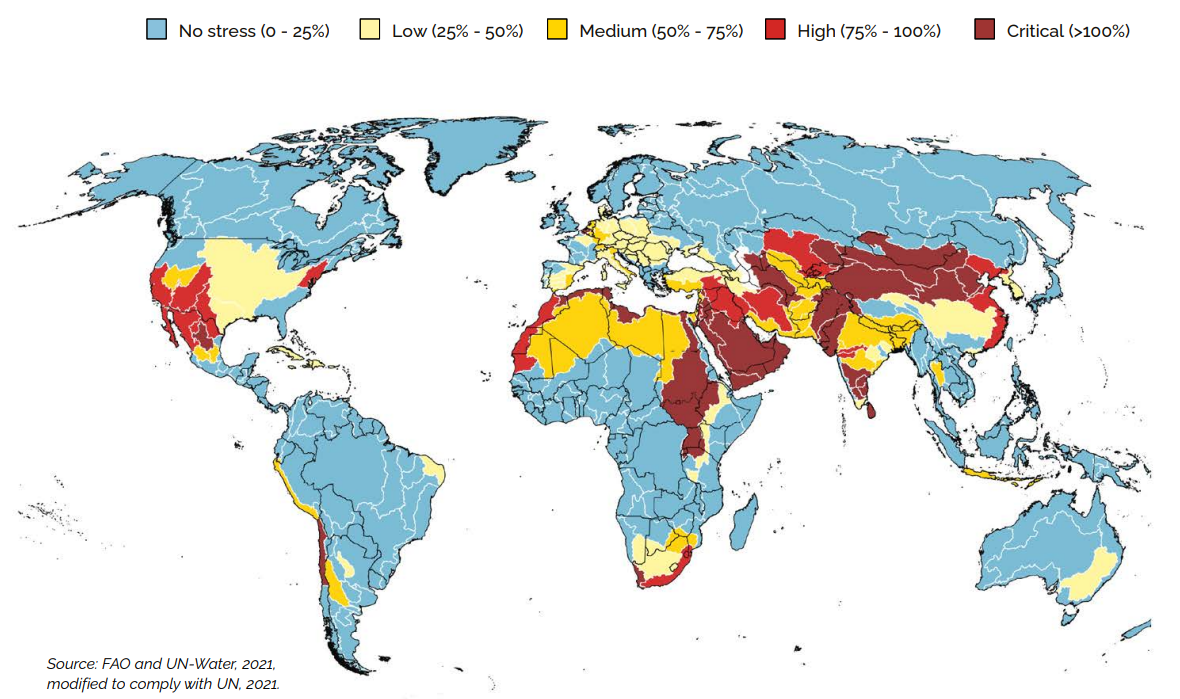
ADVANCING SUSTAINABLE BIOENERGY DEVELOPMENT
New, advanced technologies make it possible to produce climate neutral fuels from non-forest and non-food energy crops. The benefits of cultivation and use of these energy crops for transport fuels and electricity goes beyond the benefits of reducing greenhouse gas emissions. Terrestrial energy crop cultivation and aquatic energy crop harvesting reverses land and water degradation, increases biodiversity and carbon sequestration and improves land fertility. We call this
Deep Green Biomass. Moreover, deploying these energy crops for the production of advanced biofuels will positively impact social-economic structures and energy independence and reduce the need for involuntary migration and deforestation: Deep Green Energy.
Deep Green Energy Partners works to accelerate deployment of deep green biomass for the production of advanced biofuels and biochemicals, to restore soil and water conditions and to optimize the overall ecological-economic effects of investments in the energy transition.
These new bio-technologies and the rapidly changing climatic conditions have put the circular bio-economy and the sourcing of sustainable carbon back on top of the agenda. As sustainable, renewable biomass is only limited available we will need fast growing, climate resilient, renewable, soil and water improving and cheap biomass: energy crops.
McKinsey calculated that the capital spending on physical assets for energy and land-use systems (now responsible for about 85% of all emissions and 90% of all fresh water consumption) in the main net-zero transition scenarios would amount to about USD 275 trillion between 2021 and 2050.
This is USD 9.2 trillion per year on average, an annual increase of as much as USD 3.5 trillion from today. To put this in comparative terms, the USD 3.5 trillion is approximately equivalent, in 2020, to half of global corporate profits, one-quarter of total tax revenue, and 7 percent of household spending. In addition $1 trillion of today’s annual spend would need to be reallocated from high-emissions to low-emissions assets.
ADVANCING SUSTAINABLE BIOENERGY DEVELOPMENT
New, advanced technologies make it possible to produce climate neutral fuels from non-forest and non-food energy crops. The benefits of cultivation and use of these energy crops for transport fuels and electricity goes beyond the benefits of reducing greenhouse gas emissions. Terrestrial energy crop cultivation and aquatic energy crop harvesting reverses land and water degradation, increases biodiversity and carbon sequestration and improves land fertility. We call this
Deep Green Biomass. Moreover, deploying these energy crops for the production of advanced biofuels will positively impact social-economic structures and energy independence and reduce the need for involuntary migration and deforestation: Deep Green Energy.
Deep Green Energy Partners works to accelerate deployment of deep green biomass for the production of advanced biofuels and biochemicals, to restore soil and water conditions and to optimize the overall ecological-economic effects of investments in the energy transition.
Even if we would be able to Biomass is the only regenerative and restorative resource available but to be renewable it must be replenished at least as fast as it is harvested. Energy crops can be harvested from every few months to every few years from planting, restore soil conditions and ecosystems and so can be renewable .
Energy crops can be deployed for food, feed, fuel, chemicals and construction materials and it provides the business case for co-farming of trees for further biodiversity improvement. The more Adaptation: The process of adjustment to actual or expected climate and its effects For greening our food, material energy system As a result the both amount of atmospheric carbon and the downwards flow to oceans will increase.
Implemented on large scale it will improve food, water and energy security as well as biodiversity and reduces the need for scarce natural resources.
Adaptation: The process of adjustment to actual or expected climate and its effects For greening our food, material energy system we have to start material and Carbon budgets are based on a relatively simple idea: the amount of global surface temperature warming tends to increase proportionately with the total (cumulative) emissions of CO2 focused on reaching net zero. Both the net emissions and assumed proportionality is based on best effort estimates and models. The effects of net cumulative emissions and the global surface temperature however depends on the Earth's feedback systems, their interacting effects and possible chock effects like the pace and impact of thawing permafrost and ice mass or reforestation which are uncertain. Hence the budget imbalance of -0.3 Gt.
ADVANCING SUSTAINABLE BIOENERGY DEVELOPMENT
New, advanced technologies make it possible to produce climate neutral fuels from non-forest and non-food energy crops. The benefits of cultivation and use of these energy crops for transport fuels and electricity goes beyond the benefits of reducing greenhouse gas emissions. Terrestrial energy crop cultivation and aquatic energy crop harvesting reverses land and water degradation, increases biodiversity and carbon sequestration and improves land fertility. We call this
Deep Green Biomass. Moreover, deploying these energy crops for the production of advanced biofuels will positively impact social-economic structures and energy independence and reduce the need for involuntary migration and deforestation: Deep Green Energy.
Deep Green Energy Partners works to accelerate deployment of deep green biomass for the production of advanced biofuels and biochemicals, to restore soil and water conditions and to optimize the overall ecological-economic effects of investments in the energy transition.
"Dependence on fossil energy sources is not only considered a peril to our planet, it is also increasingly seen as a threat to national security and our values of liberty, freedom and democracy" as the European Central Bank puts it. This is might be very true but the focus on rapid and maximal decarbonization is risky and does little for food or water security. Investments costs are rising
due to multiple supply chain pressures, tight markets for specialised labour and services, and the effect of higher energy prices on essential construction materials like steel and cement. After years of declines, the costs of solar panels, wind turbines nt up by between 10% and 20% since 2020
and U.S. wind and solar contracts rose 15.7 percent in 2021. and over the last year prices for critical minerals exploded
Essential metals and minerals sources and processing capacity for decarbonisation are largely controlled by undemocratic global power competitors, the skilled workforce needed is absent and public support is turning towards a ''not in my backyard" attitude thus the feasibility of a "rapid, affordable and independent low carbon energy supply" is questionable.
Resource and investment choices have to made , bring down production cost as seen for solar and wind More frequent and intensive extreme weather events and a slowdown of by decarbonization have become realistic. Natural gas price benchmarks in Europe and Asia were ten times higher in October 2021 than one year prior
but is does mean divide our mitigation efforts and investments more equally between developing a climate resilient, circular biobased economy and building solar panels and windmills. . Moreover, the cost and a success of any transition to a net zero economy will largely depend on global coordination, cooperation and solidarity. Since then global economic and geopolitical circumstances took a downturn and so did the already slim chances of GW remaining below 1.5-2°C. and meeting additional demand by 2050 from the grown world population will be impossible within the current supply and production systems
At the time the IPCC reports were released McKinsey estimated the upfront spending on physical assets for energy and land-use systems (responsible for about 85% of all emissions) needed for various net-zero scenarios 2050 at USD 275 trillion. This translates in an annual additional spending of USD 3.5 trillion annually up to 2050 compared to today. Of that amount around USD 2 trillion is destined for electrification: solar, wind, hydro, nuclear and network expansion, USD 60 billion to enable more emissions-efficient farming and USD 40 billion to forestry and USD 175 to biofuels, so less than 15% of the total amount is destined to the bio-economy . Natural gas price benchmarks in Europe and Asia were ten times higher in October 2021 than one year prior
, more frequent and intensive extreme weather events and a slowdown of the energy transition by decarbonization have become realistic. In order to minimize increasing food and water scarcity and conflict driven mass migration we will therefore have to divide our mitigation efforts and investments more equally between developing a climate resilient, circular biobased economy and building solar panels and windmills.
ADVANCING SUSTAINABLE BIOENERGY DEVELOPMENT
New, advanced technologies make it possible to produce climate neutral fuels from non-forest and non-food energy crops. The benefits of cultivation and use of these energy crops for transport fuels and electricity goes beyond the benefits of reducing greenhouse gas emissions. Terrestrial energy crop cultivation and aquatic energy crop harvesting reverses land and water degradation, increases biodiversity and carbon sequestration and improves land fertility. We call this
Deep Green Biomass. Moreover, deploying these energy crops for the production of advanced biofuels will positively impact social-economic structures and energy independence and reduce the need for involuntary migration and deforestation: Deep Green Energy.
Deep Green Energy Partners works to accelerate deployment of deep green biomass for the production of advanced biofuels and biochemicals, to restore soil and water conditions and to optimize the overall ecological-economic effects of investments in the energy transition.
Historical anthropogenic (human caused) cumulative greenhouse gas have rissen with resulted in an average rise of global temperatures of around 1.2C above pre-industrial levels up to 2020. At the COP26 in 2022 new pledges were made that could limit warming to 2C. A decoupling of GDP growth from Emissions growth to an extend that would make economic growth and emissions reductions possible is the for unlikely If we continue business as usual we are heading for 2.7-3.5C global warming. In the IPCC modelled pathways consistent with the continuation of policies implemented by the end of 2020, GHG emissions continue to rise, leading to global warming of 3.2°C by 2100.
The speed in which global warming is increasing and the effects of climate change become apparent keeps surprising us and might well keep doing so. We know what essentially needs to be done: reverse the carbon flows between the atmosphere and terrestrial reservoirs. At the same time we will however likely also need at least 35% more food, water and energy and 80% more materials and to restore our forests, soils and eco-systems by 2050. Today about 72% of all greenhouse gas emissions comes directly from extracted fossil fuels of which 85% is used for energy and 10-15% for chemicals. So let's assess if and how we can do all in the limited time we have left before climate change spins completely out of our control.
ADVANCING SUSTAINABLE BIOENERGY DEVELOPMENT
New, advanced technologies make it possible to produce climate neutral fuels from non-forest and non-food energy crops. The benefits of cultivation and use of these energy crops for transport fuels and electricity goes beyond the benefits of reducing greenhouse gas emissions. Terrestrial energy crop cultivation and aquatic energy crop harvesting reverses land and water degradation, increases biodiversity and carbon sequestration and improves land fertility. We call this
Deep Green Biomass. Moreover, deploying these energy crops for the production of advanced biofuels will positively impact social-economic structures and energy independence and reduce the need for involuntary migration and deforestation: Deep Green Energy.
Deep Green Energy Partners works to accelerate deployment of deep green biomass for the production of advanced biofuels and biochemicals, to restore soil and water conditions and to optimize the overall ecological-economic effects of investments in the energy transition.
Nevertheless we will have to increase food production with 35-50% by 2050 to feed the growing world population. To asses if and how this can be done simultaneously with land restoration the Dutch PBL has developed three scenarios for meeting the world need for food and land restoration without substitution of part of land-based food production by the new, soil-less food technologies.
ADVANCING SUSTAINABLE BIOENERGY DEVELOPMENT
New, advanced technologies make it possible to produce climate neutral fuels from non-forest and non-food energy crops. The benefits of cultivation and use of these energy crops for transport fuels and electricity goes beyond the benefits of reducing greenhouse gas emissions. Terrestrial energy crop cultivation and aquatic energy crop harvesting reverses land and water degradation, increases biodiversity and carbon sequestration and improves land fertility. We call this
Deep Green Biomass. Moreover, deploying these energy crops for the production of advanced biofuels will positively impact social-economic structures and energy independence and reduce the need for involuntary migration and deforestation: Deep Green Energy.
Deep Green Energy Partners works to accelerate deployment of deep green biomass for the production of advanced biofuels and biochemicals, to restore soil and water conditions and to optimize the overall ecological-economic effects of investments in the energy transition.
Moreover, energy crops and grasses have several additional characteristics that make them attractive for energy production and sustainable land management. The specific benefits vary by species and climate zones but are similar in general. Miscanthus, as example is highly tolerant of multiple environmental stressors like flooding, salinity, toxins and cool soil temperatures. This robustness makes it possible to establish relatively high-yielding Miscanthus fields on marginal land, e.g. wastelands, wet (coastal) areas, abandoned milling sites and mountain slopes. It has very high yields without fertiliser due to nitrogen-fixing bacteria in its roots and improves soil quality and water‐holding capacity. It is sterile and thus non-invasive to native species. It enhances biodiversity by providing cover for a variety of shade-tolerant plants, invertebrates, woodland bird species and butterflies. Planting Miscanthus to restore depleted croplands or overgrazed grasslands restores overall soil quality and water containment, it is als carbon negative (the LUC emissions above) as carbon soil sequestration is increased substantially, as illustrated below. B efore looking into the restorative land based scenarios, lets have a closer look at our food systems, their emissions and the possibilities of substituting land based food production with indoor alternatives. below 200 EJ in 2100. According to IPCC (2019a), the land demand for bioenergy crops in pathways that limit warming to 1.5 °C or 2 °C ranges from 3.2 to 6.6 million km2 in 2100, representing 20%–42% of current global cropland. Hence, these assessments seem to suggest that vast deployment of bioenergy is indispensable for keeping temperature rise below 2 °C or 1.5 °C
It remains questionable whether large cropland areas can be made available for biomass production without compromising food security. The availability of energy crop potentials depends on various socio-economic developments and underlying narratives; previous studies have identified projections for crop yields and future diets to be among the main reasons for diverging estimates of energy crop potentials
In the absence of any land use, ecosystems tend to grow back to their potential carbon stocks (Erb et al 2018), or land can be used for other purposes with effects on the overall C budget. Dedicated energy crops, specifically fast-growing trees (short rotation coppice) and energy grasses like Miscanthus (summarized as lignocellulosic or 'second generation' energy crops) appear as a favourable biomass resource for two reasons: (1) They provide relatively high yearly biomass yields per unit area. (2) Establishing such plantations on existing agricultural land typically leads to rising natural C stocks (i.e. C benefits additional to those from fossil fuel displacement) rather than a reduction of (possible long-term) C stocks, as is the case when raising harvests in forests.
erials and energy is often pictured as a competition of food, feed, forests and fuel production for limited land and water. This is however incorrect. Today there are hundreds of million hectares of abandoned and marginal lands unsuitable for forests, food or feed eroding due to lack of managed soil cover and many more will be added in the next decades. Increasing biomass supply by the right biomass - not trees, will be the best, if not the only option to make our material supply systems climate neutral and resilient and restore the world's soils and eco-systems. But if we don't scale these up alongside recycling our consumption pattern will keep leading us to abyss.
As demand for biomass will increase in all global resource extraction scenario we will have to find new, efficient and sustainable biomass sources before 2050. Trees don't qualify as these have a growth cycle of 30-100 years and are better used for other essential ecologic services, food crops are needed for food and most suitable bio-waste has already other uses.
Energy crops (e.g Miscanthus) however are
excellent for the purpose: a growth cycle of few months to a few years and they surpass any other plant or tree in carbon sequestration and energy yield per square meter-year. Moreover, they grow well on marginal lands all over the world, are climate resilient, require little water, fertilizer or maintenance. Energy crops are therefore the cheapest and best option to rapidly increase the supply of biomass as well as to improve soil quality.
Over 60% of rainwater evaporates above forests, savannah, grazing land and agricultural land (“green water”). About 40% of rainwater (43,000 km³) contributes to rivers, lakes, groundwater and glaciers (“blue water”), which then flows back into the oceans. Human blue water withdrawals make up about 9% (or 3,900 km³) of total blue water sources, with 70% of this being used for irrigation (2,700 km³) and the remaining 1,200 km³ for industry and households. Only a very small part of this water cycle serves as drinking water.
Climate change is accelerating land degradation and water shortage by droughts, wild fires, heavy rains and faster water evaporation. Besides it is also shifting where the water falls on land, with drier areas becoming drier still, and wet areas becoming wetter adding to the food and water stress in already problematic regions.
If emissions from electricity and heat production are attributed to the sectors that use the final energy, 90% of these indirect emissions are allocated to the industry and buildings sectors,increasing their relative GHG emissions shares from 24% to 34%, and from 6% to 16%, respectively. After reallocating emissions from electricity and heat production, the energy supply sector accounts for 12% of global net anthropogenic GHG emissions.
Even when we would recycle as best as we could we still would be needing additional raw materials so have we to look for the regenerative option, of which there is only one: biomass. Today about 72% of all greenhouse gas emissions comes directly from extracted fossil fuels of which 85% is used for energy and 10-15% for chemicals. Energy and chemical products made from fossil fuels could be almost completely substituted by biomass. Biomass can also be a substitute for, or integrated in building materials made from metals or concrete. This however will only be sustainable if we use the right biomass, which are energy crops (Miscanthus, Napier, willow etc.), and true waste until forests have recovered (see below).
Methane emissions can be captured and reused in a similar way to CO2. Extraction transport and production of fossil fuels is responsible for around 33% of direct methane emissions (oil and gas 24% and coal mining 9%). As methane is a fuel in itself purifying costs are limited and captured methane can be reused in production processes. Various technologies are already widely used to reduce methane emissions which also reduces emissions of volatile organic compounds, hazardous air pollutants, and other local air pollutants. Methane dissolves in the atmosphere to CO2 in approximately 12 years, but it's effect on global warming is about 30 times greater.
A substantial part of CO2 emissions from energy (85% of all CO2 emissions) can be avoided by capturing CO2 from production processes in fossil and industry for re-use or storage (CCUS). Carbon removal can happen through carbon sequestration by biomass (carbon farming) and technologies that capture carbon directly from the air for storage (DACCS) or use to avoid additional extraction of raw materials.
The figures below shows the fossil fuels use and share by sector in the IEA Net Zero Emissions from energy scenario by 2050. Overall Oil is the main fuel used for non combustion materials and for unabated combustion (no CCUS) in transport as it continues to fuel aviation in particular. A small amount of unabated coal and natural gas are used in industry and in the production of energy. The unabated use of fossil fuel which are fully offset by BECCS and DACCS in the NZE scenario.
In this scenario biomass use for energy will have to about double, modern bio energy will have to fourfold and traditional biomass must be phased out by 2050. Modern bioenergy covers all energy derived from biomass except that of the direct burning of wood, waste and dung (traditional biomass). Bioenergy is a versatile renewable energy source that can be used in all sectors, and it can often make use of existing transmission and distribution systems and end-user equipment. Around 10-15% percent of fossil fuels is used for chemicals that can be almost fully substituted by bio carbon.
A substantial part of CO2 emissions (85% of all CO2 emissions) can be avoided by capturing CO2 from production processes in fossil and industry for re-use or storage (CCUS). Carbon removal can happen through carbon sequestration by biomass (carbon farming) and technologies that capture carbon directly from the air for storage (DACCS) or to avoid additional extraction of raw materials.
CCUS at or before the smokestacks from refineries, factories and power plants is the most energy and cost efficient option as the carbon content in the captured stream is far more concentrated than in the air. DAC(CS) has the advantage that it can be applied anywhere in the world. CCUS can be retrofitted to most industrial installations. Most captured CO2 will have to be "purified" before it can be reused to produce fuels, chemicals, plastics etc. New treatment technologies reduce the complexity and costs for purification making reuse more attractive.
Carbon capture facilities can be retrofitted to existing plants ........... Not all CO2 emissions can however be captured at smoke stacks, in particular not in transport and in remote power supply (generators etc.). Substantial decarbonisation of energy in transport is possible for passenger cars and light freight but for long distance and heavy transport liquid fuels wil be needed. Hence we need advanced biofuels from energy crops to compensate for these emissions.
Advanced biofuels manufactured from various types of non-food biomass burn cleaner than either fossil or traditional biofuels. The net emissions of
advanced biofuels produced from energy crops are between 85% and 100% lower than those of fossil fuels. The negative emissions due to the high soil carbon sequestration of energy crops (short rotation coppice) makes them climate neutral. Advanced biofuels and energy crops are therefore key to neutralize emissions in the transport and heating sector.
ADVANCING SUSTAINABLE BIOENERGY DEVELOPMENT
New, advanced technologies make it possible to produce climate neutral fuels from non-forest and non-food energy crops. The benefits of cultivation and use of these energy crops for transport fuels and electricity goes beyond the benefits of reducing greenhouse gas emissions. Terrestrial energy crop cultivation and aquatic energy crop harvesting reverses land and water degradation, increases biodiversity and carbon sequestration and improves land fertility. We call this
Deep Green Biomass. Moreover, deploying these energy crops for the production of advanced biofuels will positively impact social-economic structures and energy independence and reduce the need for involuntary migration and deforestation: Deep Green Energy.
Deep Green Energy Partners works to accelerate deployment of deep green biomass for the production of advanced biofuels and biochemicals, to restore soil and water conditions and to optimize the overall ecological-economic effects of investments in the energy transition.
Today about 72% of all greenhouse gas emissions comes directly from extracted fossil fuels (the blue and part of the red gasses in the figure below). 85% is used for energy and 10-15% for chemicals. In the most optimistic scenarios we can replace 75% of fossil fuels used for energy by 2050. Decarbonizing chemicals and derived materials (plastics and other materials with embedded carbon) that are essentially made of carbon is practically impossible. So the potential for overall decarbonization current use of fossil carbons is about 60-65% of today's total fossil carbon use or about 45% of total emissions (the Climate Plus scenario). Most of the remaining carbon emissions can be captured or compensated by substituting fossil fuels with biomass.
Around 22% of greenhouse gas emissions comes from the release of carbons contained in biomass and soils by agriculture, forestry, burning, and other land-use to produce our nutrition, energy and carbon based materials. The emissions per category are more difficult to specify as they all can have both positive and negative impacts except for livestock.
DEEP GREEN ENERGY PARTNERS' VISION:
Carbon is also As fossil sources, forests, fertile soils were once cheap and abundantly available we built our energy, food and material production systems around them. But as our economies were happily steaming away we found that our carbon sources are not only infinite but their use also greenhouse gas to the atmosphere of which over 90% contain carbon. As we also reduced our natural land based carbon sinks - soils and forests - in the proces these greenhouse gasses are trapped which causes global warming and climate change, so we have to make some changes in our .
And there comes the bad news.
Firstly, the required investments in physical assets for energy and land-use systems for a transition to a net-zero economy by 2050 are substantial (rising from 6.8 percent of GDP today to as much as 8.8 percent of GDP between 2026 and 2030 before stabilizing at an estimated USD 9.2 trillion per year on average upto 2050, according to McKinsey). These investments are front-loaded, which raises the question of financing and the options for risk mitigation.
Secondly, the current focus of investments in electricity, and solar and wind in particular is too limited. Electricity networks cannot be upgraded fast enough to match new generating capacity, required resources are geographically concentrated which carries substantial risks (pollution, social, supply and price) and recycling is still a problem. Moreover, at the current roll-out pace a large part of the developed world will have cleaner electricity but a majority of the world population will not have sufficient money for (clean) energy. This might seem a problem for those others but it is actually our problem: overall demand for energy is outpacing the increase of solar and wind electricity supply, and that increasing demand surplus is satisfied by fossil fuels. Thus we keep on track for 3C or more global warming, rapidly increasing water and food scarcity, social unrest and mass migration.
The Deep Green System is based on a circular system whereby the carbon contained in any product is sourced from the atmosphere. The cycle is started by increased biomass carbon sequestration and land and ecosystem restoration through carbon and energy farming. The so produced biomass are used to produce food (cellular and indoor farming), energy (solid, liquid, gaseous and electricity) and materials (e.g. steel, cement, teflon, medicins). The process emissions are captured for either storage below ground or used as resource for new food, fuel, chemical or other materials production. The idea of a circular bio-based economy is not new or revolutionary, all technologies needed in the system already exist but the pace of implementation needs to be accelerated by a factor 100 to give us a chance to stay anywhere close to 2C warming and reduce massive involuntary migration.
The debate on climate change has lead to a kind of "apocalypse fatigue" or fear for their lifestyles. Many are worried but tired of doomsday warnings or discouraged by the lack of opportunity to make a difference and the realpolitik of governments that prohibits decisive action on a global level.
to stay below 2.0°C global warming.
to find the energy to take action. frustrated by the little impact of our individual behavior we can make ourselves and the realpolitik of our governments themslfs and tired of the endless predictions of devastation and misery. with the idea that whatever they is To slowdown global warming governments and industries have set ambitious goals: a 55% reduction of greenhousegas emissions reduction by 2030 and a climate neutral economy by 2050. Regretfully public and corporate strategies for achieving these goals are founded in traditional economic models, theoretical optimums and ultimately realpolitik. This has resulted in investments and policies that will unavoidably cause further depletion of the world's essential resources, will cause severe environmental and social damages and nevertheless keep the world on course for 2.5°C+ global warming as absolute emissions are only achieved in several decades. This means that we, individuals, households and businesses that are not impeded by shortterm elections and dividend policies or conflicting interests will have to change the course of the transformation of the world's energy and food supply chains.
The basic rationale behind the system
The degradation of one third of the world's soils has already prompted an enormous release of carbon into the atmosphere. Restoring these soils can remove up to 63 billion tonnes of carbon, significantly reducing the effects of climate change. Soils with high organic carbon content are likely to be more productive, better able to purify water and provide plants with optimal moisture conditions. The water stored in soil serves as the source for 90 per cent of the world's agricultural production and represents about 65 per cent of fresh water. Should we be able to sustainably replant these degraded lands with trees and energy crops (carbon farming) this would not only remove carbon from the atmosphere but also prevent a substantial part of the remaining 680 billion tonnes of carbon stored in the top 30 cm of the world's soil from leaking to the atmosphere.
The IPCC scenarios limiting global warming to 1.5°C show an increase in forest cover of about 322 million ha (between -67 to 890 million ha) in 2050. In these scenarios the cropland area to supply dedicated biomass for bioenergy (energy crops) is around 199 (56-482) million ha in 2100. When other renewable energy and carbon capture technologies, energy savings or reforestation are not implemented fast enough much more energy crops will be needed to compensate for excess emissions.
Energy crops are not only the most efficient option for carbon sequestration and bioenergy production. They also rapidly restore soil carbon and water retention, decentralize energy sourcing, support the business case for reforestation while halting deforestation and further improving biodiversity. Energy crops are hardy and grow well on marginal lands in different climates all over the world, so there is no competition with food and forestry over land. Harvesting times vary from a couple of months to a couple of years depending on species and climate zones which makes them key to a steady biomass supply that can be flexibly deployed for the production of fuels, food, feed, chemicals and fertilizers or construction materials. Carbon is, and will remain a key building block for the chemicals, fuels and materials and organic carbon and energy farming can provide many small farmers all over the world with a steady income thus reducing the need for mass migration, land abandonment and urbanisation.
The carbon (soil) sequestration characteristics of energy crops and their (ultra) short growth cycle makes that solid or 2nd generation liquid and gaseous fuels (advanced biofuels) and the electricity produced from them can be close to climate neutral. As these fuels are comparable in composition to their fossil counterparts (coal, oil and gas) they can to a large extend use the existing transport and refinery capacity and infrastructure. In combination with carbon capture (BECCS) these fuels become carbon-negative, which means that we can have carbon-negative electricity, heat and bio-chemicals as well as carbon neutral transport fuels for shipping and aviation within a few years.
Carbon capture however goes beyond emissions from energy and plays a significant role in all scenarios that limit global warming to 1.5°C or 2°C. In order to reach net zero CO2 emissions for the carbon needed in society (e.g., plastics, wood, aviation fuels, solvents, etc.), it is important to close the use loops for carbon and carbon dioxide through increased circularity with mechanical and chemical recycling. More efficient use of biomass and captured CO2 in production processes with addition of low GHG hydrogen will not only increase product yields in cement, steel and energy production but also drastically reduce emissions and natural resources use in food production systems through cellular agriculture and vertical farming.
Cellular agriculture is the process of growing agricultural products, like meats and other proteins in laboratories through stem cell cultivation or cellular fermentation. Vertical farming is a soilless farming technique for farming of vegetables and fruits that are stacked in tall columns above each other to grow in a controlled, optimized environment. These new farming technologies using established fermentation, photosynthesis and stem cell cultivation techniques, will make food production to a large extend location, season and climate independent while drastically reducing the need for land, deforestation, water and transport. Cellular and vertical farming basically require electricity, carbon dioxide and the later also fertilizer, which all three can be provided by using energy crops to produce electricity. This creaties the potential for a largely carbon neutral (or negative) and decentralized food system for the production of proteins, fruits and vegetables as well.
It will however also rob many farmers, ranchers and rural communities of their livelihoods and free up billions more hectares of land, of which an ever larger share is in danger of falling pray to erosion due to climate change and land abandonment. Carbon and energy farming will provide a steady alternative to these ranchers and farmers as demand will increase continuously from all sectors: food, energy, chemicals and construction materials. Of course vegetable, fruit, meat can and will still be produced in the traditional way but in far less amounts freeing more existing transport capacity infrastructure for energy crops.
But we have to it right this time to be effective which is why we need transparency concerning emissions and socio-ecological impacts throughout the supply chain.
Dedicated energy crop, laboratory and vertical farming as well as advanced biofuel production has only just started which enables us to implement a blockchain based transparency throughout the supply and value chain to ensure that we don't make the same mistakes
The technologies are there, the government support is there and trillions in green funds are looking for sustainable deployment. What is needed now are the new business models and supply chains and the will to make the transition from a fossil to a bio and renewable based production system happen. Deep Green Energy Partners delivers the platform to facilitate the development and finance of these deep sustainable supply chains.
. Both can be delivered by bio based solutions (energy crops, trees, food crops) and technology (smoke stack carbon capture and storage, wind, solar, hydro and tidal). The bio based solutions in combination with carbon capture are a key element in all scenarios that likely limit warming to 2°C or 1.5°C by 2100. Across the scenarios likely limiting warming to 2°C or below, Annual CO2 volumes captured in 2050 are 2.75 (0.52–9.45) GtCO2 for BECCS, 2.98 (0.23–6.38) GtCO2 for the net CO2 removal on managed land (including A/R), and 0.02 (0 -1.74) GtCO2 for DACCS. again.
The rational behind this supply chain
Carbon farming
Today 3 to 4 billion hectares of abandoned and depleted lands are eroding worldwide, several tens of millions hectares are added each year and climate change is speeding up the proces. Most of these lands were once covered with healthy soil but are now rapidly losing their ability to cycle and hold the carbon, nitrogen and water to sustain vegetation or species. Land erosion causes soil carbon and nitrous oxide to leak to the atmosphere and turns land into a source of greenhouse gas emissions instead of the carbon and fresh water reservoir it once was. On average 24% of arable land globally is undergoing severe erosion. Should we be able to replant these lands with trees and crops and increase overall soil carbon by just 1% this would stop greenhouse gas leakage to the atmosphere and offset 75% of all emissions from energy use. Replanting however costs money and as long as there is no steady support for carbon sequestration through carbon farming we need a business case that also makes it profitable in itself: energy farming.
Energy farming
Trees and plants, absorb carbon dioxide through photosynthesis which is partially stored in the soil, where it forms the habitat for the micro-organisms that are essential for all vegetation and species, the remainder is stored in the above ground part of the biomass. The above ground part can be directly, or after processing be combusted or gassed to produce heath and energy, during which these carbons are released again to the atmosphere. So, as long as the amount of sequestered soil carbon is higher than that released during tiling, planting, processing and transport biomass energy is climate neutral. This makes the carbon (soil) sequestration capacity and above ground carbon mass per hectare decisive for the suitability of any particular species for energy farming, and than there is the element of time.
Trees, energy crops and the element of time in energy farming
Carbon sequestration rates of trees are low in the first few years until the time trees reach their maximum rates of growth. Trees take anywhere between 25-100 years to reach maturity at which point trees become more or less carbon neutral: they absorb and sequester as much carbon as they emit through respiration and the decay of litter. This growth-carbon cycle makes that the practice of burning a grown tree and at the same planting a new one creates an atmospheric carbon surplus (or carbon debt) over a 25-100 year period. There is however an alternative that sequesters more carbon, has a far shorter growth-carbon cycle than trees but cost the same as forest wood: energy crops.
Energy crop farming
Energy crops, perennial grasses, reeds and short rotation crops (e.g. Miscanthus, Napier, Willow) have short growth-carbon cycles and several characteristics which make them extremely suitable for soil restoration as well as energy production: high yield potential, high lignin and cellulose content, high carbon sequestration rate, positive environmental impact, short harvesting cycles and little risk of soil erosion. This applies in particular to perennial grasses as these can be harvested, depending on species, land and climate conditions between every 4 months to every year, the need for soil tillage is limited to the year in which the crops are established and little fertilizers are required which results in a carbon debt of one year.
But cultivating energy crops has more advantages. The rhizome system of perennial rhizomatous grasses allows them to recycle and store nutrients. This results in very efficient use of nutrients and low demand for fertilizers and water allowing energy crops to grow well on marginal, dry, wet or contaminated lands all over the world unfit for other crops. These lands can thus be saved from further erosion while the abundance and activity of different species, especially birds, mammals and insects is increased.
Invasive water crop farming
Various invasive reeds and weeds, like water Hyacinth and Cattail are choking rivers, lakes and invading adjacent lands. As a result shipping lanes get blocked, hydro power and irrigation channels are obstructed, rice fields become useless, fish stocks are decimated and deceases are spread and as their sediments rot substantial amounts of methane are released to the atmosphere. Permanently removing these harmful reeds and weeds has often proven futile since they grow back almost immediately. Continuous clearing and harvesting is therefore the only option to reduce those methaan emissions and restore the ecological and economical function of these waters and has the benefit of creating a carbon credit from the start.
Integrated farming of food, forests, fibers, fuels and fibbers
Integrated carbon farming of food crops, energy crops and trees can provide a flexible, sustainable supply of the food, feed, fuels, fibers and chemicals and income. As various crops and trees each have their specific characteristics they should be deployed accordingly. Food crops need scarce fertile soils so should be used for food. Trees are hard to replace and should be deployed as protection for crops against wind, rain and sun, to fulfill their a crucial role in ecosystems and for fibers, and that under the condition that the particular tree is fully grown and was planted for that specific purpose and not to compensate for emissions. Energy crops should be used as replacement for trees, food crops and fossil fuels to produce fuels and chemicals and to provide fibers to local markets as this has the highest potential of reducing deforestation as well as emissions from land degradation and energy use.
The rational behind 2nd generation biofuels and electricity from energy crops
Energy crops can be converted into pellets or clean burning liquid fuels and gasses, called 2nd generation or advanced biofuels, which have a similar composition as wood, crude oil or natural gas. Hence their deployment requires minimal adaptions to existing distribution infrastructure, engines and turbines reducing roll out times and costs. The combined characteristics of energy crops and advanced biofuels causes around 55-95% of all GHG emissions from their deployment as fuel to be neutralized. When the avoided soil carbon loss from land erosion is added this becomes around 70-110% or more. (Electric cars reduce emissions by 25-75%).
For those parts of the transport sector (heavy trucks, ships and airplanes) and heavy industry (cement, steel, chemicals), heat and power plants (reliable 24/7 base load supply) that require high energy density fuels advanced biofuels and energy crop pellets are the one option to timely reduce emissions. Alternatives provided by wind, solar, hydro(gen) or nucleair energy will not be available within the next decades as it simply takes too long to build the required infrastructure and storage capacity.
Carbon capture technologies
In all scenarios that limit global warming to 2 degrees carbon capture and storage is required to compensate for "emissions overshoot" during the next decades. Various technologies are tested in an operational setting
Once carbon capture technologies become commercially available energy crops are the only resource that can timely provide the volumes needed for carbon negative heat and electricity production.
Moreover, energy carbon farming will provide the quick and steady cashflow to sustain the livelihoods of millions of rural communities as well as the cost for reforestation. Thus it will help to halt land abandonment, soil erosion, poverty and climate change driven migration. Hence we call energy crops Deep Green Biomass and the fuels produced from them Deep Green Energy.
In most 2GW scenarios that do not rely on drastic behavioral changes between 200 and 1000 million hectares of energy crops will be needed for energy by 2100. Today there are around 700 million hectares available without competing with food and reforestation over land or water and only 1 million of those are used for energy crops. Pelleting technology is already widely deployed for decades and mid-size plants can be set-up on the farm within 1-2 years. The first technologies for advanced liquid biofuels from energy crops have become commercially available in the last few years and more are close to commercial maturity. Production of advanced biofuels is done in two steps, the first is the production of a biocrude which can be done at relatively small scale plants close to the energy crop farm, plant construction time is 2-3 years. The second step is refining and upgrading of the biocrude which can be done in dedicated plants or in existing refineries. Today about 0.6 billion litres of advanced liquid biofuels are produced per year and 2GW will require at least 150 billion liters by 2035. What is needed now are the new sustainable business models and supply chains to integrate carbon farmed energy in the existing energy system.
The rational behind laboratory foods
Food Precision fermentation and cellular agriculture technologies enable the production of proteins in laboratories. Laboratory foods require a fraction of the land, water and energy to produce better quality, healthier meats, milk, flour and other proteins at lower prices than land-based production. This means that a large part of our food can be produced independent of land and climate conditions, right next to every major city in the world. Which is all good news for consumers, animals, forests (less deforestation for soy and palm), the environment and climate (less fertilizers and transport). But bad news for farmers and rural communities as land prices will fall while their livelihoods disappear. To avoid the consequential cycle of land abandonment, migration, soil degradation and land desertification alternative future proof sources of income are needed; carbon farming.
Laboratory food technologies are now in the phase of demonstration plants and close to commercial readiness, their success will however largely depend on the availability of sustainable electricity and CO2 capture for their production process. Deployment of energy crops to produce that electricity with carbon capture will provide both, and once we do so we have closed the carbon loop of a significant part of our food system as well, hence we call thus produced foods Deep Green Foods.
Braking the cascading effect of climate change
Greenhouse gases (GHGs) like carbon dioxide (CO2) and methane trap the sun’s energy in earth’s atmosphere as heat. As more and more GHGs are released, more heat gets trapped and the planet keeps warming up which results in evermore frequent extreme temperatures, droughts, rains, storms, floods and wildfires. This in turn lead to more wildfires, land erosion, disappearing forests and melting glaciers and permafrost which in turn leads to more GHGs in the atmosphere and so on. Even when we could stop all GHG emissions today we would still need to remove around 20% of the GHGs in the atmosphere to bring this vicious circle to a halt.
The new land-food-energy system also has a cascading effect, and that effect can brake the self-strengthening cycle of climate change. The more land is used for carbon farming, the less emissions from land erosion, deforestation, food production and fossil fuels and the more soil carbon is preserved and sequestered. The more laboratory food is produced, the less land, water and fuels are needed for food production and transport and the more land becomes available for carbon farming and so on. Once laboratory food production takes-off up to an additional 3000 million hectares will become available and the fast majority of that land needs to be managed through carbon farming to protect it from erosion due to the effects of climate chang
Many of us shown their will to participate by putting solar panels on their roofs, participating in local wind projects, buying locally grown foods, reducing the use of plastics, buying electric cars, planting trees and directing our savings towards Green investments etcOver the last decades many reports on climate change and its causes, impacts and remedies have been written by the IPCC, IEA, Shell and many other thousands of NGOs and research institutions. The technical potential of each particular renewable energy source has been researched, calculated and priced per country, region and globally. New management techniques for agriculture and forestry have been developed, tried and adjusted to become climate effective for specific regions. On national and regional levels many policies have been adopted to induce a transition to a climate neutral food-fuel system. Nevertheless emissions from energy use and agroforestry keep increasing year on year.
This raises the question why, when the majority of governments and industry leaders and man consumers claim to see the urgency for decisive action so little is actually done. The answer is simple: conservatism, individualism and protectionism. Achieving 1.5-2GW will cause a disruption of the fundamental business models and supply of the worlds food and energy supply system that will inevitable impact the economic and geopolitical position of nations and multi-nationals. As neither countries, companies nor consumers like to share their comparative influence or wealth, even when it is to their own benefit, supply of alternative, sustainable food and energy was delayed and demand for it discouraged by the thread of higher prices and the idea of "climate communism".
As a result we are still locked in a fossil world in which consumers have a very limited choice for sustainable alternatives. We can buy an electric car, chose for solar or wind sourced electricity, purchase our vegetables and milk from the local farmer and eat meat substitutes. But as long as there is insufficiënt supply of sustainable and affordable electricity, fuels or proteins these are drops on an ever hotter plate. If we leave it to the same governments and oil & gas industry that put us where we are today we will never make the transition in time. Which is why we, individuals and companies that are not limited by territorial constraints, shortterm elections and profits have to play an active role in the transition.
Consumer participation wil force the energy industry to follow or perish
Producing our own fuels might seem strange but it is actually not much different than what is happening in the electricity market. There we have the choice to buy electricity from different sources or to produce our own from solar panels or through windmill cooperatives. There are a few basic enabling elements for consumer participation in energy supply - government mandates for clean source energy, subsidies and access to existing technology and distribution infrastructure – all these are now also present for sustainable fuels.
Impacts of the system transition
In the energy system transition much of the processing and distribution infrastructure can remain intact but hundreds of billions of fossil reserves and dedicated fossil investments will have to be written off. The food system transition will make a large part of the current proteïne supply chain obsolete and in particular the cattle, fish and soy industries will be hit hard. These losses will however be more than compensated by new profits from carbon farming, laboratory food, renewable energy production and avoided damages from climate change.
And yes, it will also shift some of the profits and power to areas in the world that had little advantages before. But without this these countries, where most of the world population lives, will not be able to develop or buy in to the new energy and food system and the old system will continue. Currently 800 million people go hungry and 3.2 billion people live in agricultural areas with high to very high water shortages and climate change is accelerating land, food and water stress. To some this might be of little concern but in a business as usual scenario an expected 2-3 billion people will be driven into mass migration by hunger and thirst well before 2050, which wil make it their concern whether they like it or not.
Consumers are key to successful transition
More and more people are willing to do something to help reduce climate change but we are given a limited choice between sustainable or non-sustainable food and fuels. We can buy an electric car, purchase our vegetables and milk from the local farmer and eat meat substitutes but as long as there is insufficient "clean" electricity, feed or proteins this is just a small drop on an ever hotter plate. Making a real difference means large sacrificies to our lifestyles and freedom; stop driving, stop flying, stop eating meat and fish and turn of the heating and lights at 8 a clock. Not surprisingly most people become less enthusiastic when realizing what is asked of them when they wish to make a difference. This however a false choice, carefully planted and supported by framed objections: the rest of the world won't make the required amends, the transition is incredablly expensive, there is no logic in me making a sacrifice as it only will be effective when we all do it, so lets proceed as usual and enjoy life while it lasts.
We have left it to the companies that are responsible for this lack of choice to give us that choice, and we continue doing so the Arctic will have melted. Countries and companies with large fossil reserves and industries and/or large food industries stand to lose competitive advantages while countries with large landmass for carbon farming stand to gain.
"We have to stop driving unless w And if that is not enough, we will have to pay more for the sustainable alternatives although any sacrifice is futile anyway as the Chinese, Russians or Brazilians are not doing it to. ." sacrificies to our lifestyles and freedom. "We have to stop driving unless we buy an electric car, stop flying, stop eating meat, and feel guilty when we put on the airco or go on holidays, etc. And if that is not enough, we will have to pay more for the sustainable alternatives although any sacrifice is futile anyway as the Chinese, Russians or Brazilians are not doing it to. So if it is true that all is lost if they don't make amends, I don't see the logic of me making a sacrifice, etc."
something about it but the options are limited and have been successfully framed as sacrificies to our lifestyles and freedom. "We have to stop driving unless we buy an electric car, stop flying, stop eating meat, and feel guilty when we put on the airco or go on holidays, etc. And if that is not enough, we will have to pay more for the sustainable alternatives although any sacrifice is futile anyway as the Chinese, Russians or Brazilians are not doing it to. So if it is true that all is lost if they don't make amends, I don't see the logic of me making a sacrifice, etc."
This framing has worked as there is some superficial truth to it, but it is within our power, private individuals, households and businesses, to change the underlying causes
More and more consumers are willing to take measures at an individual level as the effects of heatwaves, wildfires, floods and storms are becoming evident. But the options to make a difference on an individual level are limited as most of us have have little controle over the production of the food we eat or the fuels we put in our cars and as the industries that control the supply chain. We have left the production and supply chain of food and energy in the hands of energy and food companies and our governments that are simply not willing or incapable to offer us the choice of a sustainable alternatives. So we are left with one option if we want that choice: set-up the production and supply chains ourselves.
There however is one major difference: whereas electricity production and distribution is traditionally (in)directly controlled by regional and national governments, the food, oil and gas industry is not. Incumbent food, oil and gas companies have to operate in a highly competitive global market and this has created a catch 22 situation: long term climate gains can only be achieved through accepting trillions of stranded assets, lower dividends and a complete overhaul of their business models. Not-surprisingly the industry prefers not to invest in direct cannibalization of its fossil reserve investments while it has the opportunity to branch out and become dominant in solar and wind power supply.
Current government policies don’t force the oil and gas industry to produce sustainable food and fuels against their will as this might jeopardize food and energy security or the national income from these industries or companies. Instead they have implemented a framework that makes it more profitable for the oil and gas industry to cooperate in upgrading, blending and distribution sustainable fuels than not doing so. For food companies the situation is comparable, they will not be forced to switch to laboratory food production but as it will be the cheaper and most efficient option they will fall in. So the incumbent industry actors will become our partner but we have to start production ourselves if we don’t want to wake up in a 2.6-3.2C GW world.
RethinkX argues in its latest report on climate change that a disruption of our energy system by solar, wind and batteries and our food system by laboratories foods is inevitable as both are the cheaper option and the cascading effects can stop climate change before it spins out of controle. If we can make it in time will depend on whether or not we deploy these technologies in time.
alternatives and have been successfully framed as sacrificies to our lifestyles and freedom. "We have to stop driving unless we buy an electric car, stop flying, stop eating meat, and feel guilty when we put on the airco or go on holidays, etc. And if that is not enough, we will have to pay more for the sustainable alternatives although any sacrifice is futile anyway as the Chinese, Russians or Brazilians are not doing it to. So if it is true that all is lost if they don't make amends, I don't see the logic of me making a sacrifice, etc."
. e and more people are accepting that climate change is happening and the consequences are very unpleasant. Experiencing the effects of heatwaves, wildfires, floods and storms in your own backyard, or close to home increases the willingness to do something about it but the options are limited and have been successfully framed as sacrificies to our lifestyles and freedom. "We have to stop driving unless we buy an electric car, stop flying, stop eating meat, and feel guilty when we put on the airco or go on holidays, etc. And if that is not enough, we will have to pay more for the sustainable alternatives although any sacrifice is futile anyway as the Chinese, Russians or Brazilians are not doing it to. So if it is true that all is lost if they don't make amends, I don't see the logic of me making a sacrifice, etc."
This framing has worked as there is some superficial truth to it, but it is within our power, private individuals, households and businesses, to change the underlying causes
Of course it is true that at an individual level our options are limited by choices offered we have in fuels and foods but we can change this taking up production ourselves. Of course est in a sustainable energy and food system but that doesn't mean that it more expensive
Land, soil and the carbon system
The world’s land surface is about 15 billion hectares of which a third is covered by deserts, rocks, glaciers, structures (buildings, roads etc.) and water. The remaining 10 billion hectares is arable land covered with soil, of which 40% is used for livestock and feed production, 10% is used for food crops, 40% is covered by forests and 10% by scrubs etc. The worlds soils store around 2,500 Gt of carbon. Carbon is the foundation of all life on earth, required to form complex molecules like proteins and DNA, a key ingredient in food, a major source of energy and helps regulate earths temperature.
Soils have a central role in the carbon exchange mechanism between the atmosphere, water, biomass and soils itself. The world’s soils store more carbon than the planet’s biomass and atmosphere combined. This includes soil organic carbon, which is essentially biodiversity: microbes, fungi and invertebrates, as well as root matter and decomposing vegetation. Soil organic carbon contributes to the fertility of the soil and to its capacity to hold water, and therefore to a large extent determines the capacity of the soil to produce food and to support biomass carbon sequestration and other biodiversity.
The earth and its atmosphere form a closed environment and the total amount of carbon in this system does not change. Where the carbon is located — in the atmosphere or on earth — is constantly in flux. For a long time the total volume of carbon in the atmosphere and on earth was more or less steady. This changed however drastically over the last centuries when agriculture and deforestation rapidly intensified (causing soil and biomass carbon loss) and in particular when fossil fuels became the main source of our energy system (releasing carbons previously safely stored away over millions of years). Since then we have been steadily increasing carbons in the the atmosphere at the cost of carbons stored in plants, soils and deeper below ground which resulted in global warming.
The dwindling carbon budget
Over the centuries the annual anthropogenic emissions of CO2 – from burning fossil fuels, industrial processes and land-use change – steadily increased to around 42 Gt (gigaton) per year. To limit global warming to 1.5°C the remaining carbon budget (the total amount of additional anthropogenic emissions) is 271 Gt which is used up in less than seven years from now if we continue as is. The carbon budget for staying below the 2°C threshold, approximately 1,170 Gt, would be exhausted in about 24 years in a business as usual scenario but likely earlier due to the increase of the world population and climate change.
The main source of anthropogenic GHG emissions - about 75% or 32 Gt annually - is the unearthing, processing and burning of fossil fuels. The only option to (partly) eliminate emissions from fossil sourced energy is carbon capture storage/use (CCS/CCSU). Technologies are however still energy inefficient, (too) expensive, difficult to deploy in transport and their roll-out will simply come too late to reduce atmospheric carbon levels in time. Therefore fossil fuel use has to be decimated in less than 25 years so we have to look for new energy sources fast.
The second source of GHG emissions are agricultural and forestry - 25% or about 10.5 Gt annually. Land-use and land-use change: deforestation, peatland conversion, tiling, pesticides and soil nutrient and water depletion cause either direct emissions, land degradation or both. Land degradation is a process in which land leaks its soil stored carbons and nitruous oxide to the atmosphere and steadily loses its capacity to sustain the vegetation that sequesters carbons from the atmosphere. The productivity of land currently used for food production can not be sustained without causing further depletion and thus the use of more fertilizers, water and energy to compensate. But as we will need to feed more mouths, we need more land and thus more forests will inevitably disappear in a business as usual scenario. To brake his cycle we will have to change our food production system as well, and we have to do it fast.
The urgency for a system change
Since the 19th century two-thirds of all terrestrial carbon stores from soils and vegetation have been lost, today 24% of all arable land is in a state of degradation and land degradation causes about 4-5 Gt GHG emissions annually. Deforestation causes about the same amount of annual GHG emissions and now even our largest carbon sink, the Amazon rain forest area has become a carbon source instead of a carbon sink due to deforestation and subsequent intensive agriculture and mining practices.
Climate changes is further increasing atmospheric carbon levels. Our second largest carbon sink, the Siberian forests as well as many other forests in the America's, Europe and Australia are burning with previously unknown frequency and intensity. The permafrost at the Arctic, containing 1,000+ Gt carbon starts thawing and reaching 2GW would lead to about 230 Gt carbon being released from the world's soil.
Today the world’s farmers produce enough food to feed 1.5x today's global population which could be sufficiënt for the 9-10 billion people in 2050. However, current agricultral practices and global warming minimizes the chances of actually being able to do so in a business as usual scenario. By 2050, land degradation and climate change are expected to reduce crop yields by an average of 10% globally, and up to 50% in certain regions.
Arable land is now diminishing by about 12 million hectares per year and water - 72% of all water withdrawals are used by agriculture - is getting scarcer by the day in many parts of the world as result of increased respiration caused by land erosion. Currently 3.2 billion people live in agricultural areas with high to very high water shortages and climate change is accelerating land, food and water stress. In a business as usual scenario an expected 2-3 billion people will be driven into mass migration by hunger and thirst well before 2050.
The new carbon-food-energy system
The new system is a combination of the most well tried and new technologies o reduce atmsperic carbon levels secure food, water and energy.
The most exotic system component is probably laboratory foods. Food Precision fermentation technologies that enable the production of proteins in laboratories are a few years away from commercial readiness. Laboratory proteïne production requires a fraction of the land, water and energy to produce better quality, healthier meats, milk, flour and other proteins at lower prices than land-based production. This means that a large part of our food supply can be produced independent of land and climate conditions, right next to every major city in the world. All good news for consumers, animals, forests (less deforestation for soy and palm) and the environment (less fertilizers and transport). But bad news for farmers and rural communities as land prices will fall while their livelihoods disappear. To avoid the consequential land abandonment, mass migration, soil degradation and desertification alternative future proof sources of income are needed; carbon farming, the farming of food, energy crops and forests in a manner that increases soil carbon.
bioenergy - solids, liquids and gasses - will be produced from true biowaste and energy crops. True biowaste is waste that has no other use but burning and energy crops (Miscanthus, Napier, Willow, etc.) that will be dedicated grown on abandoned and degraded land to provide energy, increase soil carbon and halt further land erosion.
Between 500-700 million hectares of light degraded and abandoned land are readily available for the production of energy crops without conflicting with land water and water needs for food production and deforestation. This is about the minimum needed in all 2GW scenario's to produce sufficient advanced biofuels provided that all "near zero carbon energy" alternatives are increased timely to their maximum theoretic potential. But there are another 1-1.5 billion hectares of more degraded lands waiting to be saved by forests and/or energy crops cover. If we substitute 30% of land and animal grown proteins by laboratory grown meats, diary and flour by 2050, this would add another 1.2 billion hectares over the period of which most will have to be managed as it will fall prey to climate change induced degradation when not. Bringing the total of land that has to be managed to at least 3 billion hectares.
Should we e able to cover 1.2 billion hectares with energy crops, another 1.2 wit trees and the remainder with vegatables and fruits by 2050 we will stop about 3 Gt carbon emissions from land degradation and increase soil carbon by another 2 Gt annually. should trees
Today around 1 million hectares are used for dedicated energy crops so we will have to 700 fold that number. The commercial production of the new "advanced bio-refineries'' for the production of advanced biofuels has only just started and we will have to built a couple of thousand over the next 25 years. Precision fermentation technologies and more advanced biofuel technologies are in a demonstration phase and are expected to reach commercial readiness within the next 2-5 years. It takes about 2-3 years from plantation establishment to the first harvest of perennial energy crops, or 0.5 years for the setup of a waterclearing project, and the turn-key delivery of production plants of advanced biofuels about 3-5 years.
Profitable production and demand for for energy crops and advanced biofuels guaranteed by specific advanced biofuel mandates, subsidies and increased carbon pricing. Due to conflicting interests of the oil & gas industry that controls the supply chain development of plantations and production facilities have started but the pace is far too slow. Not-surprisingly the industry prefers not to invest in direct cannibalization of its fossil reserve invetments while it has the opportunity to branch out and become dominant in solar and wind power supply. Besides, sustainable production of energy crops means relatively small sized operations which does not match well with current industrybusiness practices. Nevertheless the industry will refine and distribute all advanced biofuels they can get for the simple reason that it is more profitable than pay the fines for not doing so.
The only realistic option to limiting atmospheric carbon levels in time is massive scale planting of trees for long term carbon sequestration and energy crops to provide the climate neutral substitutes for fossil fuels.
climate change could cost the world some $1.7 trillion a year by 2025, increasing to about $30 trillion a year by 2075. Whereas timely changing the energy system will cost only around $50-60 trillion spread out over the next 30 years. .
t
Taking production in our hands might seem complicated for many of us but it is actually not much different from participating in a wind energy project or renewable energy investment fund.
des, sustainable production means relatively small sized operations which does not match well with its current business practices.
The development of plantations and production facilities has started but the pace is far too slow, mainly due to lack of interest from the oil & gas industry that controls the supply chain. Not-surprisingly it prefers not to cannibalize its investments in fossil reserves and besides, sustainable production means relatively small sized operations which does not match well with its current business practices. The industry will however refine and distribute all advanced biofuels they can get as it is more profitable than not to. So, if we don’t want to wake up in a 3-6C GW world we will have to organize production ourselves