ADVANCING SUSTAINABLE BIOENERGY DEVELOPMENT
New, advanced technologies make it possible to produce climate neutral fuels from non-forest and non-food energy crops. The benefits of cultivation and use of these energy crops for transport fuels and electricity goes beyond the benefits of reducing greenhouse gas emissions. Terrestrial energy crop cultivation and aquatic energy crop harvesting reverses land and water degradation, increases biodiversity and carbon sequestration and improves land fertility. We call this
Deep Green Biomass. Moreover, deploying these energy crops for the production of advanced biofuels will positively impact social-economic structures and energy independence and reduce the need for involuntary migration and deforestation: Deep Green Energy.
Deep Green Energy Partners works to accelerate deployment of deep green biomass for the production of advanced biofuels and biochemicals, to restore soil and water conditions and to optimize the overall ecological-economic effects of investments in the energy transition.
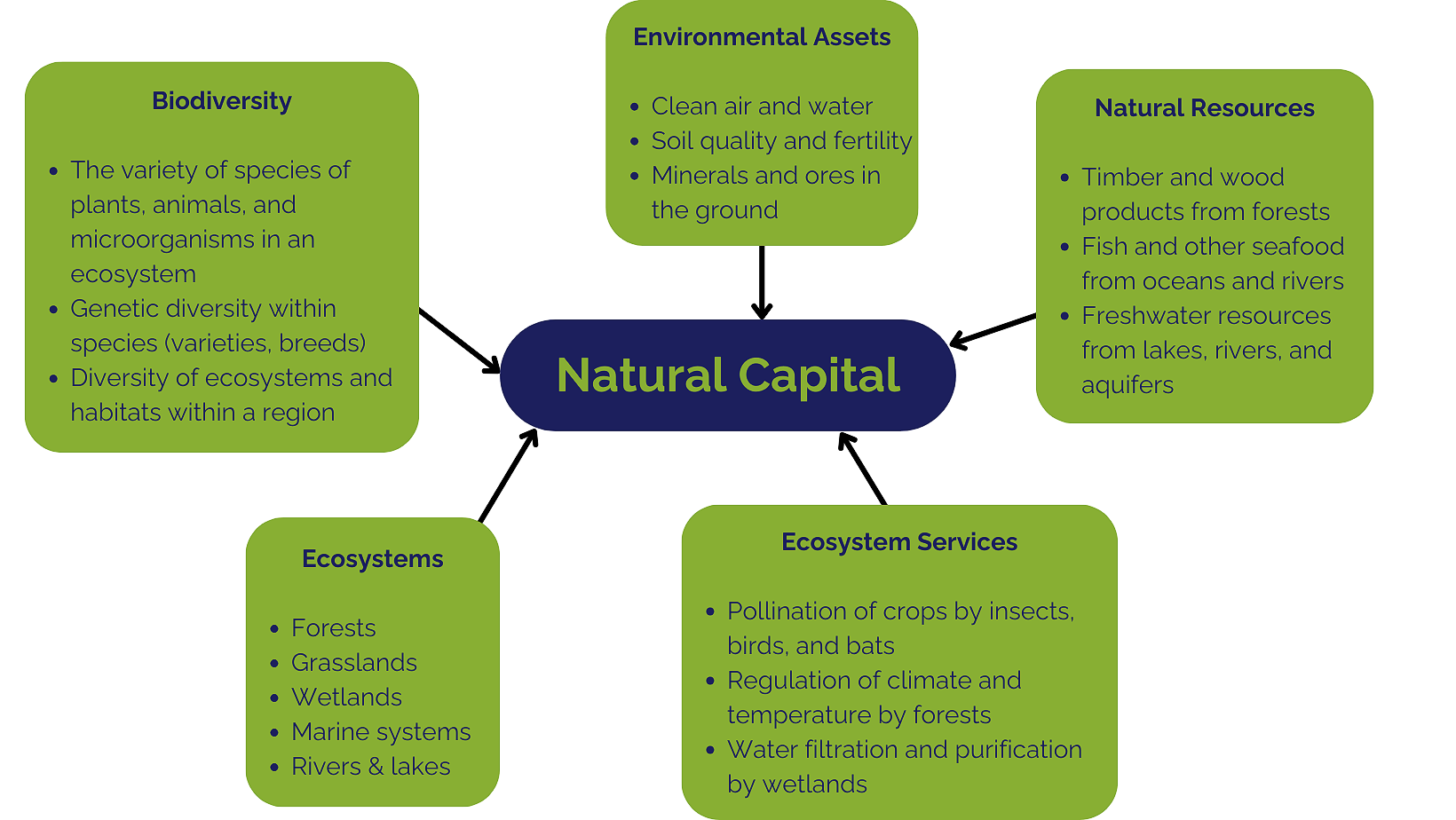
Natural capital: the stock of natural resources and ecosystems that provide goods and services.
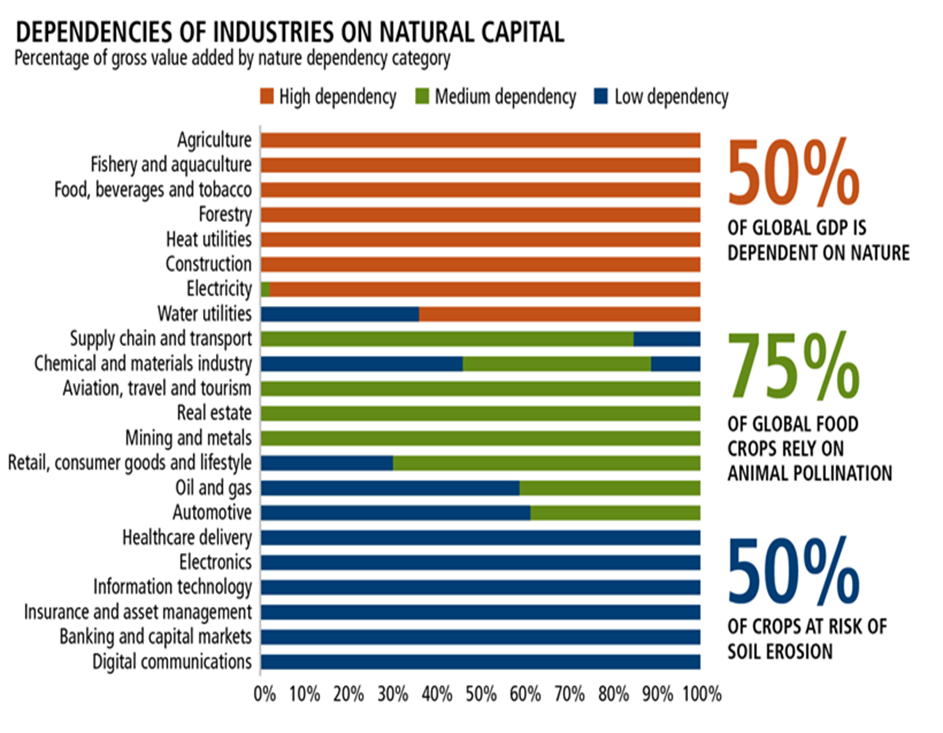
Dependency of industries on natural capital
ADVANCING SUSTAINABLE BIOENERGY DEVELOPMENT
New, advanced technologies make it possible to produce climate neutral fuels from non-forest and non-food energy crops. The benefits of cultivation and use of these energy crops for transport fuels and electricity goes beyond the benefits of reducing greenhouse gas emissions. Terrestrial energy crop cultivation and aquatic energy crop harvesting reverses land and water degradation, increases biodiversity and carbon sequestration and improves land fertility. We call this
Deep Green Biomass. Moreover, deploying these energy crops for the production of advanced biofuels will positively impact social-economic structures and energy independence and reduce the need for involuntary migration and deforestation: Deep Green Energy.
Deep Green Energy Partners works to accelerate deployment of deep green biomass for the production of advanced biofuels and biochemicals, to restore soil and water conditions and to optimize the overall ecological-economic effects of investments in the energy transition.
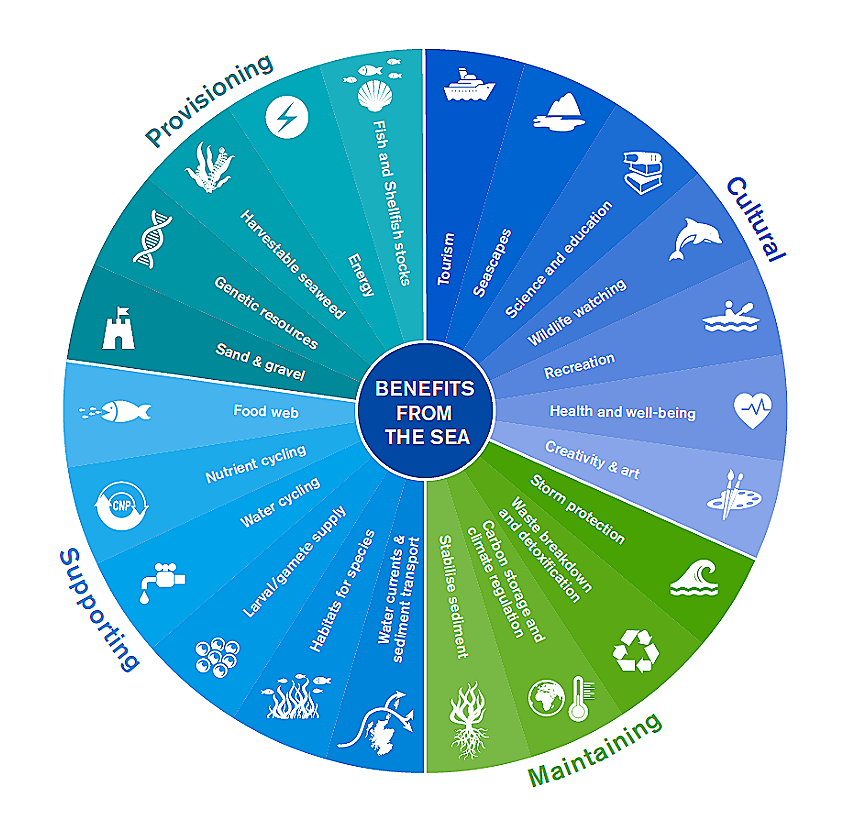
Land ecosystem services
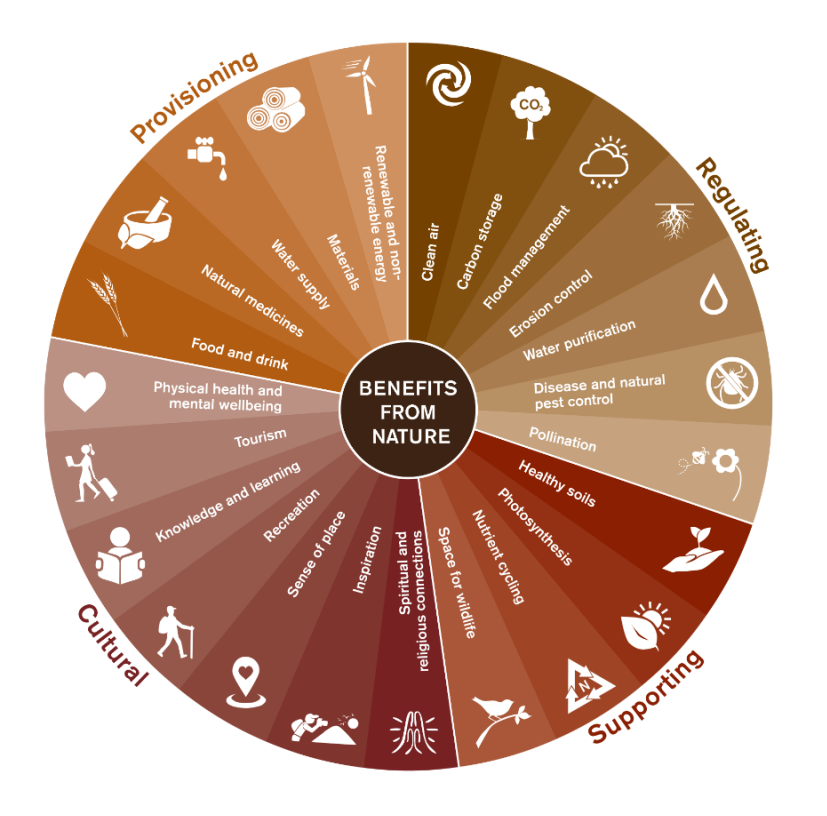
Aquatic ecosystem services
ADVANCING SUSTAINABLE BIOENERGY DEVELOPMENT
New, advanced technologies make it possible to produce climate neutral fuels from non-forest and non-food energy crops. The benefits of cultivation and use of these energy crops for transport fuels and electricity goes beyond the benefits of reducing greenhouse gas emissions. Terrestrial energy crop cultivation and aquatic energy crop harvesting reverses land and water degradation, increases biodiversity and carbon sequestration and improves land fertility. We call this
Deep Green Biomass. Moreover, deploying these energy crops for the production of advanced biofuels will positively impact social-economic structures and energy independence and reduce the need for involuntary migration and deforestation: Deep Green Energy.
Deep Green Energy Partners works to accelerate deployment of deep green biomass for the production of advanced biofuels and biochemicals, to restore soil and water conditions and to optimize the overall ecological-economic effects of investments in the energy transition.
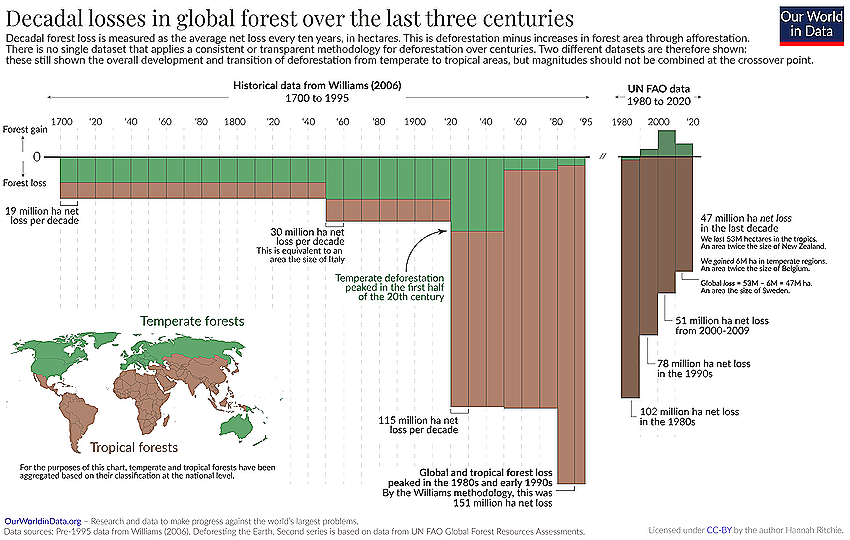
Temperate and tropical forest loss since 1700.
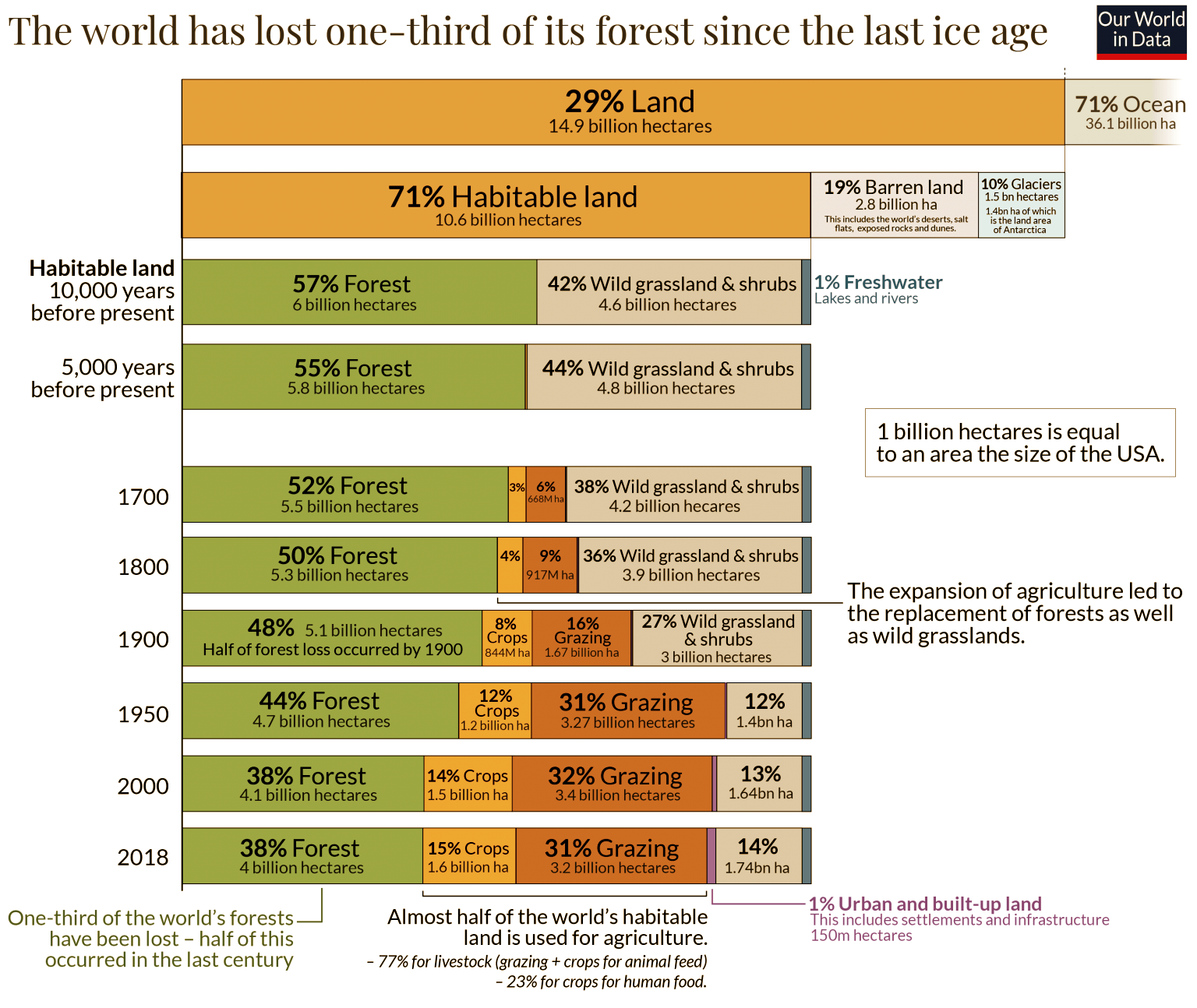
Land-use change over the centuries.
ADVANCING SUSTAINABLE BIOENERGY DEVELOPMENT
New, advanced technologies make it possible to produce climate neutral fuels from non-forest and non-food energy crops. The benefits of cultivation and use of these energy crops for transport fuels and electricity goes beyond the benefits of reducing greenhouse gas emissions. Terrestrial energy crop cultivation and aquatic energy crop harvesting reverses land and water degradation, increases biodiversity and carbon sequestration and improves land fertility. We call this
Deep Green Biomass. Moreover, deploying these energy crops for the production of advanced biofuels will positively impact social-economic structures and energy independence and reduce the need for involuntary migration and deforestation: Deep Green Energy.
Deep Green Energy Partners works to accelerate deployment of deep green biomass for the production of advanced biofuels and biochemicals, to restore soil and water conditions and to optimize the overall ecological-economic effects of investments in the energy transition.
Water quality risk index 2019, the redder the higher water quality is at risk.
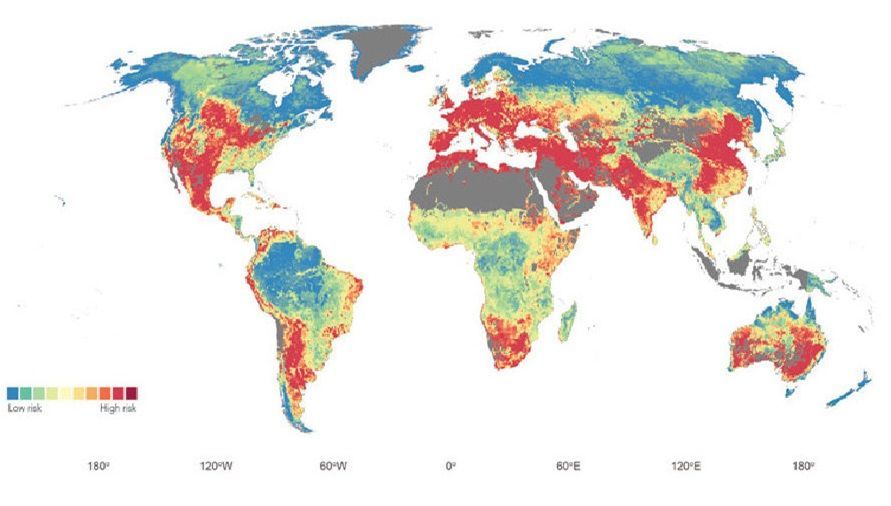
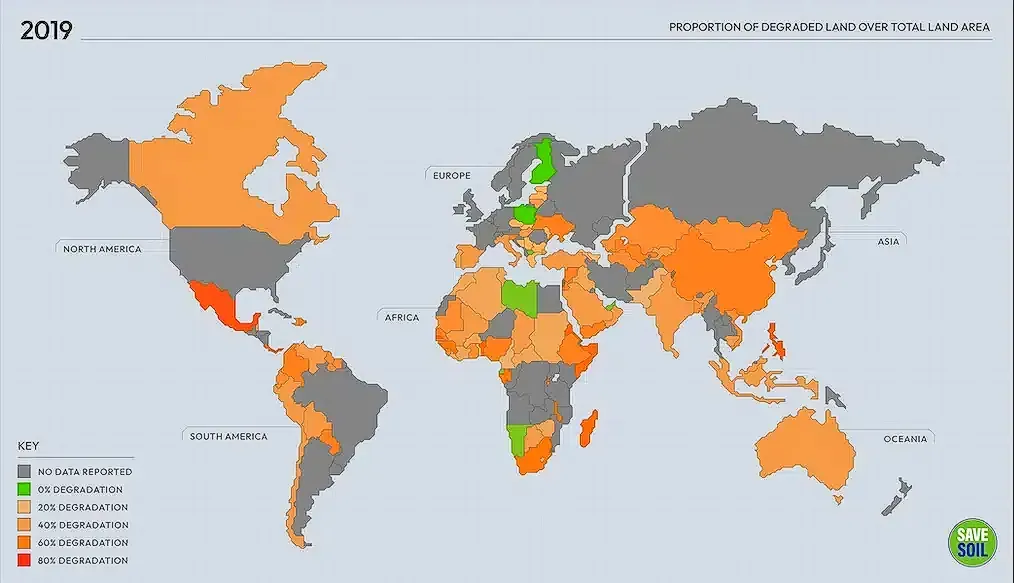
Degraded global land area 2019, the redder the more the land is degraded.
ADVANCING SUSTAINABLE BIOENERGY DEVELOPMENT
New, advanced technologies make it possible to produce climate neutral fuels from non-forest and non-food energy crops. The benefits of cultivation and use of these energy crops for transport fuels and electricity goes beyond the benefits of reducing greenhouse gas emissions. Terrestrial energy crop cultivation and aquatic energy crop harvesting reverses land and water degradation, increases biodiversity and carbon sequestration and improves land fertility. We call this
Deep Green Biomass. Moreover, deploying these energy crops for the production of advanced biofuels will positively impact social-economic structures and energy independence and reduce the need for involuntary migration and deforestation: Deep Green Energy.
Deep Green Energy Partners works to accelerate deployment of deep green biomass for the production of advanced biofuels and biochemicals, to restore soil and water conditions and to optimize the overall ecological-economic effects of investments in the energy transition.
We have exceeded 6 of the 9 crucial planetary boundaries.
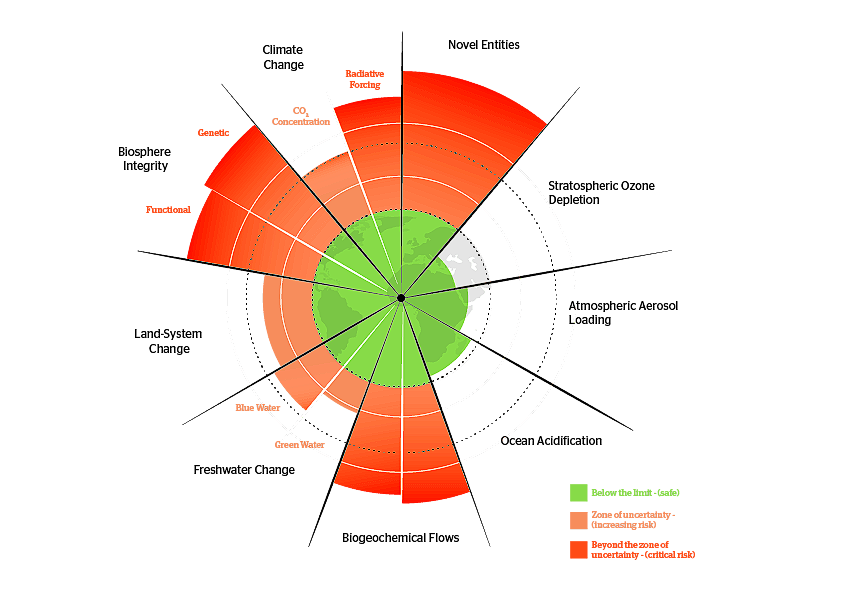
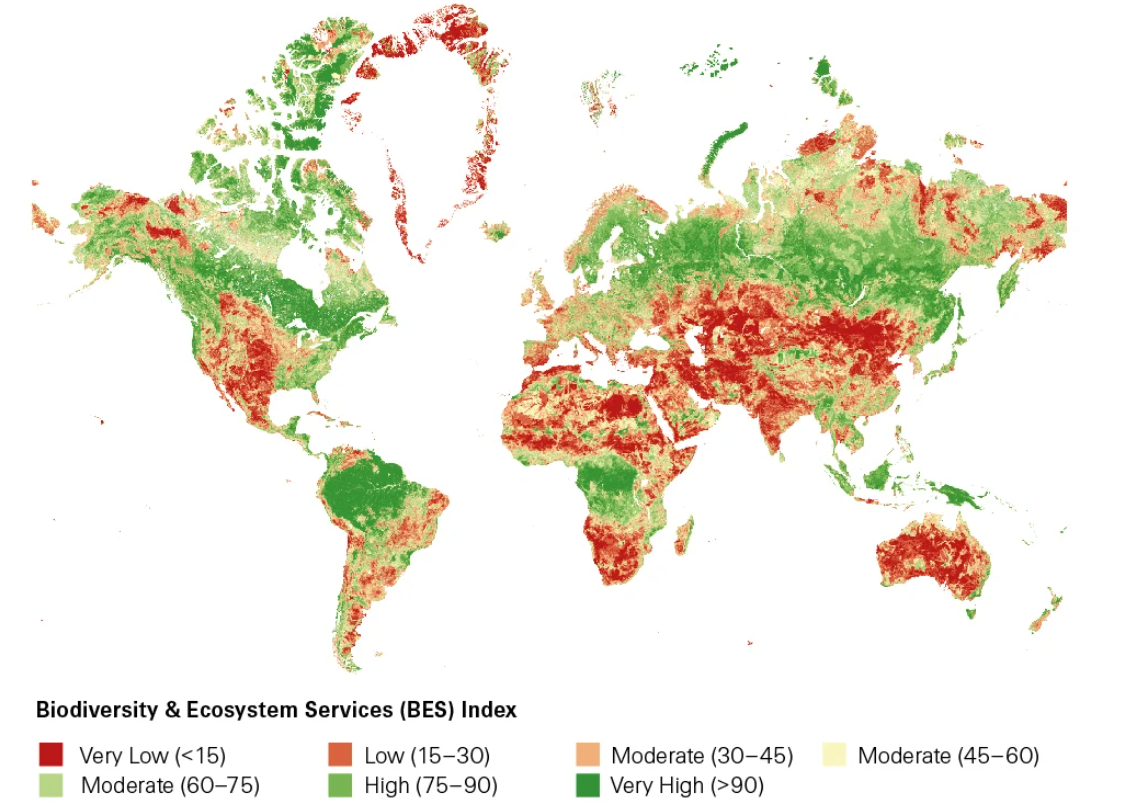
The state of biodiversity and ecosystem services in relation to the health and stability of the communities and economies they support
ADVANCING SUSTAINABLE BIOENERGY DEVELOPMENT
New, advanced technologies make it possible to produce climate neutral fuels from non-forest and non-food energy crops. The benefits of cultivation and use of these energy crops for transport fuels and electricity goes beyond the benefits of reducing greenhouse gas emissions. Terrestrial energy crop cultivation and aquatic energy crop harvesting reverses land and water degradation, increases biodiversity and carbon sequestration and improves land fertility. We call this
Deep Green Biomass. Moreover, deploying these energy crops for the production of advanced biofuels will positively impact social-economic structures and energy independence and reduce the need for involuntary migration and deforestation: Deep Green Energy.
Deep Green Energy Partners works to accelerate deployment of deep green biomass for the production of advanced biofuels and biochemicals, to restore soil and water conditions and to optimize the overall ecological-economic effects of investments in the energy transition.
The value of natural capital per capita has declined by 48% between 1990 -2015.
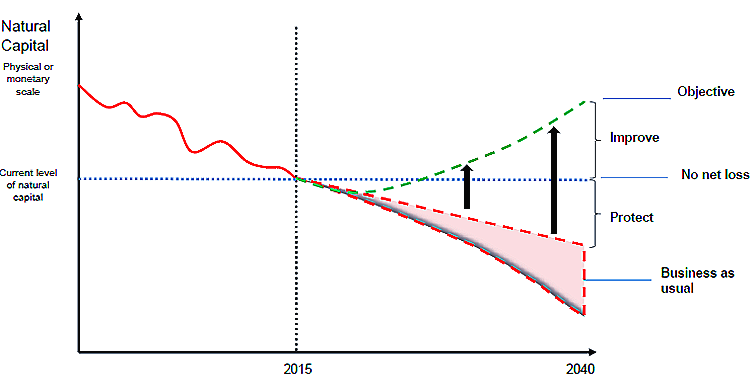
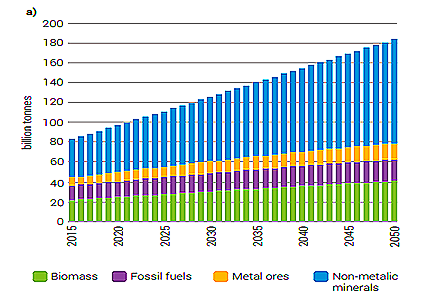
Natural resource extraction 2015-2050.
ADVANCING SUSTAINABLE BIOENERGY DEVELOPMENT
New, advanced technologies make it possible to produce climate neutral fuels from non-forest and non-food energy crops. The benefits of cultivation and use of these energy crops for transport fuels and electricity goes beyond the benefits of reducing greenhouse gas emissions. Terrestrial energy crop cultivation and aquatic energy crop harvesting reverses land and water degradation, increases biodiversity and carbon sequestration and improves land fertility. We call this
Deep Green Biomass. Moreover, deploying these energy crops for the production of advanced biofuels will positively impact social-economic structures and energy independence and reduce the need for involuntary migration and deforestation: Deep Green Energy.
Deep Green Energy Partners works to accelerate deployment of deep green biomass for the production of advanced biofuels and biochemicals, to restore soil and water conditions and to optimize the overall ecological-economic effects of investments in the energy transition.
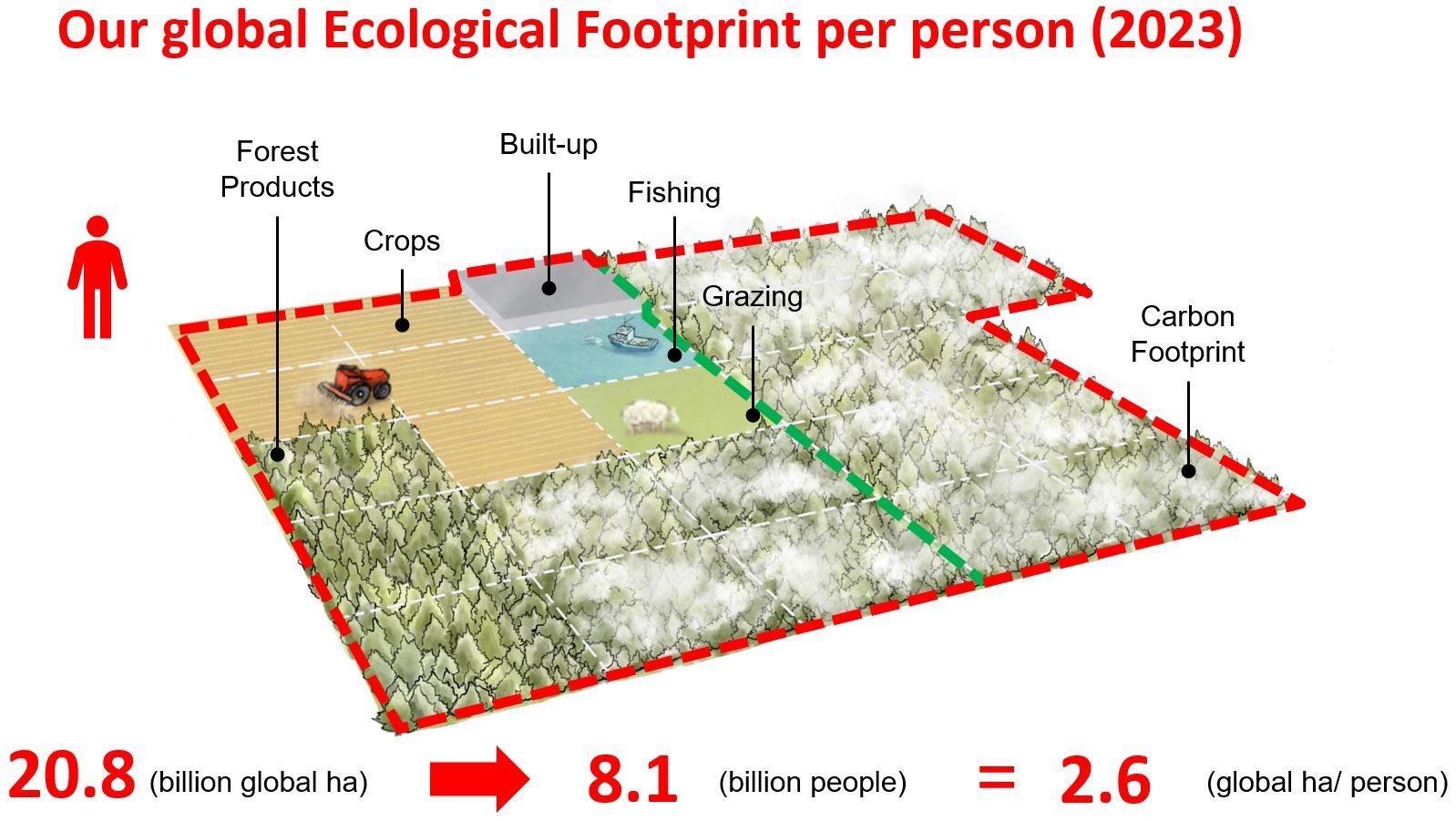
The global ecological footprint per person.
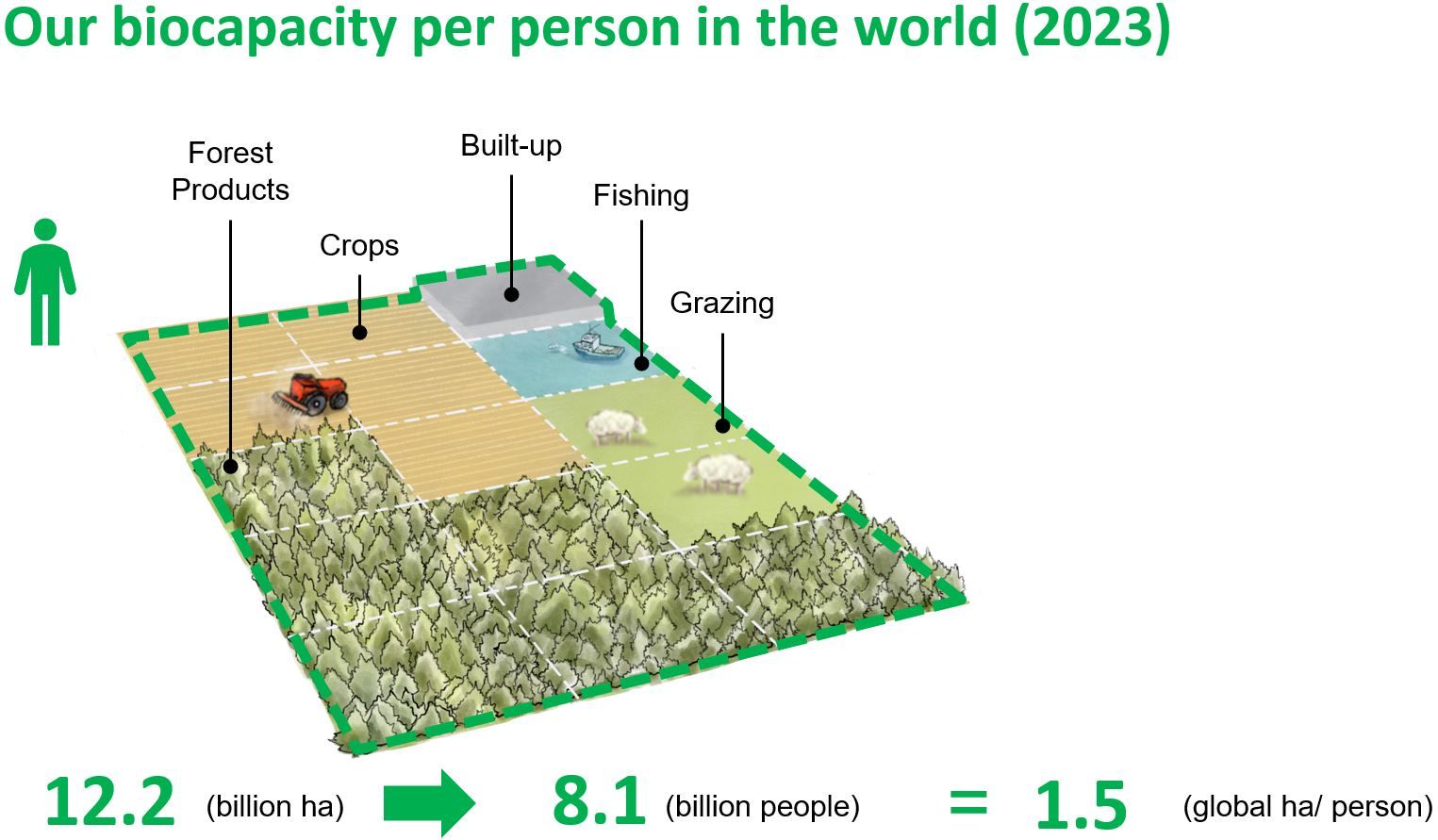
The global biocapacity per person.
ADVANCING SUSTAINABLE BIOENERGY DEVELOPMENT
New, advanced technologies make it possible to produce climate neutral fuels from non-forest and non-food energy crops. The benefits of cultivation and use of these energy crops for transport fuels and electricity goes beyond the benefits of reducing greenhouse gas emissions. Terrestrial energy crop cultivation and aquatic energy crop harvesting reverses land and water degradation, increases biodiversity and carbon sequestration and improves land fertility. We call this
Deep Green Biomass. Moreover, deploying these energy crops for the production of advanced biofuels will positively impact social-economic structures and energy independence and reduce the need for involuntary migration and deforestation: Deep Green Energy.
Deep Green Energy Partners works to accelerate deployment of deep green biomass for the production of advanced biofuels and biochemicals, to restore soil and water conditions and to optimize the overall ecological-economic effects of investments in the energy transition.
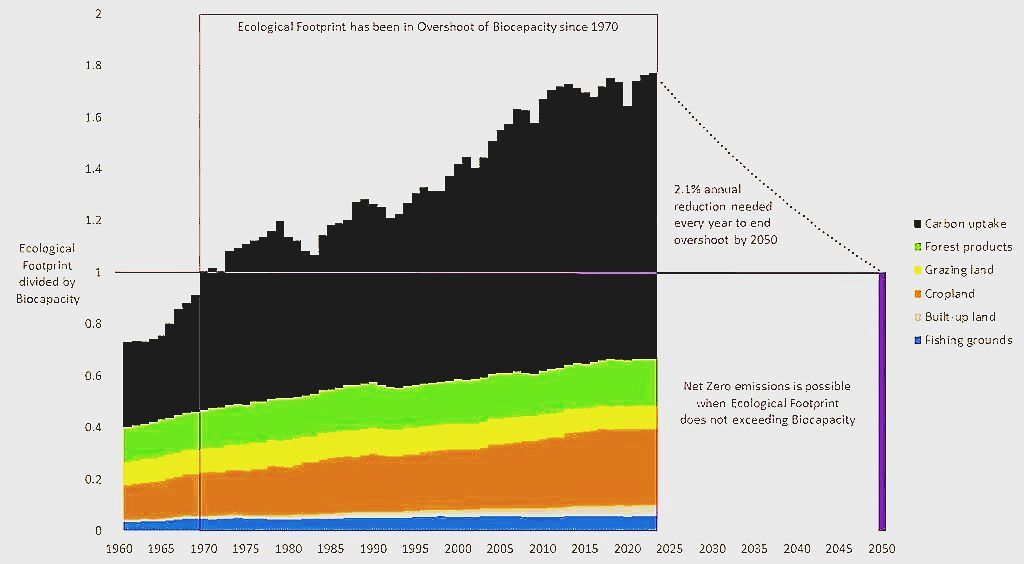
Record-breaking year of consumption leads to Ecological Footprint overshoot.
Recycling should double for net-zero
ADVANCING SUSTAINABLE BIOENERGY DEVELOPMENT
New, advanced technologies make it possible to produce climate neutral fuels from non-forest and non-food energy crops. The benefits of cultivation and use of these energy crops for transport fuels and electricity goes beyond the benefits of reducing greenhouse gas emissions. Terrestrial energy crop cultivation and aquatic energy crop harvesting reverses land and water degradation, increases biodiversity and carbon sequestration and improves land fertility. We call this
Deep Green Biomass. Moreover, deploying these energy crops for the production of advanced biofuels will positively impact social-economic structures and energy independence and reduce the need for involuntary migration and deforestation: Deep Green Energy.
Deep Green Energy Partners works to accelerate deployment of deep green biomass for the production of advanced biofuels and biochemicals, to restore soil and water conditions and to optimize the overall ecological-economic effects of investments in the energy transition.
Feedback loops between land degradation, climate change, and biodiversity loss
Large-scale mines in forest areas (MFAs), by primary commodity
ADVANCING SUSTAINABLE BIOENERGY DEVELOPMENT
New, advanced technologies make it possible to produce climate neutral fuels from non-forest and non-food energy crops. The benefits of cultivation and use of these energy crops for transport fuels and electricity goes beyond the benefits of reducing greenhouse gas emissions. Terrestrial energy crop cultivation and aquatic energy crop harvesting reverses land and water degradation, increases biodiversity and carbon sequestration and improves land fertility. We call this
Deep Green Biomass. Moreover, deploying these energy crops for the production of advanced biofuels will positively impact social-economic structures and energy independence and reduce the need for involuntary migration and deforestation: Deep Green Energy.
Deep Green Energy Partners works to accelerate deployment of deep green biomass for the production of advanced biofuels and biochemicals, to restore soil and water conditions and to optimize the overall ecological-economic effects of investments in the energy transition.
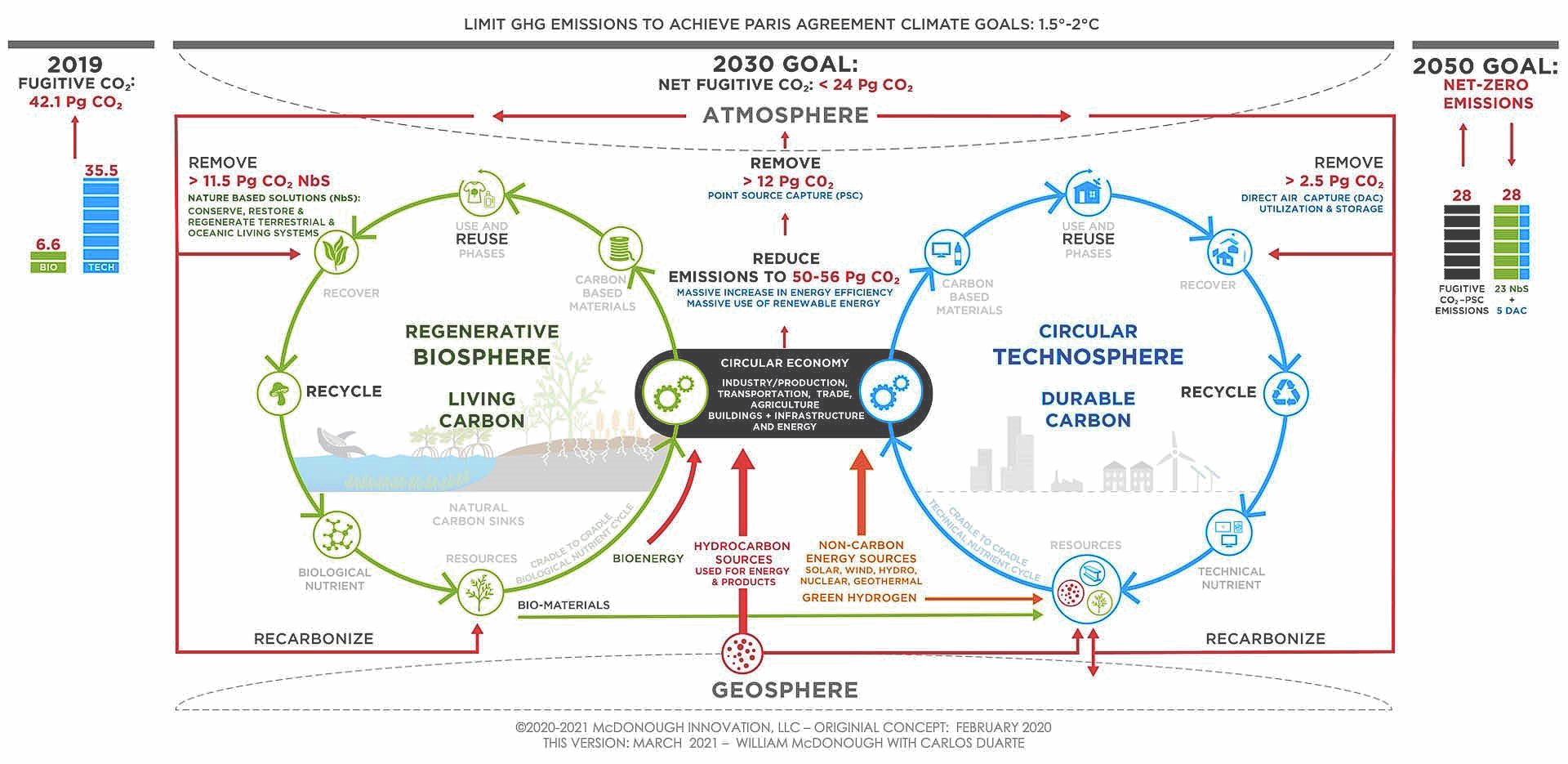
Circular Carbon Economy, Design for the regenerative biosphere and circular technosphere
ADVANCING SUSTAINABLE BIOENERGY DEVELOPMENT
New, advanced technologies make it possible to produce climate neutral fuels from non-forest and non-food energy crops. The benefits of cultivation and use of these energy crops for transport fuels and electricity goes beyond the benefits of reducing greenhouse gas emissions. Terrestrial energy crop cultivation and aquatic energy crop harvesting reverses land and water degradation, increases biodiversity and carbon sequestration and improves land fertility. We call this
Deep Green Biomass. Moreover, deploying these energy crops for the production of advanced biofuels will positively impact social-economic structures and energy independence and reduce the need for involuntary migration and deforestation: Deep Green Energy.
Deep Green Energy Partners works to accelerate deployment of deep green biomass for the production of advanced biofuels and biochemicals, to restore soil and water conditions and to optimize the overall ecological-economic effects of investments in the energy transition.
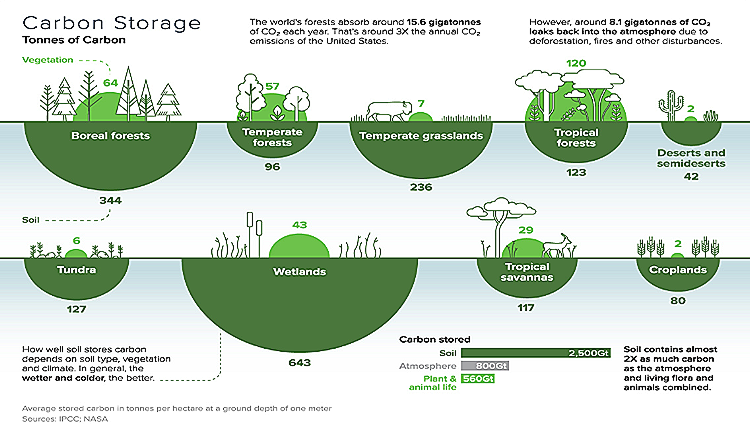
Carbon stored in soils, plants and animals in various biomes.
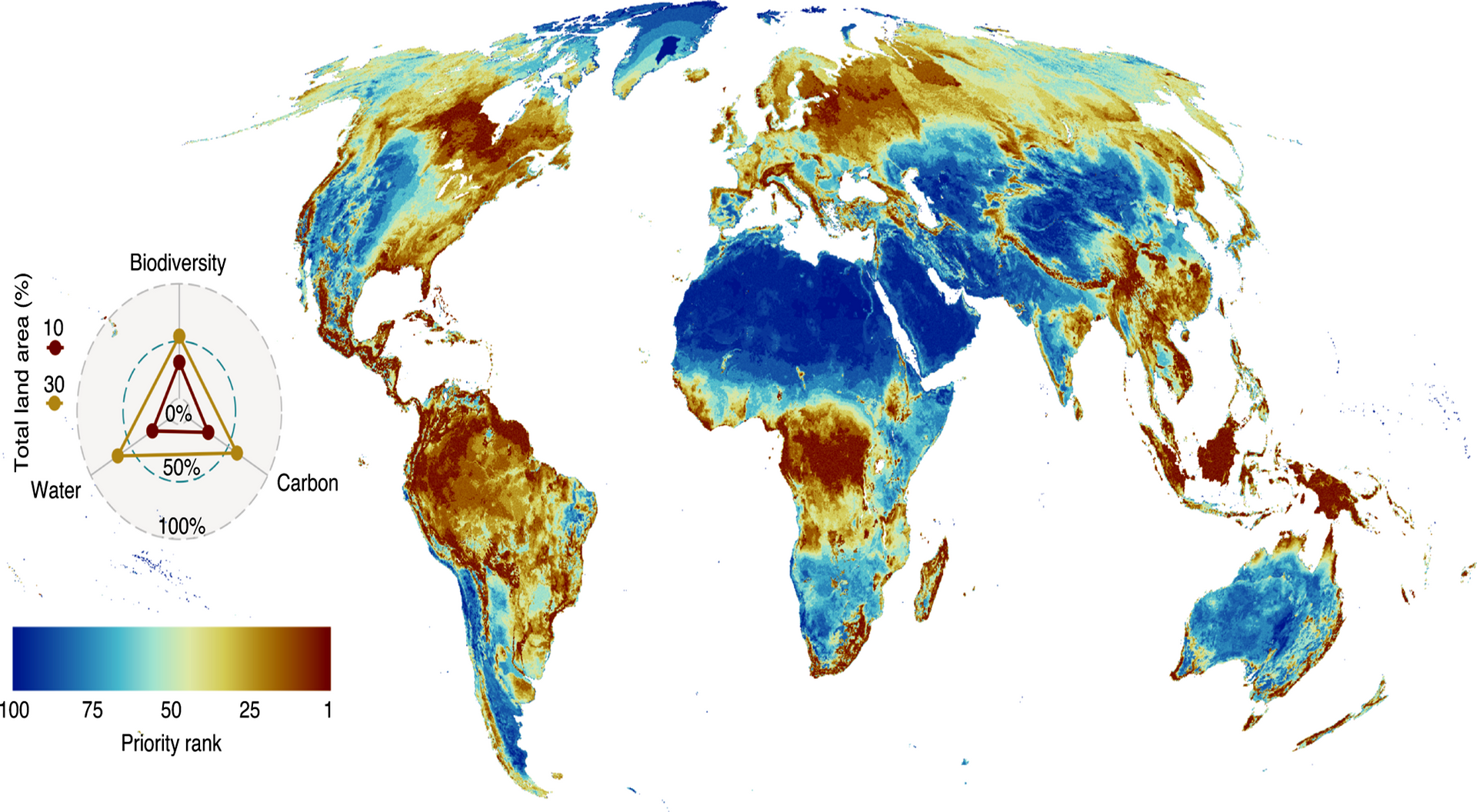
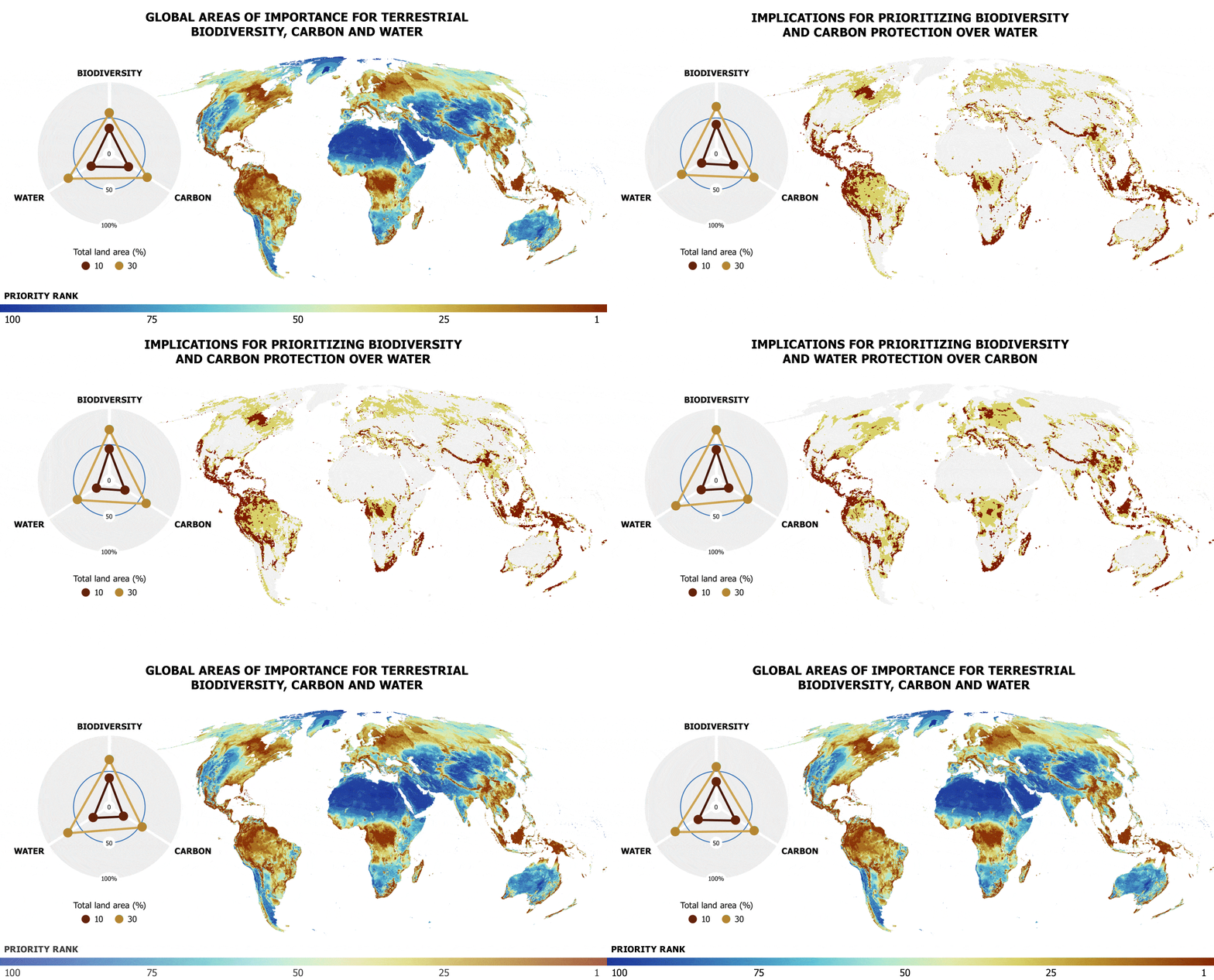
Terrestrial areas of global importance for conserving biodiversity, water and carbon.
ADVANCING SUSTAINABLE BIOENERGY DEVELOPMENT
New, advanced technologies make it possible to produce climate neutral fuels from non-forest and non-food energy crops. The benefits of cultivation and use of these energy crops for transport fuels and electricity goes beyond the benefits of reducing greenhouse gas emissions. Terrestrial energy crop cultivation and aquatic energy crop harvesting reverses land and water degradation, increases biodiversity and carbon sequestration and improves land fertility. We call this
Deep Green Biomass. Moreover, deploying these energy crops for the production of advanced biofuels will positively impact social-economic structures and energy independence and reduce the need for involuntary migration and deforestation: Deep Green Energy.
Deep Green Energy Partners works to accelerate deployment of deep green biomass for the production of advanced biofuels and biochemicals, to restore soil and water conditions and to optimize the overall ecological-economic effects of investments in the energy transition.
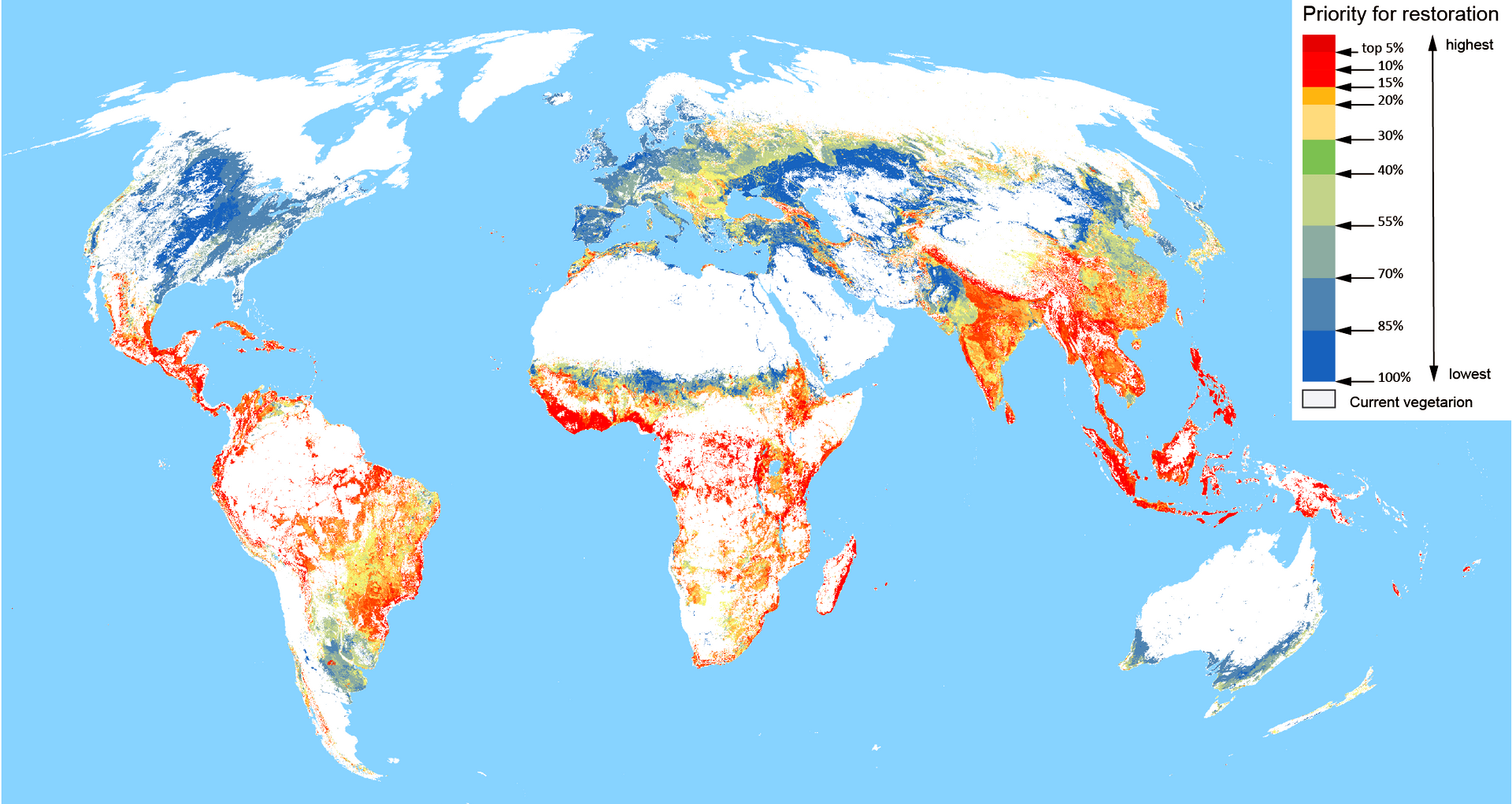
Agricultural lands with highest priority for restoration
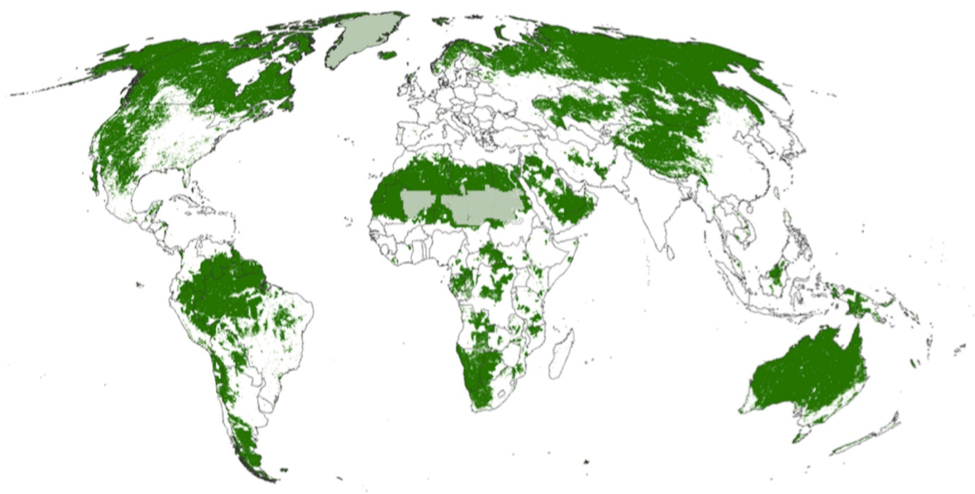
Least modified 50% land surface
ADVANCING SUSTAINABLE BIOENERGY DEVELOPMENT
New, advanced technologies make it possible to produce climate neutral fuels from non-forest and non-food energy crops. The benefits of cultivation and use of these energy crops for transport fuels and electricity goes beyond the benefits of reducing greenhouse gas emissions. Terrestrial energy crop cultivation and aquatic energy crop harvesting reverses land and water degradation, increases biodiversity and carbon sequestration and improves land fertility. We call this
Deep Green Biomass. Moreover, deploying these energy crops for the production of advanced biofuels will positively impact social-economic structures and energy independence and reduce the need for involuntary migration and deforestation: Deep Green Energy.
Deep Green Energy Partners works to accelerate deployment of deep green biomass for the production of advanced biofuels and biochemicals, to restore soil and water conditions and to optimize the overall ecological-economic effects of investments in the energy transition.
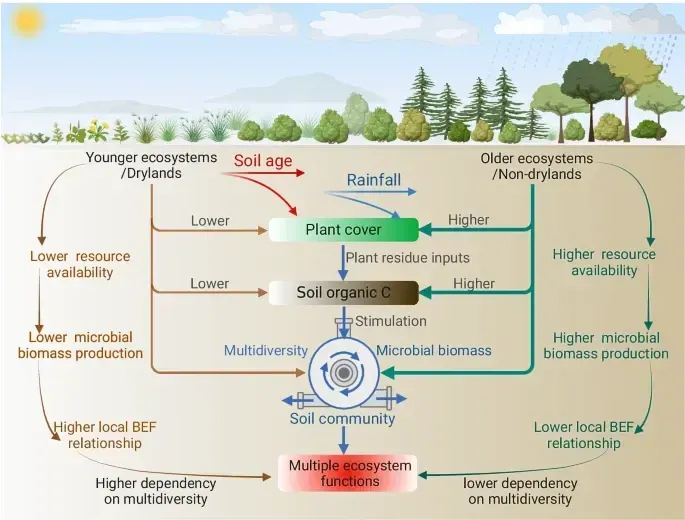
Geologically younger ecosystems are more dependent on soil biodiversity for supporting function
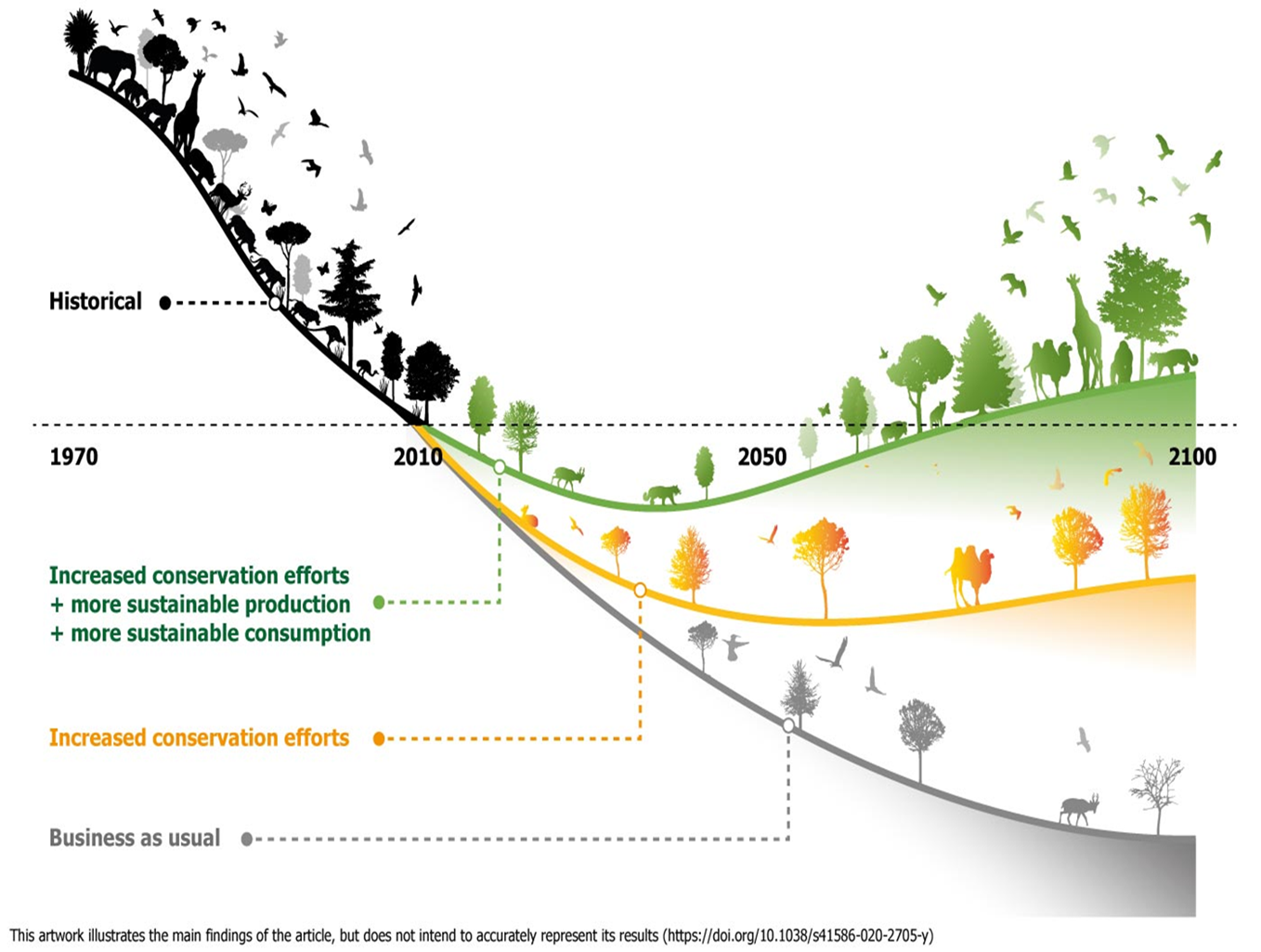
For (partially) intact ecosystems and biodiversity: ambitious conservation and restoration efforts are Required
ADVANCING SUSTAINABLE BIOENERGY DEVELOPMENT
New, advanced technologies make it possible to produce climate neutral fuels from non-forest and non-food energy crops. The benefits of cultivation and use of these energy crops for transport fuels and electricity goes beyond the benefits of reducing greenhouse gas emissions. Terrestrial energy crop cultivation and aquatic energy crop harvesting reverses land and water degradation, increases biodiversity and carbon sequestration and improves land fertility. We call this
Deep Green Biomass. Moreover, deploying these energy crops for the production of advanced biofuels will positively impact social-economic structures and energy independence and reduce the need for involuntary migration and deforestation: Deep Green Energy.
Deep Green Energy Partners works to accelerate deployment of deep green biomass for the production of advanced biofuels and biochemicals, to restore soil and water conditions and to optimize the overall ecological-economic effects of investments in the energy transition.
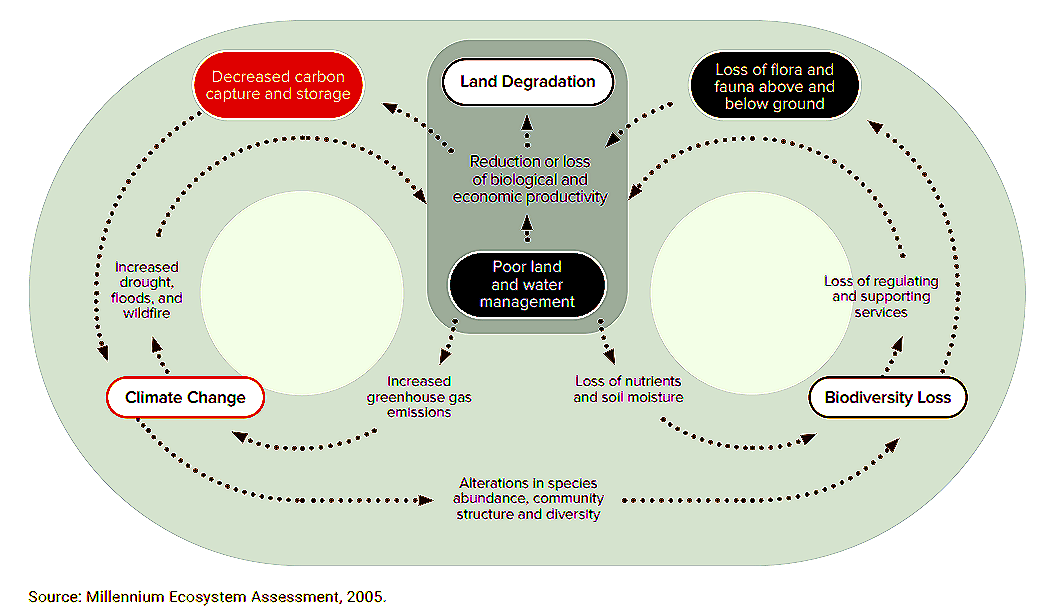
Feedback loops between land degradation, climate change, and biodiversity loss
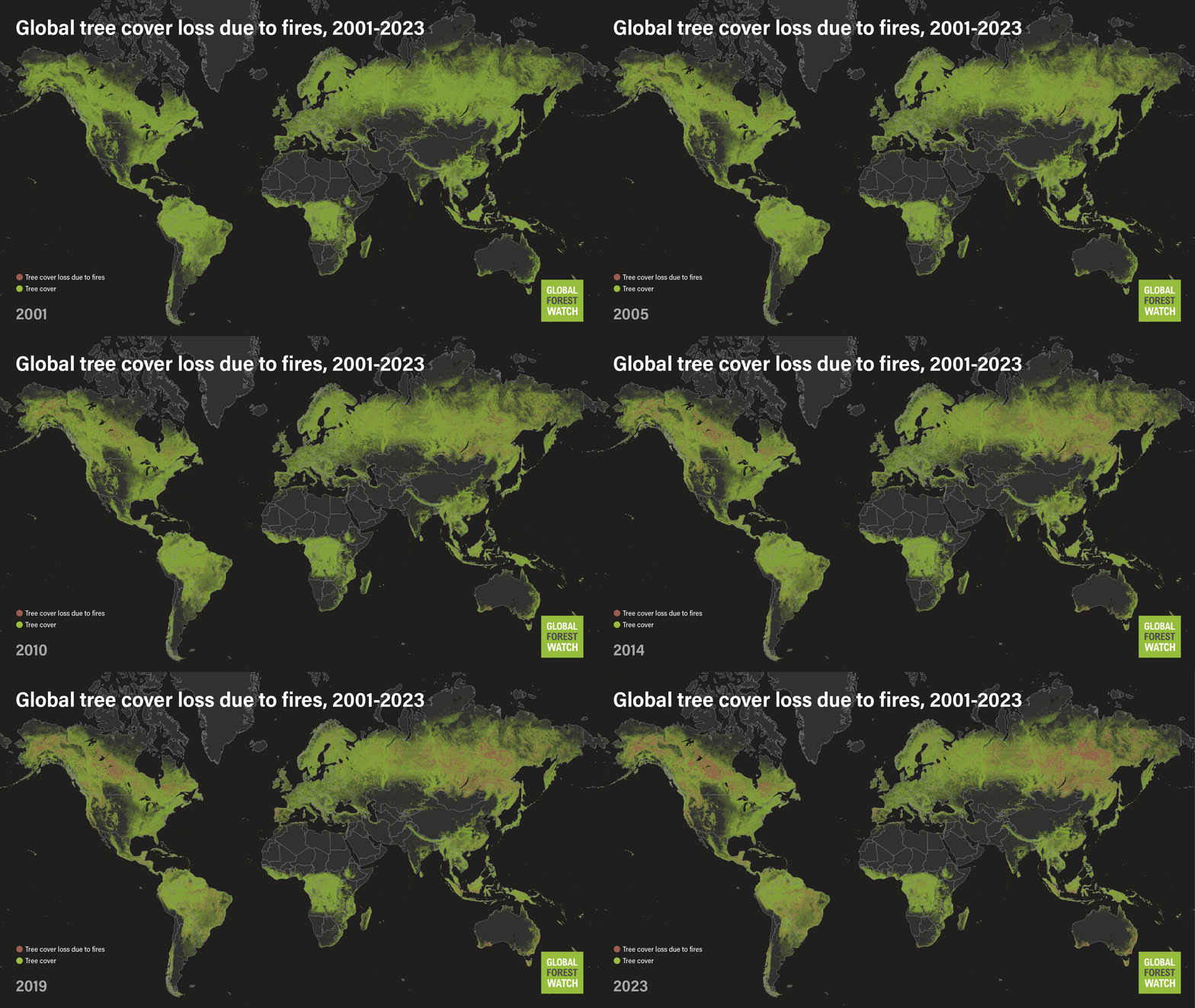
Since 2001 the land area burned by forest fires increased by 5.4% annually
ADVANCING SUSTAINABLE BIOENERGY DEVELOPMENT
New, advanced technologies make it possible to produce climate neutral fuels from non-forest and non-food energy crops. The benefits of cultivation and use of these energy crops for transport fuels and electricity goes beyond the benefits of reducing greenhouse gas emissions. Terrestrial energy crop cultivation and aquatic energy crop harvesting reverses land and water degradation, increases biodiversity and carbon sequestration and improves land fertility. We call this
Deep Green Biomass. Moreover, deploying these energy crops for the production of advanced biofuels will positively impact social-economic structures and energy independence and reduce the need for involuntary migration and deforestation: Deep Green Energy.
Deep Green Energy Partners works to accelerate deployment of deep green biomass for the production of advanced biofuels and biochemicals, to restore soil and water conditions and to optimize the overall ecological-economic effects of investments in the energy transition.
Transfer of atmospheric CO2 into biotic and pedologic carbon (C) pools the plant ecosystem.
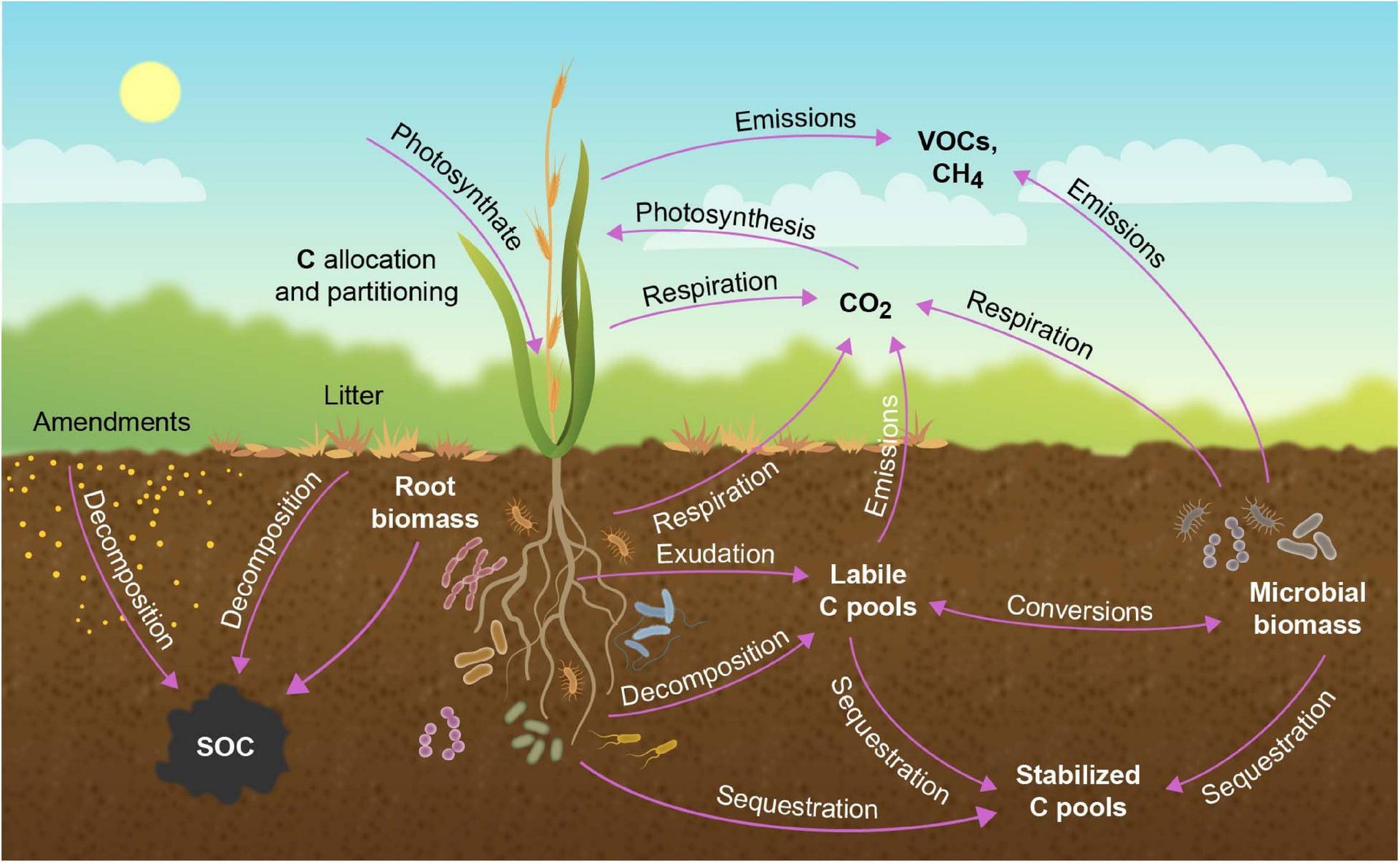
The terrestrial carbon (C) cycle.
ADVANCING SUSTAINABLE BIOENERGY DEVELOPMENT
New, advanced technologies make it possible to produce climate neutral fuels from non-forest and non-food energy crops. The benefits of cultivation and use of these energy crops for transport fuels and electricity goes beyond the benefits of reducing greenhouse gas emissions. Terrestrial energy crop cultivation and aquatic energy crop harvesting reverses land and water degradation, increases biodiversity and carbon sequestration and improves land fertility. We call this
Deep Green Biomass. Moreover, deploying these energy crops for the production of advanced biofuels will positively impact social-economic structures and energy independence and reduce the need for involuntary migration and deforestation: Deep Green Energy.
Deep Green Energy Partners works to accelerate deployment of deep green biomass for the production of advanced biofuels and biochemicals, to restore soil and water conditions and to optimize the overall ecological-economic effects of investments in the energy transition.
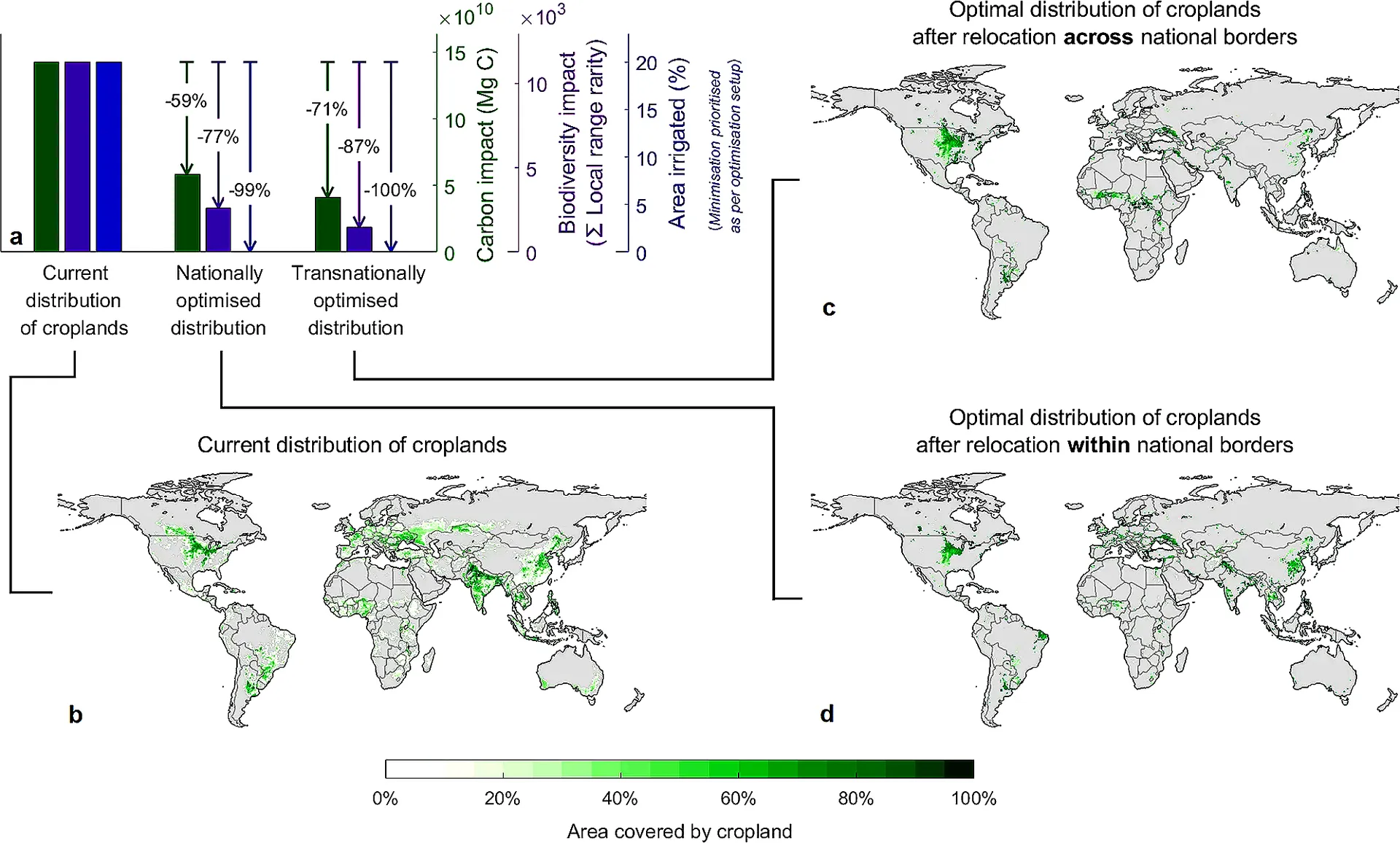
Land cover type giving highest carbon mitigation potential on current crop land.
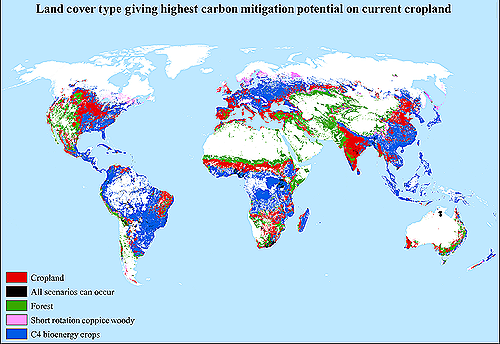
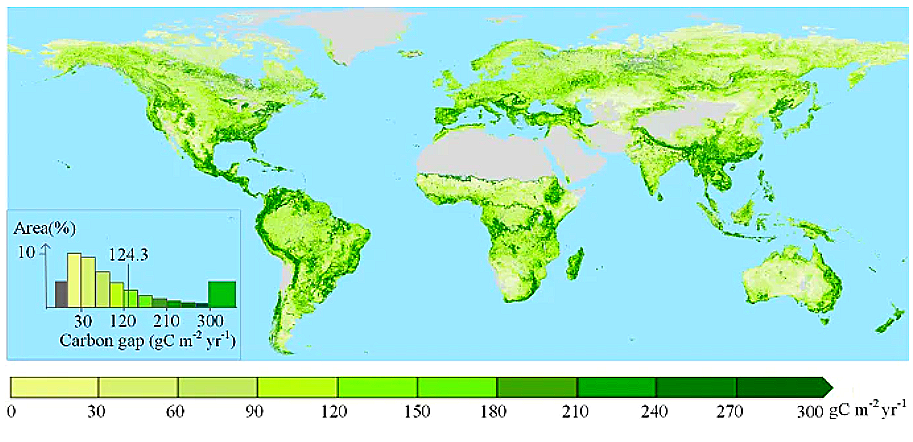
Global land vegetation can sequester an extra of 13.74 GtC per year, by optimizing land management practices. Half of that extra can come from ~15% of the global vegetated area.
ADVANCING SUSTAINABLE BIOENERGY DEVELOPMENT
New, advanced technologies make it possible to produce climate neutral fuels from non-forest and non-food energy crops. The benefits of cultivation and use of these energy crops for transport fuels and electricity goes beyond the benefits of reducing greenhouse gas emissions. Terrestrial energy crop cultivation and aquatic energy crop harvesting reverses land and water degradation, increases biodiversity and carbon sequestration and improves land fertility. We call this
Deep Green Biomass. Moreover, deploying these energy crops for the production of advanced biofuels will positively impact social-economic structures and energy independence and reduce the need for involuntary migration and deforestation: Deep Green Energy.
Deep Green Energy Partners works to accelerate deployment of deep green biomass for the production of advanced biofuels and biochemicals, to restore soil and water conditions and to optimize the overall ecological-economic effects of investments in the energy transition.
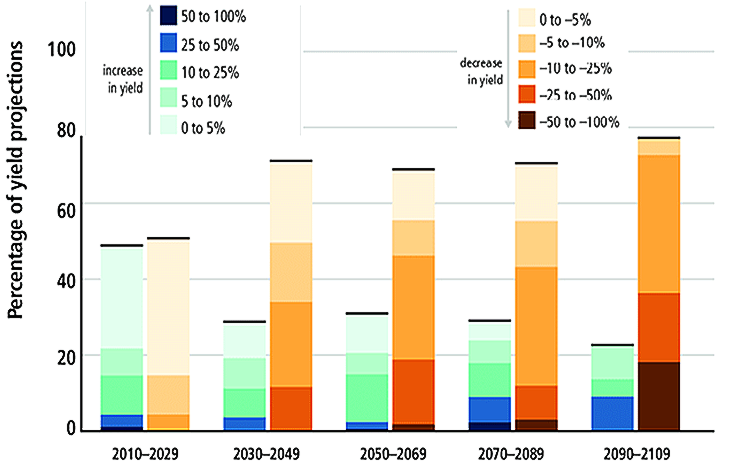
Projected losses in crop yields
ADVANCING SUSTAINABLE BIOENERGY DEVELOPMENT
New, advanced technologies make it possible to produce climate neutral fuels from non-forest and non-food energy crops. The benefits of cultivation and use of these energy crops for transport fuels and electricity goes beyond the benefits of reducing greenhouse gas emissions. Terrestrial energy crop cultivation and aquatic energy crop harvesting reverses land and water degradation, increases biodiversity and carbon sequestration and improves land fertility. We call this
Deep Green Biomass. Moreover, deploying these energy crops for the production of advanced biofuels will positively impact social-economic structures and energy independence and reduce the need for involuntary migration and deforestation: Deep Green Energy.
Deep Green Energy Partners works to accelerate deployment of deep green biomass for the production of advanced biofuels and biochemicals, to restore soil and water conditions and to optimize the overall ecological-economic effects of investments in the energy transition.
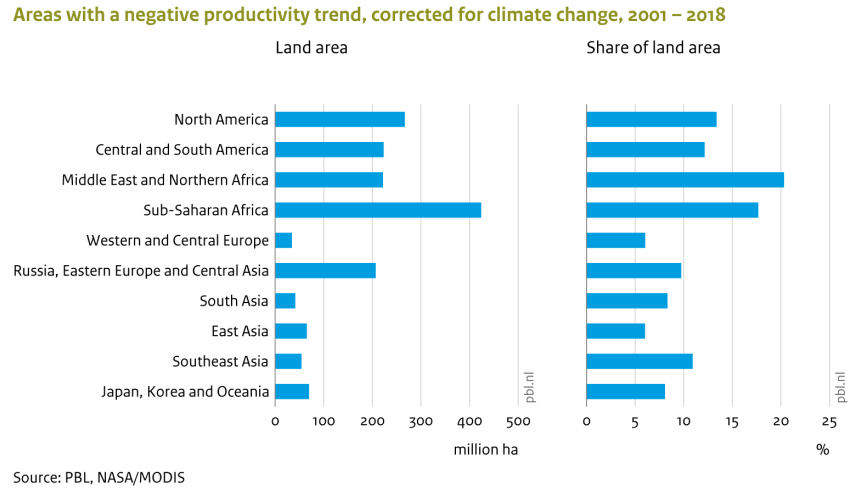
Areas with a negative productivity trend, corrected for climate change, 2001-2018
ADVANCING SUSTAINABLE BIOENERGY DEVELOPMENT
New, advanced technologies make it possible to produce climate neutral fuels from non-forest and non-food energy crops. The benefits of cultivation and use of these energy crops for transport fuels and electricity goes beyond the benefits of reducing greenhouse gas emissions. Terrestrial energy crop cultivation and aquatic energy crop harvesting reverses land and water degradation, increases biodiversity and carbon sequestration and improves land fertility. We call this
Deep Green Biomass. Moreover, deploying these energy crops for the production of advanced biofuels will positively impact social-economic structures and energy independence and reduce the need for involuntary migration and deforestation: Deep Green Energy.
Deep Green Energy Partners works to accelerate deployment of deep green biomass for the production of advanced biofuels and biochemicals, to restore soil and water conditions and to optimize the overall ecological-economic effects of investments in the energy transition.
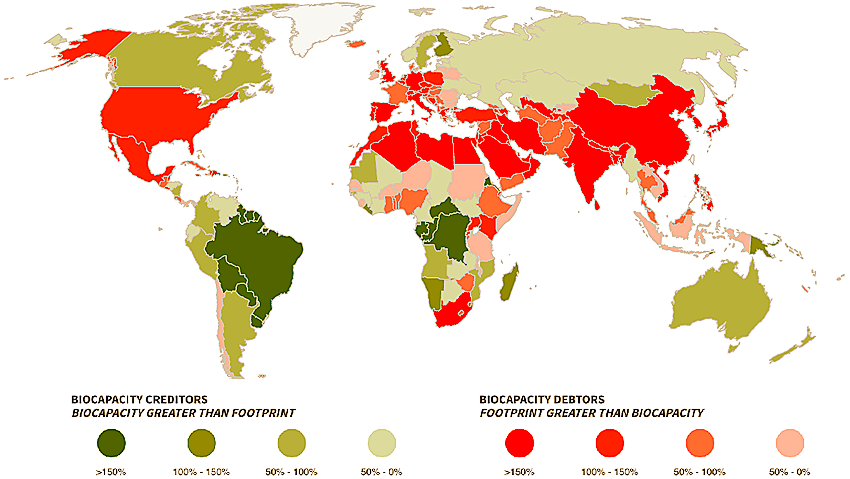
Over 80% of the world population lives in the red shaded countries with ecological deficits.
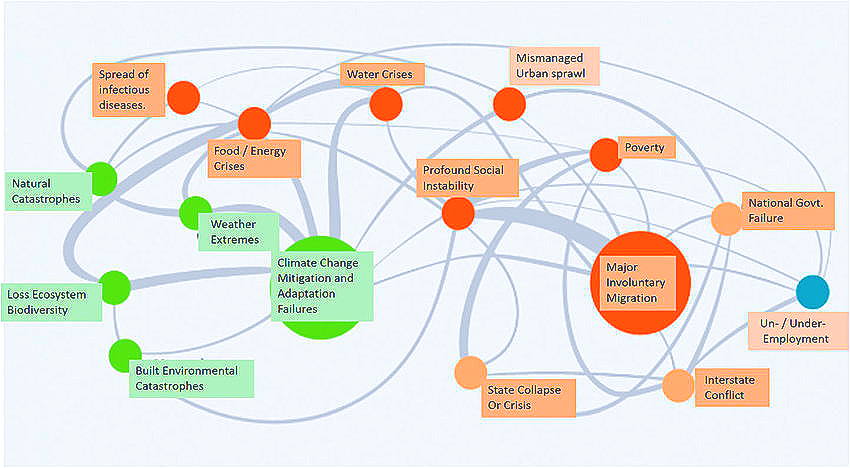
The interconnected elements propelling the world into societal collapse. Red: societal, green: environmental, orange: geopolitical, blue: economic.
ADVANCING SUSTAINABLE BIOENERGY DEVELOPMENT
New, advanced technologies make it possible to produce climate neutral fuels from non-forest and non-food energy crops. The benefits of cultivation and use of these energy crops for transport fuels and electricity goes beyond the benefits of reducing greenhouse gas emissions. Terrestrial energy crop cultivation and aquatic energy crop harvesting reverses land and water degradation, increases biodiversity and carbon sequestration and improves land fertility. We call this
Deep Green Biomass. Moreover, deploying these energy crops for the production of advanced biofuels will positively impact social-economic structures and energy independence and reduce the need for involuntary migration and deforestation: Deep Green Energy.
Deep Green Energy Partners works to accelerate deployment of deep green biomass for the production of advanced biofuels and biochemicals, to restore soil and water conditions and to optimize the overall ecological-economic effects of investments in the energy transition.
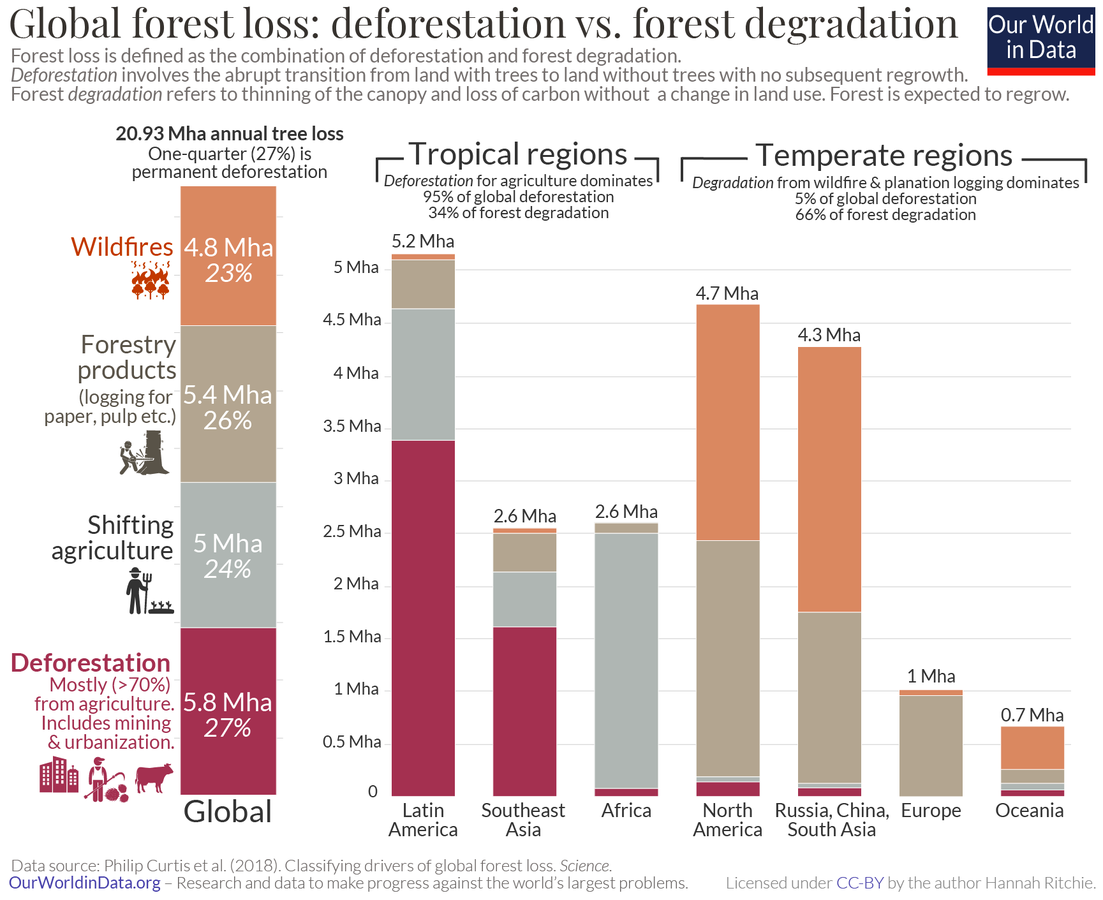
Global forests loss continues by deforestation and degradation
ADVANCING SUSTAINABLE BIOENERGY DEVELOPMENT
New, advanced technologies make it possible to produce climate neutral fuels from non-forest and non-food energy crops. The benefits of cultivation and use of these energy crops for transport fuels and electricity goes beyond the benefits of reducing greenhouse gas emissions. Terrestrial energy crop cultivation and aquatic energy crop harvesting reverses land and water degradation, increases biodiversity and carbon sequestration and improves land fertility. We call this
Deep Green Biomass. Moreover, deploying these energy crops for the production of advanced biofuels will positively impact social-economic structures and energy independence and reduce the need for involuntary migration and deforestation: Deep Green Energy.
Deep Green Energy Partners works to accelerate deployment of deep green biomass for the production of advanced biofuels and biochemicals, to restore soil and water conditions and to optimize the overall ecological-economic effects of investments in the energy transition.
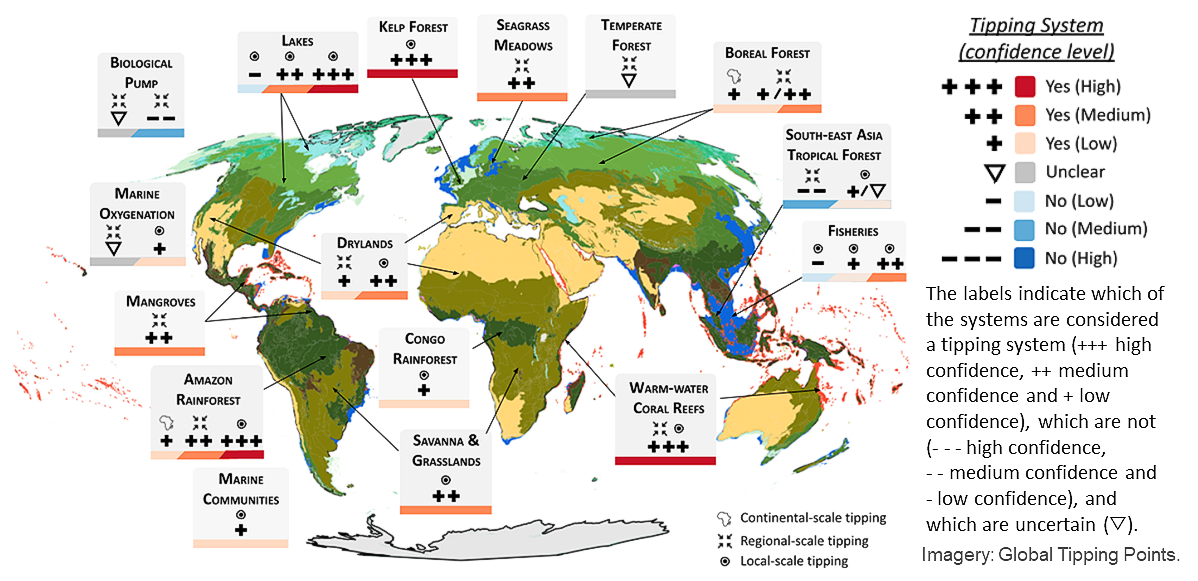
Tipping points for various biomes in the global biosphere: forests, savannas, drylands, lakes, coastal ecosystems and marine environments
ADVANCING SUSTAINABLE BIOENERGY DEVELOPMENT
New, advanced technologies make it possible to produce climate neutral fuels from non-forest and non-food energy crops. The benefits of cultivation and use of these energy crops for transport fuels and electricity goes beyond the benefits of reducing greenhouse gas emissions. Terrestrial energy crop cultivation and aquatic energy crop harvesting reverses land and water degradation, increases biodiversity and carbon sequestration and improves land fertility. We call this
Deep Green Biomass. Moreover, deploying these energy crops for the production of advanced biofuels will positively impact social-economic structures and energy independence and reduce the need for involuntary migration and deforestation: Deep Green Energy.
Deep Green Energy Partners works to accelerate deployment of deep green biomass for the production of advanced biofuels and biochemicals, to restore soil and water conditions and to optimize the overall ecological-economic effects of investments in the energy transition.
The biological productivity of ecosystems is measured by the organic carbon mass contained in soils, plants and animals, i.e. biomass, as it is a key component of all living things. Human activity impacted all ESs.
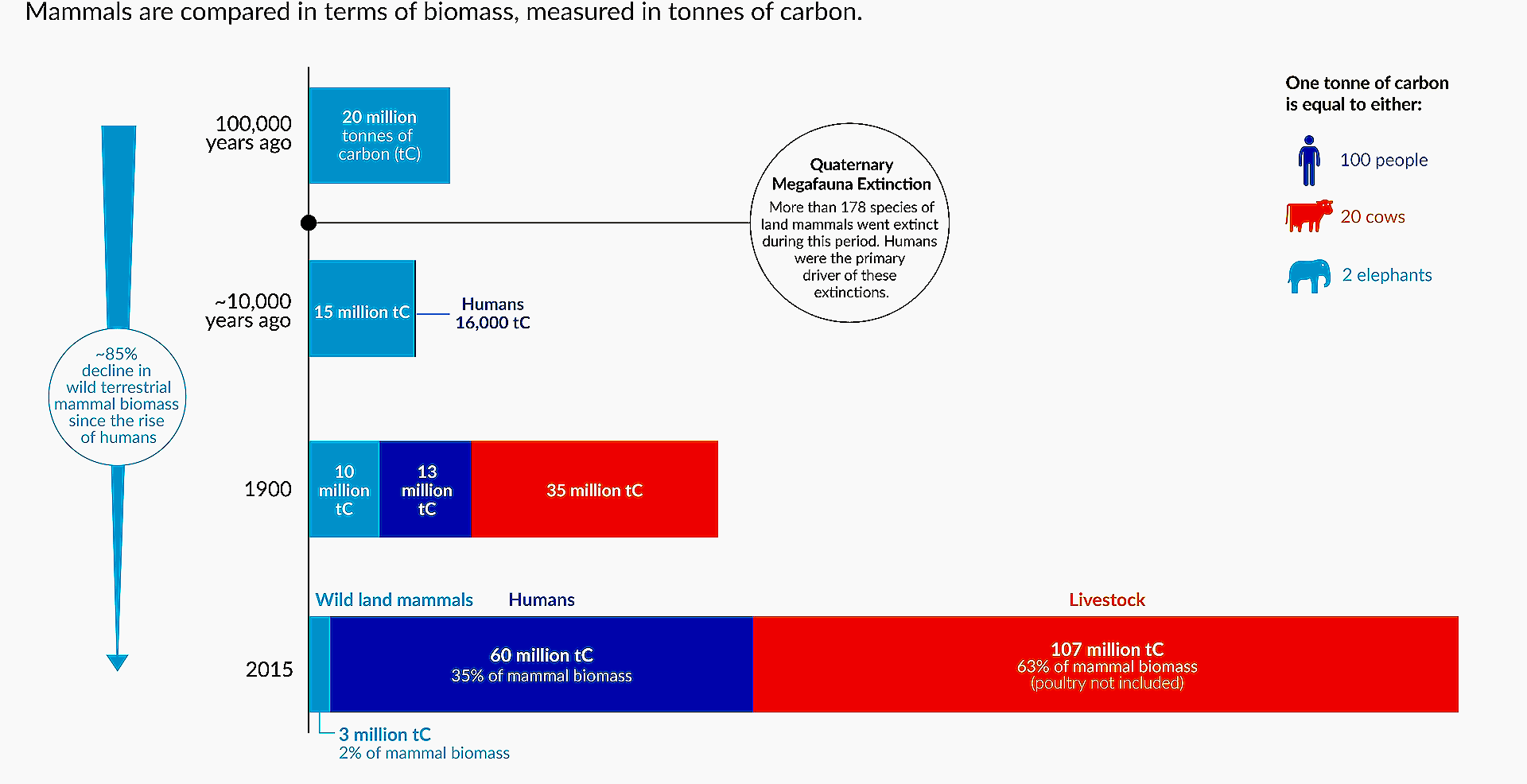
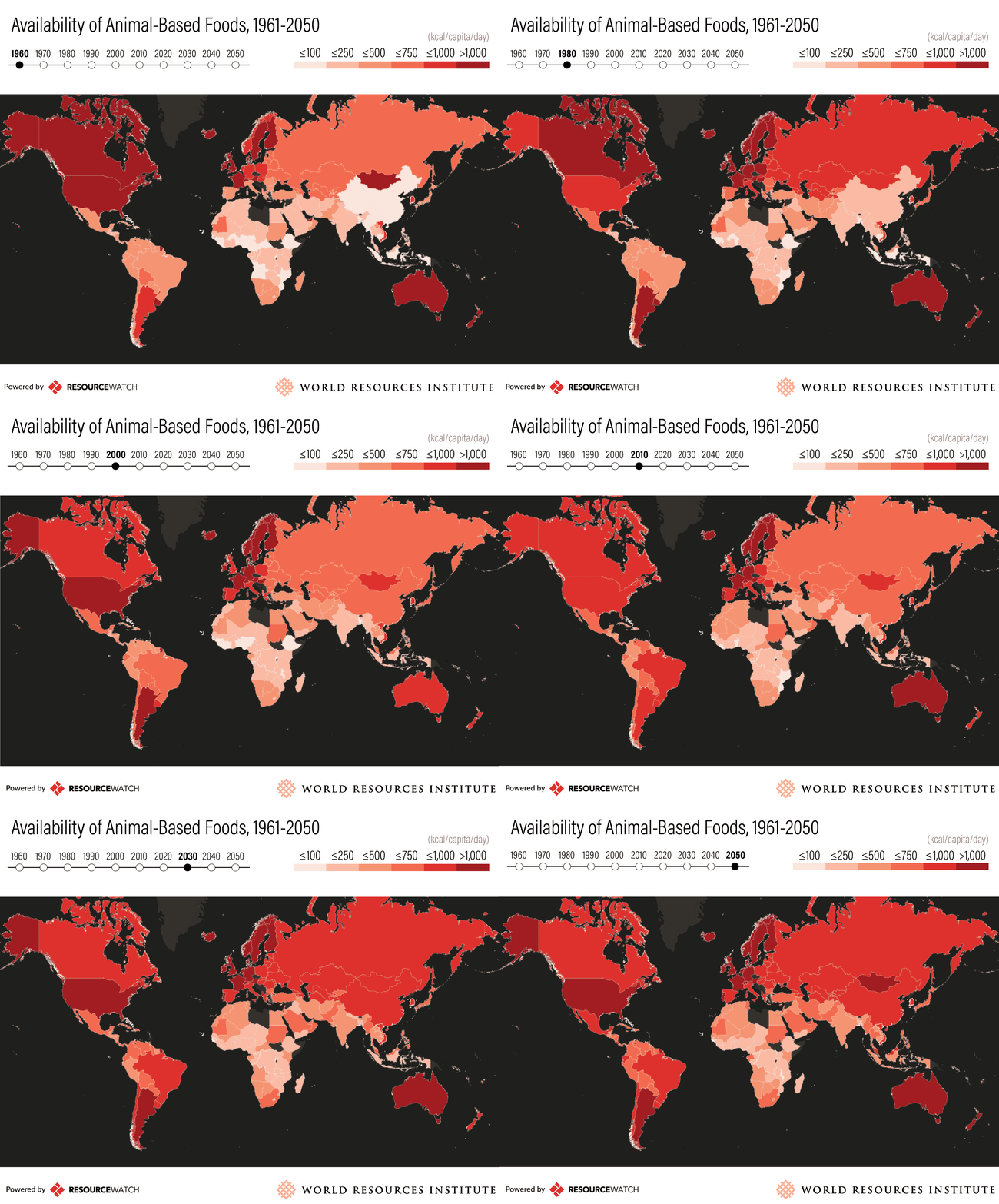
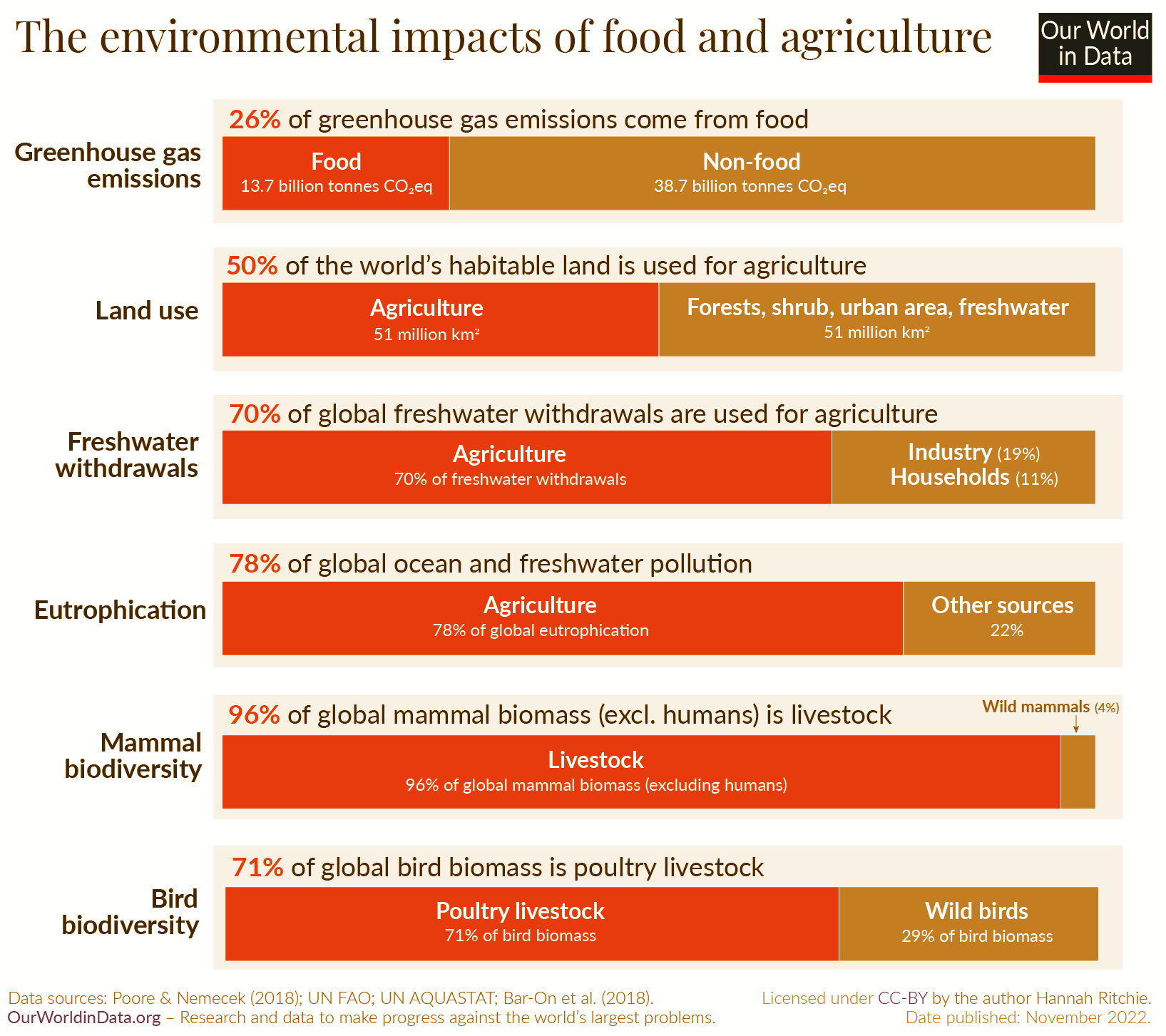
Human food demand has contributed most. Natural land was at first predominantly converted to land for food crops which resulted in soil and vegetation loss from tilling and clear cutting. Then dietary preferences shifted to meat and dairy which resulted in both a change and an increase in animal biomass and more tilling, clear cutting and overgrazing. Overall mammal biomass increased by a factor 10 but its composition changed drastically. Over time ~ 85% of all wild mammals have been lost and where they once represented 100% of all mammal biomass it is now 4%. The other 96% is now made up of livestock biomass and humans for 62% and 34% respectively. For bird mass the composition changes are less drastic but still impressive: 71% poultry versus 29% wild birds.
Livestock ruminants like cattle, sheep and bisons eat about
2.5% of their body weight per day (in dry weight biomass), 10 times more as e.g. birds, bears, and mice that eat about 0.25% of their body weight daily. Thus exponentially more land was required to satisfy human food and livestocks' feed demand. Thus agriculture has caused about 80% of deforestation and biodiversity loss and the ~
500 GtC of of aboveground plant carbon and about
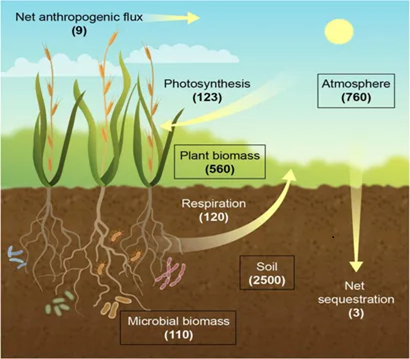
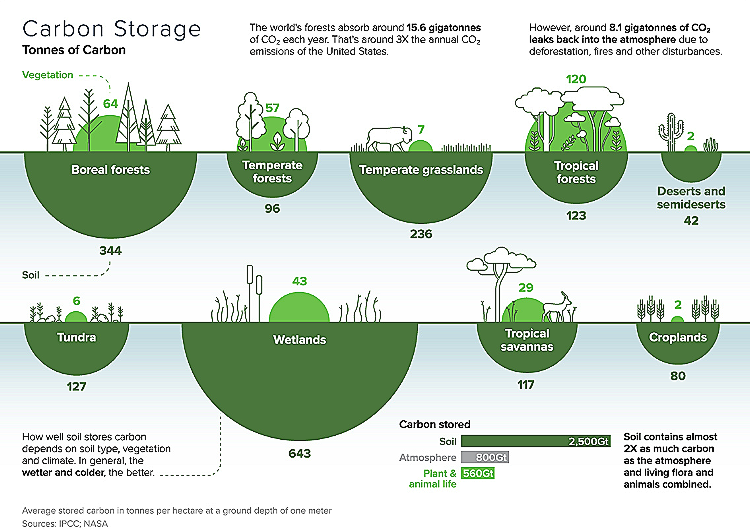
140 GtC of soil carbon net transfer to the atmosphere (equaling 2.400 GtCO2). Today soils contain 2.500 gigatonnes carbon (GtC), plants and biomass 560 GtC and the atmosphere 875 GtC.
Carbon stored in soils, plants and animals
Mammal carbon mass increases and decreases over the millenia
ADVANCING SUSTAINABLE BIOENERGY DEVELOPMENT
New, advanced technologies make it possible to produce climate neutral fuels from non-forest and non-food energy crops. The benefits of cultivation and use of these energy crops for transport fuels and electricity goes beyond the benefits of reducing greenhouse gas emissions. Terrestrial energy crop cultivation and aquatic energy crop harvesting reverses land and water degradation, increases biodiversity and carbon sequestration and improves land fertility. We call this
Deep Green Biomass. Moreover, deploying these energy crops for the production of advanced biofuels will positively impact social-economic structures and energy independence and reduce the need for involuntary migration and deforestation: Deep Green Energy.
Deep Green Energy Partners works to accelerate deployment of deep green biomass for the production of advanced biofuels and biochemicals, to restore soil and water conditions and to optimize the overall ecological-economic effects of investments in the energy transition.
All in all some 60% of all land is used for material production today and over 40% of all the planet’s land is degraded, which directly affects half of humanity and threatens roughly half of global GDP. By 2060 annual biomass extraction is expected to increase by another 80%, the extraction of metals and minerals by
100% and urbanization by around 1.8–2.4%.
ADVANCING SUSTAINABLE BIOENERGY DEVELOPMENT
New, advanced technologies make it possible to produce climate neutral fuels from non-forest and non-food energy crops. The benefits of cultivation and use of these energy crops for transport fuels and electricity goes beyond the benefits of reducing greenhouse gas emissions. Terrestrial energy crop cultivation and aquatic energy crop harvesting reverses land and water degradation, increases biodiversity and carbon sequestration and improves land fertility. We call this
Deep Green Biomass. Moreover, deploying these energy crops for the production of advanced biofuels will positively impact social-economic structures and energy independence and reduce the need for involuntary migration and deforestation: Deep Green Energy.
Deep Green Energy Partners works to accelerate deployment of deep green biomass for the production of advanced biofuels and biochemicals, to restore soil and water conditions and to optimize the overall ecological-economic effects of investments in the energy transition.
ADVANCING SUSTAINABLE BIOENERGY DEVELOPMENT
New, advanced technologies make it possible to produce climate neutral fuels from non-forest and non-food energy crops. The benefits of cultivation and use of these energy crops for transport fuels and electricity goes beyond the benefits of reducing greenhouse gas emissions. Terrestrial energy crop cultivation and aquatic energy crop harvesting reverses land and water degradation, increases biodiversity and carbon sequestration and improves land fertility. We call this
Deep Green Biomass. Moreover, deploying these energy crops for the production of advanced biofuels will positively impact social-economic structures and energy independence and reduce the need for involuntary migration and deforestation: Deep Green Energy.
Deep Green Energy Partners works to accelerate deployment of deep green biomass for the production of advanced biofuels and biochemicals, to restore soil and water conditions and to optimize the overall ecological-economic effects of investments in the energy transition.
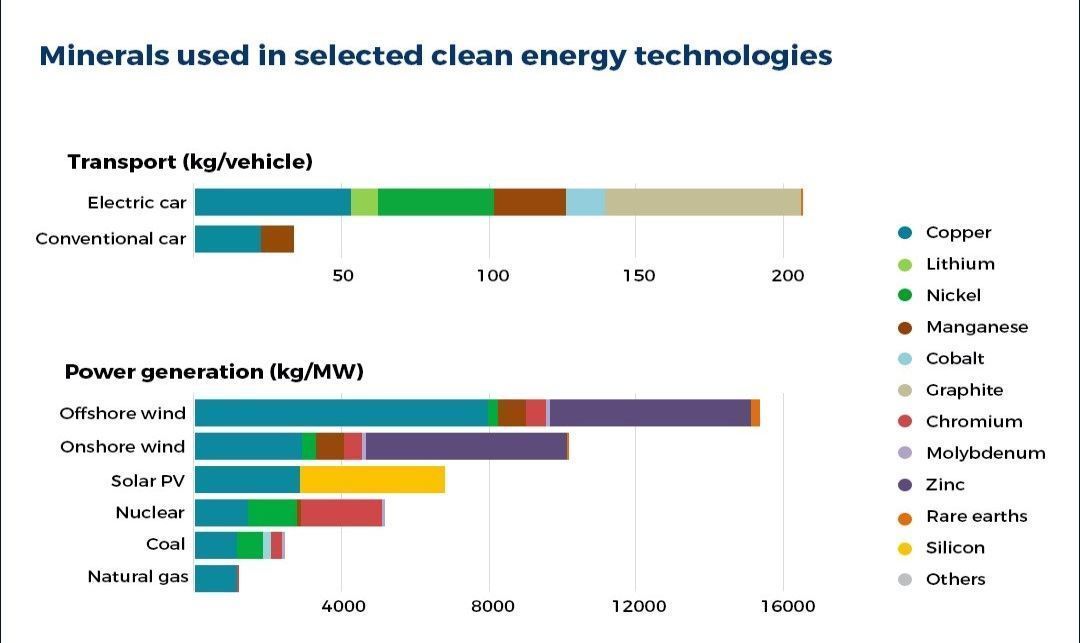
The impacts of renewable non-carbon and bio-carbon based energy differ considerably and therefore we start with the non-carbon variant. The
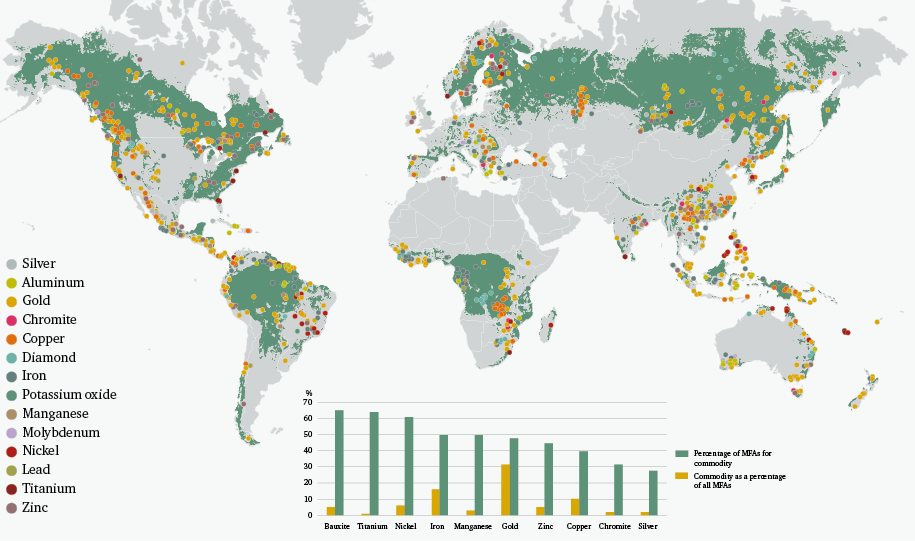
land-use for non-carbon renewable energy for windturbines, solar panels, reservoirs, infrastructure is relatively limited and the same applies to the land-use required mining. Mining sites now cover a land area estimated to be 0.5% of the global ice-free land surface but they potentially influence 40% of Earth’s land surface
by land clearing, toxic pollution and habitat destruction. About 8% of the so influenced lands coincide with protected natural areas, 7% with key biodiversity areas, and 16% with remaining wilderness. And as rivers end in lakes or seas this puts mining in conflict with both terrestrial and aquatic biodiversity.
Most mining areas (82%) target materials needed for renewable energy production, and areas that overlap with protected areas and remaining wilderness contain a greater density of mines (the indicator of threat severity) compared to the overlapping mining areas that target other materials. Although it is too early to tell it is har to imagine how deep sea mining would not affect seas and oceans.
Mining also uses water which adding to water stress and food insecurity in those areas that are already suffering from droughts. Thus, as renewable non-carbon energy supply grows so does the chance that these new threats to biodiversity surpass those averted by climate change mitigation.
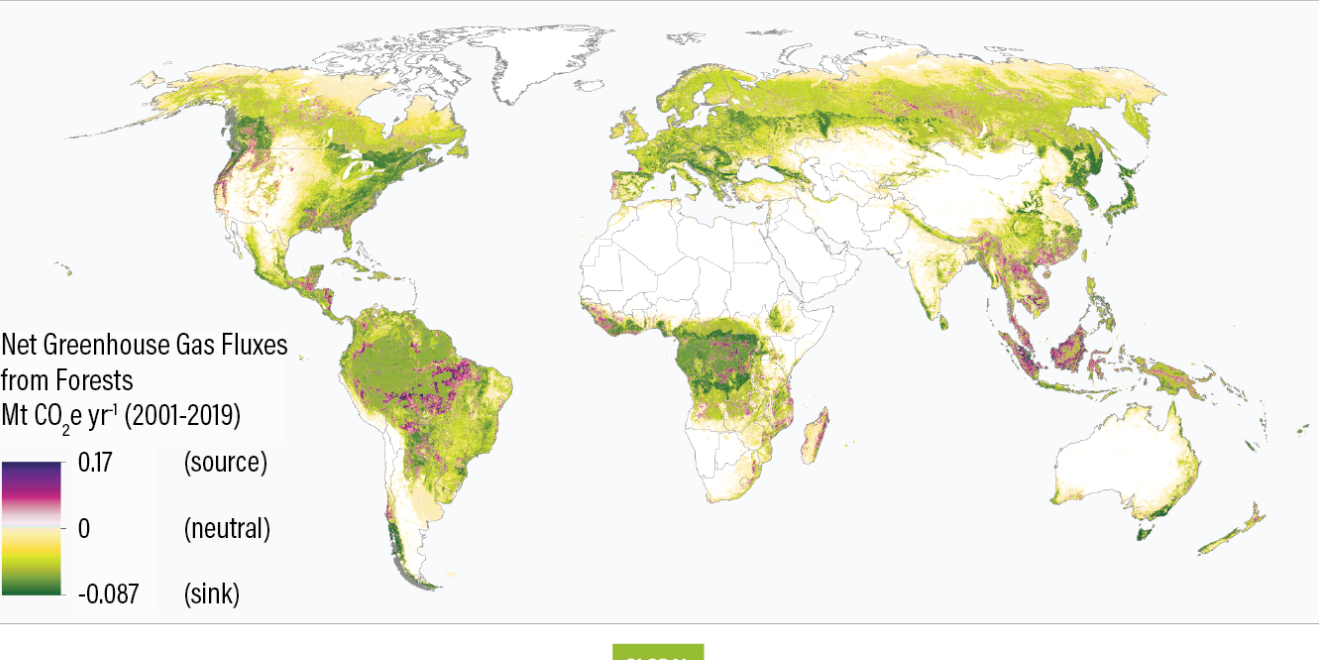
Keeping old forests in tact, and rainforests in particular is crucial for carbon sequestration preservation as well as well for the regulation of biodiversity, water and climatic conditions on which all land use is dependent. Business as usual
around
10 million ha per year are lost to deforestation. Nearly all, 95%, of this deforestation occurs in the tropics, i.e rainforests, and unless additional action is taken an estimated
270 million ha of tropical rainforests
will be deforested by 2050 for pasture, crops (soy, palm oil), fuel wood, timber and mining. Around half of the deforestation is offset
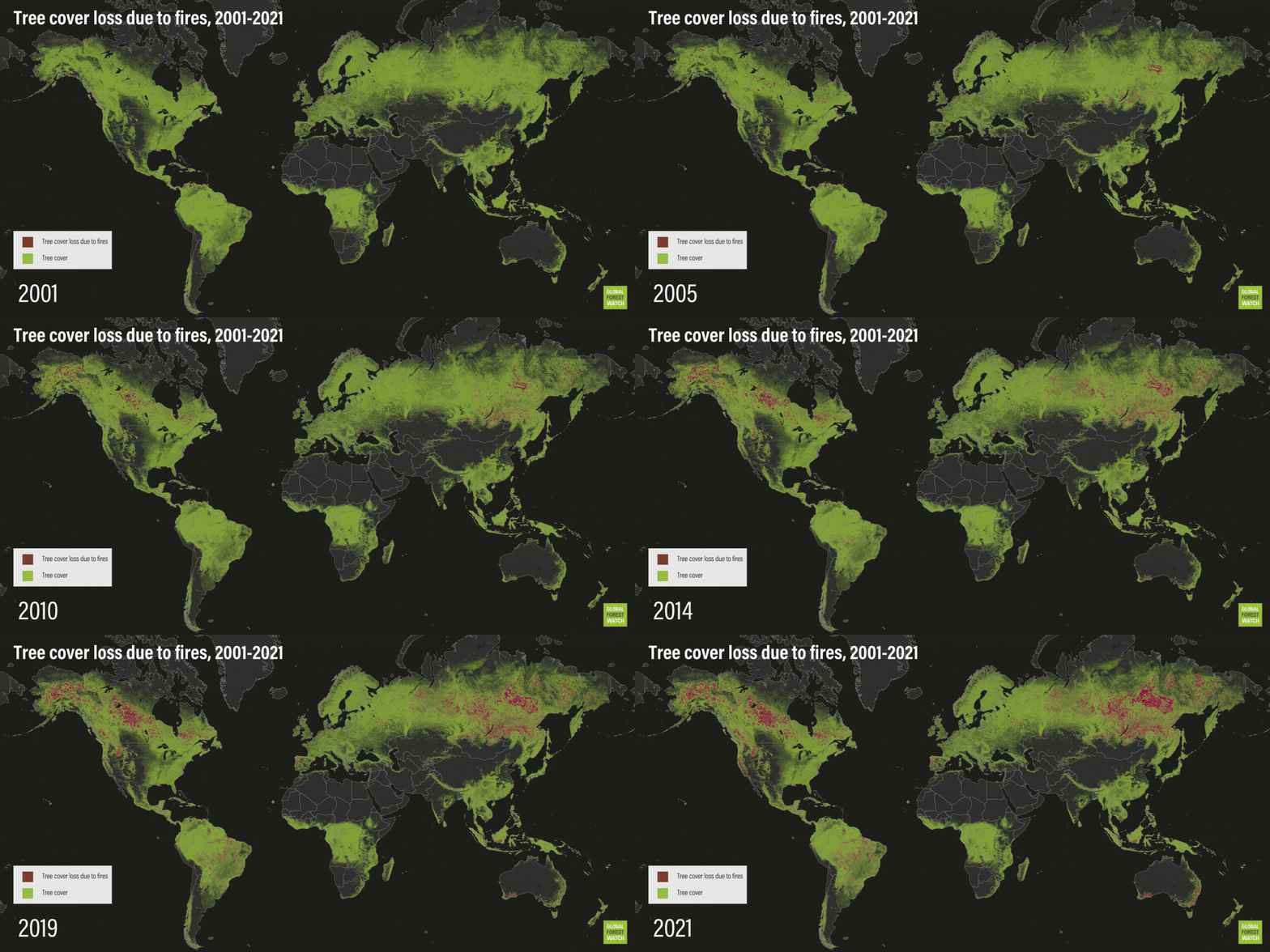
by regrowing forests, so overall net forest loss is about around 5 million ha/y, of which most is old forests. Increasing wildfires, droughts and mining activities will further speed up the loss of tree cover, carbon and biodiversity.
ADVANCING SUSTAINABLE BIOENERGY DEVELOPMENT
New, advanced technologies make it possible to produce climate neutral fuels from non-forest and non-food energy crops. The benefits of cultivation and use of these energy crops for transport fuels and electricity goes beyond the benefits of reducing greenhouse gas emissions. Terrestrial energy crop cultivation and aquatic energy crop harvesting reverses land and water degradation, increases biodiversity and carbon sequestration and improves land fertility. We call this
Deep Green Biomass. Moreover, deploying these energy crops for the production of advanced biofuels will positively impact social-economic structures and energy independence and reduce the need for involuntary migration and deforestation: Deep Green Energy.
Deep Green Energy Partners works to accelerate deployment of deep green biomass for the production of advanced biofuels and biochemicals, to restore soil and water conditions and to optimize the overall ecological-economic effects of investments in the energy transition.
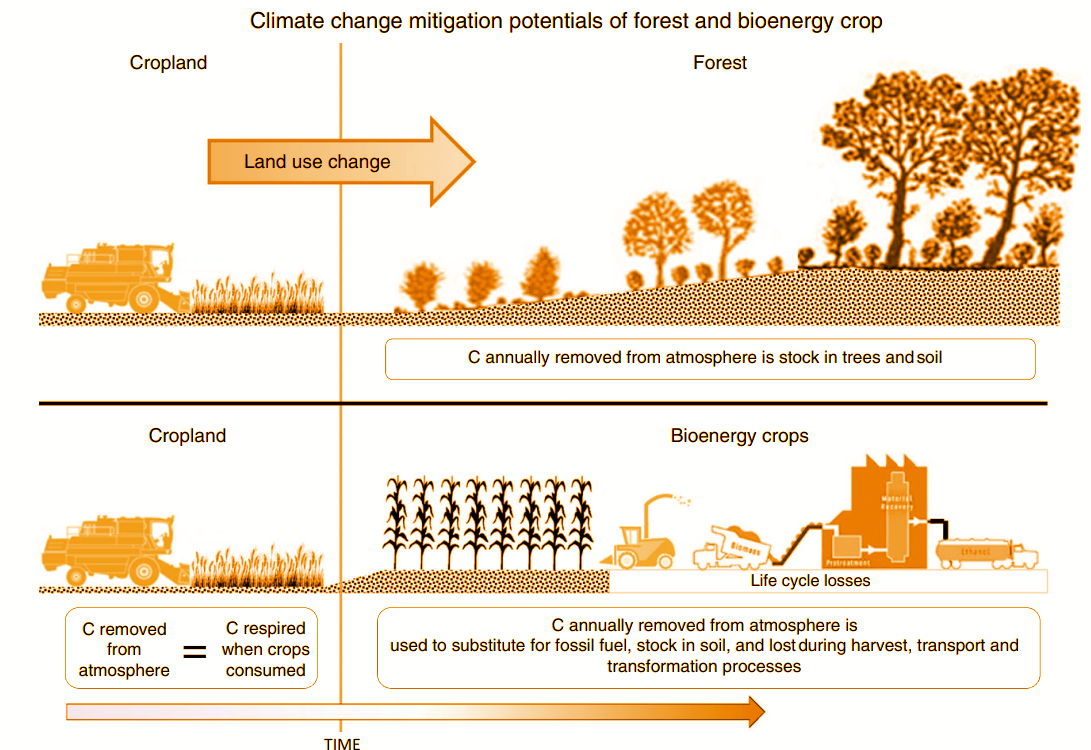
This leaves planting new grass lands. Perennial grasses (e.g. Miscanthus, Napier, King or Switch grass, often generically called elephant-, giant grasses or C4 energy crops) can potentially be 4–15 times
more effective than forest and grassland conservation in reducing CO2
emissions and mitigating climate change, even after taking account of carbon emissions from land-use changes and opportunity costs. Perennial grasses are cheap to cultivate, require little fertilizer or maintenance, are climate resilient and grow well on marginal lands all over the world.
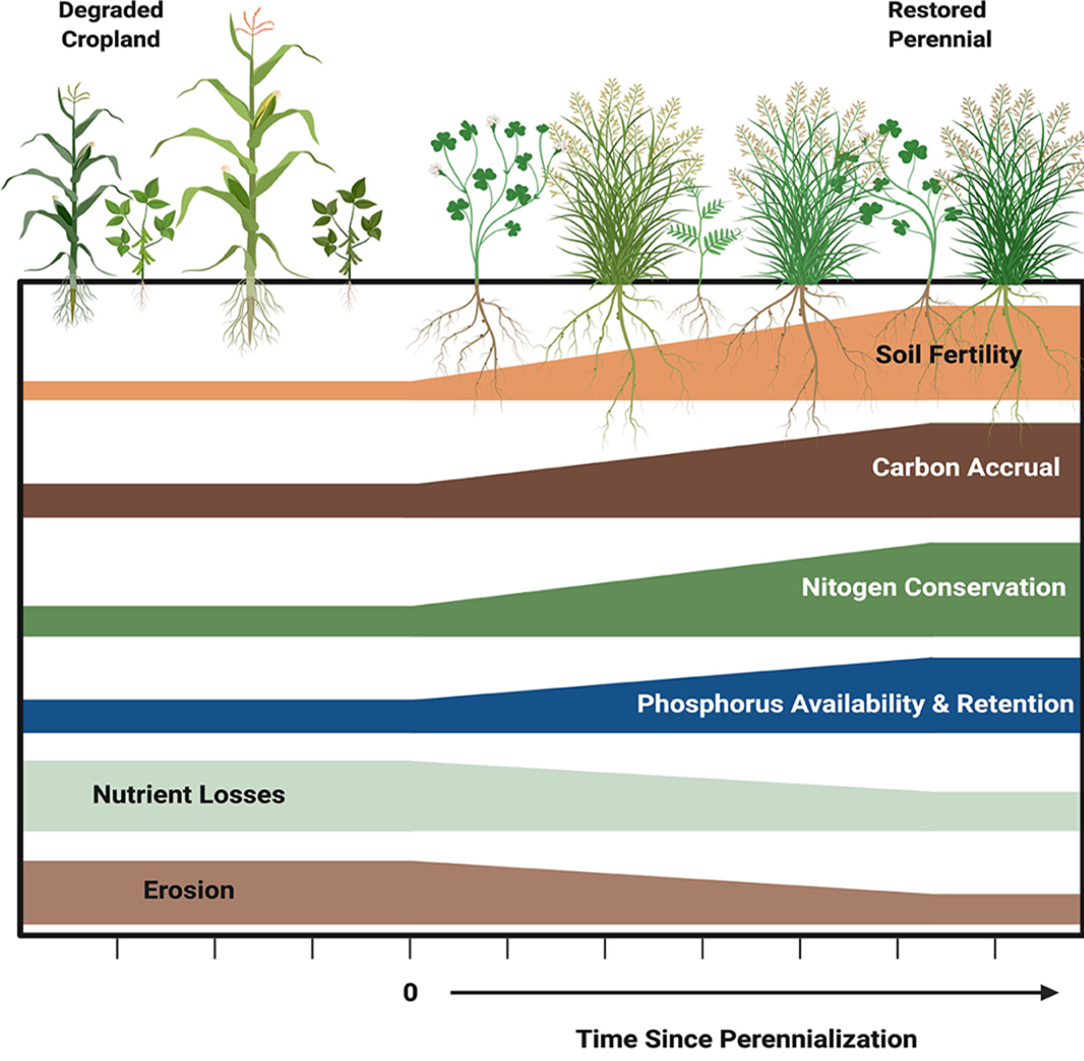
Planting perennial grasses on degraded and abandoned agricultural lands (perennialization) increases terrestrial carbon sequestration, restores soil organic carbon and fertility, vegetative (leaf) cover and soil water holding capacity. When done at scale,
perennialization enhances hydrology, cooling and reduces aridity, in a similar way as forests do. Perennial grasses have large and long root systems that assure longer and deeper carbon and water holding as well microbial activity. Runoff of available water and nutrients is reduced, and water and nutrient availability and resilience to extreme weather events increases in limited time.
Tree cover loss from wildfires is rapidly increasing
Tree cover gain and loss and forest carbon fluxes
Climate change mitigation potentials of forests, food and perennial grasses for e.g bioenergy
Restoring soil fertility on degraded lands via perennialization
ADVANCING SUSTAINABLE BIOENERGY DEVELOPMENT
New, advanced technologies make it possible to produce climate neutral fuels from non-forest and non-food energy crops. The benefits of cultivation and use of these energy crops for transport fuels and electricity goes beyond the benefits of reducing greenhouse gas emissions. Terrestrial energy crop cultivation and aquatic energy crop harvesting reverses land and water degradation, increases biodiversity and carbon sequestration and improves land fertility. We call this
Deep Green Biomass. Moreover, deploying these energy crops for the production of advanced biofuels will positively impact social-economic structures and energy independence and reduce the need for involuntary migration and deforestation: Deep Green Energy.
Deep Green Energy Partners works to accelerate deployment of deep green biomass for the production of advanced biofuels and biochemicals, to restore soil and water conditions and to optimize the overall ecological-economic effects of investments in the energy transition.
Perennial grasses can be harvested once or multiple times per year without interrupting carbon sequestration, plant growth cycles or the recovery of soil biodiversity. Moreover, perennial grasses have to be replanted every 7 to 25 years depending on grass variety and so the annual tilling process for food/feed crops are avoided. Perennialization is also the most beneficial land-use option to increase primary production, measured both in yields and in time. Thus unlike forest or food/feed crop plantations, perennial grass plantations provide a steady revenue stream and a sustainable and economically viable business case for increasing carbon sequestration, ecosystem and land restoration and limiting GW.
ADVANCING SUSTAINABLE BIOENERGY DEVELOPMENT
New, advanced technologies make it possible to produce climate neutral fuels from non-forest and non-food energy crops. The benefits of cultivation and use of these energy crops for transport fuels and electricity goes beyond the benefits of reducing greenhouse gas emissions. Terrestrial energy crop cultivation and aquatic energy crop harvesting reverses land and water degradation, increases biodiversity and carbon sequestration and improves land fertility. We call this
Deep Green Biomass. Moreover, deploying these energy crops for the production of advanced biofuels will positively impact social-economic structures and energy independence and reduce the need for involuntary migration and deforestation: Deep Green Energy.
Deep Green Energy Partners works to accelerate deployment of deep green biomass for the production of advanced biofuels and biochemicals, to restore soil and water conditions and to optimize the overall ecological-economic effects of investments in the energy transition.
Land-use and landcover change over the milennia The world's soils perform a crucial role in sustaining above and below ground biomass, which work in combination to drive the Earth’s carbon, nitrogen and water cycles, thereby creating the nutrients and food we need to survive. Soil produces 95% of humanity’s food supply, by growing both the crops we eat and the grasses and other plants that are fed to livestock. Together with the biomass that grows in it or on top of it, it filters, purifies and holds our water, reduces flooding and regulates carbon and water vapor in the atmosphere. Soil stores three times the amount of carbon in the atmosphere and twice the amount contained in all plants and trees. Every tonne of organic soil carbon is the equivalent of about 3.67 tonnes of atmospheric CO2. So even small changes to the soil carbon stock play a big role in either limiting or exacerbating climate change.
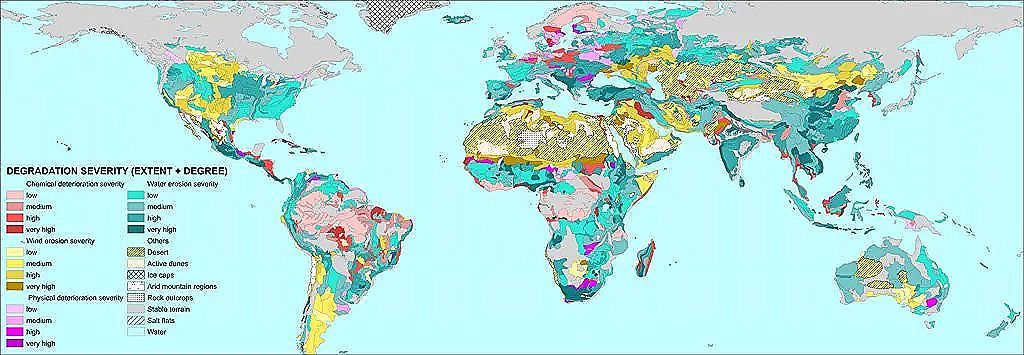
The world grows 95% of its food in the uppermost layer of soil, making topsoil one of the most important components of our food system. But thanks to conventional farming practices, nearly half of the most productive soil has disappeared in the world in the last 150 years, threatening crop yields and contributing to nutrient pollution, dead zones and erosion. In the US alone, soil on cropland is eroding 10 times faster than it can be replenished.Generating three centimeters of top soil takes 1,000 years, and if current rates of degradation continue all of the world's top soil could be gone within 60 years, a senior UN official said".The Earth’s soils contain about 2,500 gigatons of carbon—that’s more than three times the amount of carbon in the atmosphere and four times the amount stored in all living plants and animals. Because almost half the land that can support plant life on Earth has been converted to croplands, pastures and rangelands, soils have actually lost 50 to 70 percent of the carbon they once held. This has contributed about a quarter of all the manmade global greenhouse gas emissions that are warming the planet.If we continue to degrade the soil at the rate we are now, the world could run out of topsoil in about 60 years, according to Maria-Helena Semedo of the UN’s Food and Agriculture Organization. Without topsoil, the earth’s ability to filter water, absorb carbon, and feed people plunges. Not only that, but the food we do grow will probably be lower in vital nutrients.Moreover, some scientists believe soils could continue to sequester carbon for 20 to 40 years before they become saturated.in about 60 years, according to Scientific American. Global warming, deforestation, and chemical farming all contribute to the destruction of soil, and, essentially, we’re using soil faster than we can replenish it. We need healthy topsoil to grow about 95 percent of our food, and without fertile planting grounds for crops, entire civilizations can be wiped out.
The modern combination of intensive tilling, lack of cover crops, synthetic fertilizers and pesticide use has left farmland stripped of the nutrients, minerals and microbes that support healthy plant life. But some farmers are attempting to buck the trend and save their lands along with their livelihoods.
The causes of soil destruction include chemical-heavy farming techniques, deforestation which increases erosion, and global warming. The earth under our feet is too often ignored by policymakers, experts sa
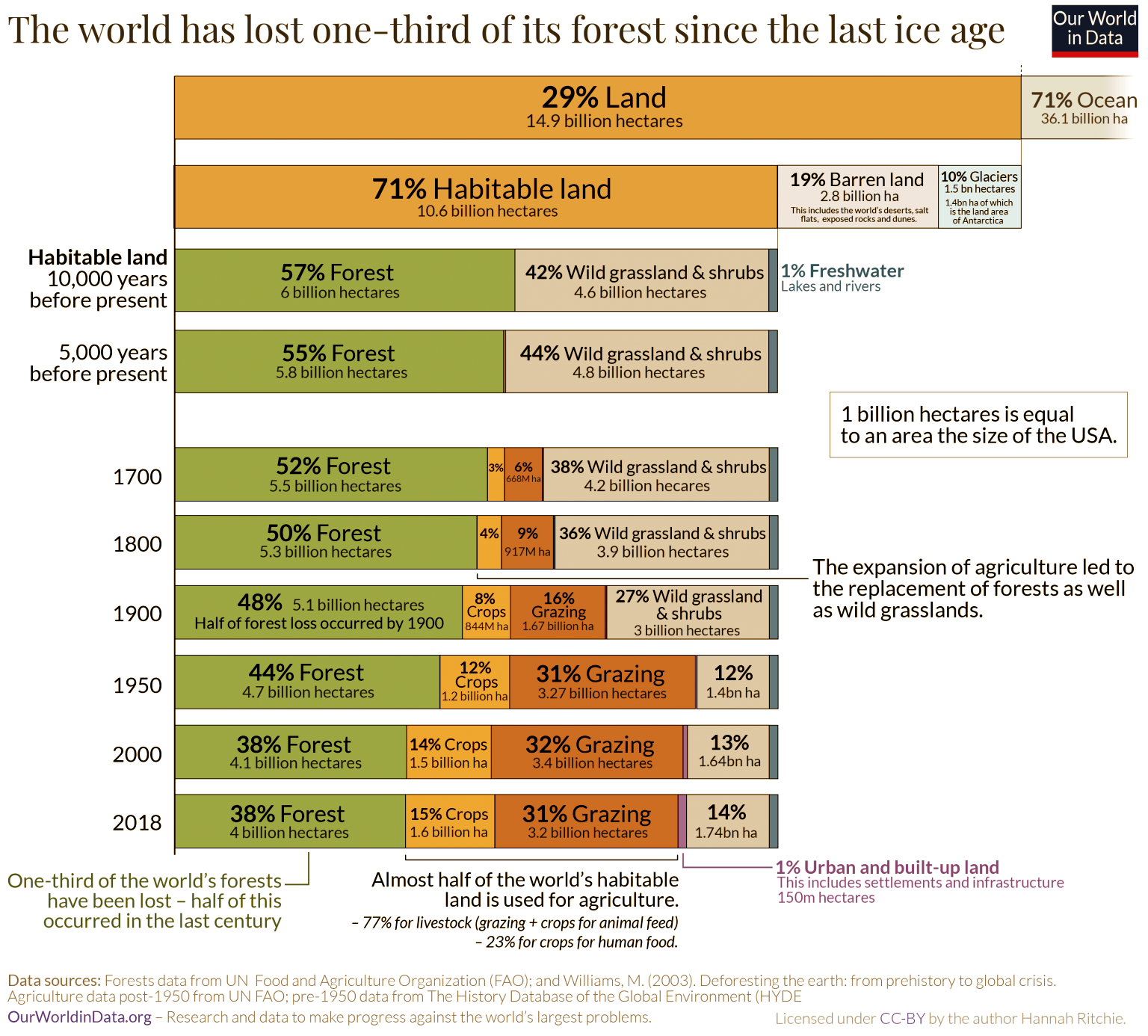
Over the millennia humans converted more an more land to meet their needs. Some 60% of all arable land is now used for materials production today and as we cultivated every more land the forests and wild grasses that once covered them disappeared. Over the last 10.000 years our land-use system caused some 140 Gt of organic soil carbon and around 500 Gt of biomass carbon from forests and other natural vegetation to be transferred to the atmosphere.
All this carbon ended up in the atmosphere while the loss of leaf cover reduced the atmospheric carbon and heat absorption capacity and the recycling and transporting patterns of water resources. The cooling effects of treecover are substantial and amount to a
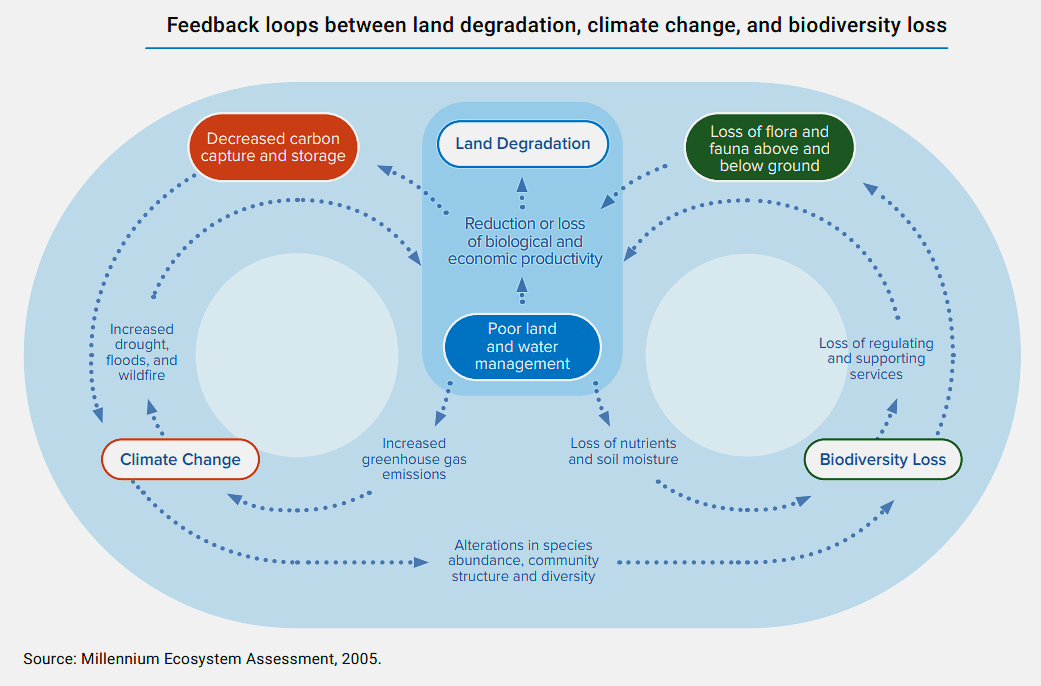
5-10 °C reduction in area surface temperature and changes in water evaporation from forests have impacts on rainfall patterns thousands of miles away. But the effects of land cultivation are not limited to the Earth's carbon and water cycles and climate change It also causes the interacting processes of biodiversity loss and soil and water degradation which in turn are accelerated by climate change and so set of carbon-climate feedback loops.
Soil and water degradation is caused by mining (fossil fuels, metals, minerals), deforestation and clear cutting (loss of root systems, biodiversity, invasive species) industrial pollution (toxic waste, mineral processing for cement and ceramics), harmful agriculture practices (tillage, fertilizing, overgrazing, irrigation) and climate change. Extreme droughts, rainfall and storms further accelerate soil erosion (carbon, water, nutrients and biodiversity loss), eutrophication (algae growth), salinization (salt concentration) and toxic runoffs. By now over 40% of the planet’s land is degraded, affecting half of humanity and roughly half of global GDP.
ADVANCING SUSTAINABLE BIOENERGY DEVELOPMENT
New, advanced technologies make it possible to produce climate neutral fuels from non-forest and non-food energy crops. The benefits of cultivation and use of these energy crops for transport fuels and electricity goes beyond the benefits of reducing greenhouse gas emissions. Terrestrial energy crop cultivation and aquatic energy crop harvesting reverses land and water degradation, increases biodiversity and carbon sequestration and improves land fertility. We call this
Deep Green Biomass. Moreover, deploying these energy crops for the production of advanced biofuels will positively impact social-economic structures and energy independence and reduce the need for involuntary migration and deforestation: Deep Green Energy.
Deep Green Energy Partners works to accelerate deployment of deep green biomass for the production of advanced biofuels and biochemicals, to restore soil and water conditions and to optimize the overall ecological-economic effects of investments in the energy transition.
ADVANCING SUSTAINABLE BIOENERGY DEVELOPMENT
New, advanced technologies make it possible to produce climate neutral fuels from non-forest and non-food energy crops. The benefits of cultivation and use of these energy crops for transport fuels and electricity goes beyond the benefits of reducing greenhouse gas emissions. Terrestrial energy crop cultivation and aquatic energy crop harvesting reverses land and water degradation, increases biodiversity and carbon sequestration and improves land fertility. We call this
Deep Green Biomass. Moreover, deploying these energy crops for the production of advanced biofuels will positively impact social-economic structures and energy independence and reduce the need for involuntary migration and deforestation: Deep Green Energy.
Deep Green Energy Partners works to accelerate deployment of deep green biomass for the production of advanced biofuels and biochemicals, to restore soil and water conditions and to optimize the overall ecological-economic effects of investments in the energy transition.
All in all some 60% of all land is used for material production today and over 40% of all the planet’s land is degraded, which directly affects half of humanity and threatens roughly half of global GDP. By 2060 annual biomass extraction is expected to increase by another 80%, the extraction of metals and minerals by
100% and urbanization by around 1.8–2.4%.
ADVANCING SUSTAINABLE BIOENERGY DEVELOPMENT
New, advanced technologies make it possible to produce climate neutral fuels from non-forest and non-food energy crops. The benefits of cultivation and use of these energy crops for transport fuels and electricity goes beyond the benefits of reducing greenhouse gas emissions. Terrestrial energy crop cultivation and aquatic energy crop harvesting reverses land and water degradation, increases biodiversity and carbon sequestration and improves land fertility. We call this
Deep Green Biomass. Moreover, deploying these energy crops for the production of advanced biofuels will positively impact social-economic structures and energy independence and reduce the need for involuntary migration and deforestation: Deep Green Energy.
Deep Green Energy Partners works to accelerate deployment of deep green biomass for the production of advanced biofuels and biochemicals, to restore soil and water conditions and to optimize the overall ecological-economic effects of investments in the energy transition.
In a business as usual scenario (BAU) productivity, carbon and water losses from current agriculture lands will grow continue due the effects of warmer average climatic conditions and extreme weather events. Around 1.6 billion hectares of agricultural land (a third) shows a persistent decline in primary productivity and in a business as usual scenario productivity loss will accelerate. Between 2010-2020 about 12 million hectares of arable land were lost annually to drought and desertification alone and BAU, at least another 300 million more hectares will be lost by 2050 as will its remaining carbon stocks.
In the latest
PBL-UN BAU scenario global demand for food increases by some 45% and agricultural land expands with 300 million ha by 2050, primarily at the expense of rainforests, which will cause an additional loss of 66 Gt carbon (average 2-3 Gt/y). Demand for primary processed wood products is expected to grow
by 37 per cent up to 2050 and most of its supply to come from new forest plantations. Carbon stock impacts of new forest plantation can be either positive or negative depending on cutting practices and frequencies and therefore difficult to asses in general but should be considered neutral at best.
when global warming reaches 2°C, which will be achieved before 2050 BAU, it is estimated to cause net additional releases of approximately 230 Gt carbon due to soil carbon-climate feedbacks from in particular boreal forest lands (average 9 Gt/y). Above ground carbon biomass losses will also increase due to wild fires by droughts and wilfires.
ADVANCING SUSTAINABLE BIOENERGY DEVELOPMENT
New, advanced technologies make it possible to produce climate neutral fuels from non-forest and non-food energy crops. The benefits of cultivation and use of these energy crops for transport fuels and electricity goes beyond the benefits of reducing greenhouse gas emissions. Terrestrial energy crop cultivation and aquatic energy crop harvesting reverses land and water degradation, increases biodiversity and carbon sequestration and improves land fertility. We call this
Deep Green Biomass. Moreover, deploying these energy crops for the production of advanced biofuels will positively impact social-economic structures and energy independence and reduce the need for involuntary migration and deforestation: Deep Green Energy.
Deep Green Energy Partners works to accelerate deployment of deep green biomass for the production of advanced biofuels and biochemicals, to restore soil and water conditions and to optimize the overall ecological-economic effects of investments in the energy transition.
SOIL
ADVANCING SUSTAINABLE BIOENERGY DEVELOPMENT
New, advanced technologies make it possible to produce climate neutral fuels from non-forest and non-food energy crops. The benefits of cultivation and use of these energy crops for transport fuels and electricity goes beyond the benefits of reducing greenhouse gas emissions. Terrestrial energy crop cultivation and aquatic energy crop harvesting reverses land and water degradation, increases biodiversity and carbon sequestration and improves land fertility. We call this
Deep Green Biomass. Moreover, deploying these energy crops for the production of advanced biofuels will positively impact social-economic structures and energy independence and reduce the need for involuntary migration and deforestation: Deep Green Energy.
Deep Green Energy Partners works to accelerate deployment of deep green biomass for the production of advanced biofuels and biochemicals, to restore soil and water conditions and to optimize the overall ecological-economic effects of investments in the energy transition.
FORESTS
ADVANCING SUSTAINABLE BIOENERGY DEVELOPMENT
New, advanced technologies make it possible to produce climate neutral fuels from non-forest and non-food energy crops. The benefits of cultivation and use of these energy crops for transport fuels and electricity goes beyond the benefits of reducing greenhouse gas emissions. Terrestrial energy crop cultivation and aquatic energy crop harvesting reverses land and water degradation, increases biodiversity and carbon sequestration and improves land fertility. We call this
Deep Green Biomass. Moreover, deploying these energy crops for the production of advanced biofuels will positively impact social-economic structures and energy independence and reduce the need for involuntary migration and deforestation: Deep Green Energy.
Deep Green Energy Partners works to accelerate deployment of deep green biomass for the production of advanced biofuels and biochemicals, to restore soil and water conditions and to optimize the overall ecological-economic effects of investments in the energy transition.
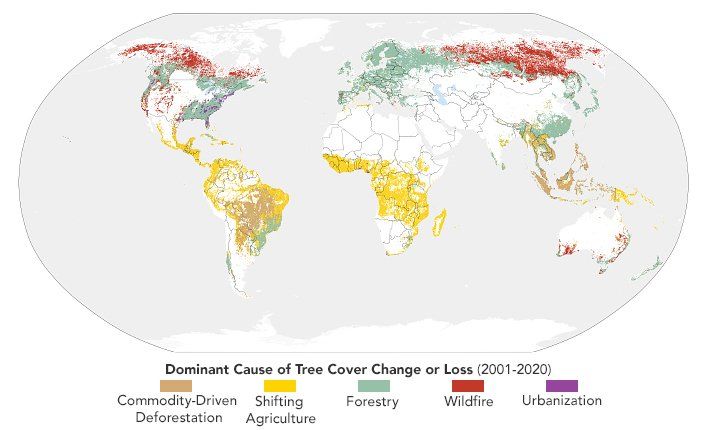
Forests store about 662 billion tonnes in below in trees and soil. In 2020 the earth lost nearly 26 million hectares of tree cover, an area larger than the United Kingdom. Loss of forests not only means loss of carbon, biodiversity and ecosystem services. It also means loss of carbon sequestration capacity, water retention and impacts albedo and atmospheric water vapor and aerosols levels. Forested watersheds and wetlands supply 75 percent of the world’s accessible fresh water
for domestic, agricultural, industrial and ecological needs and act as natural filters for our air. Forests are home to the vast majority of the terrestrial plant and animal species including 80% of amphibian species, 75% of bird species and 68% of mammal species.
Forest loss also means economic loss:
an estimate half of world gross domestic product (USD 84.4 trillion in 2020) depends moderately (USD 31 trillion per year) or highly (USD 13 trillion per year) on ecosystem services, of which a substantial part is provided by forests.
Today forests still absorb more carbon than they emit
due to reforestation but higher temperatures, droughts, forest mass loss, and wildfires are turning forests from carbon sinks to carbon sources. Climate change and land-use change are projected
to make wildfires more frequent and intense,
with a global increase of extreme fires of up to 14% by 2030, 30% by the end of 2050 and 50% by the end of the century. Mining untapped reservoirs for e.g. coal, iron ore, copper, gold, nickel, lithium, rare Earth metals or bauxite, will pose further threats to the remaining natural forests.
ADVANCING SUSTAINABLE BIOENERGY DEVELOPMENT
New, advanced technologies make it possible to produce climate neutral fuels from non-forest and non-food energy crops. The benefits of cultivation and use of these energy crops for transport fuels and electricity goes beyond the benefits of reducing greenhouse gas emissions. Terrestrial energy crop cultivation and aquatic energy crop harvesting reverses land and water degradation, increases biodiversity and carbon sequestration and improves land fertility. We call this
Deep Green Biomass. Moreover, deploying these energy crops for the production of advanced biofuels will positively impact social-economic structures and energy independence and reduce the need for involuntary migration and deforestation: Deep Green Energy.
Deep Green Energy Partners works to accelerate deployment of deep green biomass for the production of advanced biofuels and biochemicals, to restore soil and water conditions and to optimize the overall ecological-economic effects of investments in the energy transition.
THE IMPACTS OF CLIMATE CHANGE - HYDROLOGICAL CYCLES
ADVANCING SUSTAINABLE BIOENERGY DEVELOPMENT
New, advanced technologies make it possible to produce climate neutral fuels from non-forest and non-food energy crops. The benefits of cultivation and use of these energy crops for transport fuels and electricity goes beyond the benefits of reducing greenhouse gas emissions. Terrestrial energy crop cultivation and aquatic energy crop harvesting reverses land and water degradation, increases biodiversity and carbon sequestration and improves land fertility. We call this
Deep Green Biomass. Moreover, deploying these energy crops for the production of advanced biofuels will positively impact social-economic structures and energy independence and reduce the need for involuntary migration and deforestation: Deep Green Energy.
Deep Green Energy Partners works to accelerate deployment of deep green biomass for the production of advanced biofuels and biochemicals, to restore soil and water conditions and to optimize the overall ecological-economic effects of investments in the energy transition.
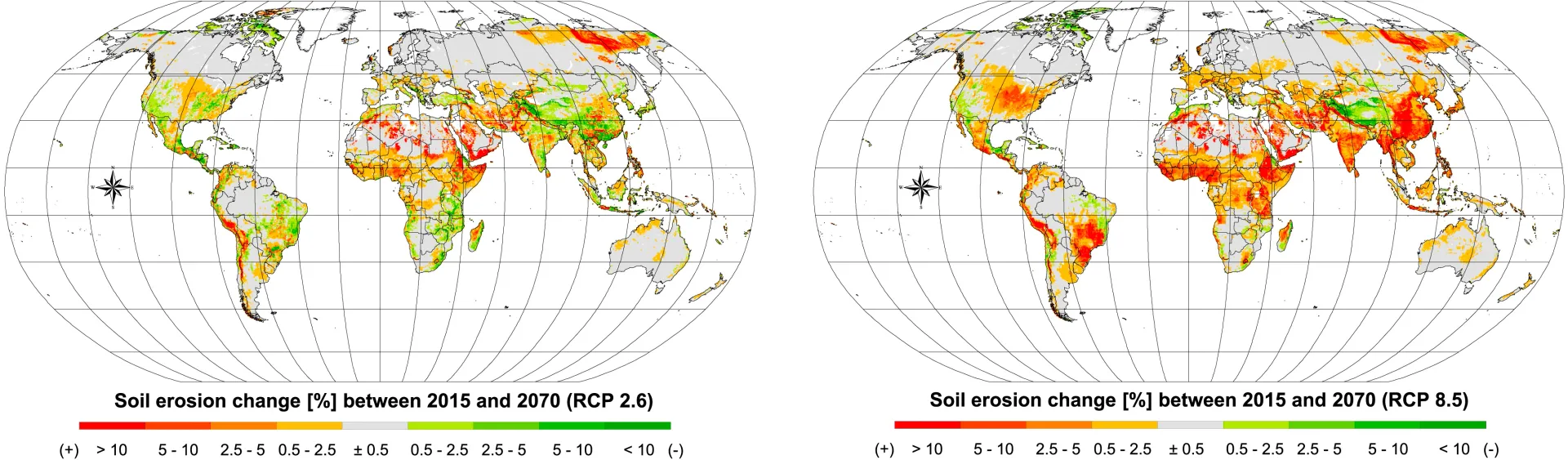
The global climate is potentially moving toward more vigorous hydrological cycles that would be acting as a major driver of future increases in soil erosion. As the world gets warmer, the air sucks up more water from oceans, lakes, soil and plants, leaving less for vegetation to grow. The increase in atmospheric water vapor also amplifies the global water cycle, making wet regions wetter and dry regions drier which increase soil erosion by extreme rain and wind which jeopardizes vegetation soil cover in those regions. In absolute terms, the greatest increases occur in areas with tropical climates. Countries in temperate latitudes and with subtropical climates will however not be spared by increases of climate erosivity. The illustration below shows the impact of a 1.7-1.8°C warming scenario (RCP 2.6) and a high 3.0-5.1°C warming scenario (RCP 8.5) on soil erosion from water.
ADVANCING SUSTAINABLE BIOENERGY DEVELOPMENT
New, advanced technologies make it possible to produce climate neutral fuels from non-forest and non-food energy crops. The benefits of cultivation and use of these energy crops for transport fuels and electricity goes beyond the benefits of reducing greenhouse gas emissions. Terrestrial energy crop cultivation and aquatic energy crop harvesting reverses land and water degradation, increases biodiversity and carbon sequestration and improves land fertility. We call this
Deep Green Biomass. Moreover, deploying these energy crops for the production of advanced biofuels will positively impact social-economic structures and energy independence and reduce the need for involuntary migration and deforestation: Deep Green Energy.
Deep Green Energy Partners works to accelerate deployment of deep green biomass for the production of advanced biofuels and biochemicals, to restore soil and water conditions and to optimize the overall ecological-economic effects of investments in the energy transition.
ADVANCING SUSTAINABLE BIOENERGY DEVELOPMENT
New, advanced technologies make it possible to produce climate neutral fuels from non-forest and non-food energy crops. The benefits of cultivation and use of these energy crops for transport fuels and electricity goes beyond the benefits of reducing greenhouse gas emissions. Terrestrial energy crop cultivation and aquatic energy crop harvesting reverses land and water degradation, increases biodiversity and carbon sequestration and improves land fertility. We call this
Deep Green Biomass. Moreover, deploying these energy crops for the production of advanced biofuels will positively impact social-economic structures and energy independence and reduce the need for involuntary migration and deforestation: Deep Green Energy.
Deep Green Energy Partners works to accelerate deployment of deep green biomass for the production of advanced biofuels and biochemicals, to restore soil and water conditions and to optimize the overall ecological-economic effects of investments in the energy transition.
AGRICULTURE LAND
ADVANCING SUSTAINABLE BIOENERGY DEVELOPMENT
New, advanced technologies make it possible to produce climate neutral fuels from non-forest and non-food energy crops. The benefits of cultivation and use of these energy crops for transport fuels and electricity goes beyond the benefits of reducing greenhouse gas emissions. Terrestrial energy crop cultivation and aquatic energy crop harvesting reverses land and water degradation, increases biodiversity and carbon sequestration and improves land fertility. We call this
Deep Green Biomass. Moreover, deploying these energy crops for the production of advanced biofuels will positively impact social-economic structures and energy independence and reduce the need for involuntary migration and deforestation: Deep Green Energy.
Deep Green Energy Partners works to accelerate deployment of deep green biomass for the production of advanced biofuels and biochemicals, to restore soil and water conditions and to optimize the overall ecological-economic effects of investments in the energy transition.
The industrial revolution also slow-started the world population growth that exploded after the second world war and to match that growth in food production we cut down more forests, deployed ever more fertilizers and water to increase productivity. On average land productivity increased by a factor 3 to 4. This remarkable increase in agriculture productivity over the last centuries made it possible to produce sufficient food for the exploding world population but it came at the expense of forests, wild grass lands, soils, biodiversity and freshwater. This proces of land degradation is accelerated by climate change and ultimately ends in desertification.
Furthermore, the deployment of chemical (non-organic) nitrogen fertilizers to compensate for the loss of soil nutrition has caused waterway pollution, acidification, air pollution, further mineral depletion of soils and nitrogen emissions (NO2) that steep up global warming. Land productivity is now decreasing on a large part these marginalizing lands and increase is constrained by soil carbon, nutrients and water loss. In the latest
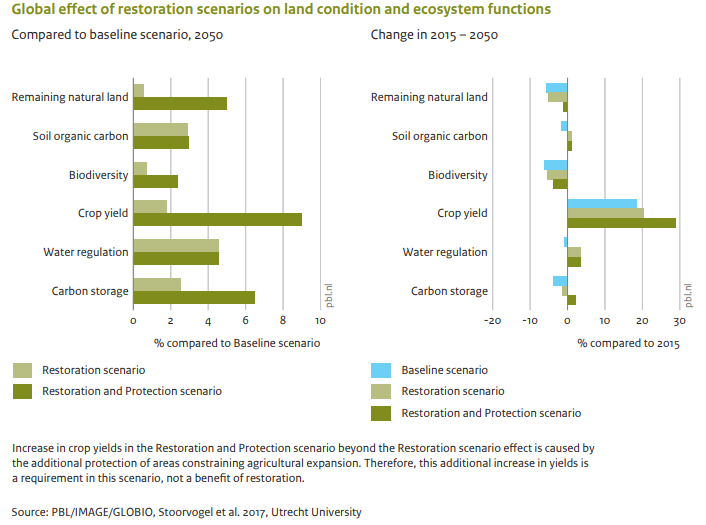
PBL-UN baseline scenario global demand for crops increases by some 45% and cropland expands by close to 20% (300 million ha) while land-use change and soil degradation will cause an additional 66 gigatonnes in carbon emissions (average 2 Gt/y).
ADVANCING SUSTAINABLE BIOENERGY DEVELOPMENT
New, advanced technologies make it possible to produce climate neutral fuels from non-forest and non-food energy crops. The benefits of cultivation and use of these energy crops for transport fuels and electricity goes beyond the benefits of reducing greenhouse gas emissions. Terrestrial energy crop cultivation and aquatic energy crop harvesting reverses land and water degradation, increases biodiversity and carbon sequestration and improves land fertility. We call this
Deep Green Biomass. Moreover, deploying these energy crops for the production of advanced biofuels will positively impact social-economic structures and energy independence and reduce the need for involuntary migration and deforestation: Deep Green Energy.
Deep Green Energy Partners works to accelerate deployment of deep green biomass for the production of advanced biofuels and biochemicals, to restore soil and water conditions and to optimize the overall ecological-economic effects of investments in the energy transition.
between 2010-2020 about 12 million hectares of arable land were lost annually and continuing as we do, another 300 million hectares will be lost by 2050 and by 2080 climatic conditions in about 30% of the world will gradually become impossible for food production.
ADVANCING SUSTAINABLE BIOENERGY DEVELOPMENT
New, advanced technologies make it possible to produce climate neutral fuels from non-forest and non-food energy crops. The benefits of cultivation and use of these energy crops for transport fuels and electricity goes beyond the benefits of reducing greenhouse gas emissions. Terrestrial energy crop cultivation and aquatic energy crop harvesting reverses land and water degradation, increases biodiversity and carbon sequestration and improves land fertility. We call this
Deep Green Biomass. Moreover, deploying these energy crops for the production of advanced biofuels will positively impact social-economic structures and energy independence and reduce the need for involuntary migration and deforestation: Deep Green Energy.
Deep Green Energy Partners works to accelerate deployment of deep green biomass for the production of advanced biofuels and biochemicals, to restore soil and water conditions and to optimize the overall ecological-economic effects of investments in the energy transition.
Around 1.6 billion hectares of agricultural land (a third) shows a persistent decline in primary productivity land and in a business as usual scenario productivity loss will accelerate. between 2010-2020 about 12 million hectares of arable land were lost annually and continuing as we do, another 300 million hectares will be lost by 2050 and by 2080 climatic conditions in about 30% of the world will gradually become impossible for food production.
ADVANCING SUSTAINABLE BIOENERGY DEVELOPMENT
New, advanced technologies make it possible to produce climate neutral fuels from non-forest and non-food energy crops. The benefits of cultivation and use of these energy crops for transport fuels and electricity goes beyond the benefits of reducing greenhouse gas emissions. Terrestrial energy crop cultivation and aquatic energy crop harvesting reverses land and water degradation, increases biodiversity and carbon sequestration and improves land fertility. We call this
Deep Green Biomass. Moreover, deploying these energy crops for the production of advanced biofuels will positively impact social-economic structures and energy independence and reduce the need for involuntary migration and deforestation: Deep Green Energy.
Deep Green Energy Partners works to accelerate deployment of deep green biomass for the production of advanced biofuels and biochemicals, to restore soil and water conditions and to optimize the overall ecological-economic effects of investments in the energy transition.
DRYLANDS AND DESERTIFICATION
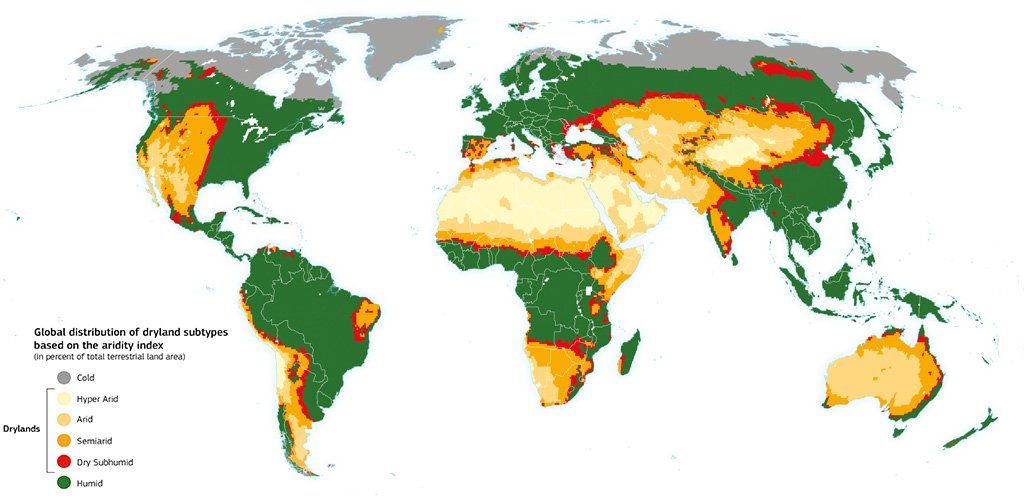
Land degradation especially effects the water-scarce parts of the world, the drylands or arid, semi-arid and dry sub-humid areas that encompass 38% of the earth’s land area and are home to approximately 2.7 billion people of which 90% live in developing countries. by 2050 an expected 4 billion people will be living in drylands. Drylands, store an estimated 450-646 billion tonnes (Giga tonnes or Gt) of carbon. In business as usual scenario's drylands will cover 50-55% of the globe in 2100.
ADVANCING SUSTAINABLE BIOENERGY DEVELOPMENT
New, advanced technologies make it possible to produce climate neutral fuels from non-forest and non-food energy crops. The benefits of cultivation and use of these energy crops for transport fuels and electricity goes beyond the benefits of reducing greenhouse gas emissions. Terrestrial energy crop cultivation and aquatic energy crop harvesting reverses land and water degradation, increases biodiversity and carbon sequestration and improves land fertility. We call this
Deep Green Biomass. Moreover, deploying these energy crops for the production of advanced biofuels will positively impact social-economic structures and energy independence and reduce the need for involuntary migration and deforestation: Deep Green Energy.
Deep Green Energy Partners works to accelerate deployment of deep green biomass for the production of advanced biofuels and biochemicals, to restore soil and water conditions and to optimize the overall ecological-economic effects of investments in the energy transition.
In drylands, land degradation turns to desertification, the process by which soil-carbon, nutrients and water decreases to the extend that vegetation eventually disappears. An estimated 12 million hectares of productive land are lost to desertification and drought each year.
The combined effects of moisture and vegetation loss, extreme weather events, temperature rises and conversion to cropland driven by population growth could result in a projected loss of up to 60% of soil carbon stocks and a 95% loss of above ground carbon stocks in drylands.
ADVANCING SUSTAINABLE BIOENERGY DEVELOPMENT
New, advanced technologies make it possible to produce climate neutral fuels from non-forest and non-food energy crops. The benefits of cultivation and use of these energy crops for transport fuels and electricity goes beyond the benefits of reducing greenhouse gas emissions. Terrestrial energy crop cultivation and aquatic energy crop harvesting reverses land and water degradation, increases biodiversity and carbon sequestration and improves land fertility. We call this
Deep Green Biomass. Moreover, deploying these energy crops for the production of advanced biofuels will positively impact social-economic structures and energy independence and reduce the need for involuntary migration and deforestation: Deep Green Energy.
Deep Green Energy Partners works to accelerate deployment of deep green biomass for the production of advanced biofuels and biochemicals, to restore soil and water conditions and to optimize the overall ecological-economic effects of investments in the energy transition.
PEATLANDS AND PERMAFROST LAND
ADVANCING SUSTAINABLE BIOENERGY DEVELOPMENT
New, advanced technologies make it possible to produce climate neutral fuels from non-forest and non-food energy crops. The benefits of cultivation and use of these energy crops for transport fuels and electricity goes beyond the benefits of reducing greenhouse gas emissions. Terrestrial energy crop cultivation and aquatic energy crop harvesting reverses land and water degradation, increases biodiversity and carbon sequestration and improves land fertility. We call this
Deep Green Biomass. Moreover, deploying these energy crops for the production of advanced biofuels will positively impact social-economic structures and energy independence and reduce the need for involuntary migration and deforestation: Deep Green Energy.
Deep Green Energy Partners works to accelerate deployment of deep green biomass for the production of advanced biofuels and biochemicals, to restore soil and water conditions and to optimize the overall ecological-economic effects of investments in the energy transition.
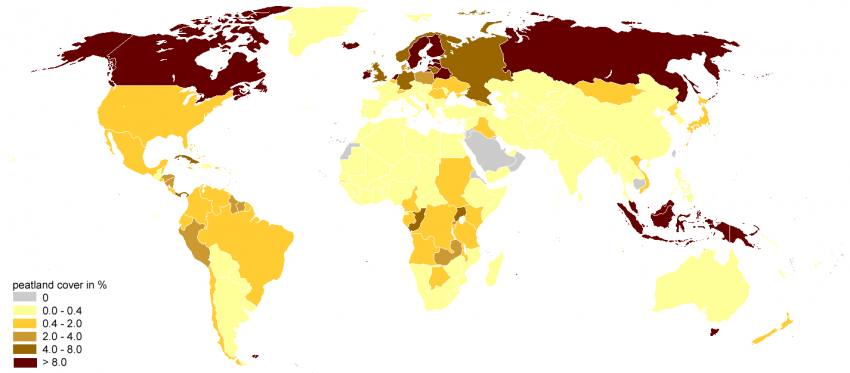
Peatland dry-out and permafrost thaw, the ticking bombs under global warming
ADVANCING SUSTAINABLE BIOENERGY DEVELOPMENT
New, advanced technologies make it possible to produce climate neutral fuels from non-forest and non-food energy crops. The benefits of cultivation and use of these energy crops for transport fuels and electricity goes beyond the benefits of reducing greenhouse gas emissions. Terrestrial energy crop cultivation and aquatic energy crop harvesting reverses land and water degradation, increases biodiversity and carbon sequestration and improves land fertility. We call this
Deep Green Biomass. Moreover, deploying these energy crops for the production of advanced biofuels will positively impact social-economic structures and energy independence and reduce the need for involuntary migration and deforestation: Deep Green Energy.
Deep Green Energy Partners works to accelerate deployment of deep green biomass for the production of advanced biofuels and biochemicals, to restore soil and water conditions and to optimize the overall ecological-economic effects of investments in the energy transition.
Peatlands, such as fens, bogs, marshes and swamps, cover just 3% of the Earth’s total land surface but they store over one-third of the planet’s soil carbon. In peatlands, year-round water-logged conditions slow plant decomposition to such an extent that dead plants accumulate to form peat. This stores the carbon the plants absorbed from the atmosphere within peat soils, providing a net-cooling effect. In permafrost regions frozen conditions freeze plant decomposition and the resulting carbon emissions.
ADVANCING SUSTAINABLE BIOENERGY DEVELOPMENT
New, advanced technologies make it possible to produce climate neutral fuels from non-forest and non-food energy crops. The benefits of cultivation and use of these energy crops for transport fuels and electricity goes beyond the benefits of reducing greenhouse gas emissions. Terrestrial energy crop cultivation and aquatic energy crop harvesting reverses land and water degradation, increases biodiversity and carbon sequestration and improves land fertility. We call this
Deep Green Biomass. Moreover, deploying these energy crops for the production of advanced biofuels will positively impact social-economic structures and energy independence and reduce the need for involuntary migration and deforestation: Deep Green Energy.
Deep Green Energy Partners works to accelerate deployment of deep green biomass for the production of advanced biofuels and biochemicals, to restore soil and water conditions and to optimize the overall ecological-economic effects of investments in the energy transition.
Peat soils contain more than 600 Gt carbon, current emissions from drained peatlands for agriculture and energy are estimated at 0.6 Gt annually. But now peatlands worldwide are drying out and threatening to release an additional 0.86 billion tonnes of carbon dioxide every year by 2100.
perhaps the biggest climate concern linked to soil is the carbon dioxide and methane stored in permafrost in boreal regions, mainly in Siberia. As the global temperatures increase, the permafrost melts. This thawing causes the organic material trapped in the frozen soil to disintegrate, which can lead to the release of massive amounts of greenhouse gases into the atmosphere, which could hence lead to the accelerating of global warming far beyond people’s control.At the same time northern permafrost region soils containing 1,400-1,600 Gt tons of organic carbon (partly overlapping with peat soils) are warming up at twice the global average rate and current annual net release from permafrost is 0.3-0.6 Gt of carbon.
Rising temperatures will enhance both peatland dry-outs and permafrost thaw but predicting the impact in time is difficult due to the interdependence of carbon fluxes and changes in climatic conditions. The carbon that could be released into the atmosphere from thawing of the frozen soils just beneath the surface of much of Arctic Alaska, Canada, Siberia, and Scandinavia range from
30 to 150 Gt by 2100. A more detailed projection however is that some thawing permafrost peatlands in Europe and Western Siberia (containing 37.0–39.5 Gt carbon) will already lose their carbon by 2040 under scenarios of moderate-to-high warming, which gives an indication of the likelihood of when the other just below surface 100 Gt will be released from permafrost lands.
LAND-USE AND CLIMATE CHANGE IMPACTS SUMMARIZED
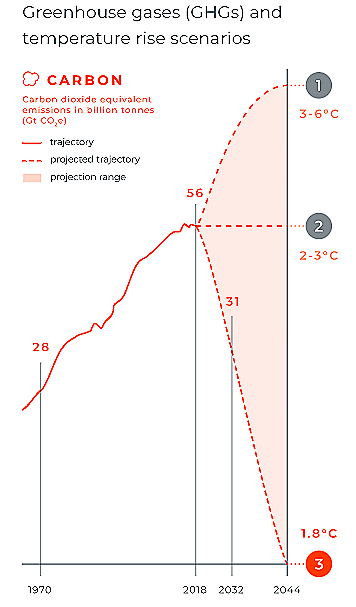
69 Gt carbon from agriculture, Global warming of 2°C would lead to about 230 billion tonnes of carbon being released from the world's soil, and this doesn’t include losses of deeper permafrost carbon. As we are on a 2°C by 2050, and 3.2°C by 2100 scenario
we face a total loss of between 300-600 Gt of soil carbon and vegetation before 2100 due to agriculture, mining, deforestation, desertification, global warming and climate change. This would mean an annual 4-8 Gt/y (or 15-29 GtCO2) on average but likely growing over time. Furthermore, we face severe productivity losses on about half of all arable land due to anthropogenic and climate change induced soil erosion and water scarcity. These projections do not include any potential land loss from sea level rise or extraordinary events.
ADVANCING SUSTAINABLE BIOENERGY DEVELOPMENT
New, advanced technologies make it possible to produce climate neutral fuels from non-forest and non-food energy crops. The benefits of cultivation and use of these energy crops for transport fuels and electricity goes beyond the benefits of reducing greenhouse gas emissions. Terrestrial energy crop cultivation and aquatic energy crop harvesting reverses land and water degradation, increases biodiversity and carbon sequestration and improves land fertility. We call this
Deep Green Biomass. Moreover, deploying these energy crops for the production of advanced biofuels will positively impact social-economic structures and energy independence and reduce the need for involuntary migration and deforestation: Deep Green Energy.
Deep Green Energy Partners works to accelerate deployment of deep green biomass for the production of advanced biofuels and biochemicals, to restore soil and water conditions and to optimize the overall ecological-economic effects of investments in the energy transition.
SOIL RESTORATION AS THE SOLUTION
ADVANCING SUSTAINABLE BIOENERGY DEVELOPMENT
New, advanced technologies make it possible to produce climate neutral fuels from non-forest and non-food energy crops. The benefits of cultivation and use of these energy crops for transport fuels and electricity goes beyond the benefits of reducing greenhouse gas emissions. Terrestrial energy crop cultivation and aquatic energy crop harvesting reverses land and water degradation, increases biodiversity and carbon sequestration and improves land fertility. We call this
Deep Green Biomass. Moreover, deploying these energy crops for the production of advanced biofuels will positively impact social-economic structures and energy independence and reduce the need for involuntary migration and deforestation: Deep Green Energy.
Deep Green Energy Partners works to accelerate deployment of deep green biomass for the production of advanced biofuels and biochemicals, to restore soil and water conditions and to optimize the overall ecological-economic effects of investments in the energy transition.
The central question from a land perspective is if we can reverse the feedback loops between land degradation, climate change and biodiversity loss fast enough to avoid the worst and provide the world's basic needs. The simple answer is no, unless we fundamentally change our land-use from traditional crop and cattle farming to carbon and energy farming. Carbon and energy farming, perennial grasses and woody biomass for food, feed, fuels, fibers, chemicals and soil protection and restoration is the only option to remove the substantial carbon volumes from the atmosphere and provide the renewable carbon needed. When done at the right pace it will also reduce the need for deforestation as it provides the sustainable alternative for forest wood.
Soil organic matter, decayed plant materials that have been biologically degraded to carbon rich humus material, is the basis for all organic life. Rich carbon soils are capable of absorbing water faster, retaining more water, and resisting erosion by wind and rain. M also attracts and holds many soluble plant available nutrients so the nutrients are retained by the soil and are available to the plant. In addition, as soil organic matter breaks down or is consumed by microorganisms, a part of the nutrients are released.When nitrogen is limiting, the most important green manures are plants that together with bacteria are able to capture nitrogen from the atmosphere and make it available in the soil.
For example, if there is 1% organic matter and 10% of it is decomposed in a year that would be equivalent to 20,000 lbs of organic matter and 2,000 lbs decomposed. If the organic matter is 1% nitrogen, that will be 20 lbs of nitrogen per acre released for crop uptake.Our food production still has the biggest impact on land-use, land change and land degradation. and can . In an assessment on how our food supply system could be aligned with soil restoration in the most leik In a "business like usual scenario" that is based on 1.5-2C another 69 Gt carbon is emitted by 2050 due to land-use change and land degradation while another 300 million hectares of forest disappears to produce 45% more food and feed crops. But agriculture is not the only cause of land use change nor that of soil land land degradation.
ADVANCING SUSTAINABLE BIOENERGY DEVELOPMENT
New, advanced technologies make it possible to produce climate neutral fuels from non-forest and non-food energy crops. The benefits of cultivation and use of these energy crops for transport fuels and electricity goes beyond the benefits of reducing greenhouse gas emissions. Terrestrial energy crop cultivation and aquatic energy crop harvesting reverses land and water degradation, increases biodiversity and carbon sequestration and improves land fertility. We call this
Deep Green Biomass. Moreover, deploying these energy crops for the production of advanced biofuels will positively impact social-economic structures and energy independence and reduce the need for involuntary migration and deforestation: Deep Green Energy.
Deep Green Energy Partners works to accelerate deployment of deep green biomass for the production of advanced biofuels and biochemicals, to restore soil and water conditions and to optimize the overall ecological-economic effects of investments in the energy transition.
Food production is both essential and has the biggest impact on land-use, land-change and land-degradation. The Dutch PBL therefore assessed if and how food production can be increased simultaneously with land restoration. Thereto it developed three 2015-2050 scenarios, Baseline (business as usual in a 1.5-2C scenario), Restoration and Restoration and protection.
In the baseline scenario global demand for crops increases by some 45% and cropland expands by close to 20% (300 million ha) while land-use change and soil degradation will cause an additional 69 gigatonnes in carbon emissions (average 2 Gt/y). In the Restoration scenarios, restoration measures are estimated to be possible on 1.6 billion ha of cropland, 2.2 billion ha of grazing land, and 1.4 billion ha of natural land while increasing crop yields by 15-30%. which is at the lowest range of expected rise in demand. In these scenarios agriculture land expansion is a little less, biodiversity also continues to decline, but restoration measures prevent some 11% of the loss under the Baseline scenario and carbon storage is between 2-6.6 Gigatonnes over the period.